
From the Travely-Family archive · Pacific Ocean
Pacific Ocean. Passage Chronicles, Days 1–4
An original publication from the former Travely-Family website. This English translation was preserved from the technical-site archive without editorial rewriting.
Pacific Ocean. Passage Chronicles, Days 1–4
The anchor chain was sucked into the locker along with the sticky sludge of the Panamanian seabed. Boom, boom, crash, splat! A hundred-metre length of iron piles into the box. Mud and seaweed cling snugly to the bow of the boat. The mainsail soars aloft.
The first seconds of a new stage of the expedition. Almost 20,000 kilometres of water. Two years until the next continent. Calms, headwinds, two hurricane seasons, and the blessed Pacific trade winds.
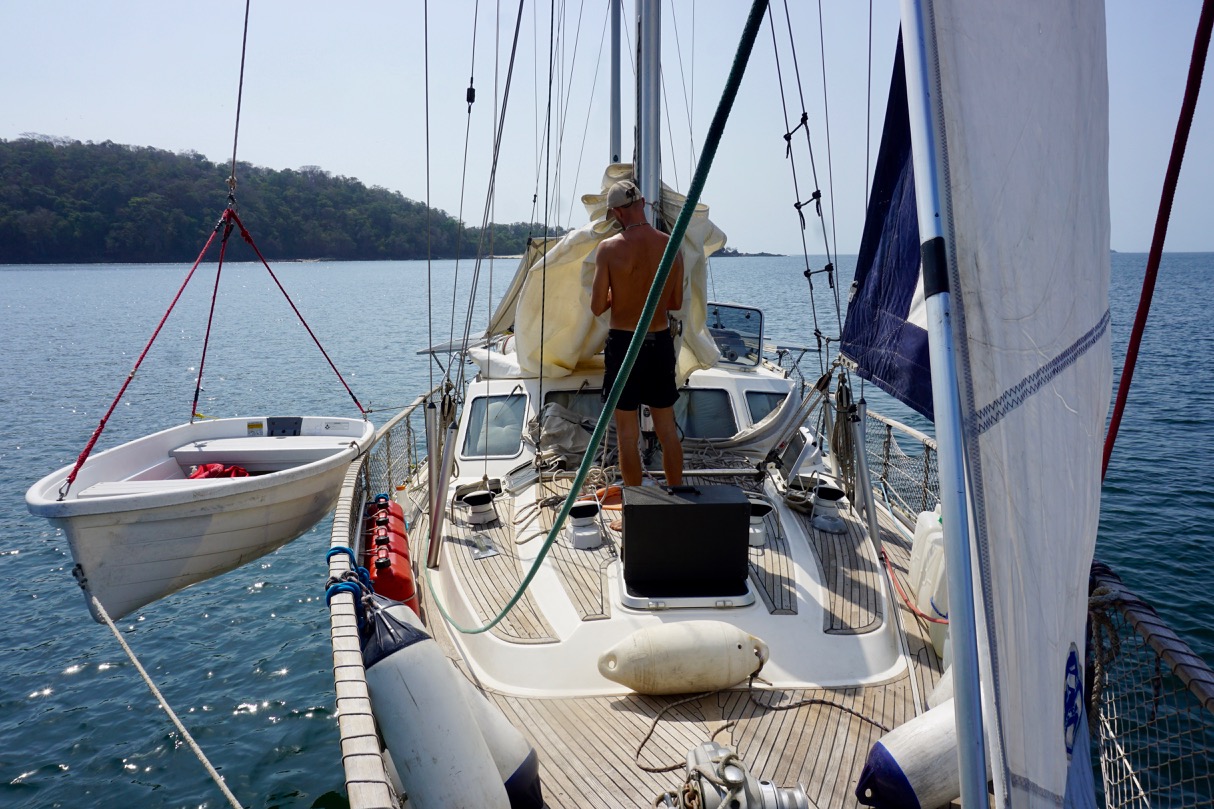
The anchorage at the entrance to the Panama Canal falls astern. There is almost no wind; Lady Mary sleepily makes 1.5 knots (about 2.5 km per hour), and we fail to reach the Las Perlas Archipelago before dark. The captain decides to head for the southernmost islands. In this wind, the passage will take all night.
Dawn. Anchor away!
As it turns out, the islands around us are uninhabited, and our remaining one and a half gigabytes of mobile data go uselessly to waste: there is no longer any signal. The fragrant, flower-scented air can be sipped until we open the stinking anchor locker. Laduska and I go out onto the bowsprit to dream and breathe the sweet air—the wind at anchor always comes over the bow, and out on the bowsprit there is no smell of anchor sludge.
After paying out all 100 metres of chain into the water, the captain orders the first mate to climb into the locker with a shovel: “And I’ll pour the sea over you.” After carefully studying the captain’s face, the irony in the first mate’s eyes gives way to grim resignation. Muttering something about my freshly washed hair, I climb into the locker with a brush and a wide scraper instead of a shovel. I scoop up the stinking sludge and, wiping my clean hair against the filthy chain three times over, dump the muck overboard.
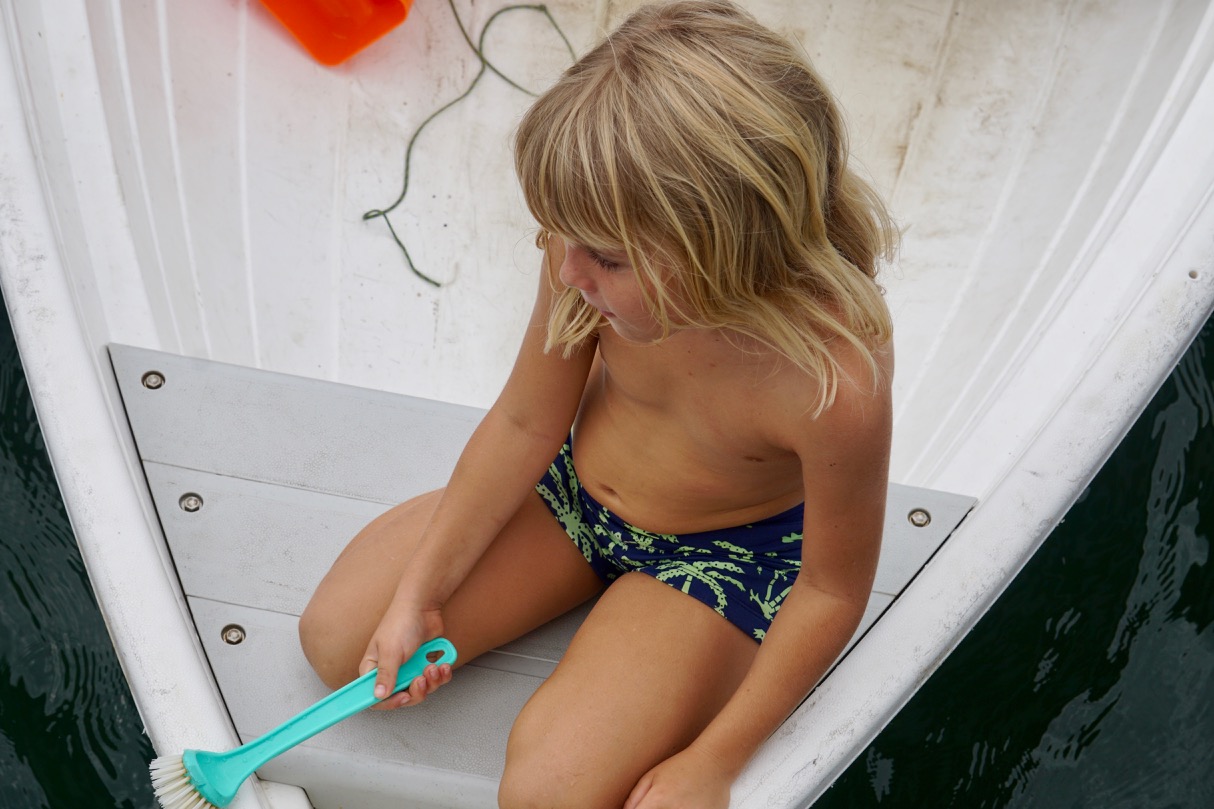
Besides cleaning out the anchor locker and scraping a centimetre-thick growth off the chain, we spend two days scrubbing the yacht from every angle. The captain, in a wetsuit and armed with scrapers, works tirelessly beneath the keel. The young sailor and I circle the yacht in the dinghy, sending into the ocean the grey-green pulp of mud and seaweed that built up on the hull and rubbing strake during our stay in Panama City.
Nastya is off sick, glued to her cabin berth with snot. Tempting though the shores are, with their secluded coves and natural shelters, once we finish the deep clean on the evening of the second day, we set a course for the Galápagos Islands. The forecast promises nearly two days of 20-knot wind from astern, and Lady Mary alternately gybes on a broad reach and rolls from side to side dead downwind, which is extremely unpleasant.
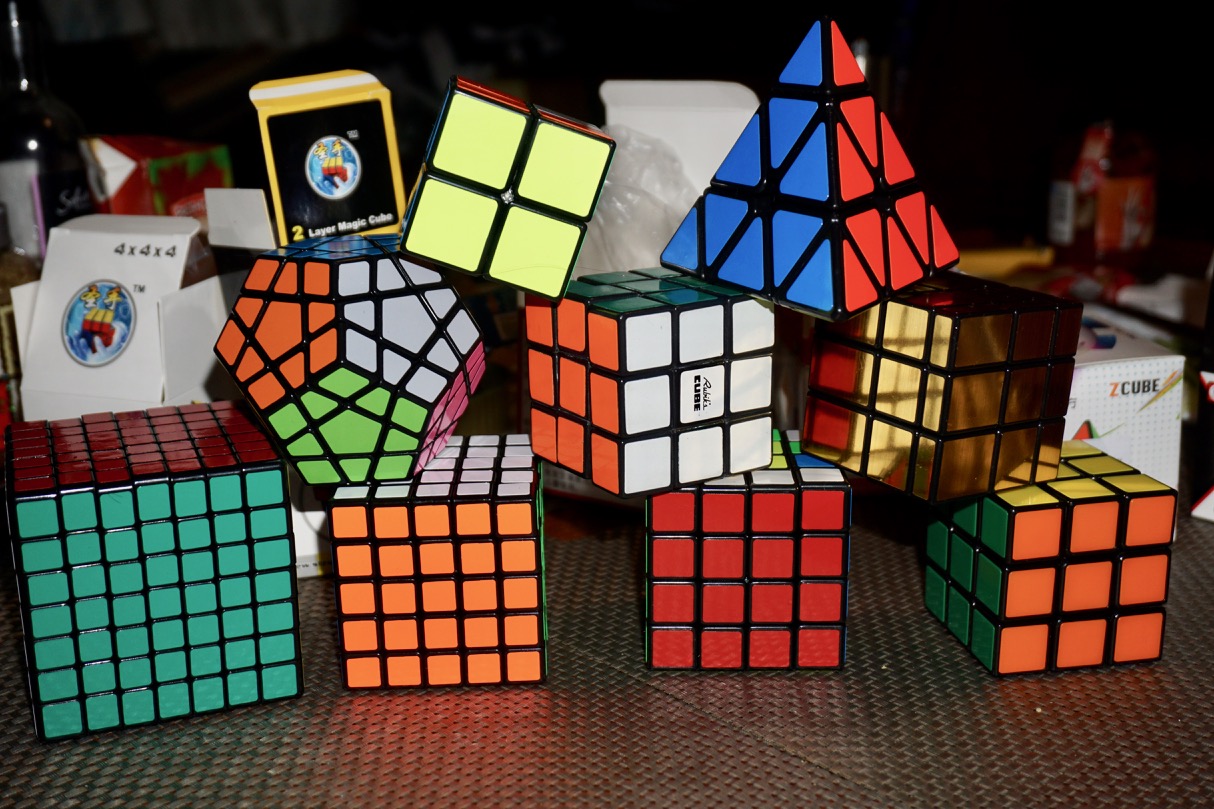
Laduska has learned to solve one face of a Rubik’s Cube, and the captain has solved five of the eight new variants—we have eight different cubes, pyramids, and polyhedra.
Under cover of illness, Nastya is finishing the Harry Potter saga while shirking Chekhov and Gogol. I won’t even mention Pythagoras and good old Ohm.
On the second day, Andrei started the watermaker. At first it refused to pump water, but after the captain’s sorcery in the bilge, the unit began to work, and for some reason we decided to flush it. For an hour, perfectly fresh water, smelling faintly not like drinking water but of something salty and technical, poured into the sink, to the first mate’s bewilderment—we are not used to simply letting water run, whether ashore or at sea:). But at least we washed all the dishes, and now everything works.
On the first night, the boat is unstable on course, and the first mate never takes her hands off the wheel. On the second night, the wind strengthens, but the yawing eases. And we fly at up to 9 knots (which is a great deal for our lumbering old lady), on a broad reach with a following current that the captain cleverly picked up between the coast of Colombia and the remote island of Malpelo.
On 17 March, the current is the only boost left, while the air hangs like hot mist between the drooping sails. It looks as though the famous doldrums have begun. The following wind has died.
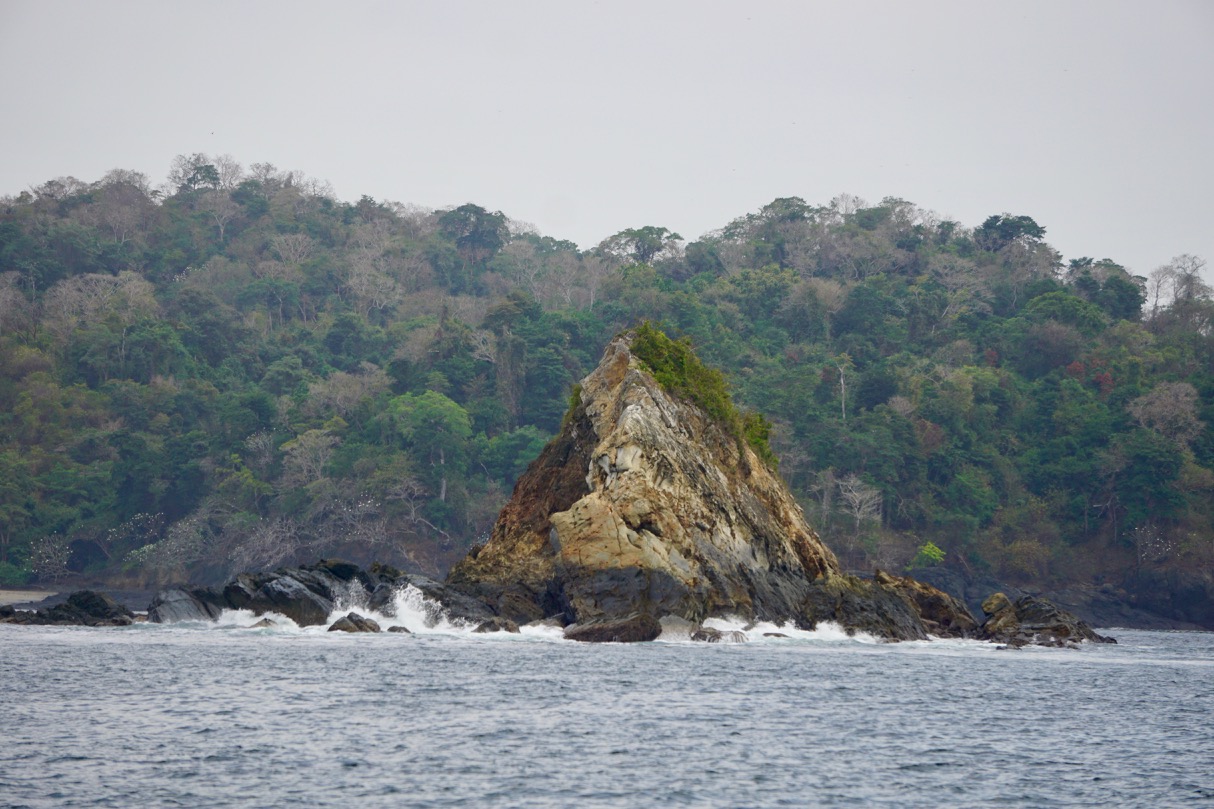
This is still from the islands.
History of Discovery
The Galápagos Islands were discovered in March, as it happens, and by accident, as usual. In the year of Our Lord 1535, a travelling friar named Tomás de Berlanga sailed from Panama to Peru and strayed off course. And there you have it!—a scattering of volcanic islands emerged from the mist, inhabited by countless giant tortoises. In Spanish, water tortoises are called galápagos—they did not agonise for long over the name of the archipelago.
Yet for more than another hundred years, no one thought to put the islands on a map. During the Age of Discovery, sailors were wary of the restless waters of the eastern Pacific. Strong currents and the mists enveloping the archipelago created the impression that the islands were drifting across the surface of the sea. Hence their nickname, the Enchanted Islands.
These waters are notorious for fickle winds from every direction. Two hundred miles from Panama City, the mists have already begun, and the sky is overcast; let’s hope the heavens don’t open. Just our luck—it is now the hot, wet season in the Galápagos; we were counting on it being dry and cool for nothing:). But the cold Humboldt Current does its bit, cooling the water and the air. The nights have turned chilly, and more and more often we feel like wrapping ourselves in a blanket.
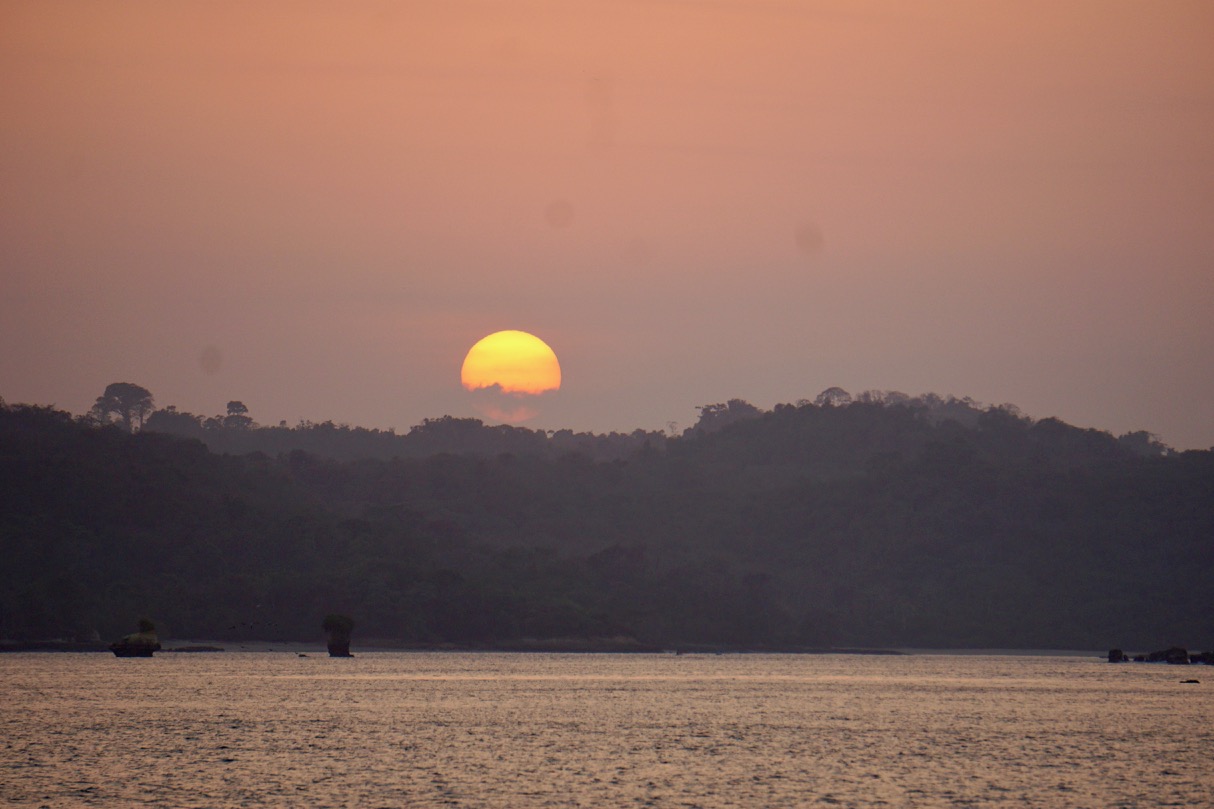
This was how the sunset saw us off into the ocean from the Las Perlas Islands.
Somehow we veered away from the main shipping lanes: only the first night was full of fishing boats, and after that there was just us and the ocean. True, a bedraggled petrel flew in, trying to settle on the mast with criminal intent. But the captain gave it such a ferocious look that the bird understood everything and withdrew, proudly soaring above the grey plain of the sea.
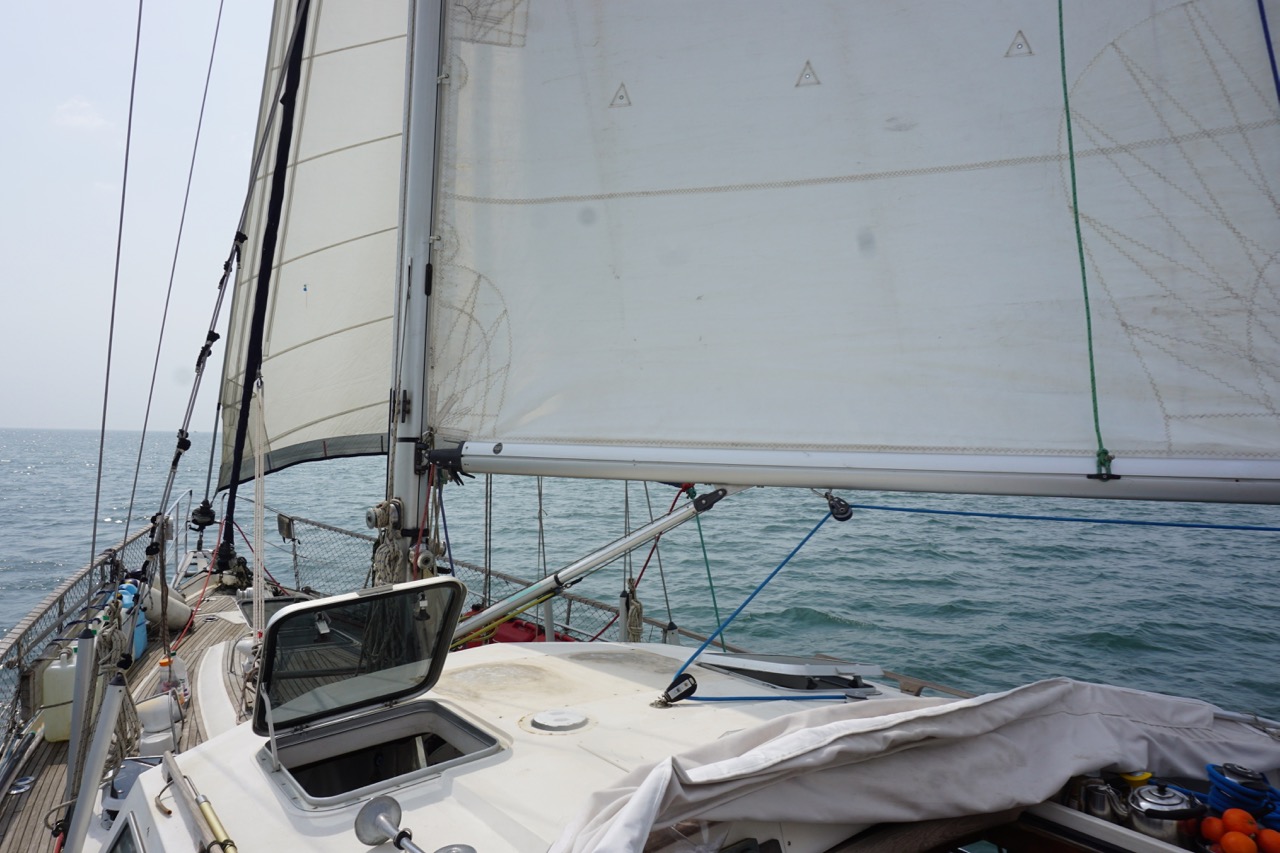
And the plain of the sea, by the way, is not at all deep blue as we were used to in the Atlantic. Apparently, some sort of microorganisms turn the surface of the water maroon-brown. And when the brownness disappears, greyness takes its place, not blue. We shall see what comes next. But at night, the wave cleaved by the boat glows with firefly plankton. It seems as though the stars have fallen into the ocean and are dancing in circles around the yacht. The wave crests and the wake are more mesmerising still, streaming like Milky Ways.
On the third night, the radar detector howled, showing a source of signal in all four directions. No one was on the horizon. A submarine or an aircraft, we decided. But in daylight the signal sounded with surprising persistence and vigour. At last, an enormous tanker emerged from the mist, with another coming towards us. So we had crossed paths with the shipping lanes after all.
Meanwhile, the ocean gave a noisy exhalation somewhere nearby...
“Ladun, could that be a whale?!”—but the depths were silent. Then, about five minutes later, an enormous dark-grey head surfaced majestically astern, followed by a long back with an elegant, almost dolphin-like fin.
“Mother of God, it’s got to be 10–12 metres! A whale, guys, a whale! Good Lord, it’s within a boat-length of us!”
The crew poured out onto the deck, while the whale, gauging our reaction, appeared decorously a couple more times alongside before moving away.
Our fourth day in the Pacific. Our coordinates are 04°52′ north latitude, 79°51′ west longitude. In two days, we have covered 210 miles from Panama’s Las Perlas Archipelago. There are 710 miles left to the Galápagos. The Equator is 300 miles away as the crow flies. Neptune’s Day is coming soon:).