
From the Travely-Family archive · Atlantic
Lamin Lodge. Baba Yaga’s Fairytale Tower. Sailing the Gambia by Yacht
An original publication from the former Travely-Family website. This English translation was preserved from the technical-site archive without editorial rewriting.
Lamin Lodge.
How we chased monkeys around the “uninhabited ruins,” the peculiarities of African architecture, travelling salesmen, and our first African friend.
An epigraph demonstrating the power of the internet in The Gambia: some of the photos promised at the end could only be uploaded here:
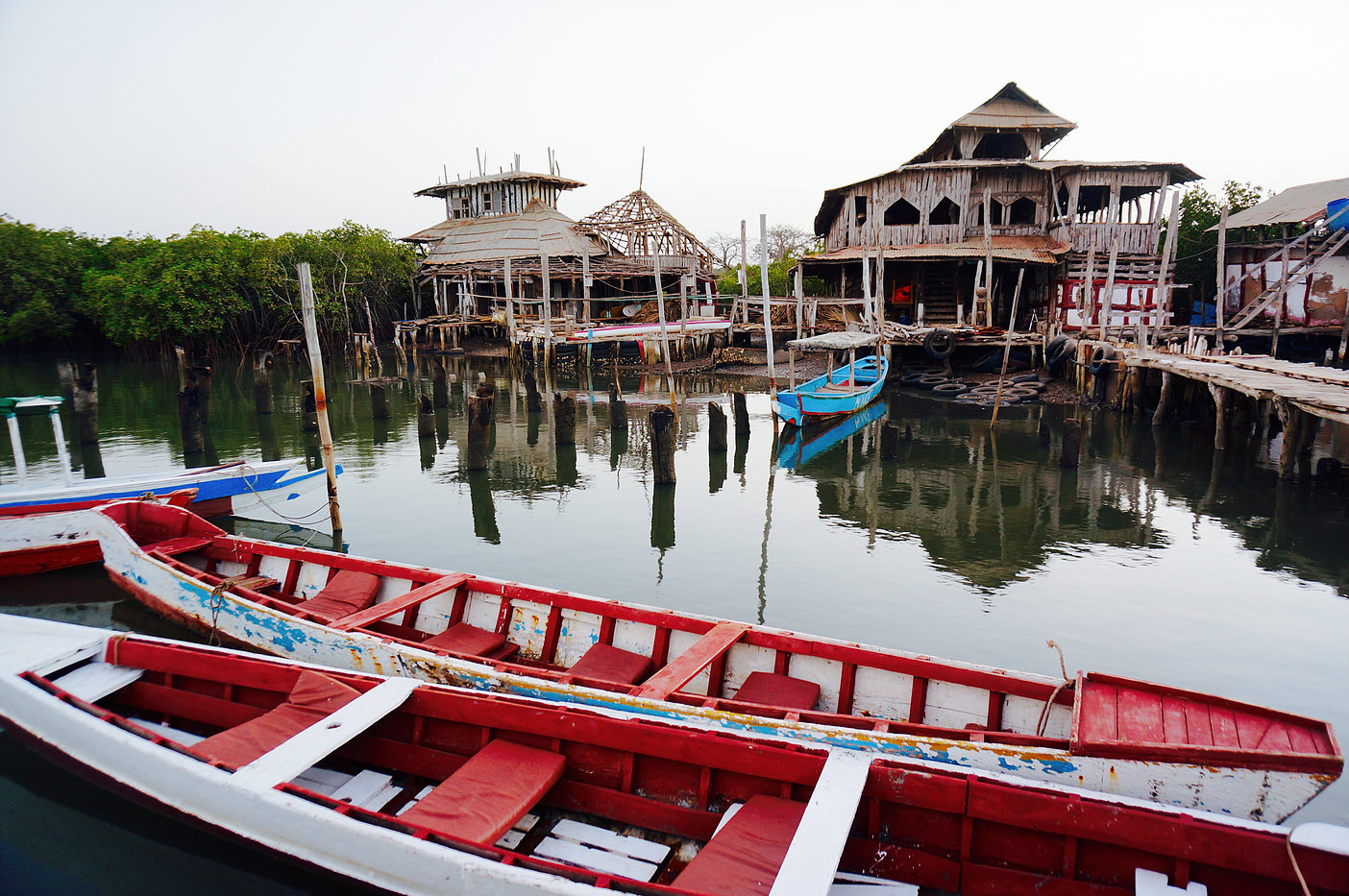
1. First glimpse of Lamin Lodge
2. Regulars at the local restaurant
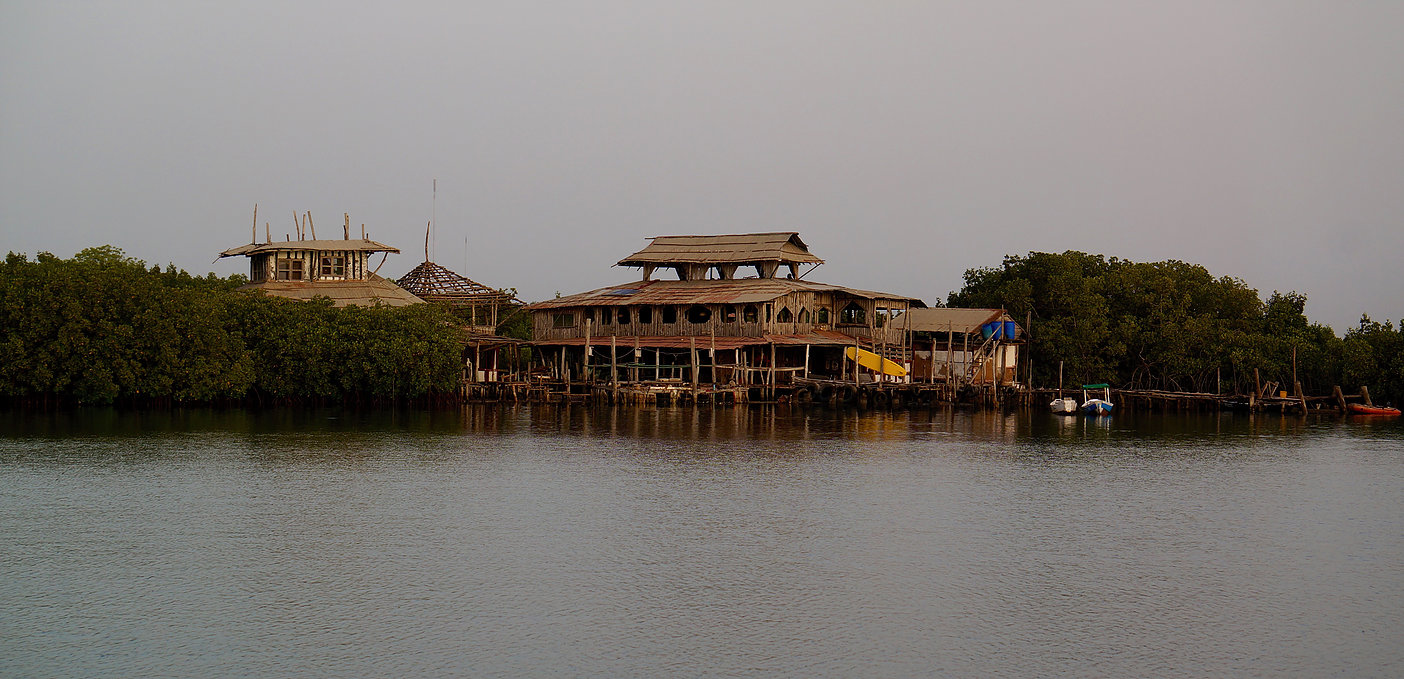
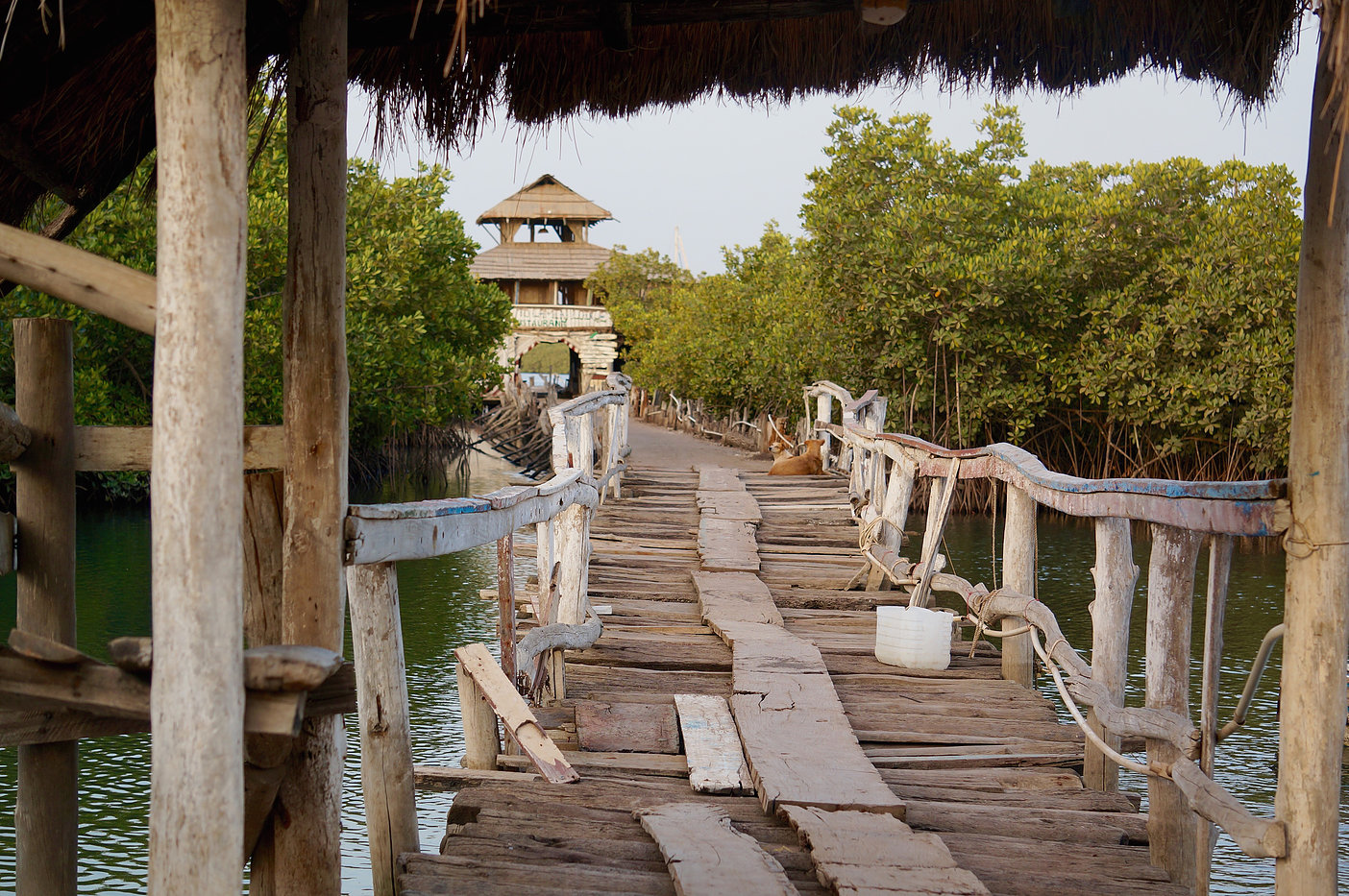
3. From this angle, the Lodge doesn’t look like ruins 🙂
Going ashore from the romantic ruins looks like this:
Lamin Lodge
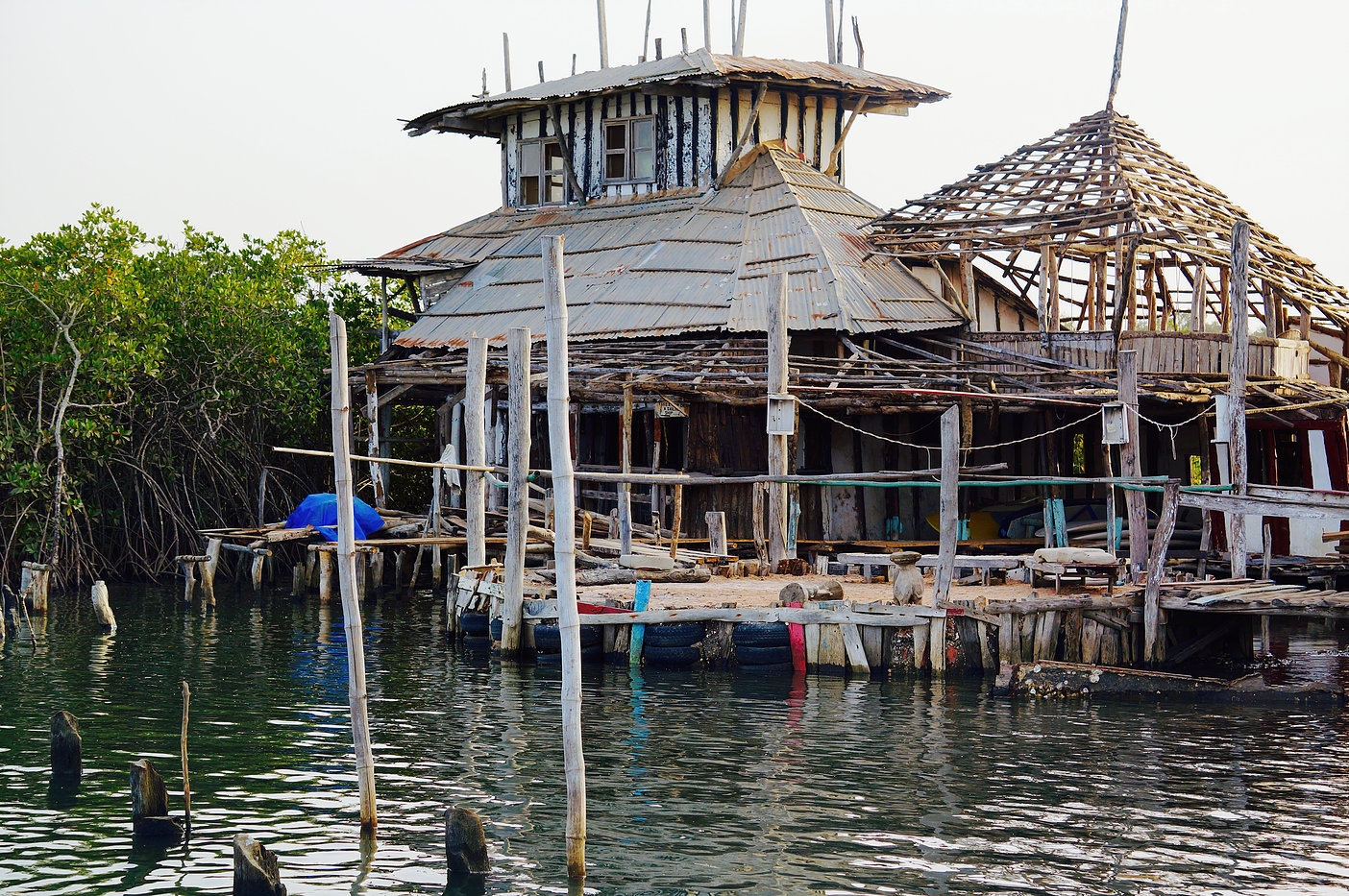
To get our bearings in the country while staying closer to provisions, we moved from Half-Dead to a cosy creek (a long, narrow inlet) five miles along the southern bank of the Gambia River. Tucked away here is an anchorage and a small lodge (a “place to stay”—“rooms,” a café, a jetty...), named “Lamin” after the nearest village. At low tide, you can run aground on the approaches to Lamin Lodge. On the bright side, it gave the keel a scrub.
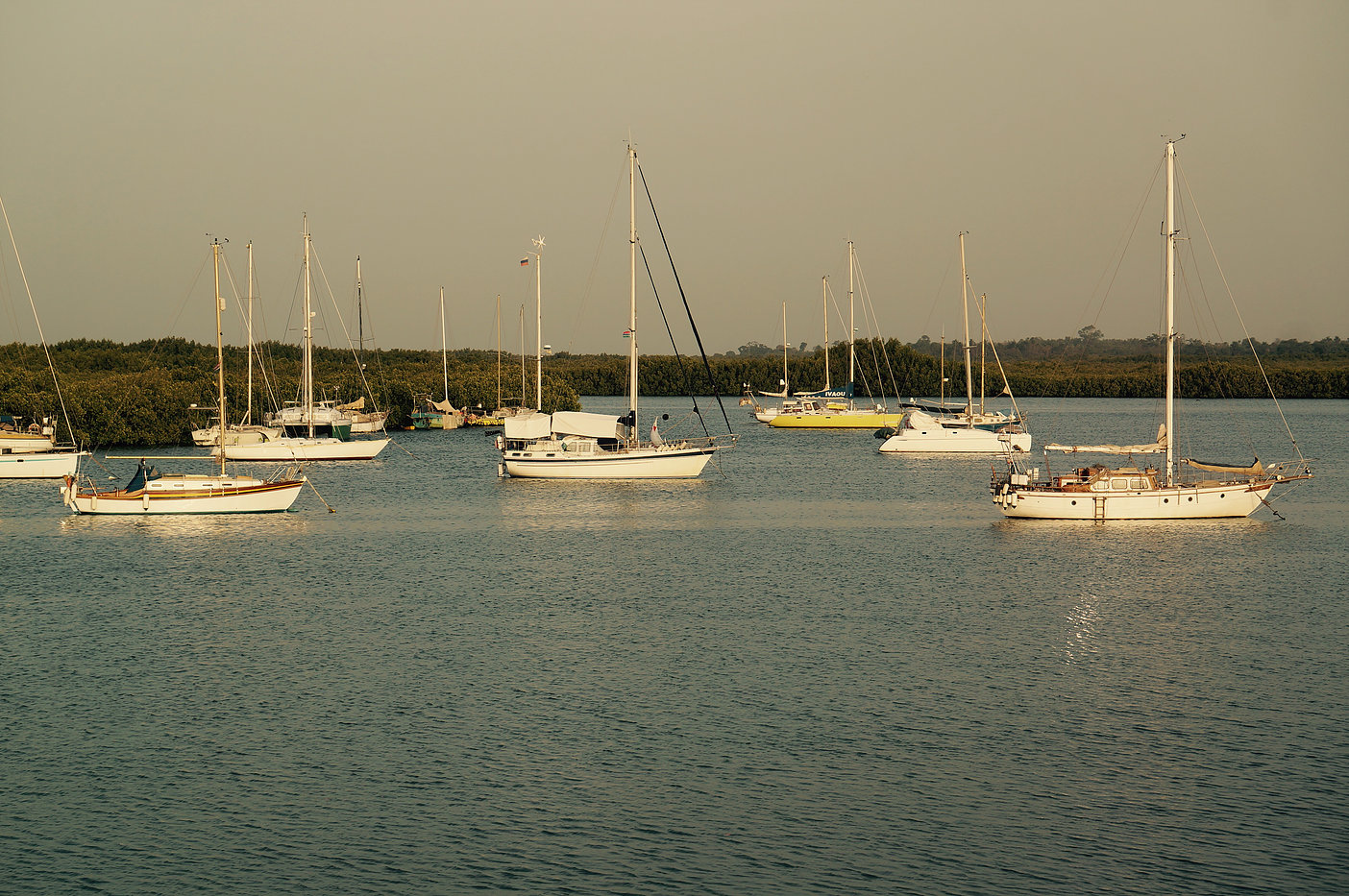
Silk-cotton trees and baobabs rise above the mangrove-covered banks. Soon, traces of human activity appear as well—builders and yachtsmen. About a dozen masts stick up beyond the mangrove fringe, while romantic ruins nestle among the bushes.
The unusual, lopsided buildings look like something out of a fairy tale, but hardly inhabited. A dilapidated jetty and the crooked fairytale tower of an African Baba Yaga. It looks as though everything here fell into decay about three years ago. The crew look questioningly at the captain, who had promised us a café, showers, internet, stunning scenery and total relaxation. So far, everything but the stunning scenery is highly doubtful.
People leave their yachts at Lamin Lodge for extended periods. The owners, mostly French, ask one of the locals to keep an eye on the boat for a small fee (presumably between 30 and 50 euros a month), then calmly depart for their historic homeland. Before the owner returns, the caretaker gets the boat into respectable shape, cleaning the bottom, awnings and deck of brown dust, flora and fauna.
Our friend Djibo and the travelling salesmen
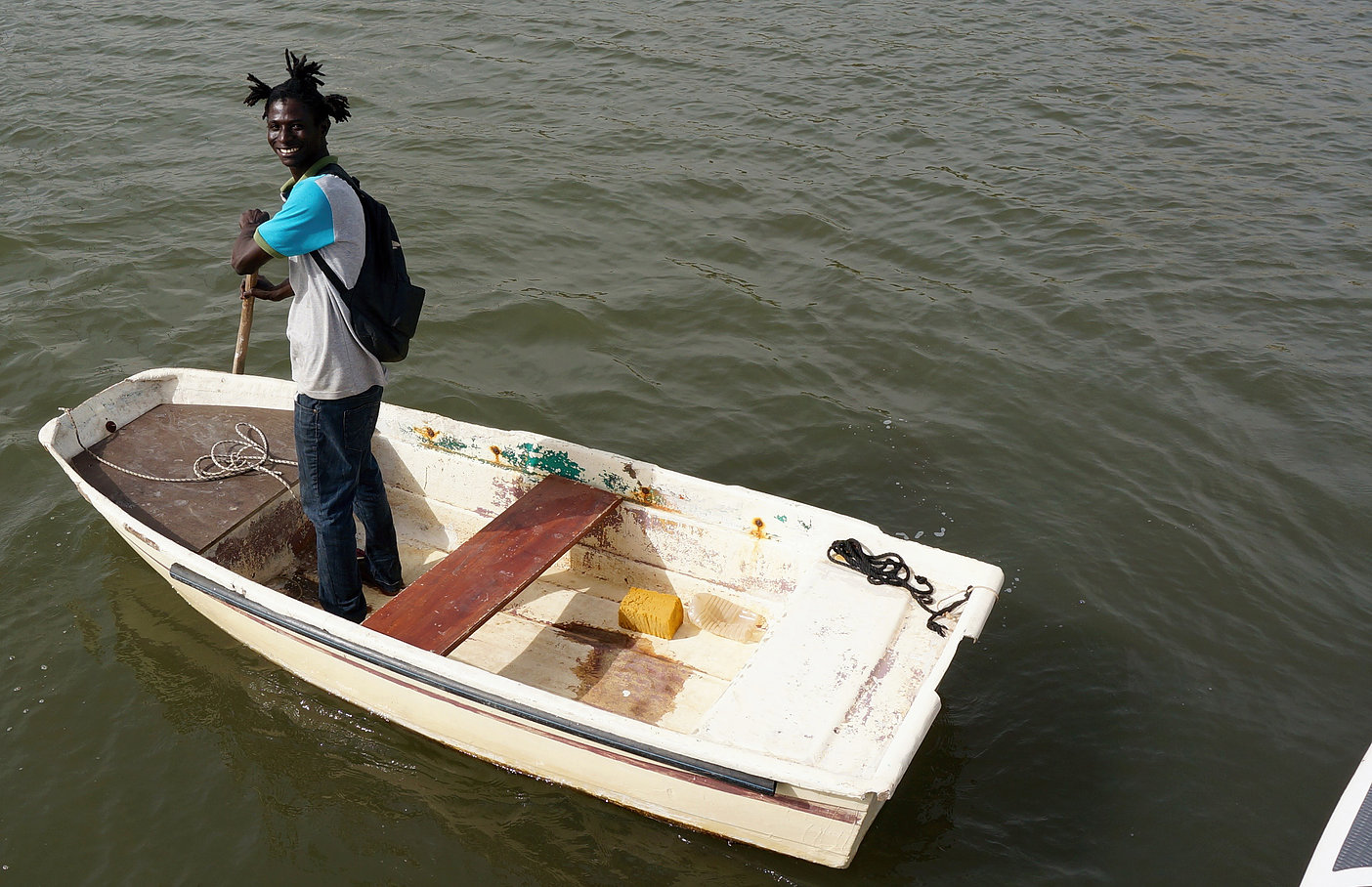
A couple of hours after we anchored, a surfboard with an elegant African surfer aboard detached itself from the neighbouring yacht. This was our now-friend Djibril. With his gentle voice and calm smile, he won over the entire crew and let real Africa into our Gambian life.
Djibo lives in the village of Lamin and comes here every day as if reporting for work. In season (from November to April), there is more to do than there is now—perhaps some tourists will turn up wanting a ride, or yachtsmen will need water brought out, or fuel, or... another ride through the mangrove backwaters.
Sometimes he spends the night aboard the neighbouring yacht—a sturdy, attractive boat whose owner has gone home to England until next season, leaving Djibril in charge.
A year earlier, Djibo looked after the yacht of Igor Kiporuk, the only Russian author of intelligible notes about The Gambia. Here >>
A link to his LiveJournal.
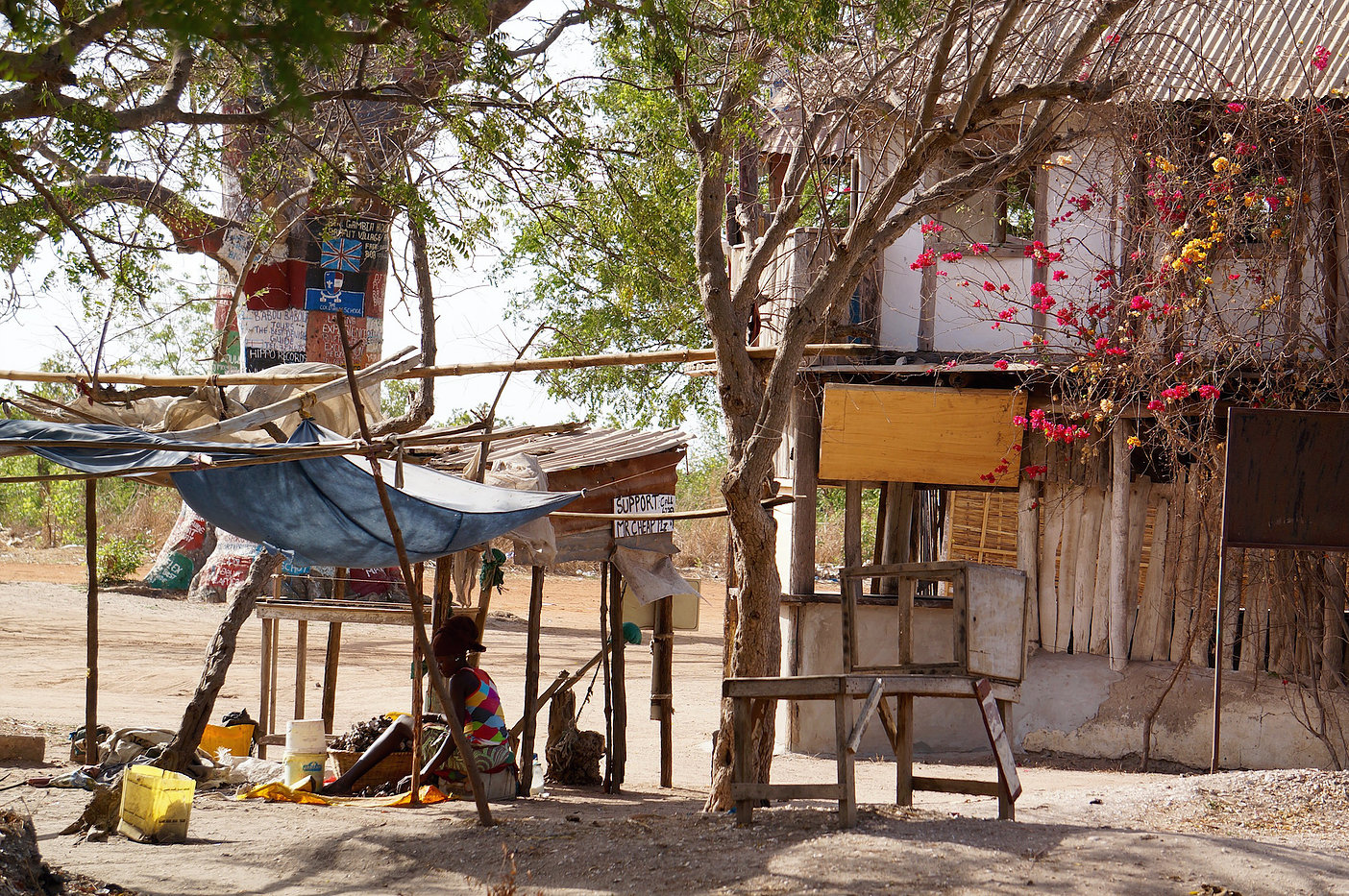
Dji is nothing like the travelling-salesman guides who grab you by the arm the moment you reach the gate, vying with one another for the right to reveal The Gambia to us. By the time we had walked along the boardwalk to the gate, we had already met a dozen rival fellows.
“No money needed,” Mudo explains. “We just help people. Well, that’s our mission—to help people. If you need any help, ask Mudo. You need water, for example?”
“We do. Djibo is bringing it tomorrow.”
“Djibo...” The chap immediately looked crestfallen. “Well, no, as they say, problem then...”
After that, our friends merely greeted us and traditionally asked how things were going, traditionally without waiting for an answer. After all, only Russians genuinely start telling you how they are when asked that question.
To swim or not to swim?
We didn’t swim on our first day in Lamin. Well, it was Africa, not quite the sea, all sorts of parasites, dysentery... But 37°C with no wind hinted that we ought to reconsider our approach to water-based activities.
“Djibo, are there sharks here?”
“Doesn’t seem so. It’s too shallow and too busy.”
“Crocodiles?”
“No, the water’s salty here.”
“How far upriver does it stay salty?”
“Maybe fifty kilometres. Farther on, there are hippos too. They’re dangerous as well.”
“Oh! That’s where we need to go.”
“And what about swimming here?”
“Oh, it’s totally great for swimming here. I do it all the time.”
“Well, splendid,” we said, and all dived into the slightly murky water together.
An African-style cafeteria
To our surprise, the shore café at Lamin Lodge proved to be inhabited inside. This is simply how they build here—for camouflage. African style.
The posts supporting the ceiling and, in places, the walls are decorated with carved figures; the tablecloths and lampshades are made of calabashes, old but colourful. The waitresses are languid and sleepy. The interior is unpretentious but very charming. It makes you want to admire the sunset over the harbour, chat with the monkeys, and ask the cats to move over when they get altogether too familiar.
The café is frequented by yachtsmen from the boats at anchor and tourists arriving overland or by sea in excursion pirogues. The tourist season ends by April, and although Lamin Lodge dozes, it does not sleep. After six in the evening, there is no one to be found in the café except the watchman. But during the day and around teatime, you can usually shout until someone turns up and even get something to eat. All sorts of local people hang around the jetty, from lodge staff to musicians and even some mysterious chaps in camouflage. It all feels very homely: people greet you and invite you to beat a tam-tam or join the communal meal—eating fire-breathing rice by hand from an aluminium basin.
We politely decline, saying we are full. Once, a kind auntie had already fed Lada a taste of Gambian rice from her hand. The young sailor ate it and bravely held back her tears: it was very spicy. Now, though, she replies with an air of expertise that she doesn’t like the local food.
The café’s selection of dishes is small, but the food is tasty. A hot meal costs 250 dalasi (about 400 roubles), while a drink (soft drink or beer) costs yachtsmen 25.
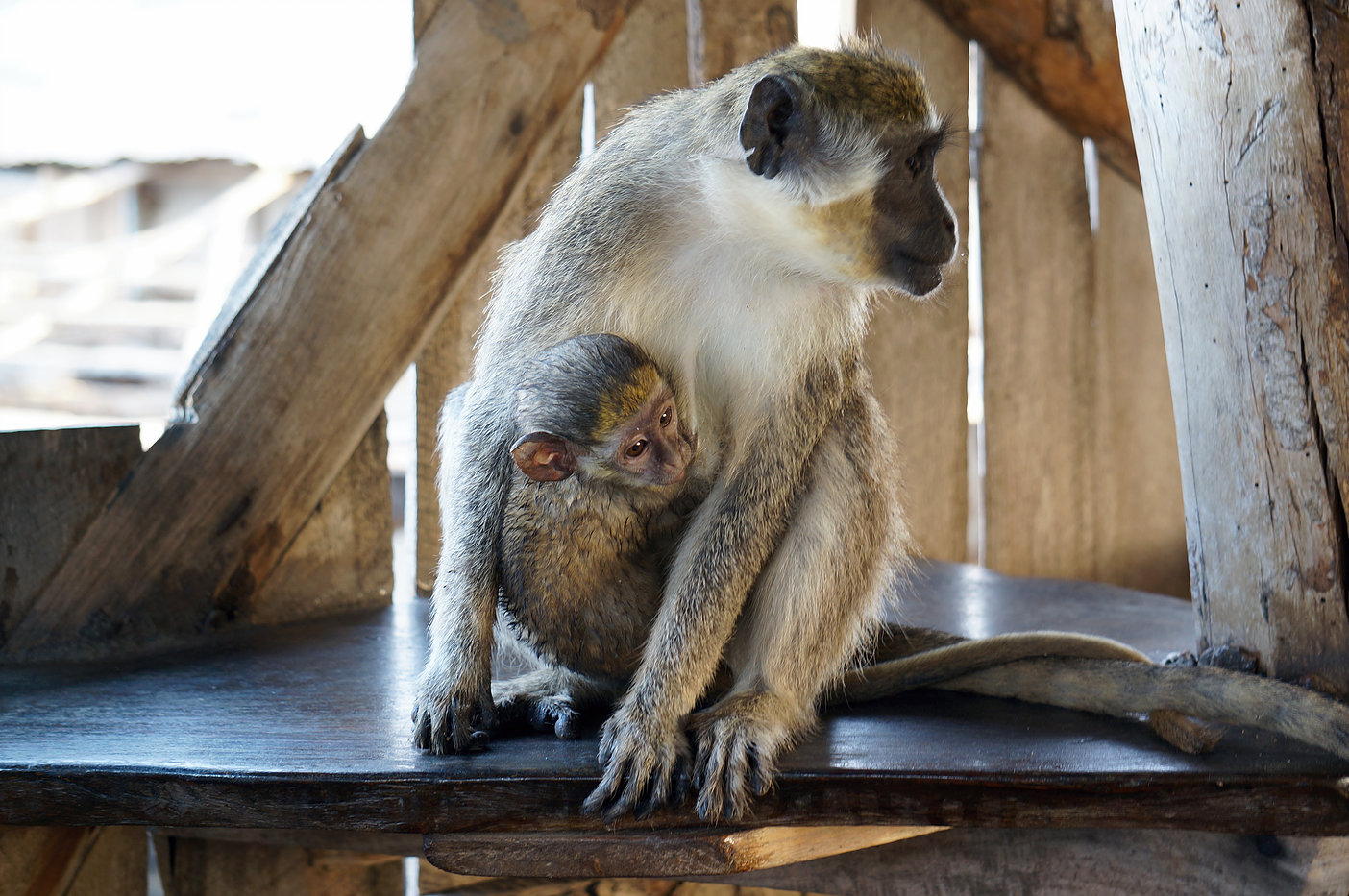
Along with their order, visitors are issued a stick—for chasing away monkeys.
The little beasts, with their sly faces and pirate ways, amuse us greatly, sneaking closer to the food amid the commotion, then snatching a piece of chicken from a plate in a flash and picking up the ketchup on the way. We never even managed to use the sword we had been issued. Amid shrieks from us and the waitress and the children’s jubilation, Andrei did eventually wrest the ketchup back from the monkey when it had already leapt onto the roof.
In the evening, the watchman, Sidiaya, comes to Lamin Lodge. He wheels a barrow along the boardwalk and reacts with enormous delight when he hears that we are from Russia. The policies of the Great Power also meet with his obvious approval:
“Russia—good! Putin—good! Syria—boom, boom, boom!” This was how the toothless African watchman summed up the current political situation...
Here are the thrilling details of life at the Lamin Lodge anchorage.
And now—the photos (there will be more tomorrow; for today, the internet has given up the ghost:))
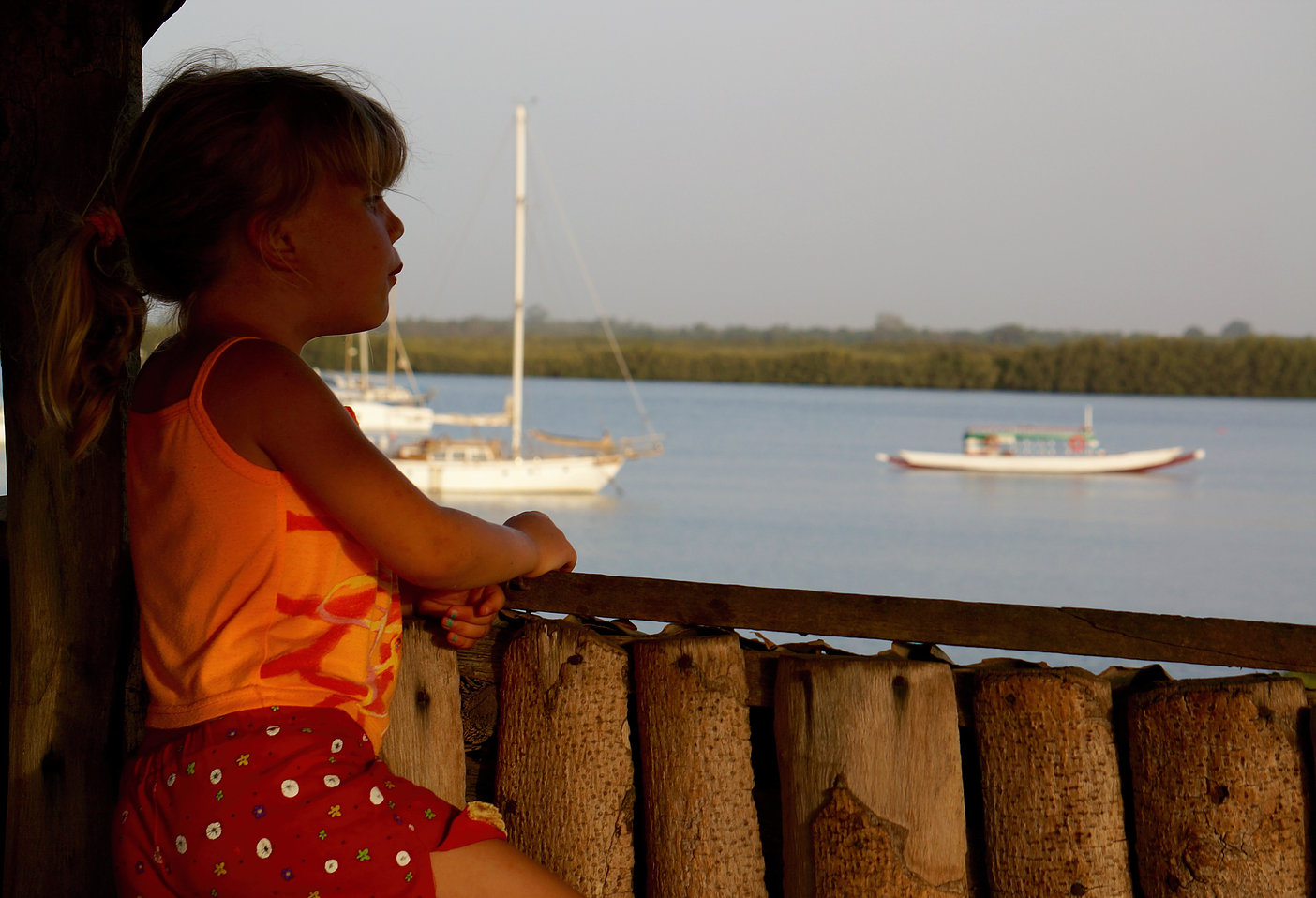
The young sailor keeps watch on the situation at the anchorage.
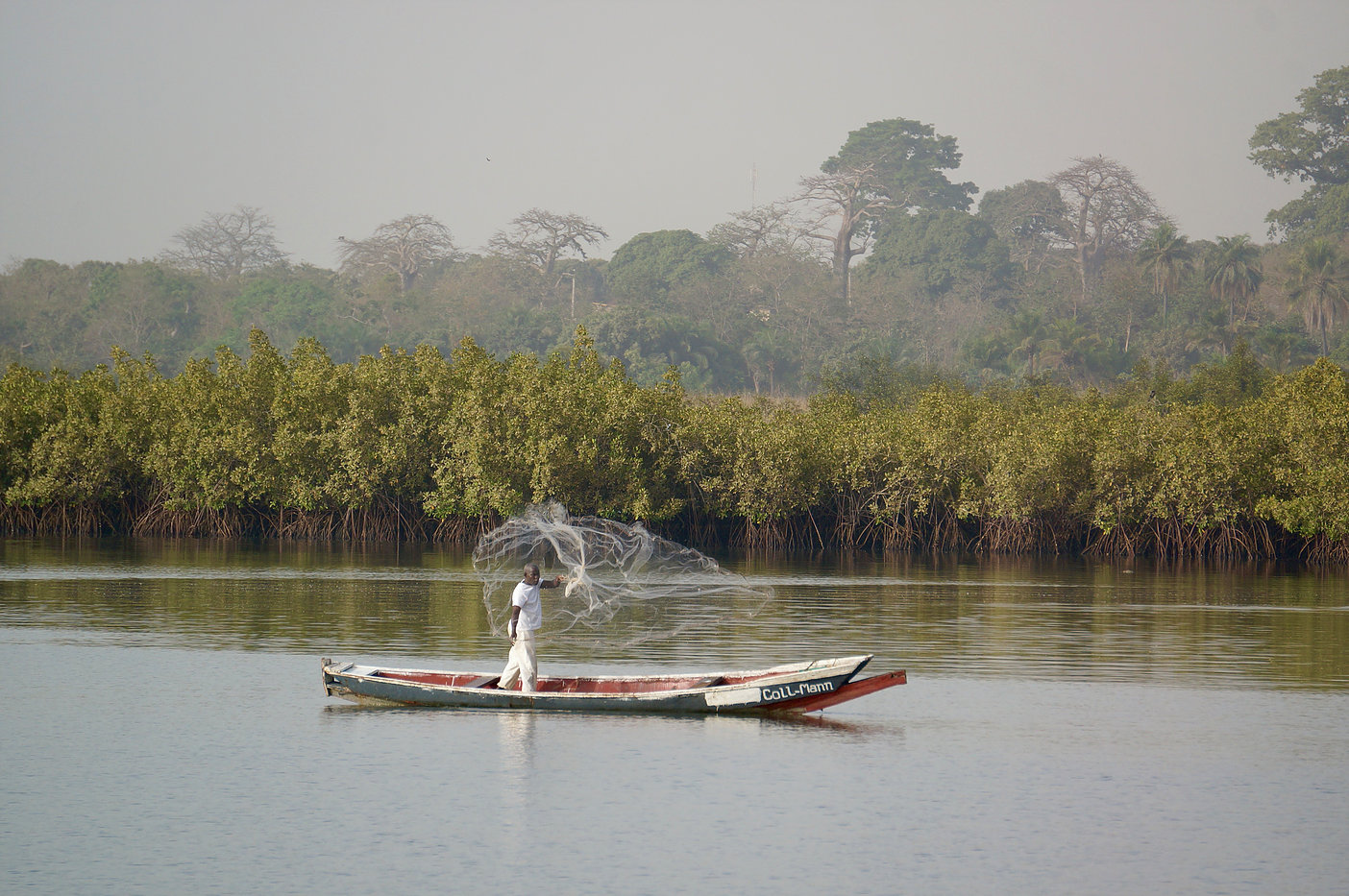
Morning at Lamin Lodge. Humming softly, a fisherman casts his glittering cloak of invisibility for the twentieth time, not in the least discouraged that his nets keep coming back empty.