
From the Travely-Family archive · Family, Children and Life Aboard
Sumatra with a Child: A Jungle Trek
An original publication from the former Travely-Family website. This English translation was preserved from the technical-site archive without editorial rewriting.
Sumatra with a Child: A Jungle Trek
Part One of Our Sumatran Journey — Sumatra with a Child — Visiting the Orangutans
The morning after arriving in Bukit Lawang, we finally stopped by the office whose employee had met us at the bus the day before. After some haggling, we agreed to set off for a two-day trip into the national park the following day, spending the night in the jungle. All the way, our friend in the Rasta hat sang a Christmas song (to the tune about the bells jingling merrily):
“Jungle trek, jungle trek in Bukit Lawang.
See gibbon, see macaque, see orangutan!” — The song became the anthem of our trek ).
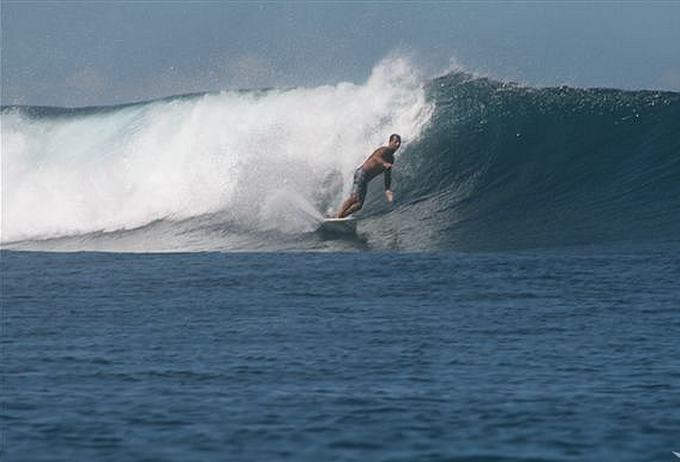
Besides our little family and two guides, the group included two Australians, John and Tom. After the trek, they were planning to visit the famous Lake Toba and then head to Sumatra’s west coast to surf. Avid surfers, daring and cheerful guys, they made our journey even more interesting and enjoyable.
And here is a photo one of them sent us from his surfing trip
We never once regretted going on this overnight trek. Despite the rain that began to fall and the 10-kilometre hike; despite the steep climb up a mountain washed out by the rain, and the leech that latched onto my leg at night. And even despite the monkeys peeing down from the branches onto our makeshift table during breakfast ))))). Our eight-year-old daughter covered all 10 km without a single serious complaint.
Protected Wilderness
The trail runs through ancient equatorial rainforest, now climbing uphill, now dropping steeply towards the river. Gibbons—our Nastya’s great favourites—leap through the foliage. Shaggy red orangutans descend to special feeding platforms with the agility of aerial acrobats. The guides bring their groups just in time for the demonstration feeding of former residents who are learning to live in the wild.
When people began covering the whole of Sumatra with oil-palm plantations, building roads and expanding cities, the orangutans found themselves on the brink of extinction. Conservationists struggled to wrest land from the authorities for a reserve and an orangutan rehabilitation centre. Here, the primates are bred in captivity and released into the wild. But to prevent the released apes from starving to death, they continue to receive supplementary food for a while. At the same time, these former “orphanage kids” learn to survive on their own. Thanks to these measures, the population of Sumatran orangutans has increased significantly in recent years.
Mother and child 🙂
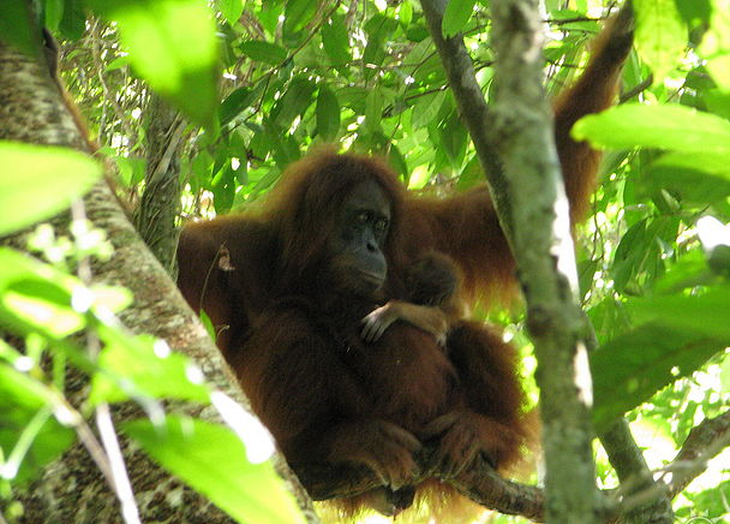
First, very young individuals descend to the wooden platforms piled with fruit, followed by mothers with their young. Sometimes aggressive males appear as well, making the gawkers (us) jump aside at the guide’s alarmed shout. We retreat and hide behind his—the guide’s—mighty back until the brutal alpha male demonstrates complete indifference to our curious mugs:).
A Night in the Jungle
After visiting two or three feeding sites, we reach our overnight stop and set up a bivouac on the riverbank. Monkeys hold their get-togethers right above the camp, inquisitively jumping from one guest to another and trying to sneak away with something tasty amid the commotion. The guides cooked an amazing dinner over the fire, made from young banana-palm shoots, bamboo, vegetables and meat. The abundance and quality of the dishes would have done any miracle chef proud. We wolf it all down, sharing our impressions of the long, eventful day. Instead of a tent, a sheet of polythene is stretched one metre above the ground. The back and sides are also made from pieces of polythene. We lie down packed together on blankets thrown over the ground and, amid jokes and scary stories, fall sound asleep.
The next morning, we had to cross the Bohorok to reach an utterly magical waterfall, straight out of The Jungle Book, on one of its tributaries. The waterfall is completely hidden from the sun and sky beneath a canopy of vines and leaves. We felt like Mowgli as we scrambled upwards, stood beneath the warm streams and sprawled in the natural tiered pools of warm water.
Our daughter was thrilled by the overnight stay, the waterfall and the tubing trip that followed, taking us all the way back to our hotel. Amid squeals and splashes, we floated straight to the Jungle Inn in about forty minutes.
Prices:
Jungle treks range from 3 hours to 5 days. A 2-day trek costs $60. The price includes a guide, a national park entry permit, lunch, dinner and breakfast, a tarpaulin and blankets.
Tubing costs an additional $10 per person. It is best to book the trek directly with the local trackers at the park entrance. On the streets, there is a good chance of running into a middleman and overpaying.
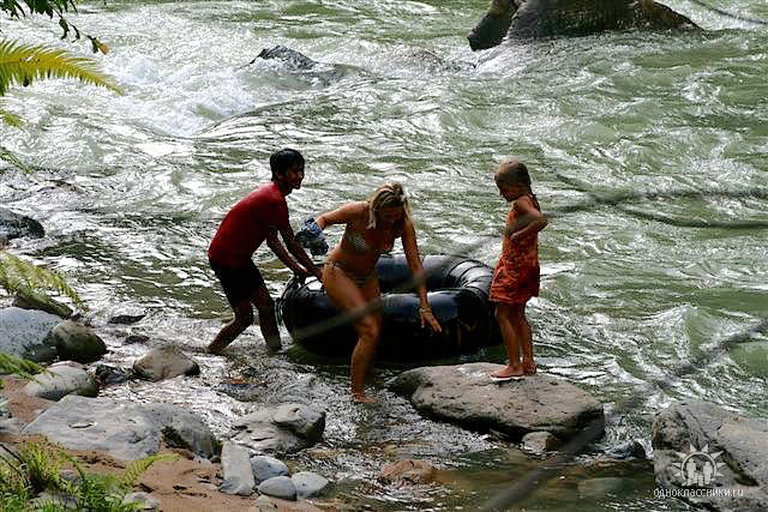
Crossing the Bohorok to the hidden waterfall
P.S.: You may have noticed that some photos bear the logo of the OK social network. That is because our entire photo archive was lost during our travels. This is what survived:).
A related post is our report on the island of Langkawi:
Malaysia, Langkawi: Where, What and How Much