
From the Travely-Family archive · Yacht, Sea and Equipment
The Cost of Living on a Yacht
An original publication from the former Travely-Family website. This English translation was preserved from the technical-site archive without editorial rewriting.
The cost of living on a yacht consists of:
vessel insurance (more about that here — Yacht Insurance — Going for a Third Term) routine yacht maintenance
(comparable to maintaining a not-so-new car in Russian conditions) overhauls and repairs to failed equipment (often sudden) berths in marinas and ports, paid mooring buoys and anchorages port and visa fees fuel, gas and water communications crew living expenses (food, clothing, books, household items...)
entertainment (visits to cafés and bars, cultural events, excursions, etc.)
The cost of living on a yacht, just as on land, can vary. If you live in grand style, the leg will cost you dearly regardless of what it is wearing: flippers or boots. We know sailors who live aboard their boats on $100–300 a month, and others who can barely keep within €5,000.
We have also encountered truly extreme cases with a budget of zero or close to it, but that is a separate subject.
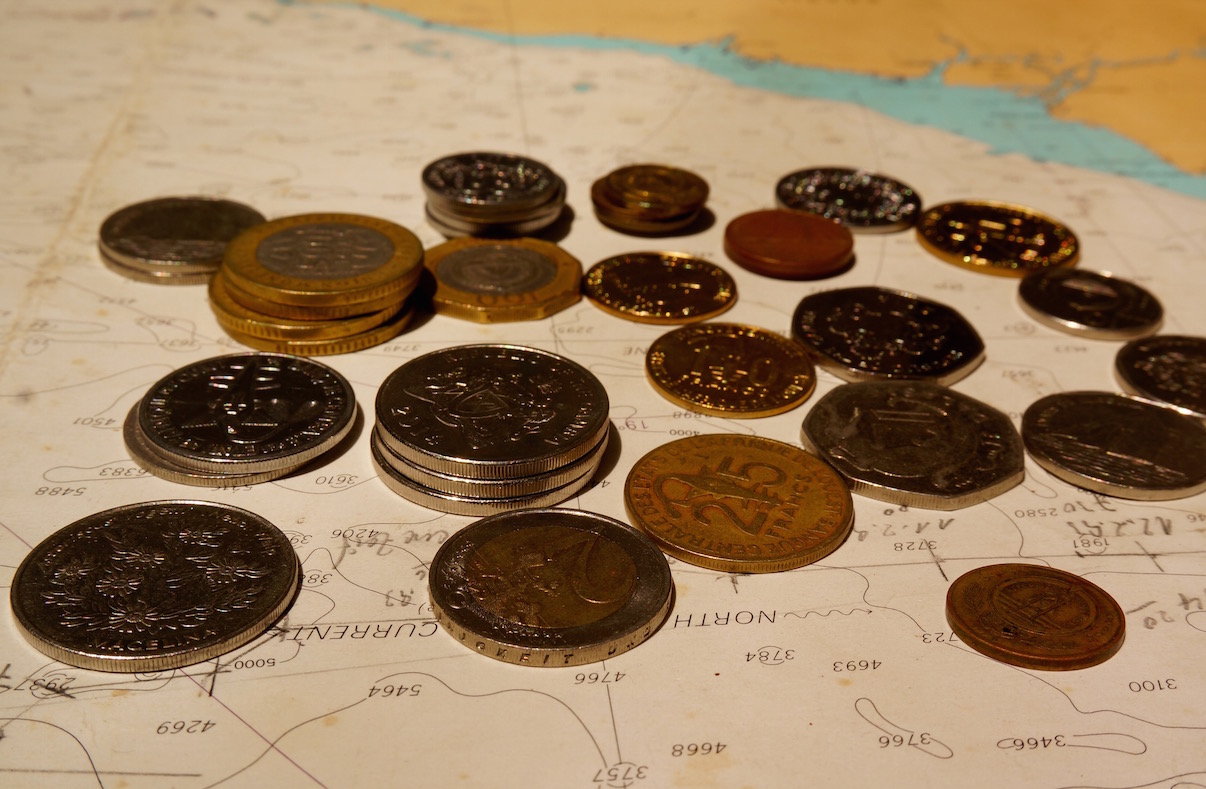
Once, during a sailors’ get-together before an Atlantic crossing, one traveller from a 6-metre boat declared:
A budget? $100? $1,000? It’s much simpler than that: if I have money, I spend it; if I don’t, I don’t!
🙂 That happens too...
Our firm conviction and everyday philosophy:
You don’t need to earn more; you need to spend less
This applies to money, electricity, water, food preferences, buying unnecessary things at the dictates of fashion...
This approach pays off at sea: on a long passage, you are less likely to come across bags full of plastic packaging from everything under the sun. And I personally (the crew’s first mate) cannot admire schools of flying fish, dolphins and turtles and then immediately pour Fairy foam and other toilet-cleaner chemicals over them... and I’m not alone in this 🙂 How We Reduced the Cost of Living on a Yacht
We eat practically no meat, don’t buy heavily advertised fizzy drinks and sweets, and manage without regular Kinder Surprises.
We don’t smoke and hardly drink alcohol.
Trendy gadgets and clothes are unnecessary at sea. Until recently, our whole family had one phone: a good old Philips feature phone costing 2,500 roubles. (Plus a couple of MacBooks and iPads with duplicate navigation software installed ☺).
Update:
a year after this was written, we did finally acquire a couple of smartphones—one went to our elder young sailor so she could keep in touch with friends via social networks and messaging apps; the other serves as a navigator and a collection of messaging apps for calling loved ones far away. Internet calls are considerably cheaper than calls over telephone (mobile) networks, which also reduces the cost of living on a yacht.
Where to Save on Everyday Expenses
1. Household chemicals
We very rarely use products for washing dishes, cleaning bathroom fittings or anything else. Dishes wash perfectly well in salt water, and for life aboard a yacht it is essential to install a foot pump in the galley to supply seawater. This saves water and avoids poisoning marine flora and fauna.
The exception is laundry detergent. We use very little of it (not because we are poor, but because we don’t want to pour soapy alkali into the sea), and try to buy products labelled “bio.” In especially difficult cases, baking soda comes to the rescue—an extremely useful product aboard a yacht, replacing all cleaning products, baker’s yeast and baking powder, as well as a dozen medicines, including remedies for tonsillitis, sinusitis and so on. Besides this, baking soda is the enemy of mould, which inevitably appears in various “weak spots” on a yacht in a warm, humid climate. These damp areas are treated with a baking-soda solution both to kill mould and to prevent it.
2. Children’s toys
This will be a saucepan )
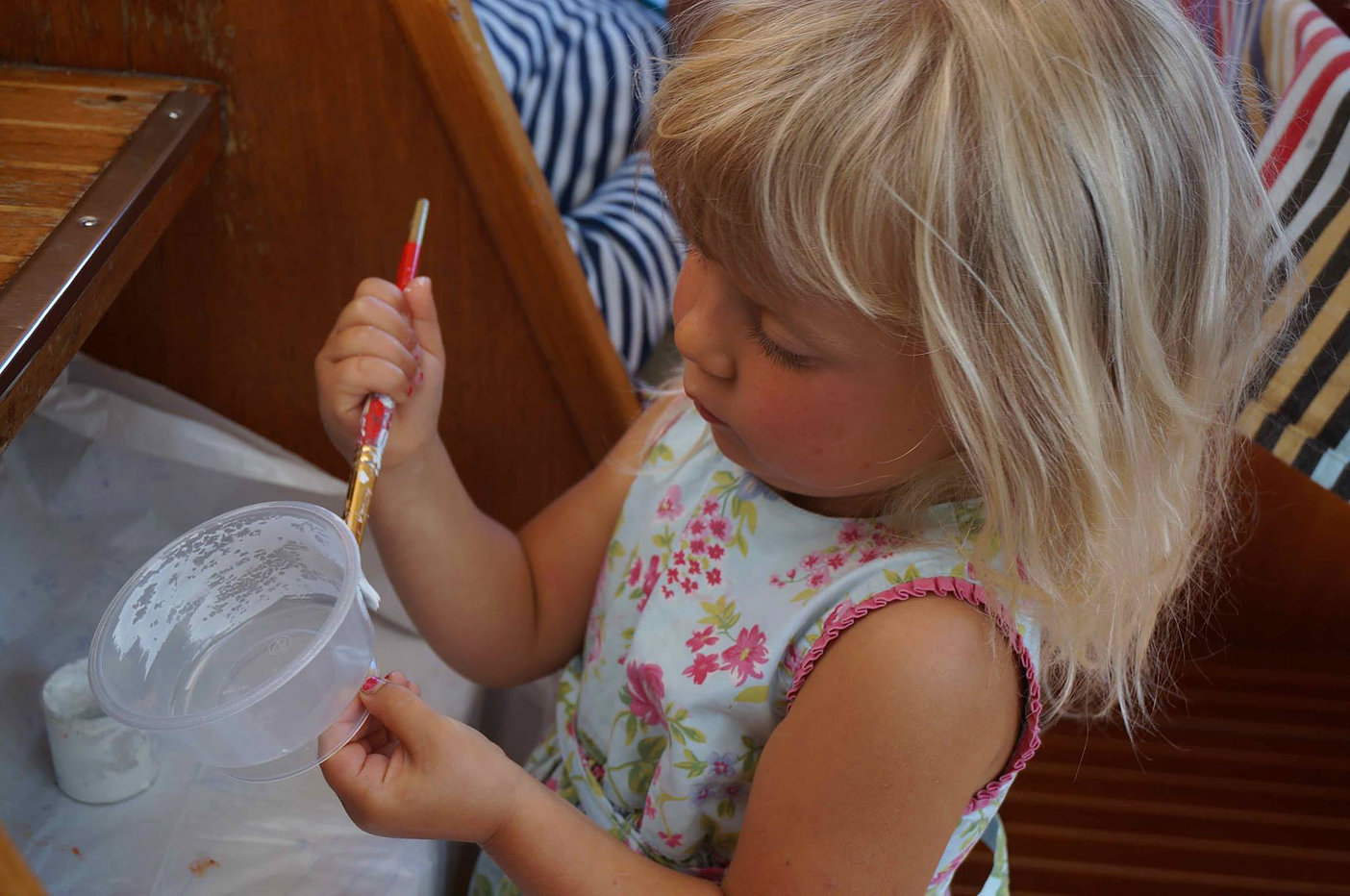
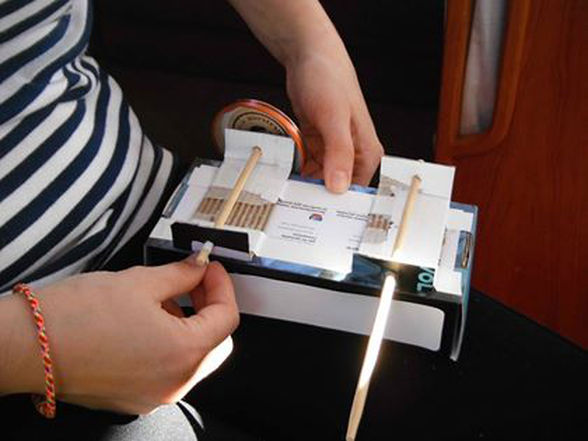
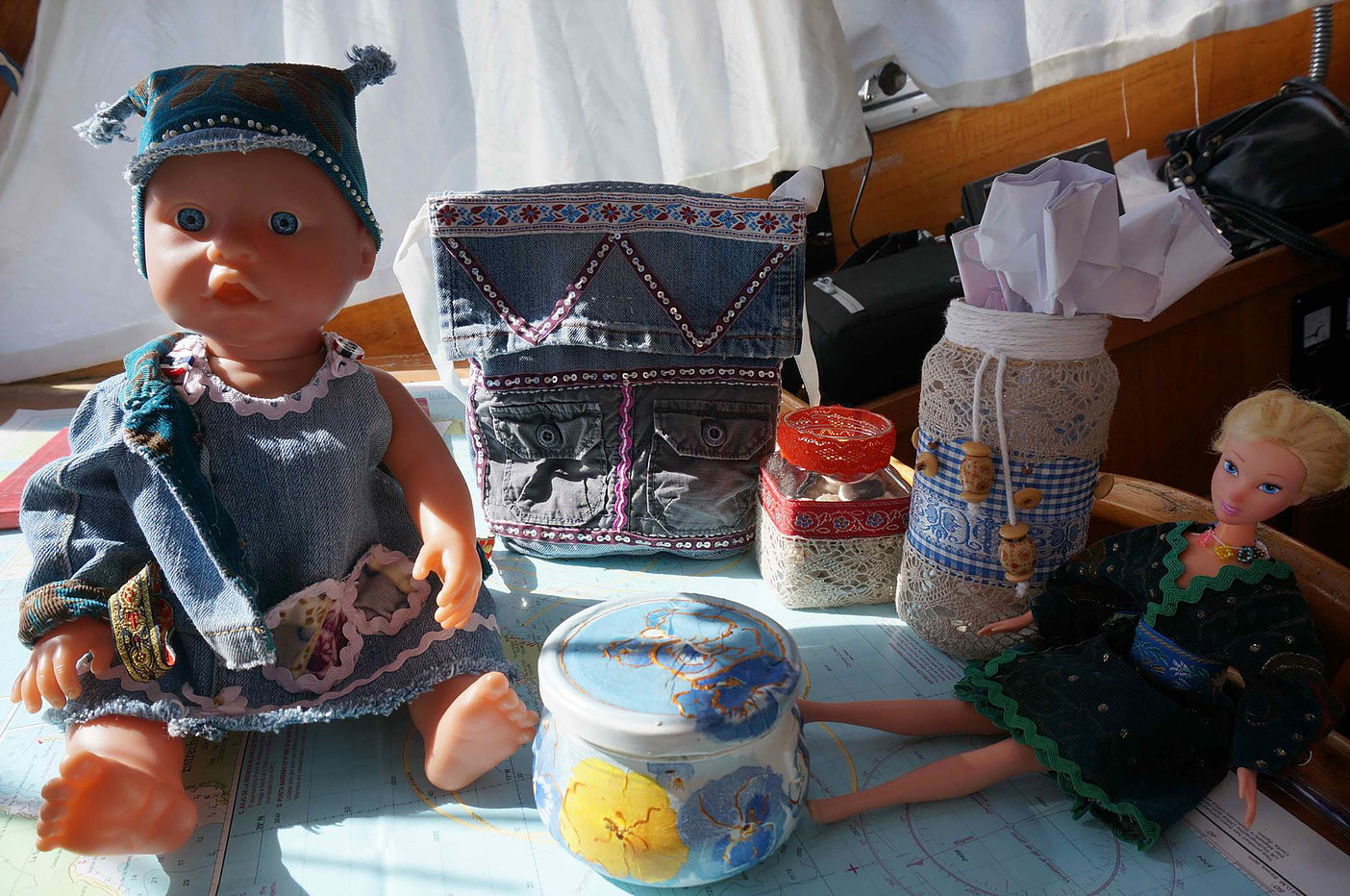
There is no room aboard a yacht for Barbie cities or a fleet of 100 toy cars anyway. And if a doll suddenly needs a house, it is immediately made from materials at hand. Ice-cream tubs (the sturdy kind, though for some reason considered disposable) become dishes, jars become vases, and boxes become dolls’ houses. Our daughters become craftswomen ☺
We sew clothes for the dolls ourselves (there are now four dolls aboard—one large baby doll and four small Barbies). For our daughter’s birthday, we made her a bag from one leg of a pair of jeans. The second leg went into clothes, while the remains of the trousers became a complete pair of shorts ☺. That is roughly how we played in our own childhood, after all, and there was no need to attend paid classes to learn how to sew, knit and make things.
And this will be a lorry )
3. Drinking water
Additional water filters are installed aboard, so we did not buy bottled water even in Africa. The “say no to plastic waste” concept.
After leaving
Panama for the Pacific Ocean, the watermaker began operating. We no longer buy water at all. But the watermaker cost £5,000. Details about installing a watermaker aboard a yacht and whether it is worthwhile— in the captain’s new article >>
A new life for jars and ripped jeans ).
Main Regular Expenses:
food and provisions routine maintenance marina berths engine fuel satellite communications internet visas, if you have left the Schengen Area
1. Food and provisions
We spend between $300 and $600 a month on food in different countries for a family of four. When preparing for long passages, expenses depend on the size of the lockers and the emergency food reserve.
In Panama we spent $1,000 stocking up on food for the Pacific Ocean. If things get tight, we could last four months on our stores alone.
Food prices rise as you head west away from southern Europe. On islands they are higher than on the mainland because almost everything is imported. If you buy local fruit instead of European apples, you will save money.
In Latin America, the lowest supermarket prices are in mainland Mexico (comparable to Spain) and Cuba (although finding food in Cuba turns into a quest). Colombia is somewhat more expensive, and Panama more expensive still. Then come the Pacific islands, where prices head for outer space the farther you get from the mainland.
There is nothing unusual in our basic diet:
plenty of fresh fruit and vegetables (except on long passages) milk and eggs bread when we are not on passage cheese and chicken once a month (somehow we don’t need any more than that) various tinned foods—from fruit and vegetables to fish fish—once a month at a stretch; we catch the rest ourselves sweets and biscuits with tea flour, pasta and grains cartons of juice a couple of times a month, as a treat vegetable oil
2. Routine Yacht Maintenance
Once a year, or depending on how heavily the underwater hull becomes fouled with barnacles and algae, it is advisable to haul the yacht out, clean it, and then paint it with special antifouling paint. If you do the painting yourselves—as, for example, we did on the Canary Island of El Hierro —the cost of the travel lift for haul-out and launch, plus the paint, is about €500.
The last time we hauled out was in Cartagena, Colombia.
A month ashore and the haul-out and launch cost
Budget for Vessel Upgrades and Breakdowns
It all depends on — your needs, — what has broken, — and whether the yacht owner’s hands are attached in the right place.
The captain repairs as much as possible himself. Our biggest repair to date cost us about €2,000: replacing the heat exchanger and repeatedly flushing seawater that had entered the cylinders out of the engine. The repairs took a week in Alicante, Spain.
The most expensive upgrade was the purchase of a watermaker, costing £5,000.
3. Berths and Anchorages
Anchoring is mostly free. In the Mediterranean, we anchored at the Columbretes Islands, Spain; Corsica; off the coast of Sicily; and in Montenegro
(the Bay of Kotor). In the Canary Islands we anchored off Gran Canaria, Tenerife, Lanzarote and El Hierro— here we even managed to break the anchor windlass. We bought a new one. We stayed for free in The Gambia, in a river channel in Senegal, and in Cabo Verde. All through the Caribbean, Colombia and Panama. The most expensive anchorage is in the Galápagos. There are only five places where you are allowed to stay at all. And three weeks in one of them costs from $1,000, including visas.
We get ashore under oars or sail (we have a sailing dinghy), or, during bouts of laziness, using the outboard motor.
Marina berths
The daily berth rate in Europe varies from €5 to €200. If you pay for a month, six months or a year in advance, you can receive quite substantial discounts. Rates depend on the season. Winter is cheaper. Without water and electricity is cheaper.
The lowest daily rate we saw was in Almerimar, southern Spain, in winter: €6 without water and electricity, and €9 with them. Read our review of anchorages and marinas in the Canary Islands, and details of anchorages in Dakar and in The Gambia.
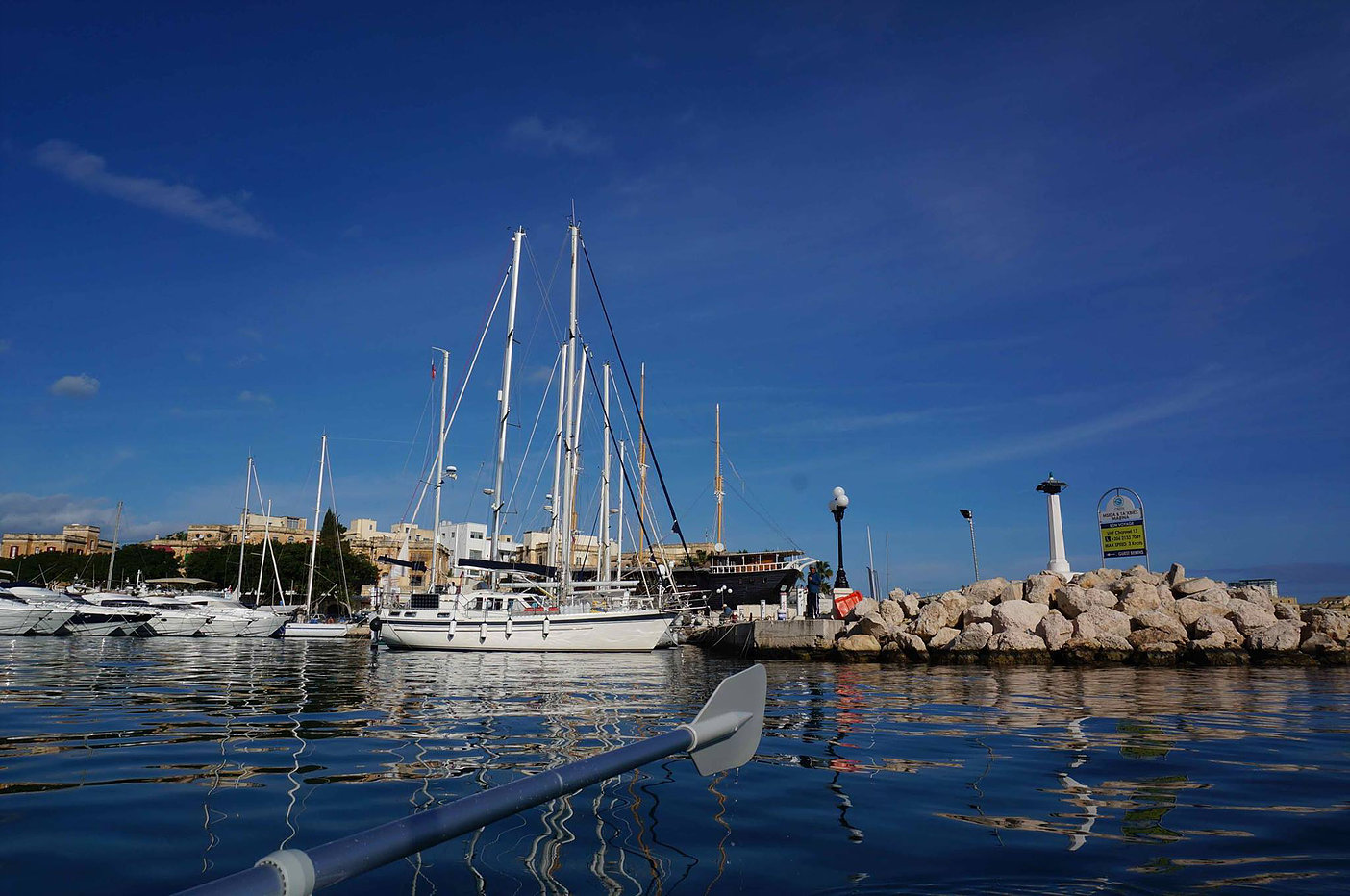
Lady Mary in Ta’ Xbiex Marina, Malta
4. Fuel
When we have enough time and patience, we wait for wind of the strength and direction we need, then go on our way. Our main engine is the sails. Cost of travel: 0.
The diesel fuel our fairly thirsty engine loves costs €1–1.5 per litre.
In the Canary Islands it is €0.9. The engine burns about 5 litres per hour, during which the yacht covers 6–7 nautical miles (11–13 km). We try to use the engine as little as possible.
5. Satellite Communications
The captain spent a long time choosing the best equipment in terms of price and quality. And here is a great article about it, the equipment and all the prices:
Satellite Communications for a Circumnavigation
6. Internet
Whenever possible, we use shore-based Wi-Fi. We have an antenna on the mast to boost the shore signal. But lately it has not been boosting much of anything, even though it is in working order. Internet became more expensive after Europe:). In Panama, we bought 3 GB plus WhatsApp and Facebook for $15. In the Galápagos, Ecuador, 10 GB costs $10, and now the package includes only WhatsApp.
7. Visas
The website section
“Visa Matters”
The most expensive visa in our history is for the Galápagos Islands—from $1,000 to $3,000, depending on how many islands you want to stop at.
The other expenses are not particularly different from those ashore—clothing, entertainment.
Total Budget
In our experience, as a family with two children, if you do not indulge yourselves too much and are not carrying out repairs, the cost of living on a yacht is from €200 per person per month. In the event of major repairs or upgrades to the boat, the figures can reach five digits, or even six 🙂
Our house in the Altai Mountains helps cover some of the expenses; while we are away it has turned into the Gingerbread House® and welcomes guests, wayfarers and lodgers.
Welcome aboard 🙂
Ways for travellers to replenish their yachting budget are listed here — Where’s the Money, Zin? — Life on a Yacht.
If you found this article useful and would like to thank the authors but do not know how, click the button below 🙂