
From the Travely-Family archive · Atlantic
The Tale of How We Sailed to Senegal Without a Visa
An original publication from the former Travely-Family website. This English translation was preserved from the technical-site archive without editorial rewriting.
Getting a Senegalese visa on arrival by yacht. The captain’s notes
When it comes to visas for Russians travelling to Senegal, the internet offers three versions:
— Timatic and Wikipedia: no need to worry for 90 days, — travel websites: visa on arrival, — yacht travellers have described the application procedure. Somewhere, a figure of 50 euros per person for a Senegalese visa cropped up.
We decided to play it by ear.
Formalities
We dropped anchor and hoisted the yellow flag. The crew stayed in quarantine while the captain went ashore to complete the formalities.
The water taxi was a five-metre boat with an outboard motor and a black pilot. The lad proudly displayed his overalls bearing the letters CVD, proving that he wasn’t some dodgy freelance boatman but a bona fide yacht-club employee.
At the yacht club, another black lad, whose English vocabulary was five words larger than the boatman’s, copied my documents and sent me with an escort to the taxi rank. The escort explained to the driver where to go, and the battered yellow Citroën whisked me off to the Comissariat Special du Porte.
Currency exchange
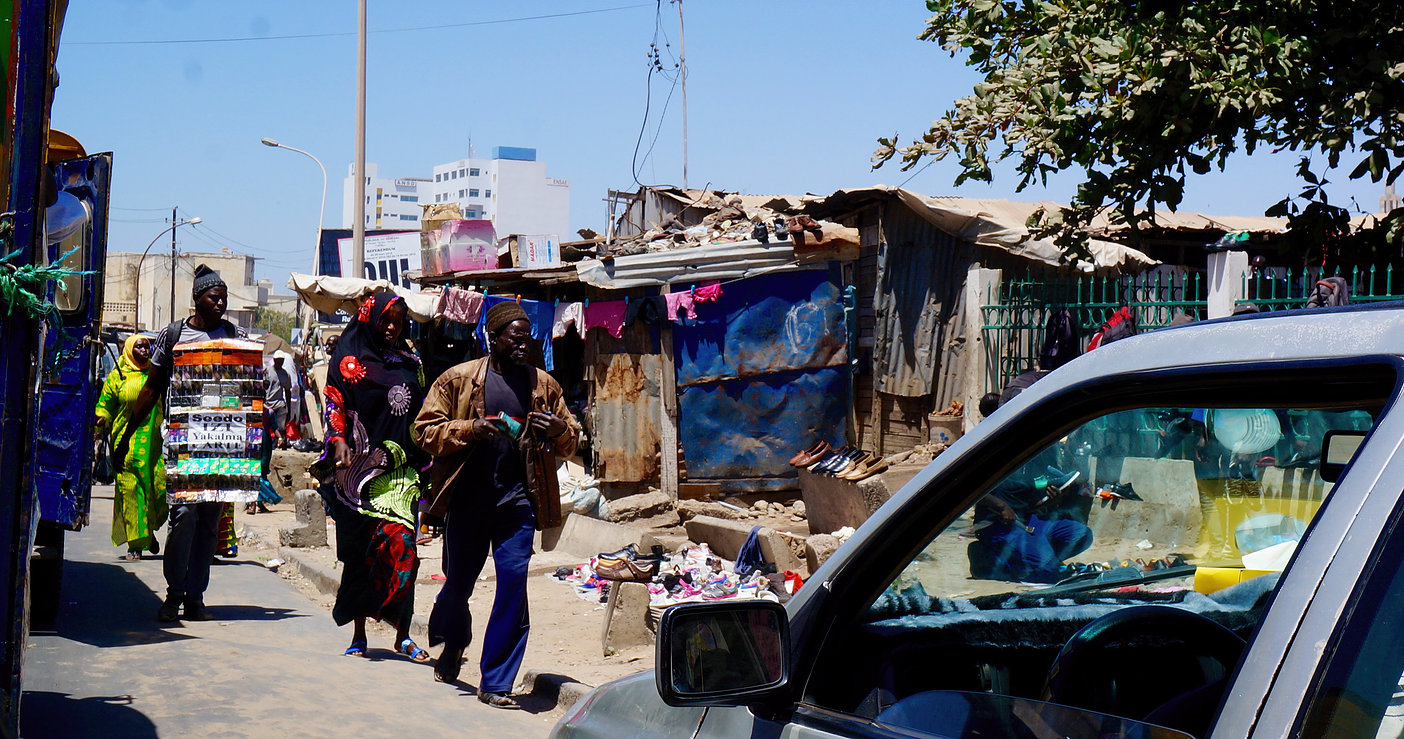
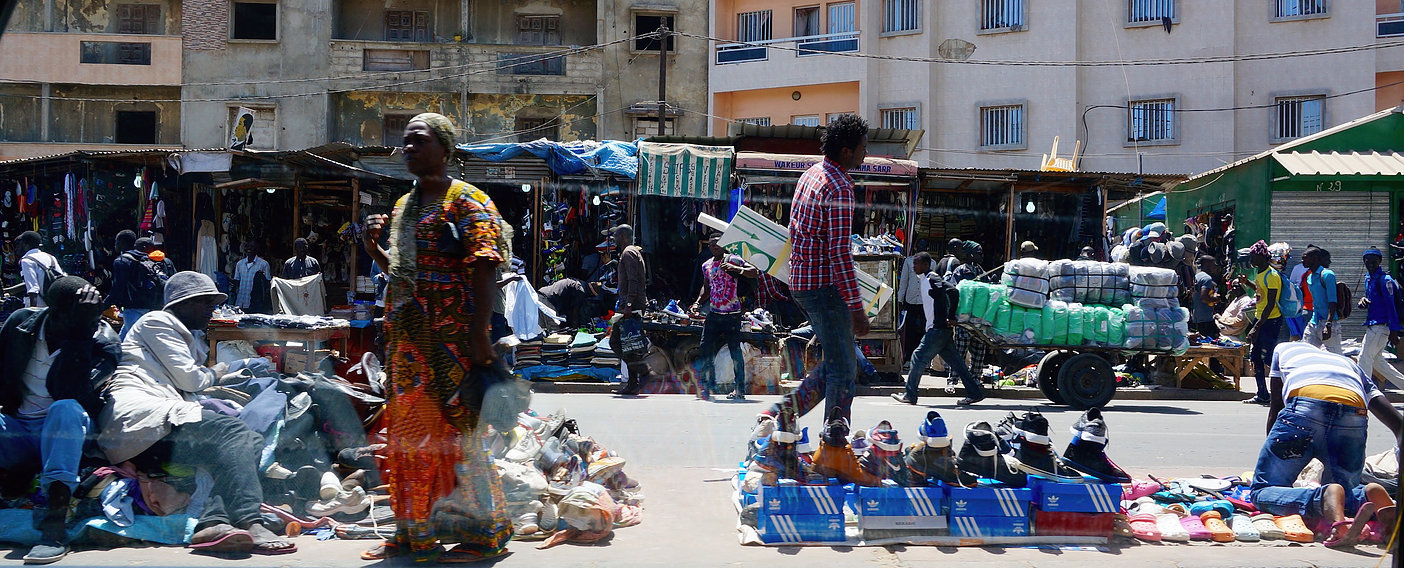
The first task was to get hold of some local money. The taxi driver said that the banks were already closed—it was afternoon—and deftly turned into the depths of the slums and fish markets.
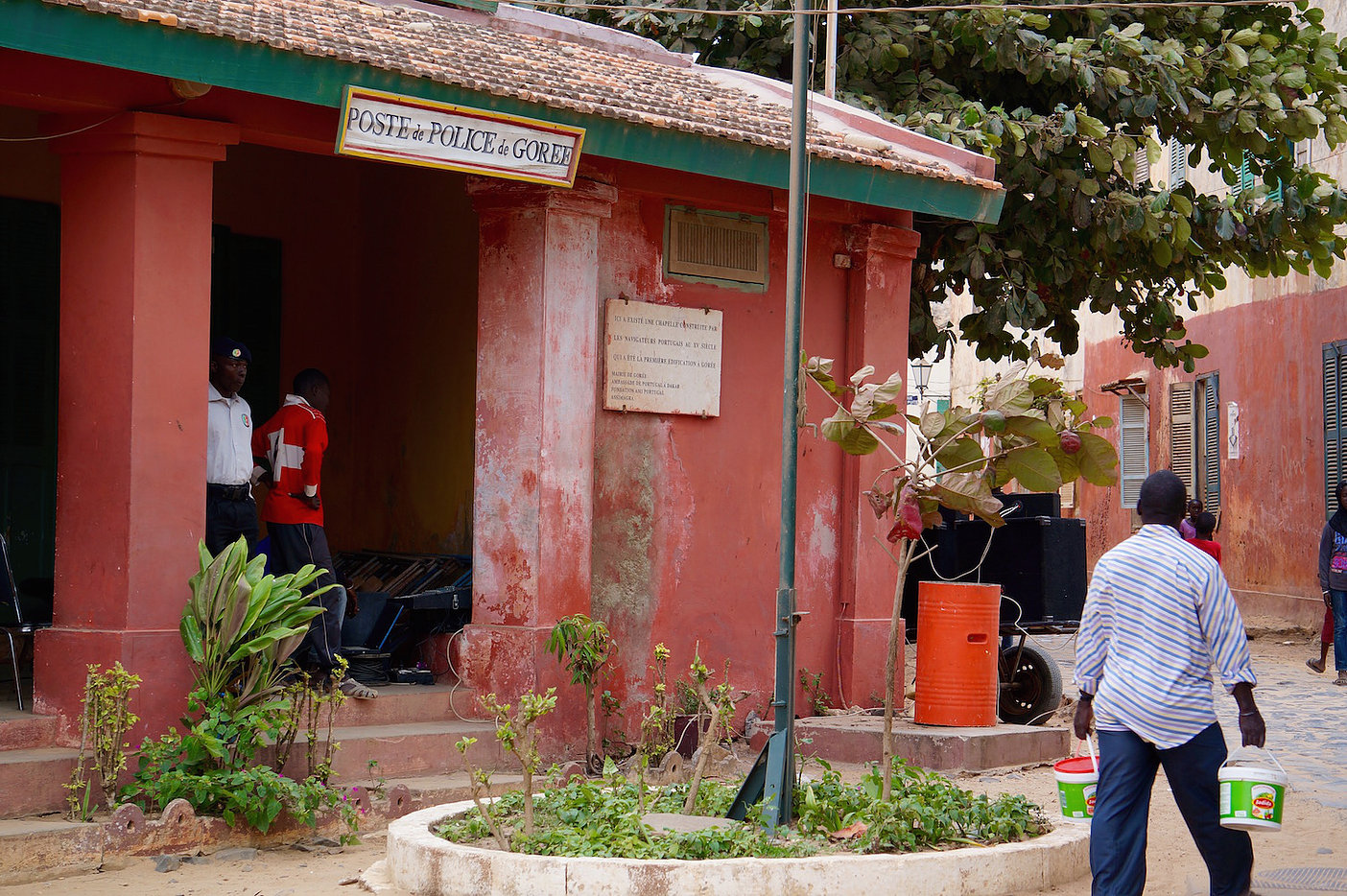
We stopped right in the heart of a poor district, beside a shop with barred windows. I even tensed up a little. But then I remembered, just in time, that my 150 euros were hardly cause for concern, either for my personal safety or for my worldly goods.
Everything went perfectly: a few words from the taxi driver, and the barred door opened. I changed a hundred euros at a rate that, as it turned out, was better than the banks offered. We drove out of the slums without incident.
Anyone arriving by yacht has to visit two establishments to complete the formalities:
the Commissariat du Port
Customs
Comissariat Special du Porte—the Port Police
It very much felt as though the crew of Lady Mary had arrived in a visa-required country without visas. At the Commissariat, the entire vast machinery of Senegalese corruption stared expectantly at me through the eyes of a well-fed policewoman who spoke fluent English. The lady leafed through the passports, looked at the boat papers and crew list, then pronounced gloomily:
You don’t have Senegalese visas.
I nodded in agreement.
Wait. Take a seat.
I sat down on the bench opposite, where three other people were also awaiting police verdicts. Ten minutes later, she called me over:
Captain, come here, please.
I went up to her.
Where have you come from, and where are you going next?—as though she hadn’t just studied all my documents three times over. I answered and smiled. The cycle began again:
Wait. Take a seat.
This happened three more times. Schooled by Southeast Asia, where time flows very gently, I waited.... Well, I wasn’t in any hurry. If things went badly, they would simply deport me. Fine, I’d go to The Gambia. In the very worst case, I’d have to visit a Senegalese prison, after which, obviously, they would deport me as well. And again—I’d go to The Gambia.
A new turn in the conversation
On the fifth round of the same questions and answers, this emerged:
You need to buy a visa.
Since I would have preferred to slip into Senegal without a visa, I pretended not to be interested. She began telling me that I had to go through a special agent, like all arriving vessels, and obtain visas with his help. I countered that mine wasn’t a cruise liner, just a small sailing yacht, and that I had neither the money nor any reason to pay for the formalities:
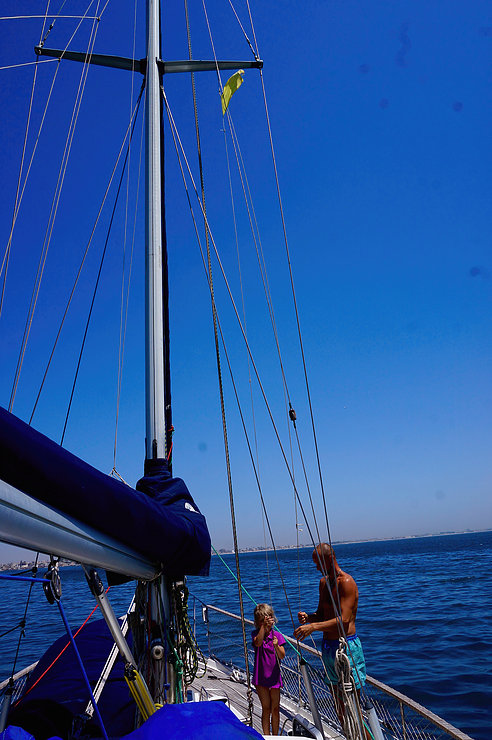
I’m only here with my family, guys. Look, here’s my younger daughter!—I jabbed at Lada’s passport photo.
Wait. Take a seat.
She made a phone call. The only words I understood from the conversation were Lady Mary. She beckoned me over again:
We can help you—we’ll stamp your passports “Transit.” That’ll be 500 US dollars.
My widening eyes spoke more eloquently than words:...
All right, make it 100.
“100 is closer to reality,” I thought, and offered 50.
50 is too little. There are four of you—25 each. Sit down and think about it.
I sat and thought. About ten minutes later, she called me over:
Well, have you thought about it?
Agreed, I said.
Let’s go into the back room, the guardian of law and order beamed.
I handed over the baksheesh. She stamped “Transit” in the passports.
What does that mean? I asked.
You can remain here aboard your vessel until you leave for The Gambia. (We did eventually leave for The Gambia a month later, but before that we also visited the Senegalese wilderness upriver along the Saloum.)
For how long?
She shrugged uncomprehendingly...
A month?
She nodded.
Could it be a year? I asked, getting cheeky:))
Yes! she smiled. Just don’t go ashore!??? But I need to buy provisions, and I want to visit museums!
Ahhh, you can buy provisions. You can visit museums too, just don’t go to nightclubs!
Well, I’m not playing by those rules... I refuse to stay in Senegal without nightclubs!... 🙂 I couldn’t understand why nightclubs were so out of favour, but nodded obediently.
Do I need some kind of shore pass? I asked.
No, she said. You don’t need one; everything will be fine as it is.
I had heard that, after completing the formalities, the police might keep your passports and/or boat papers until you left Senegal. Nobody mentioned anything of the sort. I put away the passports, and, mutually pleased with one another, we parted ways. I caught a taxi back to the yacht club for 2,000 CFA. It was already too late to visit Customs that day.
Customs
Morning. On my way to the taxi, I forgot the French word for “customs.” I showed the address and wrote “customs.”
Get in, let’s go. We’ll find it.
We drove around Dakar’s port district for about 30 minutes, until yet another official from yet another department directed us to the port Douane—which is what they call Customs locally.
There was a surprise at the entrance: it turned out that the building was inside the port, and entry was allowed only on presentation of a seaman’s book. After ten minutes of explaining why I needed to visit Customs and whom I needed to see, I finally had the nerve to say:
I need to see the Douane boss—the head of Customs, that is.
They reluctantly let me through, following me with their eyes all the way to the entrance of the building. A security guard led me to an office where an important-looking officer nearing retirement age sat enthroned.
The same questions: where had I come from, where was I going next, and so on.
The Head of Customs
At that moment, a beaming man in an expensive suit came in and shook hands with the officer, then with me. He spoke to the officer in a language I didn’t understand, then asked me a couple of questions in good English—who was I, where was I from, was this my first time, and so on.
I’m from Russia, I said.
From my visits to France, I had retained one trusty phrase:
Parlez-vous russe?
At this point everyone realises that I’m not English, not American, nor even a resident of civilised Europe, and tries to recall every English word they know. The chap replied:
And do you speak Wolof? (That’s a local African language.)
Fluently! I replied. Absolutely fluently! 🙂
We all laughed and exchanged a couple of jokes. The officer stared in amazement and, after the visitor left, set about my papers with astonishing zeal. As he later told me, that had been the Head of Customs HIMSELF. The fact that instead of grovelling before him, as was customary, I had simply shared a hearty laugh with him seemed to raise me in the customs officer’s estimation.
The security guard, summoned for the purpose, took me to the local photocopy shop, where we made copies of the passports and other papers, and then to the accounts office to pay the official 5,000 CFA customs-clearance fee.
The customs officer told me that the one-month permit to stay could be extended for another month when it expired. But some French acquaintances said it could also be extended for six months, at a cost of about 200 euros. We weren’t planning to stay here that long, so it wasn’t relevant for the time being. Although... who knows....
While I was clearing Customs, my taxi driver was fined for parking illegally. He had tried to wait nearby so that I wouldn’t overexert myself walking back to the car. Oh well, it had been a good day, so I reimbursed him for the fine.
In the end, I paid 7,000 CFA for the whole trip—we had agreed on 5,000 CFA. 1 euro = 655 CFA.
And that, in fact, is the whole story of getting a Senegalese visa.
If you found this article useful and would like to thank the authors but don’t know how, click the button below 🙂