
From the Travely-Family archive · Atlantic
From Dakar to the Saloum. Senegal by Sailing Yacht
An original publication from the former Travely-Family website. This English translation was preserved from the technical-site archive without editorial rewriting.
From Dakar to the Saloum
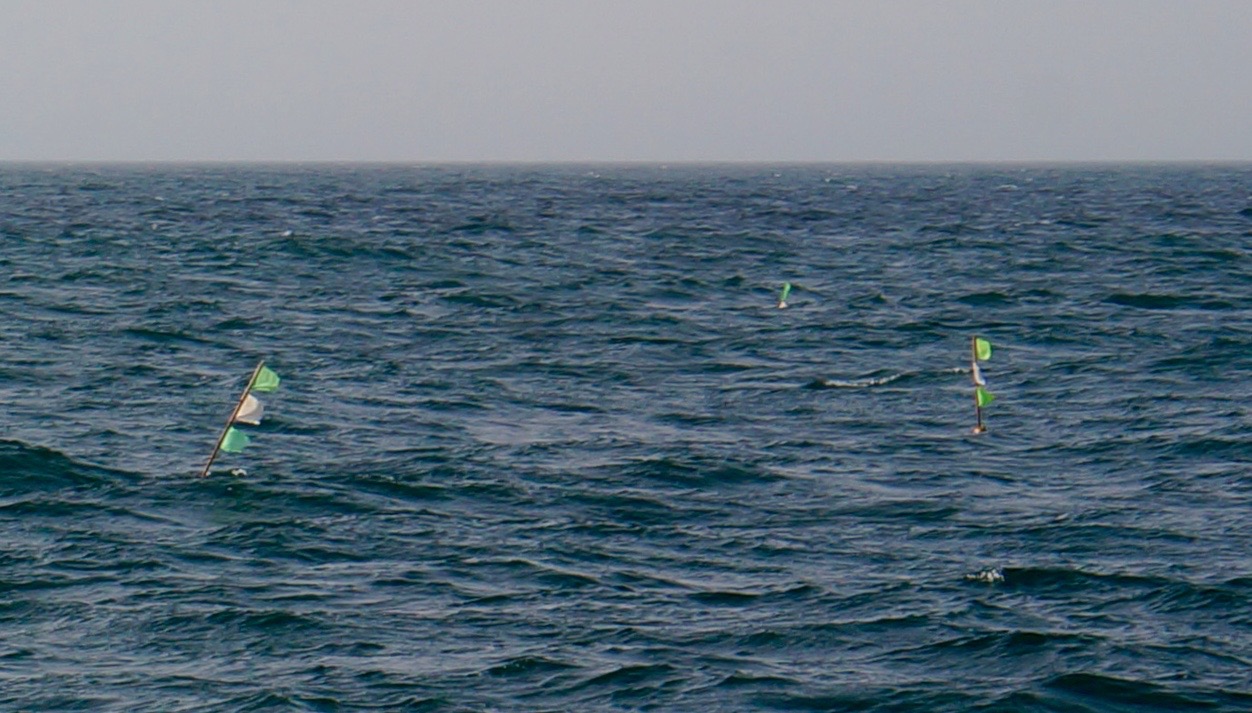
It is not worth sailing from Dakar to the Saloum at night: the waterways are thickly laced with fishing nets. Your brain and eyes get a workout the whole way with a simple little game of “Find the Matching Buoy.” The winner gets through cleanly. The loser tows the nets behind them, complete with buoys, catch, and the fishermen’s curses.
It is 60 miles to the Saloum River delta.
We set off after dawn, risking having to anchor at dusk wherever it happened to catch us. We are flying along at 6–7 knots as if on tarmac: the trade wind is blowing in the right direction, and the waves are hardly any trouble.
Encounters at sea
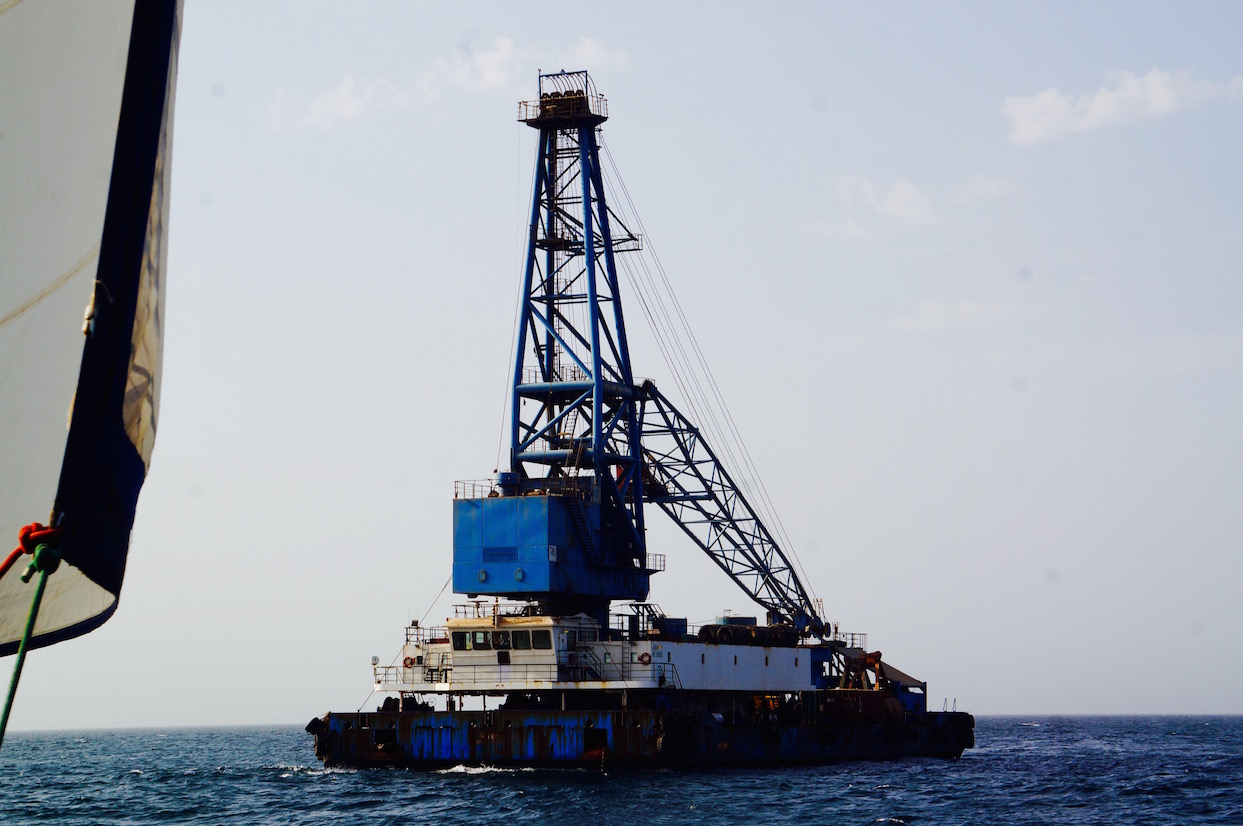
Some kind of platform off the coast of Dakar
We gaze curiously at the ships lying in the roadstead. If the camera had not failed at the crucial moment, we would have had a shot like something from the cartoon about Captain Vrungel, when the military squadron surrounded the Trouble. A tiny yacht beside a ten-storey bulk carrier.
High above, in a glass wheelhouse the size of an assembly hall, two men in striped sailor shirts are studying us through binoculars. We film them on a phone and wave. They wave back happily.
Soon the shore disappeared into the haze, and for the first few hours it seemed as though we were alone on the open ocean.
We had barely begun to get bored when suddenly a white jet aircraft roared directly over us. It made a rapid circuit, seemingly just above the mast, fell silent, and only then dissolved into the air. Why had it come?
“Maybe they think we attacked them?”
“But we’re sailing without a flag.”
“Well, so they don’t even know who attacked them?!:)...”
A chill ran down my spine: what if they come back?...May there always be peace.
A couple of hours later, the illusion of the open ocean began to be broken by traditional Senegalese motorised pirogues, adding new structures to the already dense palisade of nets and buoys.
The ocean off the coast of West Africa is studded with nets
The big wash
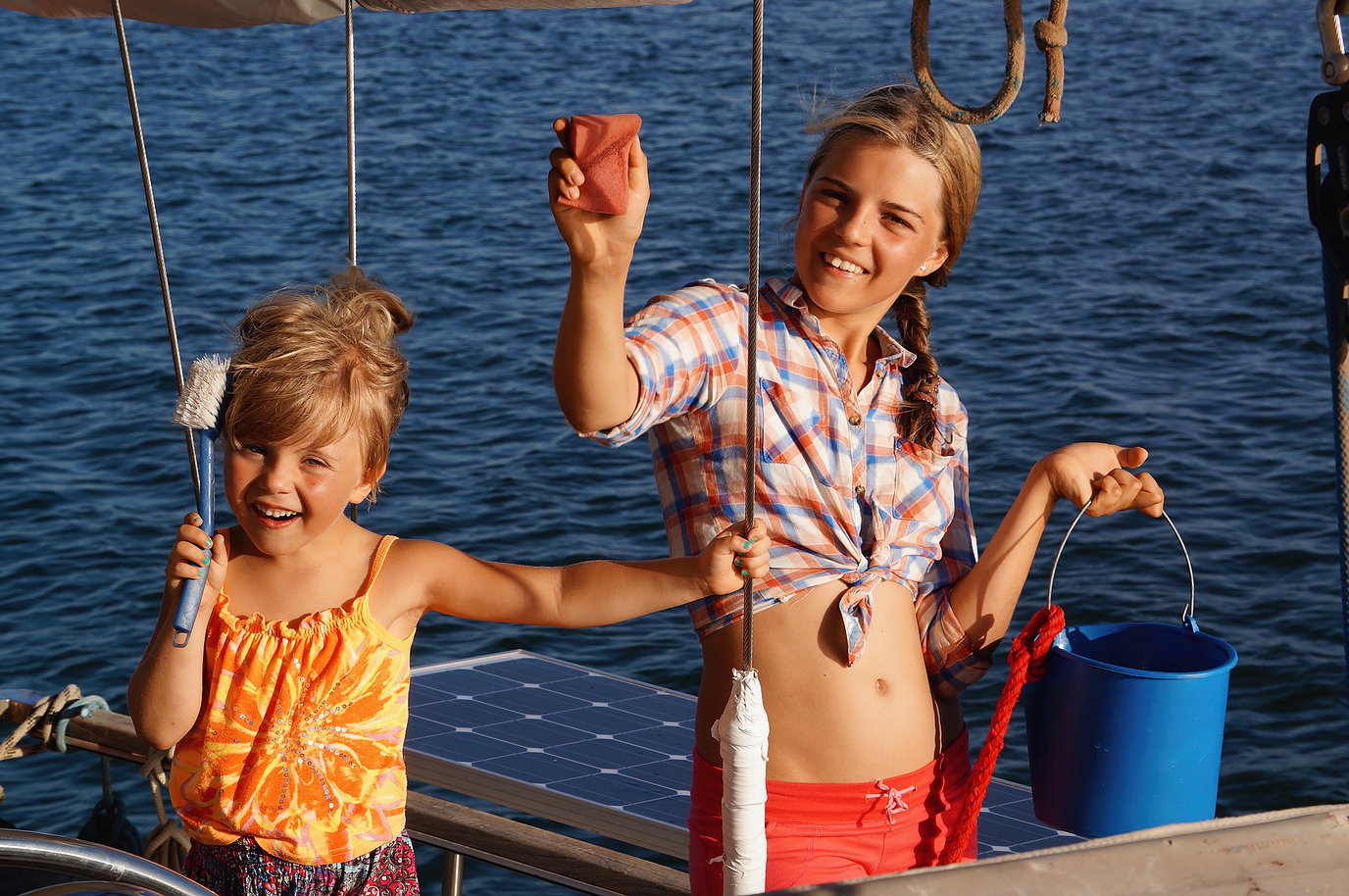
Unable to endure the yacht’s plaintive cries of “Wash me, I’m itching all over!”, the crew embarked on a major clean-up. Very timely, too—after three weeks in Dakar under bombardment from birds and sand-laden winds. The tattered flag, now grey-blue-red, was trimmed and sent off for a rinse as well. Only after that would it be safe to mend it.
The longer you live while travelling on a yacht (not to be confused with passages, even multi-day ones, from marina to marina), the more your perception undergoes a metamorphosis: after scrubbing the deck with seawater, we rejoice like children—the house is clean again. Laughing, we remember how, after several days among the waves, Nastya and I used to perch cautiously on the edge of a salty bench, eager to wash everything down with fresh water.
Now, all we need for comfortable life aboard is a few buckets hauled over the side, some brushes, and sponges.
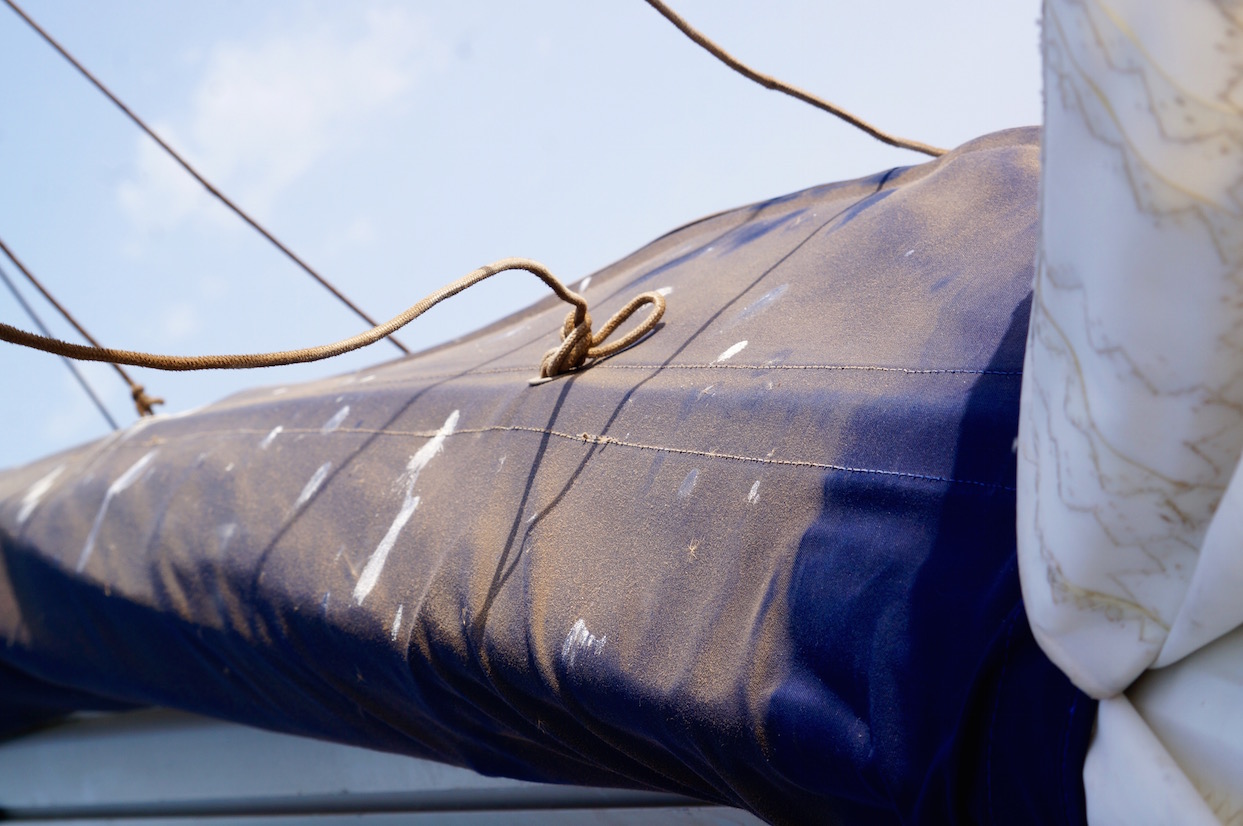
Of course, we would love to berth beside a fire station and blast megatonnes of pressurised water right up to the masthead. There is no other way to wash off the rusty dust. But for now, this will do.
This is what sail covers look like after a yacht has been berthed in Dakar
From Dakar to the Saloum. Losses and finds
In the course of the clean-up, the captain sent a bucket to the bottom. A good bucket, too—a proper marine one, with a sturdy handle and a ring for the line. We sadly watched the end of the red rope disappear into the depths, and then we really let ourselves go:
“Go on, Nastya, nag Dad—it’s your turn now.”
For a long while, mournfully, we listed the virtues of the lost bucket, lamenting and hinting that perhaps the captain ought now to sit quietly and contemplate the full depth of his guilt. Even Lada chimed in: “You know, Dad, it was our money you sank.”
We decided that next time we went to a café, Dad would have to sit there hungry, since he had just given his portion to Neptune. To which Andrey replied that he had treated Neptune with our money.
And so, with jokes and banter, we passed the middle of the day, managing along the way to sink one of my yachting slippers as well. A bright orange speck, it bobbed merrily in our wake. Lada and I had only just filled our lungs, ready to start wailing, when the captain ordered the engine started, the landing net made ready, and the yacht turned around. We rescued the slipper, for good measure whacking Nastya on the head with the net in exactly the same spot where the end of the boathook had hit her that morning. Andrey had been using it to remove seaweed from the anchor chain.
We’ve arrived
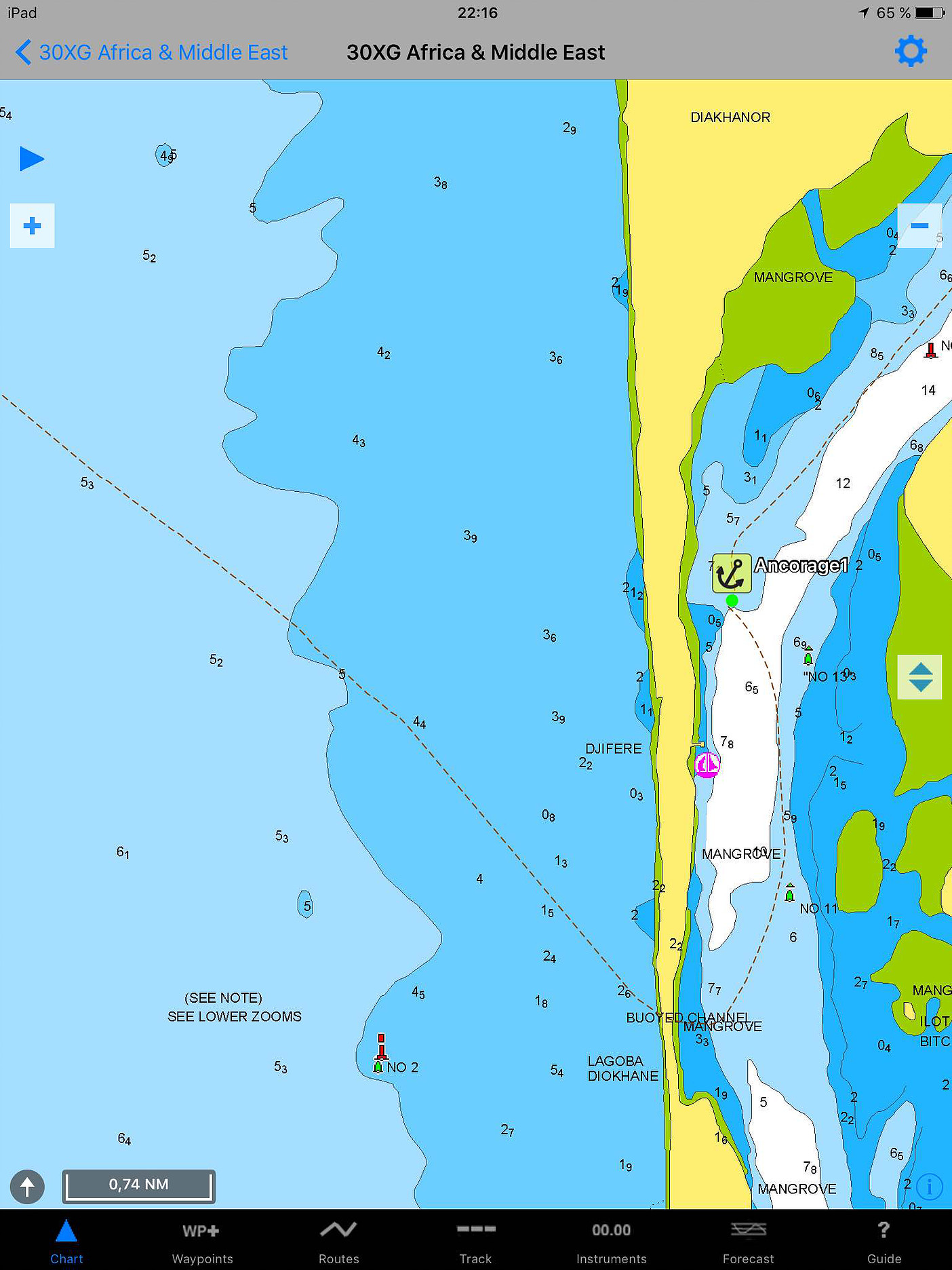
By evening, the palisade of nets had grown denser, and our tacking more virtuosic. Closer to shore, shoals were added to the nets. For the first time in our seafaring history, I peer tensely into the water from the bow of the yacht, afraid I might see the bottom.
We make our way as if through a minefield, dodging shoals, nets, then more shoals... Strangely, on the track our route looks almost like a straight line.
Dusk is falling, and the entrance to the channel is still a long way off. Buoys are marked on the chart, but at the entrance to the Saloum delta our chart shows an unbroken yellow band of land. The buoys are on top of it.
Judging by the breaking waves, there is one hell of a shoal dead ahead. We go around it under engine by now (back then, we had no idea just how rich our journey into the African interior would prove in shoals—and in ways of getting off them).
At last, a green buoy appeared, and a red one very far away. The depth sounder instantly went from 3 metres to 10, and Lady Mary joyfully raced down the fairway into the night.
We passed the entrance to the river mouth, separated from the ocean by a long, narrow spit. At the tip of the spit are a warehouse and cold-storage facilities for fish. The smell is exactly what you would expect.
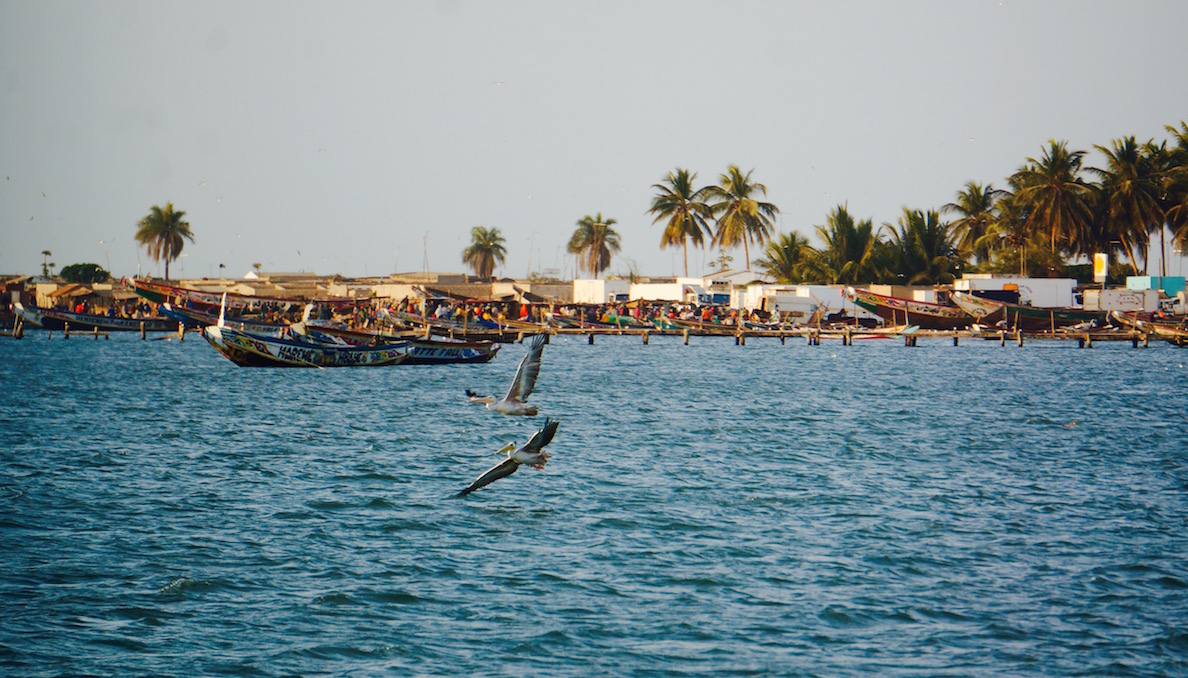
A tall bonfire is burning on the shore, presumably so that we do not get lost. We drop anchor. Opposite us, a fishing village bristles into the river with the bows of its boats.
Darkness falls. Phew—we made it!
The continuation is here >>
This was the sailing yacht Lady Mary crew’s first morning at the mouth of the Saloum River Joy to everyone!