
From the Travely-Family archive · Atlantic
Senegal and the Senegalese — from the Anchorage
An original publication from the former Travely-Family website. This English translation was preserved from the technical-site archive without editorial rewriting.
The Senegalese at the Dakar anchorage
On our “arrivalling” 🙂 in Senegal, Lady Mary disentangled herself from all the traps set by the local fishermen and headed for the anchorage of the CVD yacht club on the outskirts of Dakar.
The story begins here — Canaries to Senegal. Arrival
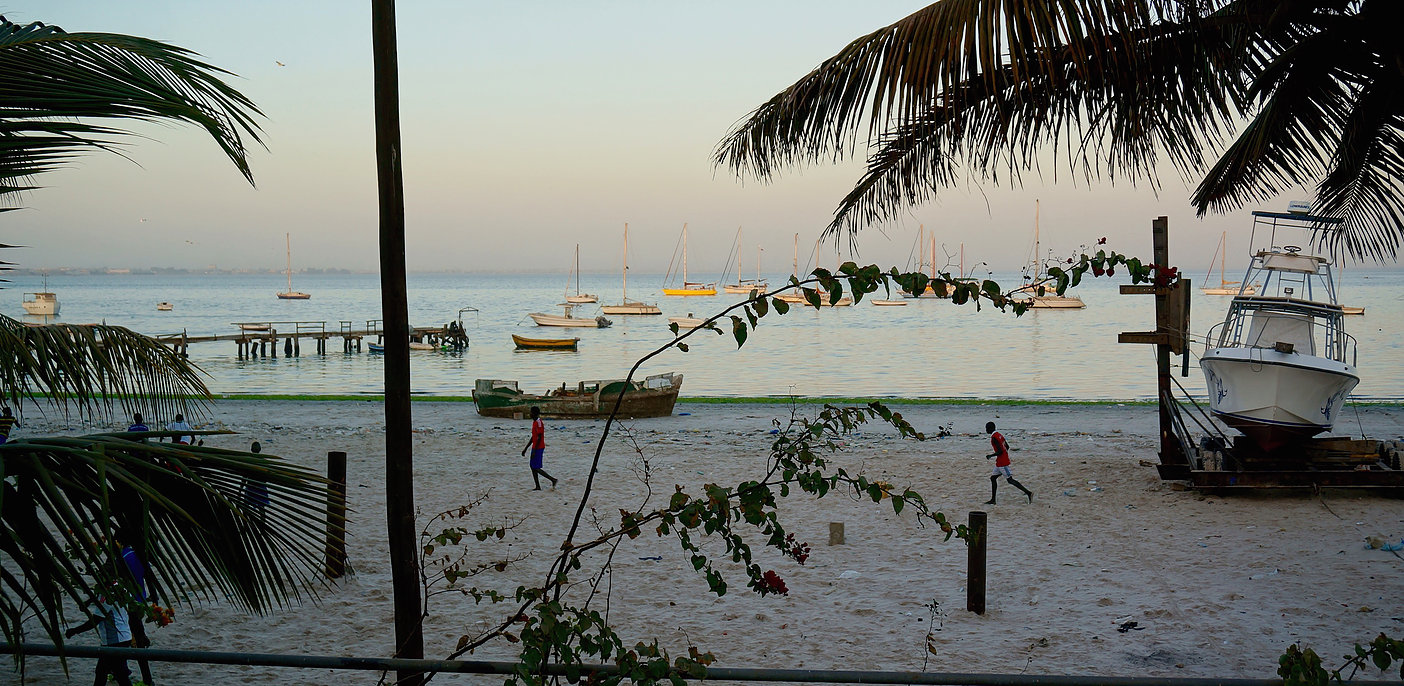
There are about fifteen yachts at the anchorage, and at best only half of them are inhabited. The other half are inhabited by numerous birds.
The two outermost boats on the seaward side are yellow submarines—yachts. As we parked at the yacht club anchorage, we stared hard at the outline of one of the yellow yachts: we had seen her somewhere before.
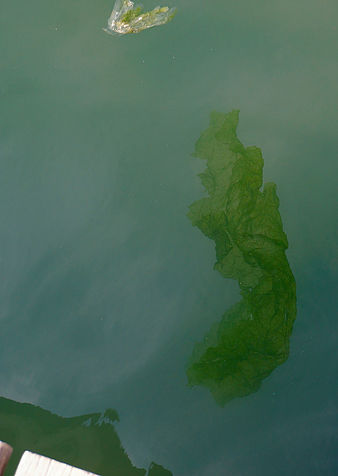
As we lowered the anchor into something resembling miso soup with green seaweed, the navigator and I placed our bets: was it them or wasn’t it? Though what bets could there be when we had no disagreement—it was most likely them. At the grinding of our anchor chain, children poured into the cockpit of the yellow yacht—a girl of about twelve and two younger boys. No doubt remained.
“Hurrah!” we cried.
The children waved a bonjour back at us, disappeared into the saloon, and did not appear again. As we later found out, they have lessons in the mornings.
The yacht “BABA,” with a family crew from France
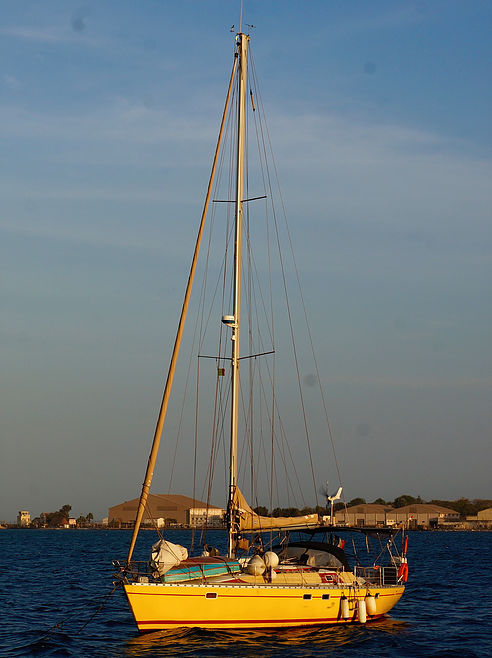
Charlotte is twelve, and her brothers are now ten and six. For the past seven years, the family has lived aboard their yacht, making their unhurried way from France towards Brazil. The children do not remember any other life. Every morning, their mother spends two or three hours doing lessons with them. Saturday and Sunday are their rightful days off.
Last year, our young sailors played with them at the marina in Agadir. That story is here — Yacht Kids and the African Heat
We exchanged contact details then and had long been meaning to get in touch.
There was no need to write. “BABA” arrived in Dakar from El Hierro a couple of days before us. In a week, they are planning to sail to the mouth of Senegal’s Casamance River.
We, meanwhile, plan to head up the Saloum River, then enter the mouth of the Gambia River. And even if we do end up in the Casamance, we really don’t fancy having to beat back upwind to the Gambia afterwards.
Marina. Dakar
Senegal’s capital has no fewer than two marinas—though not quite marinas in the usual sense.
The CVD anchorage—the French abbreviation for “Yacht Club Dakar”—is just beyond Dakar, in the suburbs.
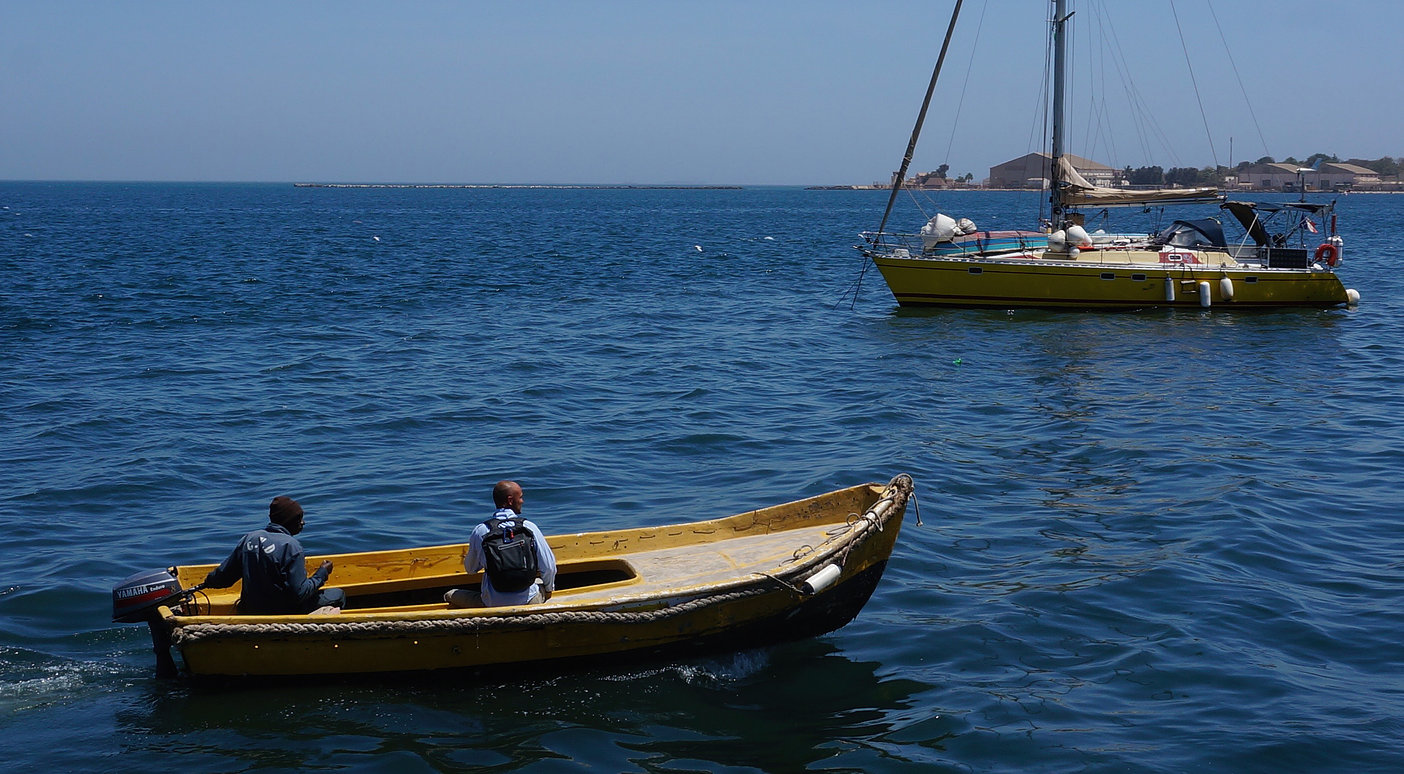
The depths are 2–3 metres. Winds from northerly quarters prevail. At night, a very damp wind whistles through; if you haven’t closed the hatch, the settee will be wet. By day, the sun is almost always scorching.
At half past four in the morning comes the first wake-up call, to the sound of the mullah’s chant: the overwhelming majority of the population are Muslim, and the mosque is evidently nearby. Almost every evening, the sounds of tambourines and African folk singing in chorus drift over from the shore.
Next to the CVD yacht club are a military base and two racecourses. Besides those, there are two-storey houses with tiled roofs and a couple of restaurant-bars—the legacy of the colonial era.
For local colour, there are shacks and workshops, a distinctly... um... fragrant fish market, a filthy beach and the sea. And very beautiful Black women in colourful clothing. They make a vivid contrast with the rubbish-strewn streets.
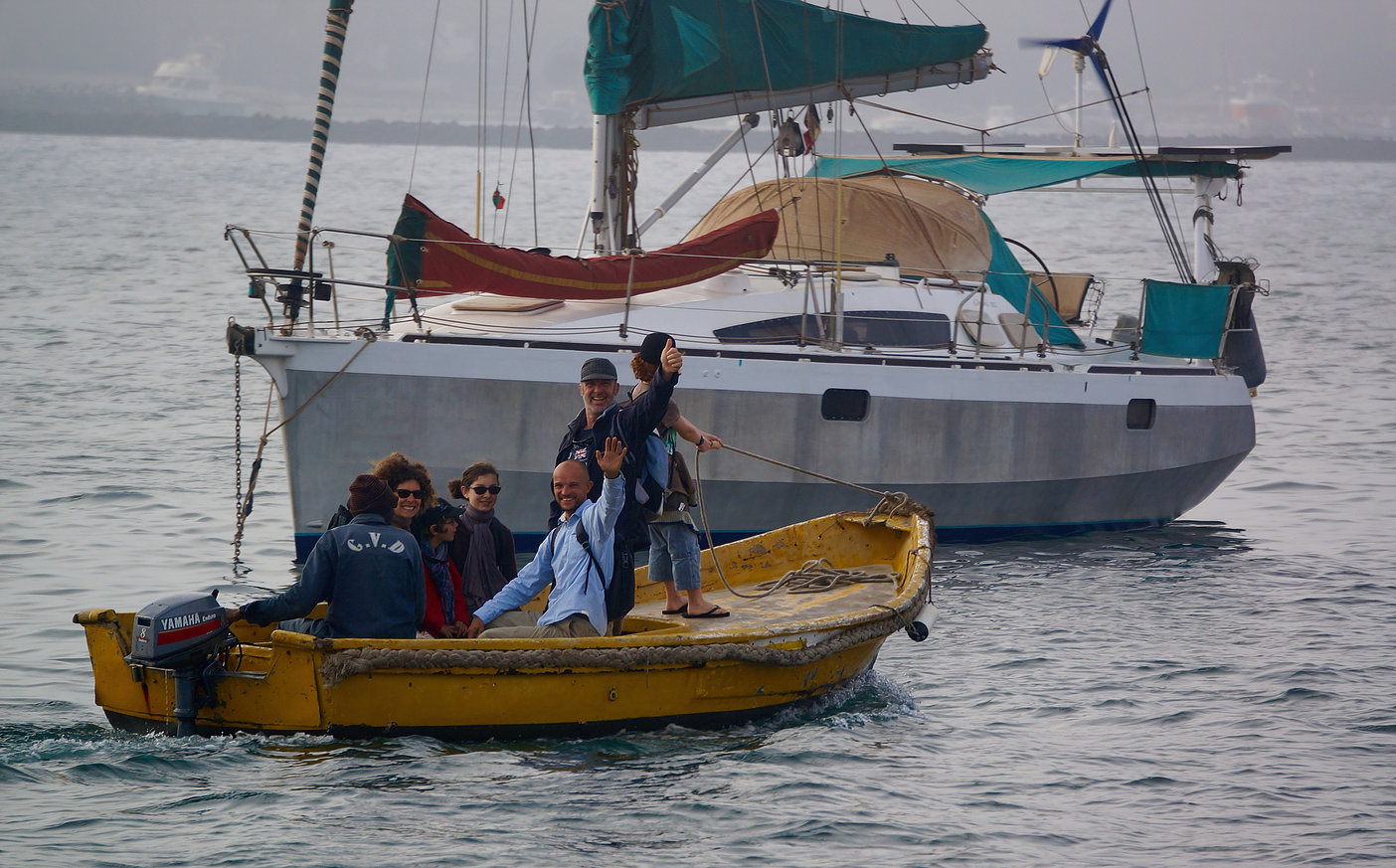
Every two hours, the water taxi sets off from shore, calls at all the inhabited boats, and takes the yachties ashore or back aboard.
On shore, there is a dreadful stench of rotten fish, or perhaps of seaweed washed up on the beach that looks like green scraps of polythene.
After low tide, the seaweed carpets the entire shore in a broad five-metre band.
Yesterday, it took us half an hour longer to weigh anchor: long streamers of seaweed had plastered themselves over all 30 metres of anchor chain. Enough miso soup for the whole crew.
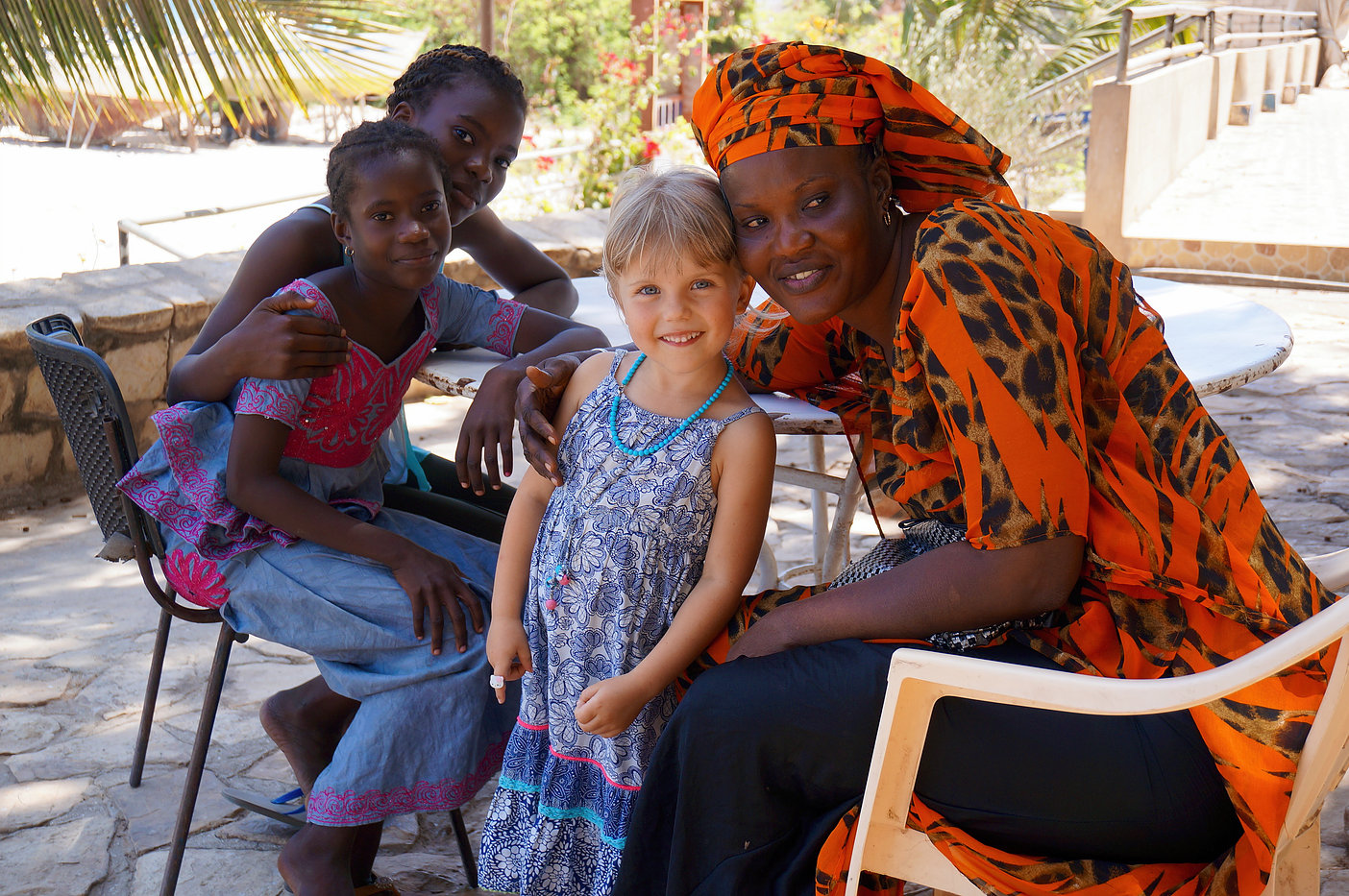
The water-taxi driver is called Moussa, and he does not speak English. But he now knows two Russian words: “spasibo” and “khorosho”—“thank you” and “good.” His good-natured face breaks into a smile when Lada says “Bonjour” to him.
“Bonjour, princess!” Moussa replies, and tells us that he has children too—a six-year-old son and a five-year-old daughter.
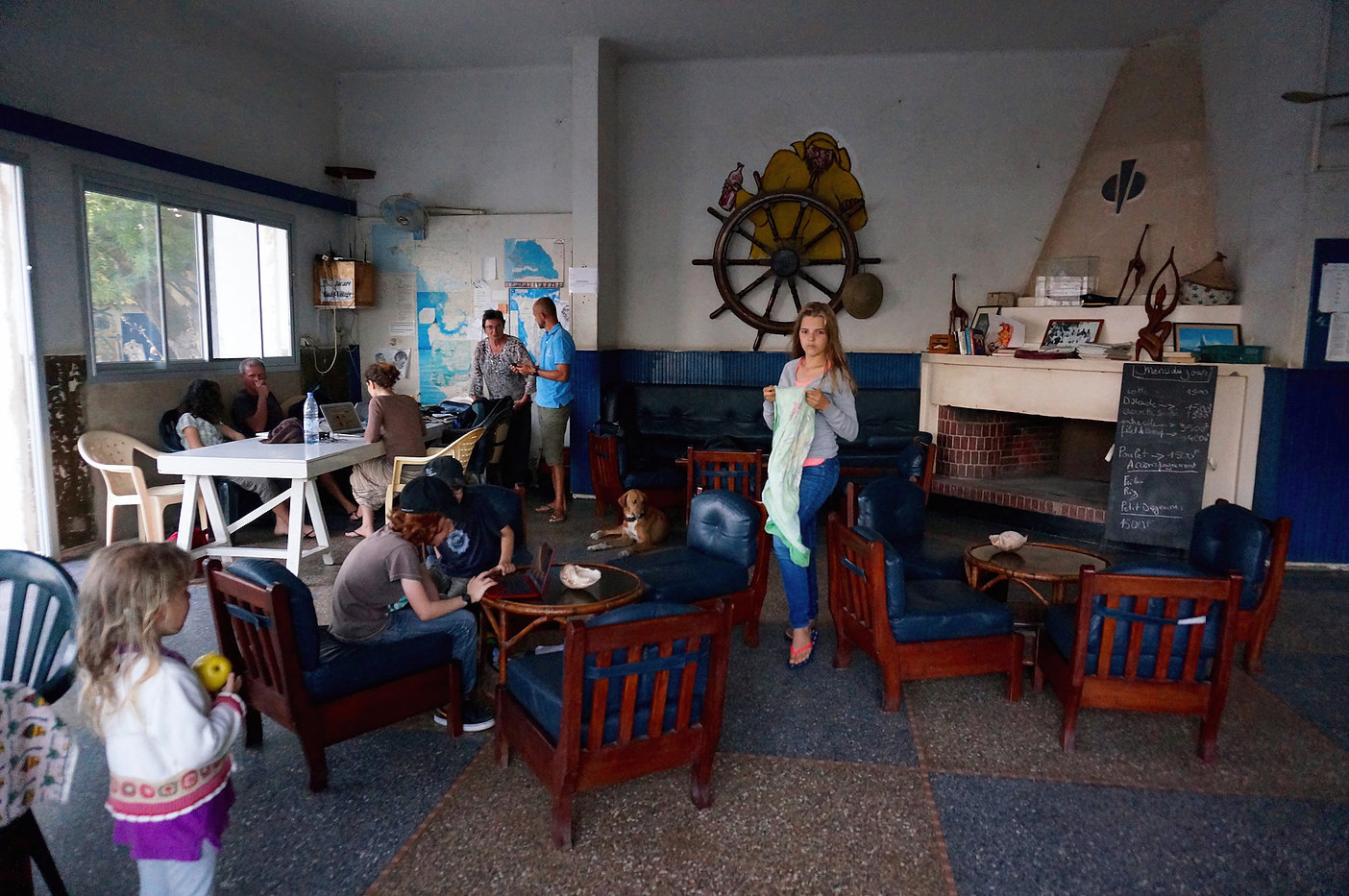
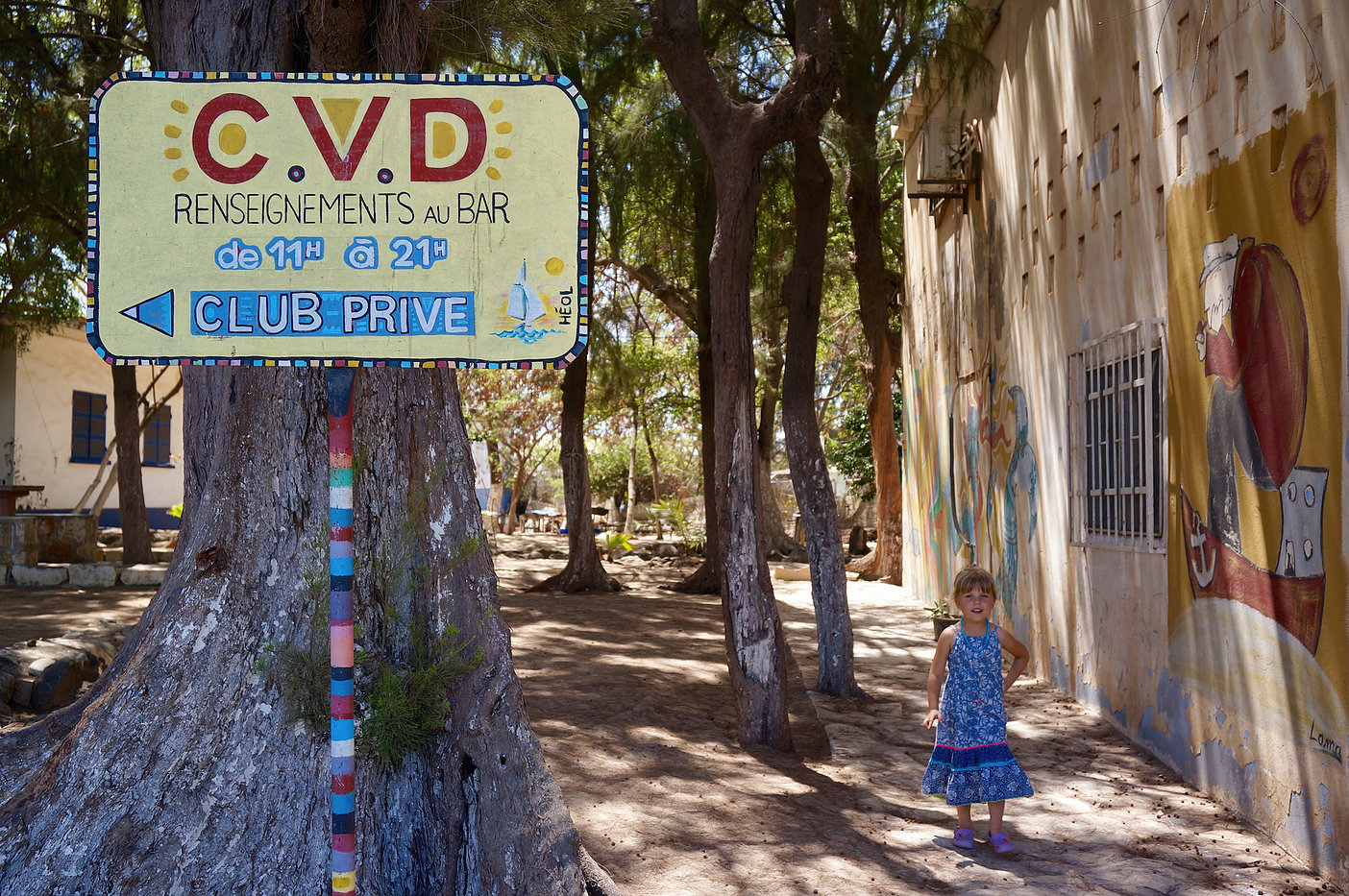
The CVD yacht club is highly colourful and looks like a little piece of a not particularly fancy Soviet-era Young Pioneer camp.
It has an office, a shower, a toilet, “rooms,” and a bar with internet access.
Here you can have sails repaired, buy any flags you are missing for the yacht and assorted trinkets, and fill up with clean water that smells only faintly of chlorine.
For 500 units of the strangely named local currency, CFA—the Central African franc—a chap in baggy trousers filled five jerrycans for us and carried them to the water taxi.
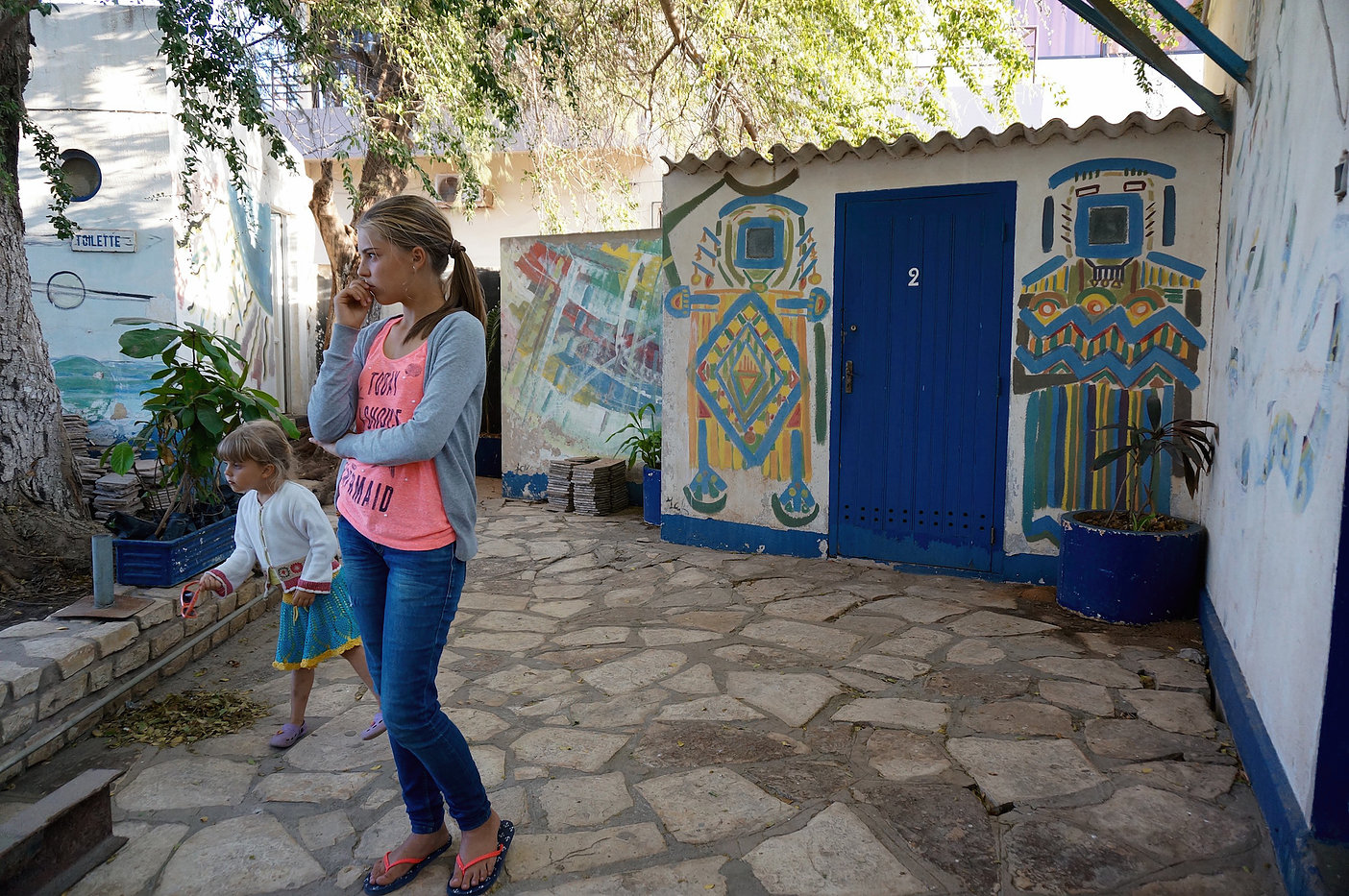
This is what the area in front of the shower and lavatory looks like:
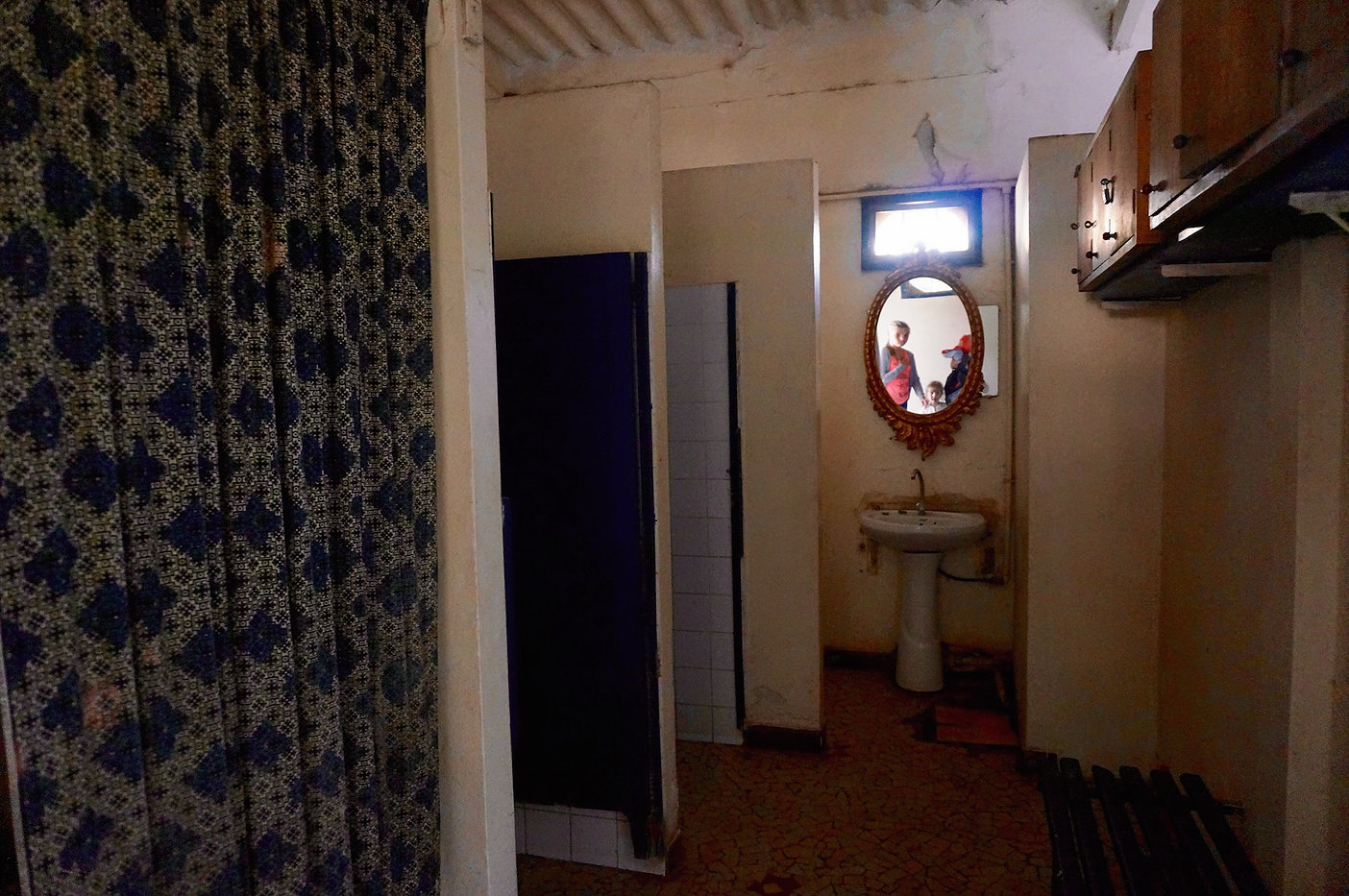
And this is the cool-water shower. A swarm of mosquitoes hides from the sun in there. The insects become extremely lively whenever someone wants to wash and mercilessly bite hygiene-minded citizens everywhere. Against the general shabbiness of the interior, a Louis XVI-style mirror gleams in its gold frame:
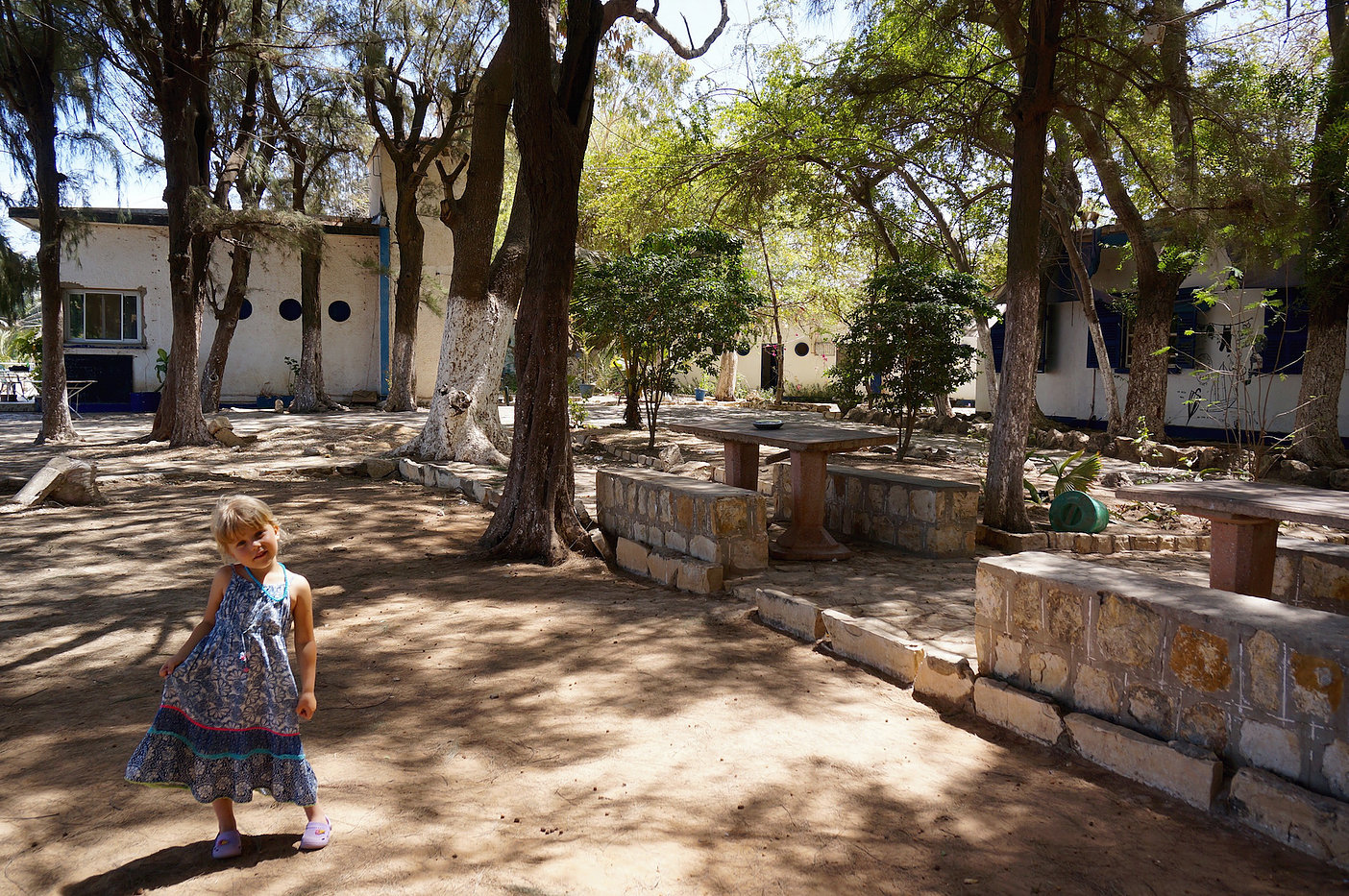
The yacht club grounds are clean, with benches and tables in the shade of large trees. If every African town were like the club grounds, it would all be very sweet. But alas....
The post-colonial era
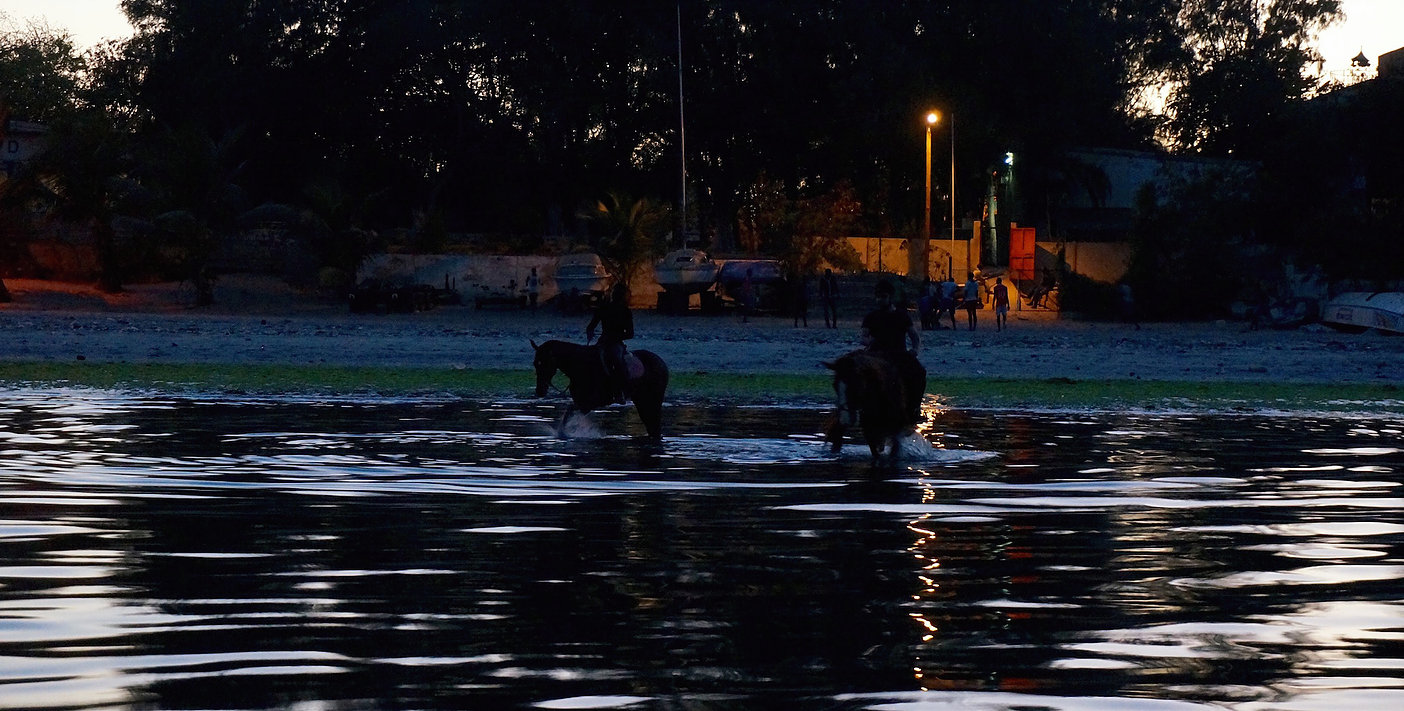
In the evenings, horses walk through the bay. It looks splendid and peaceful. In colonial times, equestrian sport was very popular, and this district was considered exclusive. After Senegal gained its freedom, the French gradually left, and everything slowly began to decline. In the 1980s, the economy finally collapsed—but at least freedom from oppression remained.
Senegal is now experiencing the beginnings of a revival. Phosphates and gold are still mined here, and factories are even being built with the involvement of our compatriots.
They say that to live in Africa, you have to love it. Then you will accept both the dirt in the streets and the local people, with all their unfamiliar qualities. If you don’t love it, you won’t last here.
Russian Senegalese. Fellow countrymen!
We had barely set foot on the African continent before setting off to explore the streets. Five hundred metres from the yacht club gates, an imposing man in a smart light-coloured suit greeted us in Russian—to be honest, I had thought it was completely impossible to meet any Russians here. He had stopped by the racecourse to pick up his wife and seven-year-old daughter.
Alexander turned out to be a senior manager at one of the joint ventures, while his wife Katya and daughter Masha were very sweet girls:). Lada and Masha immediately found plenty in common, both in their games and in their children’s conversations. During our pleasant acquaintance, we learned many finer points of local life that the internet had neglected to mention.
Opposite the racecourse is a decent little restaurant run by a Frenchman and his Russian wife, Natalia. She came to Senegal in the 1970s as a very young woman. We’ll go and meet her one of these days: we have never met a Russian woman who has lived in Senegal for 40 years.
The story continues here >>
🙂