
From the Travely-Family archive · Atlantic
From Senegal to The Gambia by Yacht
An original publication from the former Travely-Family website. This English translation was preserved from the technical-site archive without editorial rewriting.
Course: The Gambia
On our way back to the ocean along the Saloum, we tried to ride the ebb current and follow our own track, deftly skirting shallows, banks and bars. Once again, we began stopping by the mangroves, where even the 43-degree heat is not as exhausting as it is on the barren shores of the eastern Saloum.
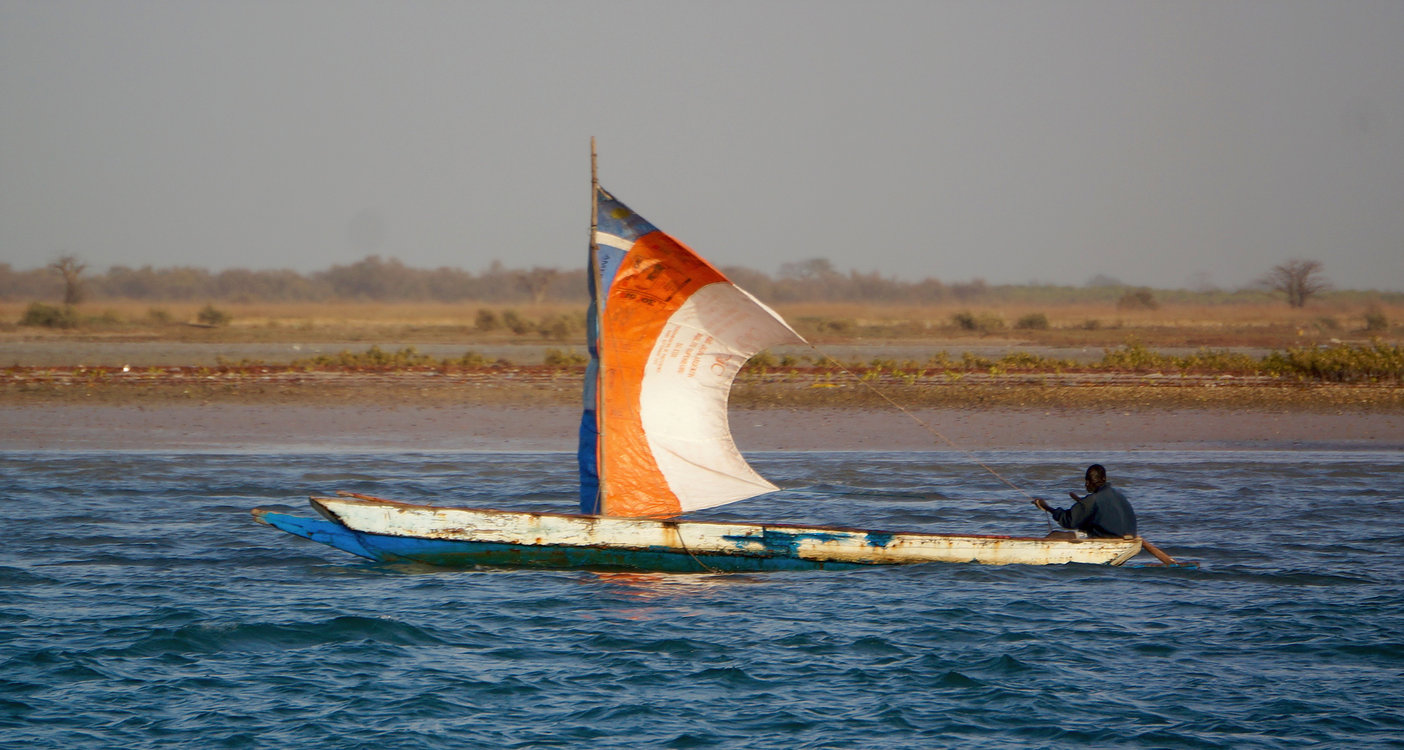
On the way, we bought some fish from a pirogue. The guys hooked onto our side without waiting for an invitation:
— Poisson (fish, Fr.)?
— Oui!
— Español? — (What was wrong with our “Oui,” I wonder?:)) — Yeah, we can do that. We can do English too.
— English?... Americanos?
— No, Russian. — So it turned out he wasn’t asking about the language, but our nationality.
They wanted 4,000 francs for a large fish. As usual, the fishing boat had ankle-deep water in it, a little bucket for bailing, something like a cauldron with coals, fishing tackle, poles, and a crate of fish on ice. We bought four small ones for 2,000 francs. We could identify only two of them—a barracuda and something resembling our perch.
Overjoyed, the captain promptly caught a fish of his own (his first and, so far, last in three months). But guided by humanitarianism and common sense (even we couldn’t eat that much), we released the catch back to its little ones.
Out into the Ocean
After four days at an easy pace under engine, we reached Djifferé—the very village on the spit at the entrance to the ocean. Here, for the first time since the Senegalese capital, we encountered another yacht. Four men, beer bellies, grim faces... no flag in sight. Everything suggested a forced stop because of a breakdown: the yacht’s engine was running constantly, while some kind of power tool droned inside.
We didn’t feel like going ashore in Djifferé: we had read that it was rather dirty and that there were many open-air latrines right on the shore. Besides, it was late; besides, we wanted to set off for The Gambia first thing in the morning...
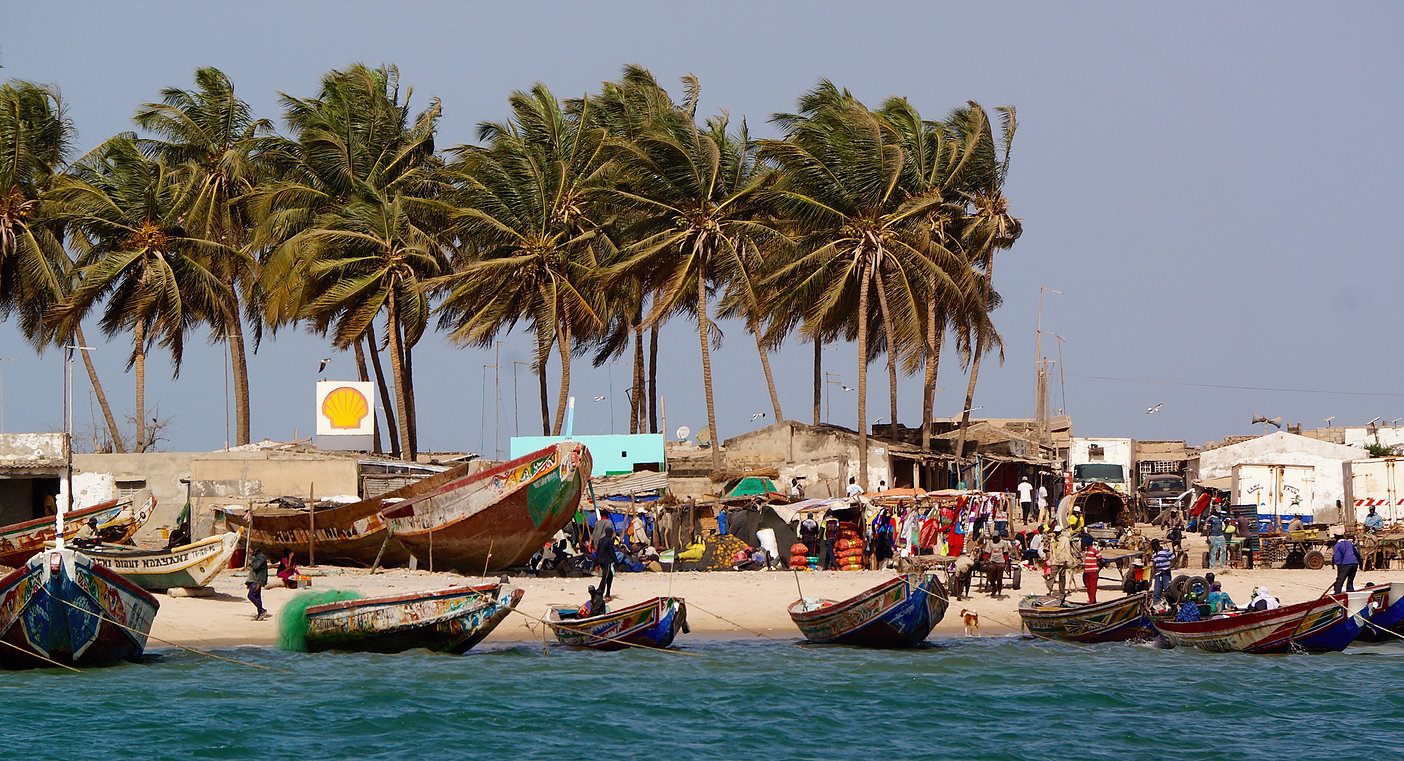
Djifferé Village
If you happen to sail into the Saloum estuary, it is better to anchor closer to the far end of the village, away from the fish market that operates until late. The rotten smells do not reach that far. And in the morning, the crew will not have to leap out of bed at five o’clock to an endless “dr-dr-dr-drrrrr.” We had already grown accustomed to the imam’s wailing, but a battalion of fishermen roaring past a metre from the windows long before dawn was not the most pleasant surprise for the sleeping crew. The smells of exhaust fumes, yesterday’s fish, and something that might have been paint or solvent puffed in through the hatches.
Noah’s Ark
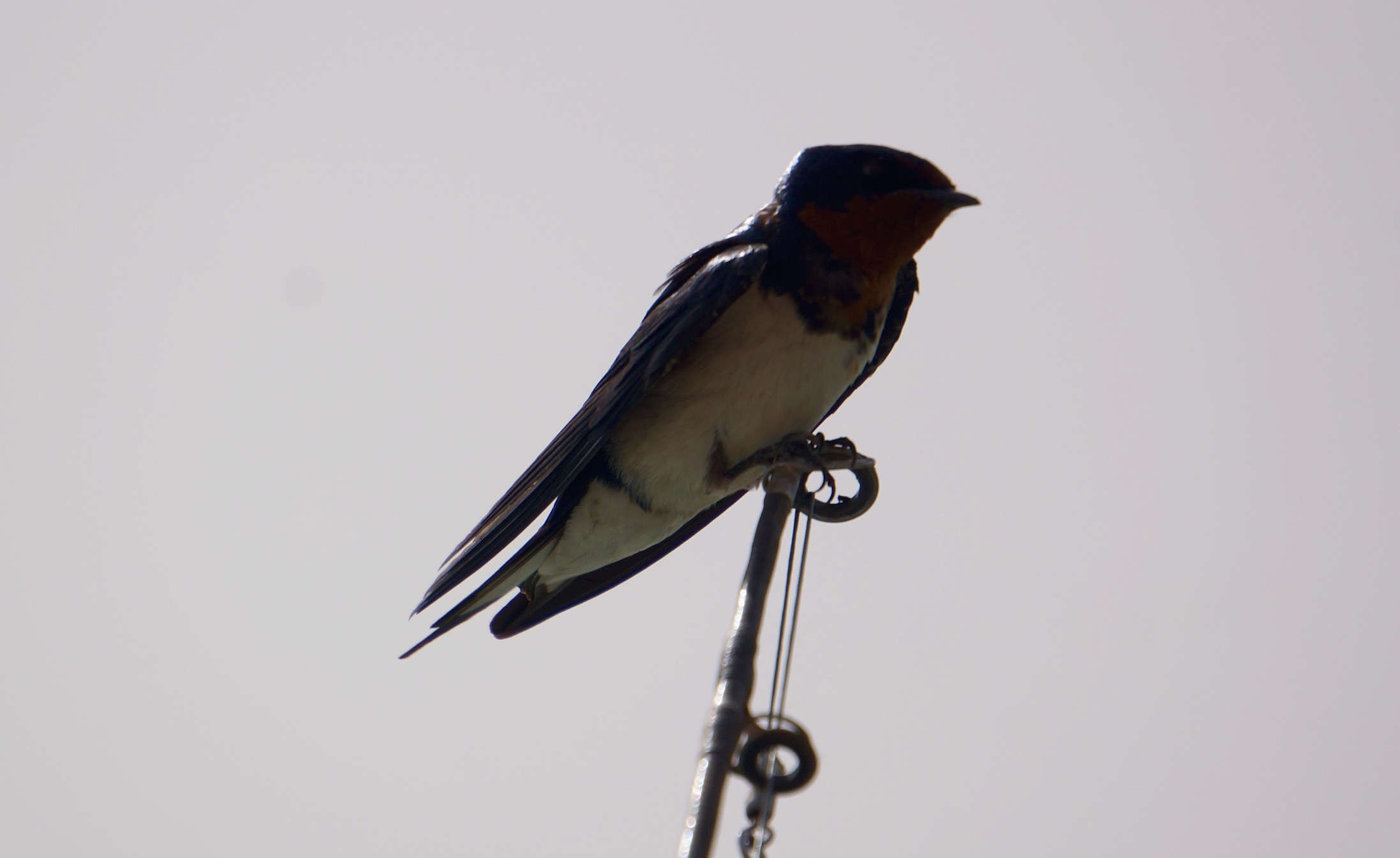
From Senegal to The Gambia, Lady Mary carried at least 13 species of insects: two kinds of dragonflies, flies, midges, some strange green and yellow-green bugs, biting white and black little beasties, as well as beetles and a wasp with a smaller wasp. A swallow with a burgundy throat and white belly rode out the sea passage at the masthead.
An Illegal Emigrant from Senegal to The Gambia
All the way from the Saloum Delta to The Gambia, the same little pilot fish raced ahead of us.
Banjul appeared toward dusk. There were few nets and few fishermen. Only closer to the capital did both become more numerous. We sailed two-thirds of the way, then the wind died. Passing fishermen made some strange gestures with their hands around their heads, and then dead fish began appearing here and there in the sea. Nastya cautiously suggested washing ourselves with water from a bucket:
— What if sharks come to eat them?
A strange buoy dead ahead turned out, on closer inspection, to be a white fish inflated into a round, knobbly ball. You could probably keep treasure inside a deceased fish like that now... or use it as a buoy too 🙂 Banjul and Dolphins
On the approach to The Gambia, bars (sand-built shallows) became more frequent. Over one of them, ocean waves curled like something out of the film Point Break. We turned farther offshore and found the fairway right at the river entrance: 27 metres deep.
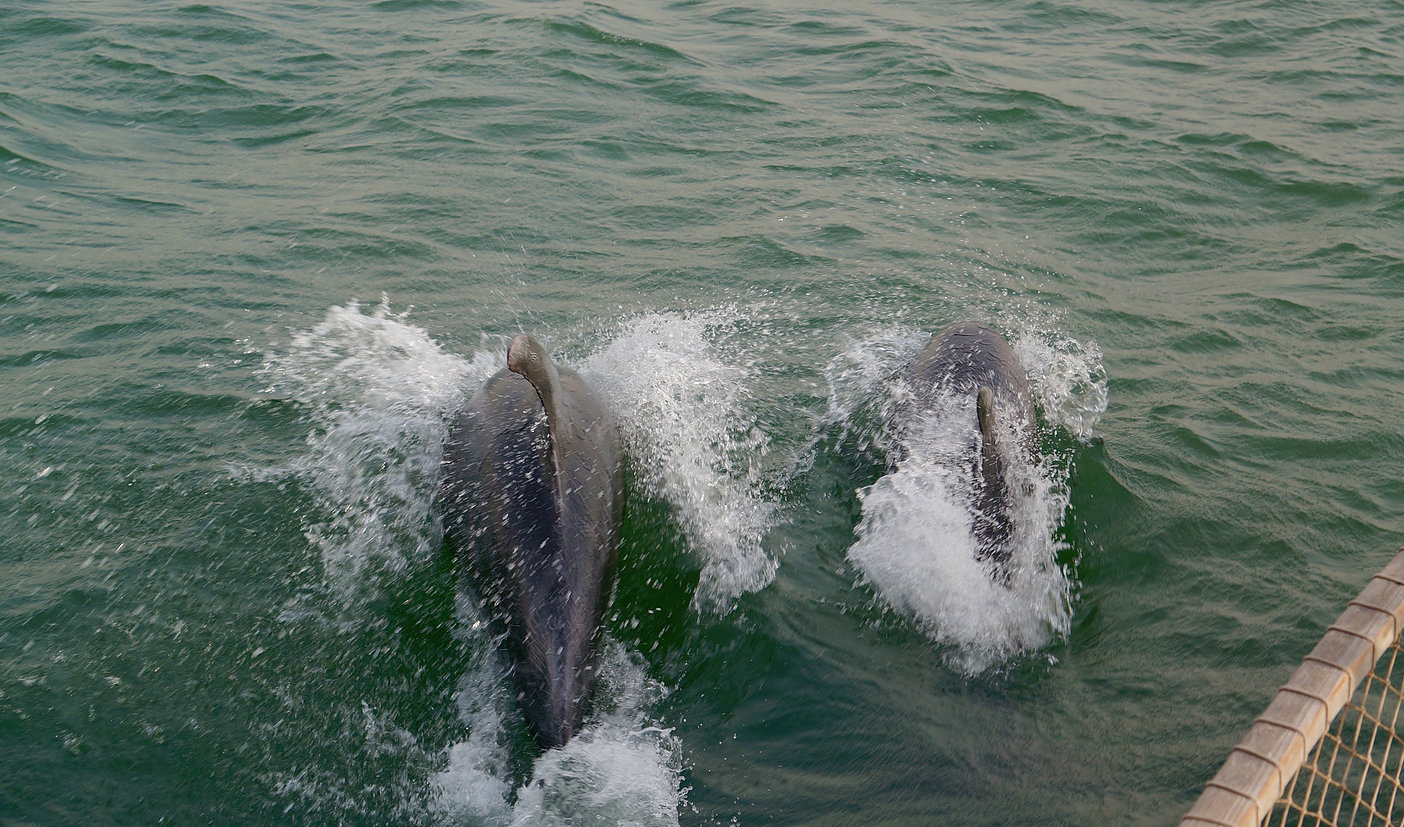
To everyone’s astonishment, a very lively three-metre dolphin suddenly leapt out of the water right beside the yacht. We had never seen such enormous ones before. While we stared in amazement, its companion arrived, and the friends began playing with the yacht, alternately leaping clear of the water on the right and left. The children suggested that dolphins must be loved and treated kindly in The Gambia if they came so close to the port.
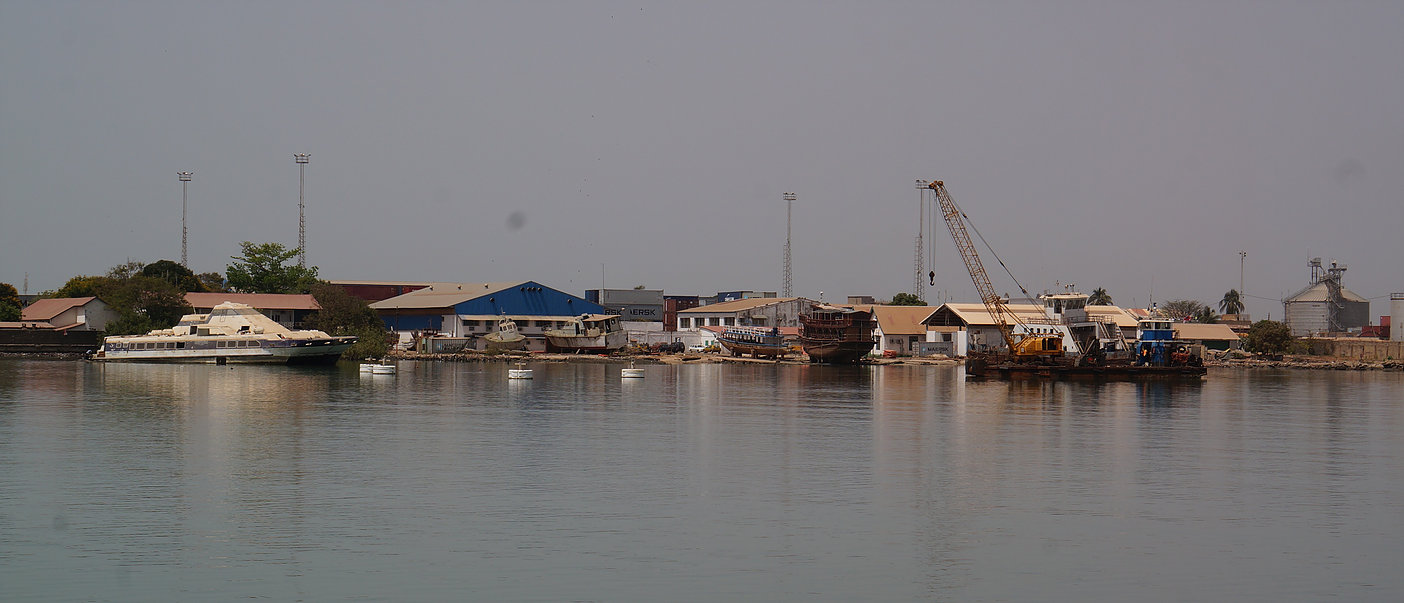
A large ferry runs from the left bank (where the capital is) to the right. They say it is almost always short of space, and to get a car aboard, people bribe the right people.
At Banjul’s quay were a small ocean liner and a cargo vessel flying the Panamanian flag. About a dozen smaller ships, several abandoned ones and a couple of sunken ones—that was the entire capital port.
We could see only a small part of The Gambia’s capital, and it gave the impression of being a small city, not particularly industrial. Strangely, there were no plastic bags floating in the water. Well, perhaps one or two.
Half Die
In an inhospitable, windy place that you would never take for a river mouth, we managed to anchor on our third attempt. Dead ahead, the funnel of a long-sunken vessel stuck out of the water. A small ferry approached the pier, with white people on the upper deck and black people below. No two ways about it: racial hierarchy. People waved cheerfully to us from both decks and were delighted when they spotted the children. We were the only sailing yacht there.
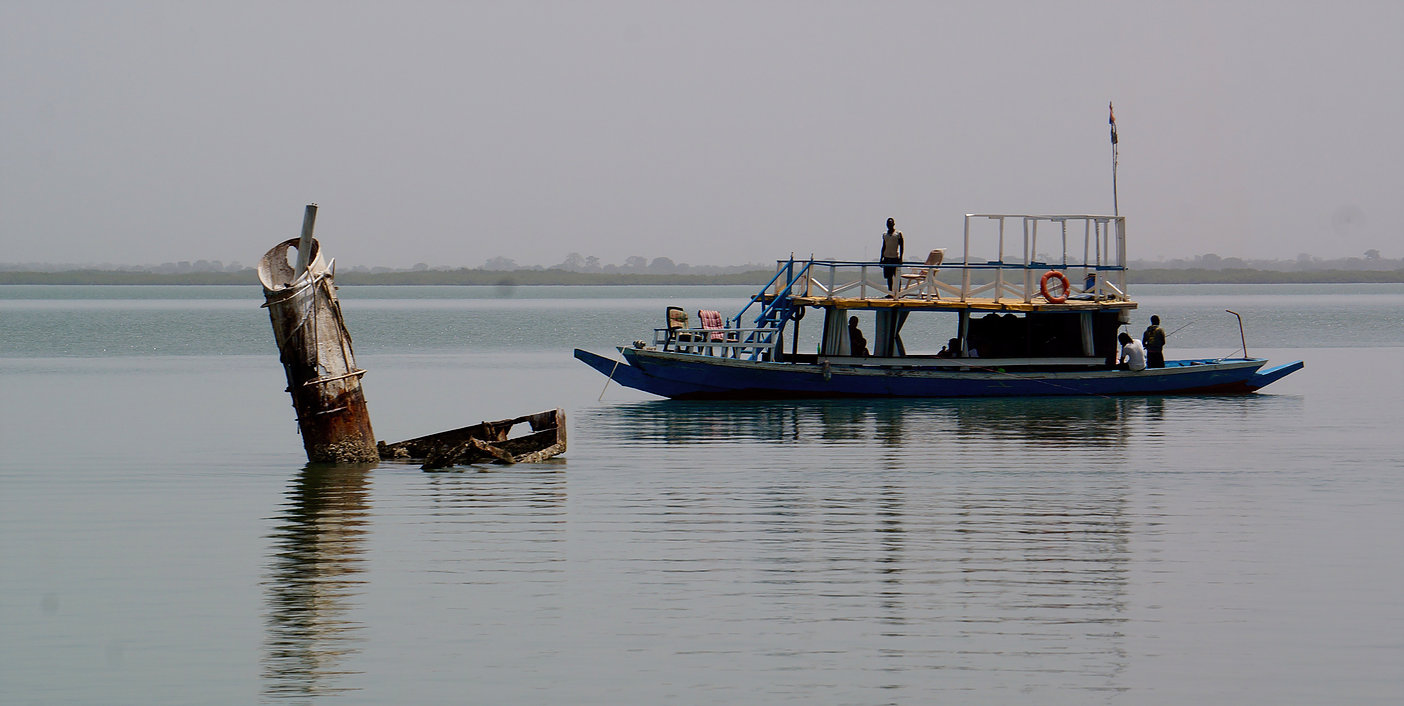
The place that sheltered Lady Mary for the night is popularly known as “Half Die.” In 1869, a terrible cholera epidemic claimed nearly half the lives here. And those who survived looked little better than the dead. This sad page of history is reflected in the name.
Tomorrow, the captain will go ashore to complete the arrival formalities.
The story continues here— Clearing into The Gambia by Yacht