
From the Travely-Family archive · Yacht, Sea and Equipment
A Watermaker on a Yacht
An original publication from the former Travely-Family website. This English translation was preserved from the technical-site archive without editorial rewriting.
A watermaker on a yacht. Thoughts on whether it is worthwhile. Choosing a model. Purchase and installation. The watermaker in operation.
What You Need to Know
A watermaker, from the standpoint of economic expediency, is an absolutely unprofitable investment.
It will NEVER pay for itself!
Several thousand euros to buy one, plus what I imagine will be substantial costs for servicing and repairs (though we have yet to encounter those). For that money, you could fill up with water for the rest of your life, especially since it is available practically everywhere—very cheaply in some places and free in others.
We crossed our first ocean—the Atlantic—without a watermaker. The passage from Cabo Verde (the Cape Verde Islands) to French Guiana (northeastern South America) took 23 days. During that time, the crew of four—two adults and two children—used 500 litres of fresh water.
Our fresh-water consumption routine is covered in a separate post, but, in brief, we did not ration water for drinking or cooking, and once or twice a day we rinsed ourselves with fresh water from 1.5-litre bottles.
Lady Mary’s standard tanks hold 600 litres of water, and another 200 litres were stored in jerrycans. A substantial reserve relative to our current consumption.
In the Caribbean islands and the Mediterranean, it is difficult to find a place where you cannot fill up with water.
So why buy a watermaker?
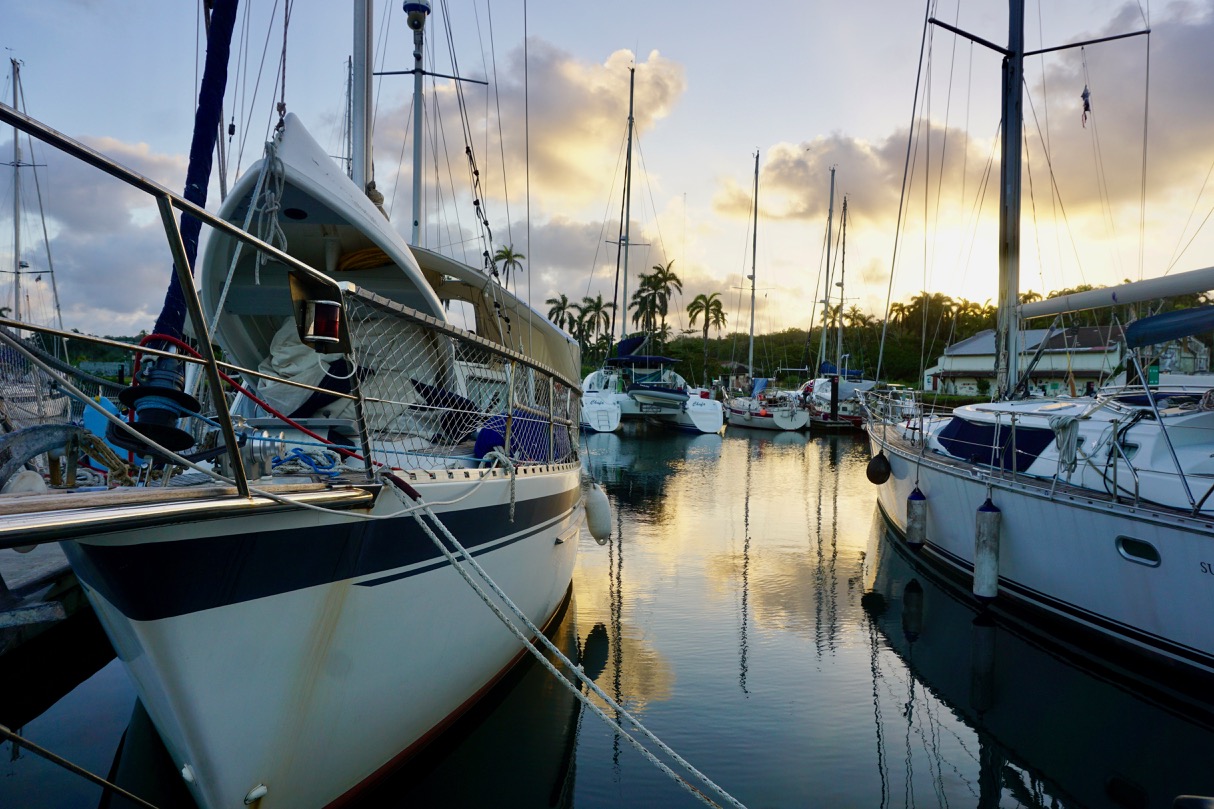
We are heading into the Pacific Ocean. And we are not travelling in racing mode, but at a fairly leisurely pace. Having a watermaker aboard gives us self-sufficiency in fresh water, something that is not exactly abundant on many atolls. We do not need to plan our route around places where we can fill the water tanks.
So, we’re buying one!
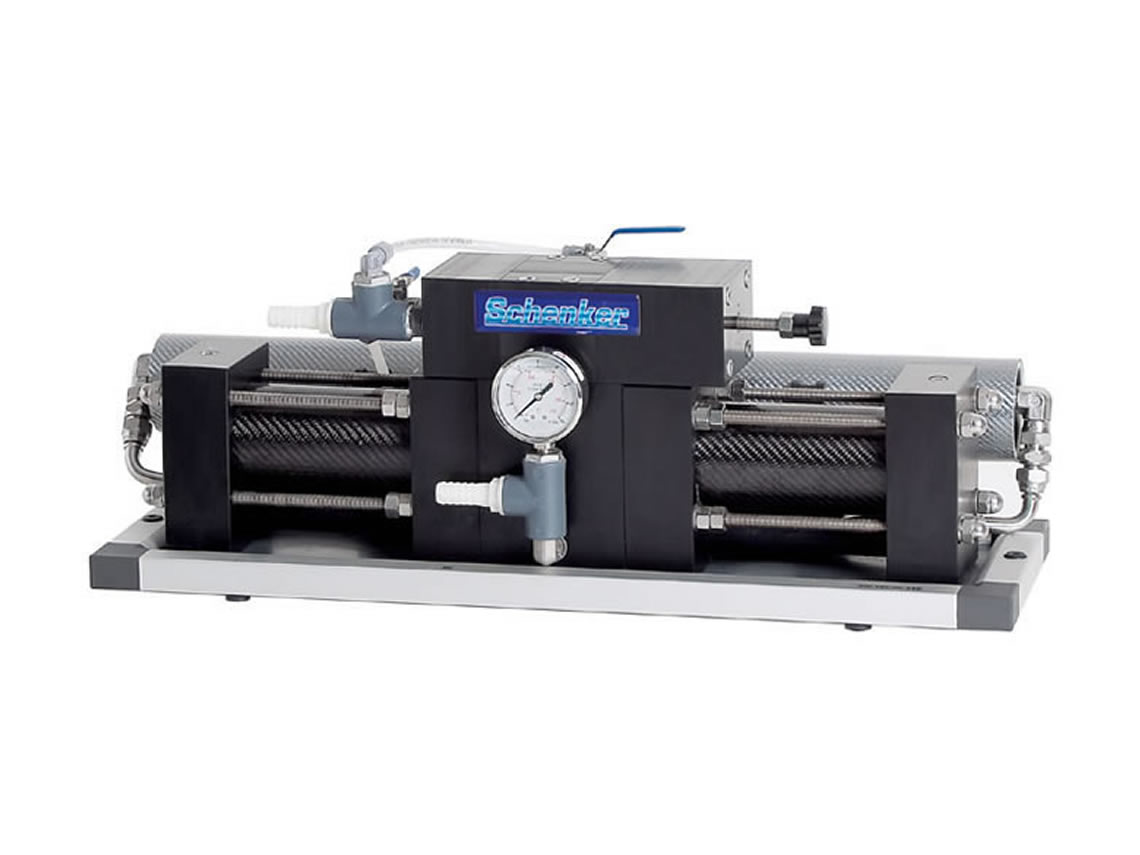
After studying the market, we chose a watermaker made by the Italian brand Schenker Watermakers.
Schenker Watermaker http://www.schenkerwatermakers.com
Model description and first impressions.
We chose the simplest model—the Smart 30. It runs on 12 volts.
The “30” in the name indicates the theoretically possible amount of fresh water produced per hour under ideal conditions. In our correspondence, the dealer said that actual output would be 25 litres per hour, provided the onboard voltage was no lower than 12.5 volts. It draws 8 amps.
Which was confirmed after we started up the system..
The Dealer
It was a British Schenker Watermakers dealer, even though we were in Panama and it would have made more sense to order delivery from Florida.
The American dealer showed no signs of life, either by phone or email.
Having the Italian watermaker shipped to us from somewhere near London cost us an extra couple of hundred dollars. The total cost, including delivery, was about 5,000 pounds sterling.
It had to be sent in two packages, as it turned out that FedEx in Panama does not deliver packages weighing more than 35 kg; you have to go to the airport customs office and collect those yourself.
All the details were agreed, payment was made, a week passed for delivery—and the courier brought the long-awaited boxes straight to Shelter Bay Marina, where we were berthed while waiting to transit the Panama Canal..
The System
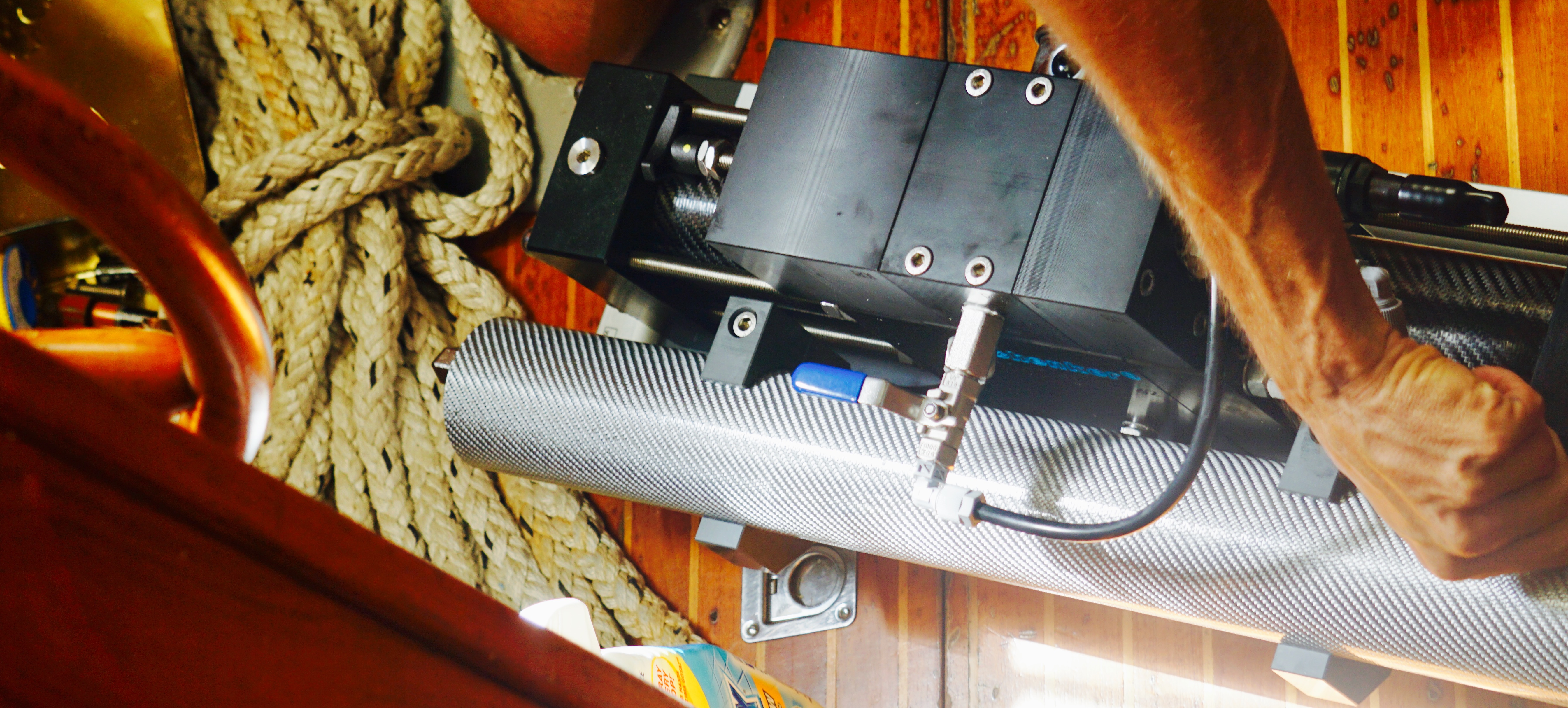
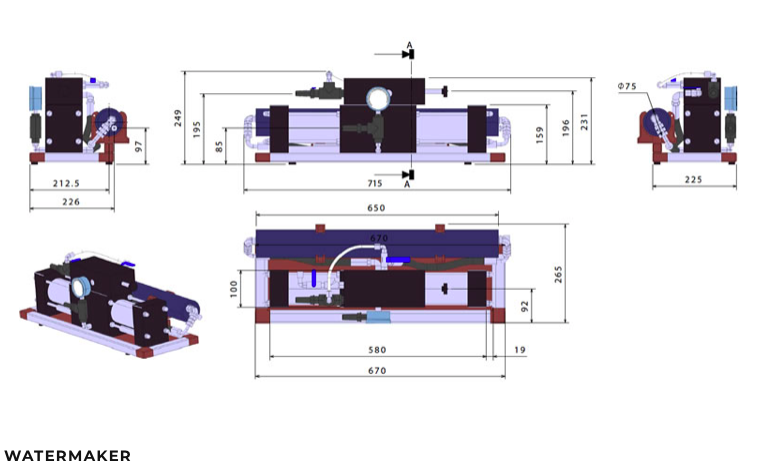
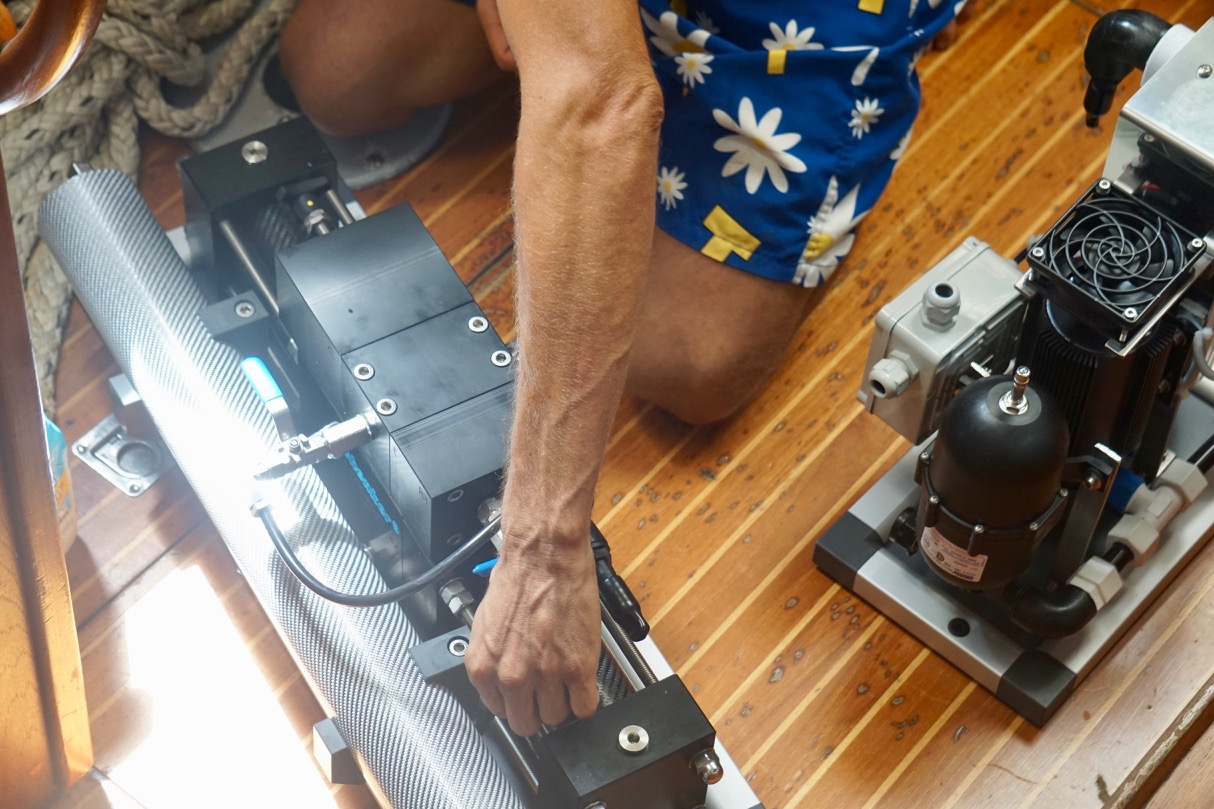
The system consists of two units—the membrane and the high-pressure pump with filter.
This is convenient:
the units can be installed in separate, suitable locations where they will not take up unnecessary space and can be easily reached for servicing.
Fig. 1—Membrane unit
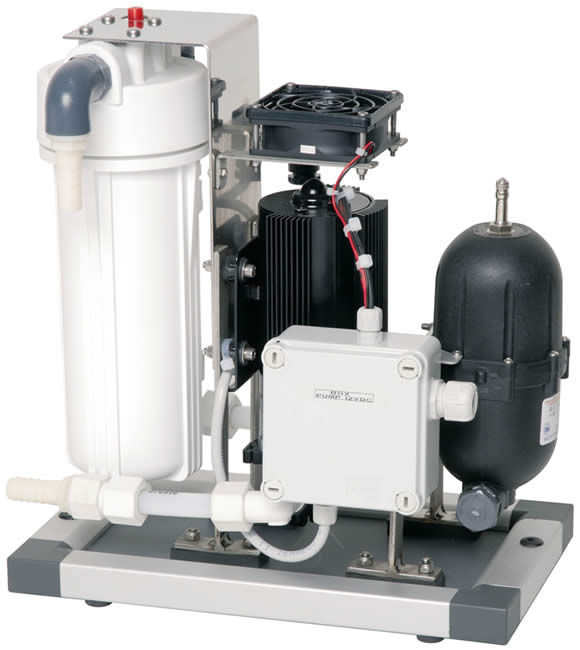
Fig. 2—High-pressure pump.
Installation restrictions:
The pump must be installed as low as possible, preferably even below the waterline, and no more than 1.5 metres from the seawater seacock.
The membrane can be installed practically anywhere that provides easy access for servicing.
A connection to the fresh-water system is required in order to flush the membrane before and after operating the watermaker.
Voltage: 12 volts. The control panel can be installed in any convenient location and has only two switches:
watermaker operating mode fresh-water membrane flush.
All the necessary fittings for the electrical and plumbing connections were included. The only things we needed to buy were hoses and wires of the required lengths.
Installing the System
We installed the high-pressure pump in the engine compartment, next to the dedicated seawater seacock. The membrane went into the locker beneath the saloon settee. The control panel was installed in the galley.
Both units ready for installation.
How the Watermaker Works
Seawater is drawn through two filters—a coarse filter (metal mesh) and a fine filter (5 microns)—into the high-pressure pump, from where it passes to the membrane.
In theory, the membrane is a very fine filter that allows water molecules through and nothing else. But in this case, the membrane lets through slightly more than just water molecules—a couple of percent of salts as well.
What comes out of the watermaker is not distillate, devoid of mineral salts and flavour, but excellent drinking water. As the manufacturer’s advertising brochure puts it, “equal in quality to the finest bottled mineral waters.” Absolutely true!
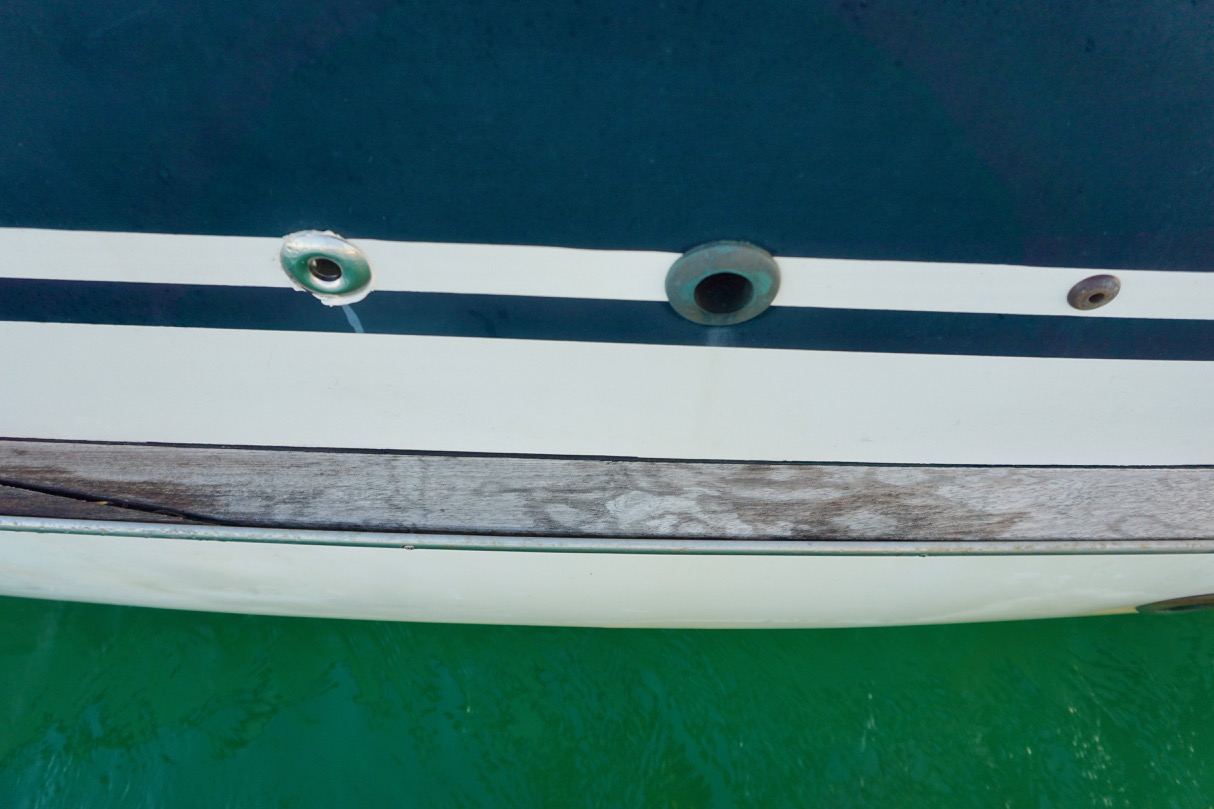
Everything else, together with the excess salts, is discharged overboard through a dedicated hull opening above the waterline. We had to drill a hole in the hull for a dedicated outlet for this super-salty brine.
The one on the left—the newest hole—is the brine outlet after the fresh water has been separated
The fresh water, meanwhile, passes through a system of hoses and valves and flows from a dedicated tap in the galley. A couple of minutes after switching on the watermaker, we taste the finished product and, once we are sure it is not salty, switch the outlet from the tap to one of the fresh-water tanks.
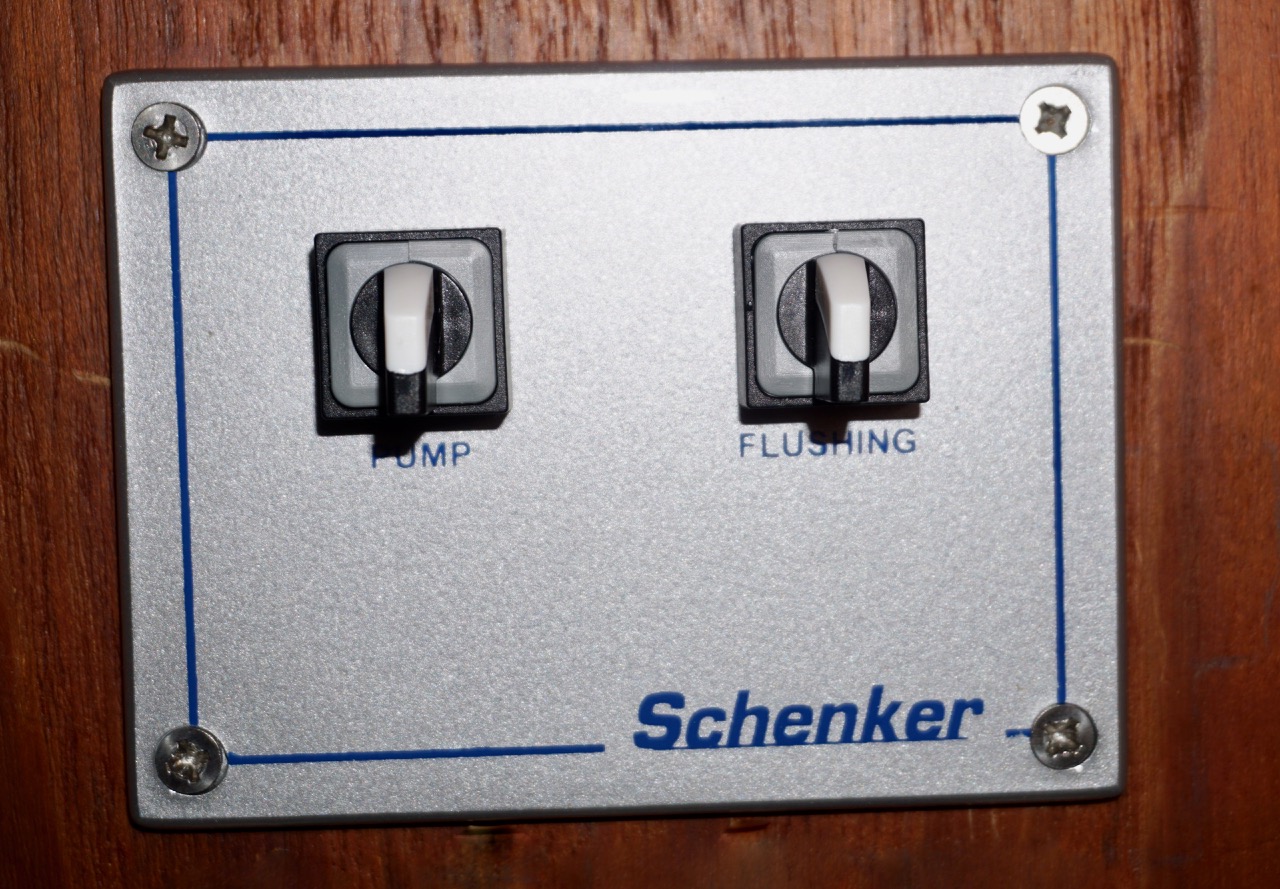
Switches installed in the galley
A side effect of having a watermaker: the crew has relaxed and now uses more water than before:).
The fresh-water consumption routine aboard one particular yacht will be here >>
Now is the perfect time to thank the author generously for such a useful article by clicking the “Thank You” button.