
From the Travely-Family archive · Pacific Ocean
From the Marquesas to the Tuamotus. Day Two. Pacific Ocean
An original publication from the former Travely-Family website. This English translation was preserved from the technical-site archive without editorial rewriting.
From the Marquesas to the Tuamotus. Day Two. Pacific Ocean. Transmitted via satellite.
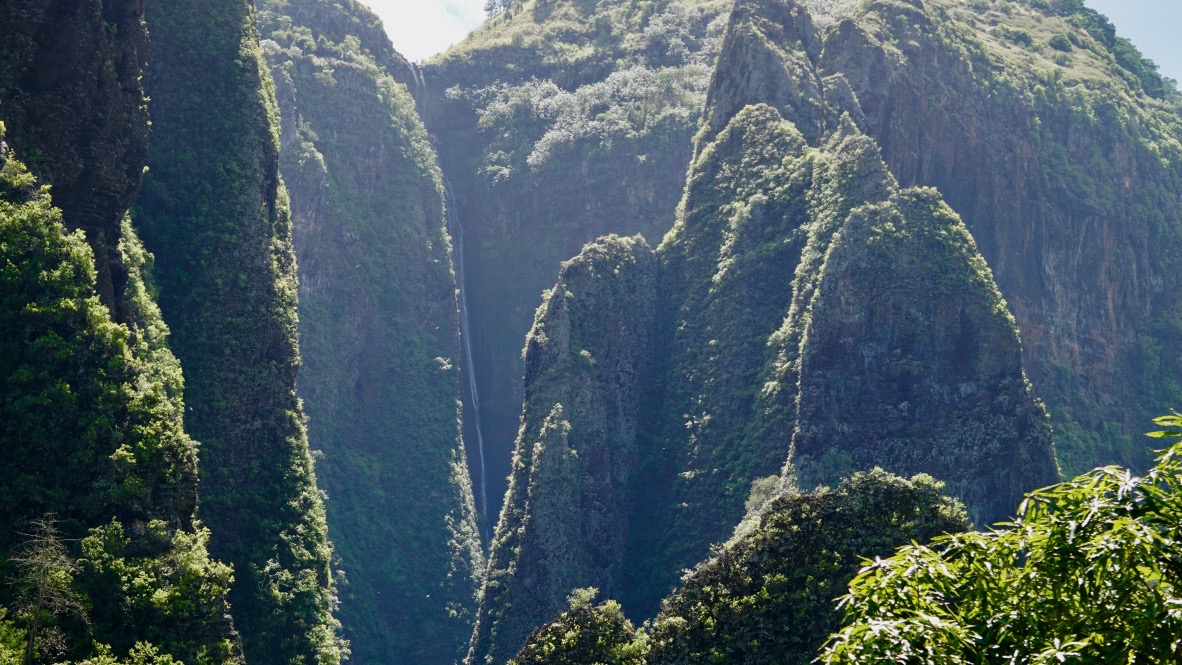
Two days ago we weighed anchor in Hakatea Bay, which we simply call Waterfall Bay. That is because it has the highest waterfall on Nuku Hiva and probably in all the Marquesas. The bay is sheer paradise. With one significant drawback: under cover of darkness, bloodthirsty midges infiltrated every compartment of the boat and, for the third day running, have continued their painfully bitey business of devouring the crew. Little do they know that Lady Mary has already been out in the open ocean for two days. From the farmers who live on the approach to the waterfall, in their utterly pastoral valley, we bought half a dinghy-load of bananas, green mangoes, pumpkins, avocados, guavas, breadfruit and greens for just 42 dollars, half the market price.
And there is still a whole crate of pamplemousses—in other words, pomelos—lying in the saloon, which came aboard from the same bay earlier. And it is true: they keep for more than a month. Although the crew no longer considers them food—we are sick of them. And they are not very sweet.
The wind and waves, as soon as we left the Marquesas, began bellowing vehemently that we had no business traipsing about the seas and should turn back, under the shelter of the coastal cliffs. It rocks there too, of course: the swell is squarely on the beam. But at least the crew are not required to know how to fly. We flew along on a beam reach, heeling considerably, at 7–8 knots. The children got a bit seasick and even turned down chocolate. By morning, however, the wind had fallen into harmony with the waves and subsided. Have they switched off the trade winds over there, or what? And on the second day they switched them over altogether, and the famous trade winds are now blowing not from the east along the equator, as they are supposed to, but from the north, no less.
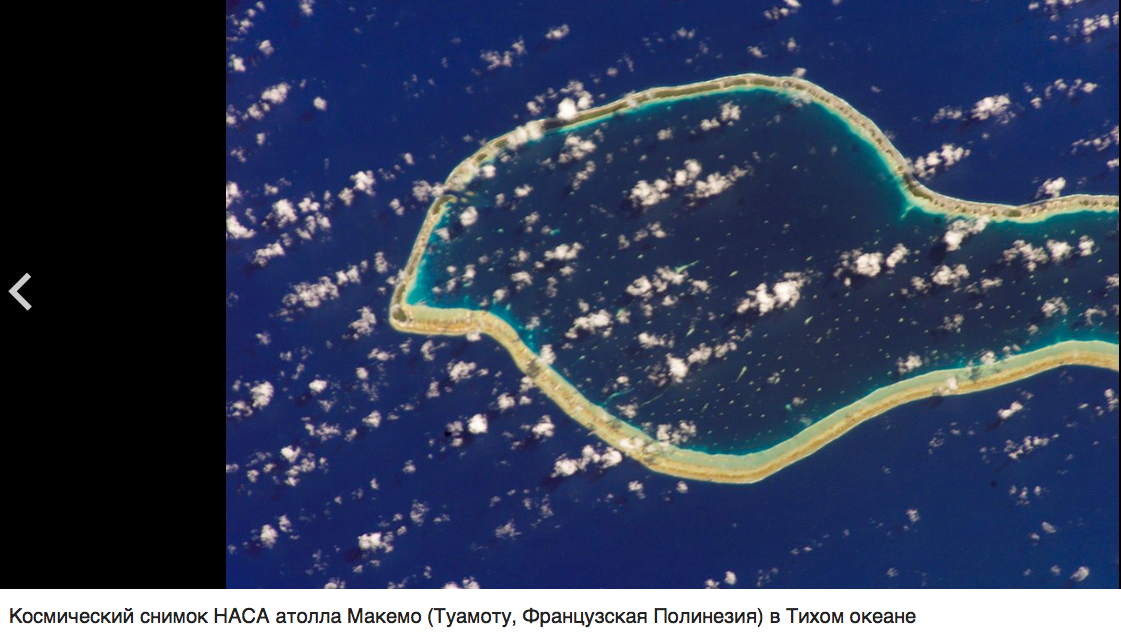
In the morning we set the sails wing and wing and are slowly crawling south-south-west towards the first of our intended atolls in the Tuamotu Archipelago. This will be Kutuzov Atoll, also known as Makemo. Although it had already been discovered in 1803, the atoll was rediscovered on 27 July 1820 by the first Russian Antarctic expedition. With Bellingshausen and Lazarev’s light touch, the atoll acquired the resounding name of the great Russian military commander. True, among the people it is still known by its native Polynesian name.
Never mind, we shall put that right:). We will discover Makemo for the third time; now we are wondering whom to name it after. We have 280 miles left to go and should arrive in about three days. Though that is not certain. The captain predicts an unusual shift in the wind that may prevent us from entering the atoll. We are hoping for the best.
photo from Wikipedia
The only ones behaving actively aboard the yacht are the micro-midges. If only their teeth would fall out soon, so they had nothing left to bite us with. Everyone else, exhausted by ciguatera, is reading, lying down or sitting. Yesterday we fried a breadfruit for dinner; today we ought to fry another, but there is no one to do it—the first mate and the captain periodically get headaches, the after-effects of ciguatoxin. And sailor Nastya has apparently caught the headache too, and is insistently recommending pasta for dinner. By tomorrow the breadfruit will turn into sweetish mush, making it harder to pass off as fried potatoes.
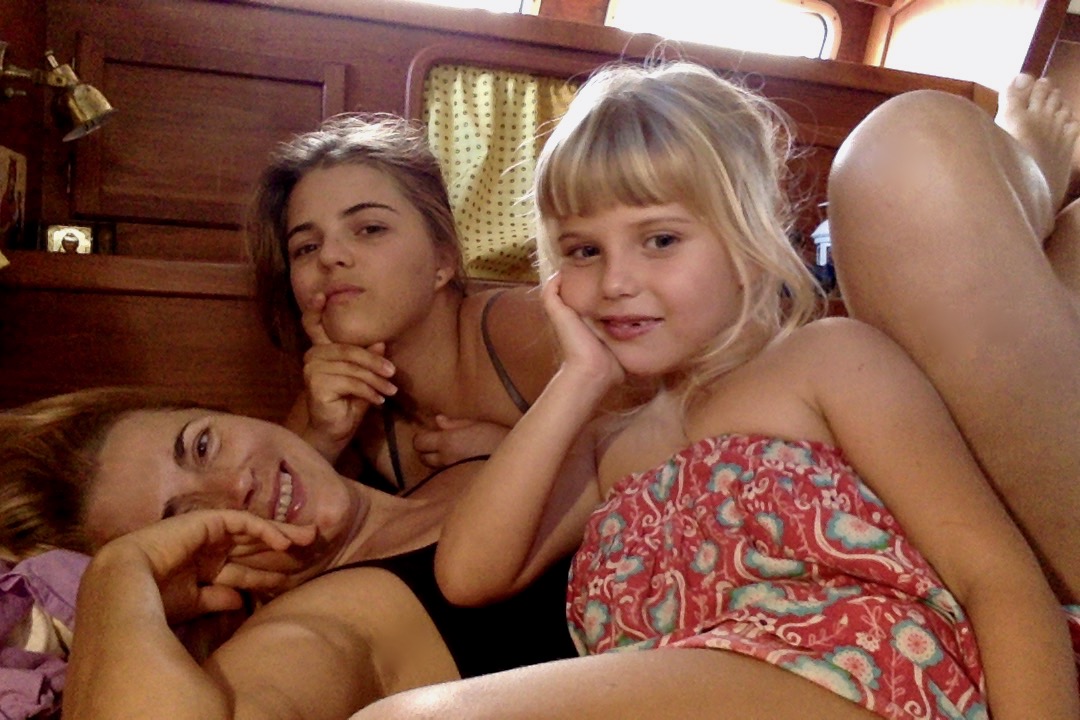
First thing this morning, Laduska dragged a folder of GEOlyonok magazines into the cockpit and is happily reading us astonishing snippets about animal life and making an octopus-shaped bookmark.
Over these past few days, the junior crew member and I have developed a lovely tradition. In the morning, while everyone else is dead to the world, we watch a cartoon in English with Russian subtitles, sharing a single pair of earphones. And on the sly, we carve up a Bounty bar from Andryukha’s secret stash. Everyone must have been hit by a Bounty craving at the same time—probably coconut deficiency..
Noteworthy events:
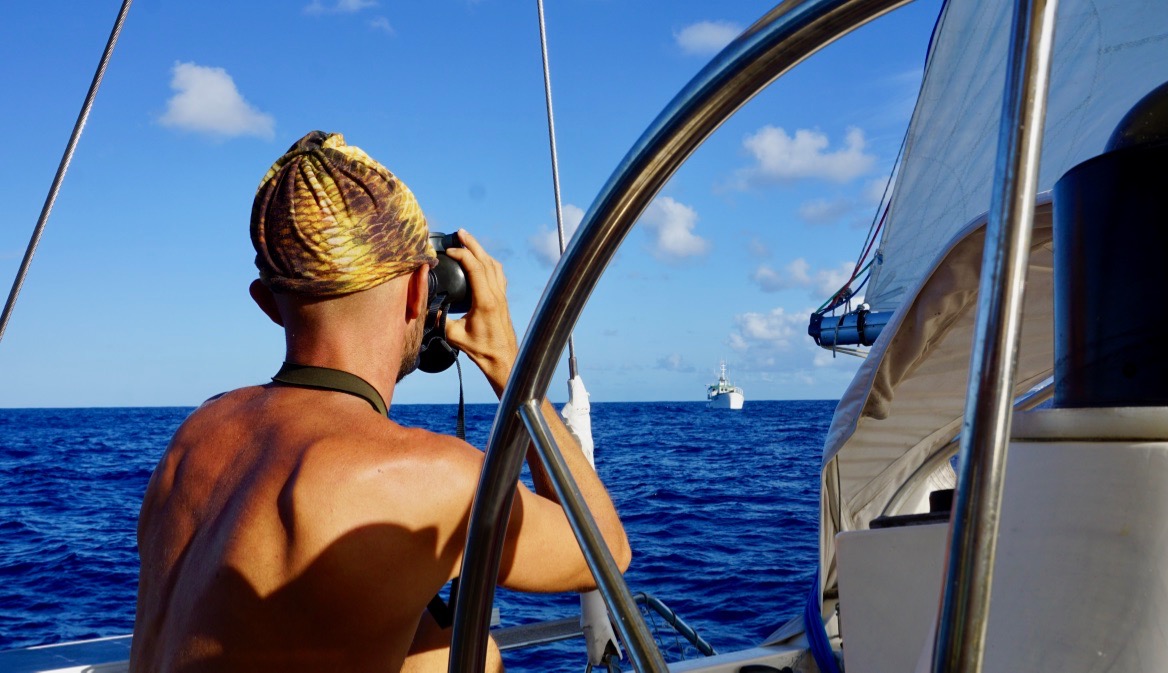
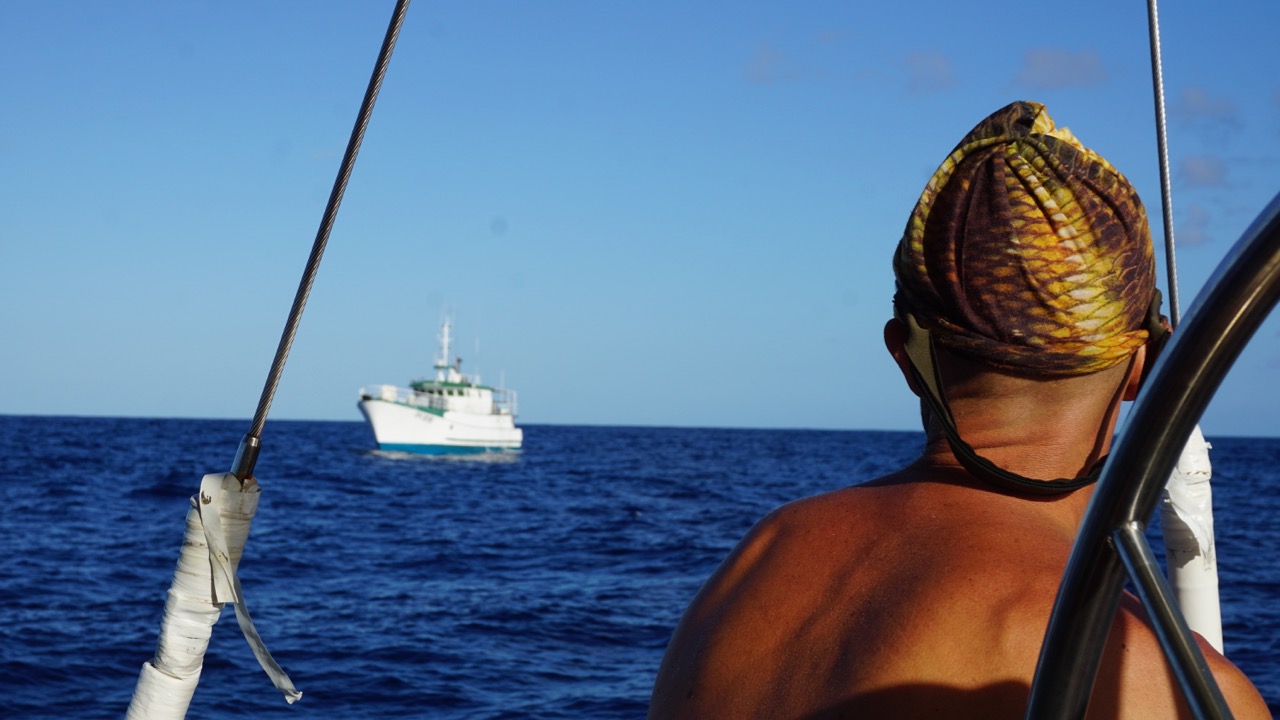
During the day, in an utterly empty ocean, we passed within a hundred metres of a little fishing boat. What are the odds of two vessels colliding in the boundless ocean? “Almost zero,” you would say. But no. During the half-hour that we were closing, the bearing of the little vessel known as “there’s something white going black over there” barely changed. Our sails were set wing and wing, running dead downwind (the wind up our backside), so changing course was extremely inconvenient for us. But on the fishing boat, it was as though everyone had died.
The engine droned steadily, keeping the vessel directly ahead of us. The captain was summoned from the aft cabin for a council of war. And together we watched as the white boat passed a hundred metres off our port side and disappeared astern. We never saw a living soul on deck. In fact, there is little visible wildlife in the ocean these days—or rather, none at all. And once it seemed that if there were anywhere whales, dolphins and other sperm whales should travel in shoals, where else but in the heart of the Pacific?
And now, everyone to the chart for a geography lesson:). Our current coordinates: 11 deg. 57 min. south latitude and 140 deg. 59 min. west longitude.
Wishing everyone a thirst for life!