
From the Travely-Family archive · Atlantic
Along the Edge of Hurricane Irma—Under Sail. A Waterspout and... Birds
An original publication from the former Travely-Family website. This English translation was preserved from the technical-site archive without editorial rewriting.
Along the Edge of Hurricane Irma—Under Sail. Crossing the Caribbean Sea along the edge of the hurricane. Days 5–6. Shifting winds, a waterspout, kamikaze passengers, approaching the reefs, and an unpleasant discovery
11 September. With the steady following wind brought by Irma, we are trying to make as much ground eastward as possible, so that when the trade winds return we can once again sail downwind, only in the opposite direction.
On the fifth day, the rolling eased off, but for some reason we started shipping more water. Pamper yourself as much as you like, but by evening the salt makes you stick to yourself (and to everything else in the cockpit).
Finds at Sea
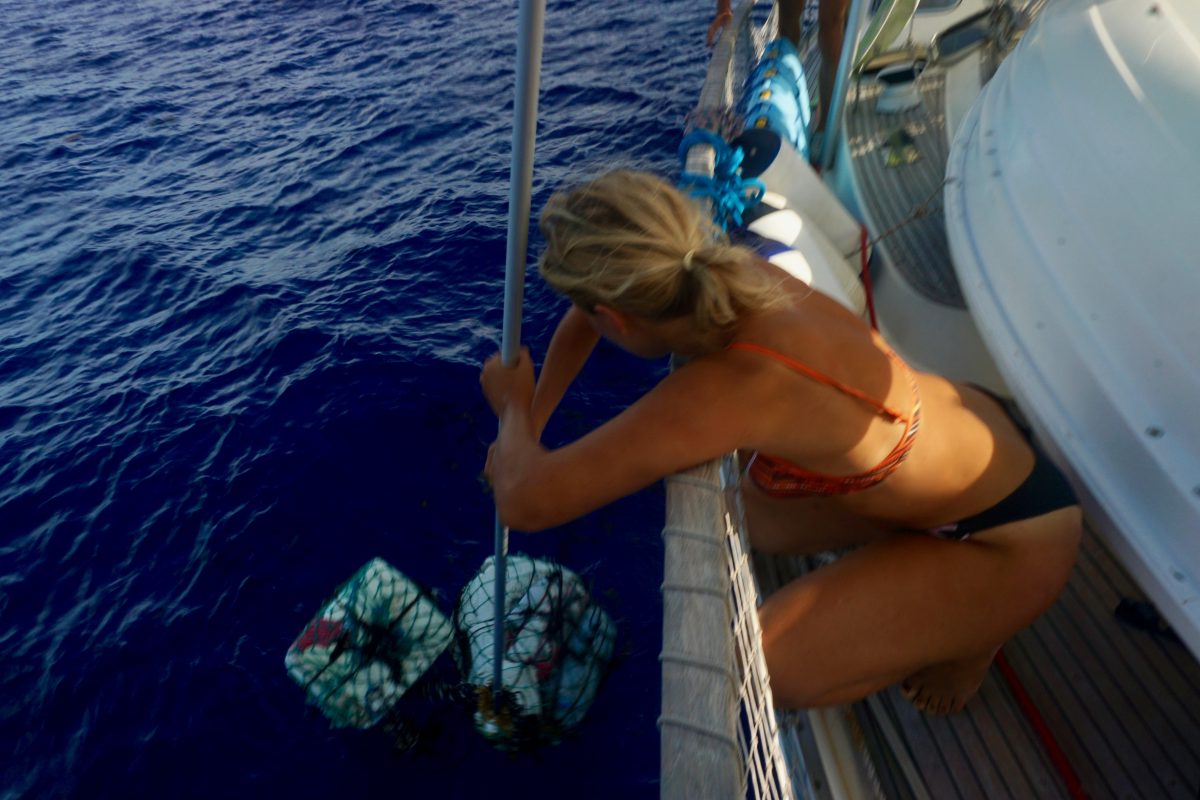
During the day, we board two objects tied together floating in the water. “What if it’s the very same 10 million dollars I ordered!?” the captain suggested.
Sadly, the millions turned out to be bales of bottles and Styrofoam, each the size of a chest—apparently torn loose from fishing nets. A school of iridescent yellow-and-blue mahi-mahi is swimming around this new island of rubbish. What attracts them to it?
There is a lot of plastic rubbish in this part of the sea in general. We come across driftwood, and yesterday an uprooted tree passed alongside us. A greeting from Irma? The nearest shore (Jamaica) is at least 60 miles away..
A New Crew Member
By the evening of the fifth day, the wind had shifted to the northeast, and a stowaway appeared aboard—a little bird, the kind that turn up in the middle of the sea all the way from Africa so often that it is high time we googled what they are called. It looks like a swift (its tail is too short for a swallow), with a cream-and-orange breast and face, tiny black bead eyes, and a small, delicate beak..
On a brisk close reach, the little bird kept trying to “Lady Mary” itself aboard, first from astern and then from alongside, choosing the slipperiest possible spots. It slid off the solar panel and the smooth liferaft canister. What does it have against the option of settling down on the mattress beneath the upturned dinghy? There are so many nesting places there that we could live there ourselves! We had already put some water there for him (the passenger) and crumbled up some food. The little one darted about until dusk, then suddenly landed on the captain’s hand and went still. We had no choice but to enter him on the crew list and issue him rations. But the new sailor refused both food and drink. He fluttered over to the sill of the fire-hatch and settled down to sleep right there, swaying and twitching.
Clouds are circling around us, and there is lightning ahead—by the look of things, we are about to run into rain and a thunderstorm. We tried to settle the bird into an old cap. Ladunka remembered that the cartoon The Fixies had taught them how to build a nest. But there was no hay aboard the yacht, though our little fellow did acquire the name Fixik.
Drowsy, he was transferred into the cap. He protested at first, but then perched on its edge again and dozed off. We wanted to move the cap-nest beneath the sprayhood, into a corner out of the wind where he could sleep until morning. But what goes on inside these birds’ heads is beyond a sailor’s ken. Fixik, regarding the move as an infringement of Caribbean swifts’ rights, rose a metre into the air—which was enough for the stern to slip away from beneath his feet. For about a minute, he tried again to hop back aboard against the wind.
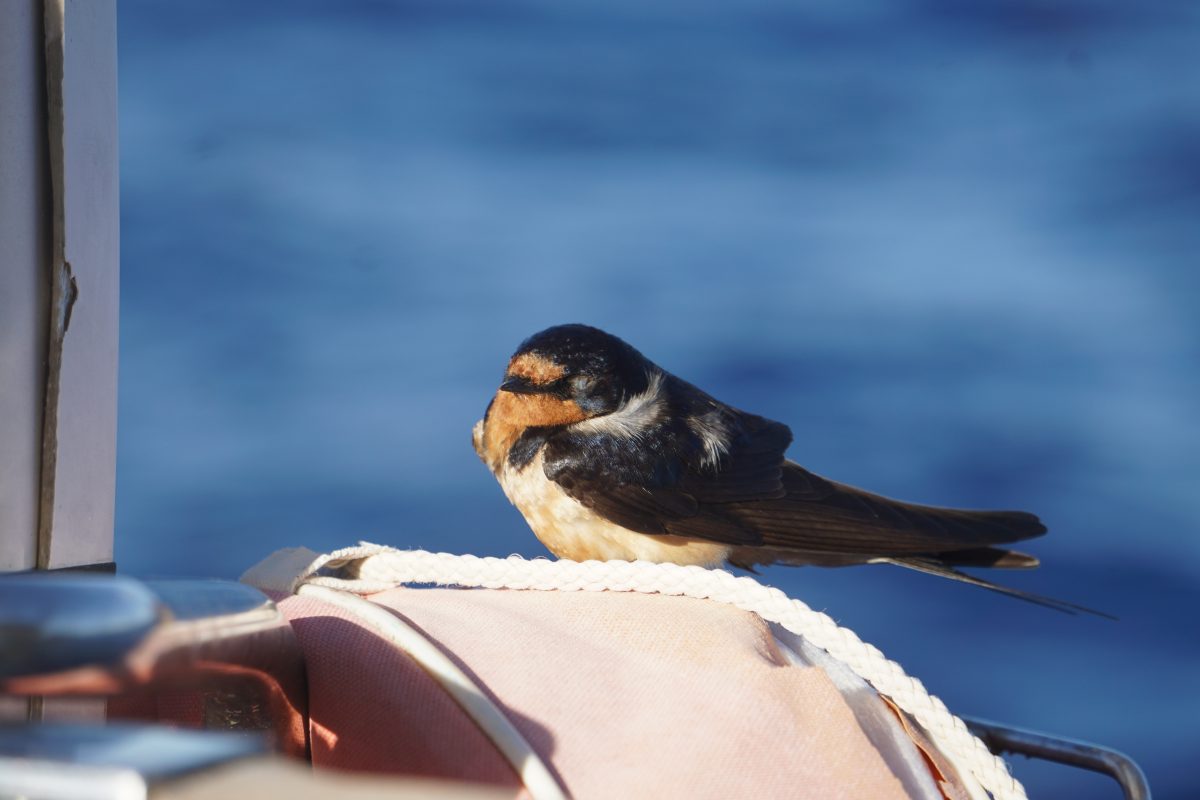
Having concluded that we understood nothing whatsoever about avian motivation, we left Fixik alone. He spent the night on the edge of the stern, sheltered from the wind by the spare anchor and the gas cylinder. He left three piles of droppings, and at dawn, instead of flying away, began multiplying in arithmetic progression..
Cloning Swifts
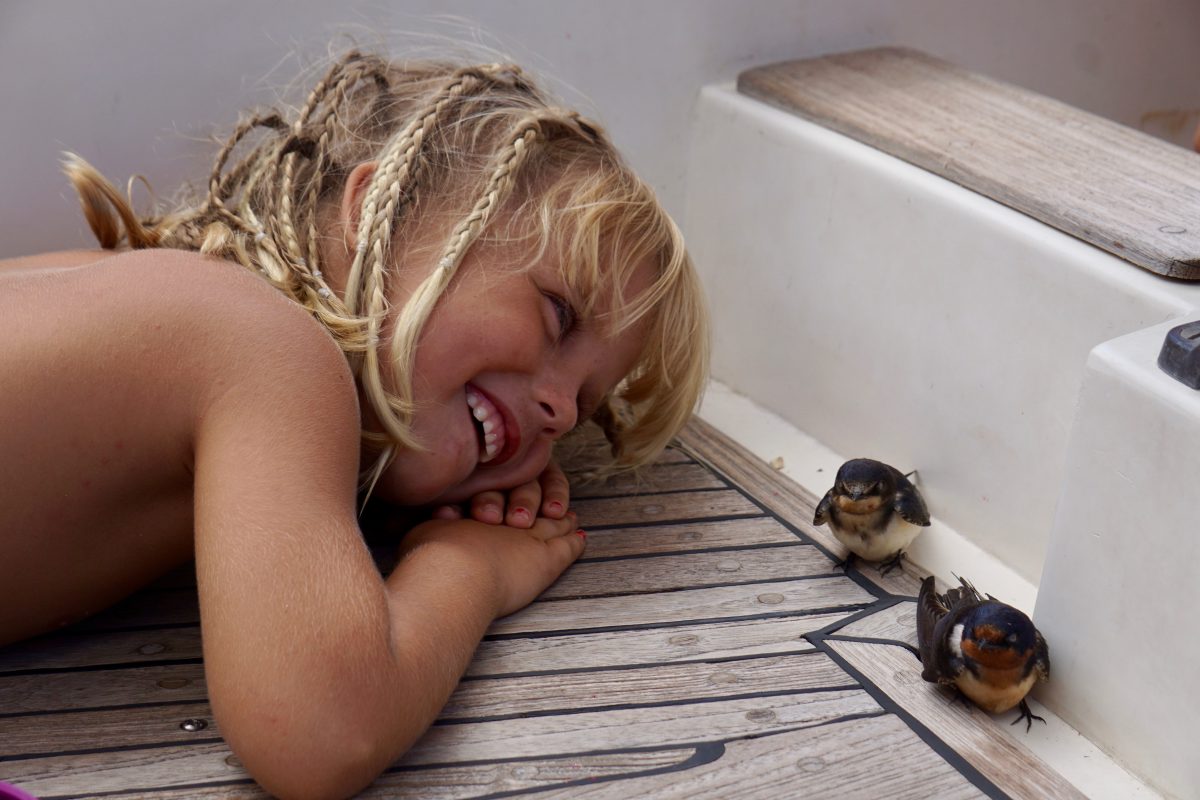
After relieving the captain on the morning watch, the first mate first spotted another Fixik, and then there were three of the same species just beyond the gunwale, flapping their wings. How did they all manage to meet out here in the open sea? Our overnight sailor was most likely a female, because her companion turned out to be far more handsome: a bright brick-red head outlined with a thin black line, and wings of a more even colour..
“With birds, the boy is always prettier than the girl,” I explain to Lada. “With people, it’s the other way round.” We burst out laughing.
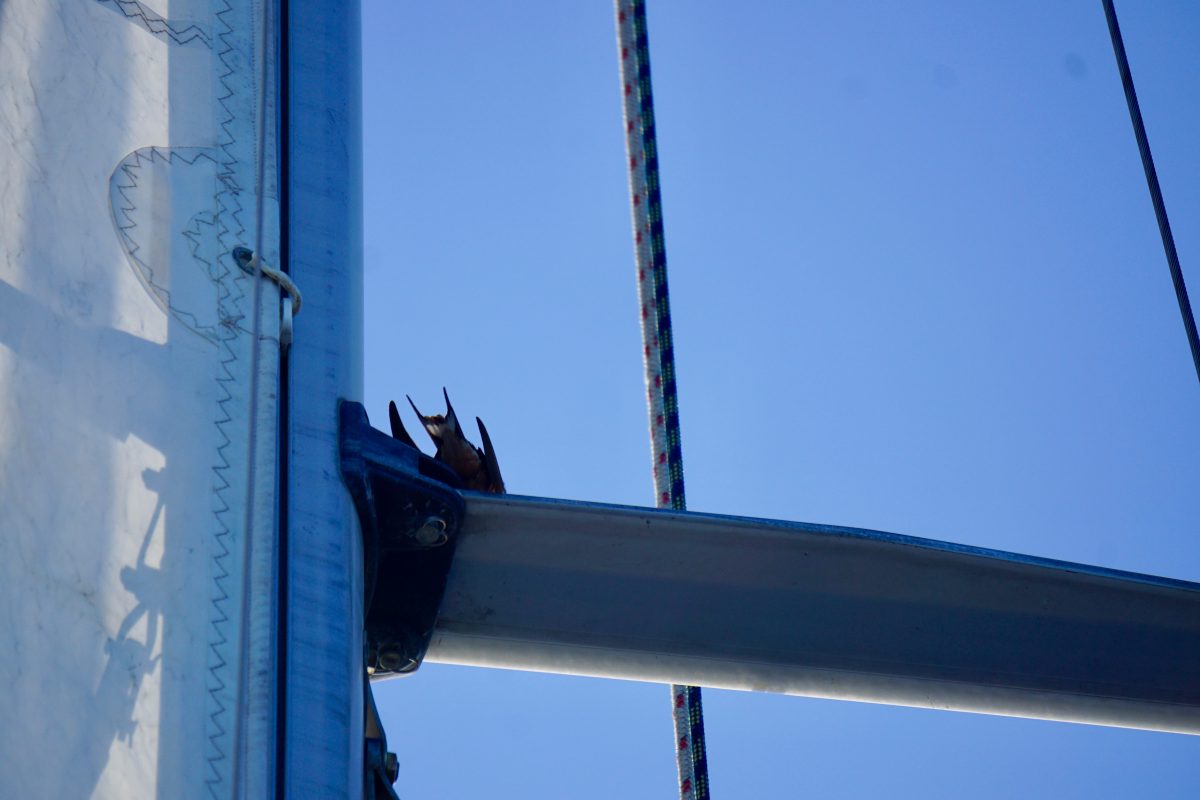
By the time of writing, the third Fixik has disappeared somewhere. The male is standing guard on the spreader, while the female has tucked her head under her wing on the lifebuoy astern and dozed off. So far, our pets have made no attempt to find food or drink, even though since last night the crew have been tripping over bowls of water, crusts of bread, and grains.
“Go and catch him some beetles,” the captain advises.
“We don’t have any beetles,” the first mate sighs.
“Then we’ll get some!” the young sailor cheerfully promises, quoting a line from Prostokvashino.
True, in a burst of inspiration, the captain also suggested giving Fixik an “enema,” but we shall keep quiet about that. In general, our captain is the world’s greatest enema specialist. He can attach them to the most unexpected places. For example, the device for collecting rainwater from the sails (a wide funnel screwed to a hose running down into a jerrycan) is also proudly called the “enema.” The moment Laduska spotted the thunderclouds, she suggested installing the enema on the boom: “Otherwise the bird will get soaked.” Because it is a sure sign—as soon as we are ready to collect water from the sails, the clouds scatter and there is no rain to be had.
A Waterspout
As for navigation: on the sixth day, the wind has weakened and is carrying us languidly northeast, closer to Jamaica. To the south lie some uninhabited reefs where we plan to stop for a day or two—the girls have been missing their Robinson Crusoe life.
For now, the hurricanes have moved north, and in a couple of days the trade wind will switch back on, reducing our chances of making a calm passage to the island of Curaçao to zero.
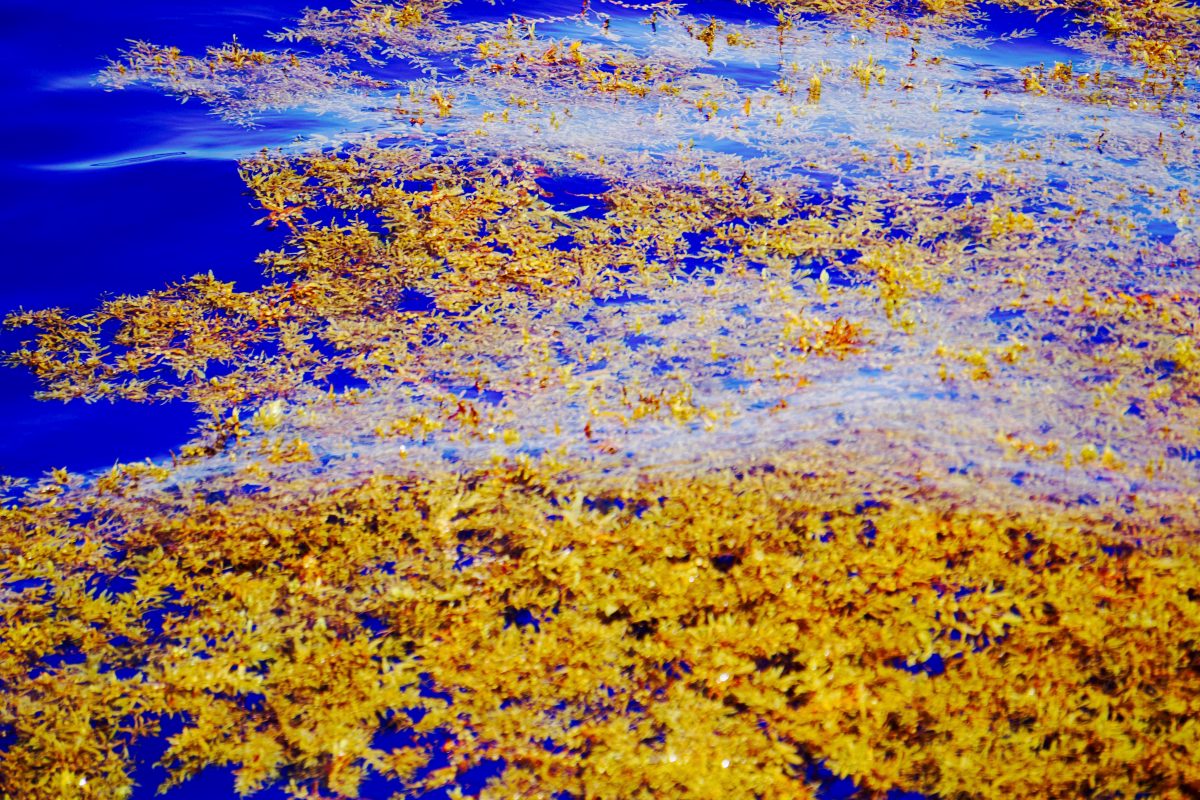
Carpet-like trails of sargassum (seaweed) drift across the sea—yellow-orange against oily blue. Yesterday we did not even put out the fishing line: the hook only picks up seaweed..
We are approaching the most electrically charged latitudes in the world. The lightning capital of the world lies in the north of South America. With every hundred miles, there is more and more lightning.
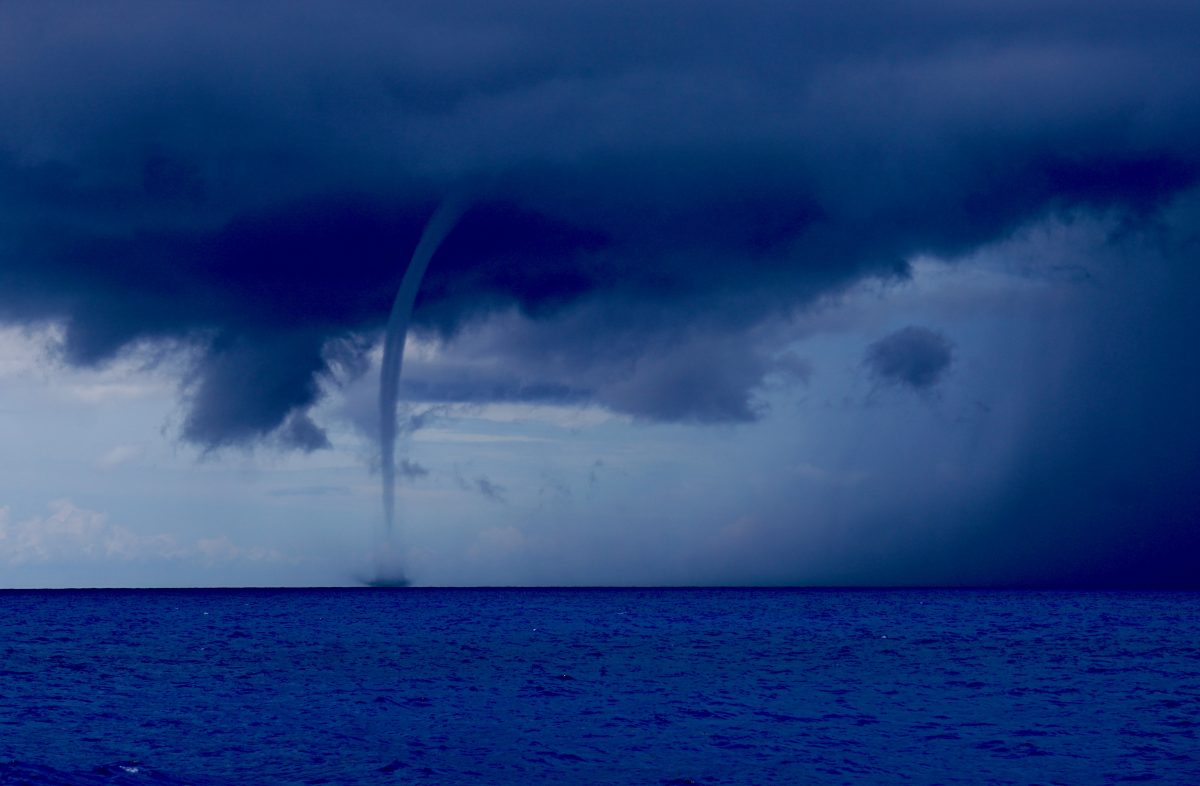
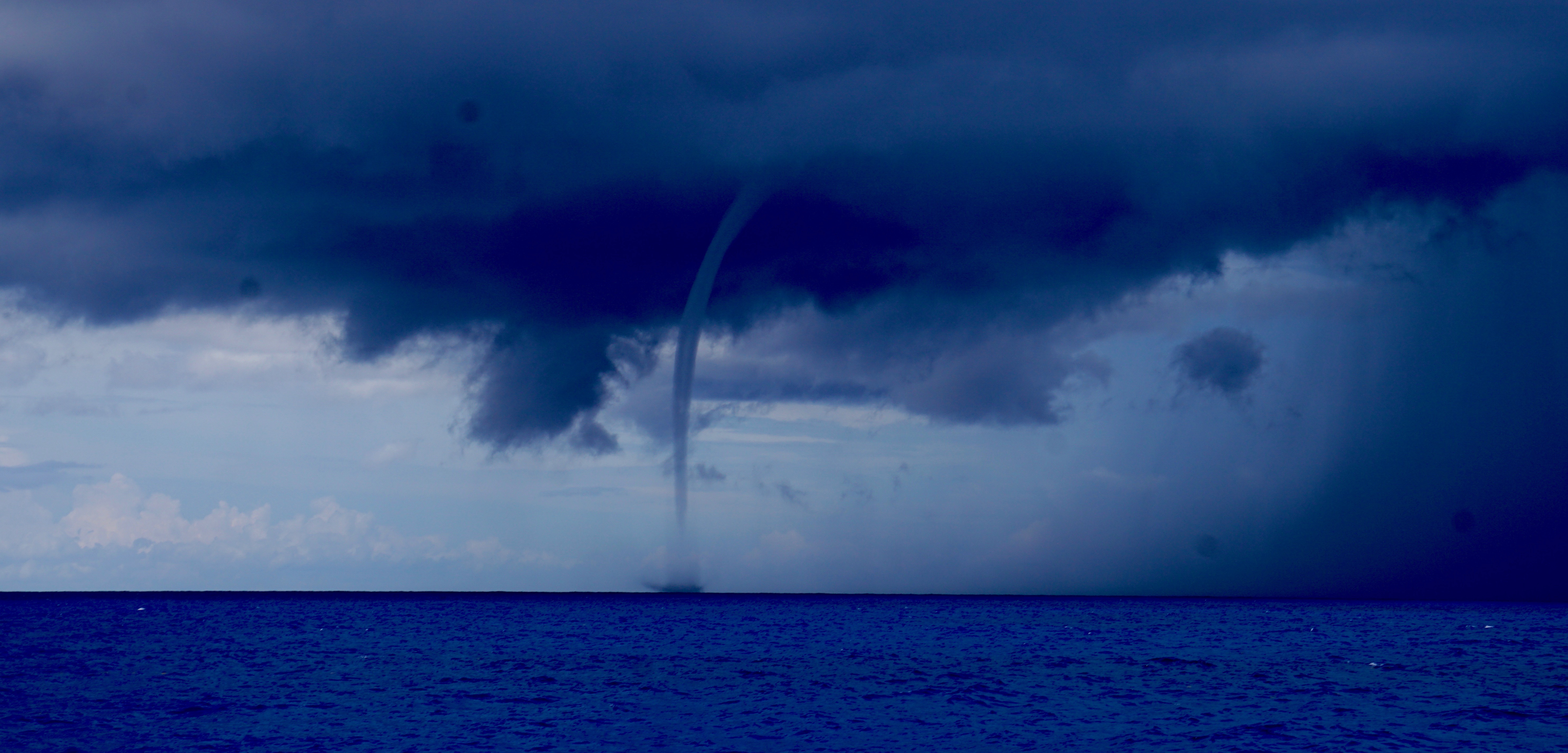
By lunchtime, we managed to outrun a powerful thunderstorm front that had churned sea and sky into a single black mess. We watch as the darkest cloud lowers a gigantic “hose-tongue” into the sea. Around that spot, a rounded cloud lights up and billows, darkening before our very eyes—as though something is pouring out of the sky and throwing up a fountain of spray. The cloud seems to have sucked water from the sea through that very hose and grown even blacker (will the rain be salty now?).
For the first time in our lives, we are watching a waterspout—and... watching it move straight towards us. The captain puts the helm over: we have no desire whatsoever to end up inside a waterspout, however interesting it might be to take a closer look.
Waterspout and black clouds. Photo taken during the day.
But We Know This Island Is... Uninhabited
A grey column has appeared on the horizon—the Pedro Bank reef lighthouse. In fact, Pedro Bank began long ago: since yesterday, depths of three kilometres have given way to depths of 30 metres. It is these Jamaican reefs that we are heading for. It has been a long time since we stayed somewhere deserted, caught crabs with our bare hands, or filled the yacht with giant shells. We will wait at anchor to see what the forecast says, and then most likely head for Colombia.
P.S.:...The reefs turned out to be INHABITED. More tomorrow about how bravely we fled from them, and about the bitter fate of our Fixiks—this has already grown rather long.
Friendliness and smiles to everyone!