
From the Travely-Family archive · Central and South America
Pacific Ocean Expedition Plan
An original publication from the former Travely-Family website. This English translation was preserved from the technical-site archive without editorial rewriting.
Pacific Ocean expedition plan. Waypoints, miles and photographs. A few formalities concerning Polynesia and the Galápagos. Why entering the Galápagos costs about as much as an old yacht in the Caribbean 🙂 The expedition’s onward route
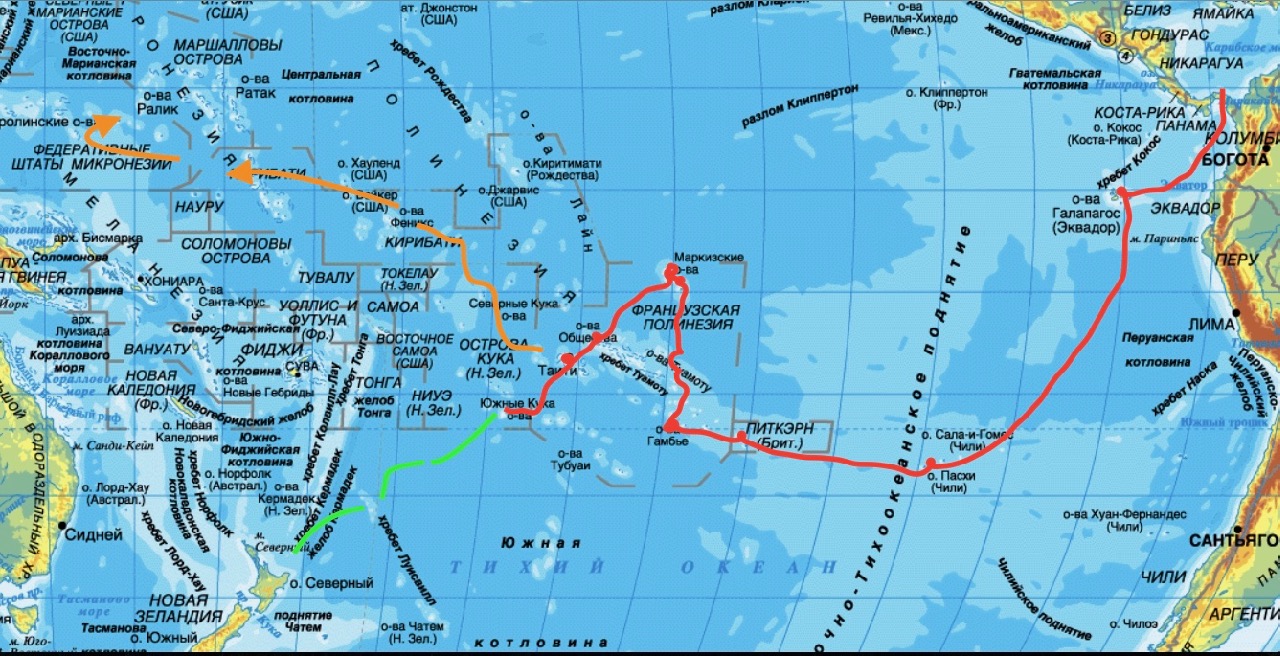
On 8 March 2018, we weigh anchor in Las Brisas, Panama City, stop for a couple of days in the Las Perlas Archipelago to scrape the yacht’s bottom and scrub the deck, then set a course for the Galápagos Islands. That is 900 miles, 9–10 days. After our wallets have been considerably lightened in these protected Ecuadorian waters, Lady Mary will set a course for Easter Island.
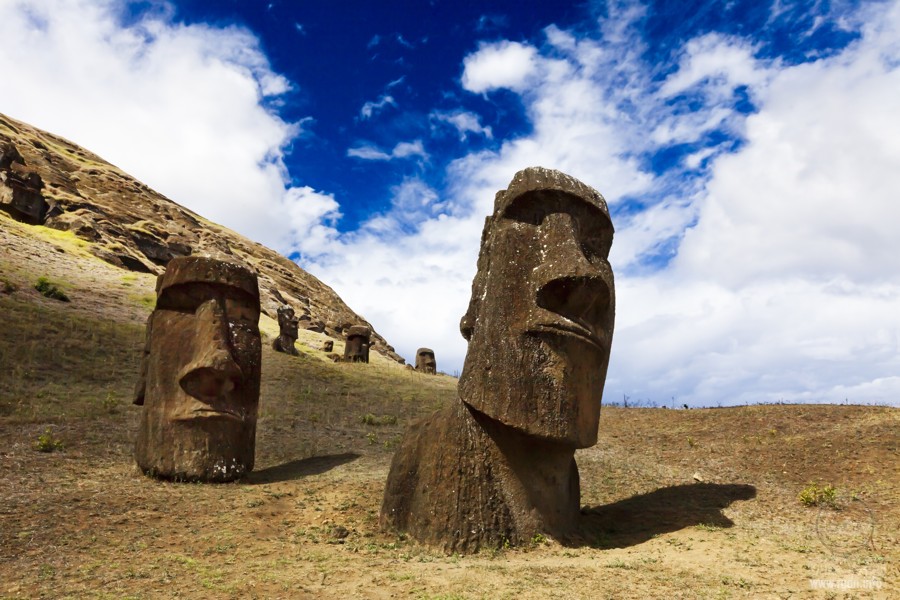
That is 2,025 miles along the rhumb line. Passage time: about three weeks. According to statistics, around 30 yachts a year call at the world’s most mysterious island—not everyone fancies battling against the current and wind. And the prize may prove as close yet unattainable as your own elbow: you cannot drop anchor in all weather at Easter Island’s unprotected anchorage, amid the ocean swell.
photo not ours
The anchorage is so bad that one of the requirements is for at least one crew member to remain aboard AT ALL TIMES during the night. If we fail to land on Easter Island, we shall have to carry on for another 1,100 miles with nothing to show for it.
Yesterday the crew heard from friends who had sailed directly from Panama City to Easter Island. 31 days, good weather, light wind, but almost astern. They managed to anchor successfully; the rolling is fierce, but they did manage to get ashore.
After Easter Island, Lady Mary will set a course for Pitcairn Island.
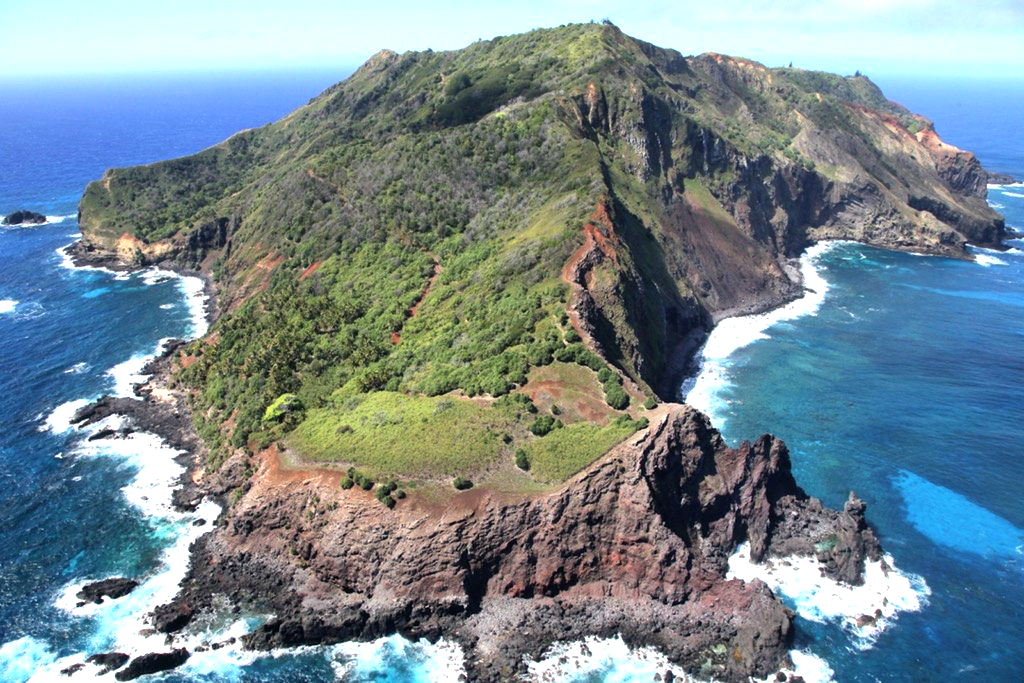
Pitcairn from the internet
Pitcairn Island —the very island lost in the ocean (the main island and three smaller ones nearby cover 2 square miles), with a population of just over 300. Until the 19th century, the island was effectively uninhabited, until the mutinous ship Bounty found its final resting place there, lending its name to an entire world—from a chocolate bar to the romantic fantasy conjured up by the phrase “Bounty island.”
Here is the irony: it is not always possible to anchor off Pitcairn either, and we have met sailors who were unable to anchor and had to continue for another 1,000 miles to the Marquesas. So the optimistic forecast is 2,000 miles non-stop; the pessimistic one, 4,000. Along the rhumb line.
The Gambier Islands are about 400 miles from Pitcairn. This is already French Polynesia, where, for the time being, we shall try to avoid formally clearing in.
Several possible stops at the eastern atolls of the Tuamotu Archipelago (see Jules Verne, In Search of the Castaways). In practice, the sailing directions have nothing to say about these atolls, because the “old Smolensk road” runs through another part of the Tuamotus. And the route from Easter Island to the Marquesas is no well-trodden, thoroughly documented highway.
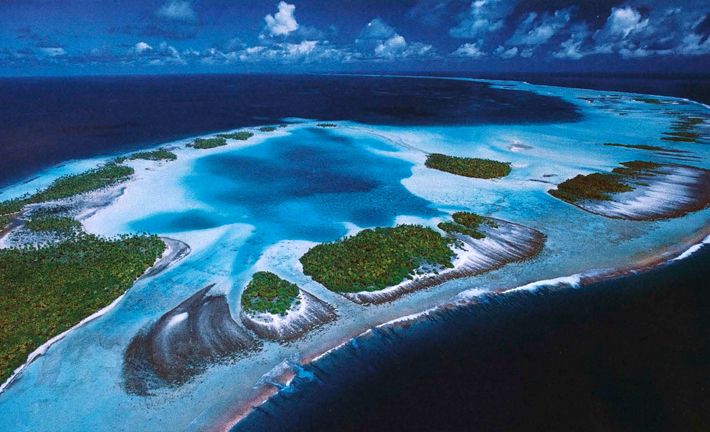
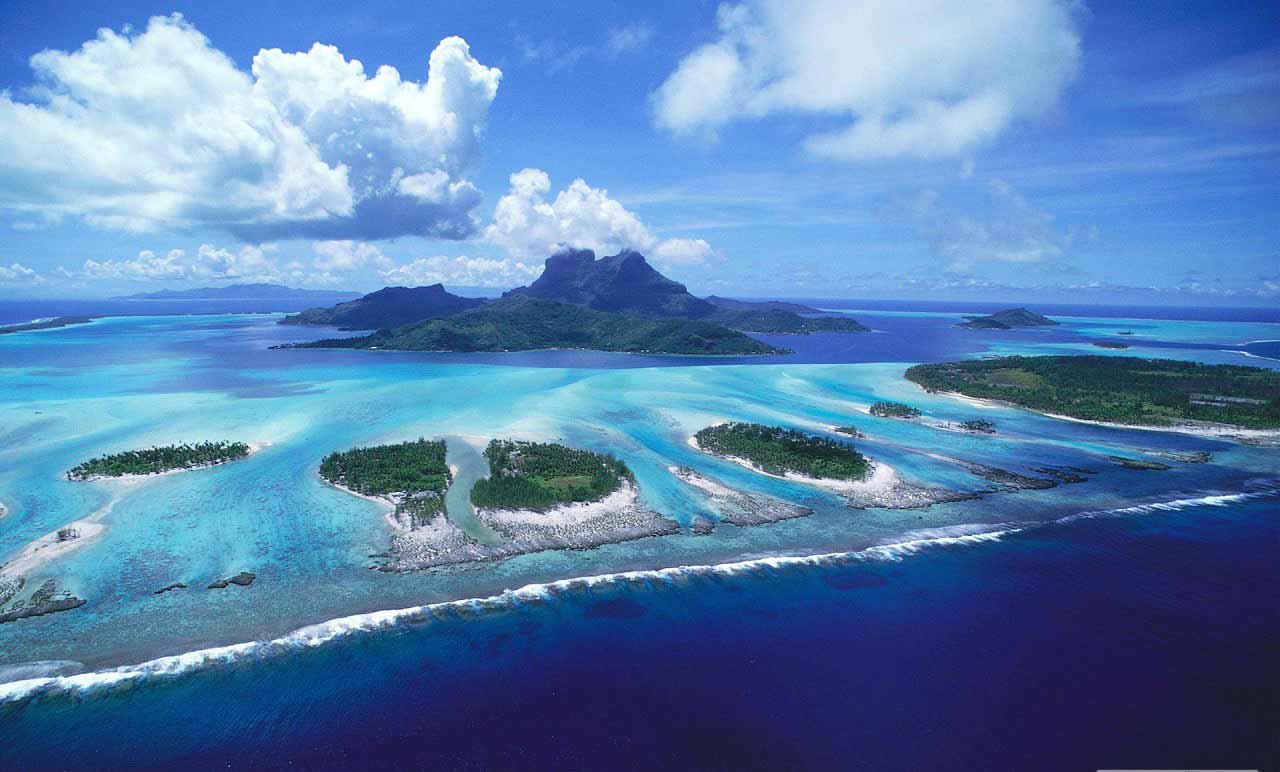
Coral atolls of the Tuamotus
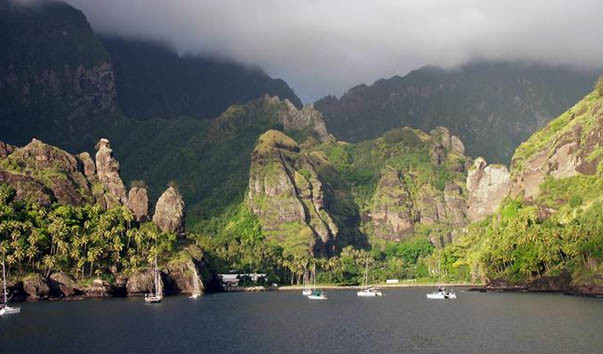
The Marquesas Islands —the very ones from Thor Heyerdahl: Fatu Hiva, Nuku Hiva, Hiva Oa... Those in the know say it is best to linger there, because they are beautiful and not ringed with hotels like Tahiti and Bora Bora.
Tahiti
(late summer–early autumn 2018).
The Cook Islands
Then comes hurricane season. We have not yet decided whether we shall sail to New Zealand, Micronesia or wait it out somewhere around there. This is where the expedition itinerary begins to sprout complicated dash-dotted lines:). Roughly like these. Everything depends on where we decide to take shelter for hurricane season, which will gradually begin sometime around October–November.
The first mate amused herself by drawing 🙂
What is the first step before our yacht sets out into the Pacific from Panama? Getting a visa for French Polynesia. There will be a separate post about this:
Visa for French Polynesia.
The beginning is already finished. We shall write the ending after we leave the French overseas territories.
Formalities
The Polynesian visa has been obtained. We may enter for three months between 18 May and 18 November. We are wondering how we might avoid checking in at the Gambiers—the first archipelago in French Polynesia—and formally clear in at the Marquesas instead. The plan is cunning and sound, but what if the border officials prove equally cunning... Then we shall have critically little time left for Polynesia—if they do not confiscate the yacht for violating the visa rules:).
We shall probably clear out on Thursday; apparently, we particularly enjoy leaping out of our comfort zone on 8 March. Two years ago, it was on the 8th that we set off from the Canaries for Senegal. That was fun: our round-the-world voyage nearly came to an end before it had barely begun:). The story is even called:
“The Triumphant Exit of a Farming Family from Their Round-the-World Voyage, or Our Passage from the Canaries to Senegal” Difficulties with the Galápagos
The greatest difficulty is money. No, not like that...— MONEY!
You can clear into the islands only through an agent. We contacted three; two replied. One is prepared to handle the formalities... deep breath... for one and a half thousand dollars. The other—for two.
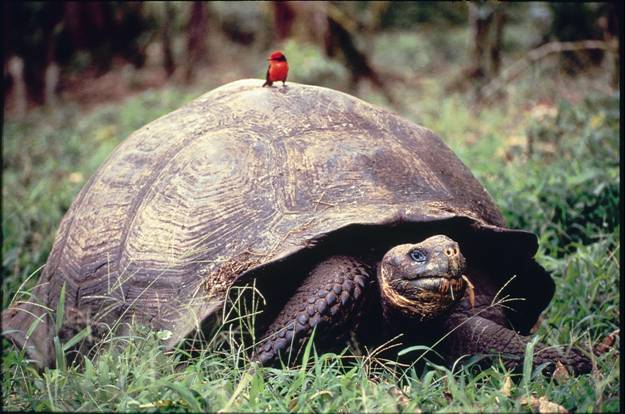
For that money, you may stay off one island for 20 days. Just stay there, with no services. Or rather, the service consists of an inspection team coming aboard your boat and carrying out a full search. If they find spoiled vegetables, fruit or other foodstuffs, algae on the yacht’s bottom, flowers or animals inside her, the boat is expelled from the reserve. And the Galápagos is one vast nature reserve.
You also need a fumigation certificate. It confirms that specially trained people came aboard your boat and used terrifying smoke to poison any unregistered creatures—mosquitoes, moths and so on.
And we must also find somewhere to hide our long-suffering friends, Shlyapnitsa and Alejandro (these are our flowers of life —a scrawny Canarian agave and a Caribbean aloe). They are not allowed into the Galápagos. But we cannot kill our pets or abandon them on foreign soil either, especially since Shlyapnitsa has a baby growing beside her in the pot, and our young sailor named her... Shlyapulya. Yes, quite an impression was made by watching Alice in Wonderland once upon a time, and by the moment Laduska realised that the Mad Hatter and Jack Sparrow were one and the same person:).
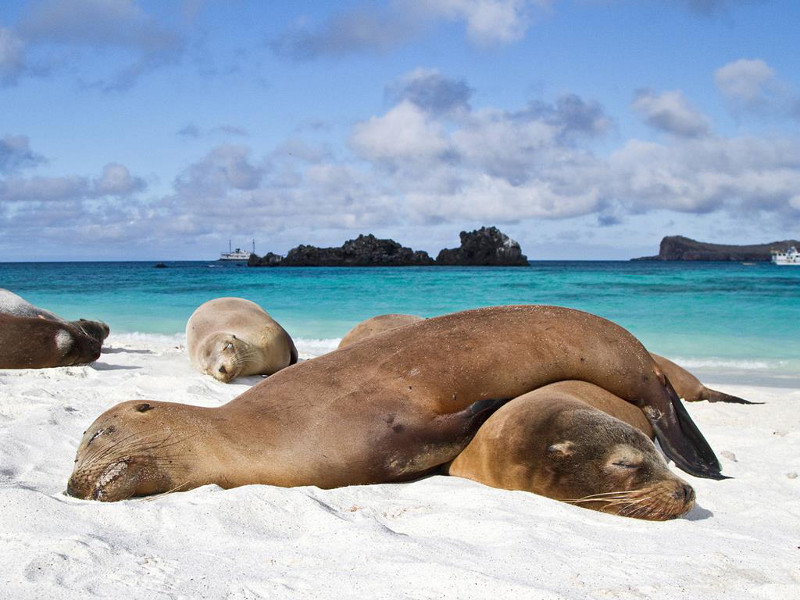
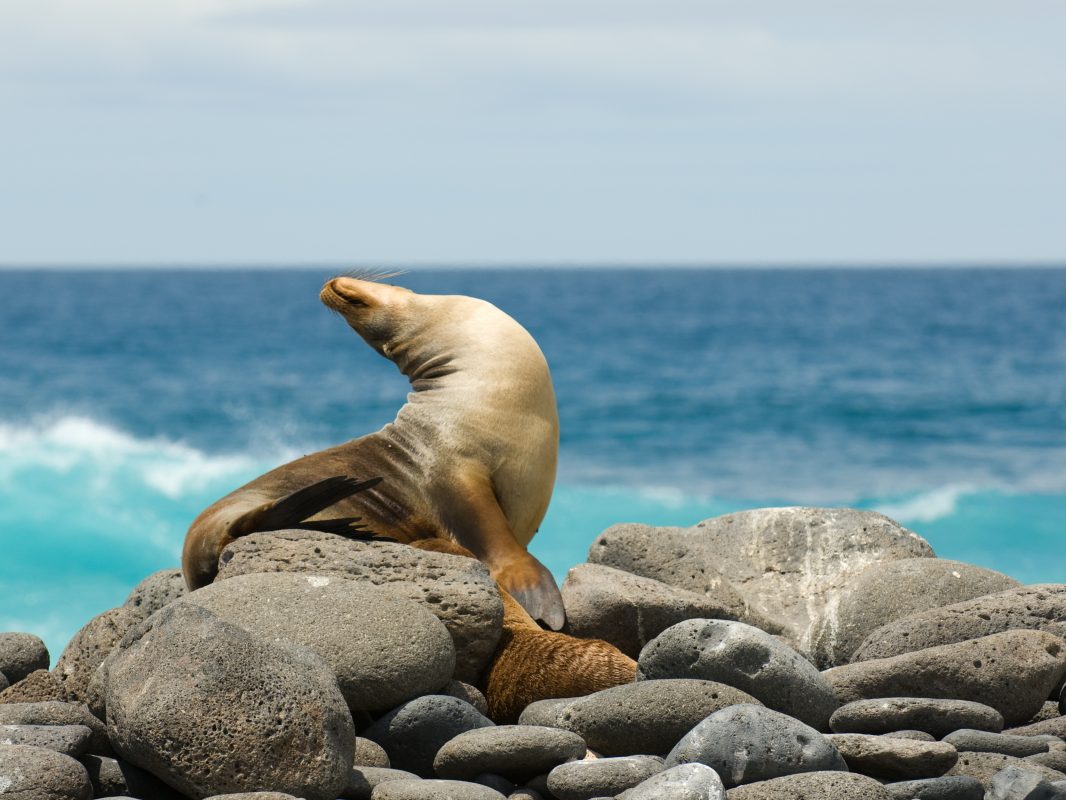
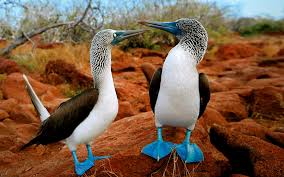
Why endure such financial and other torments, you may ask? A few photographs from the internet explain exactly why:
sea lion, Galápagos Islands, Ecuador
This is a protected place; Charles Darwin was inspired here and became the great theorist of evolution. His research station and museum still operate in the archipelago.
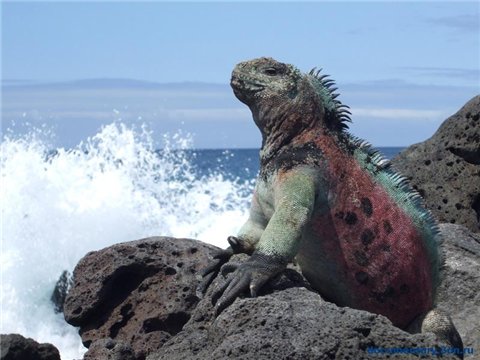
The captain is preparing a mountain of paperwork for the chance to gape at sea lions climbing aboard neighbouring boats (not a chance of them climbing onto ours), at the world’s most terrifying iguanas crawling over the rocks (nothing like those in the Caribbean), and also at blue-footed birds and giant tortoises. But the pleasure of swimming with them costs extra.
Wishing everyone astonishing discoveries.