
From the Travely-Family archive · Other Entries
Plan B: The Beagle Instead of Cape Horn
An original publication from the former Travely-Family website. This English translation was preserved from the technical-site archive without editorial rewriting.
News from the captain:
“We’re not going via Cape Horn. This decision was prompted by two important factors. First, we have only just enough diesel fuel left to reach Ushuaia. Second, we’re running short of time. The scientists and the group joining the expedition to the icy continent are already waiting for us.
Instead of rounding Cape Horn through the Drake Passage and then entering the Beagle Channel from the east, we’re cutting almost a full day off our route.
We’ll enter the Patagonian fjords and then the Beagle Channel from the west. Almost nobody does it this way. Technically, entering the strait between the islands of Tierra del Fuego in the same weather conditions is more difficult than rounding the Horn on a wide course, with the entire 600-mile-wide Drake Passage available for manoeuvring.
The swell generated by the constant westerly winds of the Southern and Pacific Oceans not only causes strong currents in the rocky coastal zone, but also becomes dangerously short while retaining its original oceanic height. In these conditions, entering the Tierra del Fuego archipelago from the ocean is, shall we say, hardly a trivial task. According to our schedule, we should reach the dangerous shores early in the morning, at dawn. At the very least, we’ll be able to keep a visual watch for hazards.
For now, we’re carrying a full mainsail, full foresail and staysail. We shook the reefs out of the main and foresail this morning. The wind has begun to ease a little. By lunchtime, we had also started the diesel engine. With this combination, it’s no trouble to maintain a speed of 8.5–9 knots. It’s a sunny day and quite warm on deck—about +10°C.
The crew are still busy cleaning the interior spaces. As soon as we’re among the islands and they shelter us from the swell, we’ll set about putting the deck in order. We’ll arrive in Ushuaia fully prepared to bunker fuel, take on provisions and set off immediately for Antarctica.
We have about 70 miles to go to Cook Bay, between the Patagonian islands of Londonderry and Hoste, which is what we’re aiming for. A few hours ago, at sunset, we took down all the sails.
We’re proceeding under engine. The wind has died away completely, but the swell remains. With every wave, the sails slat, and the gaff—which is essentially a sizeable log—tries to tear itself away from the mast and fly off into parts unknown. We couldn’t allow that, so we quickly took down the mainsail, foresail and staysail.
Judging by the current chart, we’re entering a fair current. It should add up to one and a half knots to our speed.
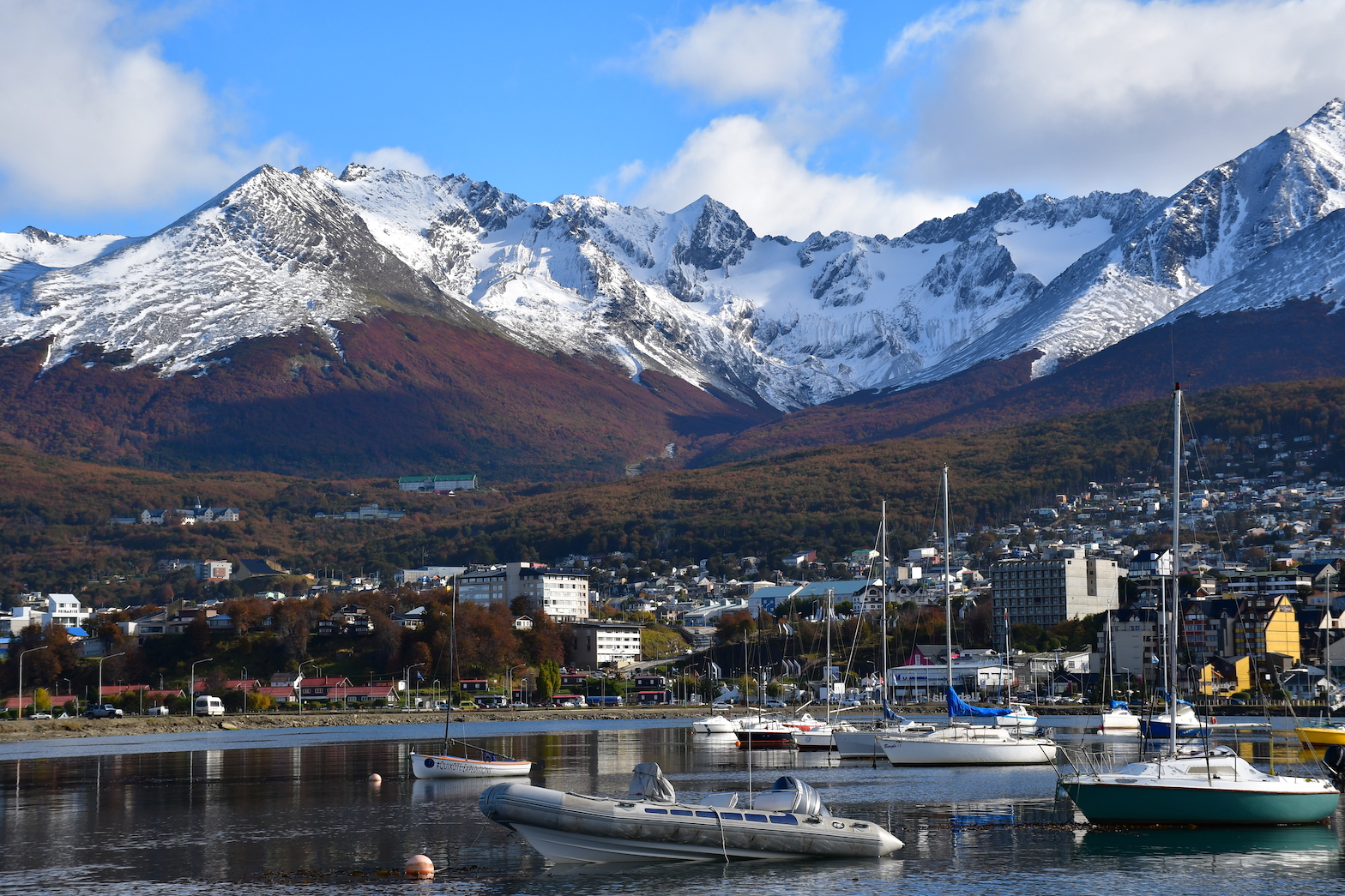
From Cook Bay, we’ll turn east into the southern arm of the Beagle Channel, and from there Ushuaia will be just a stone’s throw away.
The main thing is to calculate and execute our entry into the archipelago correctly.
Both Dan and I have sailed through the Patagonian fjords, and we understand the local conditions. So we hope our experience will allow us to negotiate the final—and far from easiest—section of the route safely.
The Chilean military have already been notified of our arrival in their territory, so our unhindered passage is assured.
Ushuaia, get ready to welcome us!”