
From the Travely-Family archive · Atlantic
Passage from French Guiana to the Caribbean. Days 1–3
An original publication from the former Travely-Family website. This English translation was preserved from the technical-site archive without editorial rewriting.
Passage from French Guiana to the Caribbean. Days 1–3
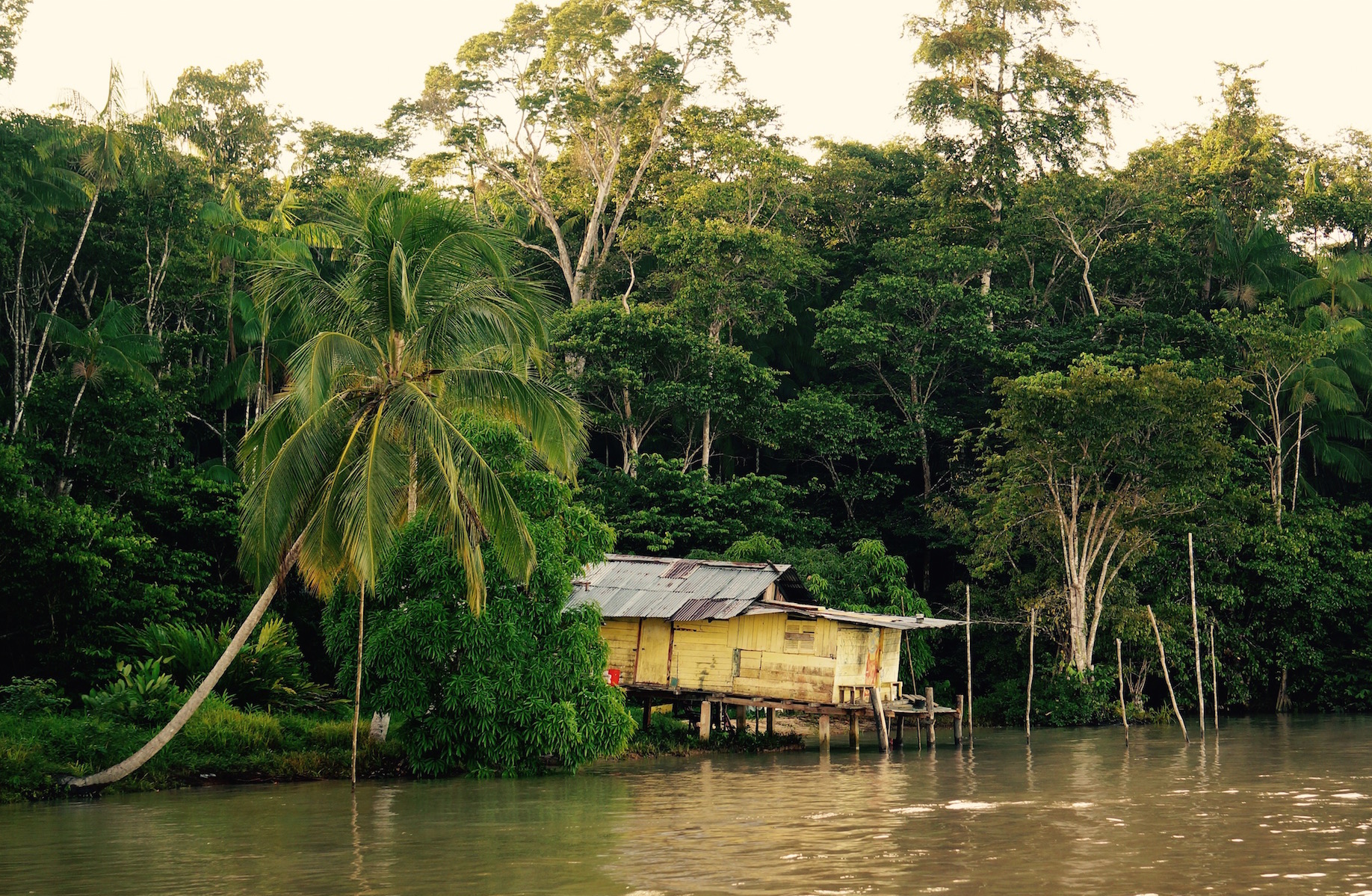
The channel of the Maroni River, which forms the border between French Guiana and Suriname, runs so close to the tropical rainforest in places that it seems you could pick coconuts straight from the mast.
After breathing our fill of the South American jungle one last time, we reached the ocean by lunchtime. Lada immediately spotted a dolphin and, inspired, told us that she could feel in her heart that a daughter or son had been born to the water spirits. “Don’t disturb me, they’ve asked me to come up with a name.” After a brief deliberation, the young sailor proclaimed: “The water spirits’ son will be called the Hatter.” “And their daughter?” “The Hatteress!” And just try explaining that hats are unlikely to be practical in the ocean depths.
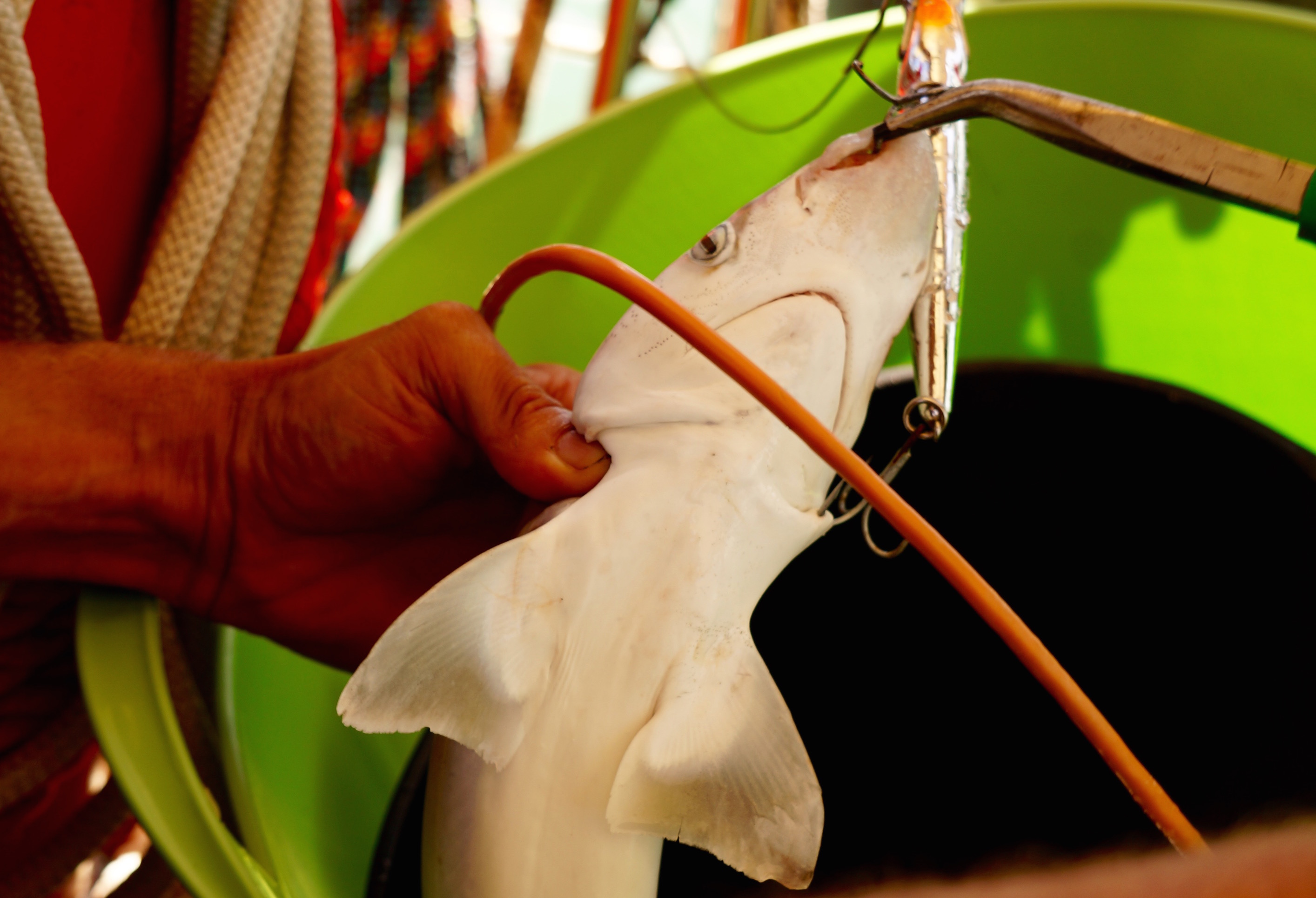
But you can catch fish from those depths—sharks, for example. From a gastronomic point of view, we know sharks well from the film Jaws, where they are... umm... at the top of the food chain. On those grounds, Nastya flatly refused to eat our catch, no matter how we tempted her. Our knowledge of how sharks are eaten was limited to the name of the dish “shark-fin soup” and a memory that surfaced from goodness knows where: that most people do not find meat with such a sharp fish-oil flavour very tasty. And the smell really was veeery fishy. To get rid of it, we intuitively marinated the chunks of meat in rum with garlic and spices.
A couple of hours later, the rather tough shark tasted almost like pork and smelled deliciously fried:). In the hundred-mile-wide continental shelf zone, there are nets and fishing vessels. One of them rushed to cut Lady Mary off while the crew were peacefully watching a children’s film. About 15 light-skinned fishermen (apparently Surinamese Creoles are nowhere near as black as those in French Guiana) insistently directed us to go around the net to the south. All together, they waved in the direction opposite our course while holding up three fingers. “Do we have to detour three hundred metres? Pass three buoys?” we guessed, and raced under engine against the Guiana Current towards Antarctica... for three miles. Or even more. Now we know how long a fishing net can be. We were already making our way back in the dark.
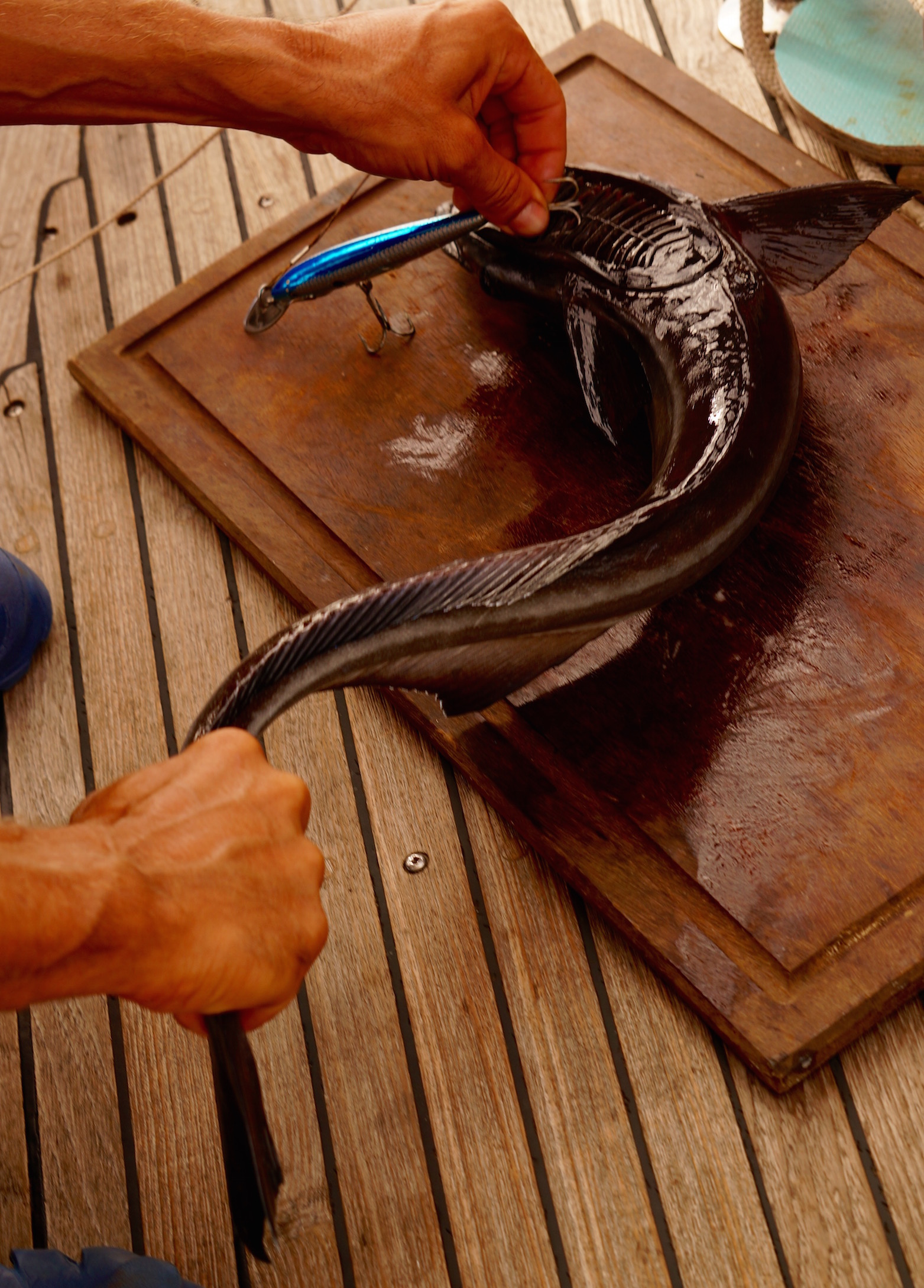
On the morning of the second day, the captain hauled out of the ocean neither a tuna nor a shark, but a completely unknown creature, seemingly from the shark family, though with a narrower body, two dark stripes along the waterline and... a sucker shaped like a shoe sole, complete with tread, covering its entire head.
Good Lord, how are we supposed to eat this one? So we let it go.
Neptune, deciding we had no need of fish, sent us no more catches. At last, the water turned bright blue and the depths became respectable. A 20-knot close-hauled wind sprang up for the whole night, and after the unobtrusive calms, some members of the crew found it positively strong:). The waves grew and even tried to wash over the deck. The skipper stood watch until morning, while also dodging a couple of large ships towing two 10-kilometre cables straight across our course.
By morning, as usual, someone had switched off the wind, and for the whole of the third day we have been standing still at a speed of one and a half knots towards Tobago. Abeam lies the border between Suriname and Guyana. In two and a half days, we have covered 205 miles. Three quarters of the crew are already tired of lying about on deck under the pretext of seasickness. It is hot by day; at night, you could catch falling stars in your apron. It looks like a meteor shower, or even a comet shower (are those a thing?): sometimes a star takes far too long to cross the sky, leaving a glowing tail behind it. For the third day running, the first mate has been practising blurting out her wish in one go. So far, when the crucial moment comes, all she manages is “Wooow!” Or “Whoa!”
Bright stars to everyone! 🙂
The continuation of the passage, calms, New Year’s dreams and real yacht music—is here:
Passage from French Guiana to the Caribbean. Days 4–5
The spectacular stormy end to the passage, the threat of losing the mast and a major breakdown—is here:
Passage from French Guiana to the Caribbean. Days 6–7