
From the Travely-Family archive · Atlantic
Passage from French Guiana to the Caribbean. Days 6–7
An original publication from the former Travely-Family website. This English translation was preserved from the technical-site archive without editorial rewriting.
Passage from French Guiana to the Caribbean. Days 6–7
“If some crap can happen, it will definitely happen at night.” — This needs to be added to the list of Murphy’s laws for sailors...
We got the wind we asked for in the previous post. Thank you. Now we’re thinking of ordering 3 million dollars: what if we conjure up twice as much of that too? 🙂 Passage chronicles
Two in the morning. Rain is drumming on the hatches. The wind-speed sensor showed 37 knots in a gust, but it was probably just startled. There are two people on deck: he, wearing a windbreaker over his bare skin, is balancing on the bowsprit; she, in her nightwear beneath the streams lashing down from the sky, is cranking a winch. The captain and first mate are trying to furl the genoa around the detached forestay. Repin’s painting “Well, Here We Are.”
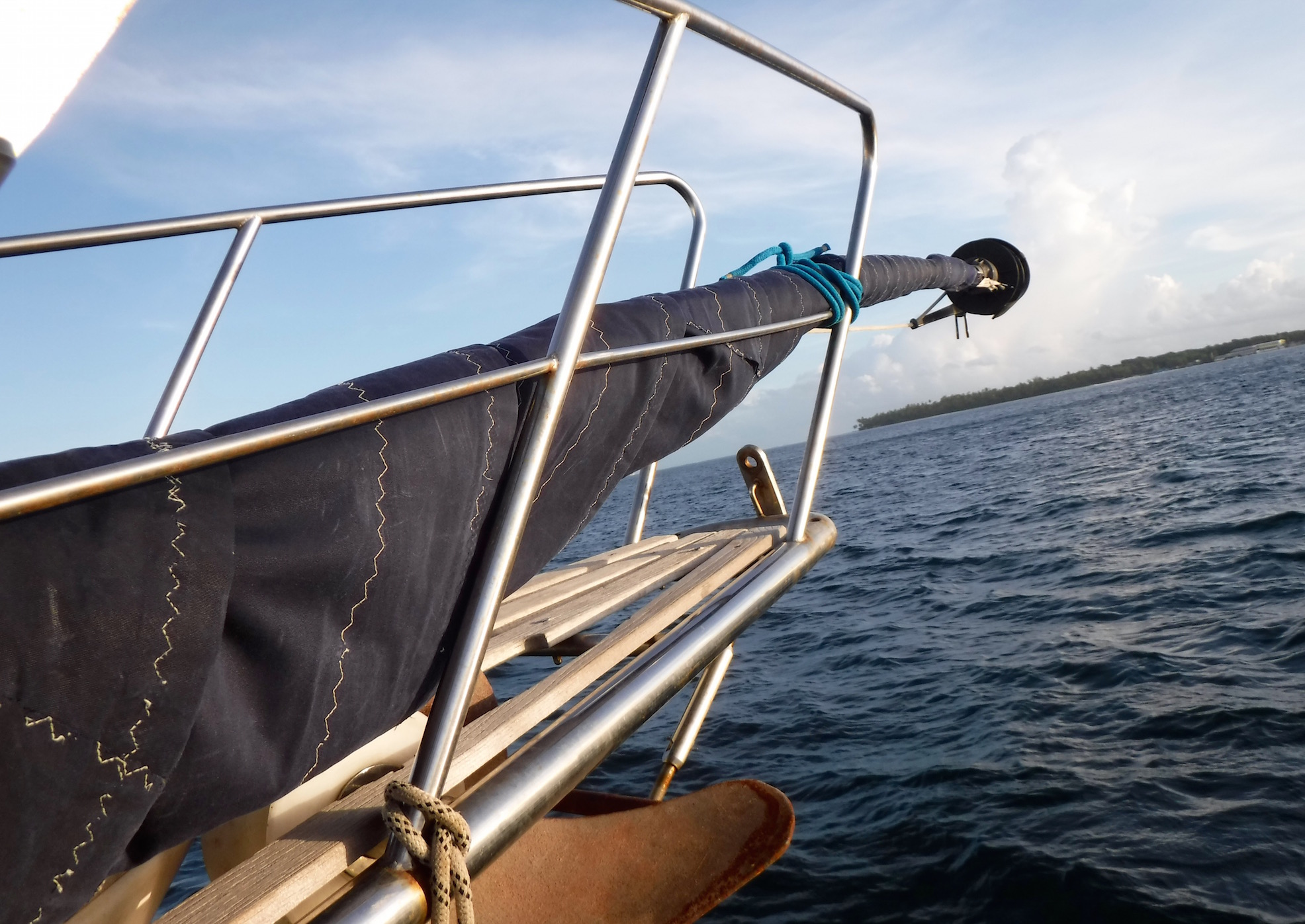
Half an hour earlier:
25 knots of steady wind. A loud bang from the rigging sent the captain rushing out on deck, where he found the genoa (the large, heavy headsail) bowed into a crescent together with the stay. The whole structure was hanging from the mast by the halyard. The forestay’s upper fitting had given up the ghost. The first mate was roused by the alarm just as she was. With the stay sagging in the strong wind, we managed somehow to furl the sail on the second attempt. We replaced the genoa with a small staysail on the baby stay, balancing the reefed mainsail. It’s a good thing Lady Mary has two headsails—at least we had options to choose from:).
A while later, the captain noticed that the detached stay was thrashing the staysail mercilessly, threatening to leave us without our second stay and, consequently, without the mainmast. Another all-hands emergency, and we took down the 17-metre stay and sail, which were hanging from the halyard and bucking wildly, then laid them along the side deck and secured them. Twenty-three knots of apparent wind and 3–4-metre waves added a little extra excitement to the exercise. Anticipating questions from the sailors most knowledgeable about the technical side of things, let us make one thing clear: a week before we set out into the ocean, the captain went to the masthead and thoroughly inspected all the rigging.
After lunch, the downpours began to ease and the wind dropped to the desired 15 knots. Though it had actually been fine in the morning too: like winter in the Mediterranean, only warm.
We slept little, we’re rolling badly, and we’re sailing under an emergency sail plan—a tiny staysail and the mainsail with two reefs in. Over the course of the day, we quietly covered about 40 miles. Another 37 to Tobago. We should be there by morning. You might think, what’s a week-long passage to us after 23 days on the Transatlantic? But no—the Transatlantic was a holiday resort for us:).
Taking the forestay with us 🙂
“Crap never comes alone”—another addition to “Murphy’s Laws”...
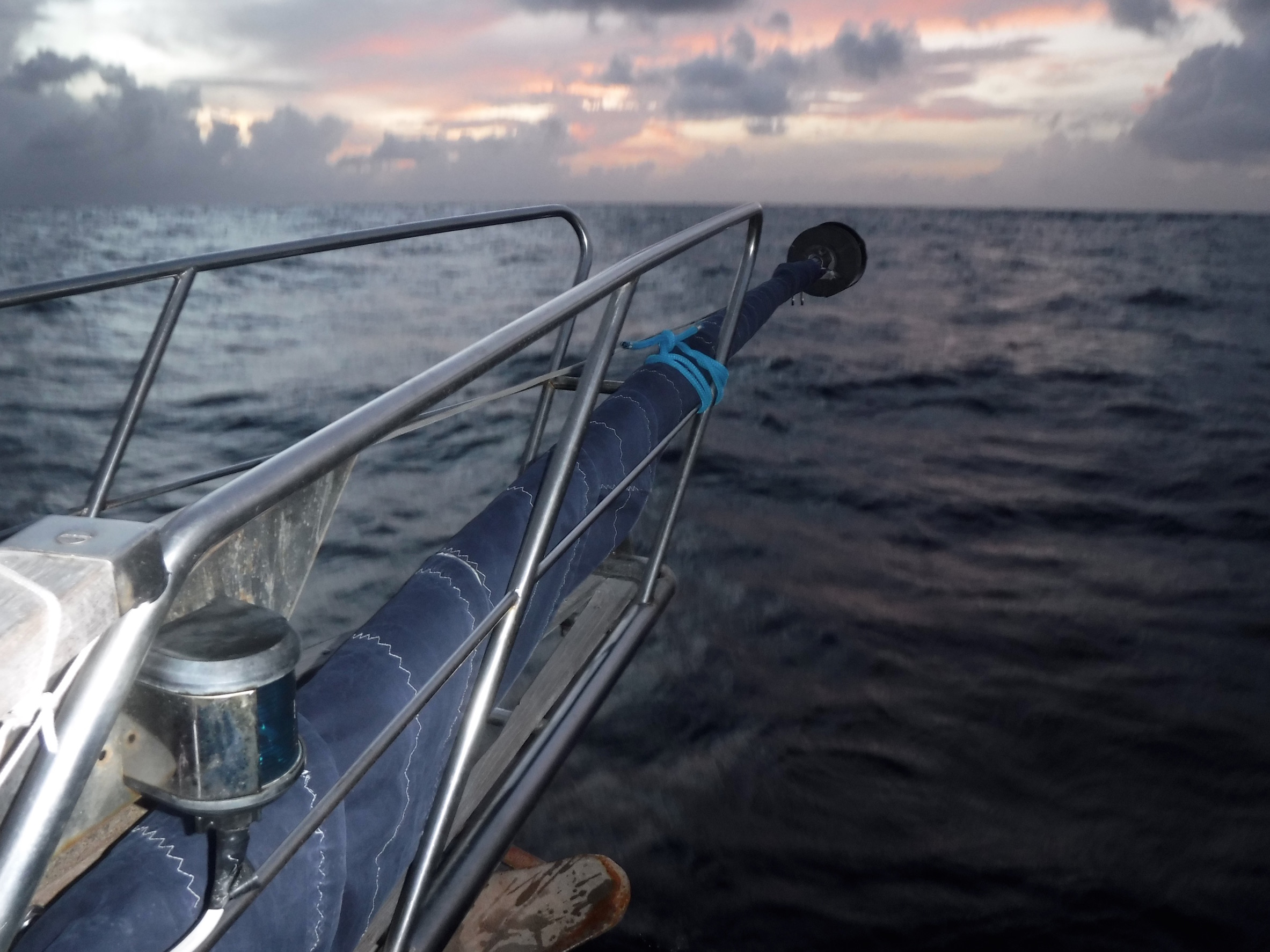
By yesterday evening, the crew’s spirits had been dampened by an unsuccessful fishing attempt. In the fresh wind and at a good speed, the spinning rod suddenly rattled. At the captain’s cry of “What an idiot!” the rest of us saw what had taken the hook... a bird. A large one. An albatross, it seemed. 🙁
What are you supposed to do at 6 knots? Cut the line? It’ll die. Haul it in, hoping the hook is caught somewhere in its beak and we can free our “catch”? Either way, it’ll die. It snapped our fishing line. And didn’t take off from the water.... If anyone knows how to avoid killing birds, please write in the comments.
They say fish are more brainless than birds. But have you noticed that a fish won’t eat just anything? If it doesn’t like the lure, it sniffs it and swims away. Well, except that predators go for trolling lures—but then, they’re fish, they’re supposed to grab them. But what about the bird? Why not pick it up carefully in its beak, then drop it when it turns out to be hard and not alive? Why swallow it whole straight away? In short, we immediately lost all desire to fish. We grew gloomy and retreated to the wheelhouse. And then, in the night—the stay.
So that’s the kind of passage it turned out to be. It seems the Intertropical Convergence Zone has finally given way to the trade winds, and by this evening we’re flying along so briskly even under reduced sail that we’ll have to anchor at night. No problem, we’ll do it.
We arrived in South America the same way, in the dark. On the whole, though, everything is fine. Our spirits are improving in proportion to the shrinking waves, and the children are looking forward to swimming in the ocean’s clear turquoise waters, which everyone has missed during our month and a half in Amazonia.
Take care of yourselves! 🙂
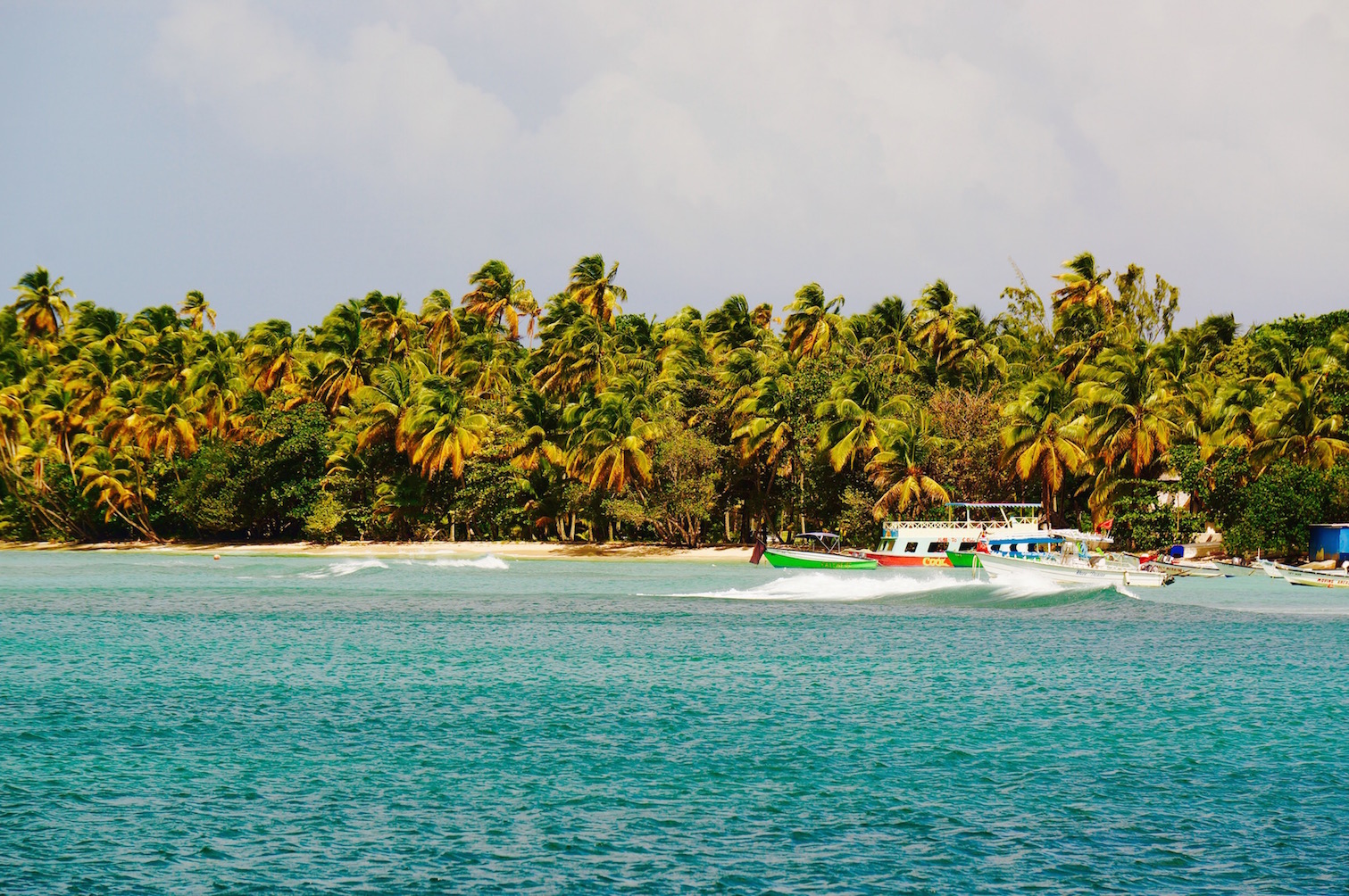
The azure waters of our first Caribbean island—Tobago
Read the beginning and continuation of the passage here:
Passage from French Guiana to the Caribbean. Days 1–3
Passage from French Guiana to the Caribbean. Days 4–5