
From the Travely-Family archive · Other Entries
The Cape Verde Islands on the Map: Sal, São Vicente and Santiago
An original publication from the former Travely-Family website. This English translation was preserved from the technical-site archive without editorial rewriting.
The Cape Verde Islands (Cabo Verde) on the map. Anchorages and the only marina. What is where and how much it costs. Healthcare, sights, a little history and lots of photos!
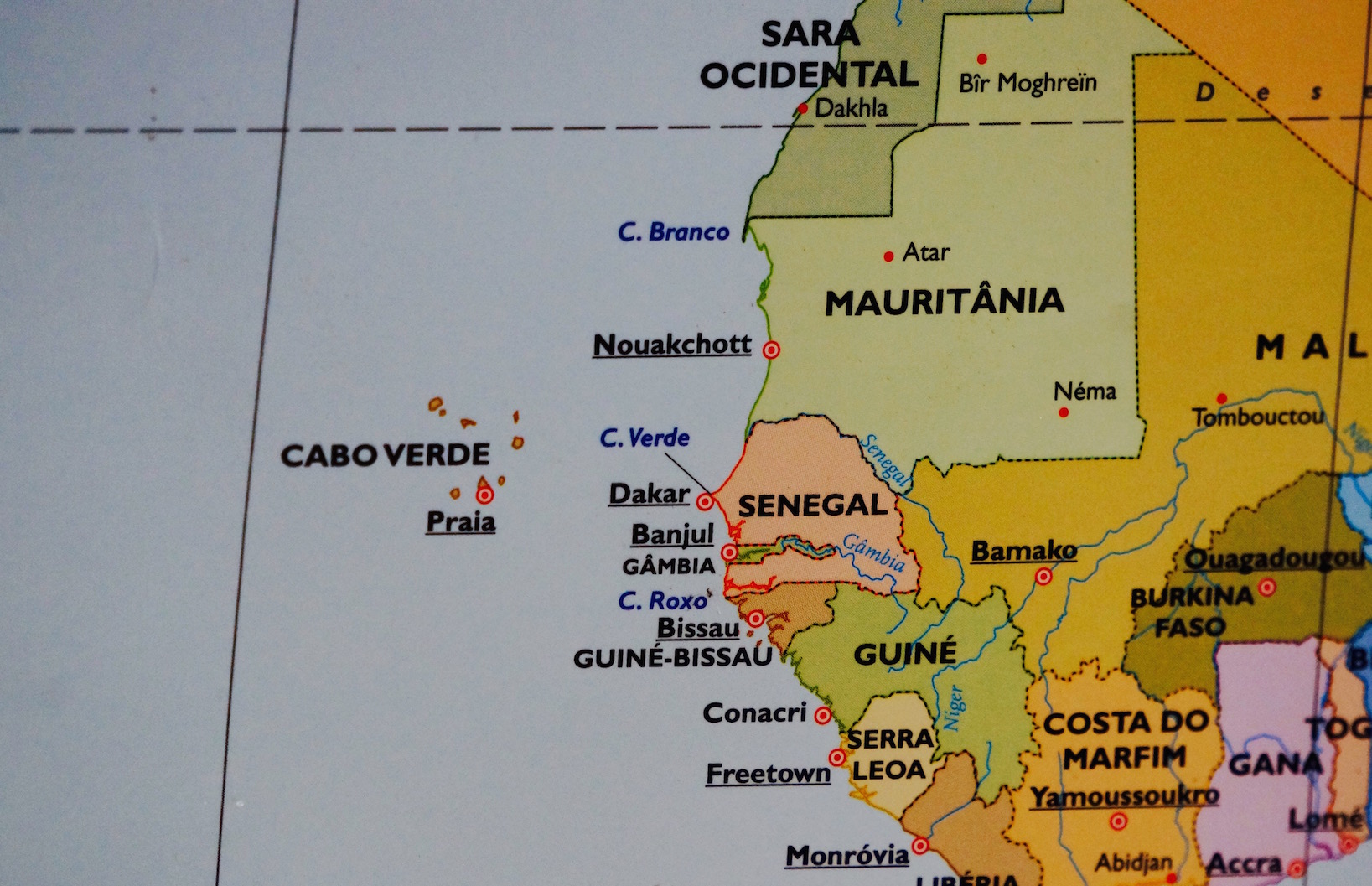
The independent Republic of Cabo Verde is considered an African country. The archipelago lies opposite the westernmost point of Africa (Pointe des Almadies and Cape Verde in Dakar, Senegal), roughly 1,000 km from the continent. There are 10 large islands, 9 of them inhabited, and 5 small uninhabited rocky islets. The capital is Praia, on the island of Santiago.
The Cape Verde Islands on the map:
The Cape Verde Islands (Cabo Verde) on a map from a local bookshop. It now occupies a place of honour in our saloon
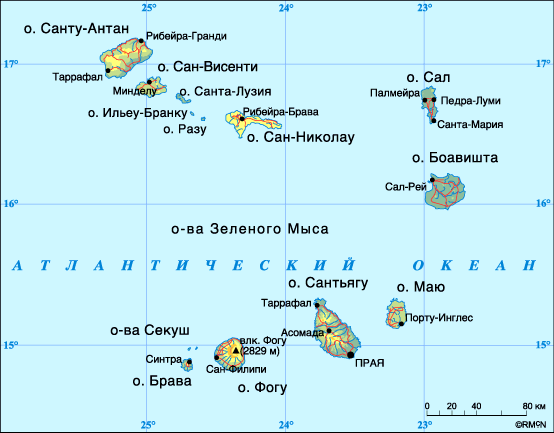
The Cape Verde Islands on a map of the archipelago. The names of islands beginning with São may vary slightly between different sources and even between the islands themselves, all because there is no clear agreement on how they should be rendered in Russian 🙂 The Windward Islands (Ilhas de Barlavento):
Santo Antão, São Vicente, Santa Luzia (uninhabited), São Nicolau, Sal and Boa Vista.
The Leeward Islands (Ilhas de Sotavento):
Santiago, Maio, Fogo and Brava.
Language
Portuguese and Creole—a mixture of Portuguese and African dialects. “Clipped” Portuguese. Creole was how black people communicated with their oppressors. Most of the population speak it among themselves. Knowing Spanish will help travellers and locals understand each other:).
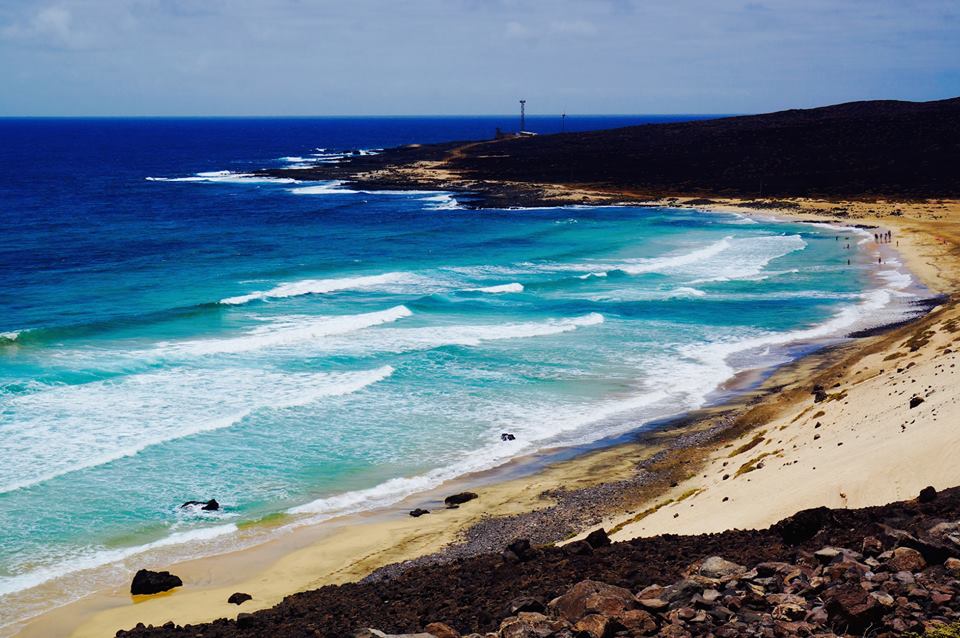
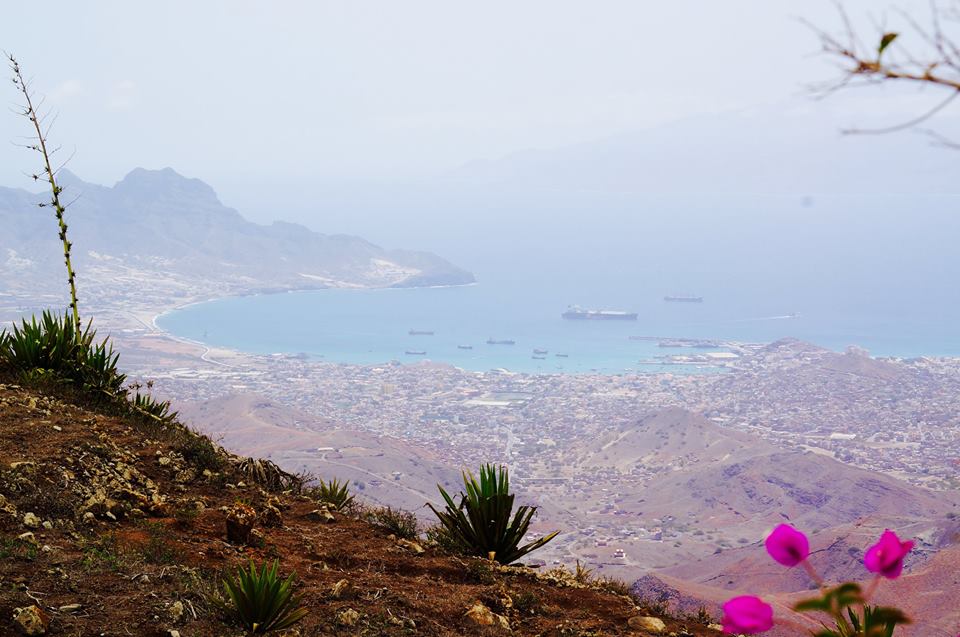
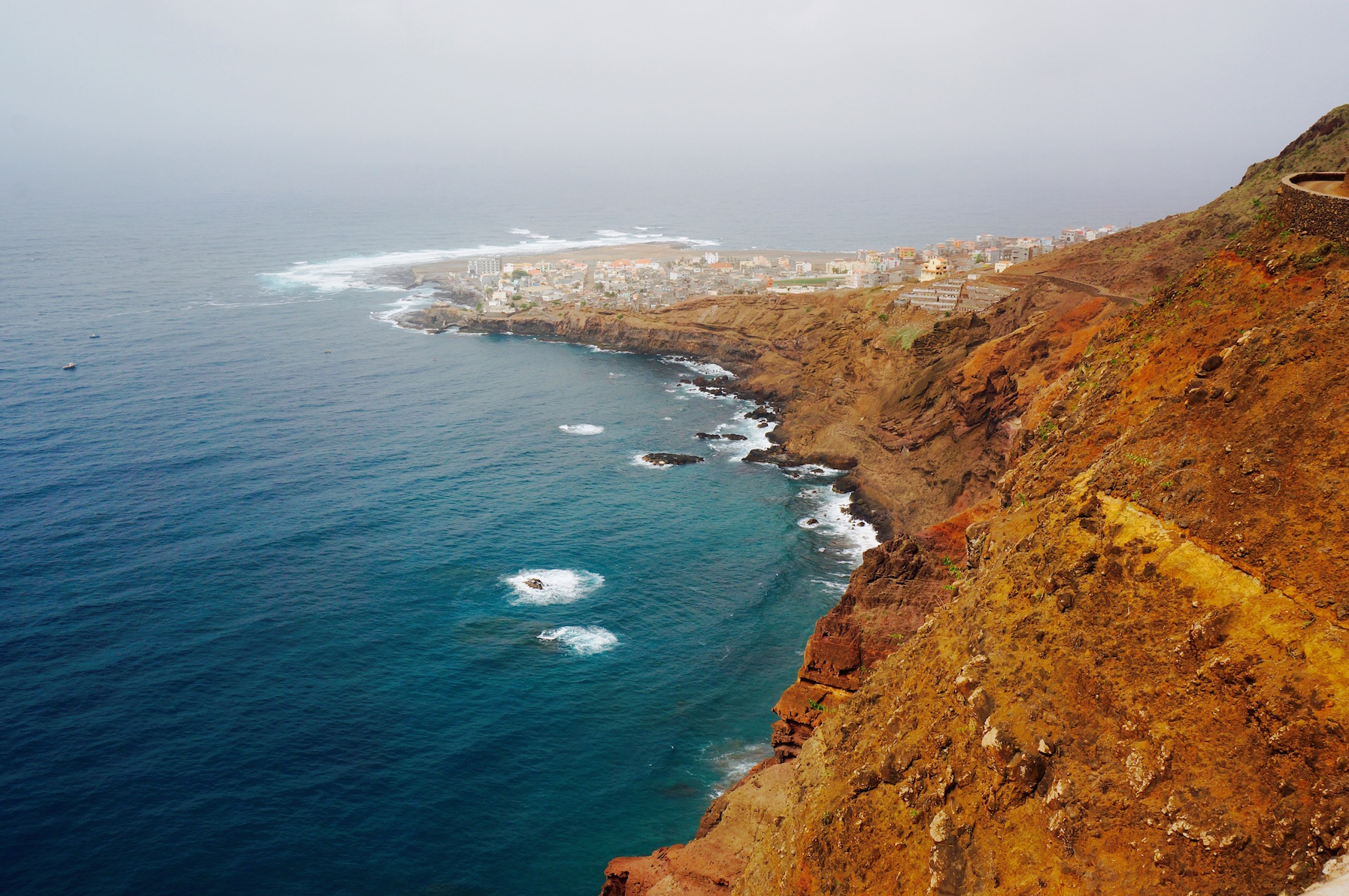
The island of São Vicente. West coast, viewed from the road.
How to get to the Cape Verde Islands
By plane from Lisbon, Amsterdam, Paris, Frankfurt or Munich.
By yacht, for example, like this:
Passage from The Gambia to Cabo Verde
Airlines:
TAP (Transportes Aéreos Portugueses) —a Portuguese airline
TACV (Transportes Aéreos de Cabo Verde) —a Cabo Verdean airline
The second is cheaper, but the first is better. The local airline (TACV—Transportes Aéreos de Cabo Verde) likes cancelling flights and delaying them by, say, 12 hours, without particularly bothering to notify passengers. So if your journey involves four different flights, three of them may go down the drain. Under the rules, if a flight is rescheduled and there is a long connection, the company must provide passengers with a hotel. In practice, however, they schedule the delay so that you fall between two stools: no hotel for you, and from three in the morning you spend the night sitting on a chair at the airport.
And, of course, you lose money when you miss your onward flights with other airlines. They say TAP is about to close, after which everyone will fly with Portuguese airlines. They also say another airline is due to launch soon, which will make prices more reasonable. But they have been saying that for about five years now.
The cost of a flight from the Cape Verde Islands to Moscow ranges from €650 (if you get extremely lucky with a special offer) to €1,500. Most flights to Europe depart from the island of Sal, which you still have to reach. A ticket on a domestic flight from Mindelo (São Vicente) to Sal costs €180.
View of Mindelo, São Vicente, from Monte Verde, the island’s highest point.
The Cape Verde Islands. Money and prices
Currency —the Cabo Verdean escudo (CVE). Exchange rate on 21 October 2016: EUR/CVE—110.78
Prices for “disposable” clothes and everything else in the Chinese shops found everywhere here are comparable to those in Europe.
Food prices are high—one and a half to two times higher than in the Canary Islands—because almost everything is imported from the Canaries or the continents.
Some prices in escudos
Apples—175 for ordinary local ones. 260–280 for glossy, pretty ones.
Snickers—75. Sugar (brown), 1 kg—44–70.
Milk, 1 litre (UHT only)—60–80.
Potatoes—120. Bell peppers—basic ones, 175. Pretty ones—300–400.
Coconut liqueur made with local grogue, 0.5 litre—500–600.
History of the settlement of the Cape Verde Islands
The Cape Verde Islands were discovered by the Portuguese sometime around 1462. The land turned out to be uninhabited, which may seem surprising but is understandable: almost none of the islands has a source of fresh water. Europeans began using the newly discovered lands as a staging post for transporting slaves from Africa to America. Here, slaves waited to be sent across the ocean; some died, some fell ill. The sick were left on the islands. Their descendants, intermingled with the descendants of Portuguese slave owners, make up the core of the islands’ present-day population—the Creoles.
The Cape Verde Islands we visited:
São Vicente Island
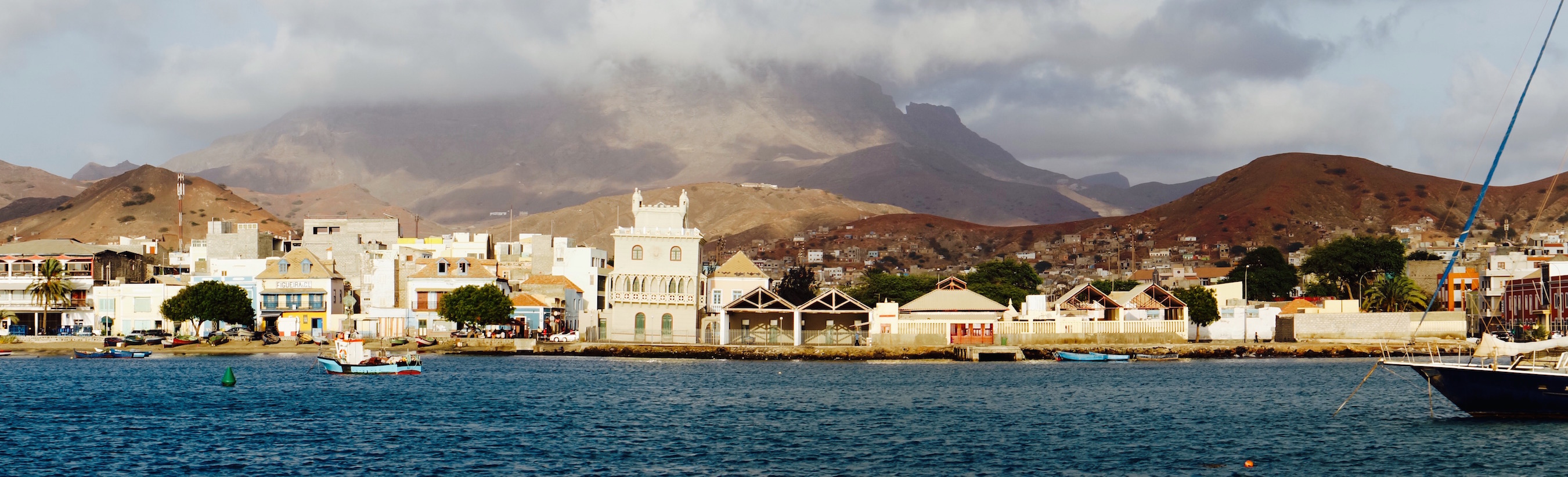
Mindelo —the northern capital, and the cultural one too; the most beautiful city in the archipelago, a city of poets, artists and musicians. The birthplace of Cesária Évora. Colonial architecture in the historic centre. The country’s largest port is here, in a large sheltered bay, along with an anchorage and the country’s only marina. A hub for yachting, yachties and commercial fishermen catering to fishing tourists.
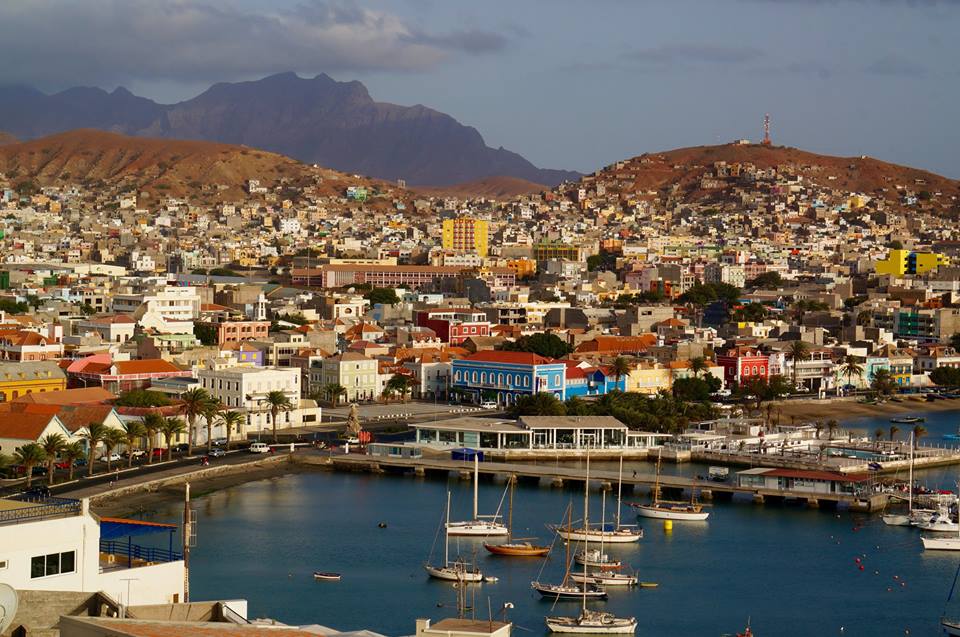
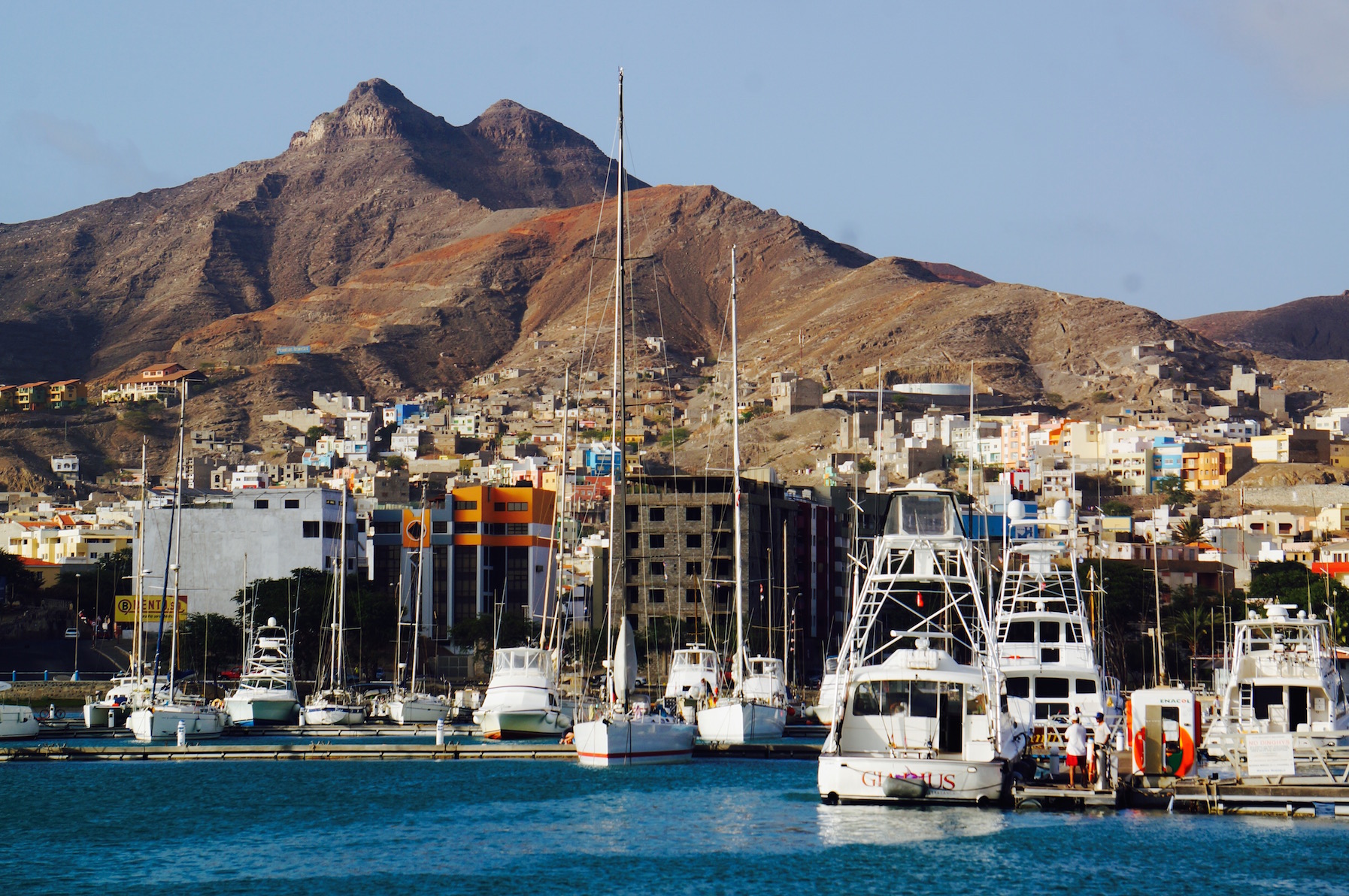
Panorama of Mindelo, the cultural capital of the archipelago. View of the marina and anchorage Marina Mindelo
View of Marina Mindelo
At anchor —the depth is 5 metres, with a sandy bottom. The marina looks and operates entirely like a European one. It is the only marina on the islands.
Card-operated showers for guests, gated pontoon.
There is a bar serving food on the pontoon. Toilets are free.
Dinghy berthing by the café costs €4 a day; we negotiated €10 a week. You can haggle to pay less.
A marina berth costs €27 (€29) per day for a 40-foot yacht. The price depends on the length of stay.
Water costs 2 escudos per litre. Twice as much as townspeople pay.
Fuel—diesel is cheaper at the marina than at petrol stations.
The marina owner is German; his wife is Australian of Latvian descent. She lived in Berlin, where she met her husband 14 years ago, and they came here to develop the business and live.
Internet is available in the marina and marina bar. We can pick it up using the yacht’s antenna. But when we started downloading films, the marina staff quickly cottoned on and began changing the password twice a day... 🙂
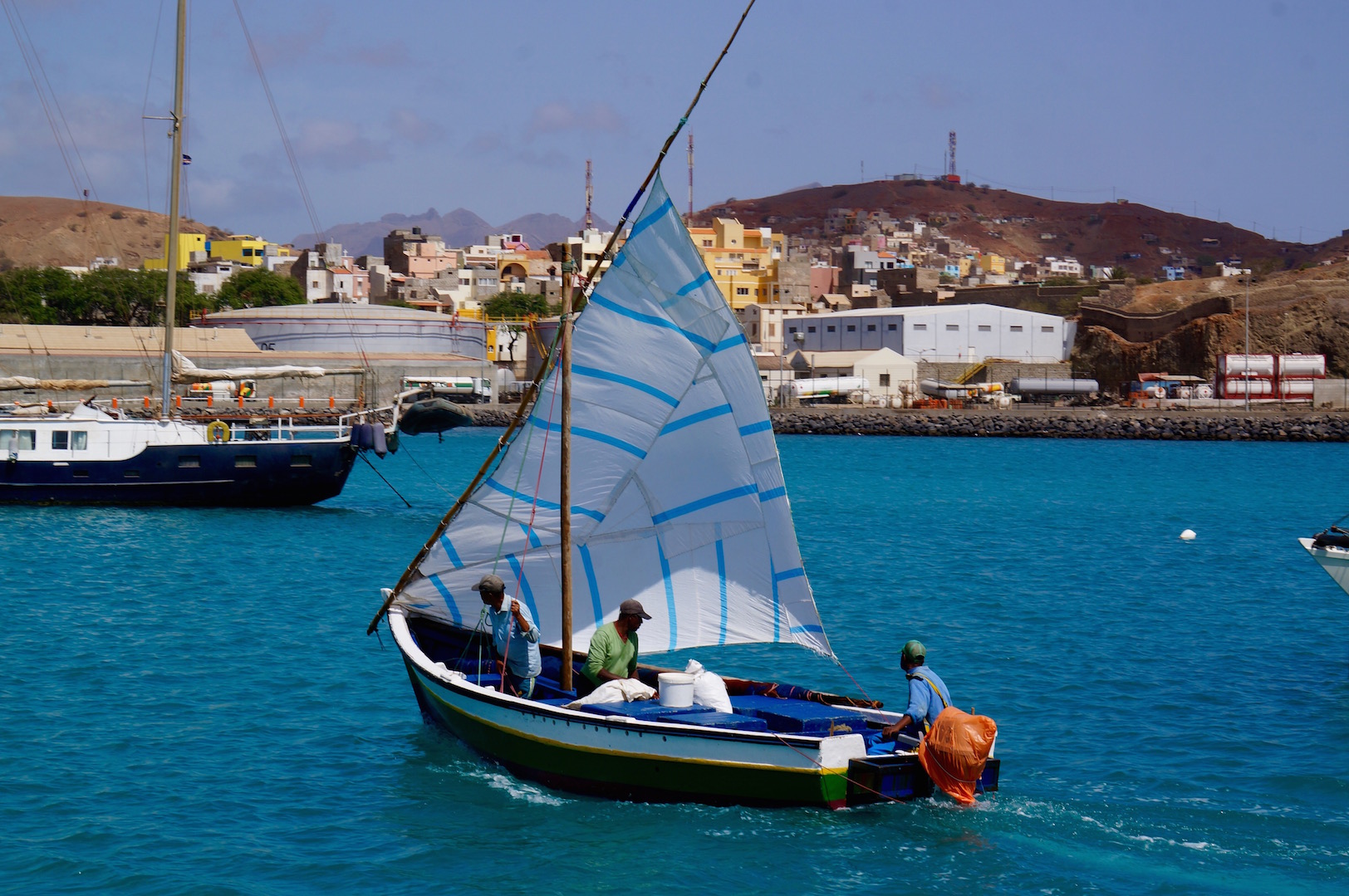
Fishermen take their catch to the market in Mindelo.
Santo Antão Island
The most beautiful, greenest island in the archipelago. High folded mountains with coniferous forest, gardens and even springs. This is the breadbasket of the archipelago.
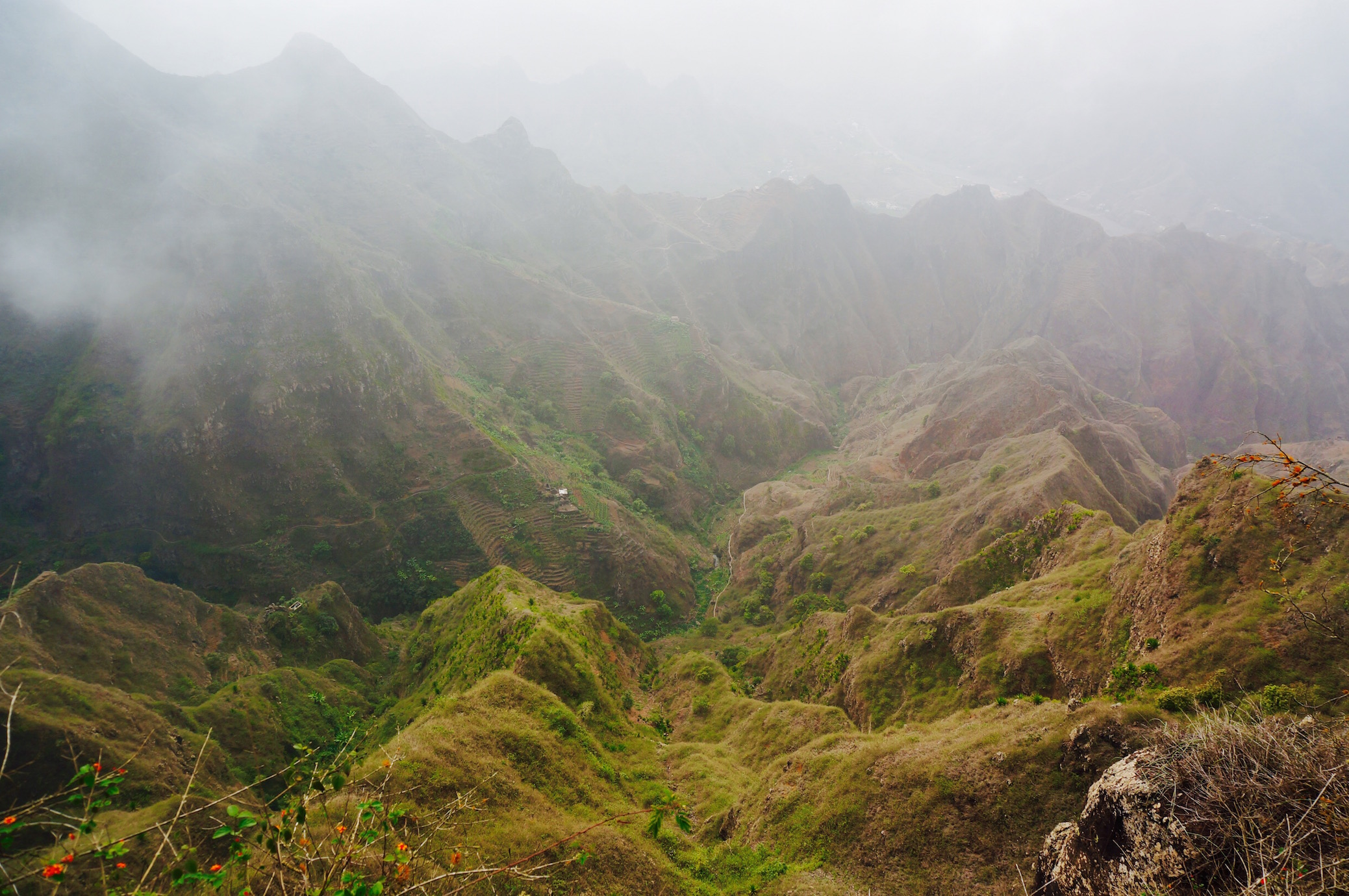
Mist in the mountains of Santo Antão at the end of the dry season. After the rainy season—which is in September—the mountains turn a richer, velvety green.
Car hire —in Porto Novo. There is an international company called “Pegas” there, about 400 metres north along the waterfront from the port.
A large pickup truck—€65 per day.
Plus petrol.
If you drive more than 100 km a day, there is a charge for every additional kilometre.
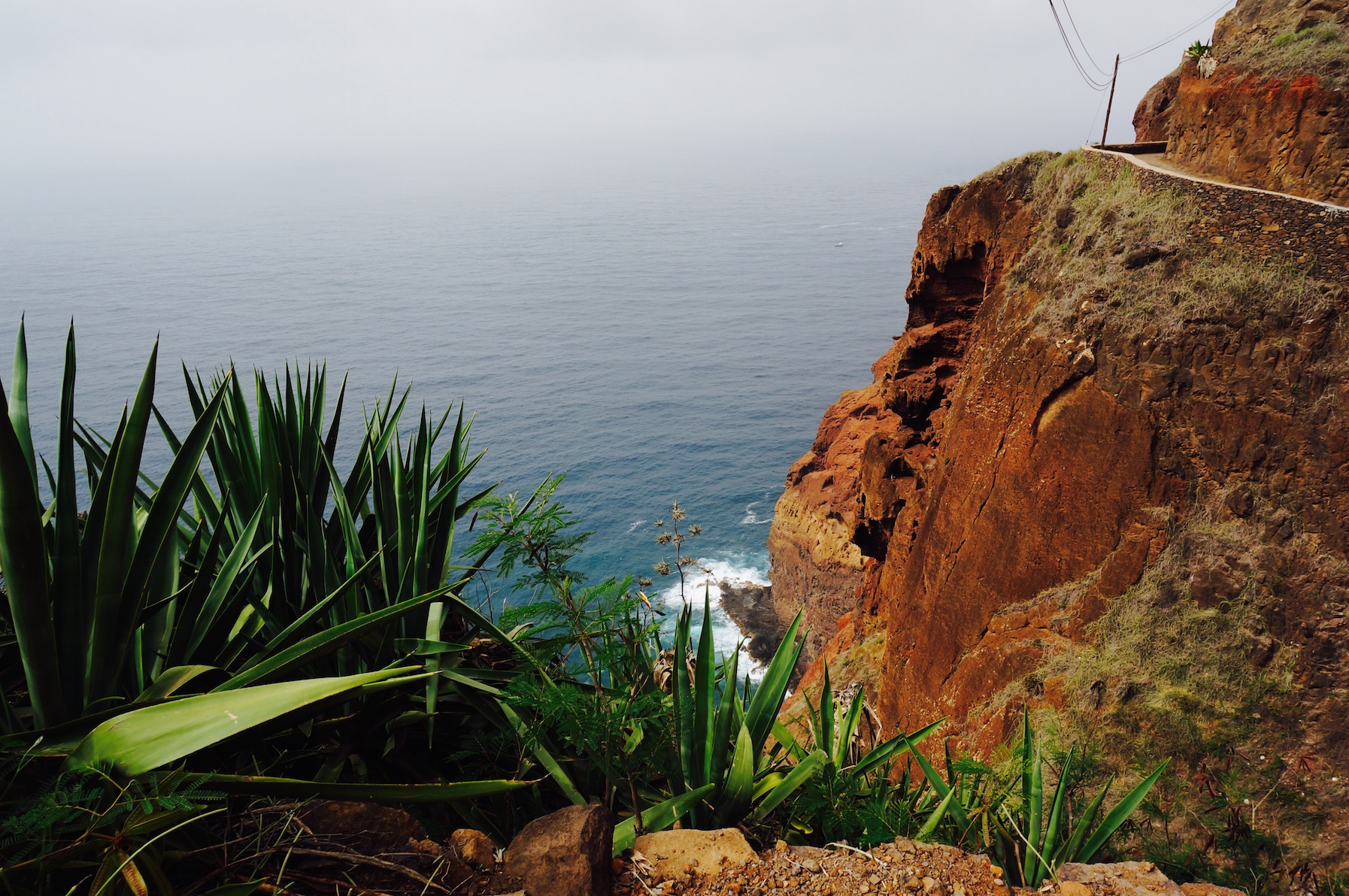
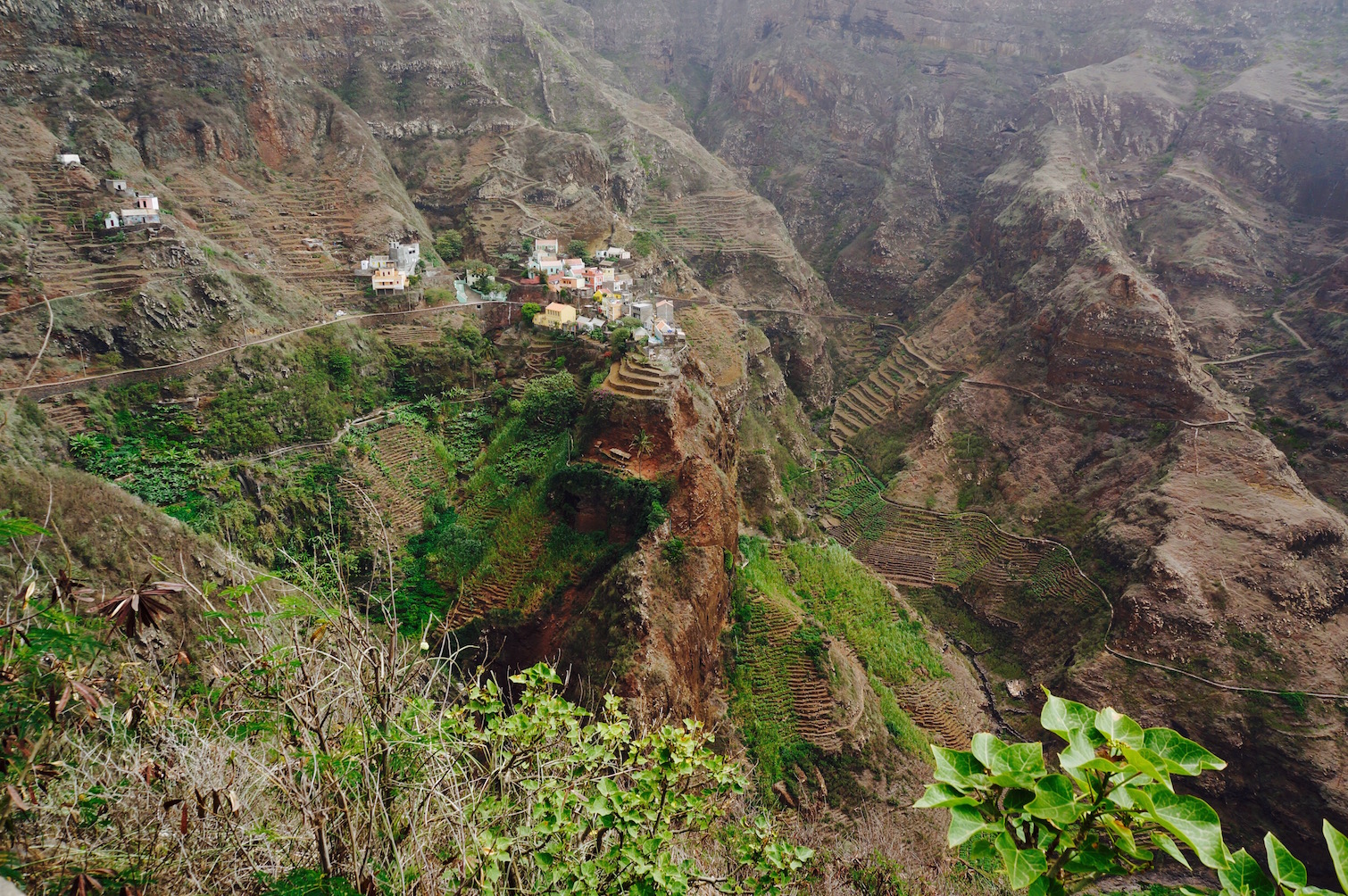
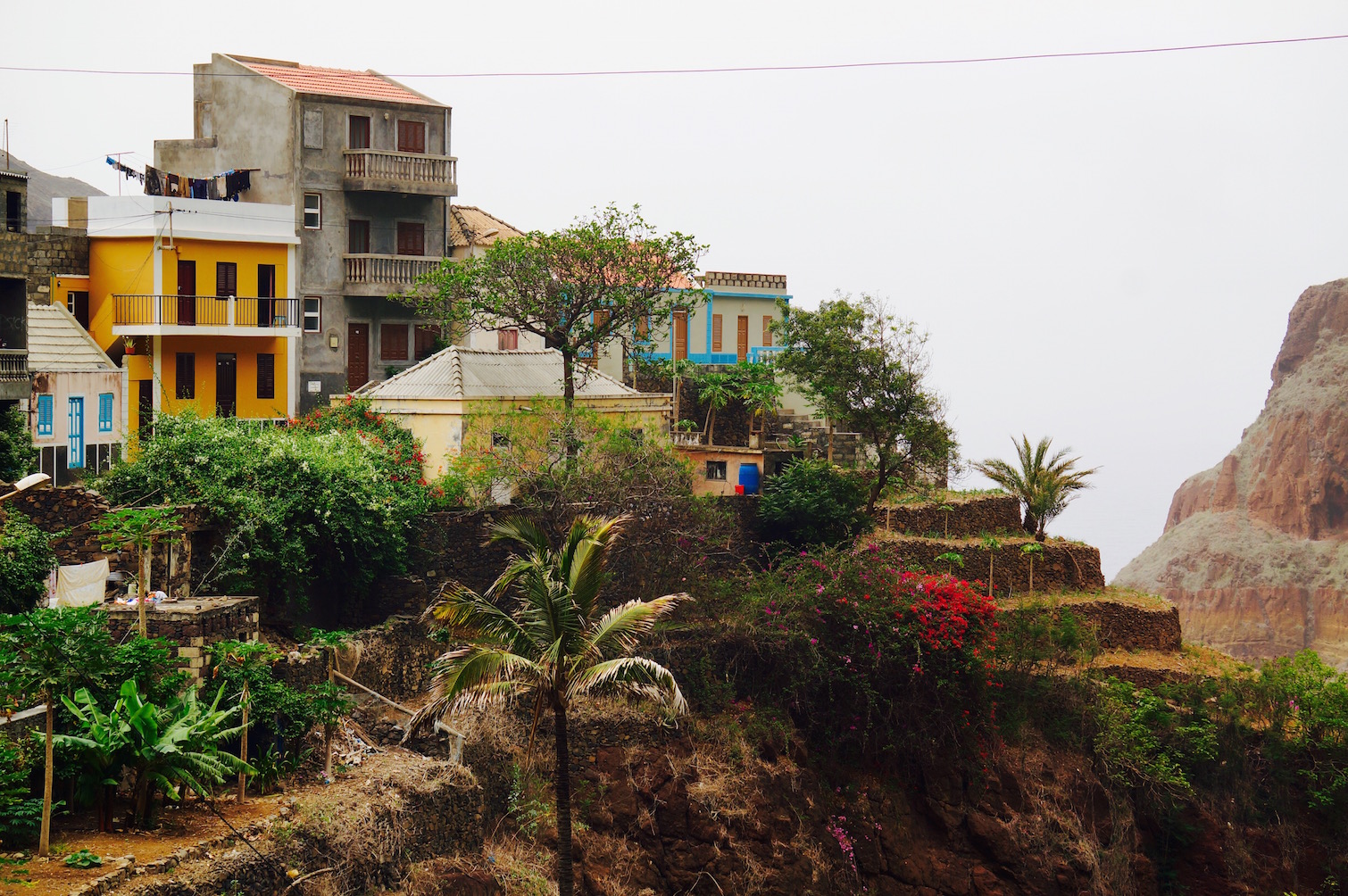
In the north-east of the island is Fontainhas, one of the most beautiful villages in the world. To get there, you have to drive about 6 kilometres from the town of Paul along a dirt road beside the ocean and into the mountains. It is not high, but it is rocky; if you look down at the ocean from inside the car, your eyes squeeze shut of their own accord:). Tourist websites and brochures say Fontainhas is high in the mountains. Rubbish. It is simply reached by a dirt road hanging above the ocean. Like this:
The road to the village of Fontainhas along a dirt track
The road to the village of Fontainhas along a dirt track
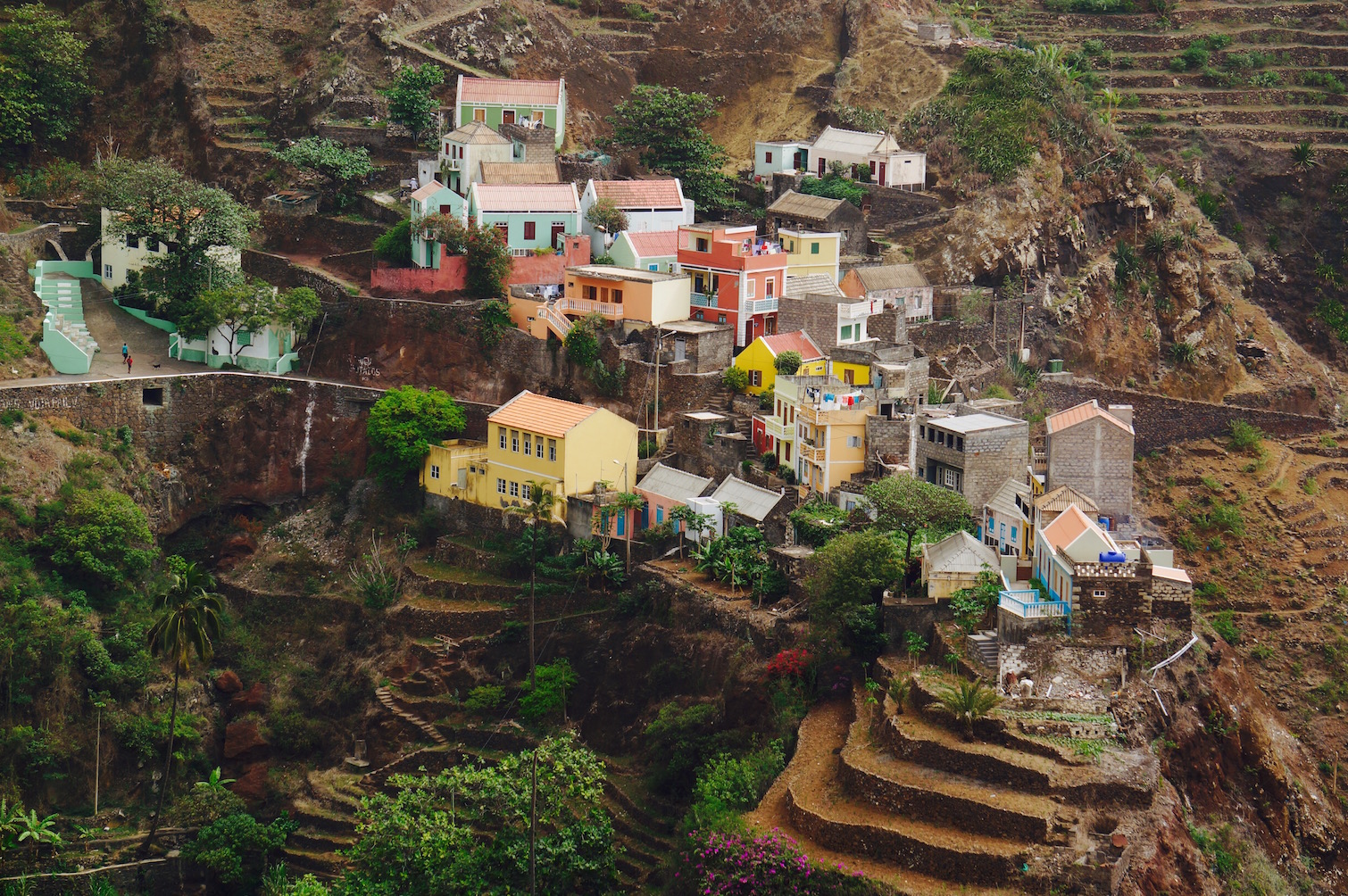
Fontainhas—according to some ranking, one of the most beautiful villages in the world
Fontainhas—according to some ranking, one of the most beautiful villages in the world. It is not high in the mountains but, rather, on high cliffs Houses and terraced slopes of Fontainhas.
Interesting places to eat on Santo Antão
In the town of Paul there is a place called
“Black Mamba,” run by an Italian woman named Liana. The outdoor tables hide in the shade of passion-fruit vines, and the owner picks the fruit on the spot to make a jug of fresh juice with ice. The same juice is used to dilute grogue, the local alcoholic drink made from sugar cane and consumed for want of fresh water on the islands:).
The owner, Liana, is a statuesque, fit woman of about 40, hard-working and tidy. If this is not your first visit and you turn up during siesta, Liana may offer to make you something from whatever is at hand, send you upstairs, and then do her fitness routine to music on the ground floor. Liana has two children; the younger is Creole, while the elder was apparently born back in Italy. Unfortunately, there is no photo of Liana’s establishment because the camera battery was dead.
A house in Paul, Santo Antão Island
Our Russian friends from Mindelo also praise a place run by an Italian named F(ernando? Francesco??). He lives in a very cosily furnished house himself and accommodates and feeds tourists there. It is best to ask locals where it is; we never did make it there.
Tarrafal
The southern tip of Santo Antão Island (there are places called Tarrafal on other Cape Verde islands too), a fishing village.
Driving there along the coast is tiring and takes ages—about an hour and a half over a dusty, stony dirt road through a lunar landscape.
It is easier to arrive by yacht—about
20 miles from Mindelo.
Anchorage. Deep water. Beach. Beautiful from the sea and green even in the dry season.
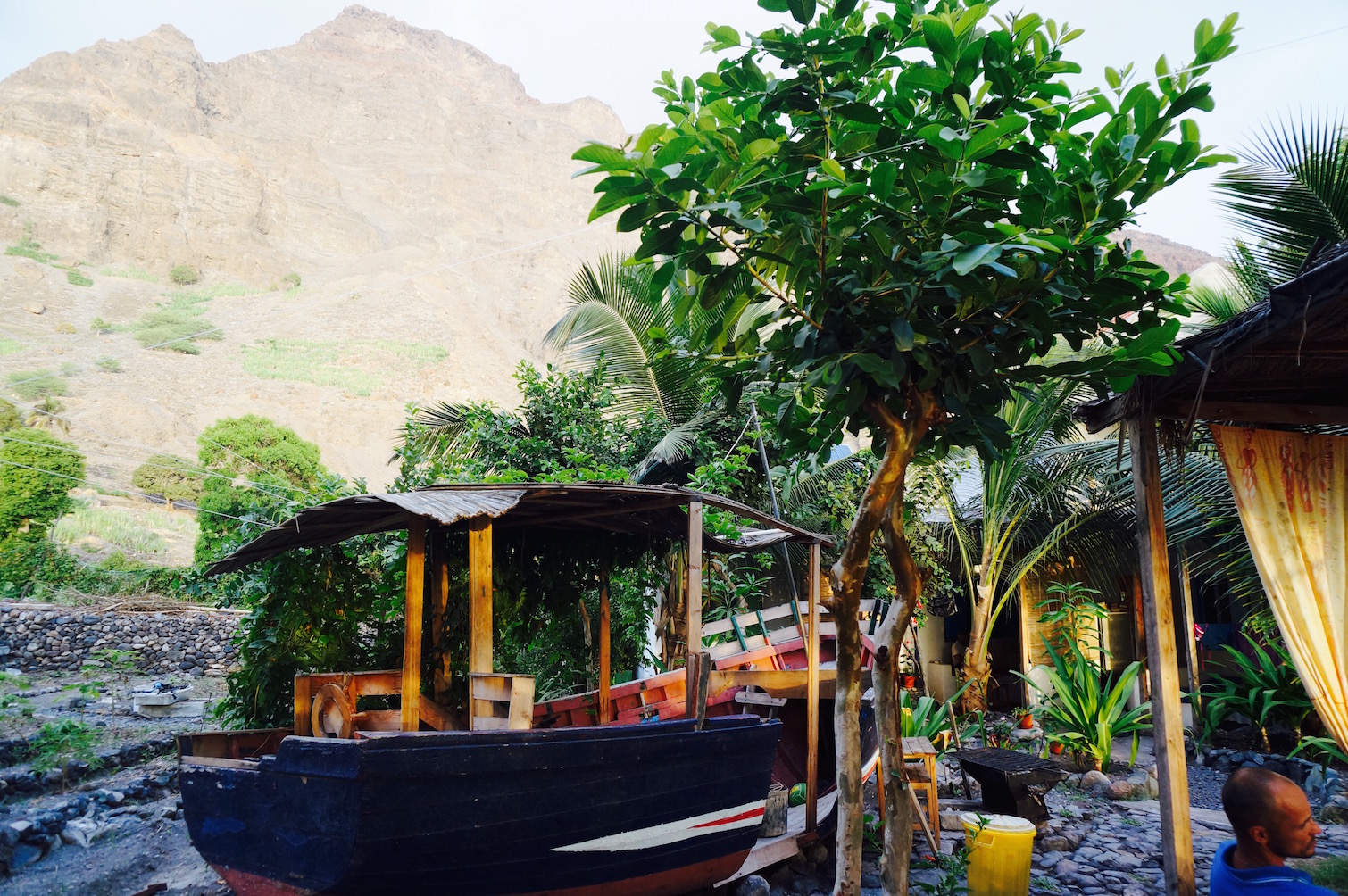
Here, at a cosy little place run by a Spaniard named Tomás, they serve ice-cold grogue with passion-fruit juice. Or just juice. Cold and delicious. There are rooms here too. Portuguese and Spanish are spoken at the establishment, and Tomás probably speaks English as well. The owners themselves live in the house they rent out to guests.
At Tomás’s, Tarrafal, Santo Antão
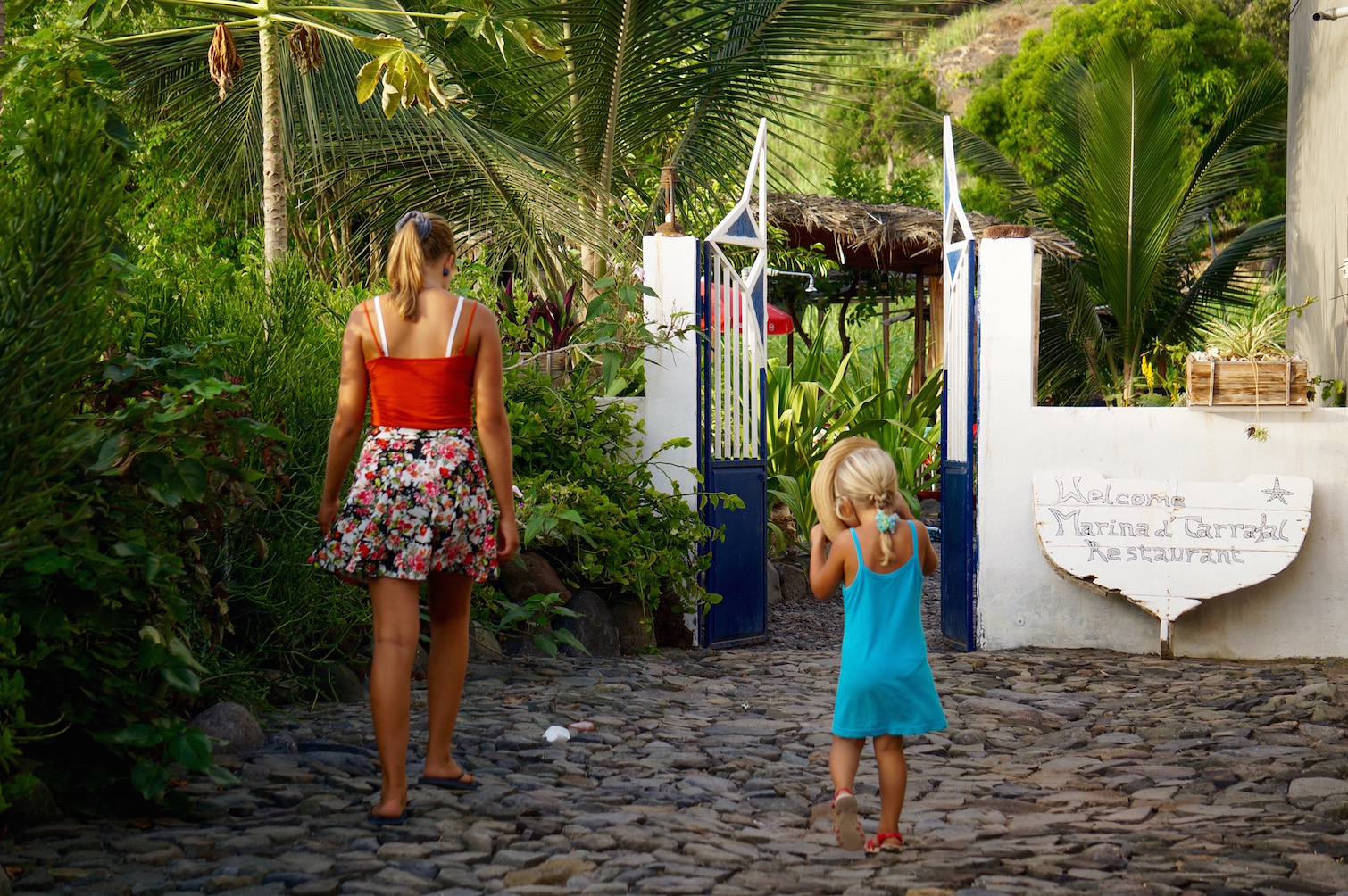
Entrance to the “Marina and Tarrafal” restaurant-resort run by the Spaniard Tomás, Tarrafal, Santo Antão
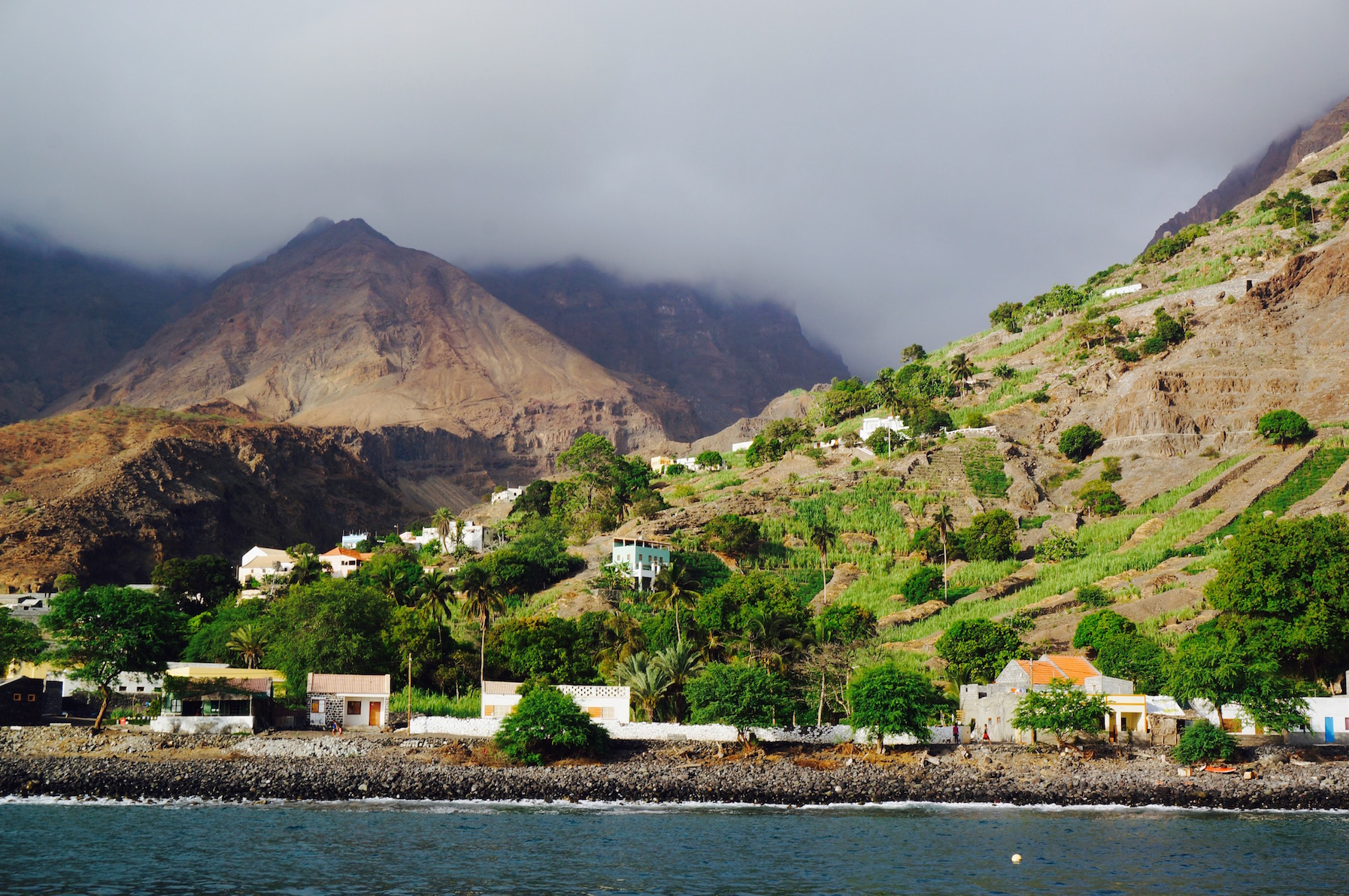
View of Tarrafal from the ocean while approaching the anchorage. Santo Antão
The streets would be beautiful if they were looked after.
More about Tarrafal on Santo Antão, the peculiarities of the anchorage and landing ashore from a yacht, can be found in the article How We Capsized in the Dinghy. Cabo Verde.
Santa Luzia Island (uninhabited)
Land from before the dawn of time—on the uninhabited island of Santa Luzia
Giant sea turtles lay their eggs here. The island was once inhabited by people.
Our notes about this wonderful island are in our Facebook group (and will soon migrate to the website too).
The Cape Verde Islands. Healthcare
Public healthcare for locals is almost free; to access it, you have to pay for something like an insurance policy. Certificates stating that you are on a low income will help you get treatment even more free of charge:).
Mindelo has a municipal hospital and at least one good but expensive private clinic, “MediCentro.” It is not far from the marina, next to the police station. The young woman at reception even speaks Russian. An initial consultation with a doctor costs 6,000 escudos (5,500 roubles). A Russian urologist works at the clinic. (If necessary, we can send you their contact details in a private message.) São Vicente has a good European-standard laboratory, “Labo Jove” (I think that is the name), which provides high-quality testing.
Mindelo’s old hospital is about 200 years old. It has inpatient wards and an outpatient clinic (consultation centre). Inside the building are open galleries with doors into consulting rooms, trees, and then another enclosed corridor lined with consulting-room doors. Everyone sits waiting on benches from around eight in the morning. At nine, the consulting-room doors are wide open, but not a single doctor is in sight. Then people stir and run through one common door, either for appointment tickets or test results. And then they sit forlornly outside the empty consulting rooms again. No one keeps a formal queue; everyone simply waits. As if...
Shops and markets in Mindelo
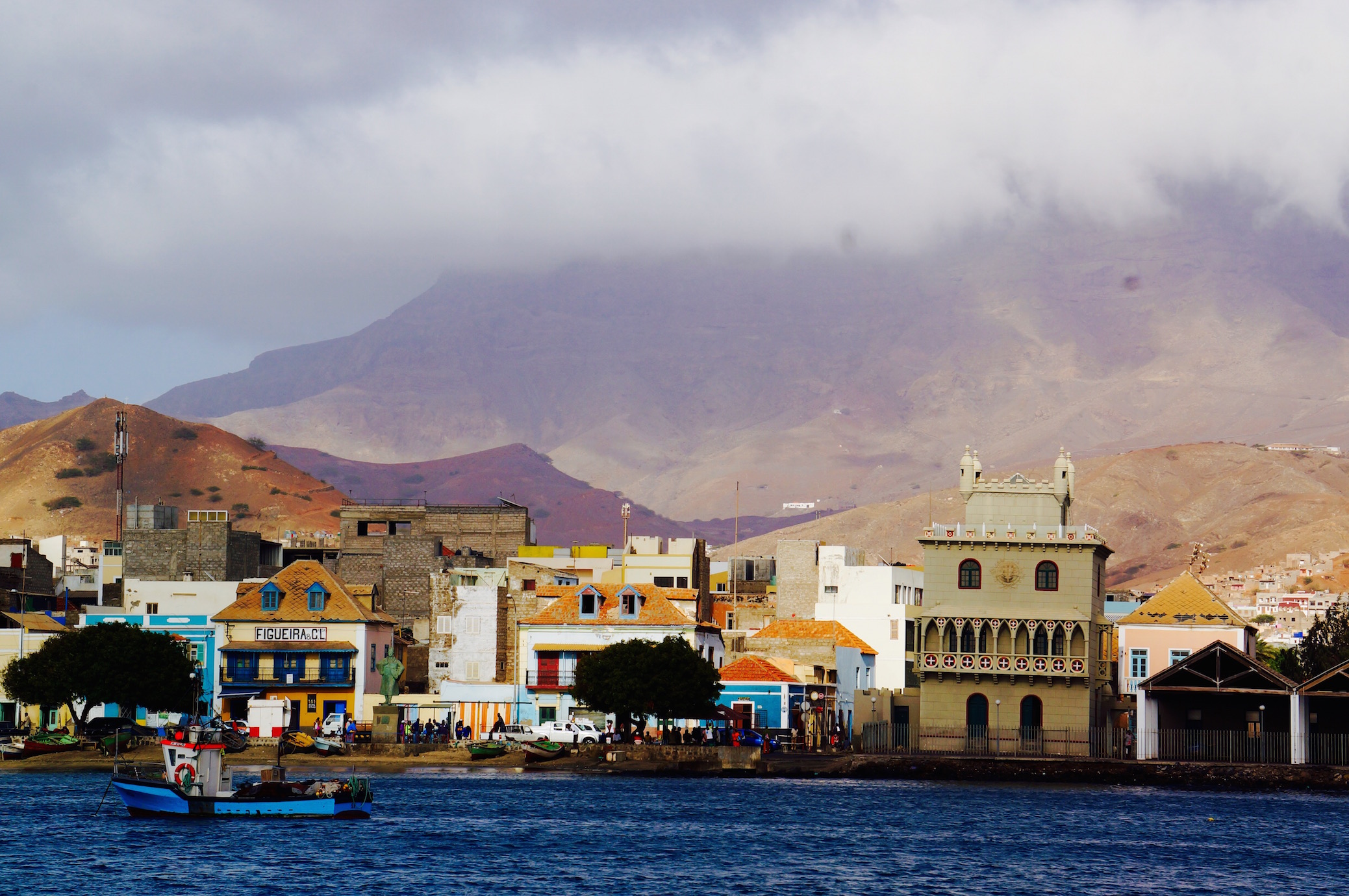
Fish market on the waterfront opposite the anchorage. From the marina exit, it is 3 minutes to the right. Immediately past the handsome Governor’s Tower (a copy of some famous tower).
In the morning, there is plenty of tuna at the market; in the cutting section, the carcasses are butchered and taken to the women selling them. A kilo costs from 400 to 500 escudos. They cut it into steaks. There is a sea of other seafood—dried, salted and fresh. They speak only Creole (Portuguese). Cleaning a fish costs 50 escudos.
Central city market —in a beautiful colonial building. Everything is nice and clean. There is a modest selection of all things vegetable, plus wine and grogue, preserves, hard local cheese and dried herbs.
On the way from the fish market, by the market square—where the stalls are painted with scenes from Mindelo’s past—there are more fruit and vegetable stalls and markets.
The square itself is devoted to souvenirs and clothing.
One side of the street by the main church is entirely occupied by Chinese shops, with Chinese people behind the counters. They do not speak English either. Lots of inexpensive, disposable stuff, just like everywhere else. When the Chinese arrived in the Cape Verde Islands 20 years ago, all the locals finally got clothes and shoes.
About the people of Cabo Verde—our own people and the locals—will be here >> (article in progress:)) Other posts about the Cape Verde Islands:
Completing Arrival Formalities by Yacht in Cabo Verde
9 Things Not to Leave Until the Last Minute If You’re Planning to Cross an Ocean
How We Capsized in the Dinghy
Passage from The Gambia to Cabo Verde
From an Oil Spill to a Tropical Storm. At Anchor in Mindelo
The Cape Verde Islands. Photographs:
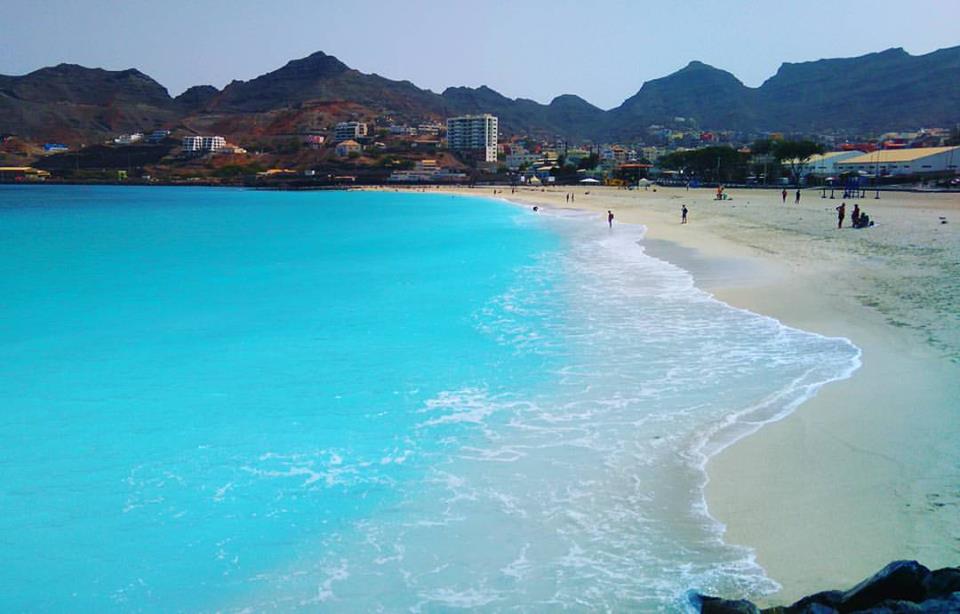
The beach in Mindelo (São Vicente Island) is made of crushed shell. The lime, mingling with the turquoise of the ocean, gives the water a fantastic colour. Immediately beyond the port, north along the coast from the marina
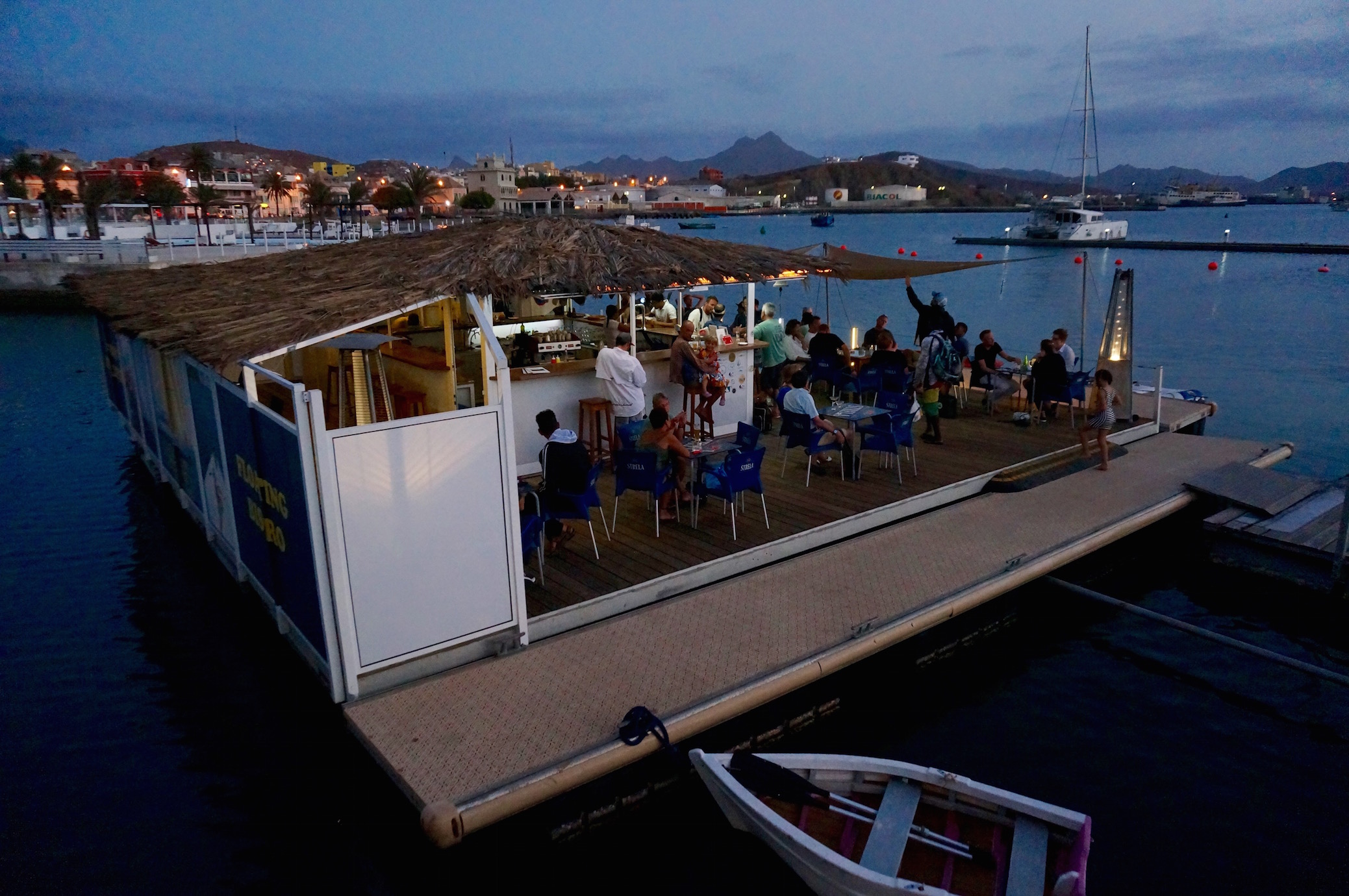
The bar at Marina Mindelo in the evening, São Vicente.
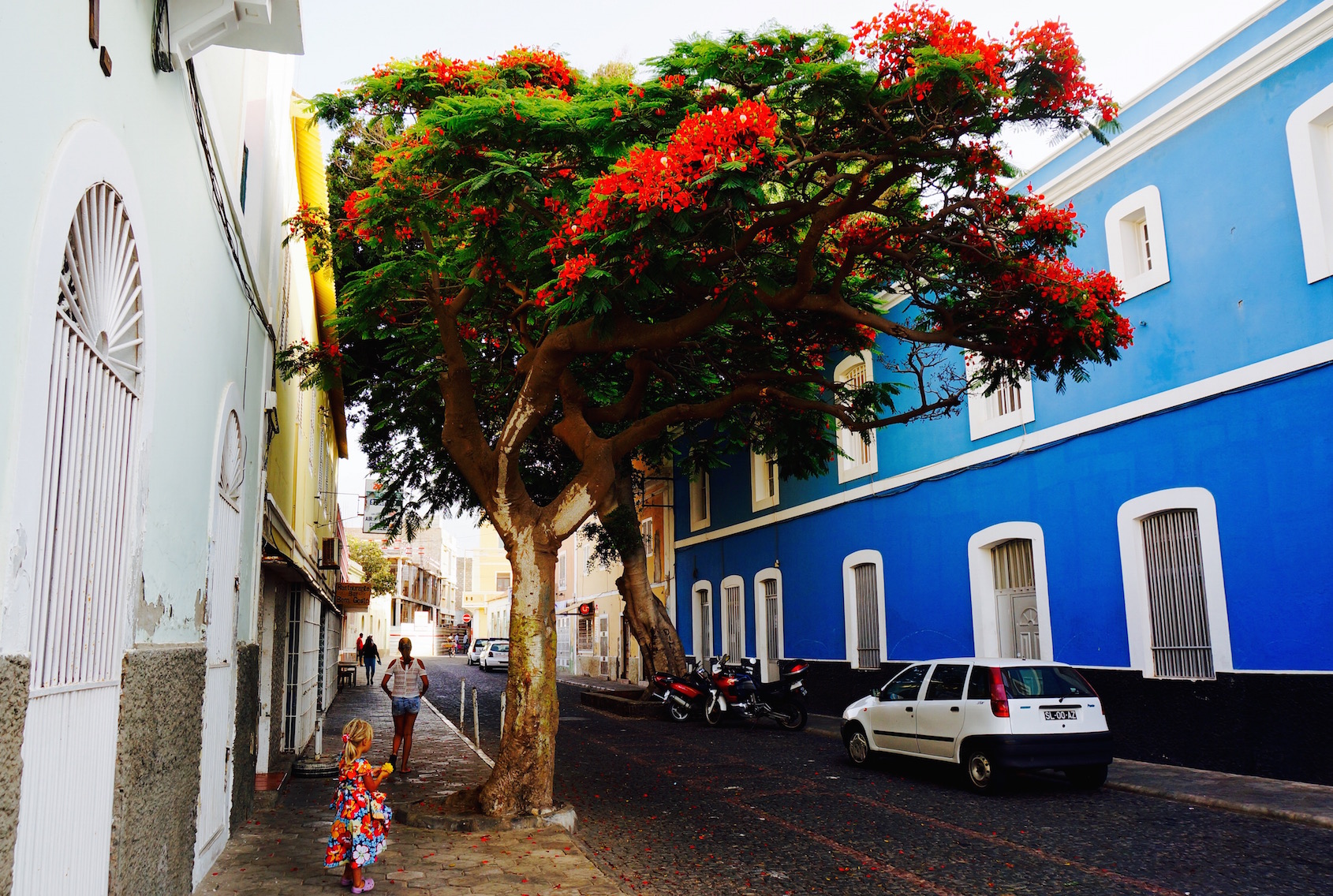
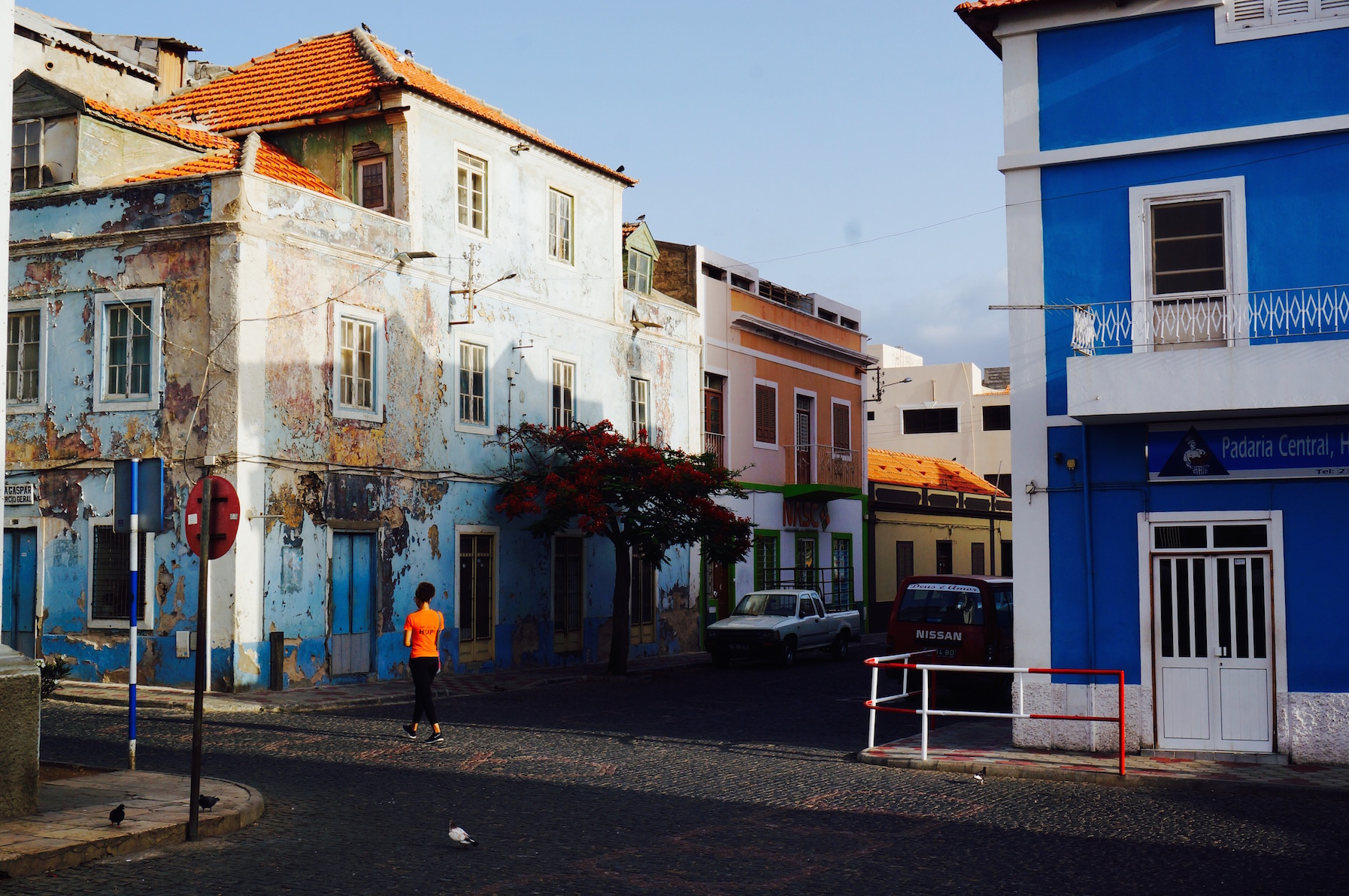
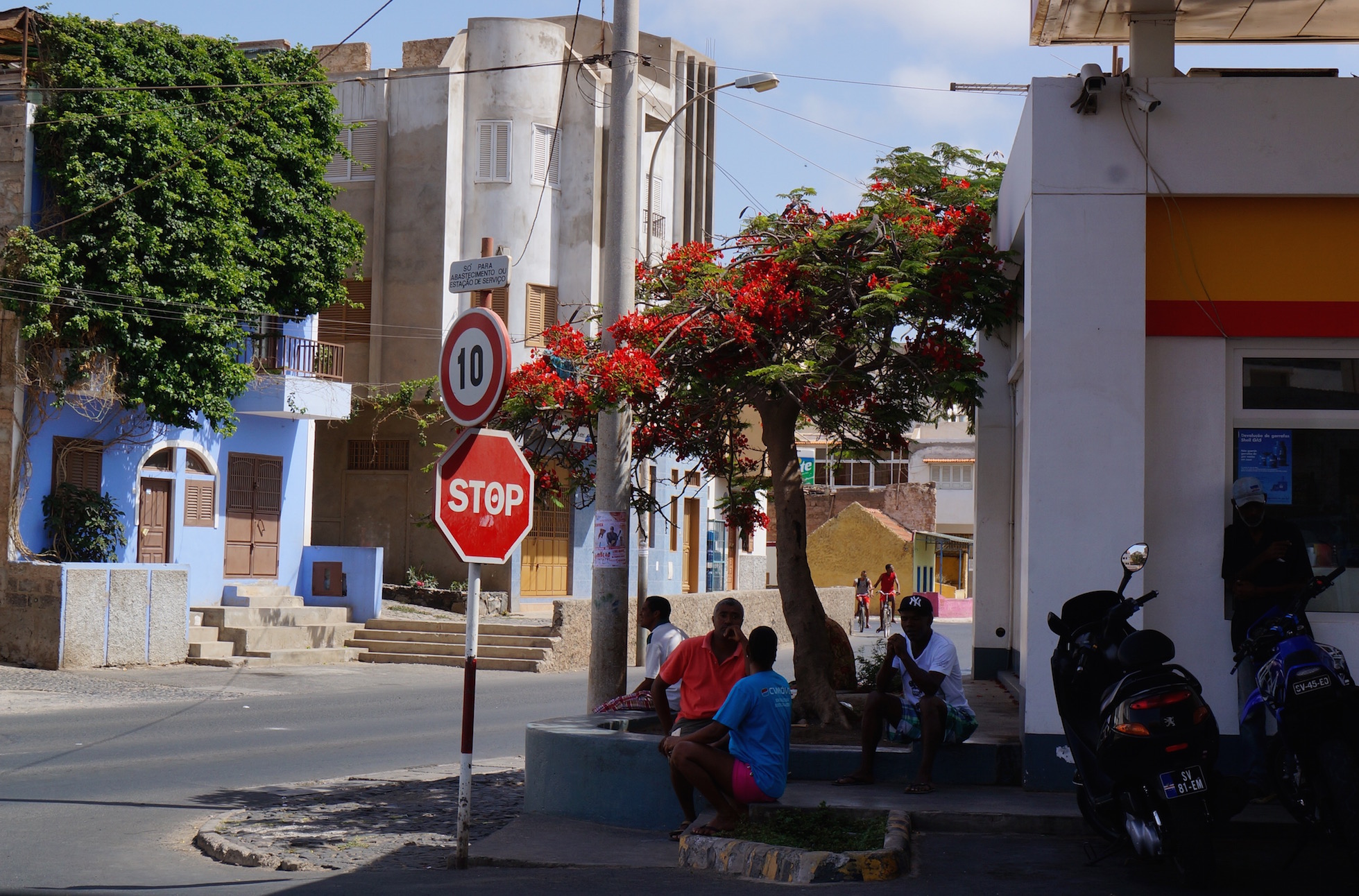
A street in central Mindelo
A street in central Mindelo
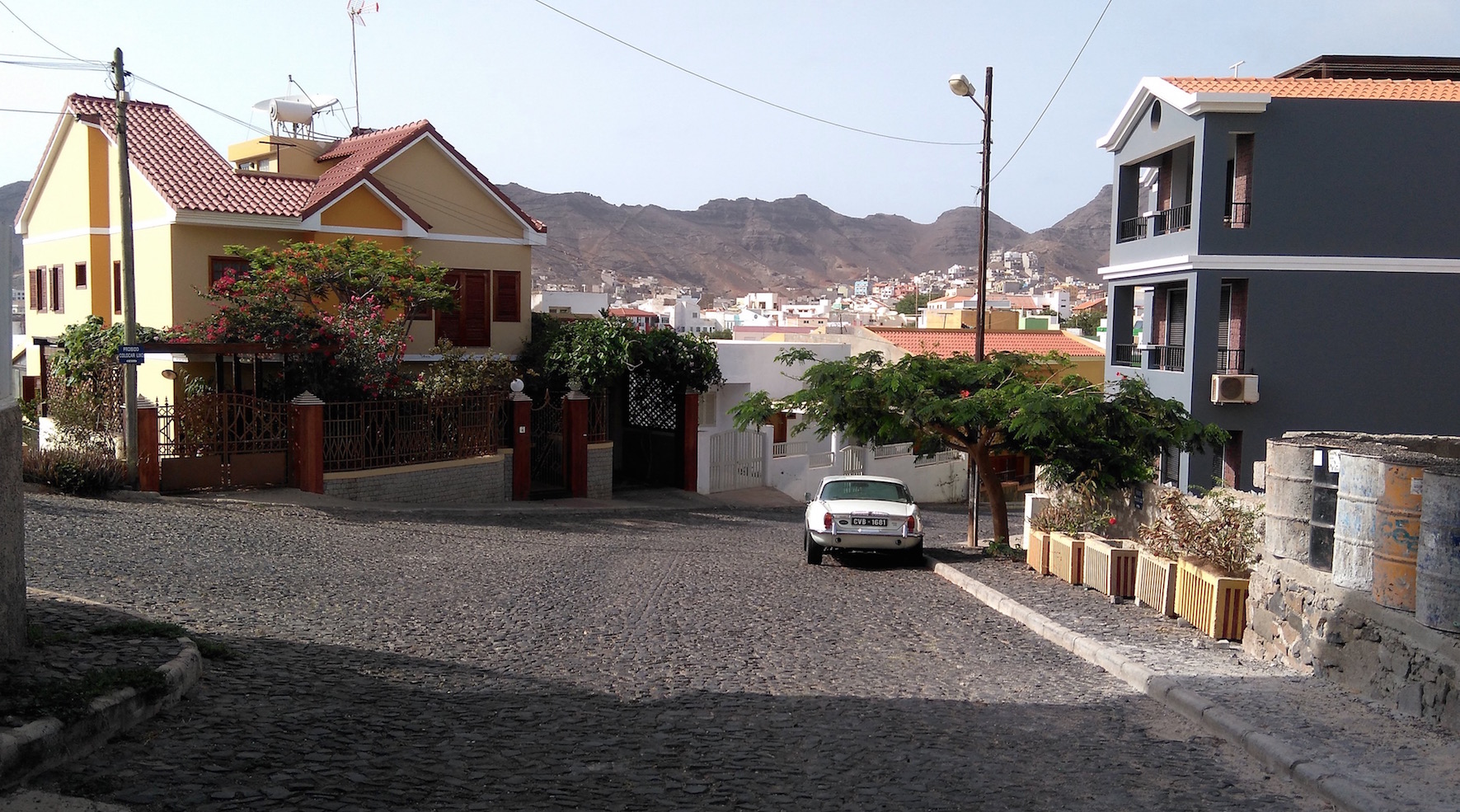
A wealthy district in Mindelo
Panorama of Mindelo, the cultural capital of the archipelago. View of the marina and anchorage
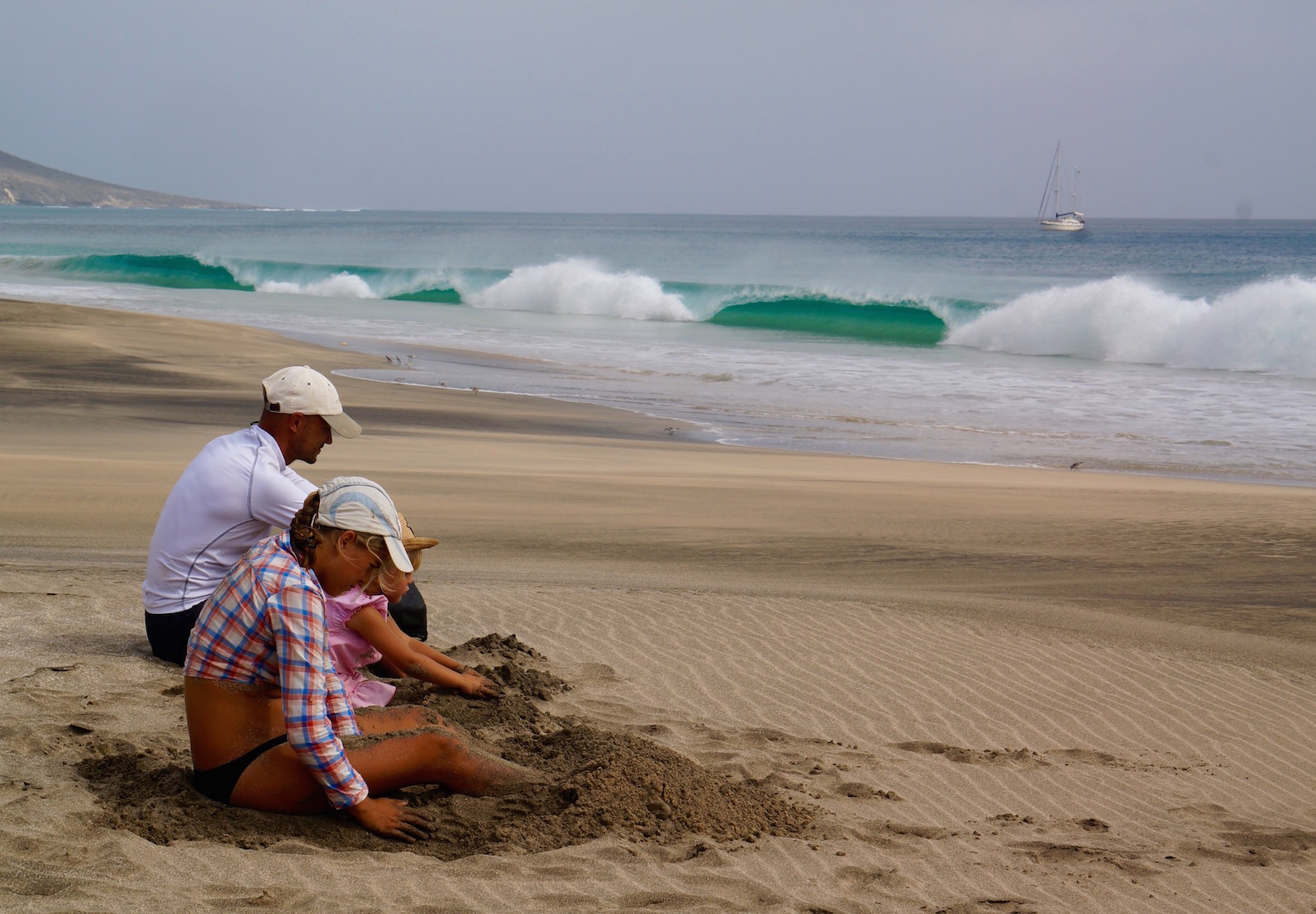
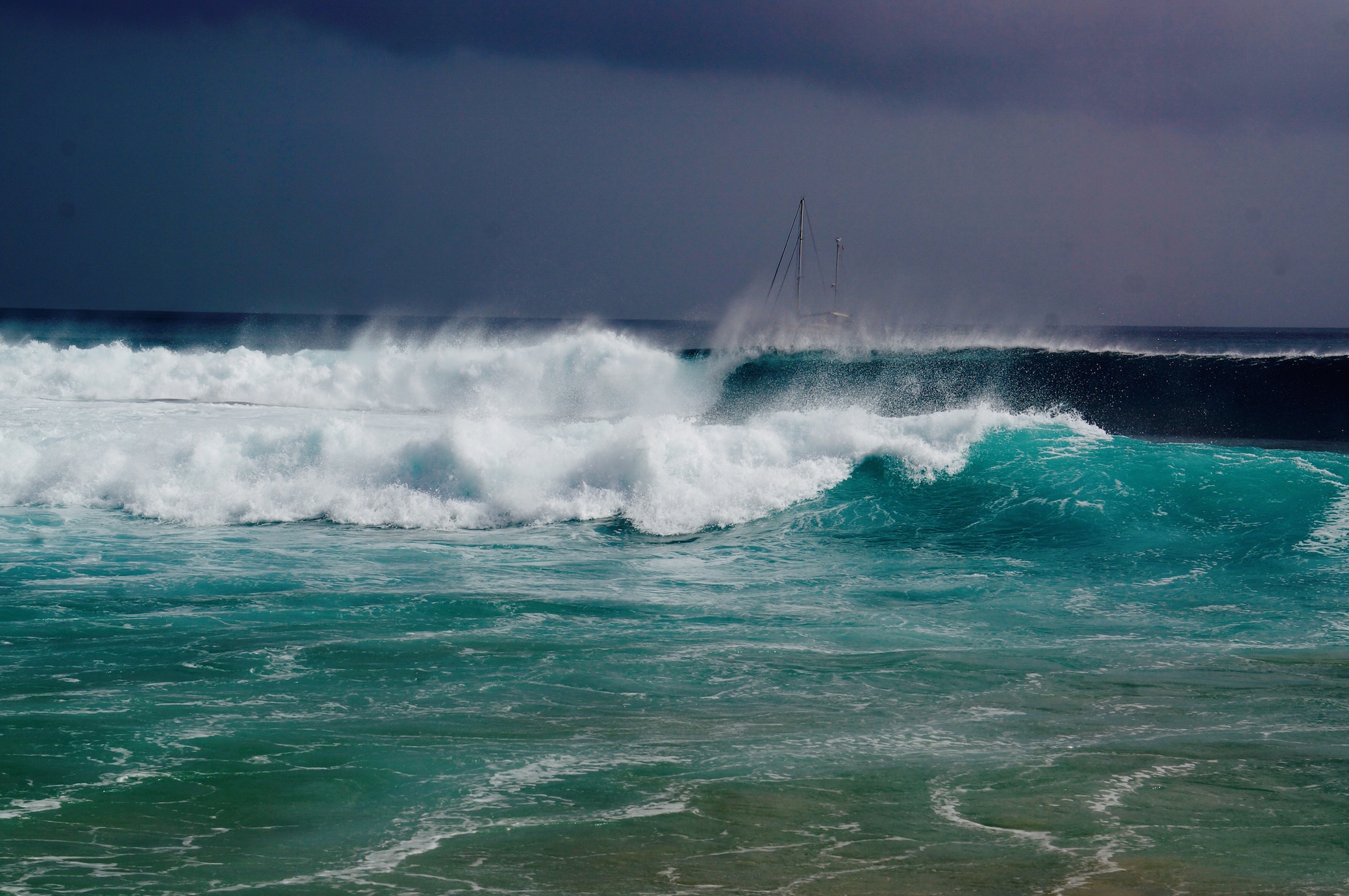
Surf on the uninhabited island of Santa Luzia. The masts of Lady Mary, lying at anchor, can be seen through the waves
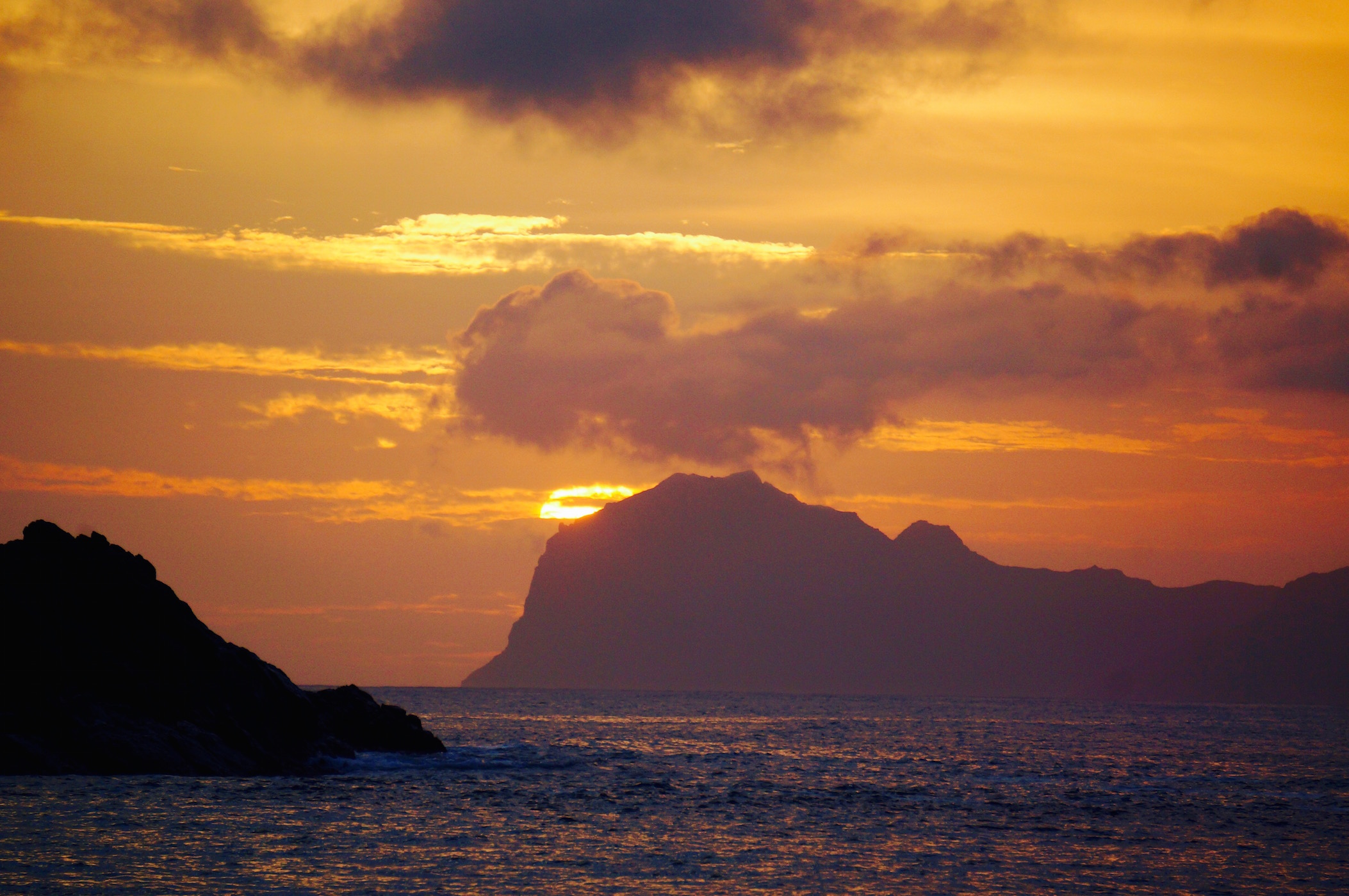
View from the anchorage at Santa Luzia towards São Vicente at sunset
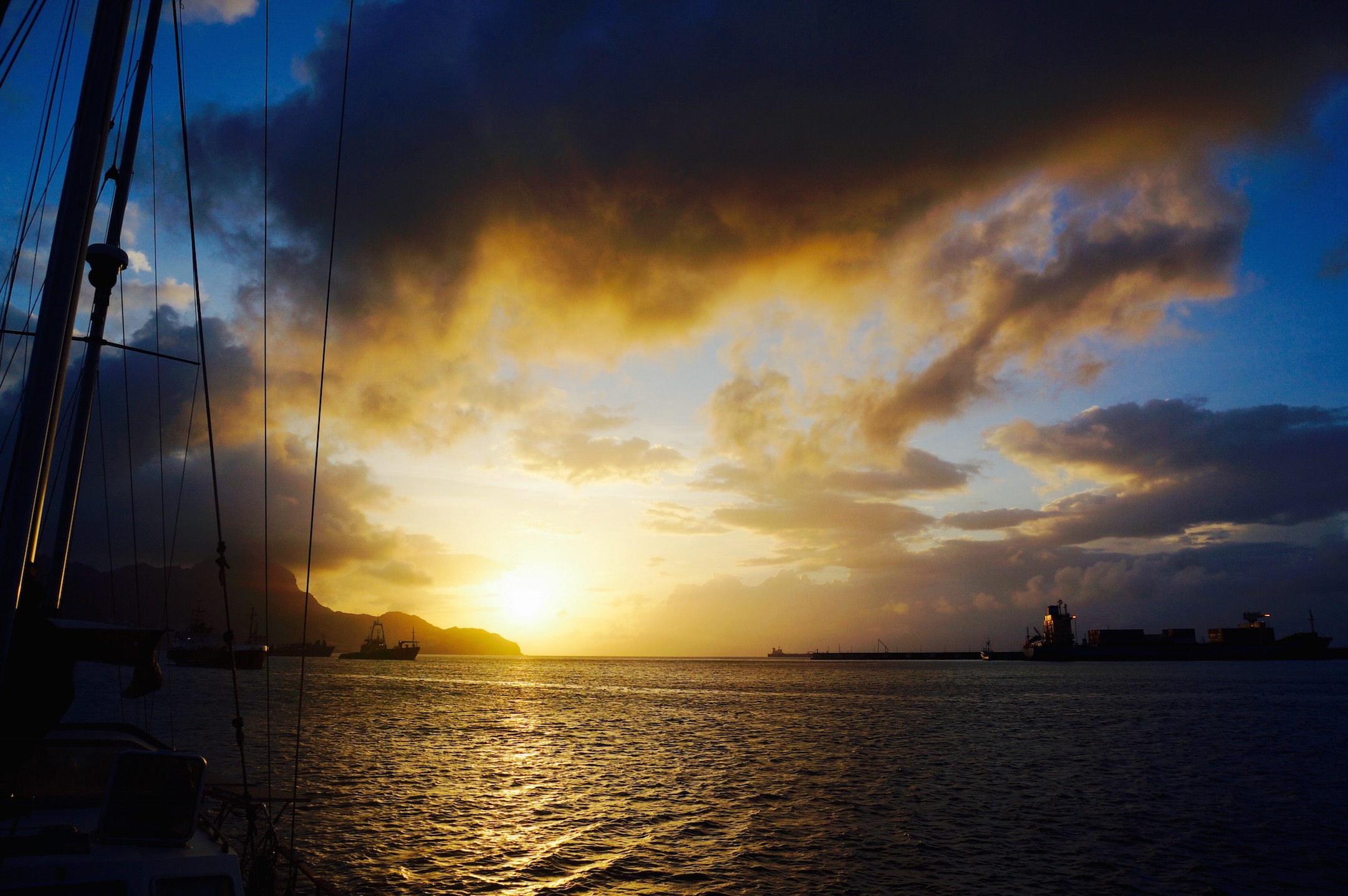
Mindelo in the evening, seen from the anchorage. On the left are the Governor’s Tower, with its modest museum, and the triangular roof of the open-air concert venue. Further left, outside the frame, is the fish market. São Vicente Island Sunset on the eve of our departure across the Atlantic Ocean
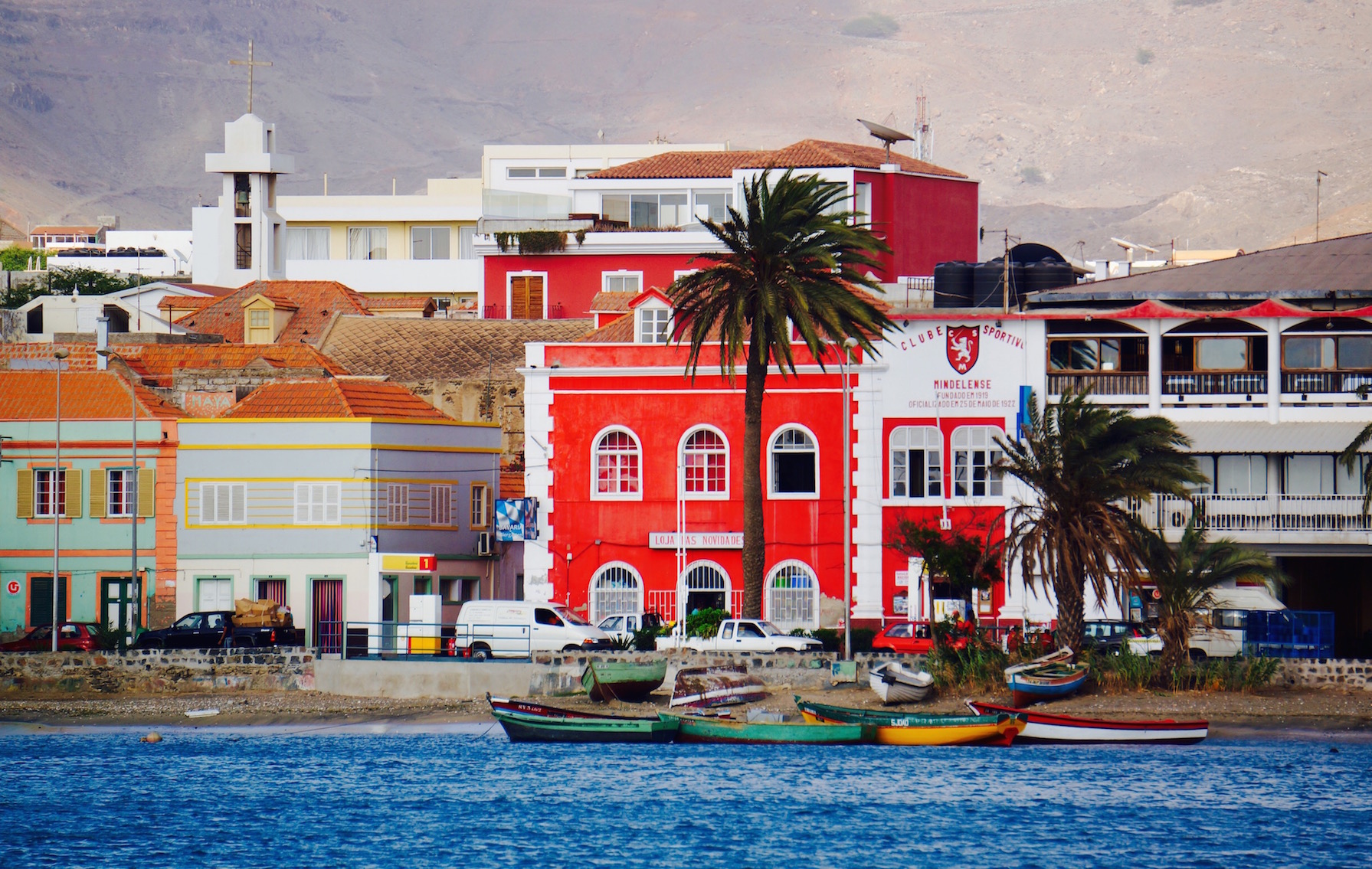
Mindelo, São Vicente, seen from the anchorage. The far-left building—the white one behind the small palm—houses “Casa de Morna,” a bar with a small stage and live music by one of Cabo Verde’s foremost living musical celebrities, Tito Paris. The music bar is on the 2nd floor, and the restaurant, with a breathtaking view of the harbour, is on the 3rd floor.
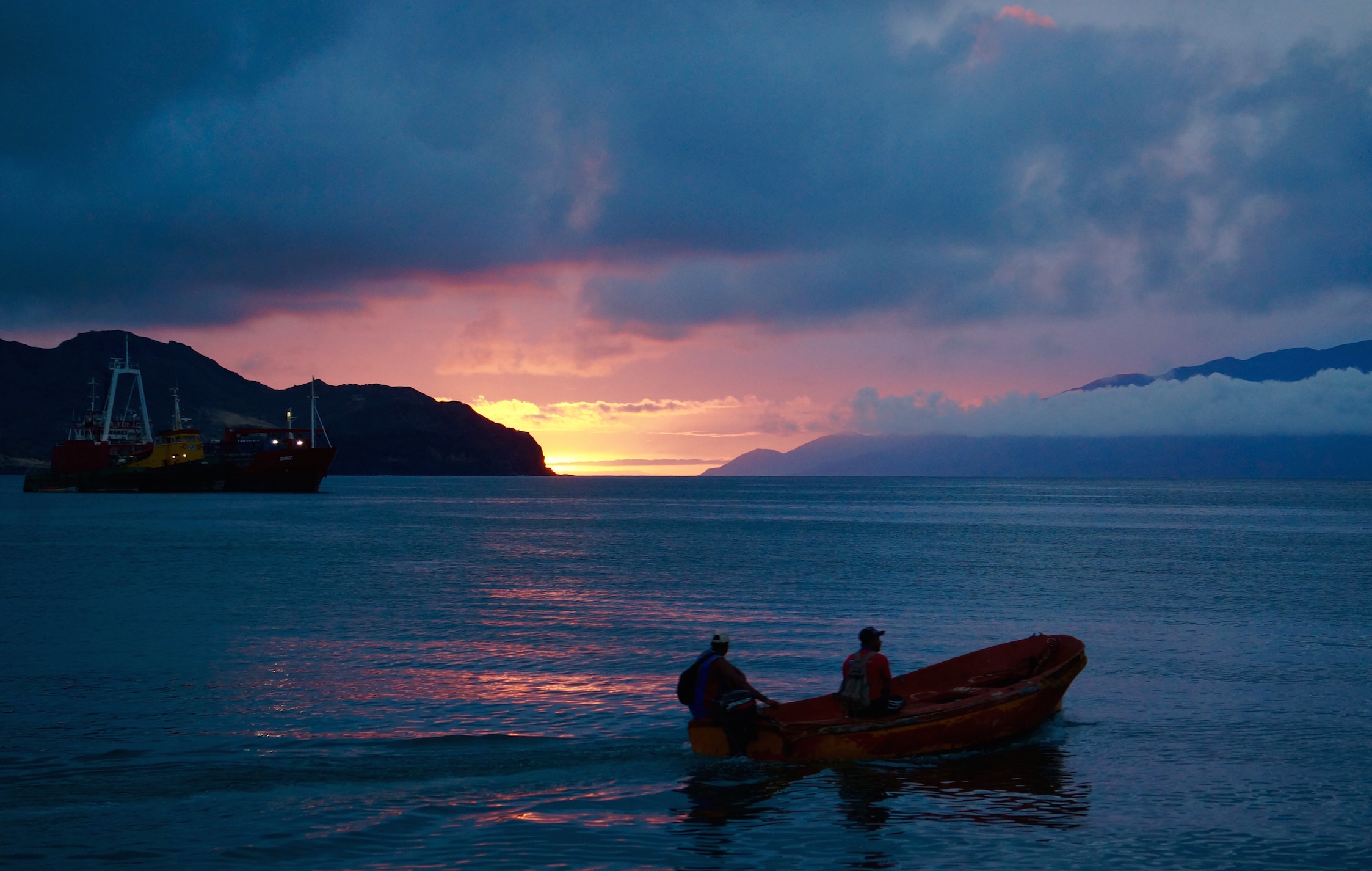
Mindelo harbour. Fishermen head out for a night’s fishing. View from the anchorage
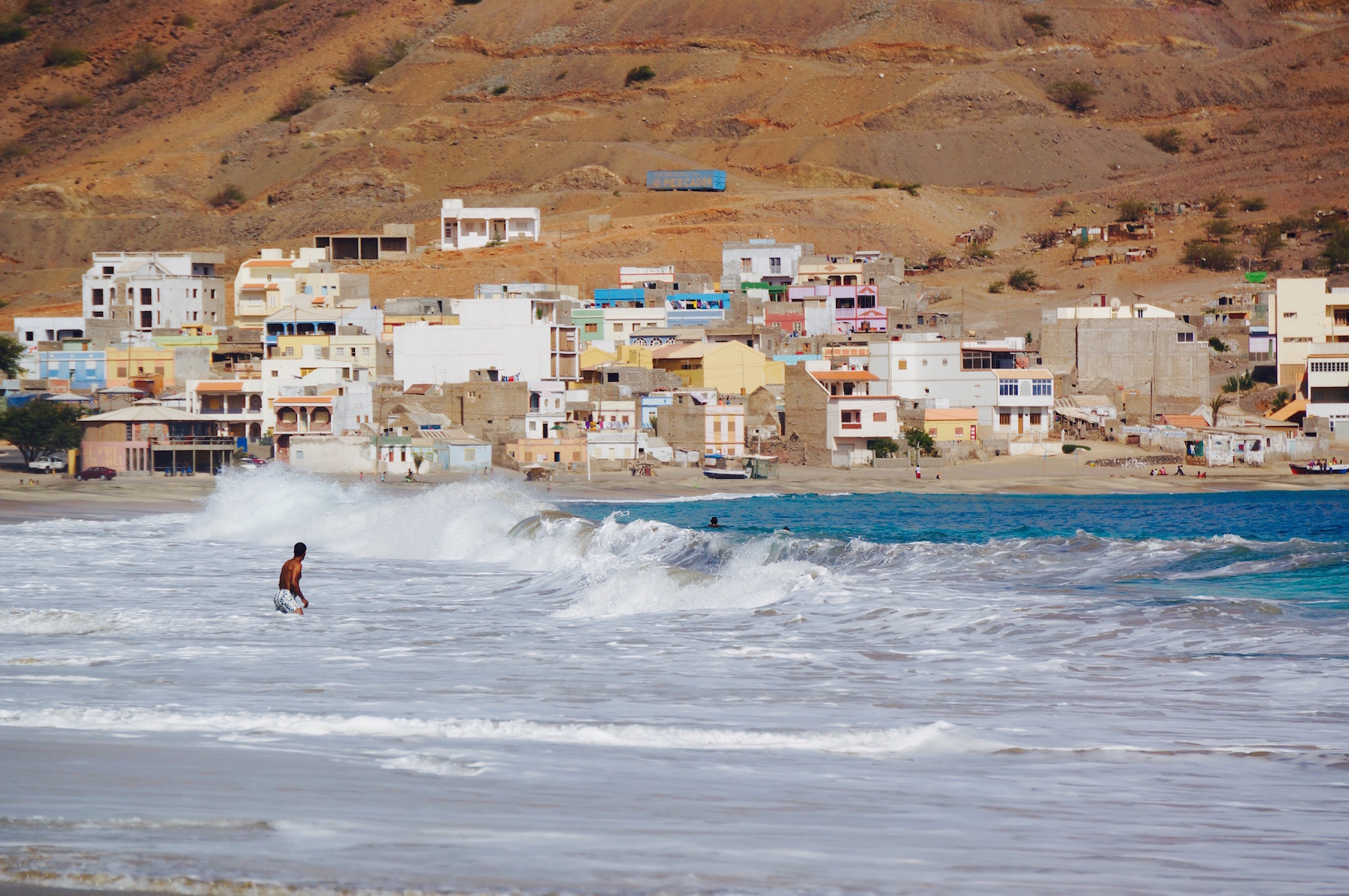
São Pedro Beach on São Vicente
A street in Mindelo
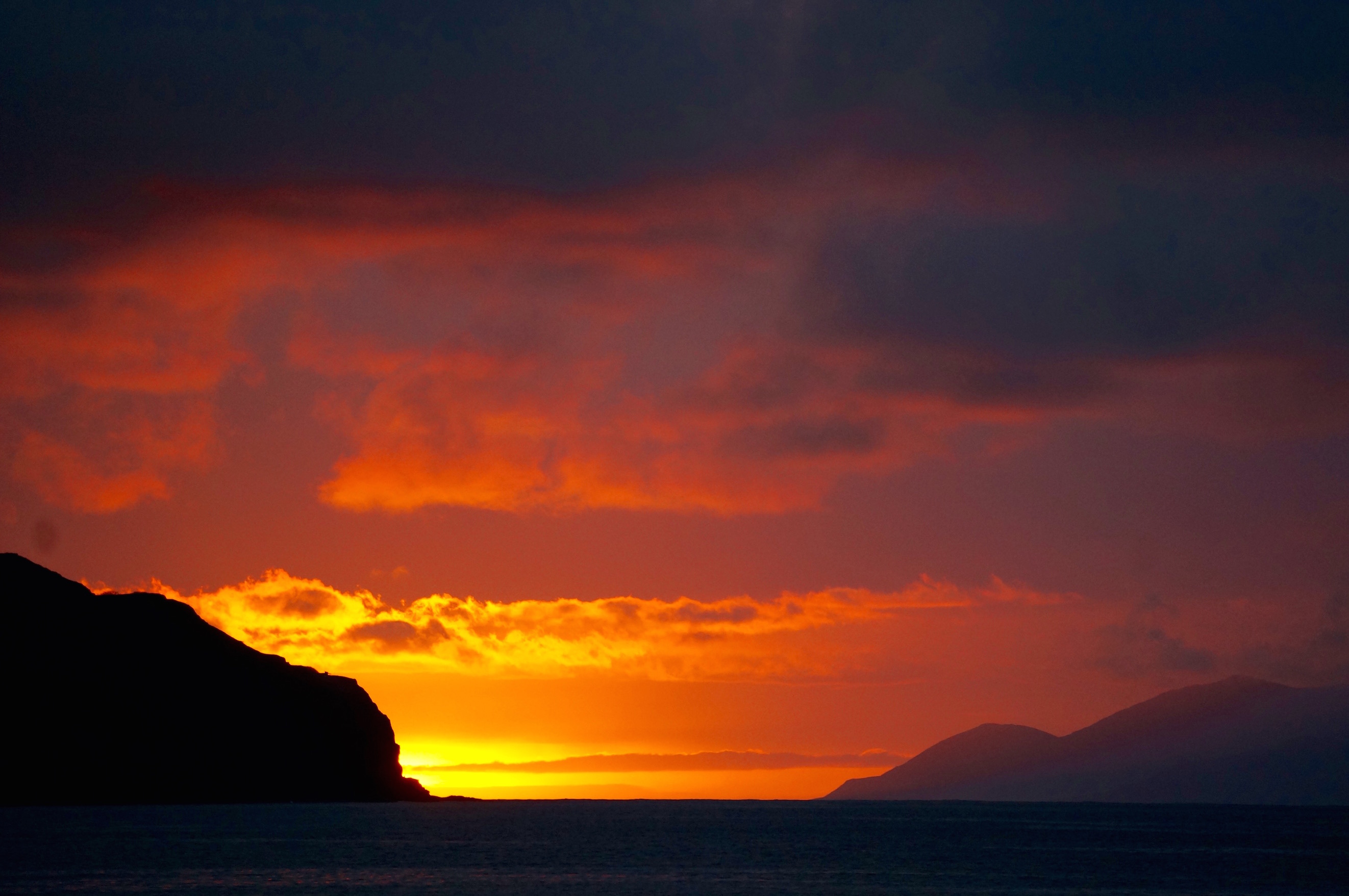
Mindelo harbour. Sunset view from the anchorage, with Santo Antão Island on the horizon
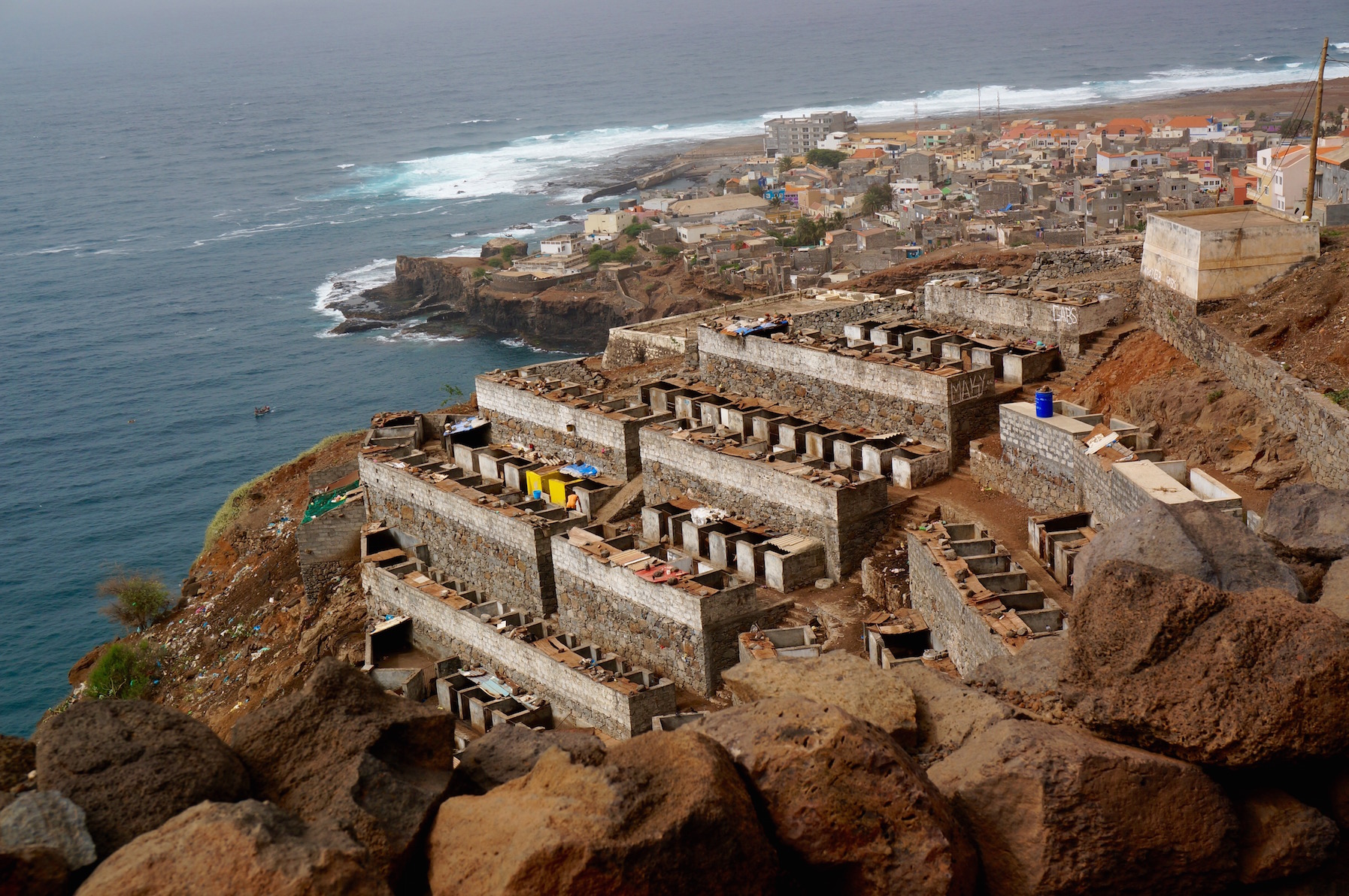
Paul, Santo Antão. These concrete cubicles, 1 m × 1.5 m, are a pig farm. This is where the pigs live, grow fat and await slaughter...
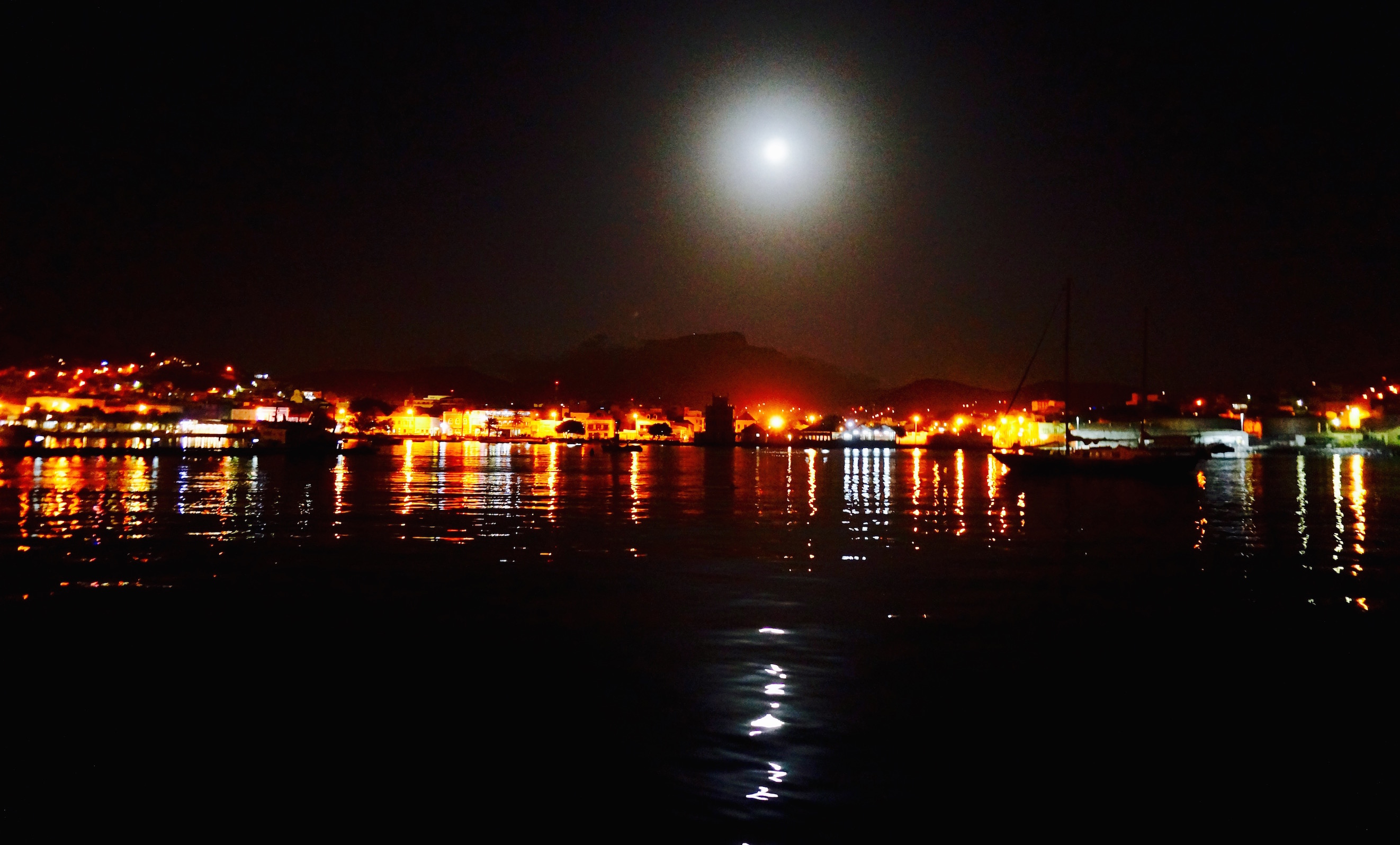
Full moon at anchor in Mindelo
P.S. What did you think of the article? We recommend receiving new website articles by email so you don’t miss useful tips and gripping stories from Travely-Family ©