
From the Travely-Family archive · Central and South America
The Islands of French Guiana. Ron Weasley's Nightmare and Lots of Wild Monkeys
An original publication from the former Travely-Family website. This English translation was preserved from the technical-site archive without editorial rewriting.
The Islands of French Guiana. Ron Weasley's Nightmare and Lots of Wild Monkeys
And Our Feet Stood on Solid Ground
After 24 days on the rolling surface of the ocean, the crew of Lady Mary landed on the uninhabited little South American island of La Mère. We made our way ashore gradually, rounding the island from the northeast, bouncing over submerged reefs and dousing ourselves in murky brown coastal water. Despite its thick green mane, the little island looks almost impregnable from the water. Not completely impregnable, of course... just impossible to land on without a headache: nothing but cliffs or isolated rocks in the surf, with not a patch of sand or mud. We were not too keen on getting bruised in utterly opaque water, so we went around most of the island, reasonably hoping to find a tiny harbour. After all, the last time, in Cabo Verde, landing and launching through the surf had been extremely nerve-racking.
Hurray, there it was! There was even a pier, built back in the year dot (read: the reign of Louis XV), waiting especially for our dinghy with both of its two mooring rings. We tied up without incident and finally set foot on the soil of the New World. Hurray!
Contrary to expectations, the ground did not shift beneath our feet, and everyone could walk straight, including the young sailor. The first mate froze in contemplation: should she lie down on the ground and smother the hot stones with kisses, or refrain from making a spectacle of herself and quietly walk beneath the canopy of vines and kapok trees—especially since about five fishermen and fisherwomen were watching our arrival from beneath a shelter. We saved the theatrics for later, limiting ourselves to an inner monologue on the theme of, “So this is what you’re like, O Amazonia!”
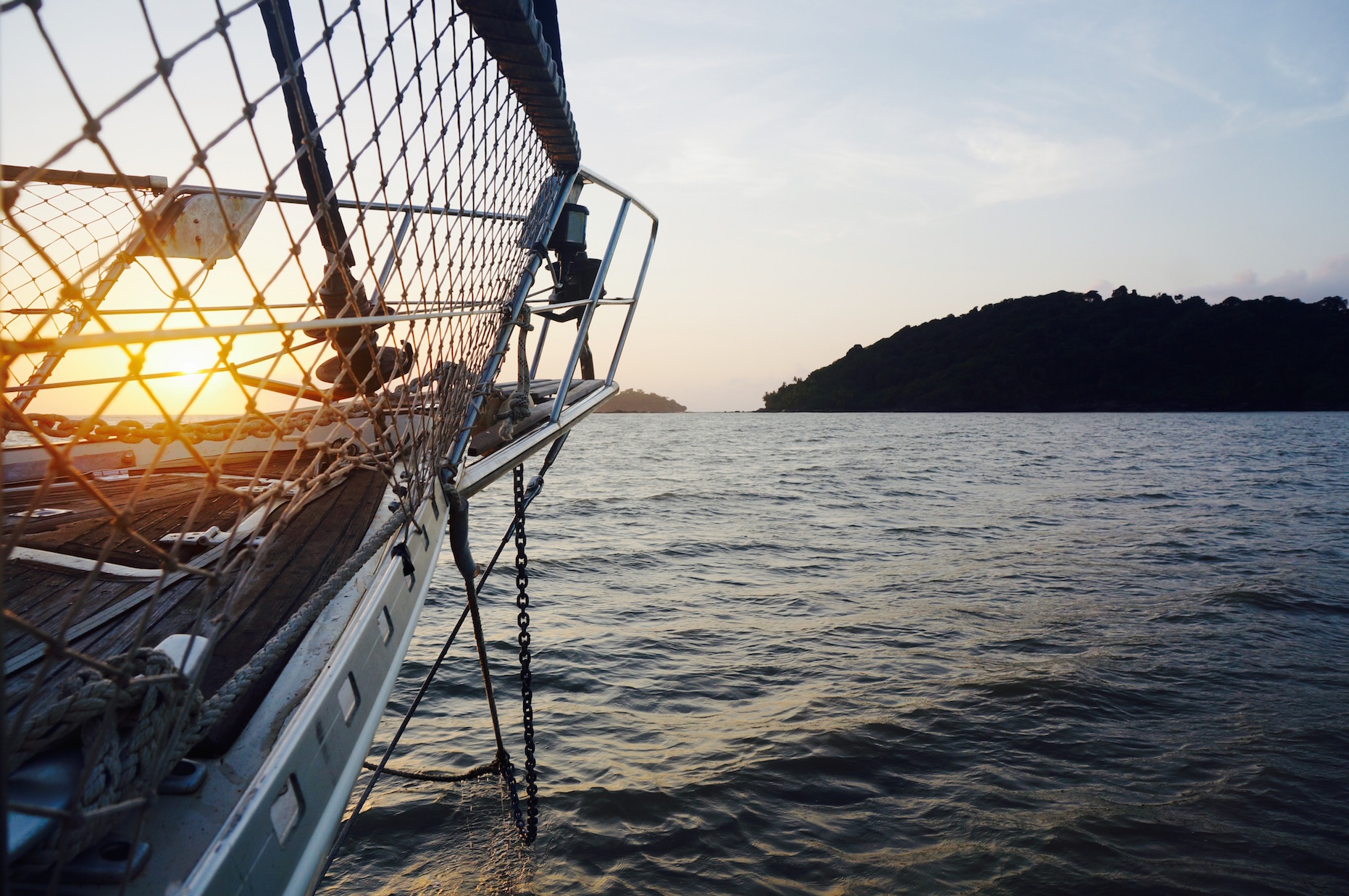
Our first sunrise off the coast of South America
Green Monkeys and the History of Colonisation
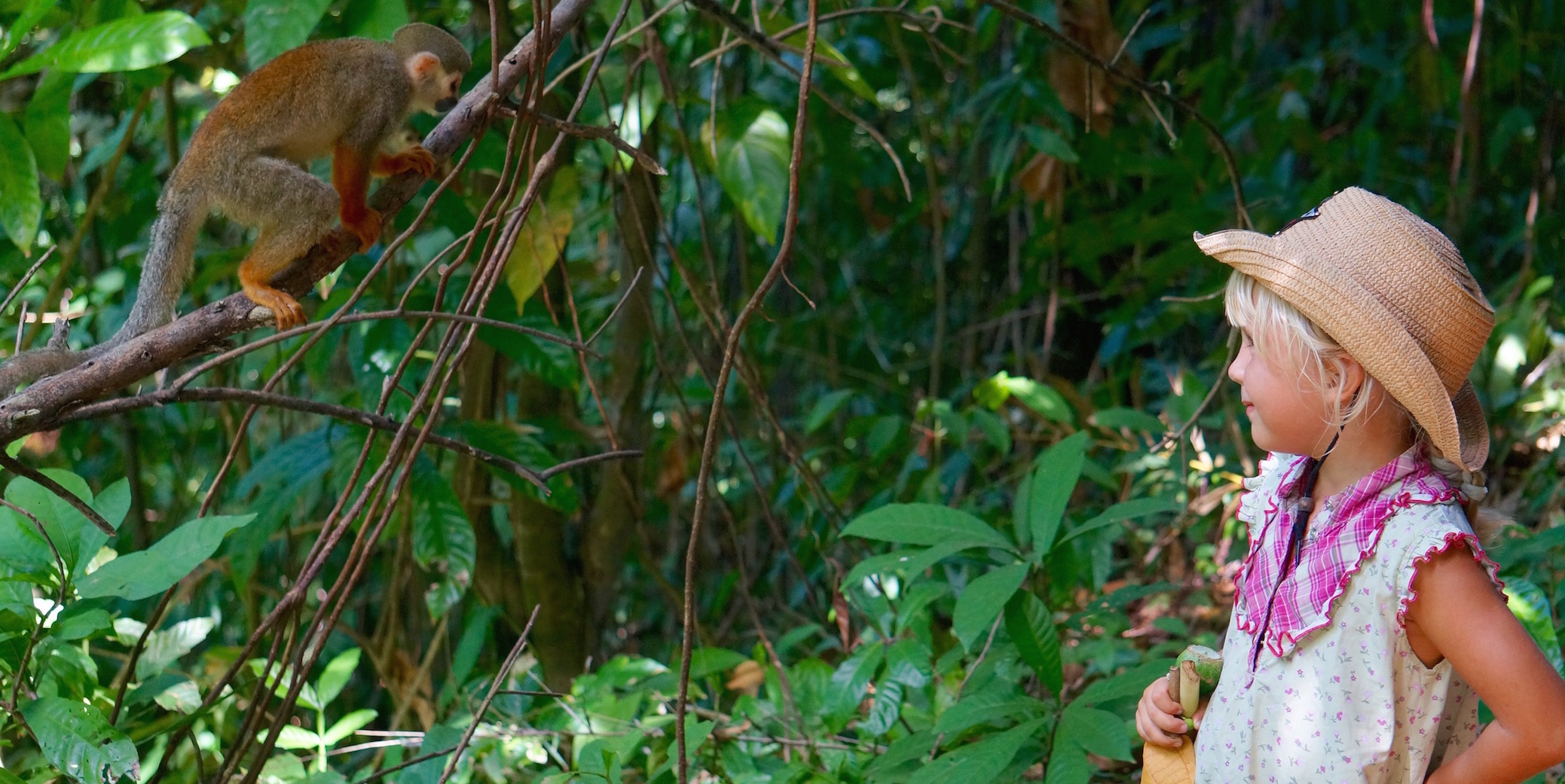
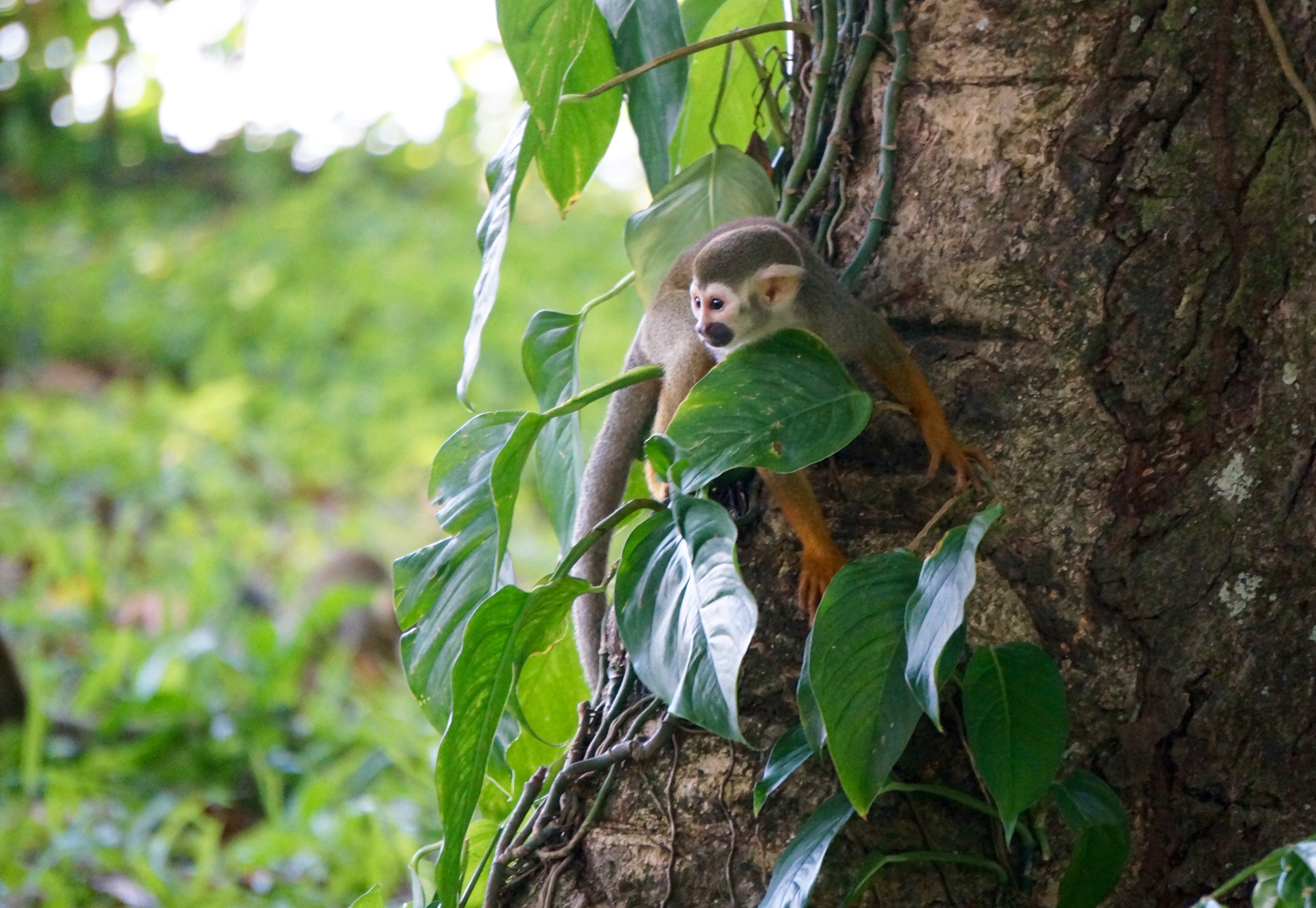
Lada skipped off to explore the surroundings, which stared back at us through tiny amber-black beads of eyes. Until 1643, Indigenous people lived on the island; then French colonists arrived in droves with their priests and Black slaves. A couple of centuries later, everyone moved away again, leaving only a small farm on La Mère. And at the end of the last century, kindly scientists populated the island with velvety green monkeys, having suddenly realised that almost all of them had been killed off at a most inconvenient time.
The masters of La Mère Island
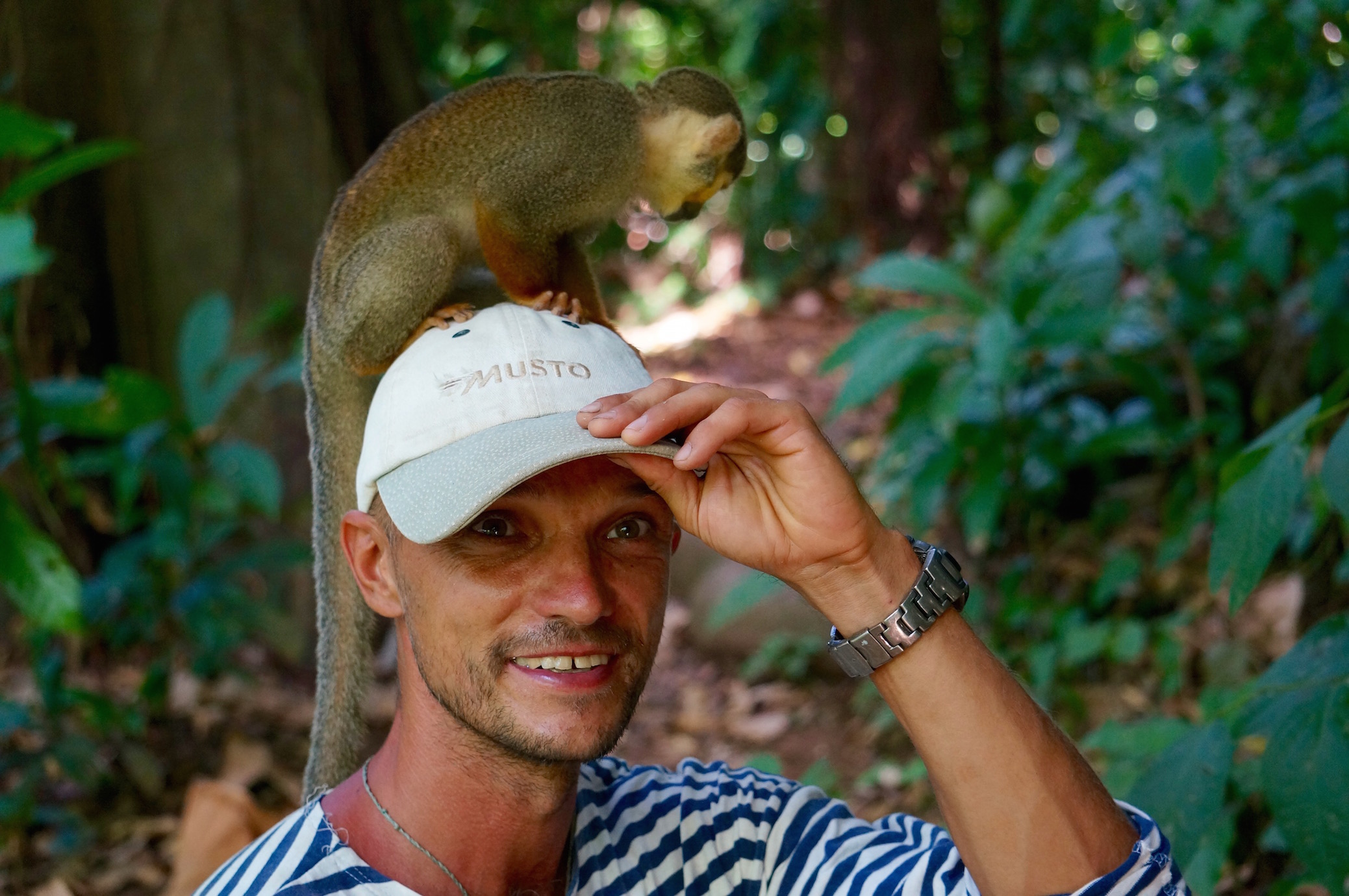
Now the little creatures hurl unripe mangoes down from the sky, freely leap onto tourists’ heads and beg for something tasty (and who on earth taught them that anything could be tastier than mangoes?). The little rascals cannot read and have no idea that special signs posted at the entrance to the island forbid visitors from feeding the monkeys.
A couple of times a day, small groups of tourists are brought to La Mère, eager to walk the narrow circular trail and climb to the island’s highest point, where an iron tower juts up for some reason, ripping through the pristine jungle.
We expressed our opposition to the treacherous colonisation of America and the extermination of its Indigenous peoples through an act of solidarity with the first inhabitants: namely, we took up gathering. For this purpose, two shopping bags were pulled from our backpacks and immediately filled with ownerless papayas, the monkeys’ mangoes and coconuts, one of which was cracked open right there, straight from the tree, so to speak.
Sooo... Who did you say was the captain here?
The nimble, inquisitive monkeys delighted the young sailors, while Mum and the first mate’s fascination gradually shifted from them to the stone ruins—the shells of houses, a partly demolished church tower, and something resembling walls that had once shored up either the soil or the farmers’ morale. All the ruins were built of stone, with no sign of cement, plaster or any substance less than 150 years old. At moments like these, you always want to stumble across a time machine and peek, if only with one eye, back through the centuries into an Indigenous hut or beyond the stone wall of an ancient church...
After unloading the first batch of our haul into the dinghy, we set off along the trail around the island. A giant leaf from a very slender tree served as a groundsheet for our young sailor and a tablecloth for everyone whenever we stopped to rest and have a snack. It was also the leaf that caused a minor adventure.
Ron Weasley’s Nightmare
Ron Weasley is Harry Potter’s best friend, and you have definitely heard of him. And what was Ron’s greatest nightmare? That’s right: spiders. No, not like that. SPIDERS. Our memories of that film were still fresh, since we had watched it only on the fourth or fifth day of our voyage across the Ocean.
At one of our stops, Lada forgot her Moon-sized leaf. Since the young sailor was already miserable after a couple of hours of walking without a break, her sobs shook the entire jungle, from the base of the little island to its summit. Leaving Lada to suffer in the company of Dad and her sister, Mum headed back to the previous resting place. The Moon-sized leaf was found and ceremoniously carried back to its rightful owner.
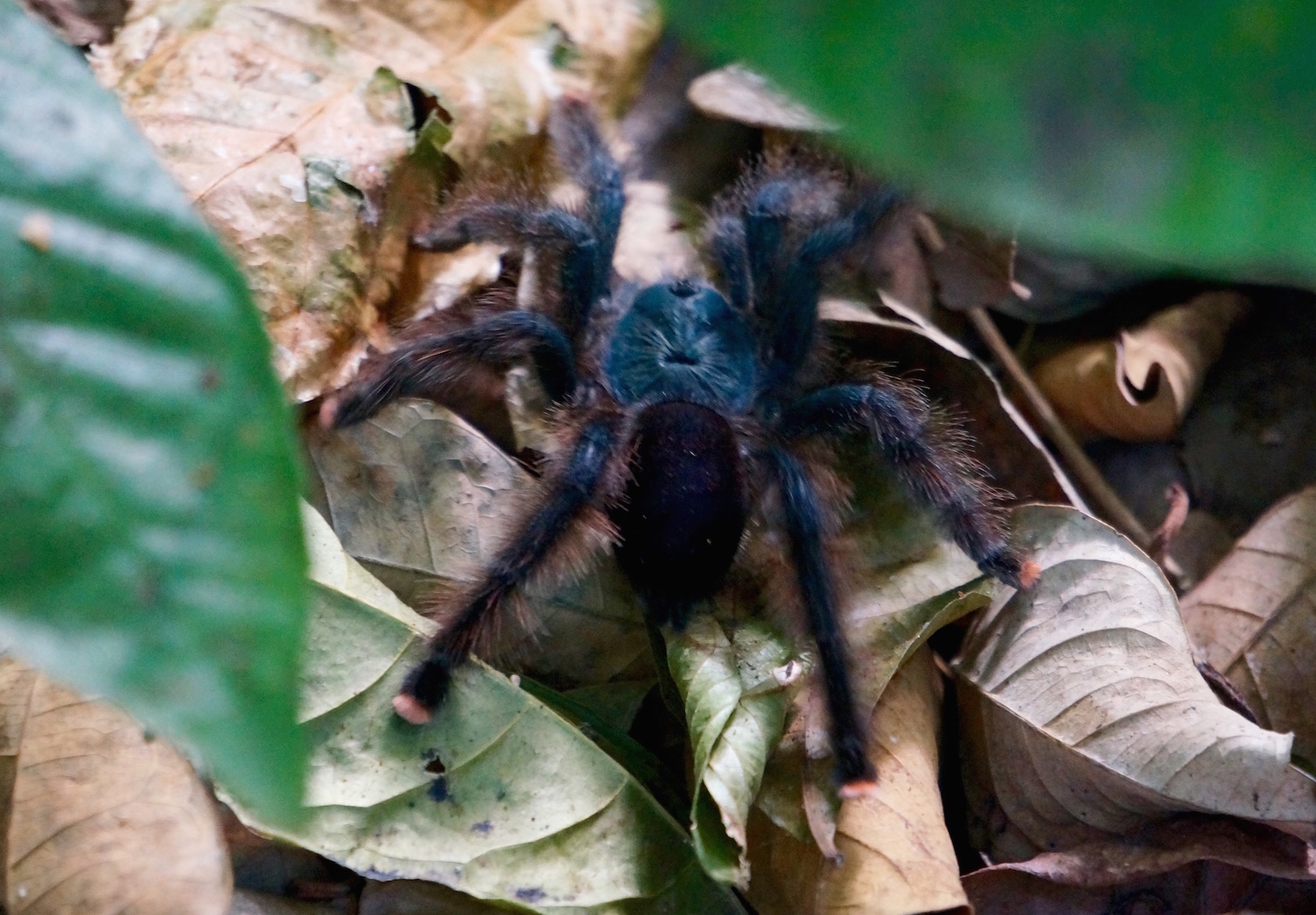
I happened to glance down and froze. Ron Weasley’s nightmare was crawling on all eight hairy legs exactly where my foot was about to land. I am not very familiar with the habits of hairy spiders the size of a hand, so I froze in place just to be safe. Swallowing convulsively, I took out the camera and began filming. I had to show the children that THEY exist!
A spider in the forests of the northern Amazon (the leaves are about 10–15 cm long)
Without a care in the world, the monster continued sedately along the very middle of the trail, and only about eight minutes later decided to veer off to the right. To be on the safe side, I let the handsome fellow get a metre away from the trail—well, after eight minutes I had already got used to him, and the “monster” had become a “handsome fellow”—then hurried off to catch up with the crew, without forgetting to scan the ground beneath my feet.
Foraging for Food
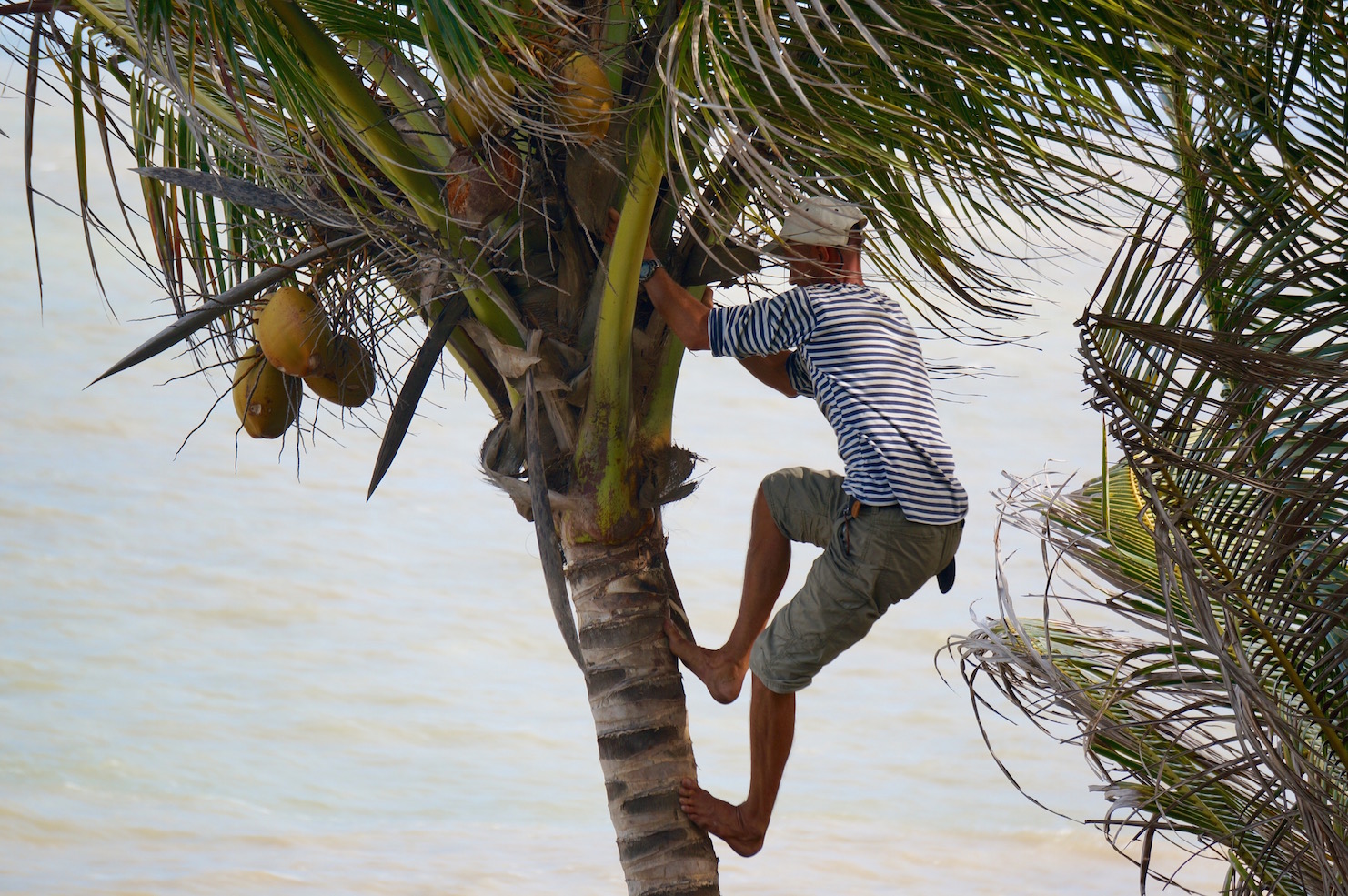
The children were thrilled. The captain was a little disappointed that the spider had turned up when he was not there, and compensated for the lack of excitement by climbing a coconut palm, because feeding the family and crew is the captain’s sacred duty:).
Gathering coconuts for the needs of a crew left ravenous by the transoceanic passage
After fortifying ourselves with coconut, we searched for more mangoes, but instead gathered several strange fruits resembling green pomegranates, with misshapen, unripe beans growing inside. The monkeys seem to eat them and look perfectly alive afterwards...
We met a group of French spider and coconut enthusiasts coming the other way, while we finally reached the dinghy. On the way, we helped a French “ranger” named Henri tie up; he was waiting for tourists on his boat to take them back to the mainland. We agreed to meet in the marina a couple of days later and set off back.
We went around the island from the other side, thus completing the circuit. It was a good thing the young sailors and I had stripped down to our underwear before getting into the dinghy. In the shallows, the breaking waves had grown to menacing proportions, threatening to dump their crests on us throughout the final 400 metres of the journey. So we got thoroughly washed, had time to get a little frightened, filled our bags with water on top of our haul, and bounced over the wave tops. We need not rush to visit a water park or ride a roller coaster any time soon:).
The monkeys don’t mind a little chat 🙂
The story of how we sailed out of the Ocean to the islands of French Guiana is told here— Atlantic Passage. Days 23–24