
From the Travely-Family archive · Other Entries
Tierra del Fuego. 500 Years of Ordeals
An original publication from the former Travely-Family website. This English translation was preserved from the technical-site archive without editorial rewriting.
Tierra del Fuego. 500 Years of Ordeals. Genocide, penal servitude, beavers and a Garden of Eden at the end of the world. The world’s southernmost history, told from aboard the family icebreaker Lady Mary
We really want to tell you not only about our adventures, sailing, amazing expeditions and heroic captains we have encountered during these several months at the end of the world. Let us also say a few words about the end of the world itself—about what the shadows hiding among its harsh cliffs have whispered to us.
These stories truly are worth telling:)...
About Magellan
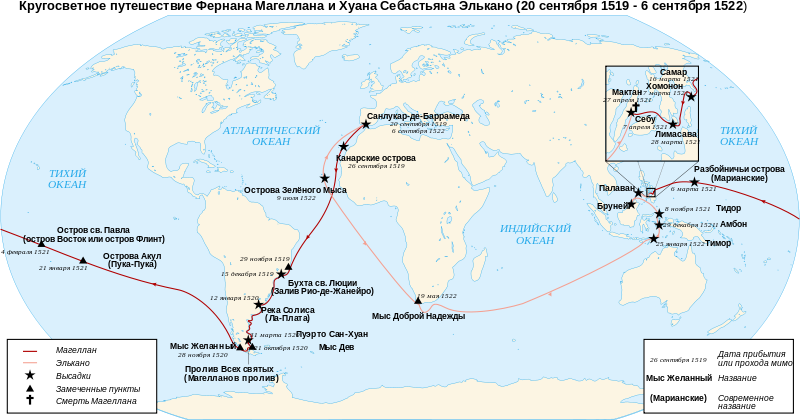
The first to see Tierra del Fuego, almost 500 years ago, was the intrepid Magellan. Having finally felt his way in 1520 through the strait he had sought so painfully, leading from the Atlantic to the Pacific, the commander decided that the land lying to the south was part of the unknown Terra Australis Incognita.
Because there simply had to be a continent in the south to counterbalance the northern landmass. And since this land burns with some mysterious fire from the depths—volcanic fire, that is—I hereby name it Tierra del Fuego, the Land of Fire.
In fact, it was the Indigenous people lighting campfires. The poor souls did not know that contraptions with sails like these would one day return to take away their lands. And five centuries later, not a single full-blooded Fuegian would remain here.
Oh, and while you’re at it, name the strait after me! Magellan added. Then he made another joke: he never encountered a single storm before the end of his life and, delighted by his good fortune, named the planet’s largest ocean the Pacific.
Magellan’s circumnavigation (from Wikipedia)
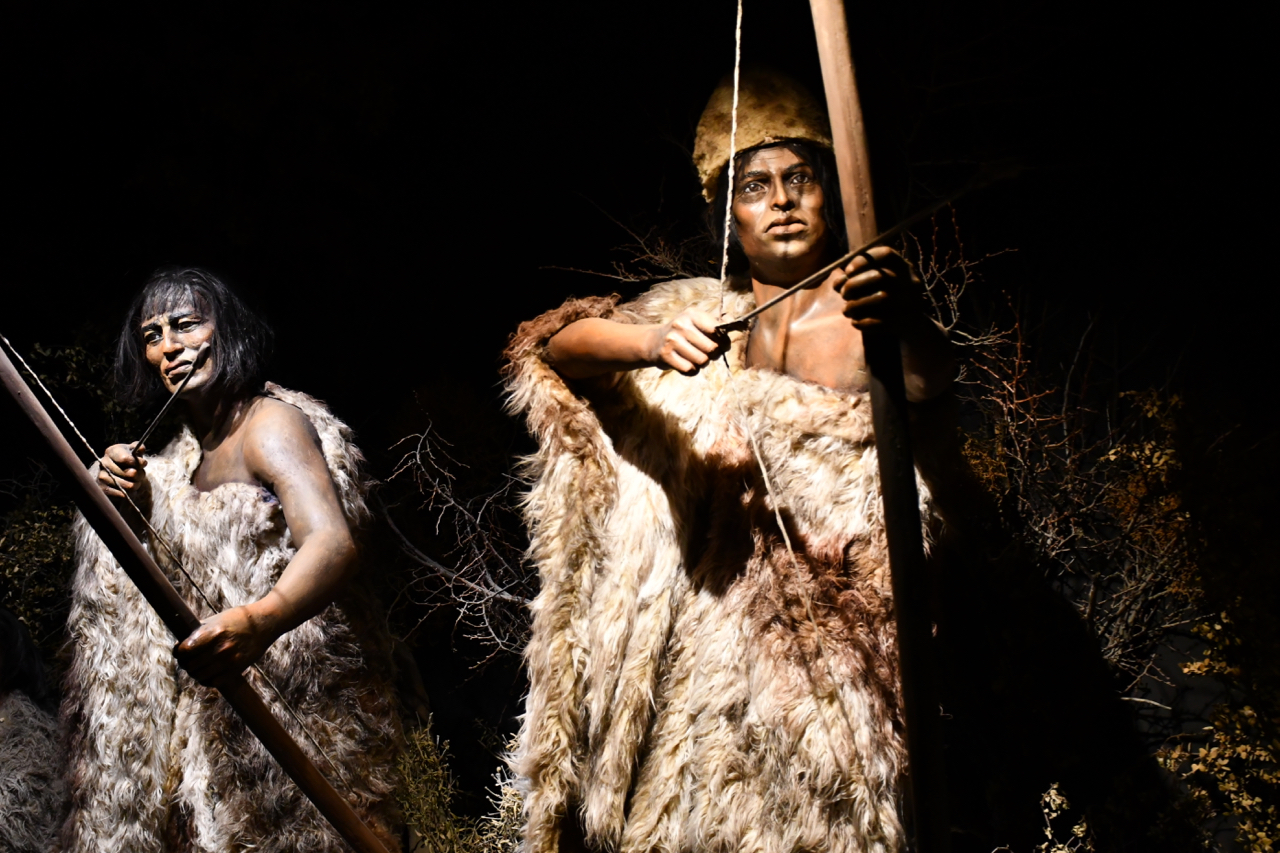
After Magellan, the young Darwin also visited this archipelago of 40,000 islands. He marvelled at the Indigenous people’s “thermos-resistance” (as our young sailor calls it), which allowed them to live here quite happily.
And perhaps they would have gone on living, slowly dying out under the pressure of missionaries who wanted to: a) dress the Fuegians (because otherwise it was somehow indecent); b) teach them how to live properly; c) drive them out of their huts and under roofs; d) assimilate them. But in 1886, calamity came to Tierra del Fuego.
About the genocide
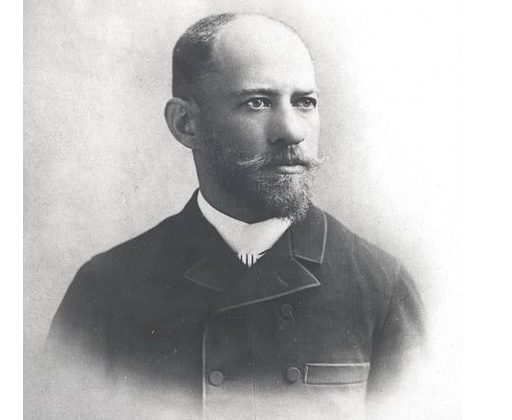
Its name—the calamity’s—was Julius Popper, a Romanian polyglot and explorer with more energy than his years might suggest. He showed up here in the company of 17 other adventurer-miners. And so it began...
By then, the Argentine flag was already flying proudly over part of Tierra del Fuego; the province was called Santa Cruz, as is customary among Spanish speakers; and the Indigenous peoples—the Selk’nam, Yaghan-Yámana and the rest—were being carefully squeezed towards the mountains. On the main island, Isla Grande, they had even started raising sheep.
“Stupid idea,” the Selk’nam told the sheep farmers. “Where are we supposed to live with all your ranches?”
“We don’t give a damn,” said the sheep farmers, hammering another nail into the lid of the Indigenous coffin ranch wall.
The Selk’nam began to grumble. The colonists grew tense.
“Why don’t we just wipe out all the Selk’nam?” suggested the Romanian lad Julio Popper, who had arrived at such an opportune moment. “They don’t like sheep!...There’s something fishy about those Selk’nam. And there’s a bit of gold on their lands too. How are we supposed to mine it with these naked people scurrying about?”
“Hmm, yes, very fishy...” mumbled the government, and approved the genocide.
Julius Popper
In short, September 1886, when Julio Popper decided to mine gold in Tierra del Fuego, proved fatal for the Indigenous people who had lived here for millennia.
In the battle to reclaim the sheep and the gold-bearing vein, they shot not only the Selk’nam, but also the Yámana and two other peaceful peoples.
Who could tell which tribe they belonged to anyway?
A pair of ears, a pair of hands or the head of a Fuegian fetched one pound sterling (judging by the currency, it was not only people from Spain who had an interest in the matter).
Thus motivated by hard cash, the newcomers set out on their righteous mission—hunting bipeds. In the course of this absorbing pursuit, almost no Indigenous people remained on the island. We wrote about the last full-blooded Yámana woman here >>.
And the last woman of the Selk’nam tribe, Rafaela Ishton, died in 1985, at the age of 66.
Popper’s fate
The valiant Julio Popper presented Argentine president Miguel Juárez Celman with a photo album of dead Selk’nam—as a report on his research activities. Then he went back to mining gold. After 600 kg had been extracted, the vein ran dry.
In 1891, the Indigenous people finally filed a complaint against Popper, and he even had to answer to Argentine justice. Two years later, Julio had so exhausted everyone with his genocides and imperial ambitions—he had started minting gold coins and even issued his own postage stamp—that he was found rather dead in Buenos Aires. Perhaps he was poisoned; perhaps he quietly popped off at the age of 35; or perhaps the time had come for him to begin developing a little patch of land in hell.
What to do
For a couple of decades, Tierra del Fuego muddled along somehow—without Popper. Meanwhile, the colonisers fretted: how could we Argentines consolidate our presence here? The gold may have run out back in Popper’s day, but it simply wouldn’t do to hand such a chunk of land over to the Chileans—coming here and taking over like that.
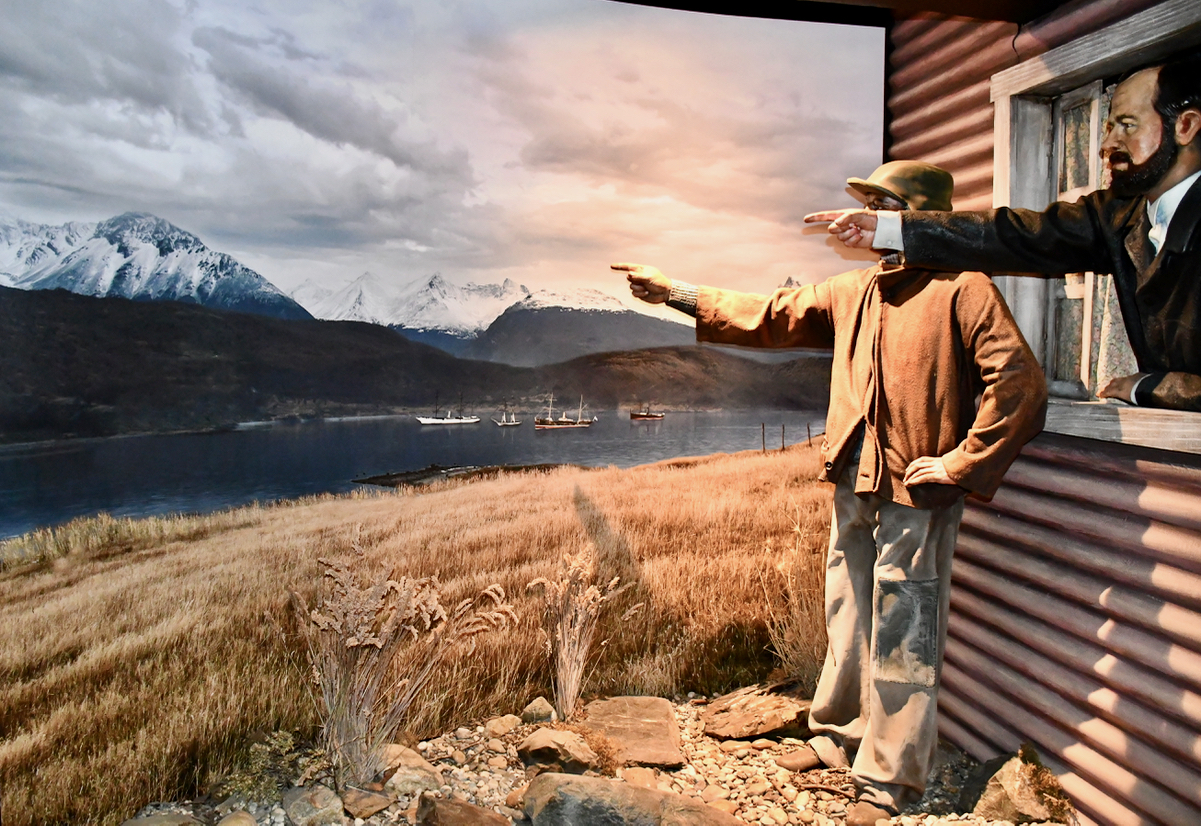
A view of Ushuaia 200 years ago
“While you’re thinking, why don’t we bring in some beavers, so there’ll be something to hunt?” suggested the North Americans.
“Oh! Great idea!” the Argentines rejoiced, and along with the beavers they brought in all sorts of other creatures, from horses to rats. Just to make it feel like home.
They looked at the result... “Nope, still doesn’t feel like home.” People were not exactly clamouring to come here. There was still no one to build and cultivate gardens in the Subantarctic, or to develop the free-trade and tax-free zone. Only missionaries wandered about, fewer than a dozen in all, converting the Indigenous people who had not quite been killed off to the true faith.
“What are we to do? They’ll seize the island—they’ll take the whole thing just as it is!” The government was fretting again.
Why the heck not?
They thought and thought, and then came up with an idea:
“Why don’t we,” they said, “drive a whole lot of people down here?”
“But who would come here of their own free will, to this freezing cold place at the edge of the map?”
“They don’t need to come willingly. We’ll open a penal colony here. We’ll have labour, we won’t need to pay them, there’ll be no need to fuss too much over feeding them, and there’s no bloody way to escape—the icy ocean, Cape Horn and the Drake Passage all around. And the lads can build the prison themselves. At the same time, they’ll cut down whatever forests are still standing after the beavers—we’ll make it like the Pampas: open spaces, what a lovely sight. We’ll sow the whole place with maize, grow bananas...” the governor daydreamed.
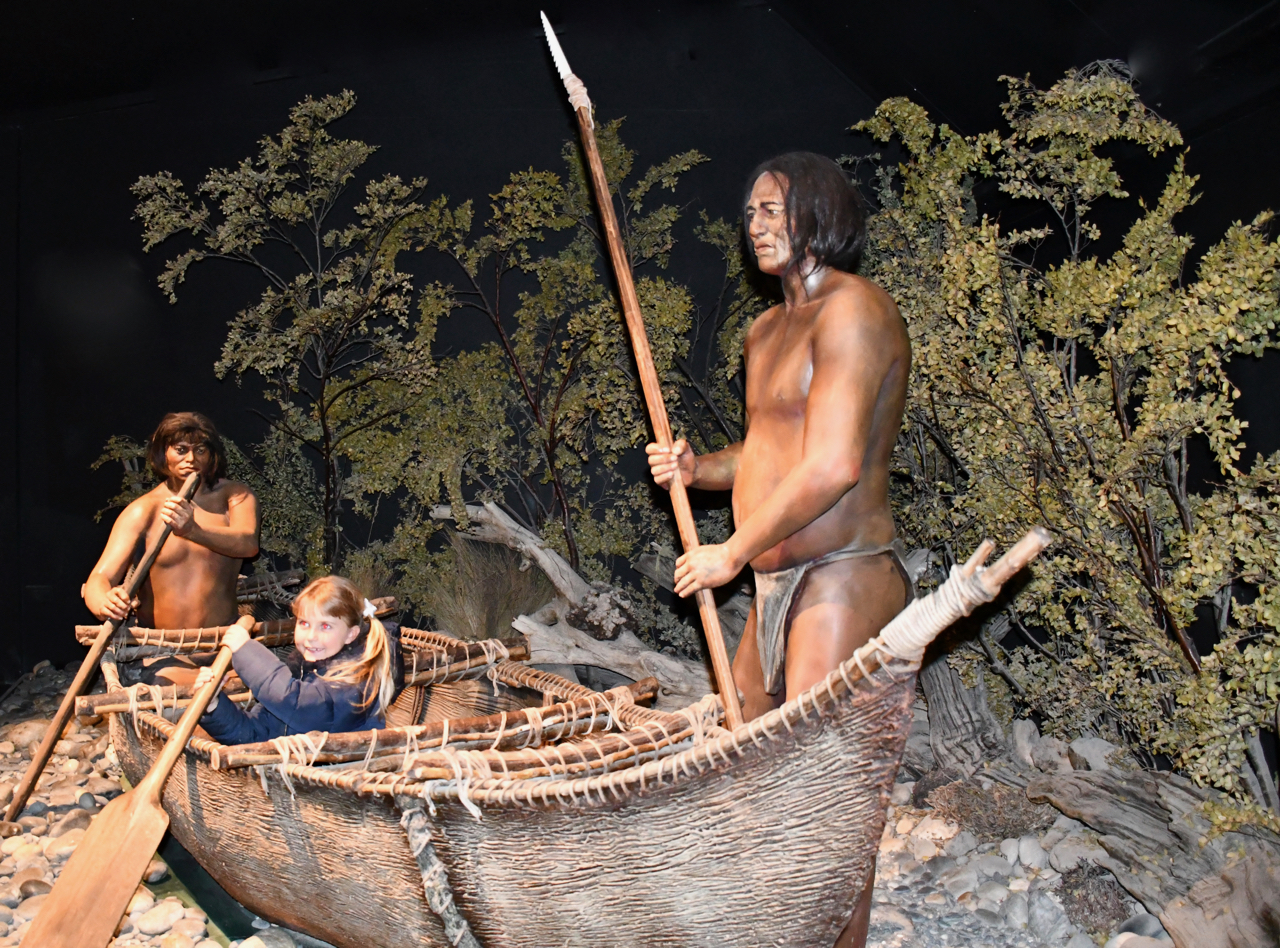
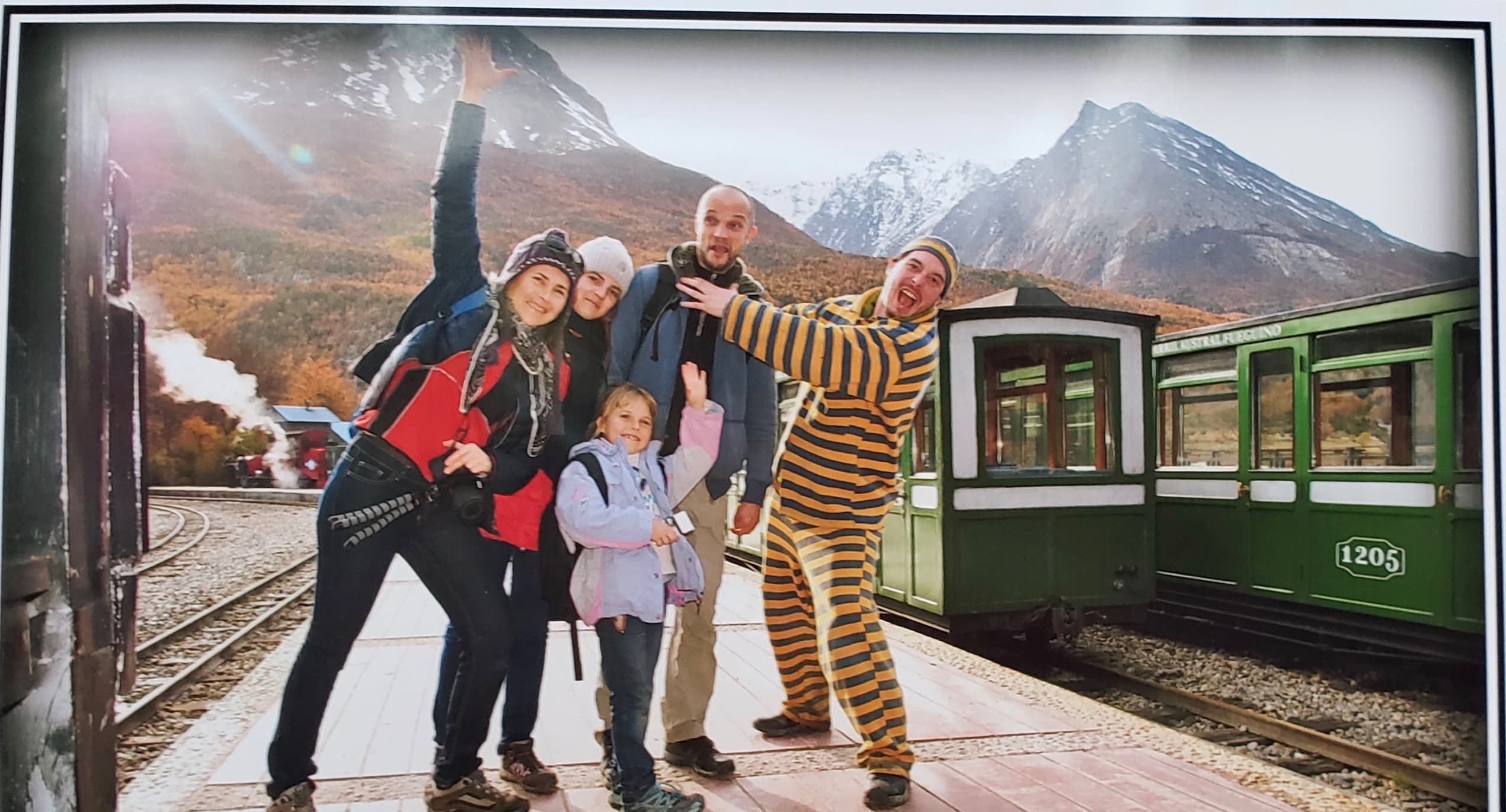
And from the first years of the twentieth century, people in jaunty prison uniforms in Beeline’s signature colours began rattling their chains in the frosty air. One of our fellow Slavs, the terrorist-anarchist Simón Radowitzky, did time here too; he was released 19 years later. But a big-eared maniac named Cayetano Santos Godino so exasperated everyone with his atrocities that even the convicts could take no more. One fine day, they did him in because he had killed—rumour had it, burned, and not for the first time—the prison cat, everyone’s darling.
Meanwhile, Ushuaia began to flourish, and the southernmost railway in the world came into being—a narrow-gauge line used to haul stones and logs for the prisoners’ own prison. And what a prison—a whole fortress, with a museum opened inside it towards the end of the last century. It’s nice there in the museum: guards stand in the corridors, the most terrifying criminals peer out of their cells with bruised eyes, and various models of ships that sank here inspire visitors with their optimistic stories.
Along the world’s southernmost railway, convicts transported timber and stone to build their own prison and the city of Ushuaia.
What it’s like today
After the Second World War, the penal colony in Tierra del Fuego was closed, and tourism gradually began to develop. And now tourists—specifically us—drive along a dirt road to the island’s oldest estancia, and farther on to the lighthouse which really is farther south than the one everyone falsely claims is the southernmost. The former penal colony has grown into nothing less than the gateway to Antarctica —what a splendid place it has become! And the history of Tierra del Fuego can be seen in a number of museums:
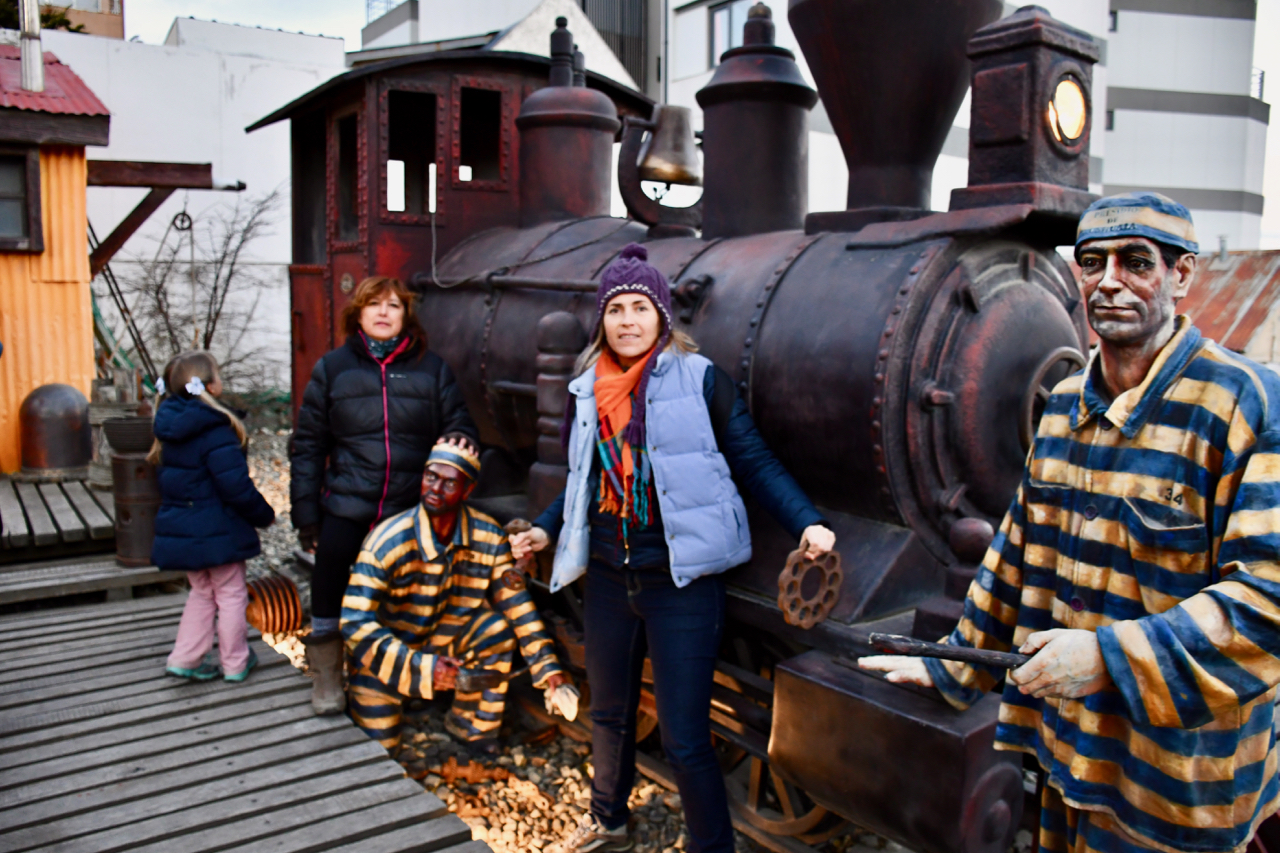
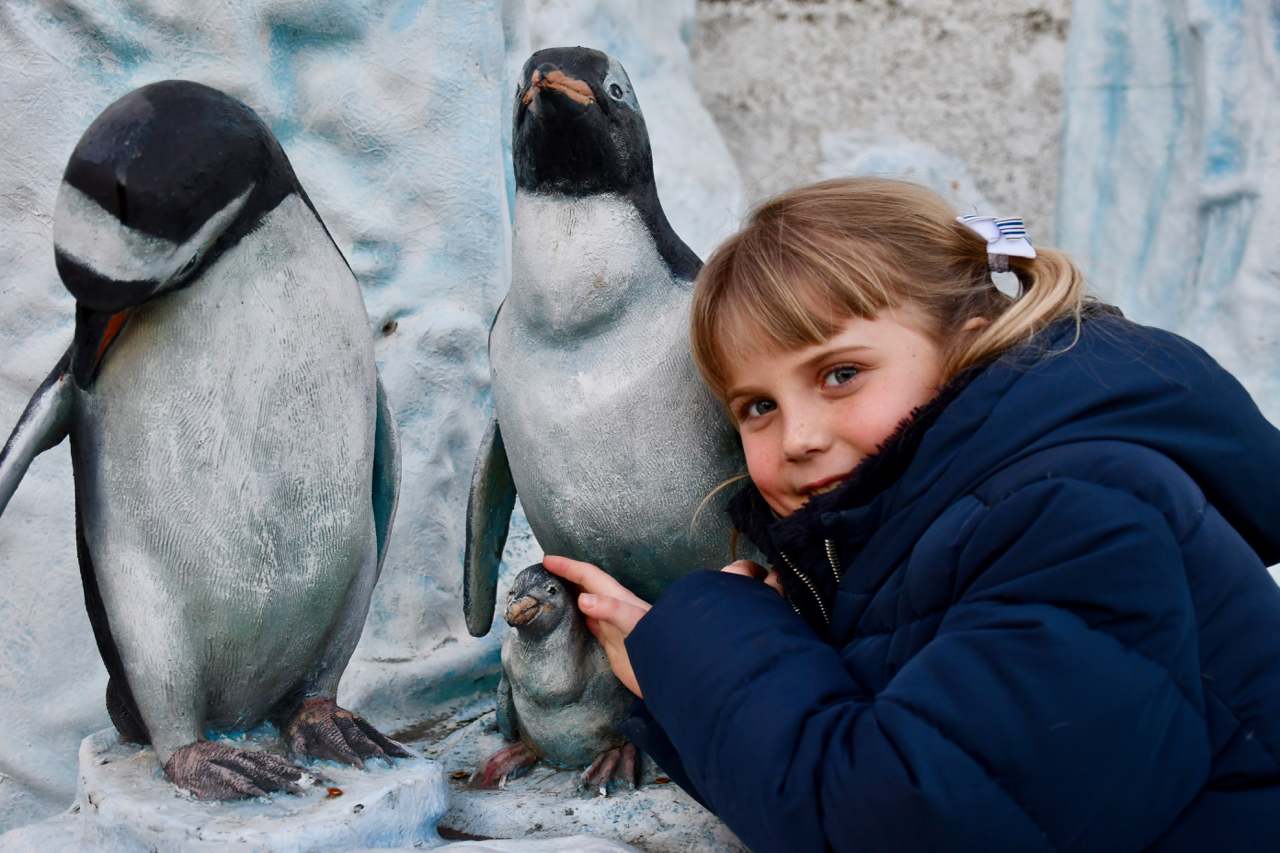
the Maritime Museum, housed in the prison; the local history museum—the Museo del Fin del Mundo—on the first street back from the sea; and the Galería Temática, at the end of the main street, San Martín. We were advised to take the children there in particular, so that Laduska would not get bored after ten minutes. There is an audio guide in eight languages, including Russian, and installations featuring the Selk’nam, the Yámana and their killers, explorers and prisoners—all almost lifelike. All our photographs of scenes from the past were taken there.
That turned into quite an introduction. Apparently, we’ll tell you about our drive through the subpolar forests, southward along the Beagle Channel, in the next report:))). And about our final days on Argentine soil as well. Now we cannot return there without a visa until next year.
Hugs from the Subantarctic, from beneath sails buried in snow.
Thank you all for your comments and letters, friends! We wish you a warm summer, while we prepare to set off for the glaciers of southern Patagonia.
#TravelyFamily