
From the Travely-Family archive · Pacific Ocean
On Reckless Parents, Risks and Adventures
An original publication from the former Travely-Family website. This English translation was preserved from the technical-site archive without editorial rewriting.
On reckless parents, risks and adventures. I think I’ll write a concluding post, I said while reading the comments on the report
How We Spent the Night in the Dinghy. The Climax. “Why?” That was the captain. “To dot the i’s and cross the t’s.”
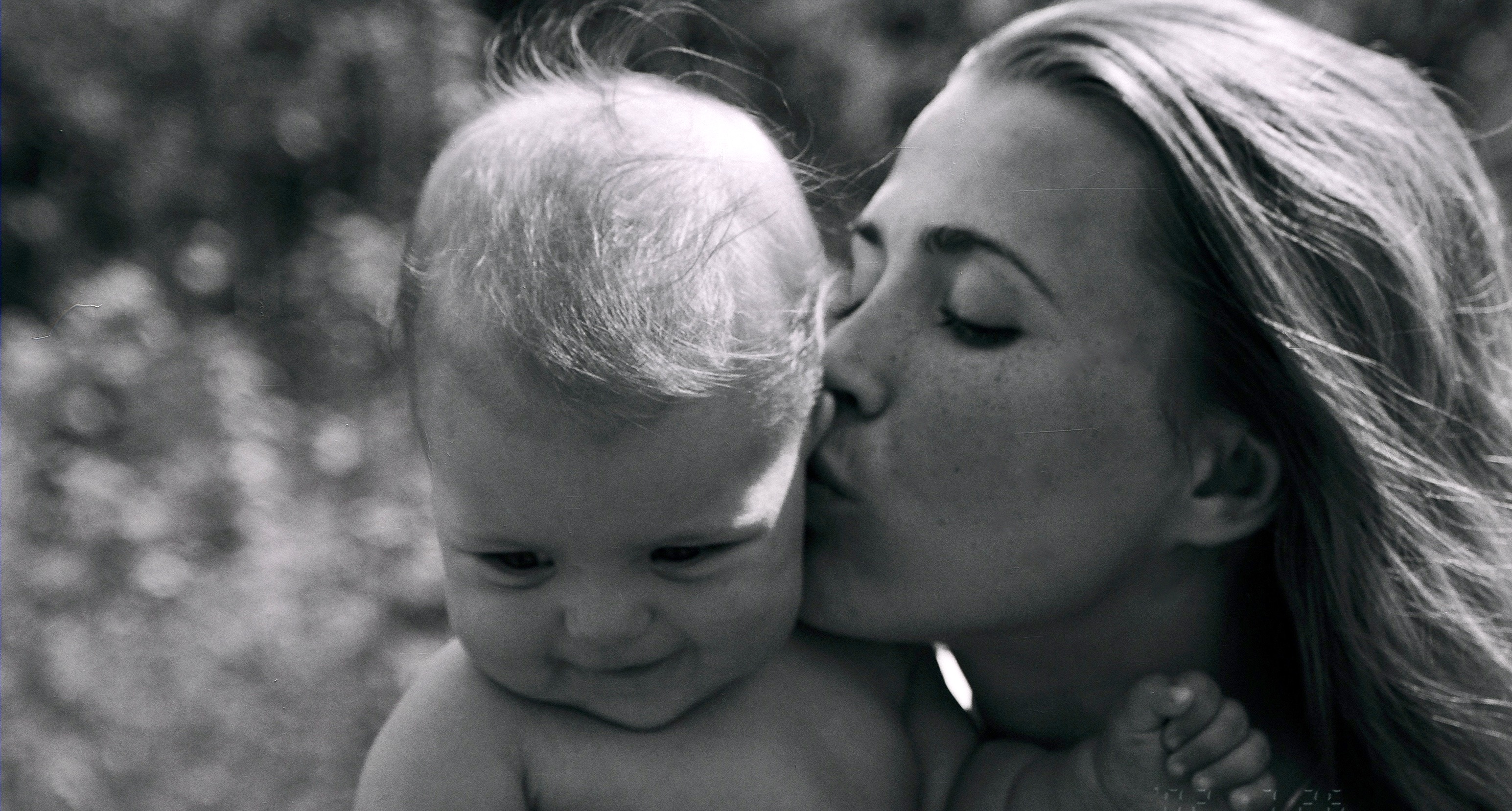
Are we reckless parents?
You’ll agree that setting off around the world with children already takes a certain degree of recklessness, won’t you? From the comfort of an ordinary life, this whole seafaring epic looks like a complete escapade. And four years ago, I—the mother—didn’t make up my mind to do it straight away. There’s a little secret: beginning a life of travel is very difficult, even frightening. But then, to your surprise, you discover just how many people in general, and families with children in particular, live while travelling. Some go to Tibet with a four-year-old child, some venture into the Amazon jungle with a baby carrier on their back, and some sail around the world.
And there’s nothing foolhardy about it. People live almost everywhere; there are ambulances, food and water. Among travelling families, we are hardly the most desperate. We don’t take the children into the Sahara or the Arctic, swim in rivers full of piranhas, study Colombian guerrillas or ride out hurricanes without shelter. We didn’t even go to Brazil after our transatlantic passage, but made landfall on the safe shores of French Guiana to avoid possible encounters with pirates. But we do many things in a rather unconventional way. That’s exactly why we’re here, in the middle of the Pacific, and not in the Novosibirsk office where we once worked without ever seeing the light of day.
About our adventure in the sailing dinghy
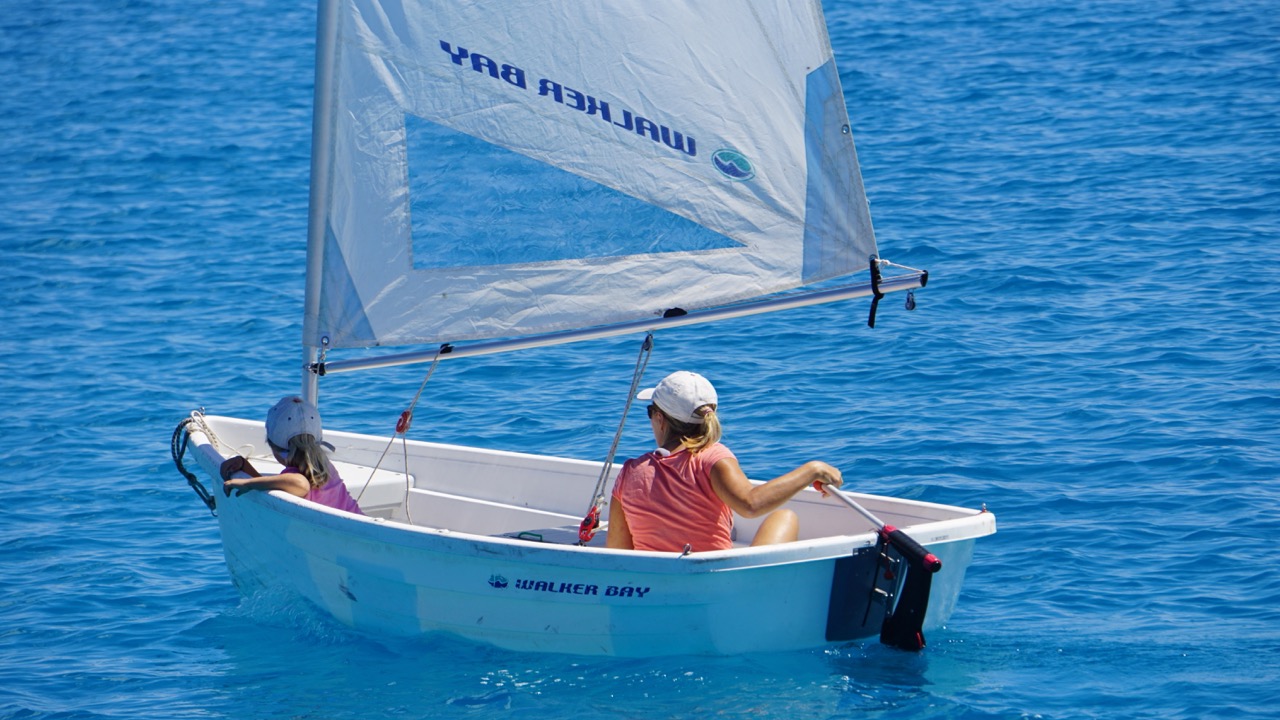
We’ve been sailing it for two years, and not because the engine is broken. It’s because we have a sailing dinghy, with a proper mast and a factory-made sail, just a little larger than the Optimist-class boats used to teach children at sailing clubs. We don’t sail in dangerous waters or eight kilometres out in the open sea. And an atoll isn’t the open sea: it’s a broken ring of land with calm water inside.
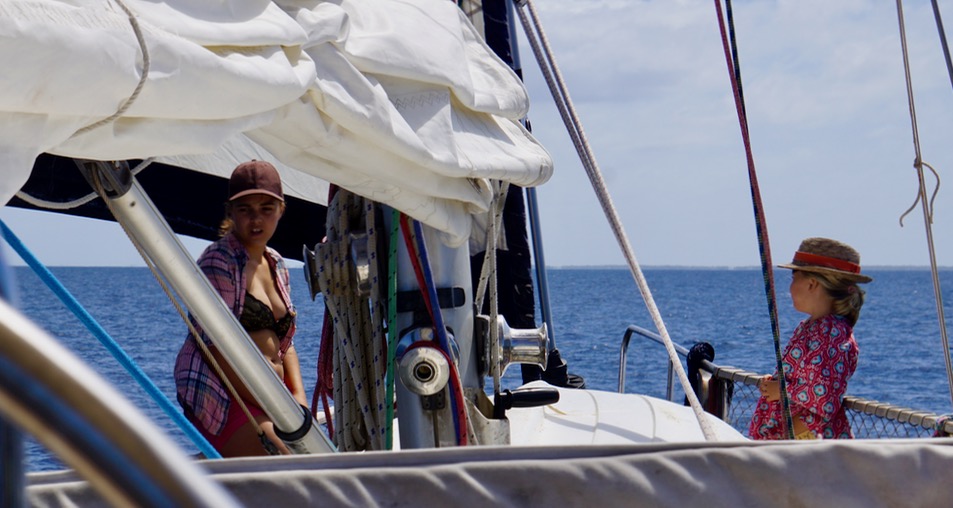
What did we risk if we encountered a headwind or the wind died away completely? Being blown to the opposite side of the atoll, where there is some sort of habitation within walking distance. We had an idea—mine—to return more or less to our starting point and walk to the village, towing the dinghy on a line. That would have been an adventure too, because we would have had to walk until morning, drink coconut water and get bitten by mosquitoes. Is that really such a great danger? If you’ve ever gone on overnight hikes, you’ll surely answer no. During my childhood, we sometimes went on multi-day hikes in summer and late autumn, sleeping in the forest with limited supplies of food and water. Yes, a heated flat is safer and softer and has running water, but does that mean everything else is certain death?
Fresh water
We had plenty of it, calculated to last until sunset. But not until sunrise ))). And once darkness fell, we rationed it so diligently that we returned to the yacht with half a glass still left in the bottle..
Do we put our children at risk?
No more than when sending them to summer camp by bus, or taking them river rafting. No more than when wintering in Thailand, where dengue fever and even malaria haven’t gone away. No more than when sending them to kindergarten during a flu epidemic. Nastya is already sixteen; she is almost an adult. Have you heard of Jessica Watson? A girl who sailed non-stop around the world in a sailing yacht, with the permission of her parents and even the authorities. Alone. Around Cape Horn. She was younger than our sailor. Another girl, Laura Dekker from the Netherlands, also circumnavigated the globe alone in a yacht. She sailed with stops, via the Panama Canal. She set off at fourteen. Nastya, of course, isn’t Jessica Watson. But she can weigh anchor, sail the yacht from point A to point B and anchor again.
What else do you need at sea—or on any journey where nothing is all-inclusive? Experience of being in different situations. If you’ve spent the night in a forest, know how to light a fire, find food and make camp, you won’t lose your head if you unexpectedly find yourself in a forest. If you can ask strangers for help in a foreign country when your parents are ill, you’ll cope with other obstacles too.
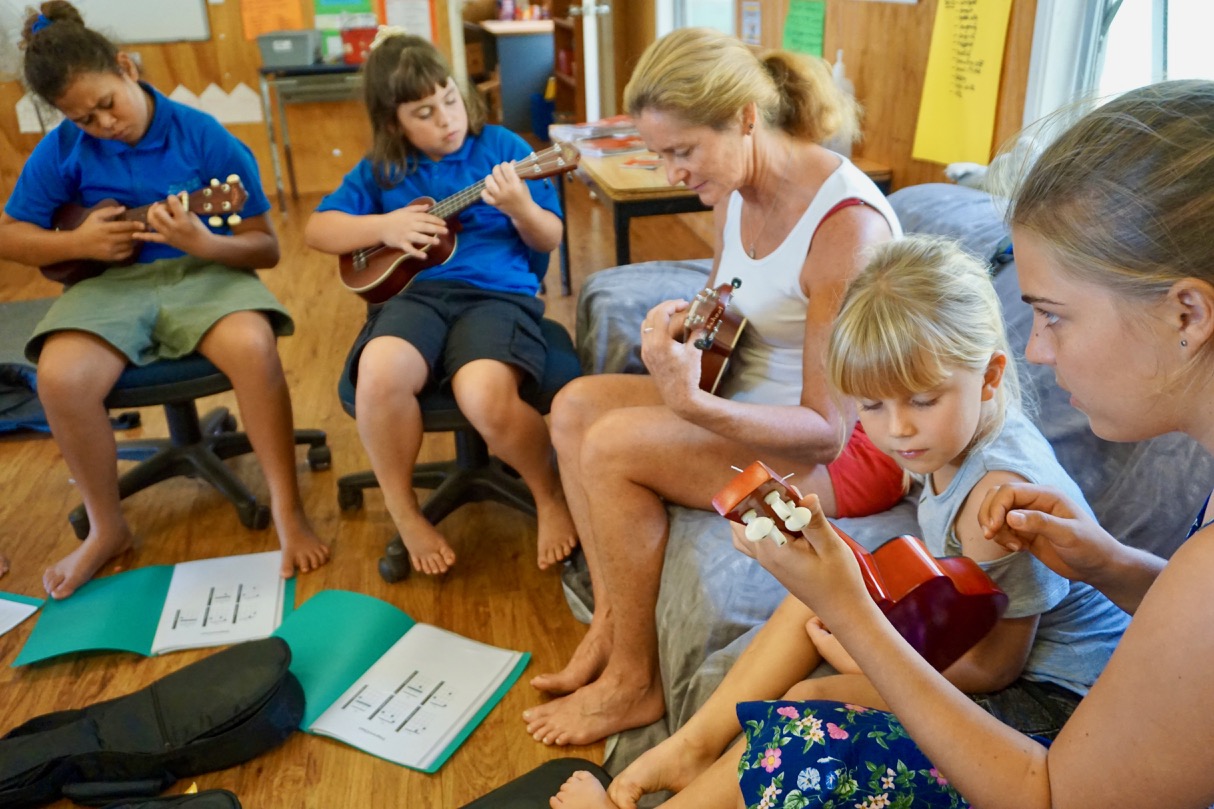
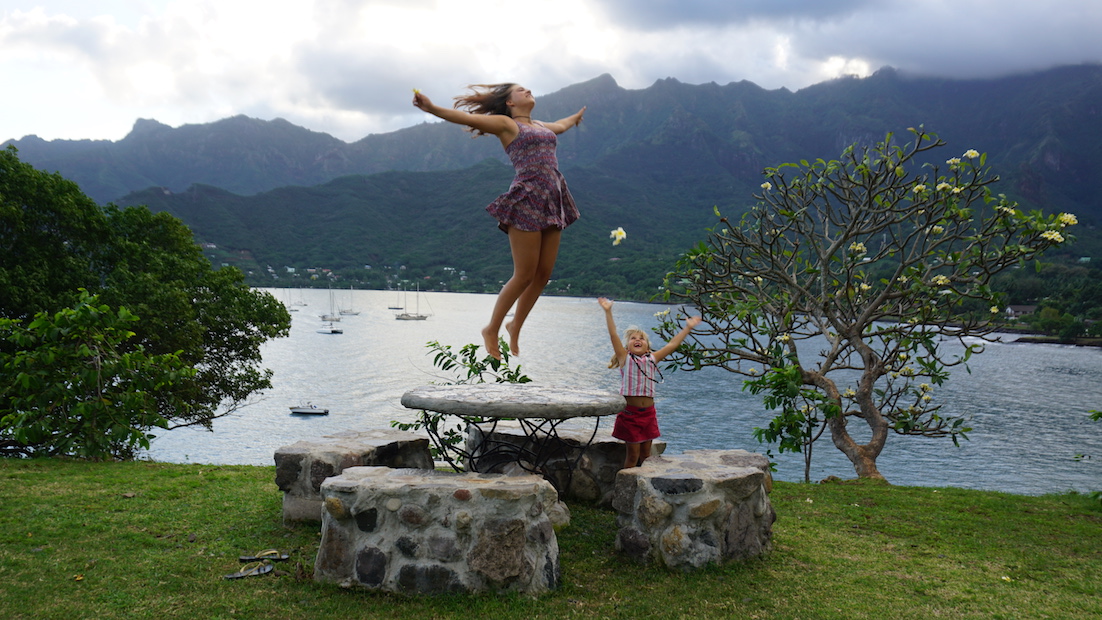
At the school on Pitcairn Island
If you’ve never been stuck in a dinghy for ten hours before, then at first, just as it was with Nastya and me, you see it like this: “Ooh, how awfuuul! What if we’re swept out into the oceaaaan!?! What about dinner and our evening movie!?! What about a soft bed and lots of fresh water!?!” Honestly? They’re perfectly fine without you. But how are you without them? Can you face the night a mile offshore in a little boat and not panic? No? Even if nothing threatens you except discomfort, the disruption of your routines and your own fears? What good are we humans, then, if a delay of several hours knocks us off balance?
The child came down with a fever the next morning... But does that only happen after sleeping in a dinghy? Who, then, fills all the hospitals and clinics in every city, town and village? I’ll say more: wherever our children happen to run a temperature, they are never ill for more than two days. Nastya was ill while we lived in the city. She was ill less often when we moved to a mountain village. And she got well at sea. So we will continue going on hikes where the children get tired; we won’t stop sailing in our little sailing boat, even though it’s harder than using an engine; we’ll teach the children to handle it; we’ll continue diving deep and treating illnesses with a minimum of medication. Precisely for the children’s safety. And so that they can survive where a hothouse plant would perish.
Perhaps the only thing we won’t do again is eat reef fish. We’ve sworn it off.
On basic safety and risks at sea
However it may sound, I’ve never met a more cautious captain than Andrey. Or a calmer person in an emergency. With him, there’s nothing to fear, so he makes the key strategic decisions in unfamiliar circumstances. Of course, I panic: “Aah!!! Are you out of your mind?” when he boldly enters a current or surfs the dinghy through the waves towards Easter Island. But I’m the mother; I’m supposed to be more fearful. In nineteen years, I have never once regretted trusting the captain to steer us through a difficult situation, from a serious problem with a child’s health to heading out into the ocean.
He knows everything there is to know about riding out storms and fine-tuning the sails, and he takes leeway, currents, clouds and sun into account. Of course, I boss him about over the little things—for example: “If you’d done as I told you, you wouldn’t have broken the coral.”
But when it comes to the big things... Do you know how long he has been poring over our onward route across the Pacific? Two weeks. With weather forecasts, sailing directions, charts and common sense. Because we lost a month to illness, and now we can only reach New Zealand just as hurricane season is beginning. I’m the one saying to him, “Then let’s set off from the Tuamotus right now—maybe we’ll make it!” He calculates everything day by day and answers: “No. We’ll take our time and follow the safe route.”
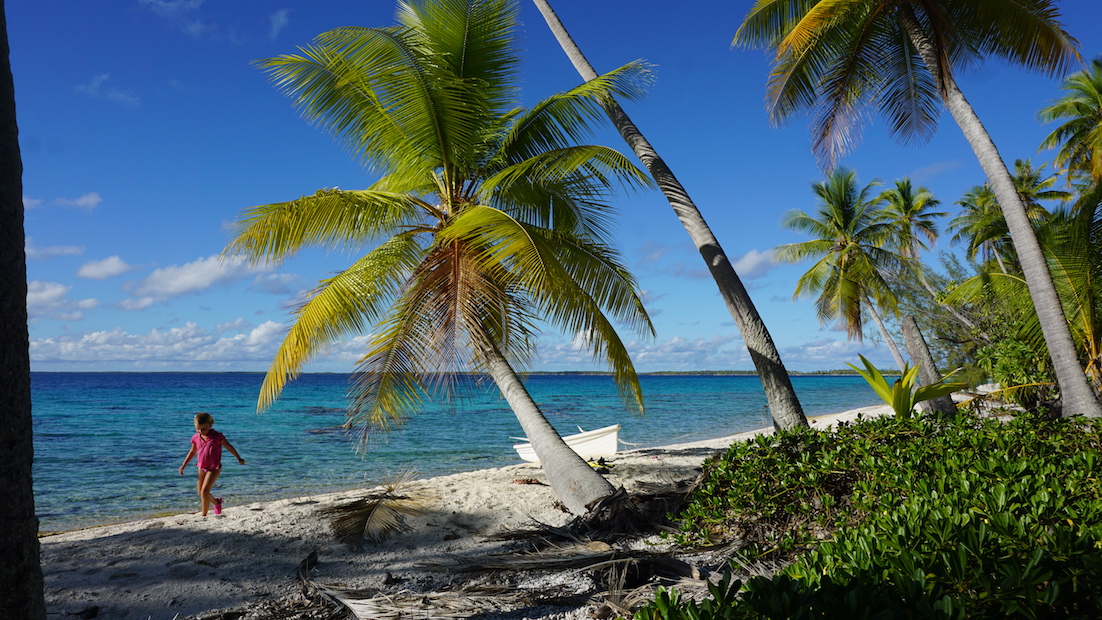
Kauehi Atoll
Our eldest daughter, Nastya, is very cautious by nature. The main adventurers in our crew are Lada and me. She calls it “adventure-lovingness.” Most of our hikes, rafting trips and sailing expeditions “waaay over there” happen at my instigation. The captain, meanwhile, only gives the go-ahead to safe ventures. That’s why we never leave anything to chance—nothing that could damage the vessel or harm the crew. The sea has no tolerance for incompetence. And ten hours in a dinghy inside a lagoon isn’t harm—it’s training. Training in patience, spirit and body. And yes, an adventure. A circumnavigation is an adventure in itself, isn’t it?
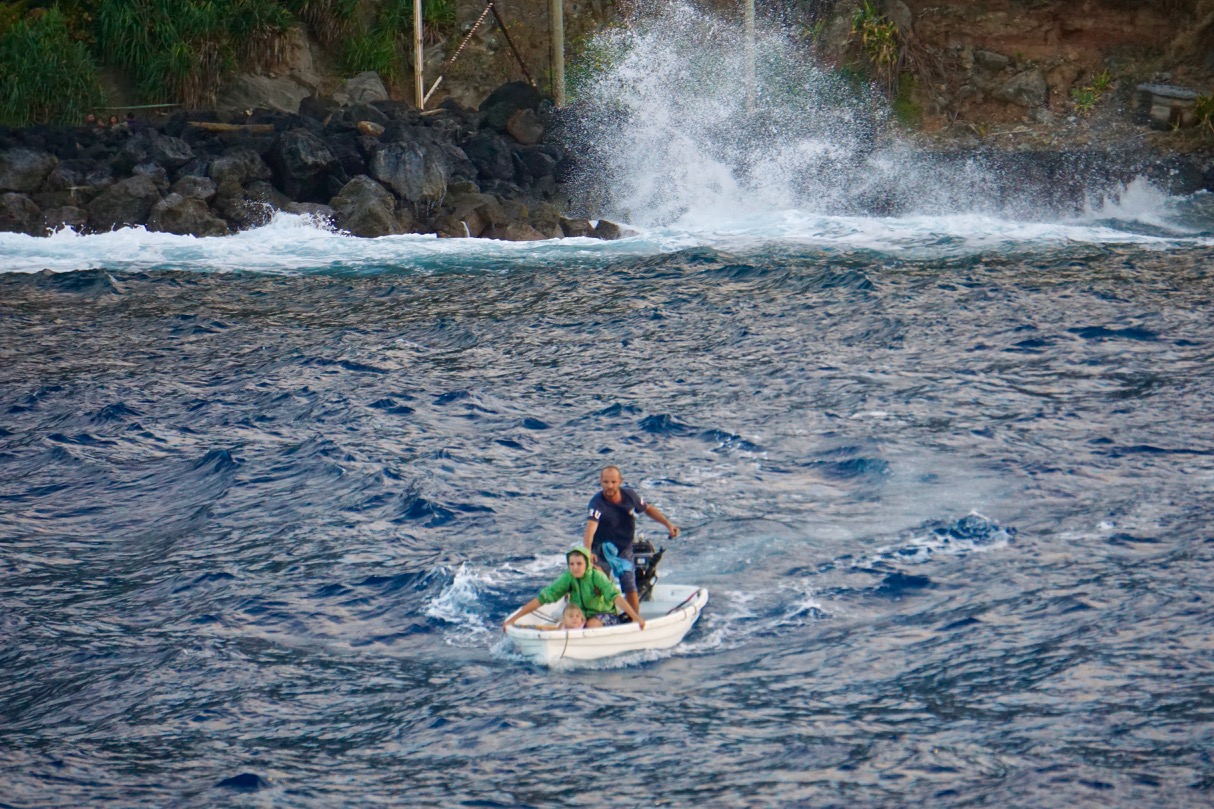
We’ll have something to tell the grandchildren.
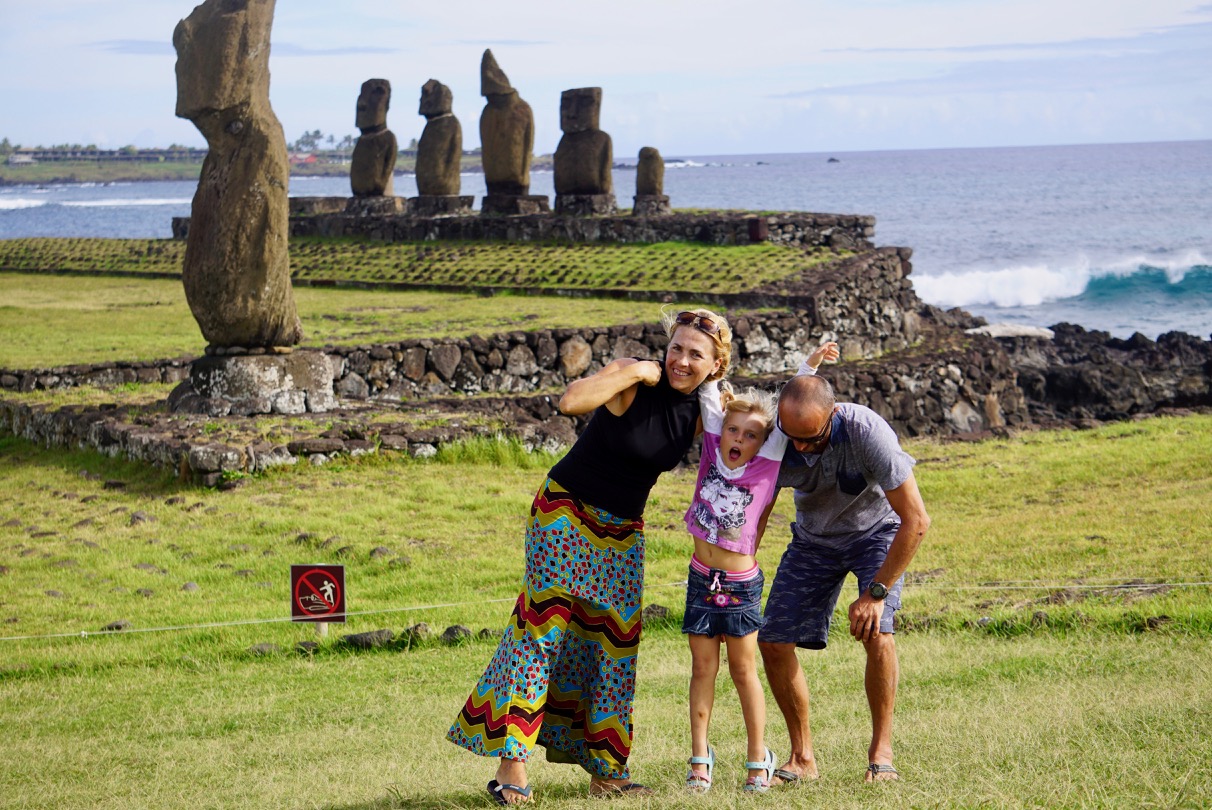
Easter Island
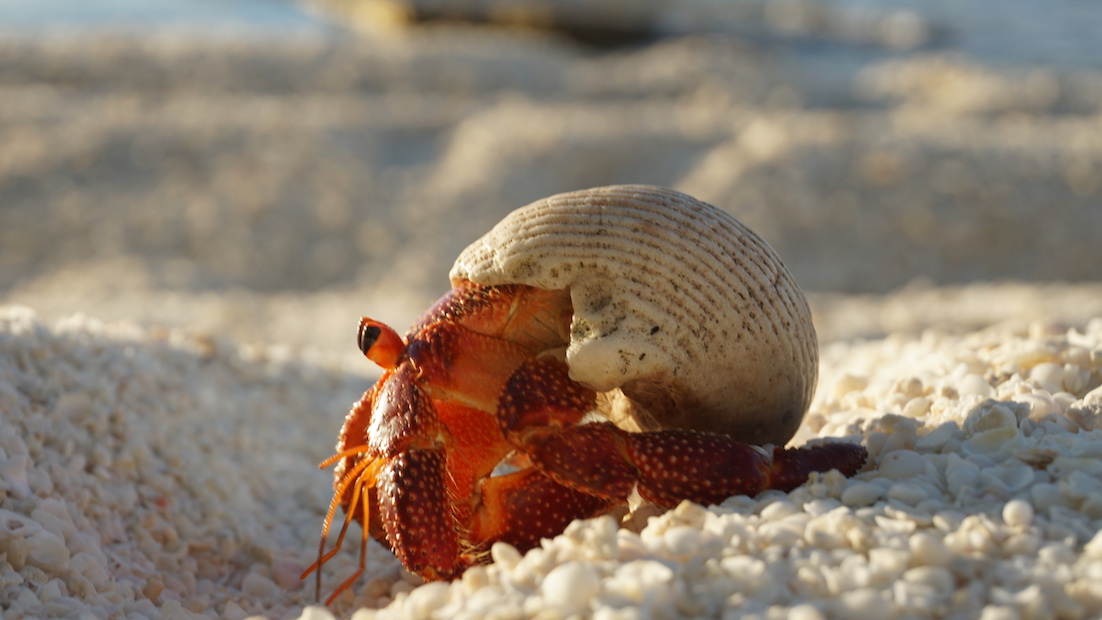
The Tuamotu Archipelago. A hermit crab
Pitcairn Island