
From the Travely-Family archive · Australia and Tasmania
A New Storm, the Same Old Quarantine, and an Old Disaster
An original publication from the former Travely-Family website. This English translation was preserved from the technical-site archive without editorial rewriting.
Right now, a powerful storm is beginning in Western Australia. The previous one was 20 days ago. Quarantine restrictions have been eased.
Let’s break up the bulletins with the story of how we went to see a famous train wreck site.
The storm is coming
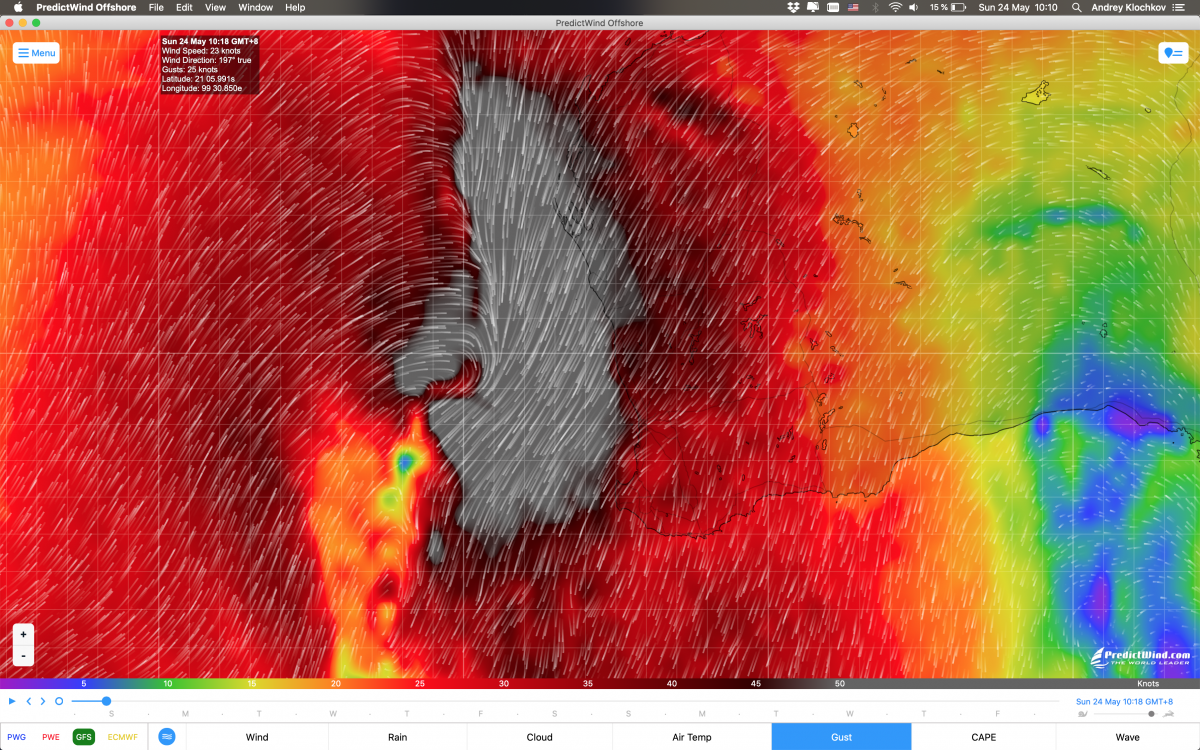
We’re waiting for the storm. The sky has already darkened, and since last night the wind has been gusting, now giving us a scare, now backing off. The mooring lines are creaking. Only yesterday they were saying that Poseidon had designated this the strongest storm in Western Australia for the past 10 years. A storm warning has been issued, and officials and various services were warning of 8-metre waves and winds of up to 130 km/h.
But not every forecast comes true, and today it already seems as though things aren’t looking quite so dire, although the weather map is still showing this horror:
We’ll keep you posted via social media—whether it arrives or not... We’re surprisingly calm and haven’t even added any mooring lines; we already have plenty. Nastya is bustling about in the galley, while the young sailor is catching up on a whole week’s sleep and has ordered us not to wake her until she gets up on her own. The captain is conserving his strength too: “What if there’s a battle tomorrow and I’m tired?” So we’re settling in to ride out the storm as usual.
And to make things even more fun, we’ve scheduled a livestream on our YouTube channel today at 16:00 Moscow time. The topic is “Safety While Travelling.”
About the previous storm
On 4 May, Western Australia unofficially marked the first day of winter. A cyclone swept the heat away. First it poured, and then the storm set in. Winds gusted up to 55 knots (22–23 m/s). Our land-based Australian friends started worrying about us—how were we doing in the storm? Perhaps they should take us home with them for the night. But a storm is precisely when you shouldn’t leave the yacht; you never know what might happen...
We were securely tied up. We checked the mooring lines on Esmeralda, berthed next to us—the very yacht on which Igor Zaretsky competed in the non-stop round-the-world Golden Globe Race, held under the same rules and using the same equipment as 50 years ago.
The storm broke a tree at the entrance to the yacht club, and the cycle path, so beloved by the young sailor, the midshipwoman and me, was covered with branches, pine needles, bark and assorted leaves. About four days later the worst of the mess had been cleared away, but traces of that storm are still visible. Today and tomorrow, new ones will be added. The yacht bounced around, the wind howled, and waves washed over the pontoon. It raged for about a day and then died down.
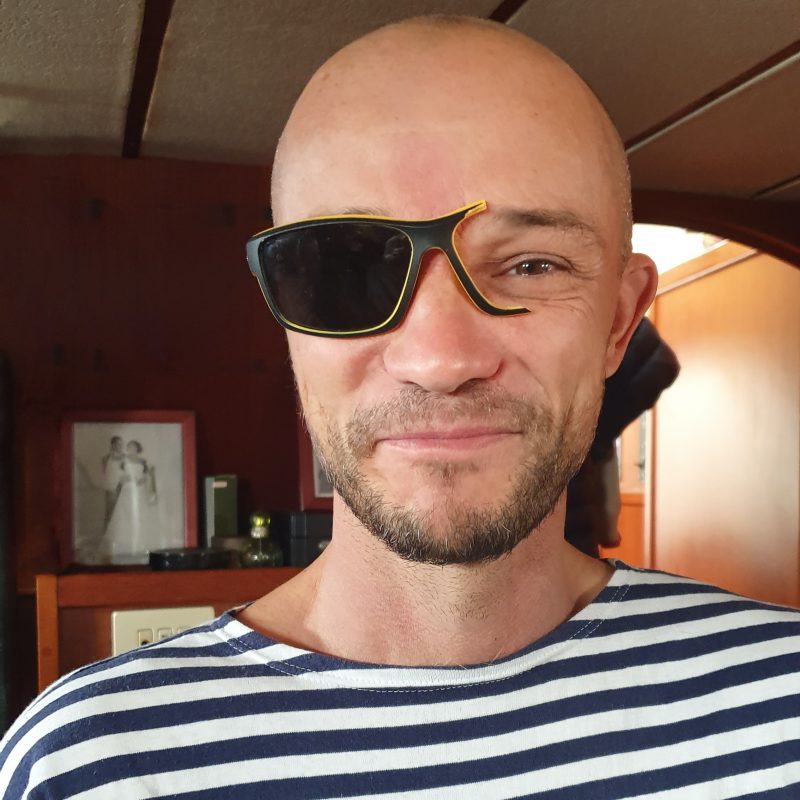
And here’s a photo greeting from the captain this morning:
The storm is only just beginning, and things have already broken
The first truly terrifying storm of our family sailing experience, which we didn’t weather all that successfully in a marina, is described here:
There Was a Storm, the Ropes Tore the Skin from Our Hands. Messina, Force 11
Easing the quarantine
The most pressing question for the whole world over the past two months has been whether there is an end to house arrest in sight and whether normal life will ever happen to us again. In Australia, the light at the end of the tunnel is already visible. By early May, quarantine restrictions had been eased across Australia. Picnic areas, parks and forests filled with groups of people out for a stroll, although officially gatherings of more than 10 people were still forbidden. As of this Monday, the number of people celebrating and picnicking has been increased to 20. We marked the occasion yesterday with a cheerful Russian crowd at a picnic for a child’s birthday. The children raced around the park searching for treasure, while the adults cheered them on.
The phased lifting of quarantine promises to remove some more of the old restrictions in another four weeks. In Australia, everything is going according to plan, without chaotic, contradictory measures being adopted, without public protests against those measures, and with good government support for those affected. We wish the same for all of us...
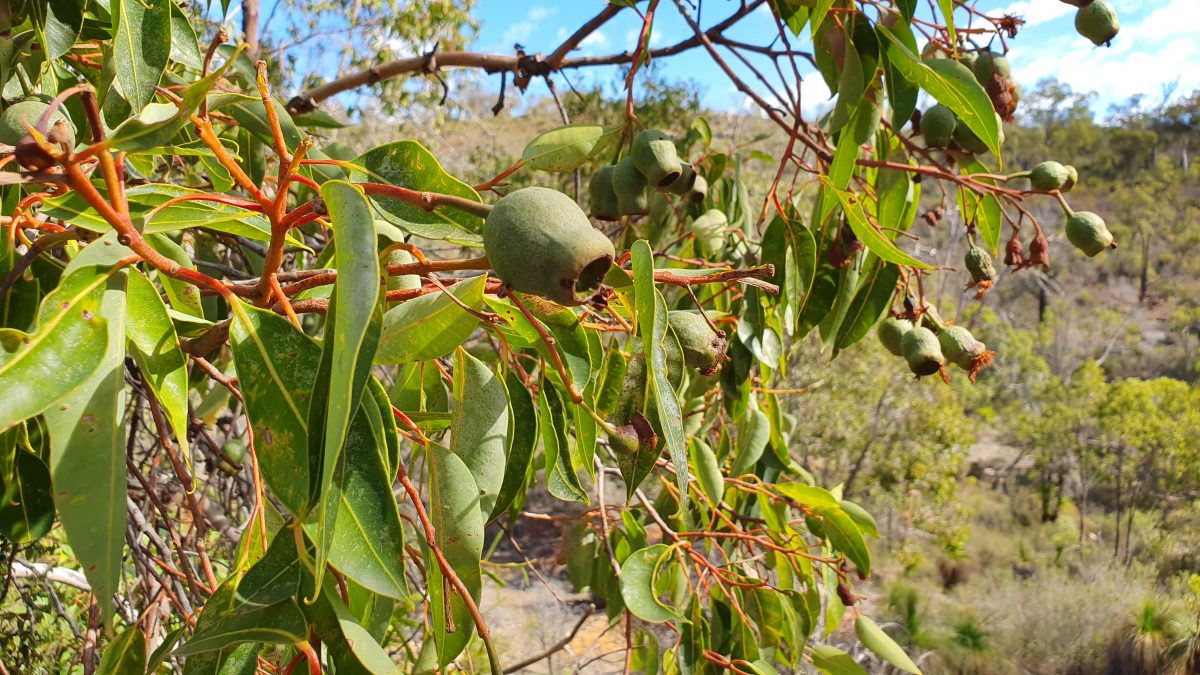
A eucalyptus fruit—as a gift ).
A record and a train wreck
To celebrate the reopening of the forests and picnic areas, we managed to dash off to John Forrest National Park, with kangaroos as placid as boa constrictors and a railway tunnel—a memorial to a late-19th-century disaster. At this very spot, a world record was accidentally set moments before the disaster, and it was even officially recorded somewhere. Seven horses and one person died in the setting of that record.
The disaster site
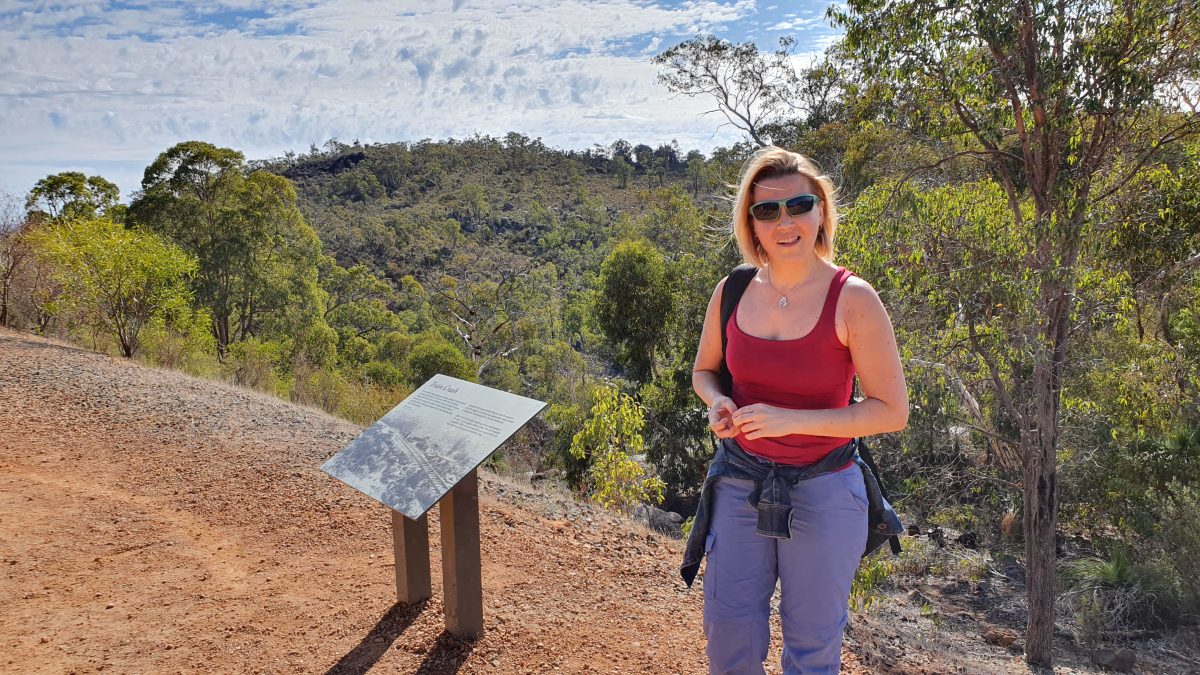
Here’s what happened. On a fine winter’s day, 30 June 1896, a train of 24 wagons was travelling uphill by rail from Perth, “on some business or other.” Two wagons behind the locomotive, a coupling—the fastening between the wagons—broke. Twenty-two wagons broke away from the head of the train and hurtled downhill at a terrifying speed. Thirteen kilometres later, this strange race ended just as one might expect, and the wagons flew off the track and down the embankment. One of them carried horses along with their groom. The selfless fellow refused to abandon the horses and did not jump from the train. They were all flattened.
Using a simple calculation based on time and distance, the investigators calculated the speed reached by the runaway wagons. It was almost 200 km/h. This was officially recorded as the world speed record for rail transport at the time. The fact that the speed had been achieved by a train running backwards without a locomotive, courtesy of gravity, was not particularly publicised.
At the tunnel entrance
John Forrest National Park
In November 1900, the area was declared a national park and named after the Australian explorer John Forrest. It was the first national park in Western Australia and the second on the entire continent.
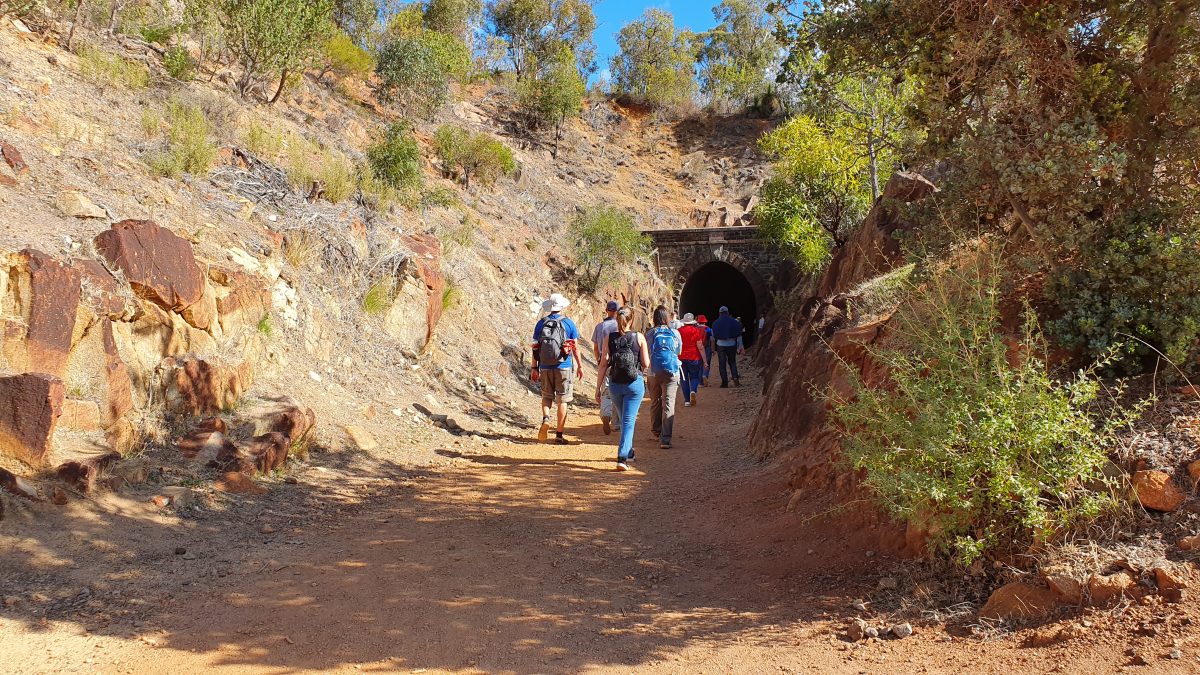
The railway was closed around 1960, and the tracks were later dismantled, leaving only the tunnel and walking and cycling trails. You can clock up about 50 km on the various routes. Somewhere along one of the trails there is a place to spend the night in colonial-provincial style. Right at the beginning of the park, by the car park and cafeteria, groups of kangaroos gather. They stare at the visitors and wait for the appointed hour, when grain resembling oats is scattered on the path for them.
Pecking at oats 🙂
A little below the crash site is a very dark, narrow railway tunnel with the poetic name Swan View. Mind you, there are no bodies of water or swans in sight. Although here, around Perth—the capital of Western Australia—the area couldn’t be more swan-like. The river is called the Swan, and black swans nest everywhere. They even swim into our marina south of Perth.
Bad news
We no longer have our Nikon DSLR. Because I broke it. Yes, yes, I pushed the memory card into it the wrong way round. Something inside got bent or snapped off. Now the card reader can’t detect the memory card. And the local repair shops are offering to fix it for almost half the price of the camera. I feel like a vandal. All that remains of our filming equipment is an old GoPro, a drone and a Samsung smartphone...
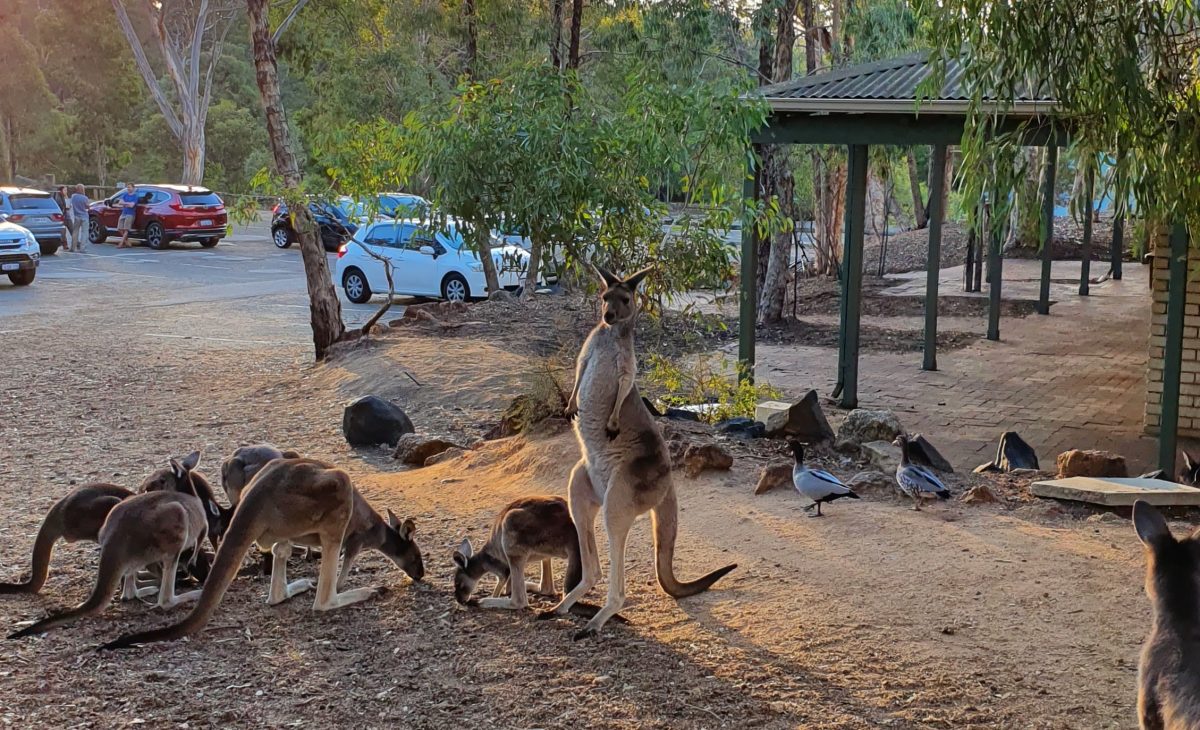
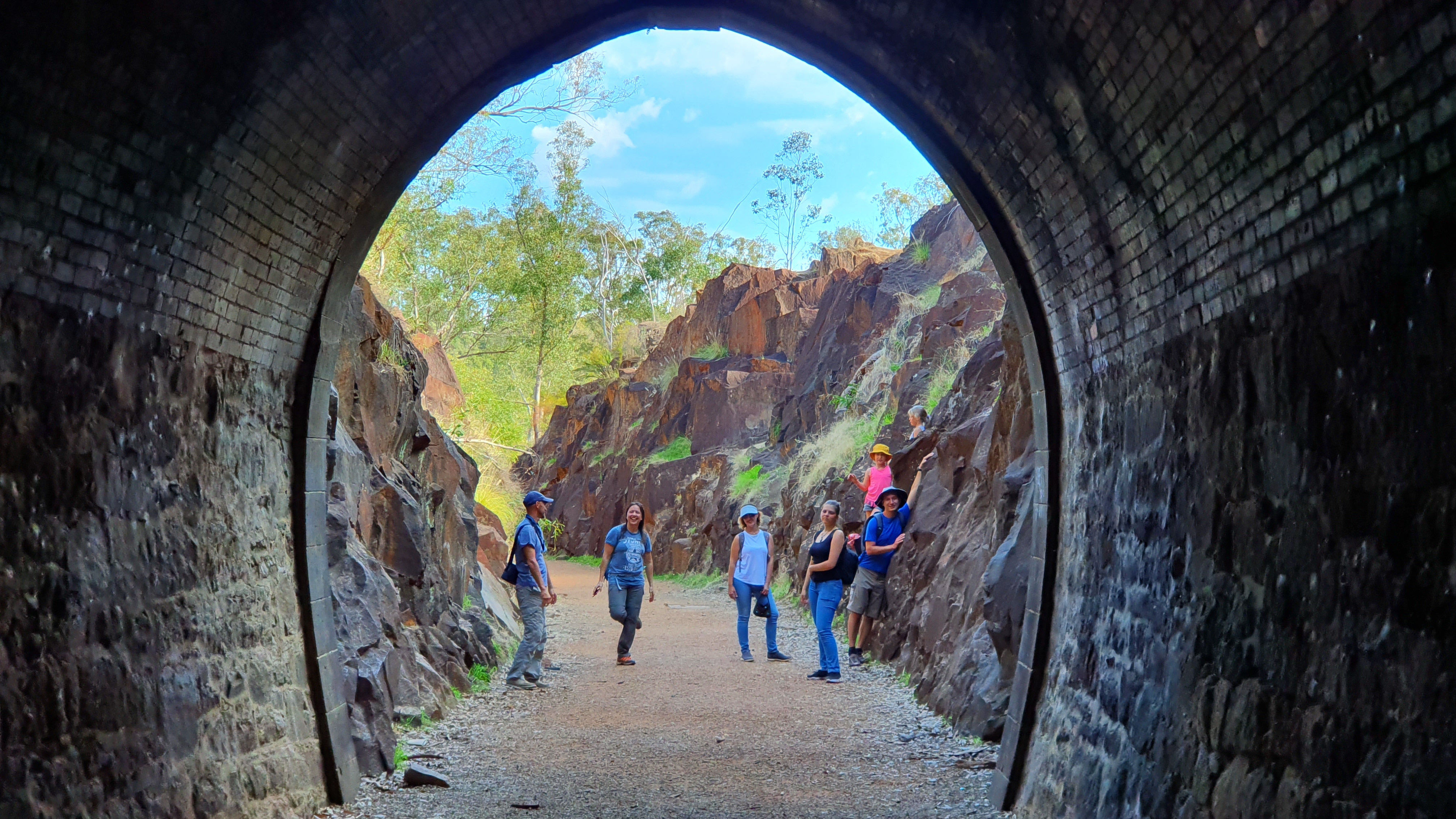
This photo is from John Forrest National Park, but taken on the phone.
Online life in quarantine
We’re constantly working away at our laptops, creating one thing or another. The number of creations, however, bears absolutely no relation to the time spent making them:). The latter is a hundred times greater.
We do livestreams on our own channel and on other platforms, particularly for Russian schools. One of them was at Mosaic School in Perth. That’s where our Ladunya has a full day of online lessons on Saturdays. Her subjects are mathematics, Russian, reading, media, Domovyonok (a handicrafts lesson), history, biology and music. For now, the lessons are being held on ZOOM, and we’re happy about that.
And on the other five days of the week, our yacht-based pupil studies at her beloved
St Andrew the First-Called School of Geography. I don’t think we’ve ever enjoyed education as much as we have during these months. We have decent internet and the opportunity to study online. The young sailor is occupied, and her like-minded girlfriends are on Skype. Which means Mum has her hands free!
That was a hymn to parental laziness:).
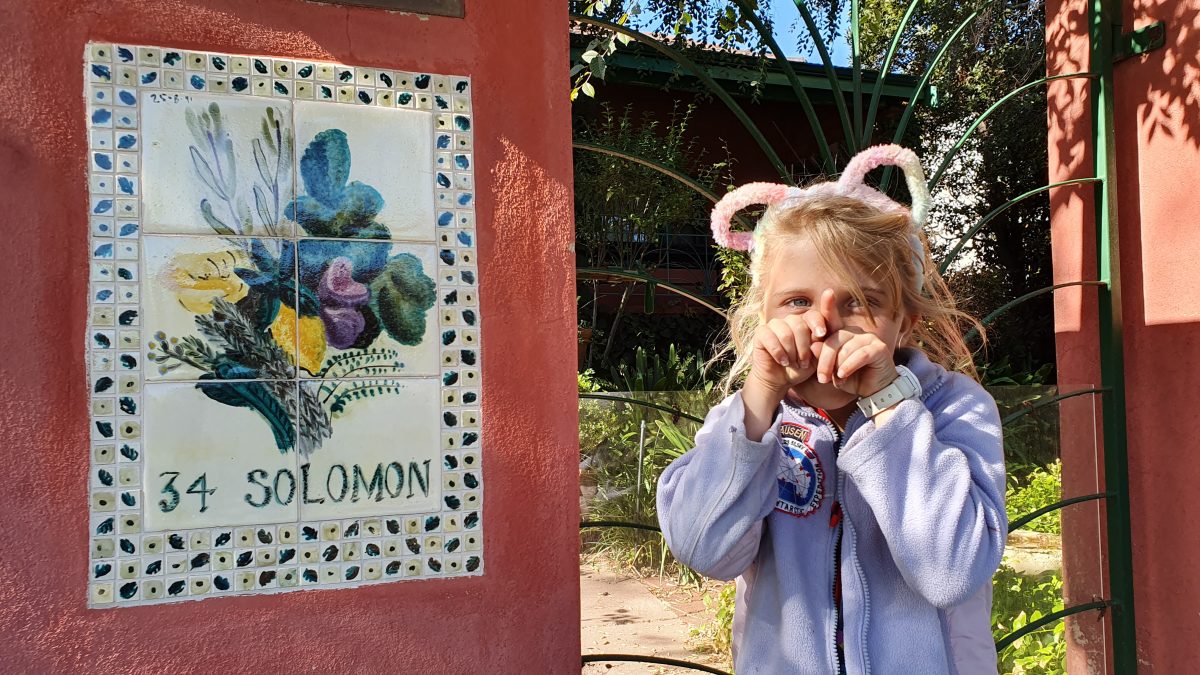
And here’s the young sailor out on a bike ride beside the cool house number on an otherwise ordinary home.
Summary
We’ve shared the bad news and the good, talked about the storms, and told you about the disaster too.
It has already begun—the storm, that is. We’re watching events unfold, and in the next report we’ll tell you how the storm turned out and how the first mate had a tooth treated in the thick of the quarantine restrictions.
Hugs from the whole crew. Wishing everyone summer and freedom of movement!