
From the Travely-Family archive · Pacific Ocean
Uninhabited Paradise. Scrubbing the Yacht, Feeding a Rat, and Unexpectedly Changing Our Plans.
An original publication from the former Travely-Family website. This English translation was preserved from the technical-site archive without editorial rewriting.
Uninhabited Paradise. Scrubbing the Yacht, Feeding a Rat, and Unexpectedly Changing Our Plans
Friends, we managed to overcome our website’s reluctance to upload new reports. And we’re starting by publishing the ones that failed to make it out of the ocean during the Tuamotus–Tahiti passage..
A Clean-Up Day Aboard the Yacht
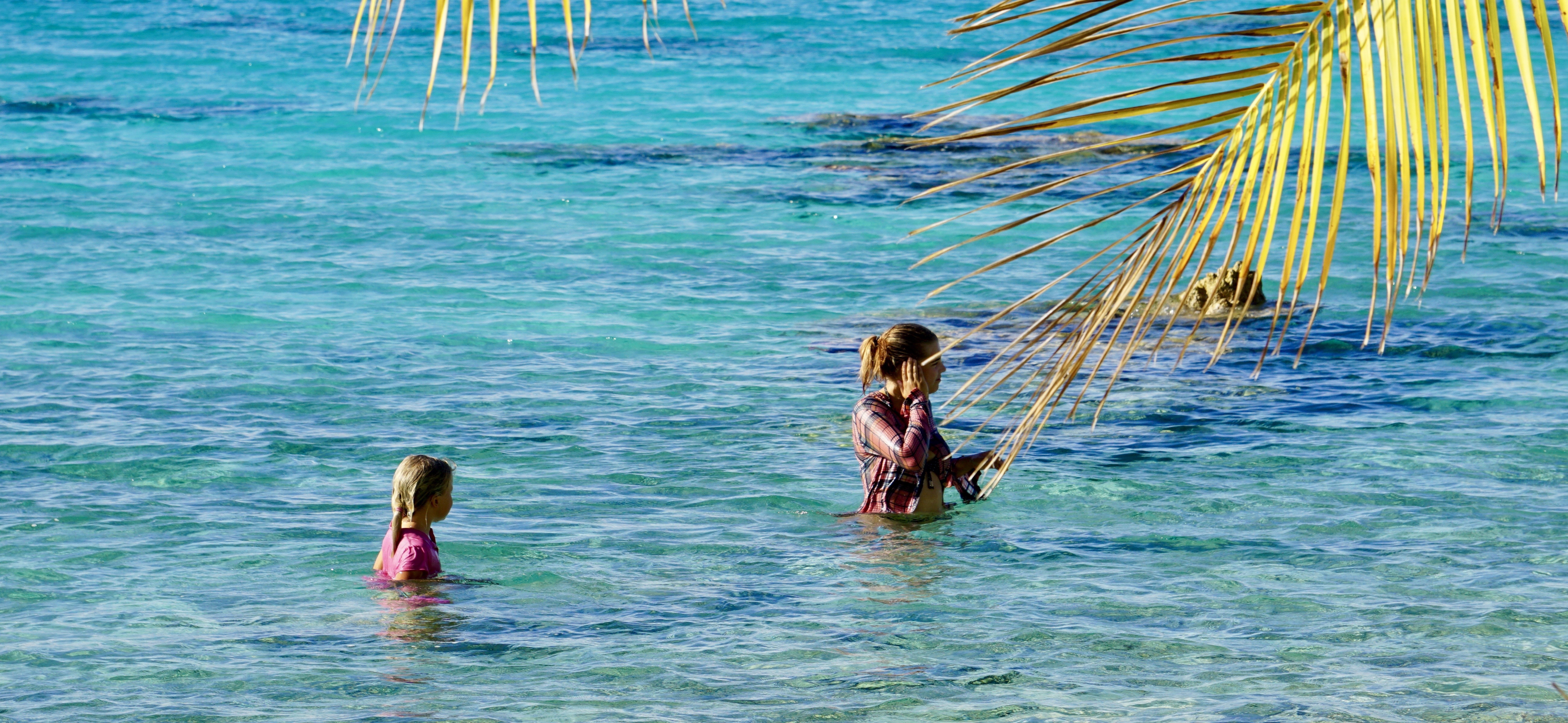
By 1 October, we had moved to the uninhabited south of Kauehi Atoll—to two idyllic little islets separated from each other and from the rest of the land by shallow channels through the barrier reef. Here we accomplished something important, on a scale Lady Mary had not seen since Panama: we scrubbed the deck with fresh water.
In the Marquesas, on Easter Island, and on Pitcairn, the salt had been washed away by rain. We arrived in the Tuamotus extra-salty. Salt falls from the shrouds, hangs in crystals, and crunches underfoot. And overnight the deck becomes wet—the salt absorbs moisture from the air. There is no proper rain.
To keep our floating home from getting grubby, it is important not to salt up the sofas, cushions, and beds. Otherwise, you’ll always be sleeping in a damp, grimy bed amid equally unsightly upholstered furniture. Nastya and I strictly make sure no one plonks a salty backside onto the fresh sofas and beds. But how do you keep an eye on a little monkey and a Viking? All in all, it’s cheaper to use up 300 litres of fresh water than to keep tasting someone’s feet.
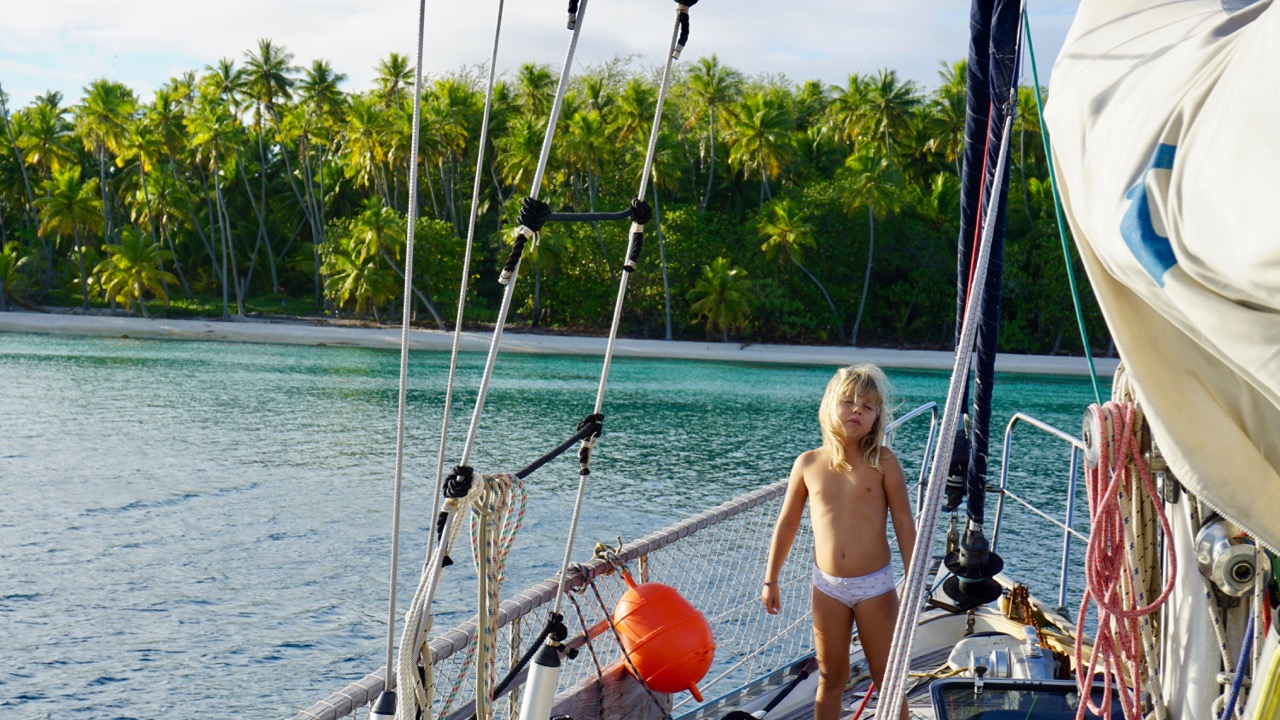
A sleepy young sailor came out for some morning contemplation )
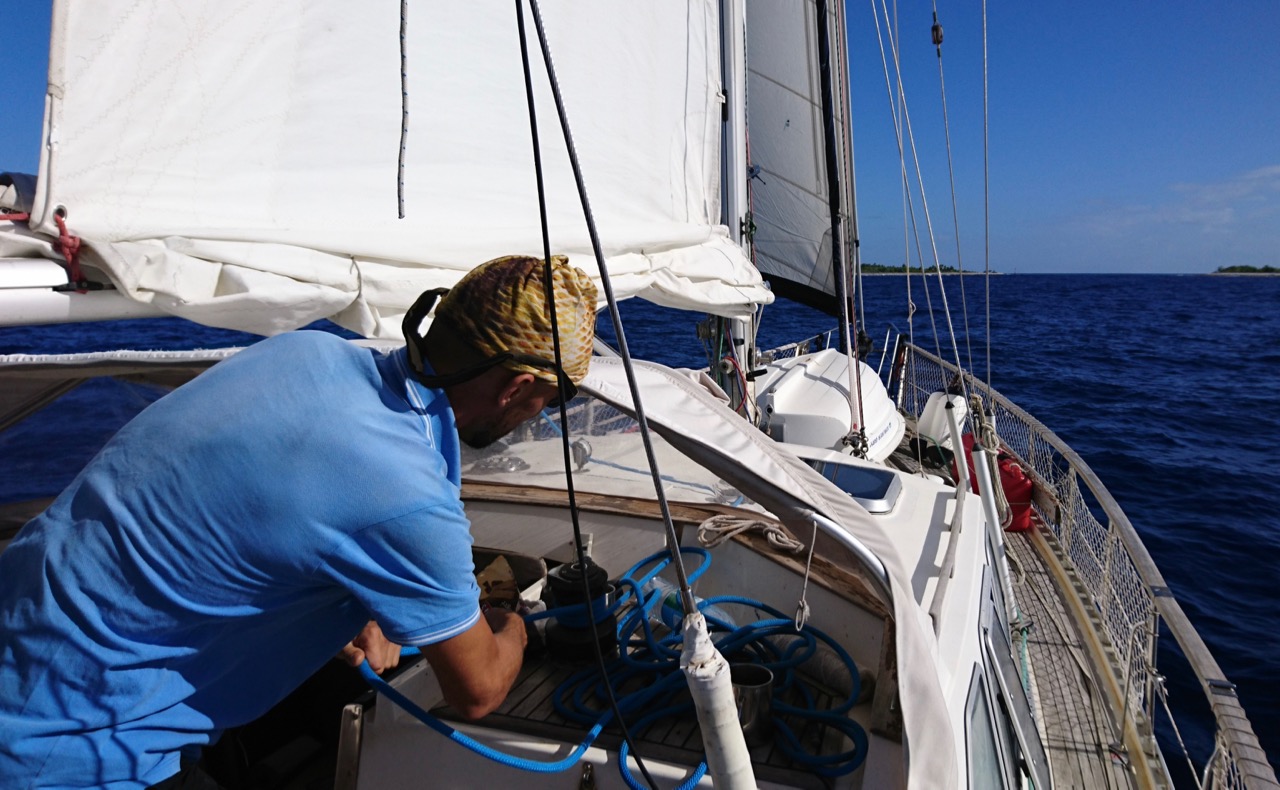
Until now, a thorough deck wash had been possible only in marinas. The last one was in January. A watermaker raises the comfort of life aboard a yacht almost to heavenly heights. In a few hours, the children and I scrubbed the deck with brushes, without risking dying of thirst afterwards. And then, with great relish, we dined on rice and ratatouille prepared by the head cook, looking out over our own private patch of atoll. The scrap of land is overgrown with coconut palms and other trees. Milky-white beaches and a winding channel. In the evenings, a white heron paces along the water’s edge; by day, birds clamour overhead or hide somewhere. Pure paradise..
The Young Sailor’s “Birthday”
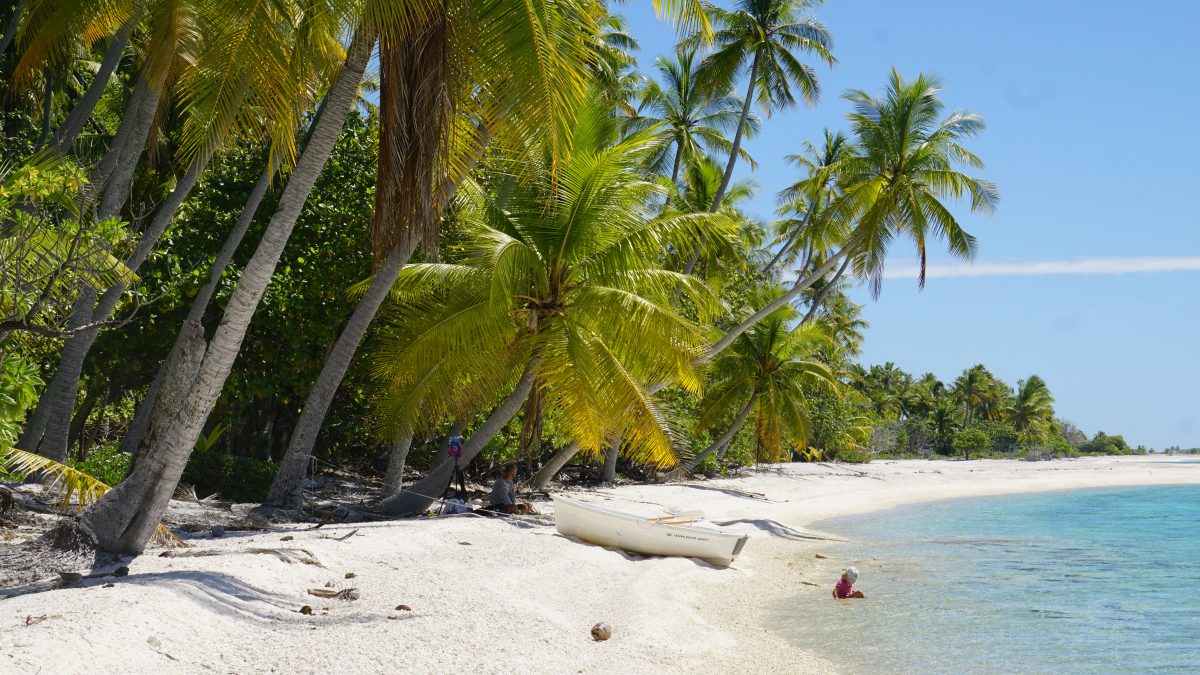
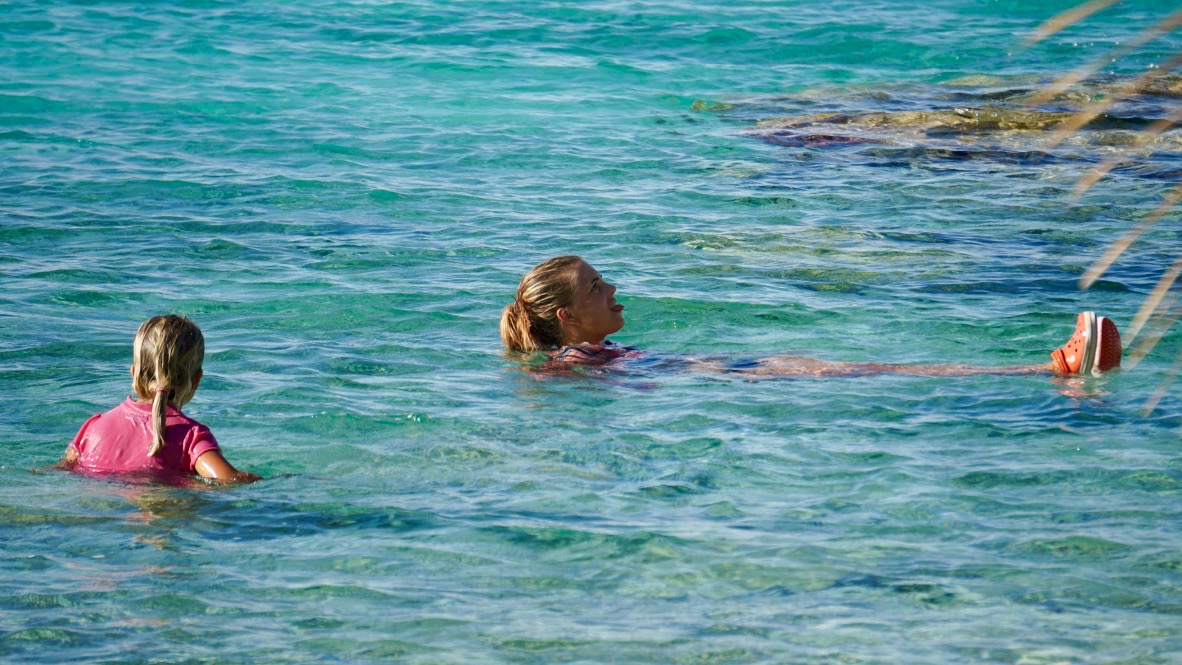
The next morning, the young sailor discovered that today (1 October) she was exactly seven and a half years old. This was followed by an announcement that, since she was the birthday girl, a celebration was required. And so we landed on the islet. We brought plenty of potatoes and the makings of “bruschetta”—the Italian name for toasted bread topped with all sorts of finely chopped delicious things. The girls and I swam over, while the captain was responsible for delivering the tender with provisions, umbrellas, mats, the camera, and a hat.
We immediately found a spot beneath a low, shaggy palm right on the shore. The white beach consists of future sand—that is, one day the sea will grind it down, but for now it is made up of pieces of coral and shells, large and tiny.
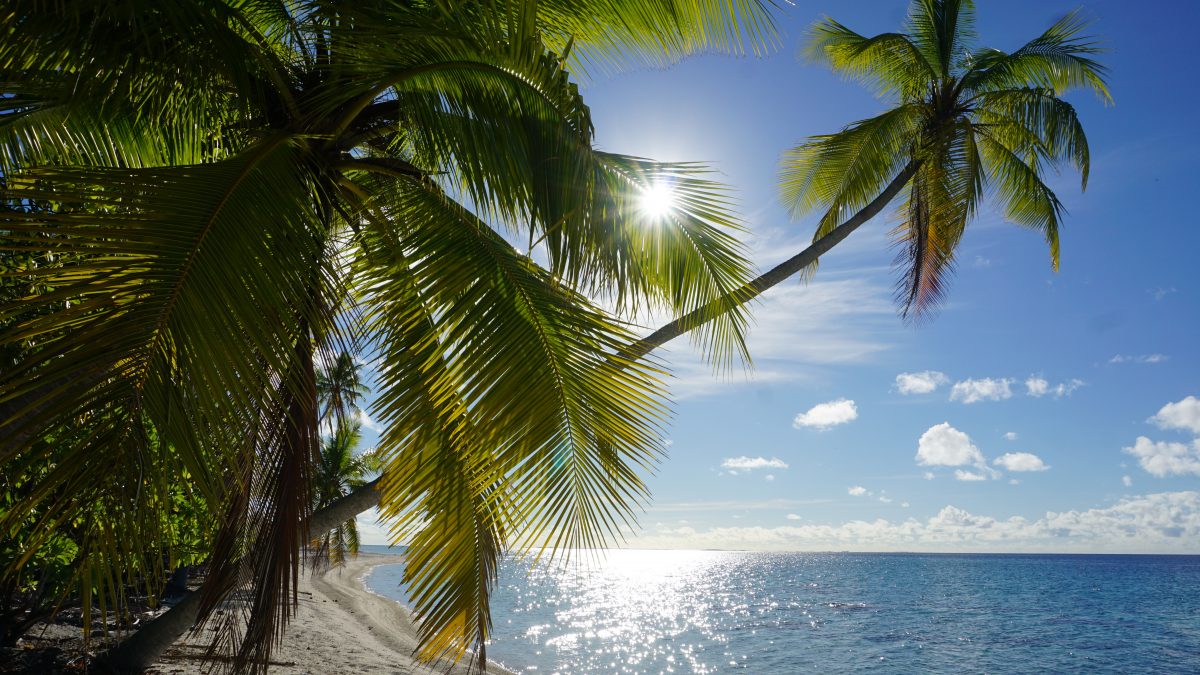
And on the ocean side of the island, there is no sand at all
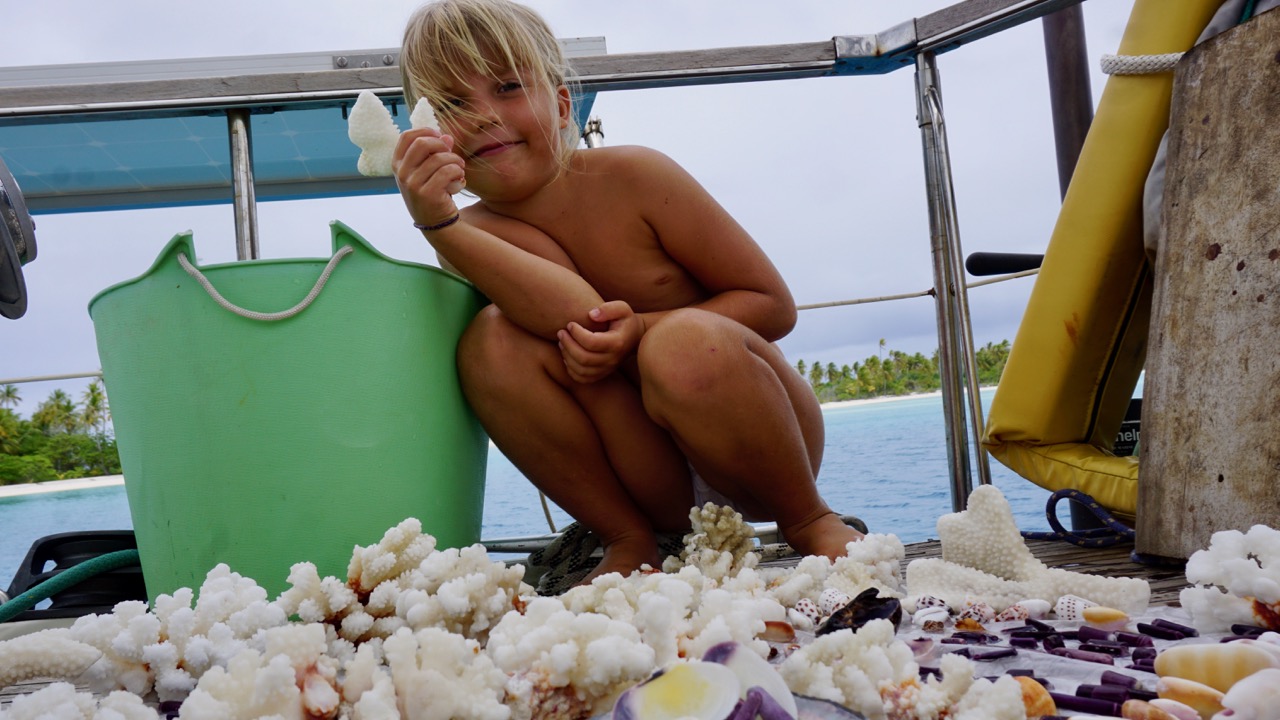
After piling our belongings in the palm’s shade, we set off to explore the island. The deckhand and the captain were eager to reach the ocean; the young sailor and I took up beachcombing. Along the way, we made three caches of branching coral and shells, intending to collect them on the way back, wrap them in something soft, and give them to friends in Russia. I don’t know what the captain will think of this initiative—he doesn’t like carrying anything anywhere. But our route back took us around the island, so we did not return for our finds until three days later. With a bucket. We lugged it aboard the yacht, full of coral fragments. The captain did not even swear—he must have missed us during that half-day. And the young sailor spent the next half-day washing and drying them:).
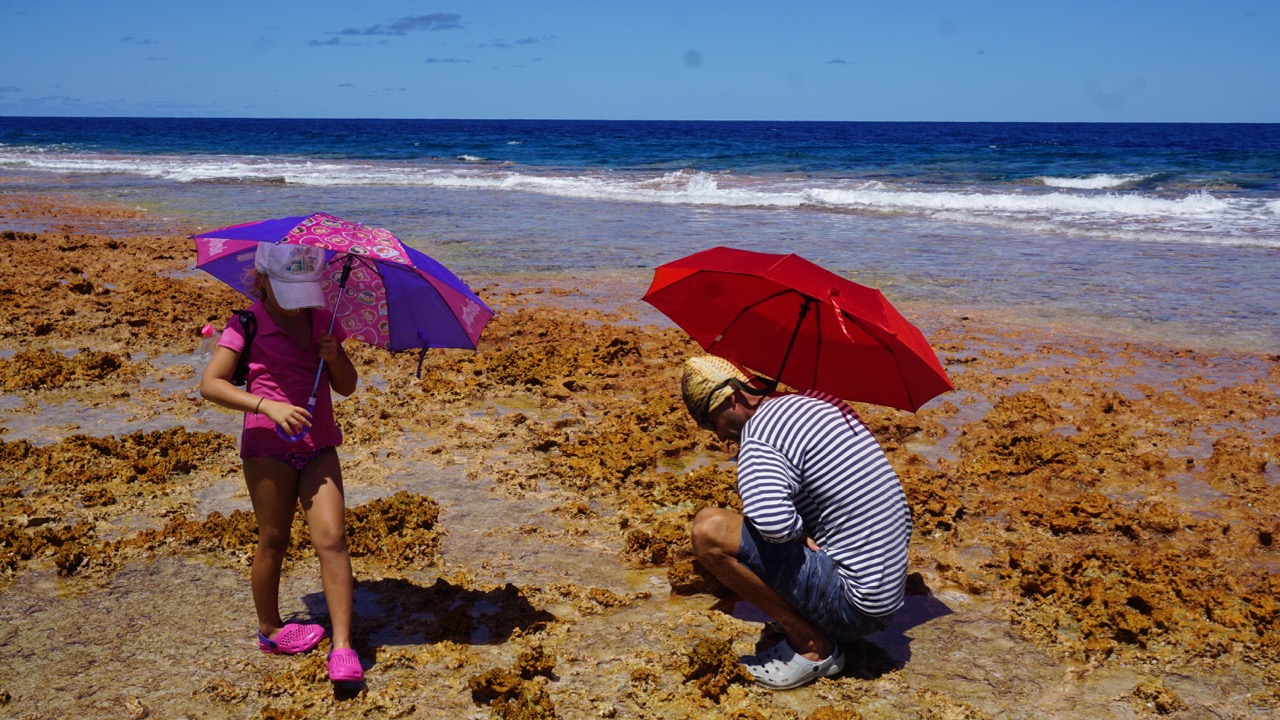
Around the Uninhabited Islet
Outside the atoll, the surf rages. Nastya watches, mesmerised. Before crashing down in foam, a wave freezes into a transparent wall. Through it, as if through blue glass, you can see sand-coloured boulders and even fish, like an aquarium. In this watery half-tunnel we made out a couple of the turquoise parrotfish we love so much.
Besides the caches of branching coral, the young sailor and I collected unusual pieces of either coral or some other fossilised creature, resembling smooth purple sticks the size of a little finger. By the time we completed our circuit of the islet, we were ravenous. Let the picnic begin! Bruschetta and water for the first snack; baked potatoes and juice for the second.
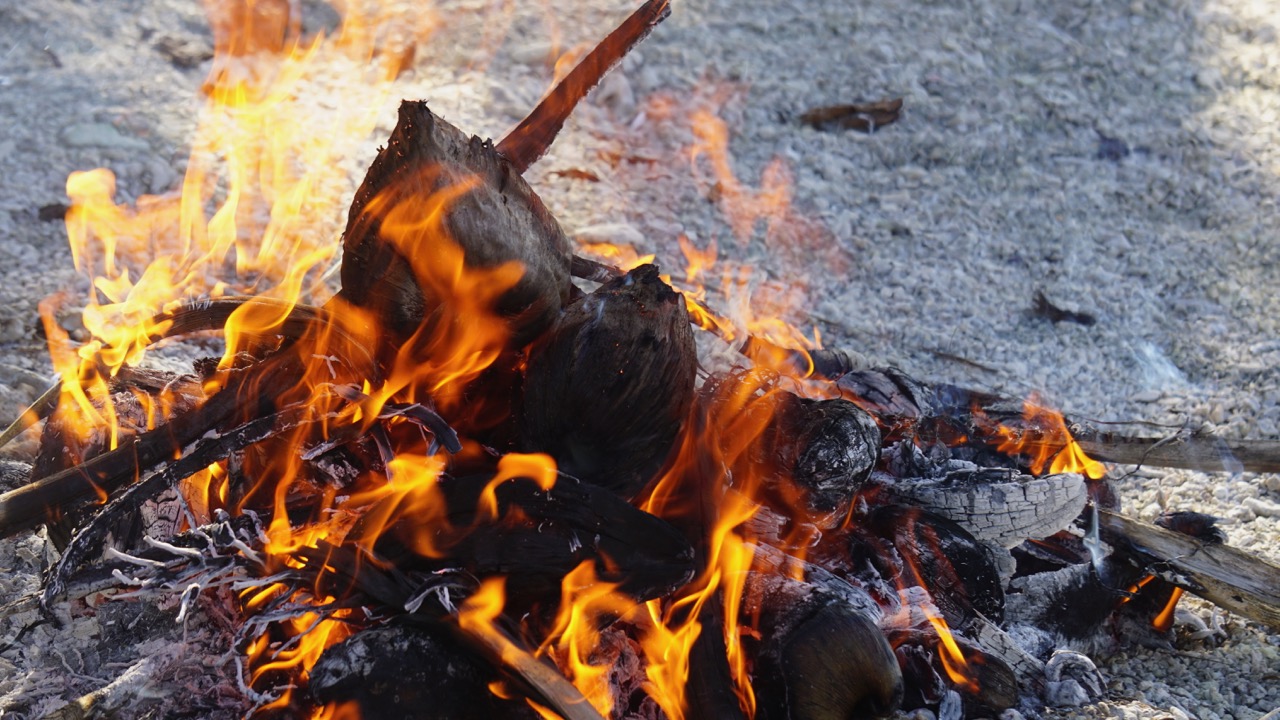
A Coconut-Husk Fire...
How We Got Ourselves a Pet 🙂
Using open tins with leftover food, we built a fortress surrounded by a moat of water. We put the lidded tub of hummus in a bowl of water—to keep out the ants. We carefully wrapped the tin of chicken in cling film and string and placed it on top of the hummus. The captain packed the rest of the provisions in a dry bag. He knew—he knew!... and stayed sprawled in the shade of the dinghy.
Meanwhile, we put on our masks and fins. Surprisingly, the underwater life proved rather sparse. Corals were few and not branching, and there were not many fish. There were, however, colonies of fantastical creatures living on the rounded corals. Fluffy, colourful little Christmas trees grow in pairs. Bright yellow, blue, purple, variegated, burgundy... Between the little trees, a disc on a stalk protrudes. And if you enter this antenna’s field, the little trees vanish into a pea-sized hole in a flash. Just like on the planet Pandora in the film Avatar. We managed to capture these cheerful little trees on video. We’ll see together how it turned out. We hope Tahitian internet will let us revive our YouTube channel. How much longer must it languish without new videos?
Meanwhile, a palm rat had already taken possession of the provisions store. A pretty little thing, with big ears and a long, bare tail. The little thief had gnawed through the film and was using its paw to pull chicken from the half-open tin. “Shoo!”—and the rat waddled off beneath a palm frond. The children decided to give it the leftovers. Many palms on the islands have a metal band about 30 centimetres high around the trunk—to stop rats reaching the coconuts, since they cannot climb metal.
But if they do manage to reach them, they gnaw a hollow through both the enormously thick coconut husk and the hard shell, then eat everything tasty inside. On uninhabited islets, rats have the run of the place—the palms have no bands. But “our pet” had grown bored with its coconut diet. We had great fun watching it furtively carry off pieces and industriously gnaw them beneath a low bush.... And we had even more fun when, while preparing this post, we discovered the mysterious disappearance of some of the photos and all the video from the Tuamotu Archipelago...
A large hermit crab also turned up—it likes tinned food too.
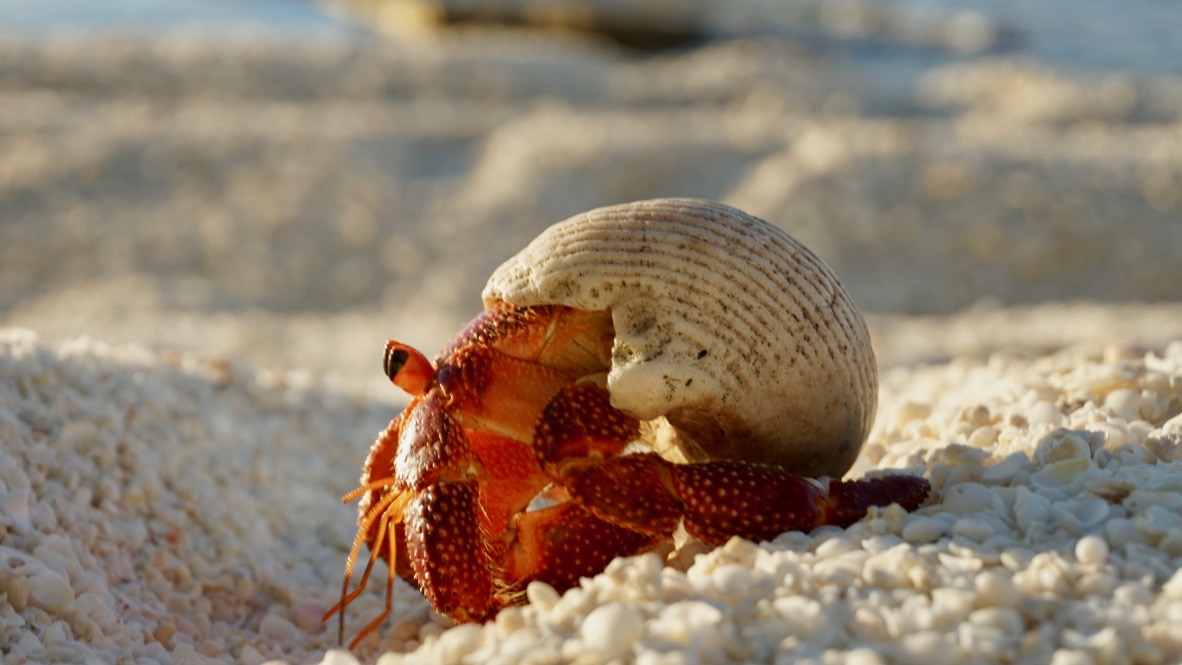
A lover of tinned food on that very “future sand”—the shell beach
In the evening, we baked potatoes, just as we do back home on camping trips.
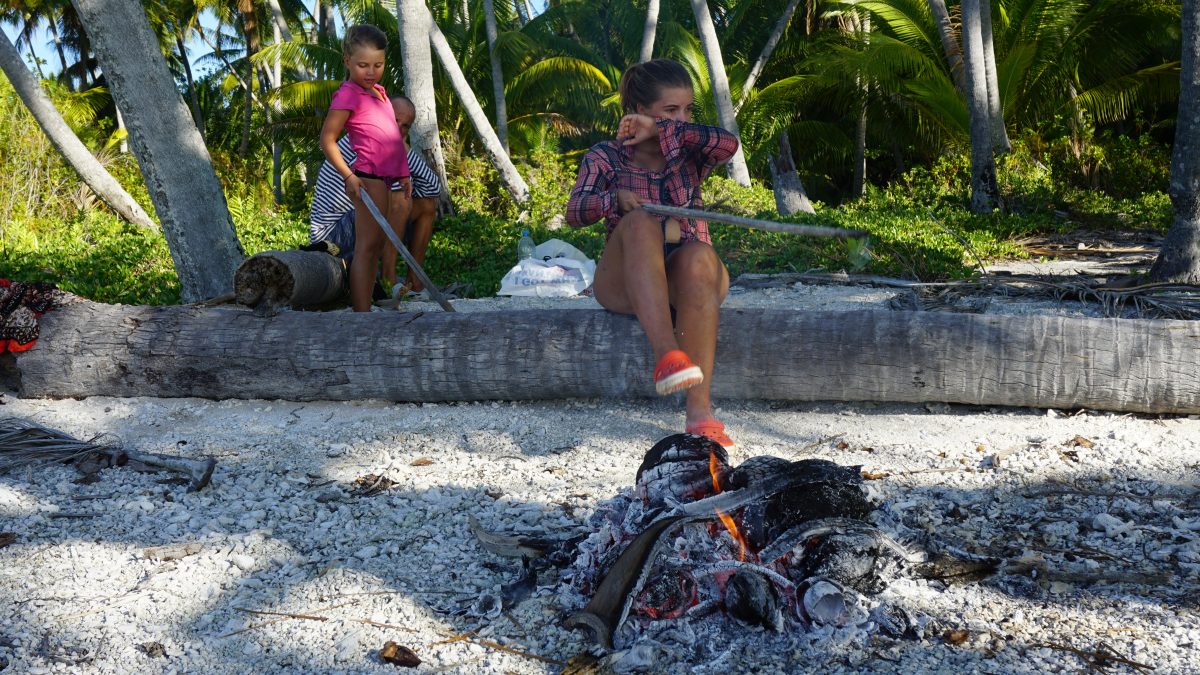
We doused the fire with a tonne of water and departed for the yacht. We swam; the captain rowed.
Update
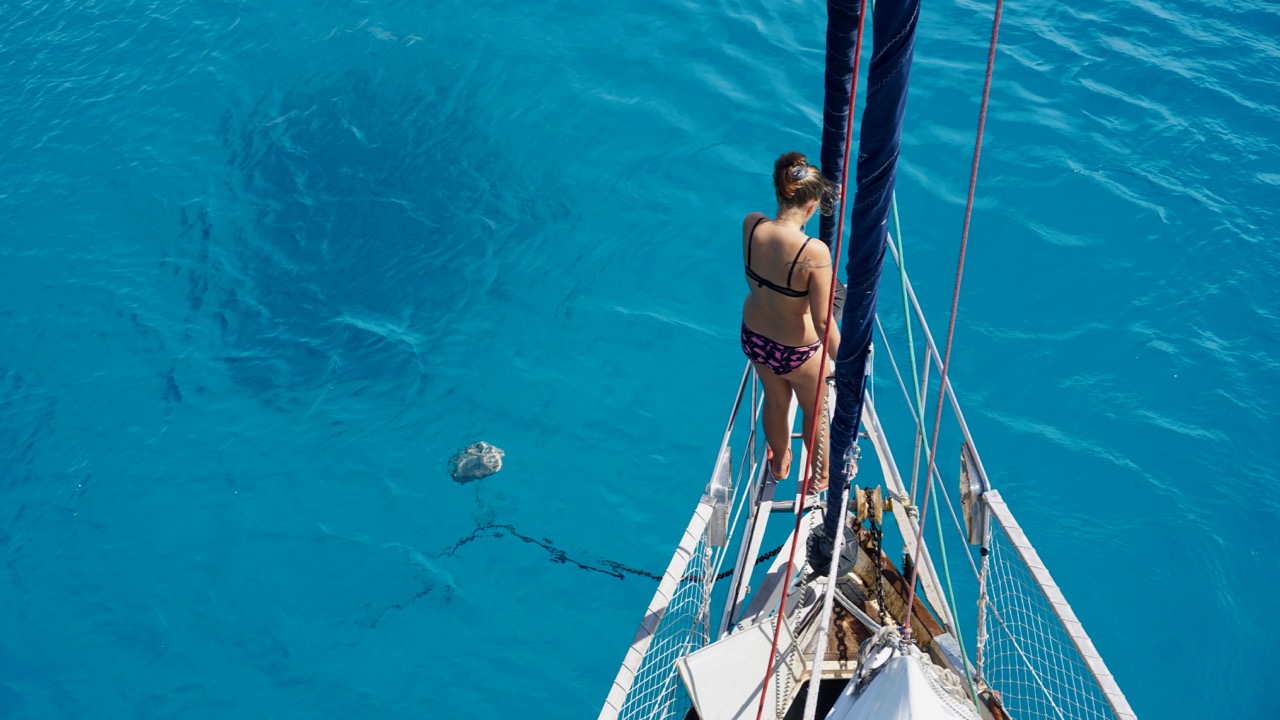
The wind has strengthened. Up to 30 knots is forecast for the entire week. In that kind of wind, the captain does not want to tack between the atolls or enter narrow passes. The widest pass was on our atoll, Kauehi. A few days spent waiting are a good opportunity to scrub the yacht’s bottom—we almost finished. Yesterday, we found out that we need to get within mobile-phone range as soon as possible. We’re setting off straight for Tahiti right now.
The deckhand weighs anchor and removes the anti-coral-snag buoys from the chain. Three of them