
From the Travely-Family archive · Central and South America
Desert Island
An original publication from the former Travely-Family website. This English translation was preserved from the technical-site archive without editorial rewriting.
Desert island. Back in the Las Perlas Archipelago. About a desert island and a push through the jungle. A good catch, a barbecue and some very un-piratical treasure...
The start of our landing in the Las Perlas Archipelago — here >>
Half an hour before noon, Lady Mary weighed anchor in the bay of Piedra de Gonzalez Island and set a course for Isla Biberos. Three times a fish tried to take the bait, but the hook came back empty. On the fourth attempt, however, the line began to crackle rather delicately, and a small fish finally joined us for the barbecue.
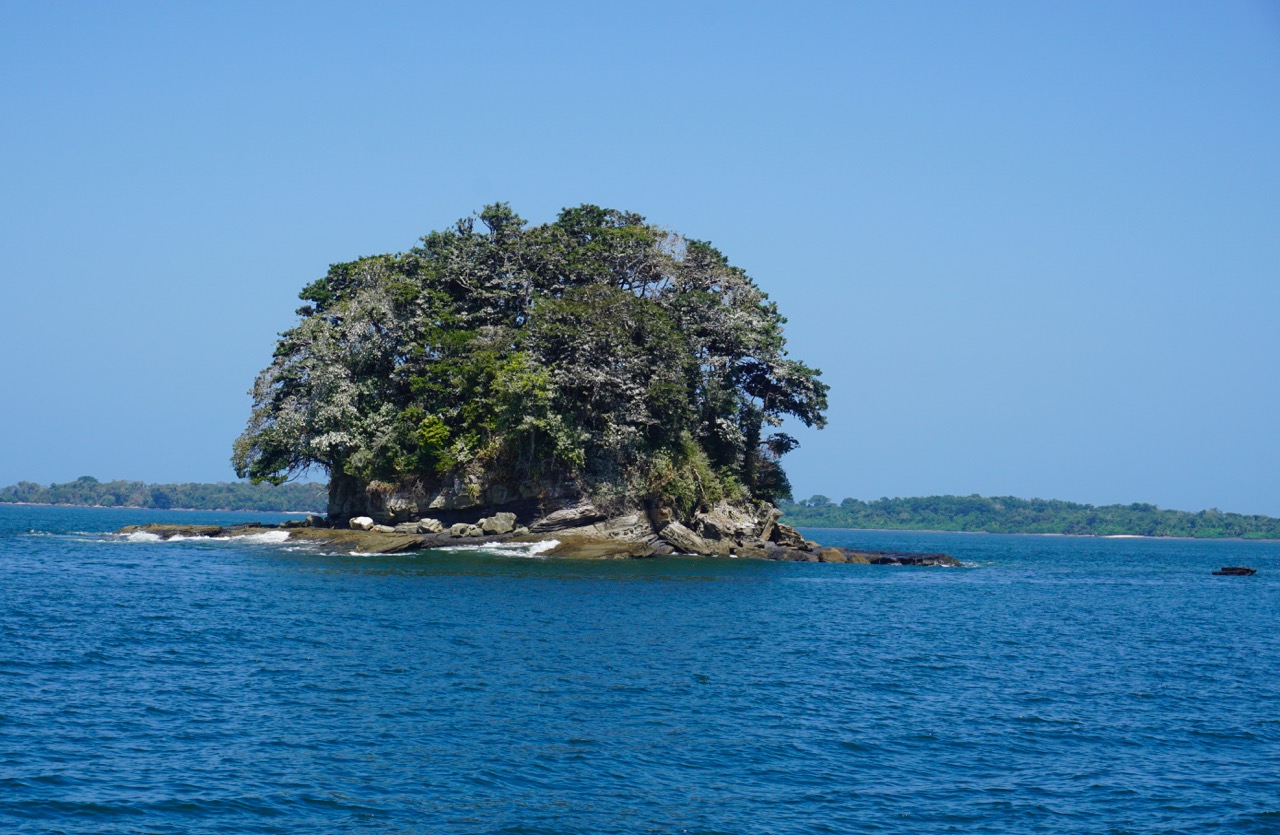
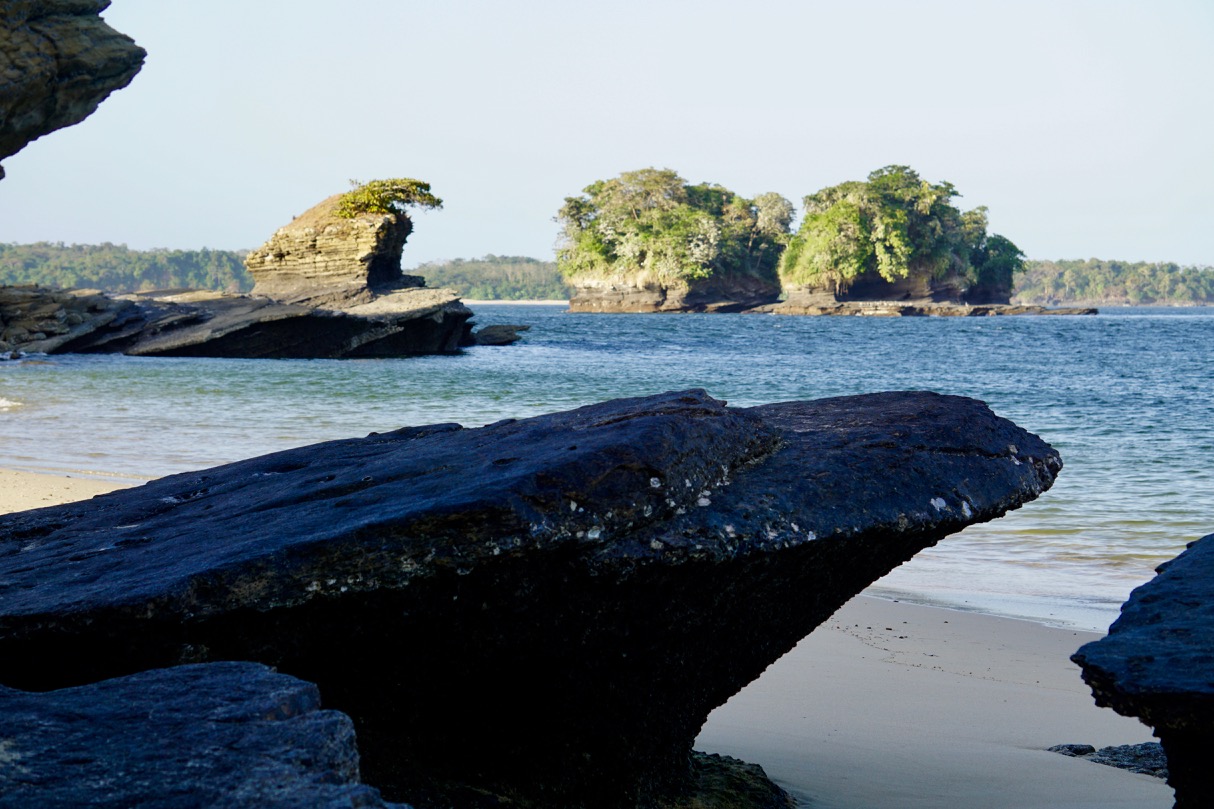
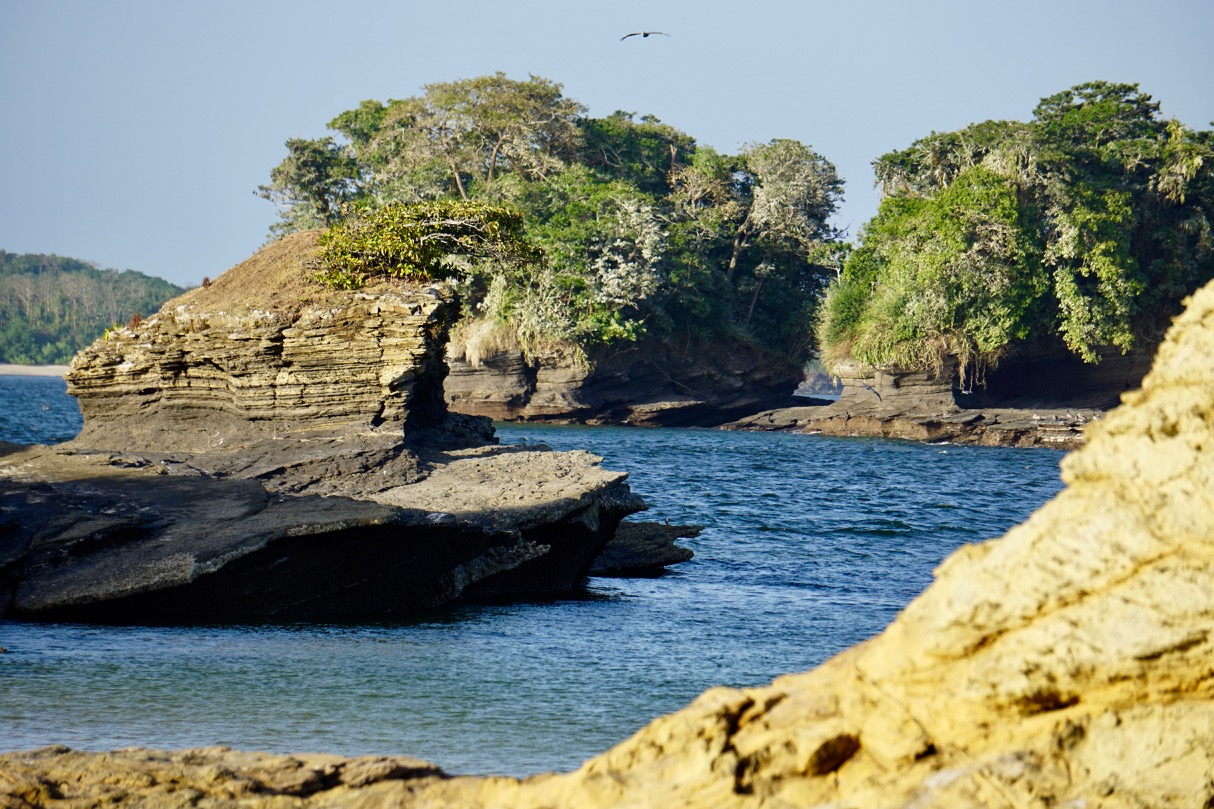
On the final approach, we caught sight of such a wonderful little island of Robinson Crusoe adventures and harmony that we begged the captain to drop anchor right here. According to the sailing directions, the desert island is called Isla Fuecha. The bay is enclosed by a long reef, with the green pompoms of two little islands, like these.
As she comes in to anchor, Lady Mary circles under sail, trying to tuck herself in closer to shore. To be on the safe side, we motored another 50 metres and set the anchor firmly on the first attempt.
The picnic bag would have done nicely for Robin Bobbin or Porthos at lunchtime: it held vegetables and fresh fish for the grill, juice and wine, chocolate bars and tea. This time we hadn’t forgotten the dishes either, so we wouldn’t have to eat with seashells. The men were charged with getting everything ashore intact and double-quick. Meanwhile, the girls and women leapt overboard and swam. The water temperature helps swimmers pick up speed.
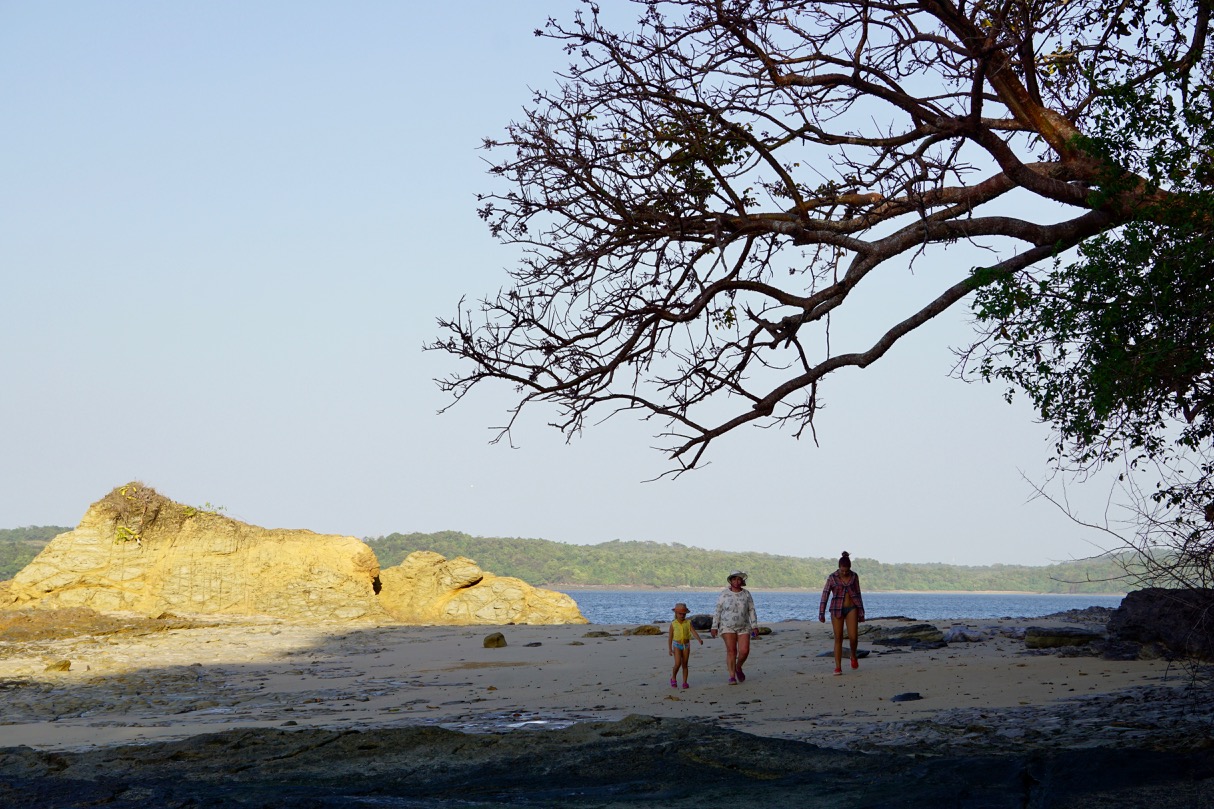
Once we had set up camp, the women-and-children contingent, armed with a camera, hurried off to explore the perimeter of the desert island; after the tide came in, it would be impossible.
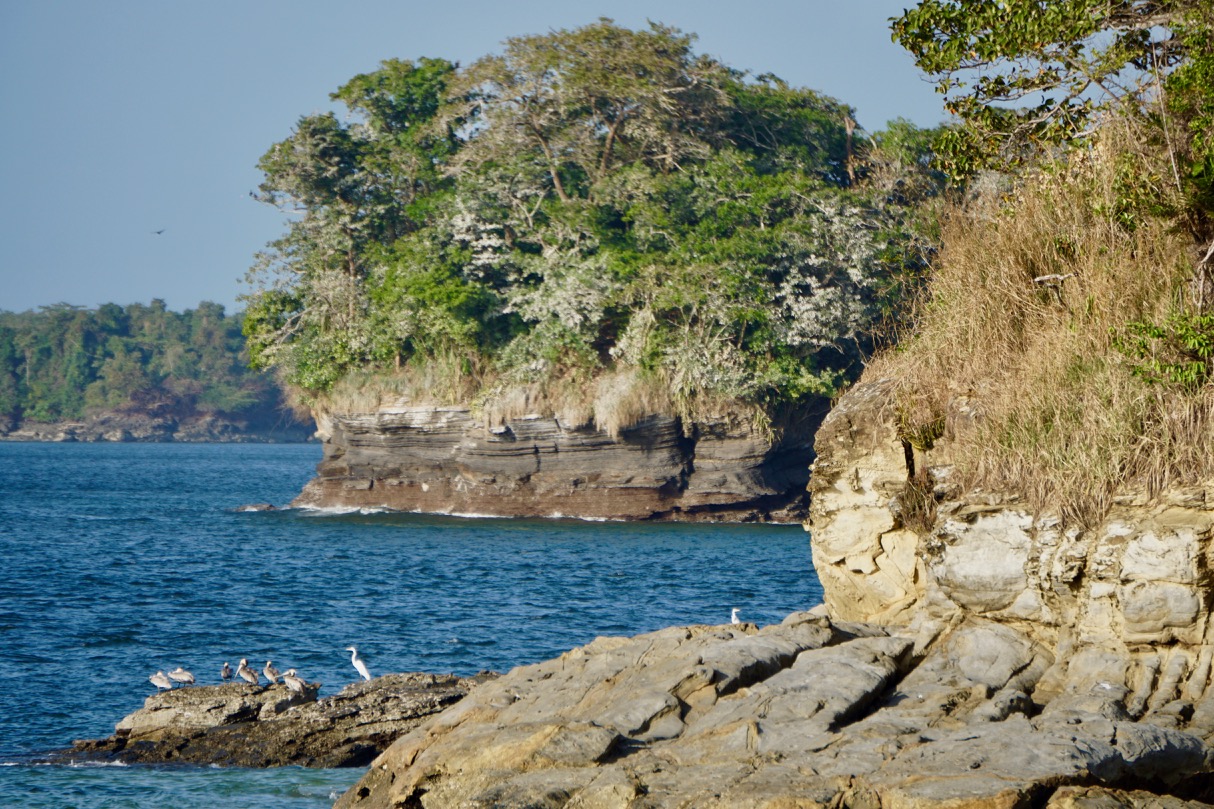
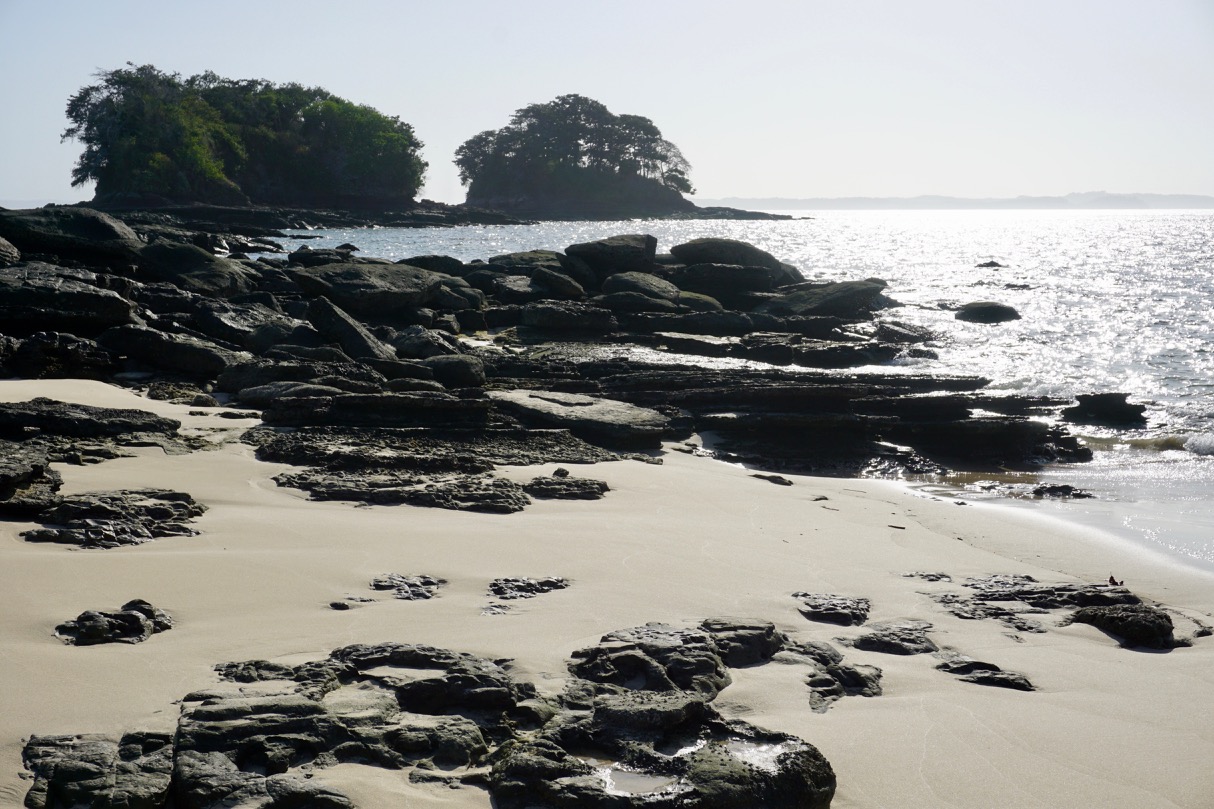
The wave-washed basalt, now overhanging the ocean like a shelf, now disappearing into the sand of tiny beaches, suddenly ended at a small ravine. Even Nastya began to doubt our rock-climbing abilities:
“You won’t get through there. Let’s go back.”
“Nastya, I’m a mountaineer’s daughter, and you’re his granddaughters. And Elena Stepanovna spent her youth hiking—do you really think this will stop us J?”
I said it, then thought: “Hang on, isn’t my daughter a bit quick to relegate us to the second echelon?” ))).
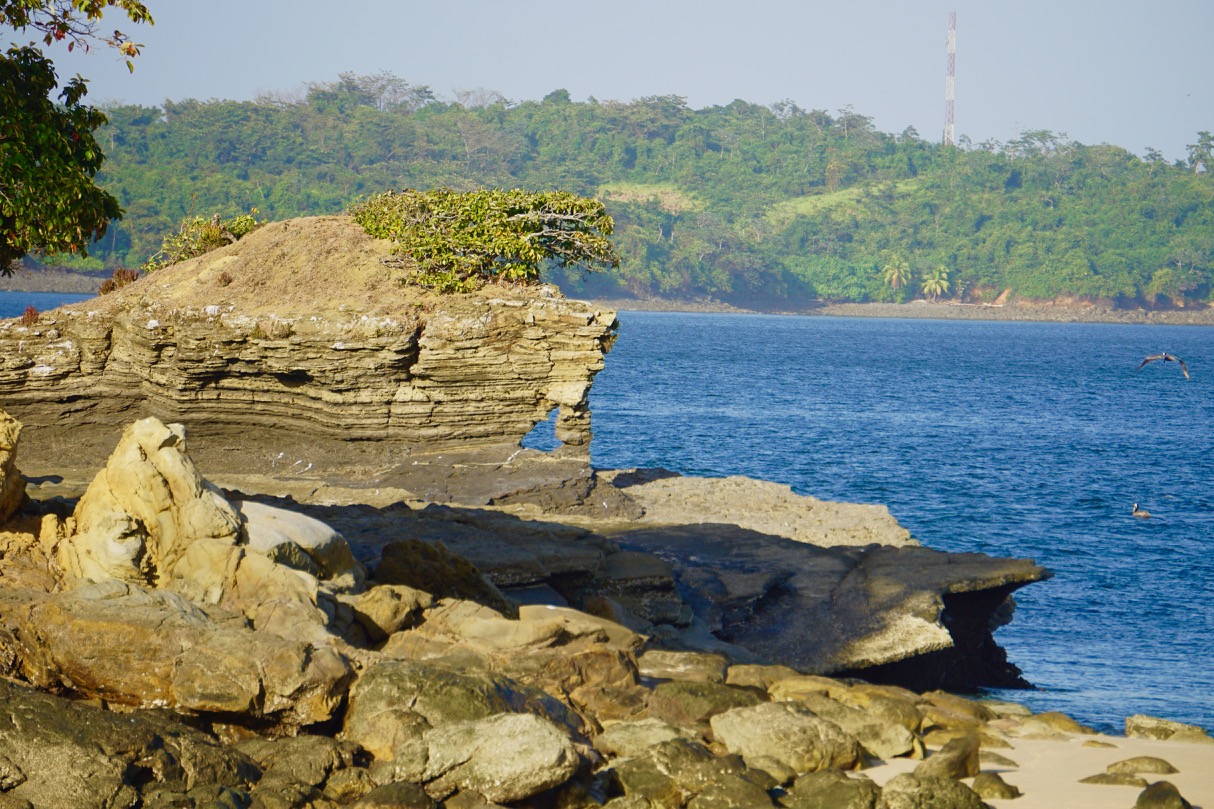
Volcanic paradise
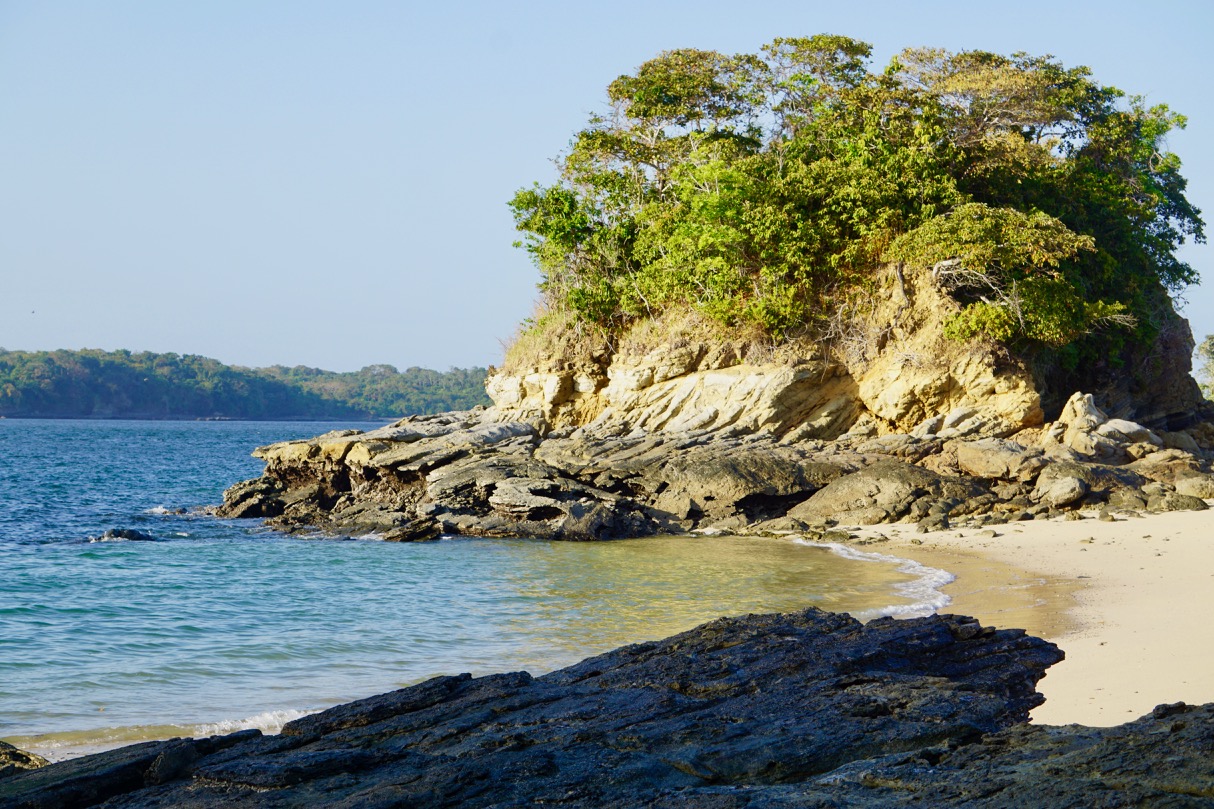
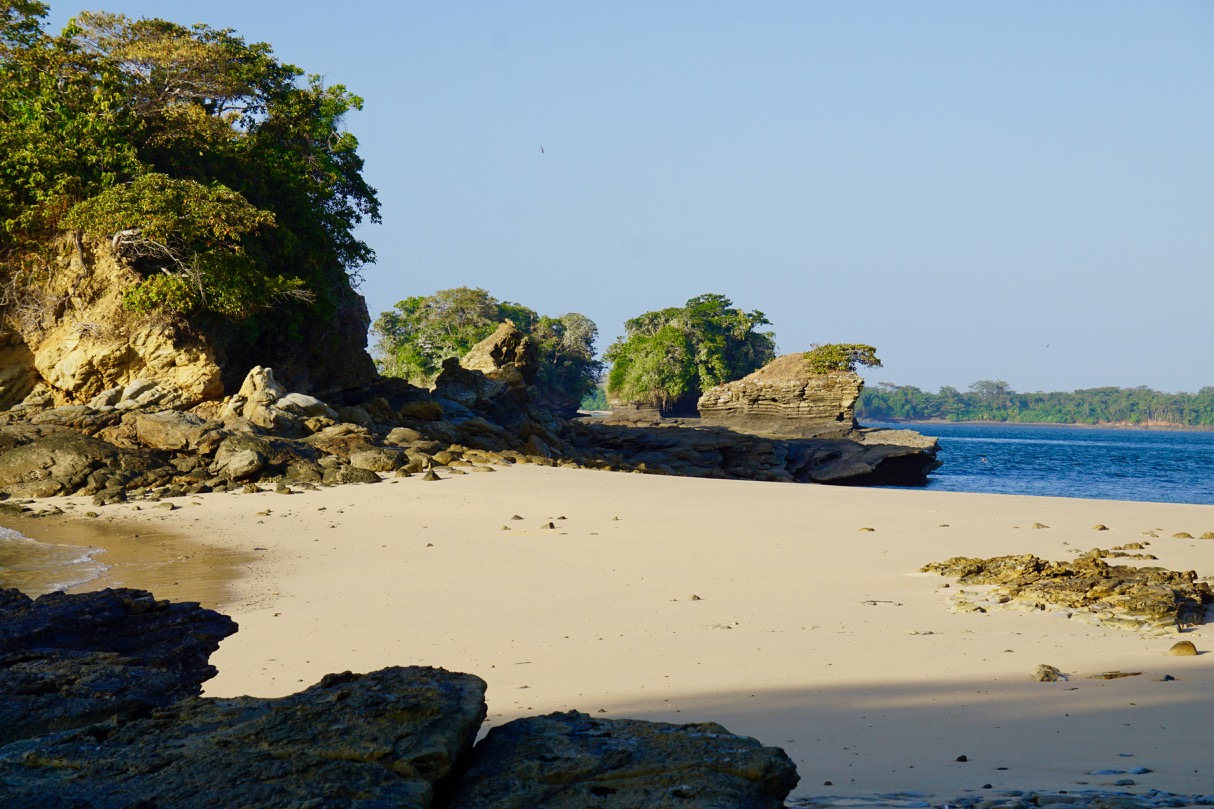
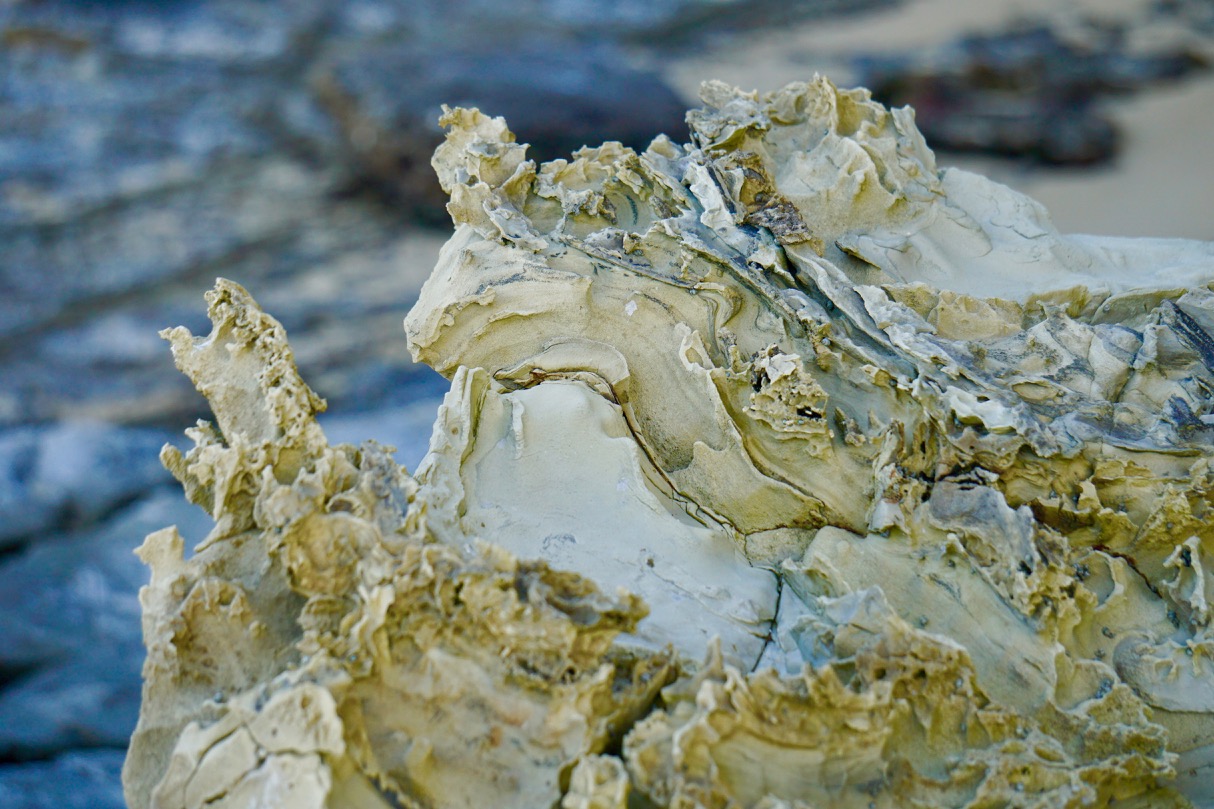
Headlands, frozen lava flows, islets and fantastically shaped rocky outcrops topped with little caps of forest, sand spits that appear only at low tide.
Herons gaze proudly about them; pelicans turn their enormous beaked heads pensively. Here and there, flocks of birds take wing. Beyond every cliff, a little cove appears, fringed by a wall of tropical forest, boulders or clay bluffs. The senior sailor, the junior crew member and the “junior crew member’s assistant,” Elena Stepanovna, who have gone on ahead, appear beneath a sprawling bare branch. Beyond that is a dead end, and we would have to swim. I ask them to return to camp without me, while I stay behind to catch the soft evening light and observe.
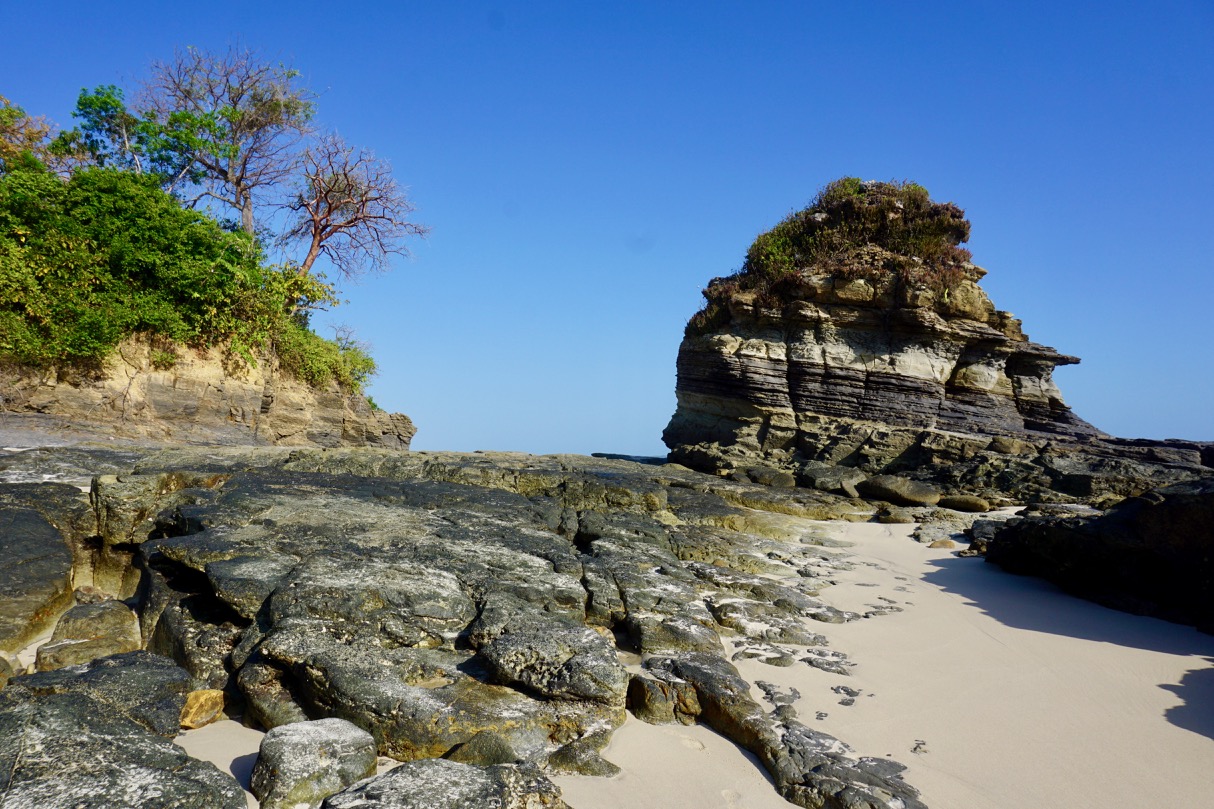
It feels as though I have almost completed the circuit, and the last passable route around the island climbs onto a stone ledge high above the water, where I have to stoop as I walk, catching my head on the branches and the solid overhang.
And sure enough, there is no way forward. I perch on the edge; swimming is out of the question, with the camera slung over my shoulder. The tide is coming in, and I imagine the path disappearing beneath the watery depths while I scramble up the cliff, saving the camera with its trove of photos and videos.
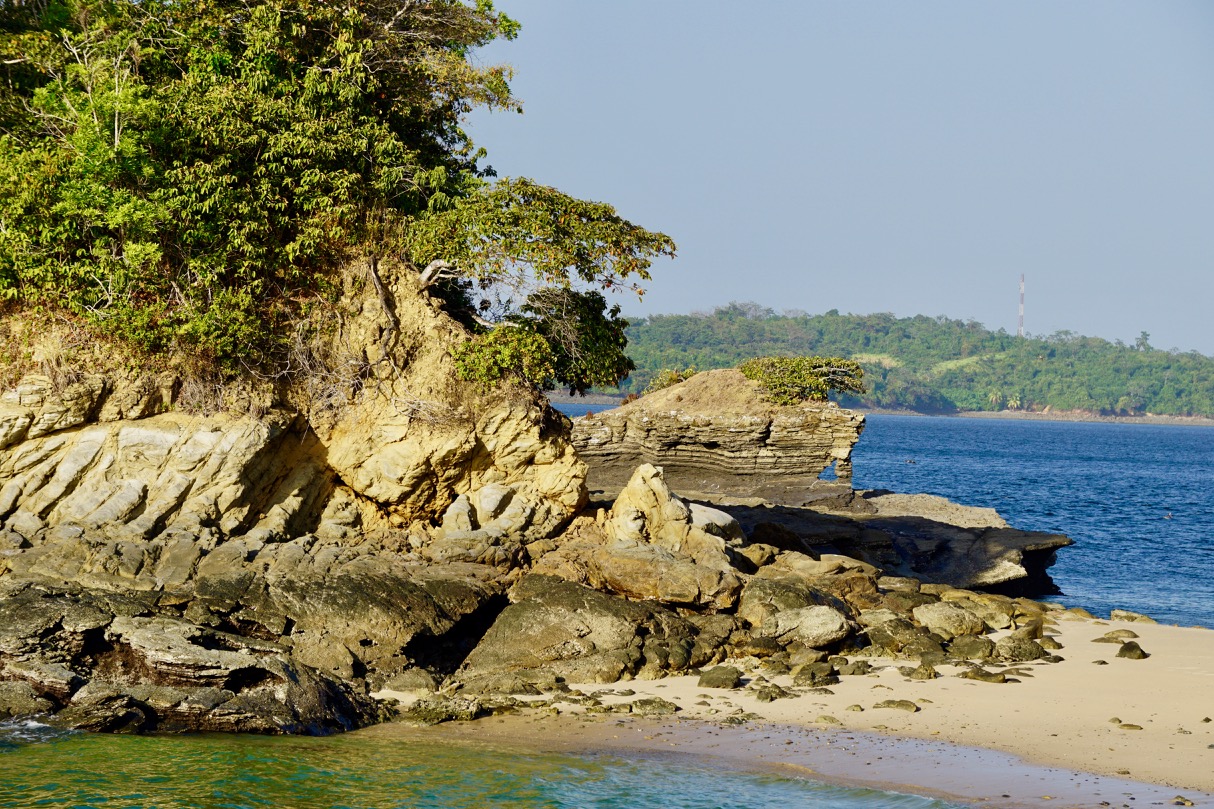
After examining the slope, I decide to push through over the top after all, through the mesh of the forest.
Pushing through the jungle
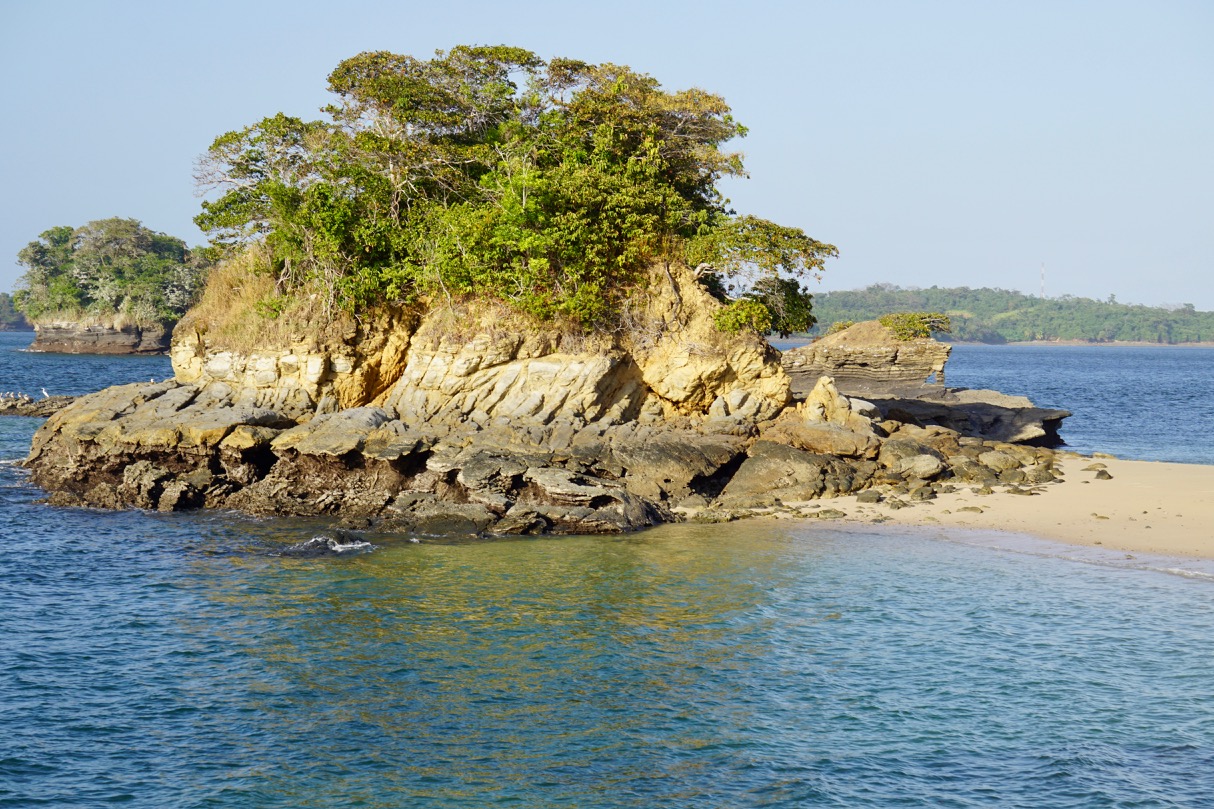
When you don’t push your way through the jungle every day, it seems as though a scorpion or centipede is lying in ambush beneath every dry leaf, while a snake or hairy spider sits frozen on a vine. In reality, however, everything turns out to be fairly mundane and not all that difficult, and soon the plastic rubbish among the dry leaves tells me that I have almost reached our little beach. These utterly unromantic and un-piratical treasures are a reminder that this desert island lies in a very inhabited world, one capable of spoiling any beauty:(...
let’s have a photo of beauty here, not rubbish
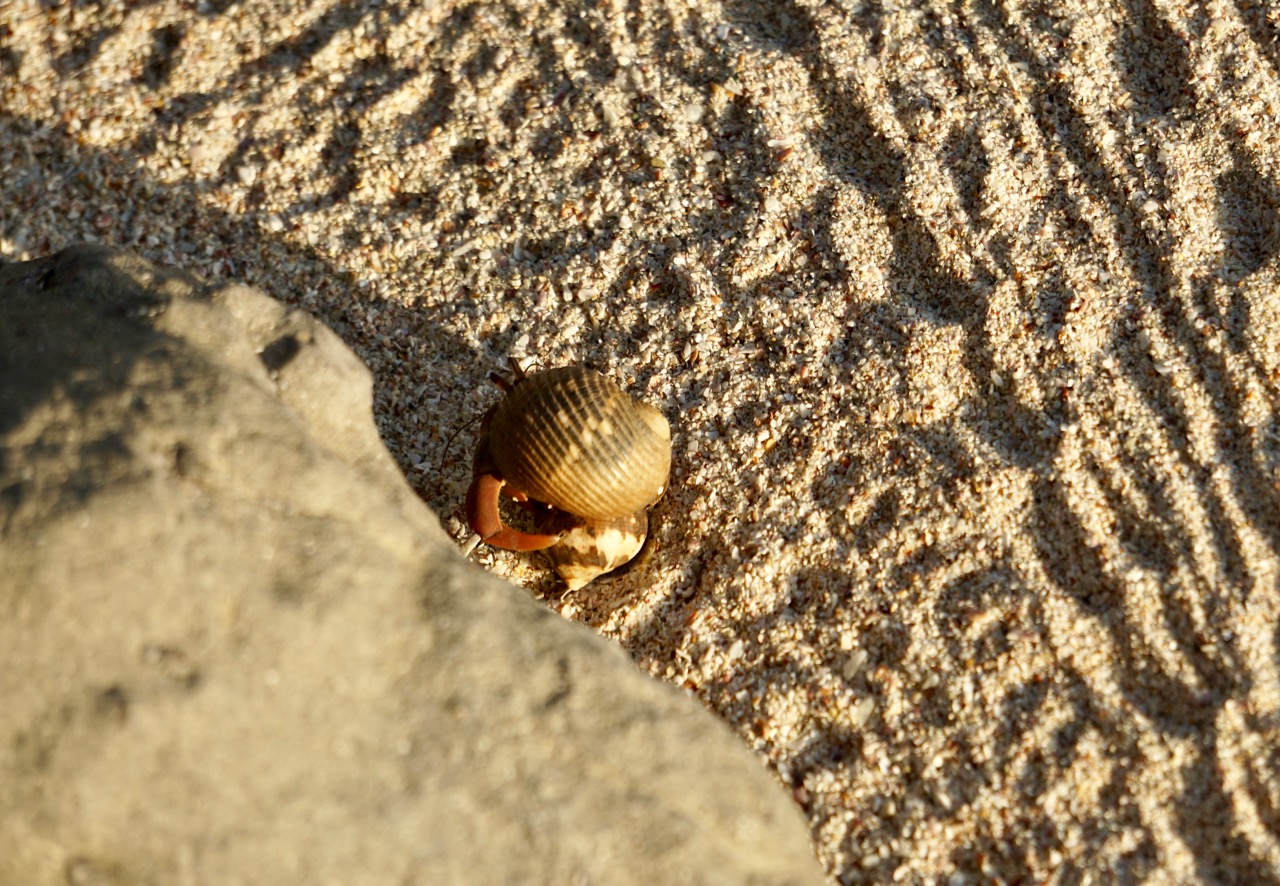
An army of hermit crabs barring the way prevents me from reaching the campfire smoke and the tantalising smells of fish. The vanguard looks solemn and comes in all shapes and sizes; the smartly turned-out guard is interspersed with motley volunteers, each wearing whatever it could find—shells of different shapes and thicknesses, some cracked or battered, which had lain empty on the seabed for decades and now protect the soft chitin of the crabs’ bodies. Having climbed too high, the shells lose their grip and roll downhill like round pebbles, clattering and knocking into their neighbours. Half a minute later, the little rockfall comes to an end, and the hapless climbers continue upwards with the determination of champions.
Those tread marks beside the little crab are the crabs’ own tracks
I return to the others, and we see out the sunset over barbecue and white wine, tea from the thermos and sweets. Then, in pitch darkness, San Palych and I are the only ones to clamber aboard the dinghy; the other brave souls swim back.
Our evening beneath the stars means a shower on deck, hoisting the dinghy aboard and heart-to-heart conversations in the cockpit. One by one, everyone drifts off to their cabins; the masthead catches on Orion’s Belt, while Elena Stepanovna remains outside to sleep beneath the southern constellations, and no amount of hardness in the bench can spoil the pleasure for her.
A few more photographs
Next >> —a landing at a bird colony uninhabited by humans, and an encounter with a round-the-world sailing regatta.
Dreams to you all!