
From the Travely-Family archive · Pacific Ocean
A Week After Leaving Panama. The Pacific Ocean. Whales
An original publication from the former Travely-Family website. This English translation was preserved from the technical-site archive without editorial rewriting.
A week after leaving Panama City. The Pacific Ocean. Whales, scary tales in the fog, and the little old moneylender
Lady Mary is making steady progress through the eastern Pacific. By nightfall, the wind dies away almost completely. The sails hang like wet rags, and everything from deck to bilge is coated with salty dew—no matter how much you wipe the floors and walls, there is no escaping the briny damp.
A couple of times, rain shyly hinted that it might like to pay us a visit, but, finding no lavish welcome awaiting it, wandered off to roam other latitudes.
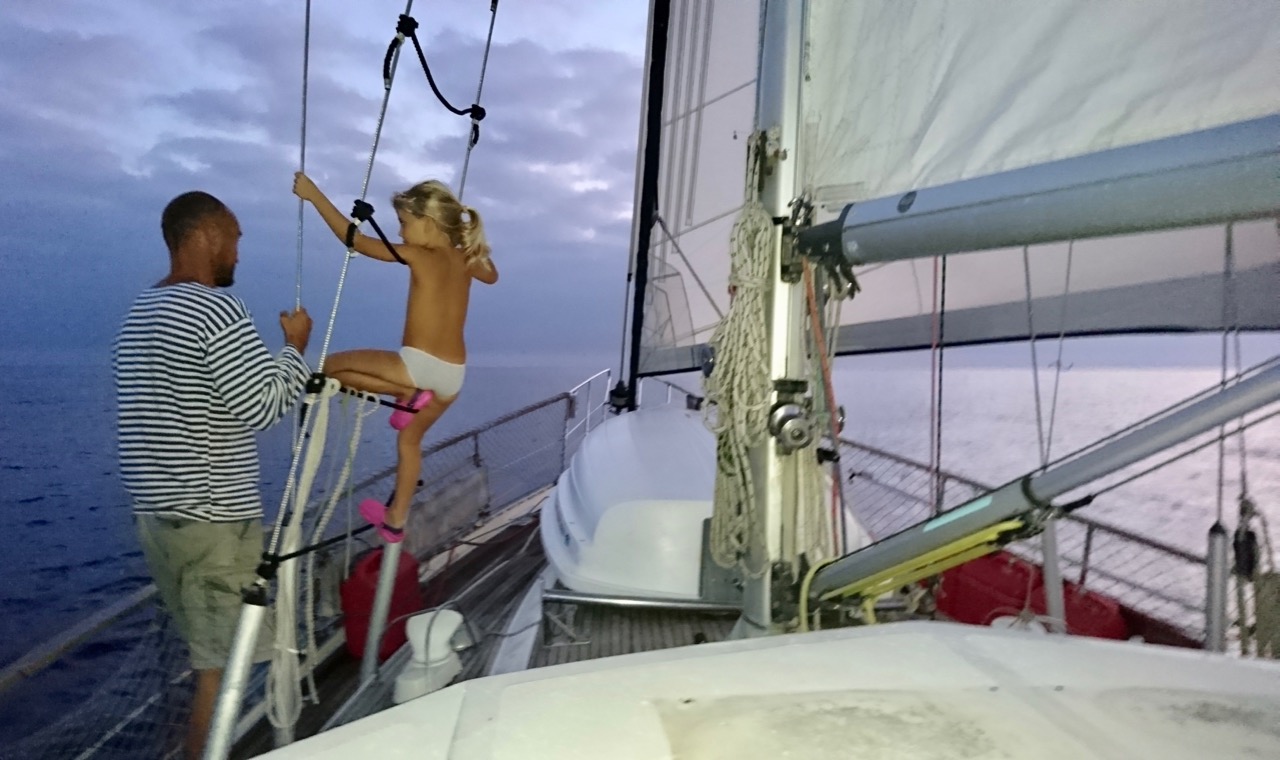
Before bed, the captain teaches our young sailor and me to read the night sky: there is Betelgeuse, Alpha Orionis, and there is Sirius, Alpha Canis Majoris. And Laduska and I spot a parallel with the Harry Potter book she is reading now (the Animagus in it was called Sirius, and he turned into a large dog):). Gemini hangs above the mizzenmast crosstrees, while Alpha and Beta Canis Minoris are above the masthead.
At night, Ladunka and I watch a film about the search for Captain Grant and look for the Duncan on the chart, compare its position with ours, and head to the cabin to finish reading the first volume of Harry Potter. Our young sailor is already reading 72 words a minute and tirelessly setting new records.
On the night watch, the cap adjusts the sails, trying to squeeze out at least half a knot of speed. Now and then, the black ocean heaves a noisy sigh right alongside us, then again and again astern—it seems to be a sleeping whale. Good thing we did not run into it.
The moment when the murky ink of night is diluted by blots of dawn looks rather eerie if you go back some 400 years and imagine yourself a superstitious sailor who has strayed into these unknown waters. You could imagine all sorts of things here, and no mistake. The watery abyss, which only half an hour ago shimmered with wandering blue lights, turns into lifeless, milky mercury, while the stars drown in grey cotton wool. The silence feels taut as rubber, and even the knock of the boom and the slapping of the drooping sails sound hollow and slowed down.
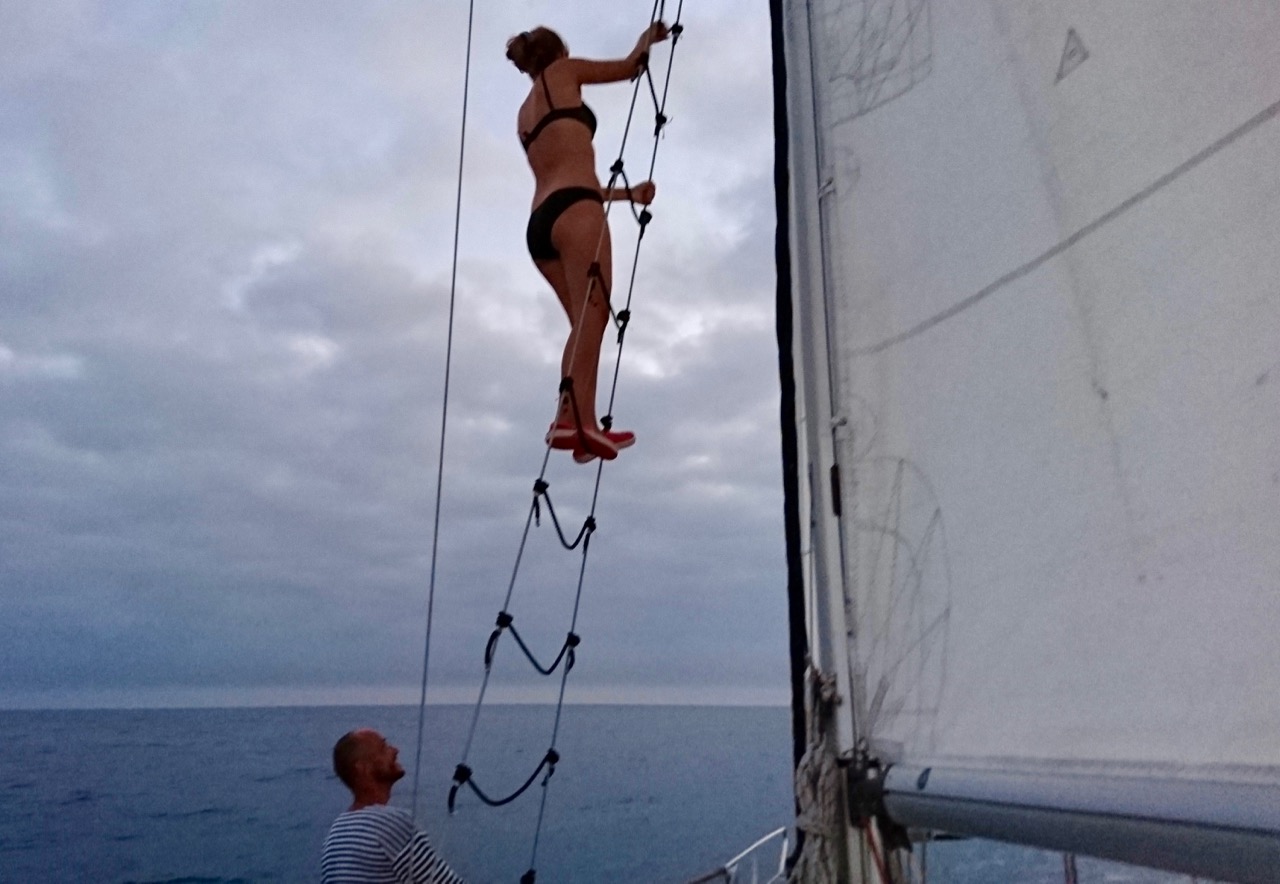
The vessel looks as though she has been suspended by her masthead in the murk of the dingy grey fog. The horizon is not yet visible, while the lights are no longer visible, and I start checking whether our radar detector and AIS are switched on. God forbid some ship should suddenly come bursting out straight towards us. I should say that at any other time of day, this would cause no concern whatsoever. Truly, more than a few tales of Flying Dutchmen and sea monsters must have been born in precisely this cotton-wool, fogbound hour before dawn. More than a hundred salty old sea dogs, afraid of neither God nor the devil, must have crossed themselves while awaiting sunrise.
But the sun rises, and the crew returns to ordinary ocean life. The radar detector lets out an unpleasant squeal. A vessel festooned with some sort of nets is heading straight for us. Encounters on the open sea with small, locally built vessels bring a certain unease. You do not expect any nasty surprises from a 300-metre tanker—except, perhaps, that it might run you down in the dark and fail to notice.
But that is what night watches and daytime vigilance are for. With a small vessel that has ventured 300 kilometres from inhabited land, you do not know what to expect. So, just in case, I recall where we keep the flare pistol and the clothes appropriate for the occasion—instead of my usual swimsuit.
Meanwhile, the fisherman keeps bearing straight down on us. On the same side, towards the bow, an enormous whale swims along, breathing heavily (though perhaps it is just an ordinary whale—maybe they are all this enormous here, a good dozen metres long?).
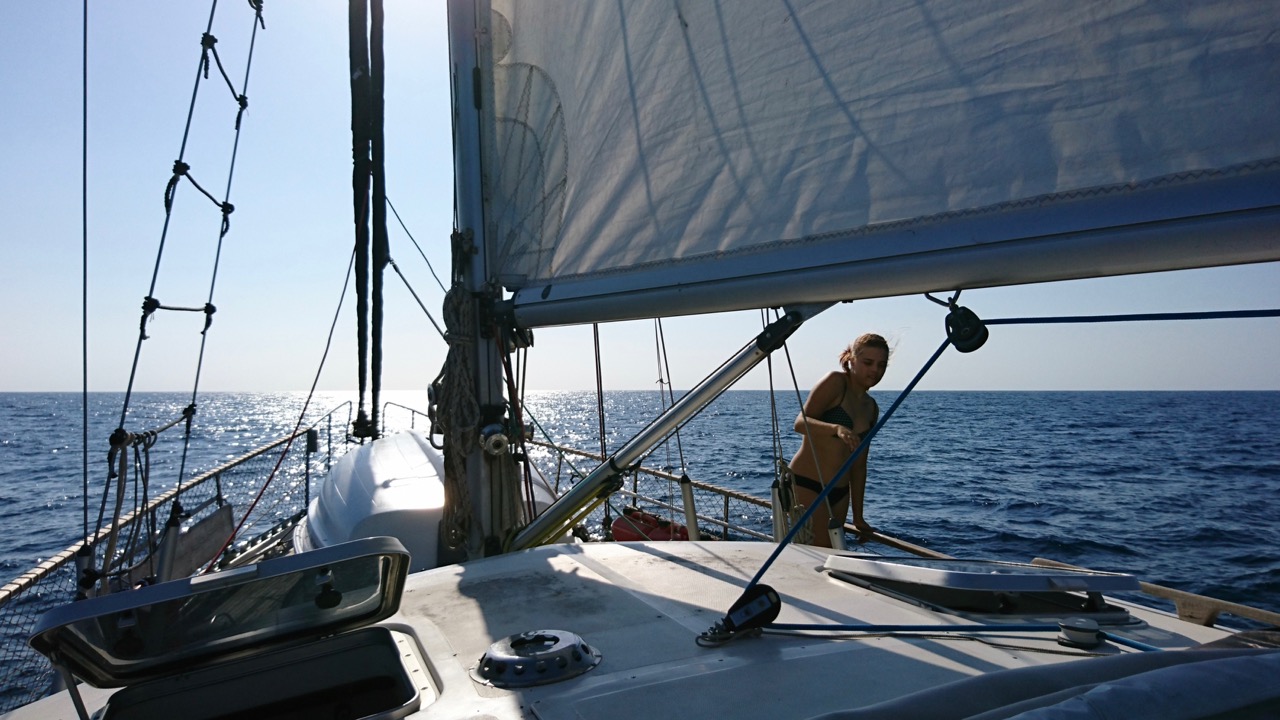
What if that ship is a whaler? Yes, yes, that industry still exists on Earth, despite animal protection and all that:(. The whale crosses our path about 70 metres away, then turns smoothly and disappears into the leaden distance. During the quarter of an hour we spend watching the ocean giant, the bearing to the fishing vessel changes, and it passes peacefully astern. Now we can have some tea.
We cook rice and eat it with pumpkin-and-pepper goulash. It is sooo delicious! And the cap enjoys fragrant green tea.
Over the past week, Laduska has earned the nickname “the little old moneylender,” even though she is covered in ink from head to toe. This is how it happened: as part of our child-prodigy programme, we offered our young sailor a reward of one dollar for every 15 pages she read. Before leaving Panama, she had read her way to eight dollars, bought Lego with it, and since then—in one week—has earned another 22 dollars, even though her parents had already caught on and changed the rules. Now she gets one dollar for every 20 pages and is saving up for her own e-reader. In 24 hours, she read 100 pages of Harry Potter and has no plans to stop.
Then Dad offered her another contract: she would receive as many dollars as there are letters in the alphabet if, by her seventh birthday, she could write every letter in cursive. Her seventh birthday is 11 days away. She does not know that schools spend six months teaching this. 🙂 For the second day running, Ladka has been carefully tracing hooks; to give herself a break, she goes out into the cockpit to read, then does a headstand in the aft cabin, and sits down with her handwriting workbook again (all by herself!). Since yesterday, she has learned to write five letters and has graciously allowed the cap not to withdraw the 55 bucks she will earn by her birthday from his card straight away, but to hang on to them until there is enough for an entire e-reader. When we lament that she will earn all the money and we will have nothing to eat, our young sailor assures us that she will feed us then.
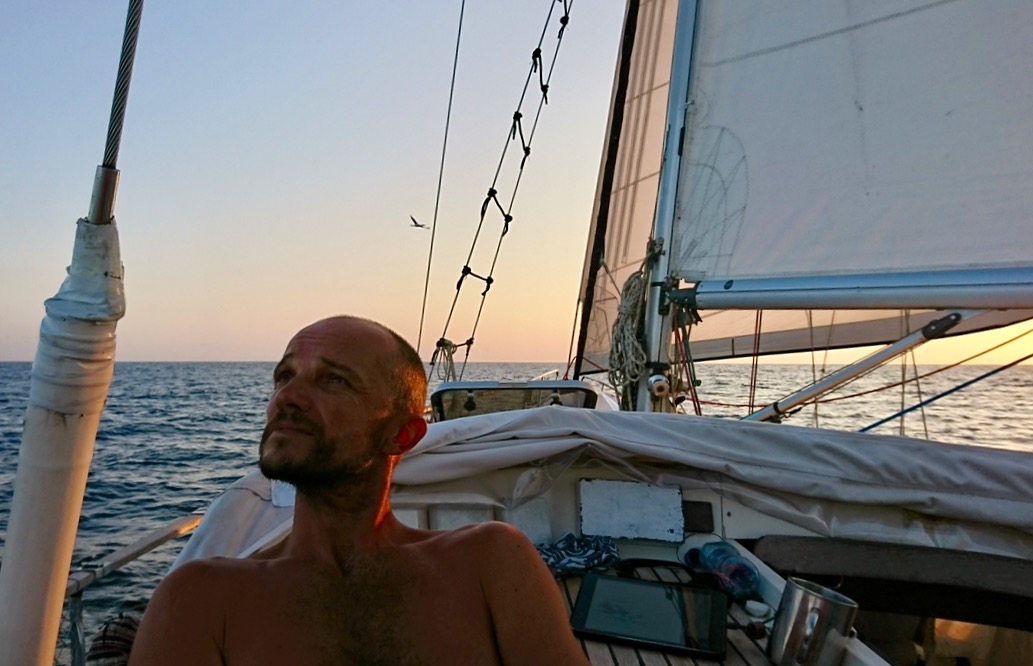
Meanwhile, our bow is pointing somewhere to the south-west. We have covered 45 miles in the past 24 hours. And it is like that every day. The wind should change any moment now. Lady Mary is therefore heading farther south so that, when the wind shifts, she can turn west towards the Galápagos in maximum comfort. We have come closer to the equator than at any other time in our sailing history.
Coordinates: 03°06′ north latitude, 81°02′ west longitude.