
From the Travely-Family archive · Pacific Ocean
Tahiti Bound! Halfway There
An original publication from the former Travely-Family website. This English translation was preserved from the technical-site archive without editorial rewriting.
Tahiti bound! Halfway there. Who is the chief Cinderella aboard? How we sailed out of the atoll and how fast we are flying towards Tahiti. This report has been compiled from two dispatches that vanished into outer space and never reached the website via satellite.
We thought the passage from Kauehi Atoll to Tahiti would take three days, but apart from a near-calm during the night, we are flying along as if we were born to it, at more than five knots. At this speed, the system says we will arrive tomorrow evening. That is because the young sailor and I cleaned the hull so well in the Tuamotus: now nothing drags through the water or gets caught in Neptune’s trident.
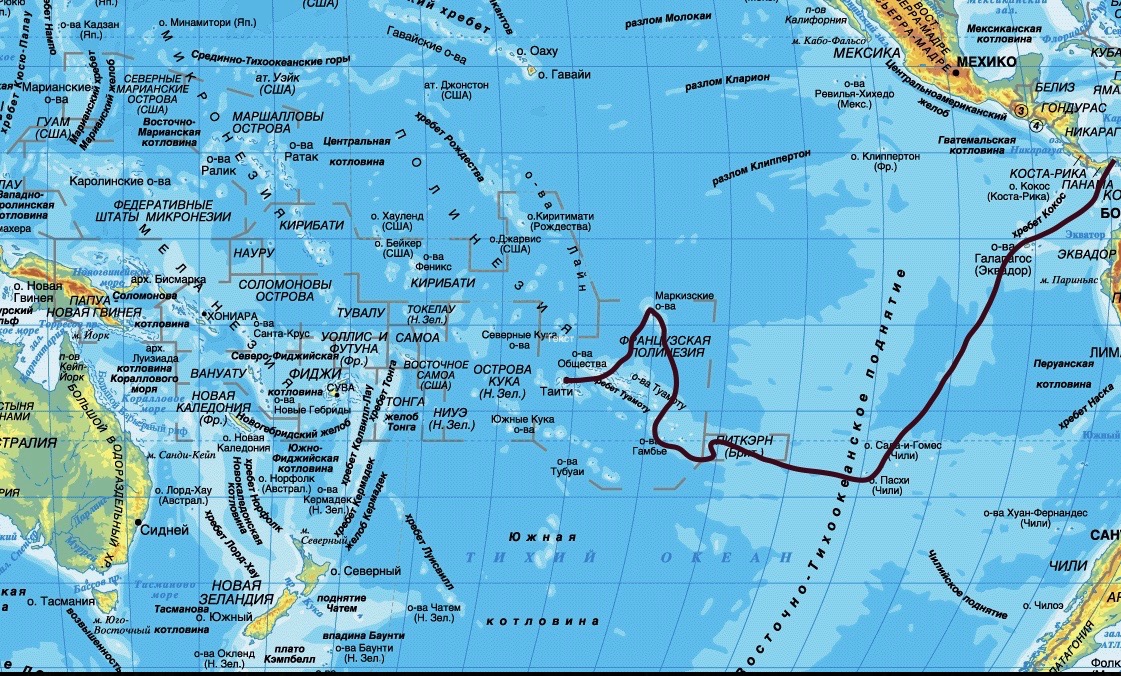
The expedition’s route across the Pacific Ocean. March–October 2018.
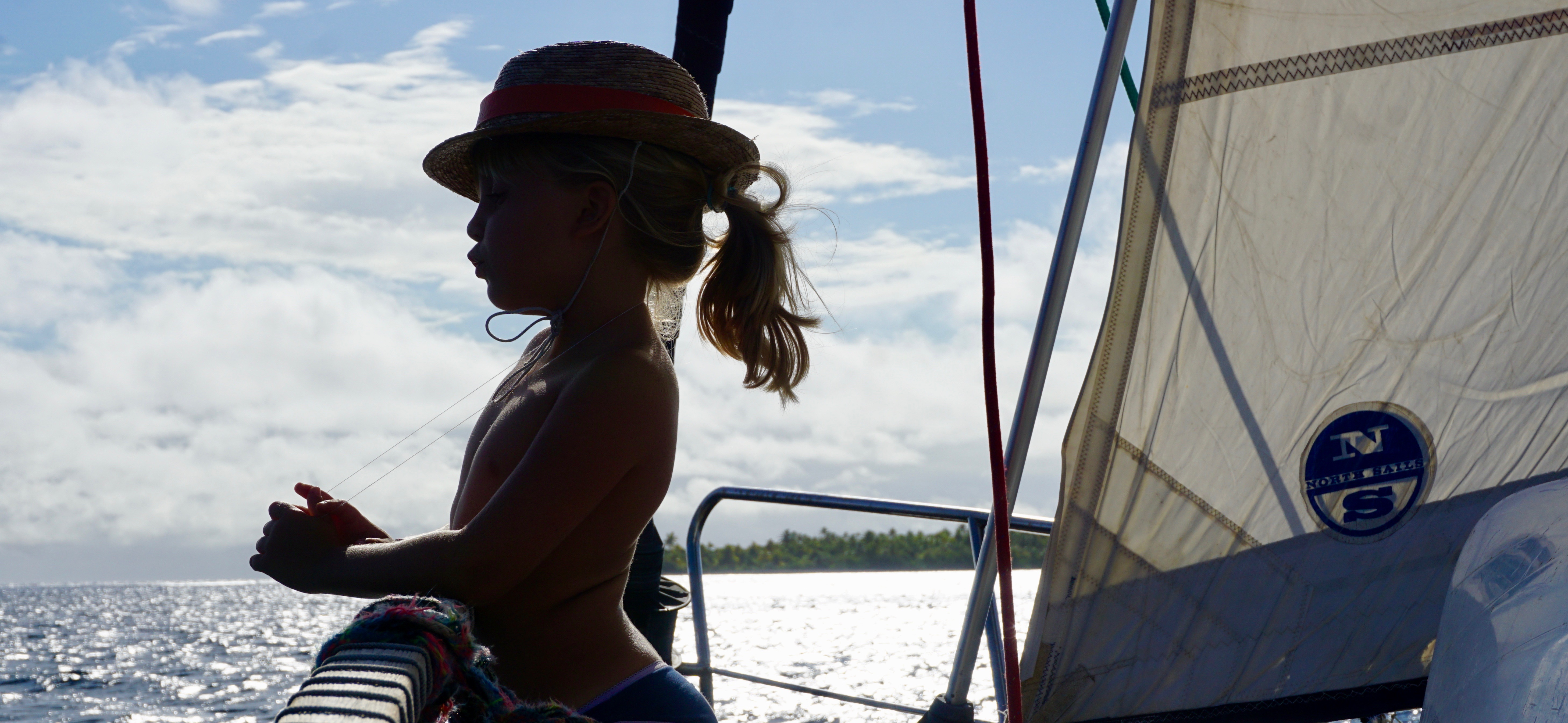
How the Young Sailor and I Became Cinderellas
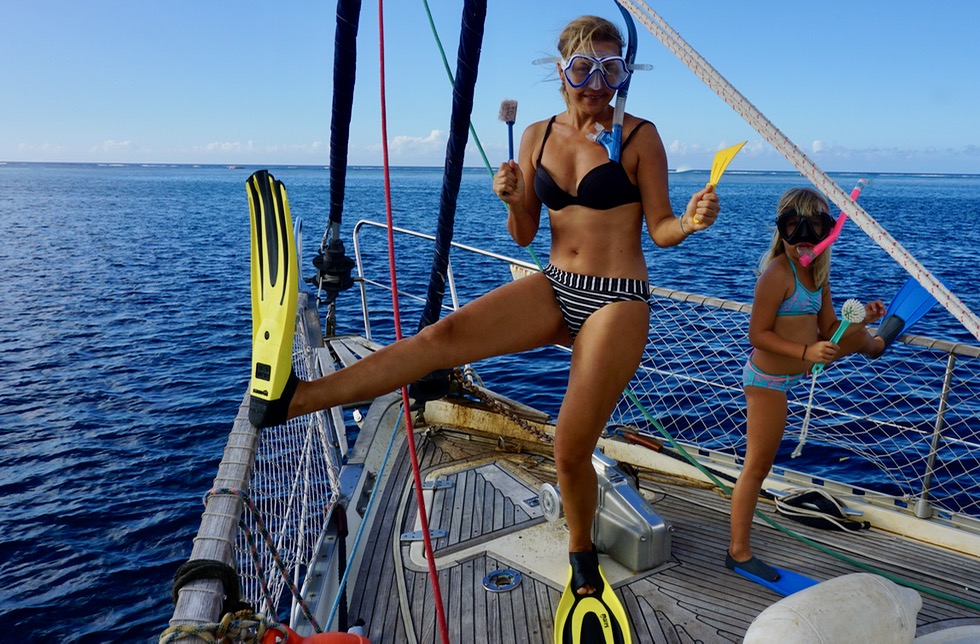
And we were the chief cleaners of the yacht’s hull. During those pristine days in an uninhabited paradise we established the following routine: first we earned our breakfast, and then our late lunch. Nastya cooked all sorts of delicious things and was too lazy to get into the water. How wonderful that at last she grew tired of all her usual dishes and embarked on a period of creative experimentation in the galley. We are happily devouring the new creations.
The yacht had not been cleaned since the Galápagos, since that very day when we frolicked with the big sharks (see “Sharks!
”). On Easter Island and Pitcairn there had been no time for cleaning—the water was rough and rather cold; on Fatu Hiva and Nuku Hiva there was no time either, and at our last anchorage there were more sharks than yachtspeople, plus we were recovering from ciguatera.
Cinderellas in Frog Suits
Above the waterline, the boat had grown a green beard all the way around. Below it, though, things were quite respectable. The six coats of antifouling, generously applied in Colombia a year ago, still do an excellent job of shedding nearly every kind of algae and shellfish. There were only lots of hard brown circles with something like moss beginning to grow in the middle. The very same circles above the waterline would not come off with ordinary scrubbing. But the young sailor and I gave it our all, and then the deckhand came along for the final scraping.
And Lady Mary gleamed along her starboard side; the port side still needs more work. The captain is afraid of the water now, so he sat in the cabin over the charts. One advantage of cleaning the hull in the morning is that it is not hot at breakfast and your body stays cool for a long time.
Now, on the passage to Tahiti, the deckhand is devoting herself to reading Kaverin’s Two Captains, a book I loved so much as a child. Swept along by the mood, we all watched the film as well. And now I am already studying charts of polar ice drift and the fates of the real-life models for the novel’s main characters. And who has to cook the delicious food? That’s right—still me.
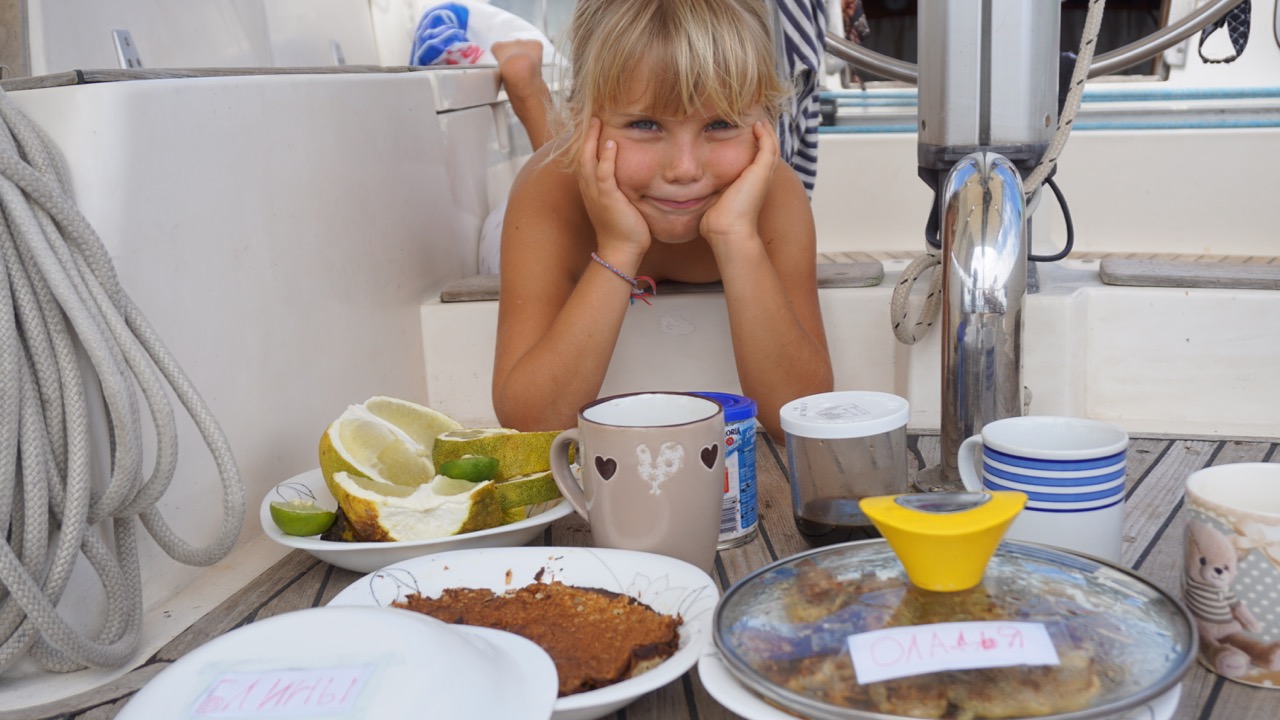
A New Cook Is Growing Up
To be honest, the young sailor cooks too. Ladunya mastered a pancake recipe from a book for girls. When she got tired of making thin pancakes, she used the same batter to make fritters. She laid everything out nicely and even labelled them “Pancakes” and “Fritter.” Bon appétit! 🙂 Leaving the Atoll
We weighed anchor at two in the afternoon. By three we had reached the pass out of the atoll. Nothing is straightforward with the atolls here—we wrote about entering one here
>>. The ebb had already begun, and the breakers were boiling madly in the current. If there is such mayhem in a wide pass, what must happen in a narrow one? We will not find out for now, because our plan to visit three to five atolls has gone completely down the drain—we need to call Russia from Tahiti.
We are sailing under jib and mainsail with two reefs in. Entering the pass is something else, of course! The boat is bucking, the bow is burying itself, the waves are boiling and leaping onto the deck. It is a good thing we have a heavy boat: we do not have to wait for those fifteen minutes of slack water between flood and ebb, and can simply head out on the ebb. Under sail—beautiful! I crouched down on the deck just in case, so I would not fall, clutching the camera to my chest.
“Sheet in the jib!” the captain shouts.
The breakers in the current are visible to starboard astern
Nastya sheets in the second headsail. Whoa, our speed is nine knots (nautical miles per hour). Five knots of that is current. Awesome! Surprisingly, we do not even have to start the engine in the pass. But immediately after we leave it, the boat swings round with her bow towards the atoll. The mainsail is on the centreline; the jib runs easily along its track and, in its excitement, flops over to the other side.
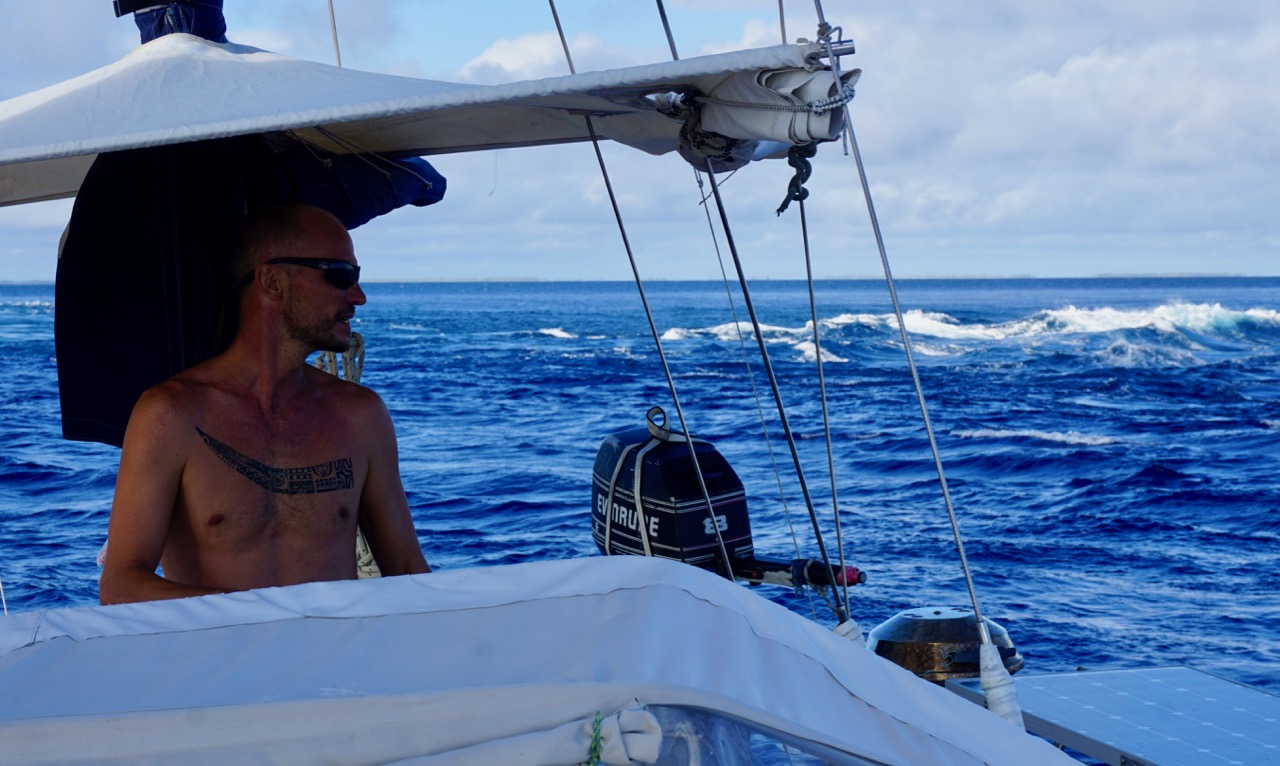
“Engine!” The deckhand runs to the engine (I’m filming, after all!:)), which runs for only half a minute so we can manoeuvre. Then we continue west.
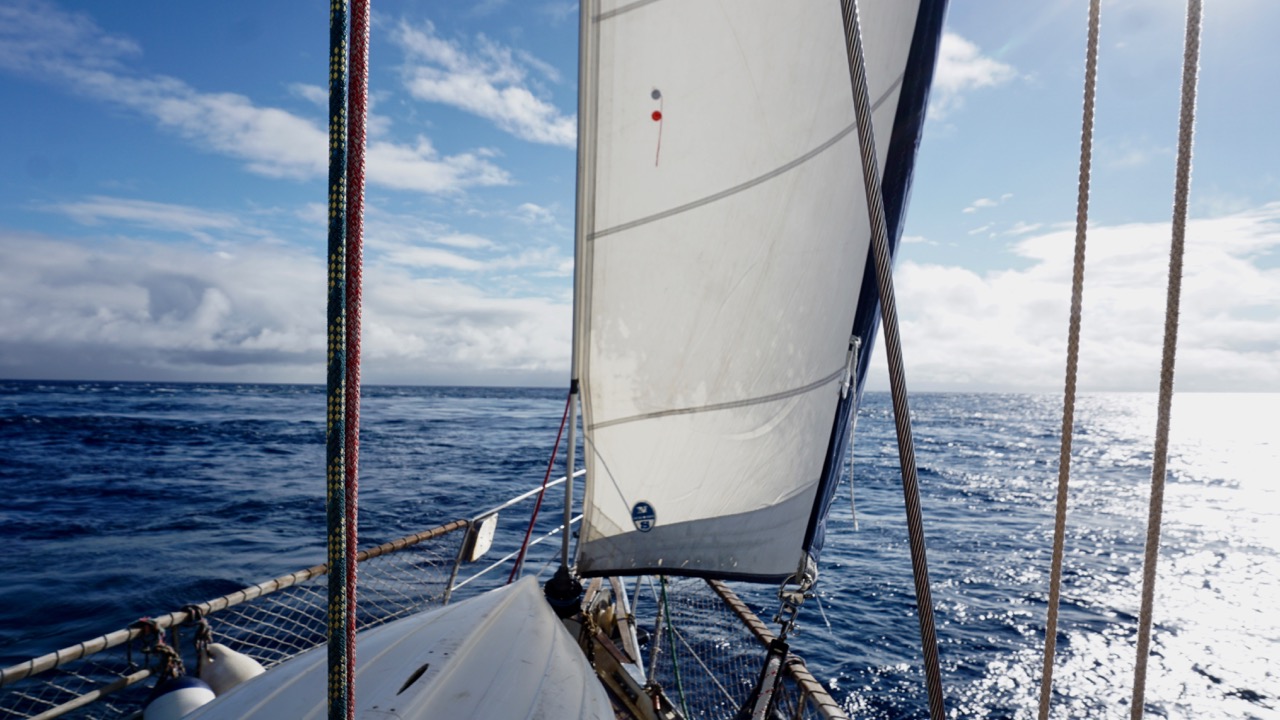
We hoist the genoa and furl the jib.
The wind is almost dead astern.
Course Set for Tahiti
The captain orders the coconuts cleared from the deck and husks four of them so that they will take up less space. As a result, the entire aft section of the boat is covered in scraps.
“But it’s only sawdust!” the captain reassures the grumbling first mate.
After waving the brush around for about ten minutes without any particularly striking results, I hand it to Andryukha:
“Go on, off you go! It’s only sawdust, after all.”
And the captain diligently smears the fine coconut debris across the damp teak deck. Well, now you understand who is really in charge aboard our yacht, don’t you? 🙂.
Course set for Tahiti!
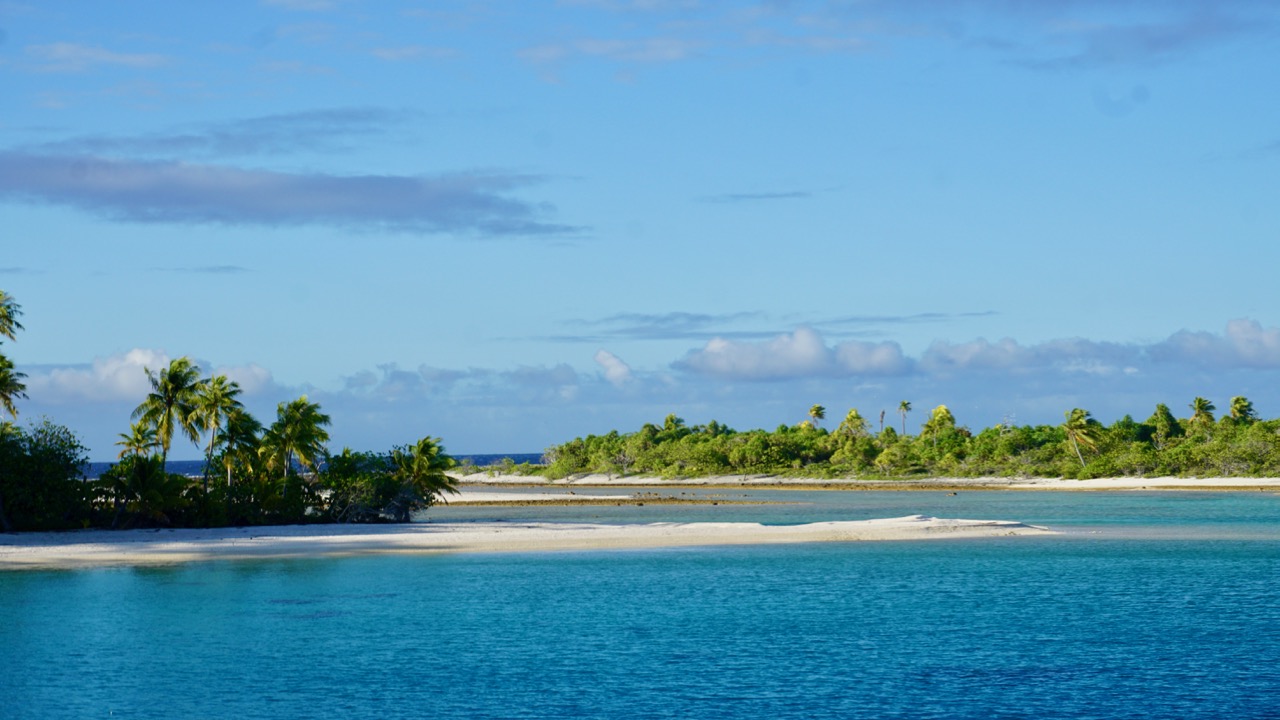
We are sailing with the wind almost dead astern. By nightfall we had passed Fakarava Atoll. The captain stood the first watch through the narrow waterways of the Tuamotus—the passage between two atolls requires care. In the Dangerous Archipelago, unexpected currents, erratic winds and who knows what else can spring up. Nastya took over at half past midnight, and I came on watch at about half past three. Our watches passed without incident. The Tuamotu Archipelago was left astern.
Fakarava is one of the atolls we wanted to visit. They say it has the best diving in the world. On my night watch, I am reading Jack London’s “The Seed of McCoy” from South Sea Tales. It brings together in one story the incredible Bounty Island, the Gambier Islands and Fakarava Atoll, which at that very moment lies five miles abeam....Oh well, our friends aboard Manai will visit it and tell us all about it.
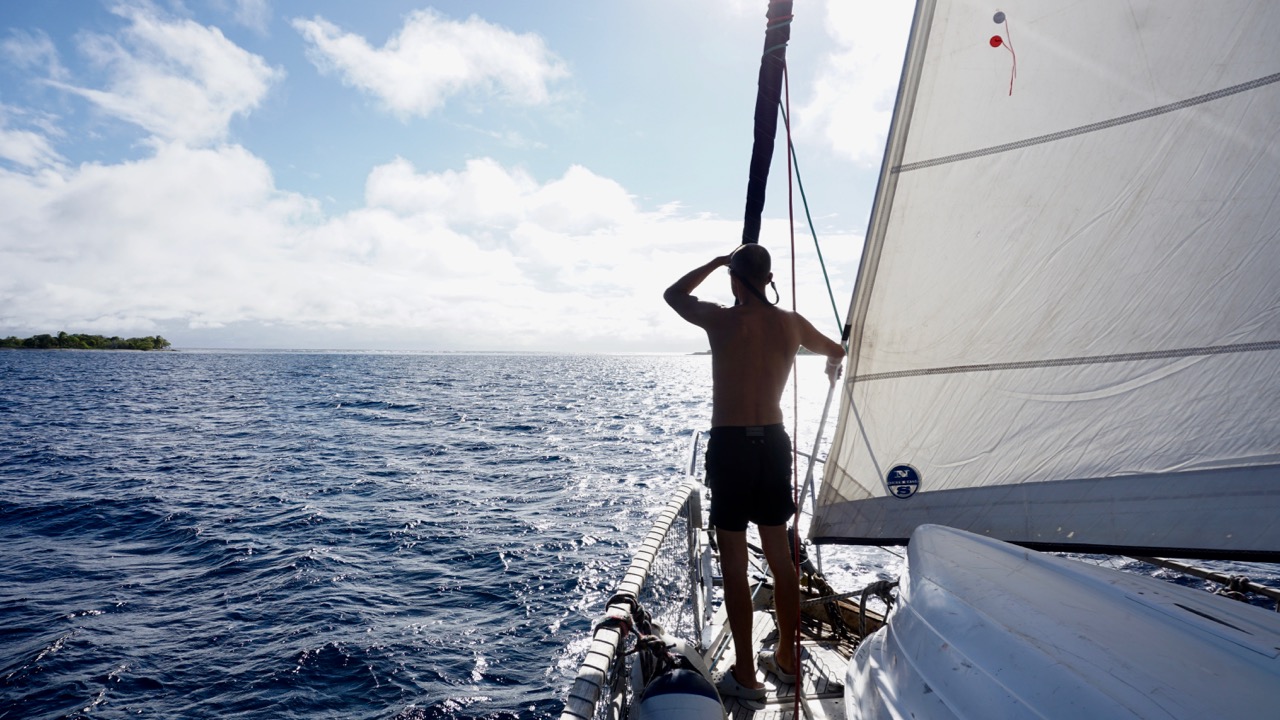
Fancy that—we missed each other by less than twenty-four hours. They were delayed leaving the Marquesas because of repairs and the weather, while we honestly waited for them on Kauehi until exactly lunchtime yesterday. This morning they were already looking for us around the atoll. The art of travel is the art of changing plans. We hope to meet kind Tommaso and Rosetta in Tahiti.
The Tuamotus Are Astern
And in Tahiti, at last, we will also meet the crew of the very first Russian yachtspeople to sail around the world with children—the Blagovestie circumnavigation.
May everyone have dependable friends.
Coordinates from which this post was sent: 16.42 S, 147.24 W.
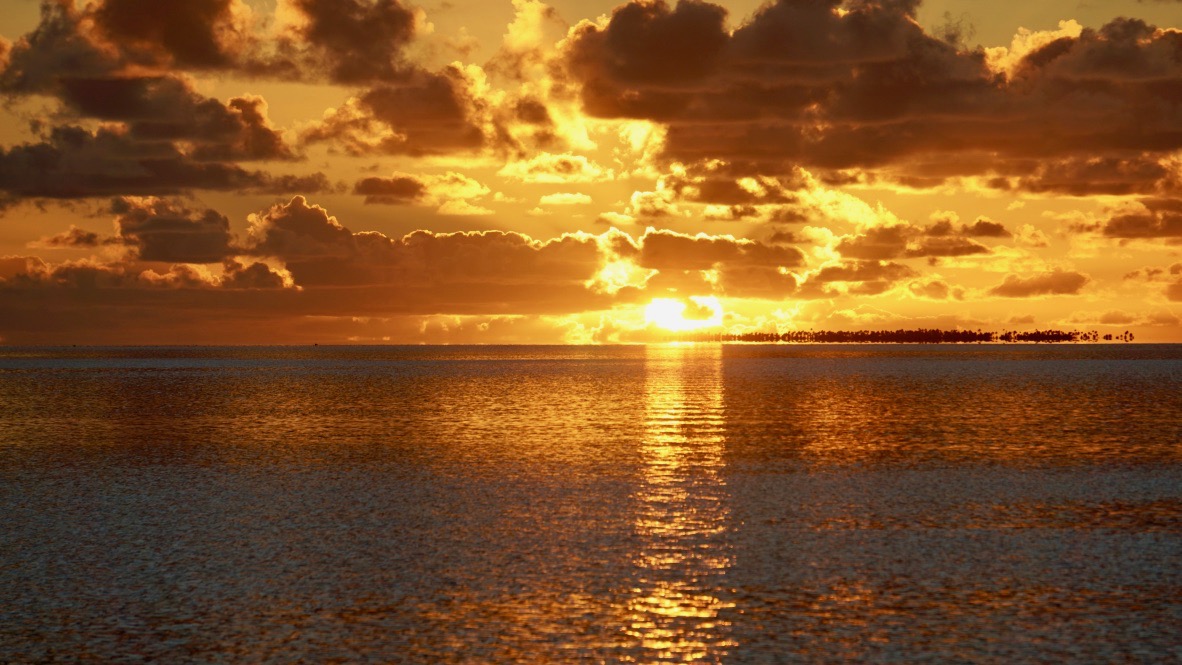
And one more drop of molten gold—as a keepsake from the Tuamotus