
From the Travely-Family archive · Atlantic
Cuba on the Horizon
An original publication from the former Travely-Family website. This English translation was preserved from the technical-site archive without editorial rewriting.
Cuba on the horizon. A meeting on an uninhabited island. How we sailed over to visit some South Africans and stocked up on giant shells The boat rang with the captain’s joyful cry:
“Laaaaand!”
Although we had left land at literally half past five this morning, the appearance of the Cuban coast was a momentous occasion for the whole crew: the end of the island-hopping Caribbean leg and, with a month-and-a-half holiday in sniffly Siberia ahead of us, the end of the winter season.
Over the past few days, Lady Mary has sailed from the uninhabited islets of the Turks and Caicos Islands to an uninhabited scrap of land in the Bahamas. We did not come across any customs office on the way, so once again we are anchored here illegally. Whales slap their tails all around us, while dozens of vessels have found their final resting place on the coral shoals. From a distance, two of them could be mistaken for islands: their rusted, crumbling skeletons rise above the shallow turquoise water. Thank God navigation systems are not what they used to be.
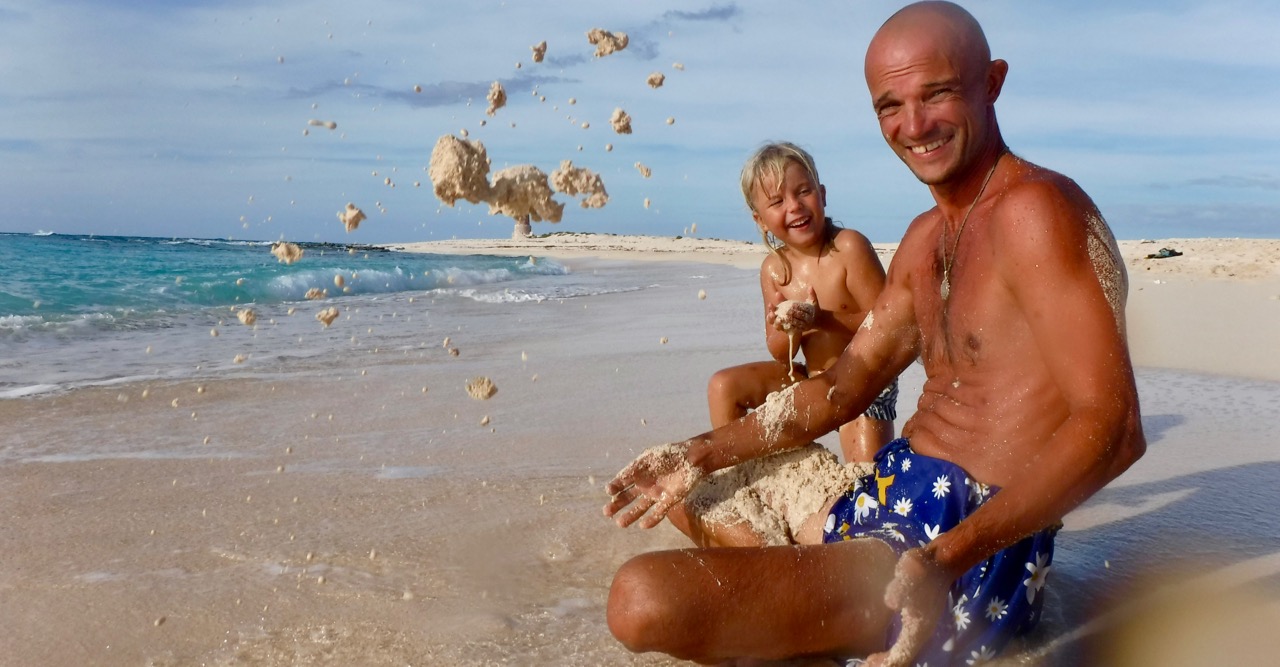
Other visitors to the uninhabited island
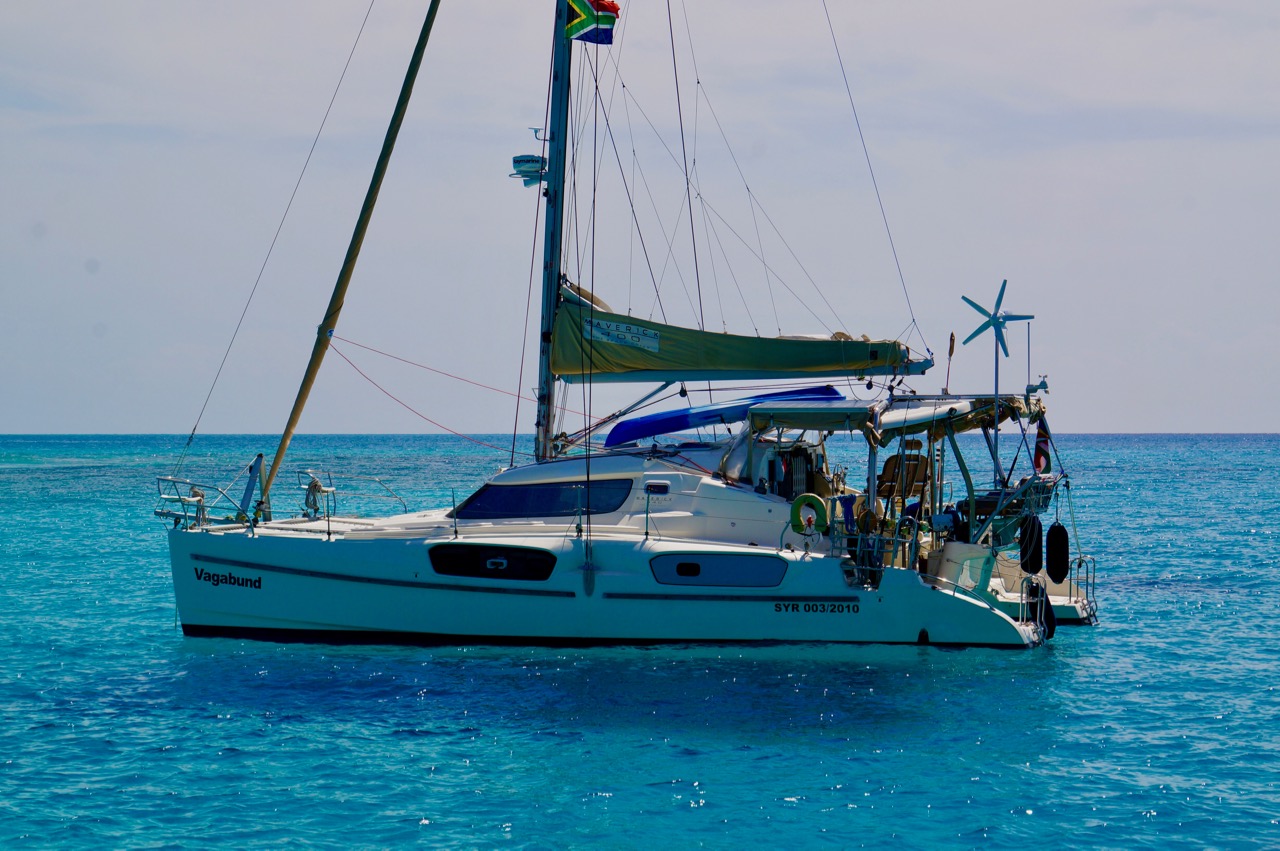
On the sand spit of Hogsty Reef, lost near the shores of the Caribbean, we crossed paths for half a day with the crew of a catamaran from South Africa. Travellers who meet like this in the middle of the sea, far from land, have no time for lengthy introductions, so that very evening we were invited aboard to visit Zac and Magda.
All three of our girls were showered with gifts in smart wrapping bearing the South African flag, as well as South African souvenirs and sweets. It is always fascinating to get to know people from very different countries.
“What nationality are you?” we asked the fair-haired, fair-skinned Magda.
“South African.” Her blue eyes watched my surprise closely.
“No, I mean not where you live, but what is your nationality?”
“South African.”
“Okay, but where did your ancestors come from all those years ago?”
“Ah! Zac’s ancestors came from Holland 300 years ago, and mine came from Germany 250 years ago. But we speak neither Dutch nor German, and we do not consider ourselves European.”
“And what language do you speak to each other?”
“South African...”
So there you have it: self-identification ). Magda and Zac live in a suburb of Johannesburg. It is safe there, they say. But it is best not to venture into the city centre. Ever since thousands of illegal immigrants took over the city centre, its skyscrapers have stood without windows, all sorts of people live crammed together inside them, and the offices, shops and business district have moved out to the suburbs. And no, nothing can be done about illegal immigration yet: everyone is desperate to get into South Africa from poorer African countries, and the army does not patrol the entire border.
The South African sailing catamaran Vagabund
Our sea-hardened souls (hee-hee) mutually thawed in such warm company, but two hours later Magda and Zac were already off to the inhabited Bahamas. Before they left, we managed to swap travel stories, feast on pancakes with juice, and exchange warm hugs. Now we have two more friends in the world.
Overcome with emotion, a beautiful hand-painted matryoshka doll migrated from our yacht to their catamaran. While visiting, Lada counted nine fishing rods, and Zac said he had twenty in all. They call their catamaran “a fishing boat that can sail”:). Their biggest fish this year was a 127-kilogram marlin. They release most of their catch. And Marina made a note of how Magda cooks the fish they keep.
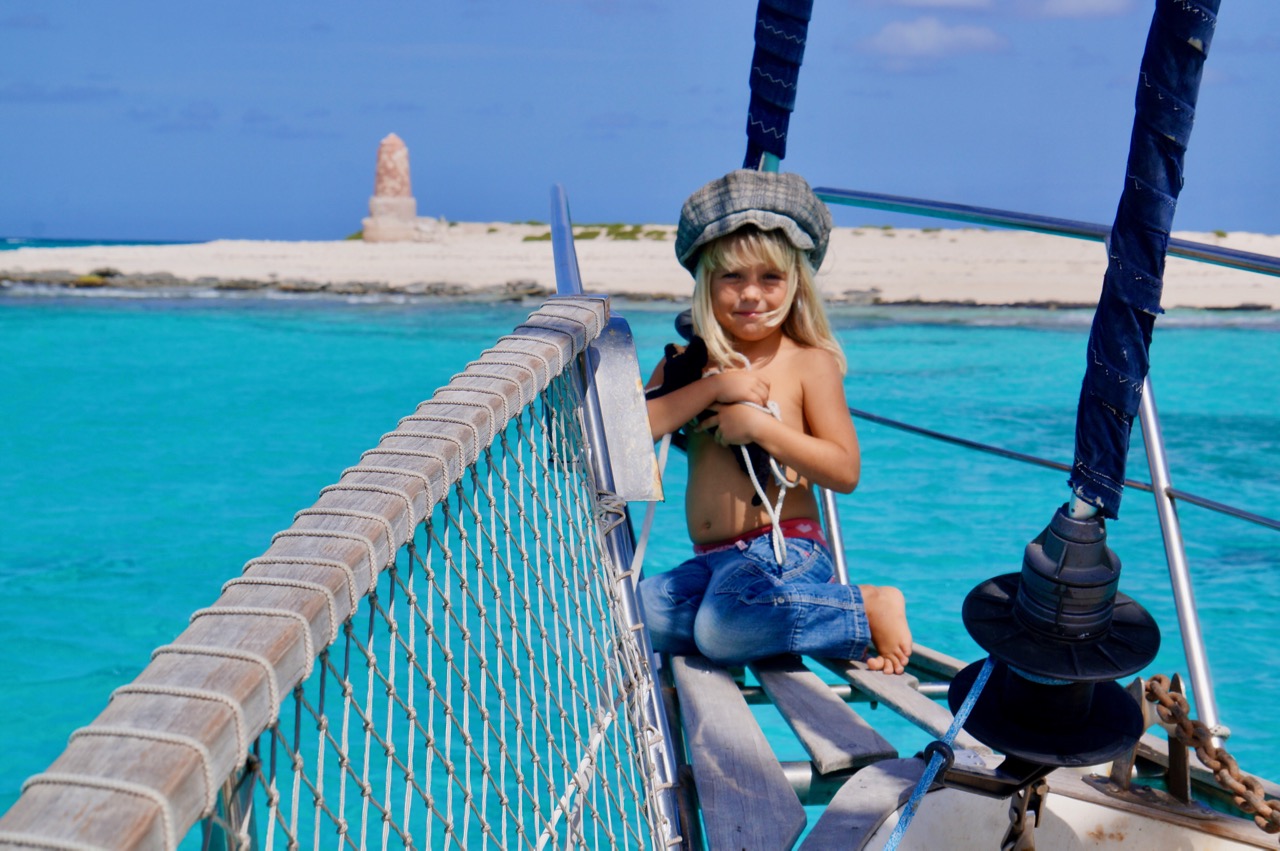
Off the uninhabited shore, the young sailor tries on winter clothes from the holds, getting ready for the holidays in Siberia 🙂
Although the fish diet is beginning to bear fruit among our crew: on the way here, when the rod we had just mounted on the stern began screaming as the line ran out into the depths, Lada sighed mournfully:
“I’ve had it up to here with this fish!” And she drew the edge of her hand across her throat.
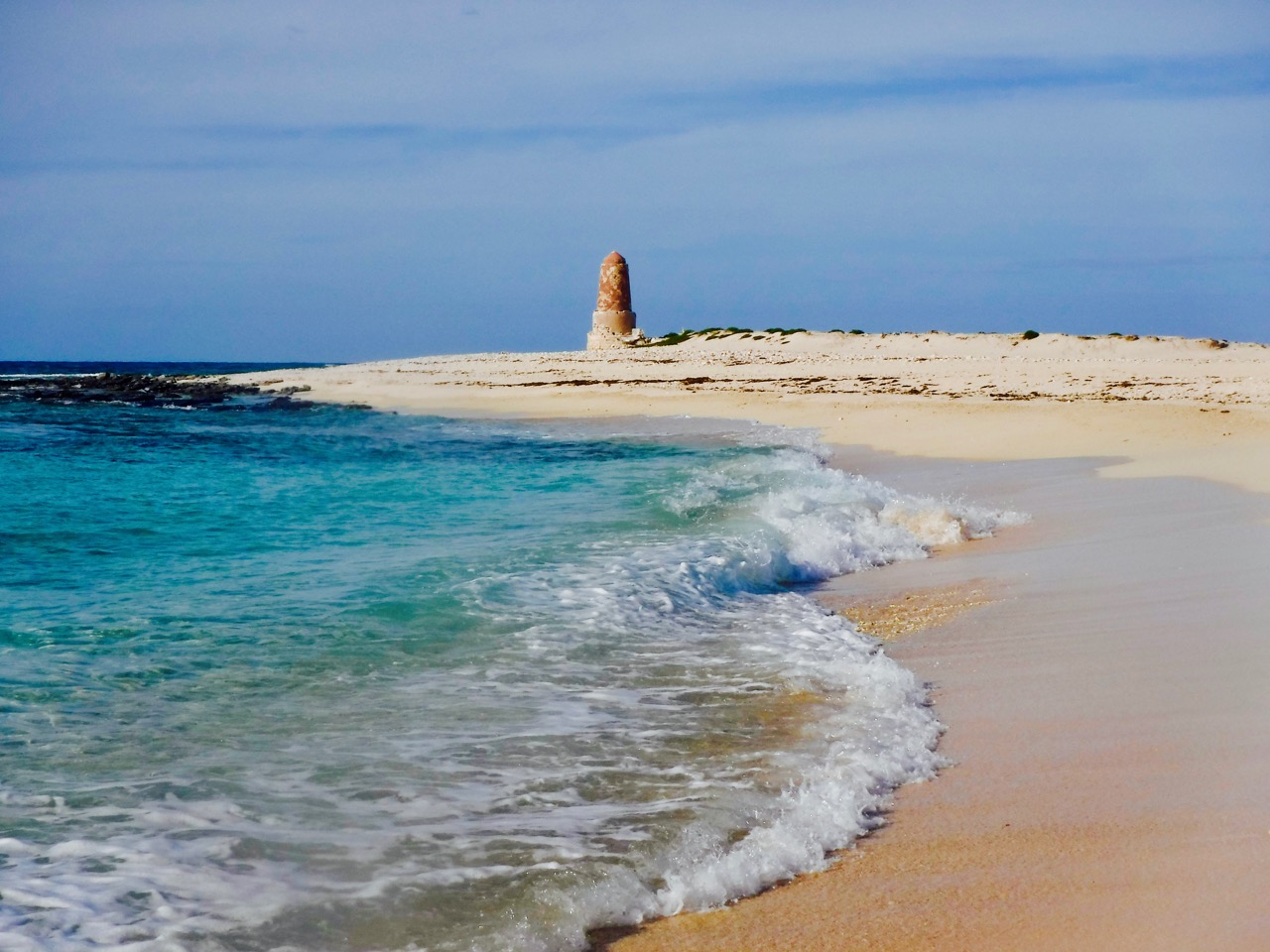
On Hogsty Reef, a patch of the Bahamas measuring 20 by 100 metres, we gathered enormous shells and explored a small stone building that once served as a lighthouse. Now it is something like a monument, because the lantern—broken off either by the wind or by pirates—lies helplessly on the sand.
A genuine former lighthouse
The prosaic side of life
After swimming briskly in fins (following two weeks without walks or exercise), the first mate suffered a side effect of physical inactivity in the form of terribly painful legs. As a result, she managed only two hours’ sleep that night and spent the rest of it groaning and crying, promising that from the next day onward she would devote at least an hour every day to exercise.
And that is how this static, humourless post came about. A time to gather stones...
There are only 60 miles left to the first Cuban port, Puerto de Vita. They say the entry checks there are unusually strict. And Lada has already begun mourning the impending (untimely!) demise of our Mad Hatter and the long-suffering Alejandro (an aloe plant and a sailing-battered agave) at the hands of Cuba’s sanitary and epidemiological inspectors.
This post has not turned out very heroic, even though it is already the morning of 23 February in Russia (and the evening of the 22nd for us). Happy holiday, dear defenders! Be a dependable support to your families and your Motherland. May you always have someone waiting for you and loving you at home! Wishing you happiness and the very best of luck!