
From the Travely-Family archive · Family, Children and Life Aboard
A Sailor Will Find the Sea Anywhere. How We Lived under a State of Emergency. Flood Chronicles. Part 2
An original publication from the former Travely-Family website. This English translation was preserved from the technical-site archive without editorial rewriting.
A Sailor Will Find the Sea Anywhere. How We Lived under a State of Emergency. Flood Chronicles. Part 2 The beginning of the deluge — How We Lived under a State of Emergency. Flood Chronicles. Part 1
30 May 2014
The general fighting spirit gives way to gloom. Mikhalych’s sheds have been swept away completely; the Zyablitskys have lost their garage and bathhouse. The ground beneath our close friends’ house is being washed away; the water is already under the foundations.
People stare blankly as the land they have cultivated and their buildings collapse. Some are taking the edge off with home-brewed moonshine; others have moved in with friends who live higher up. We wait....
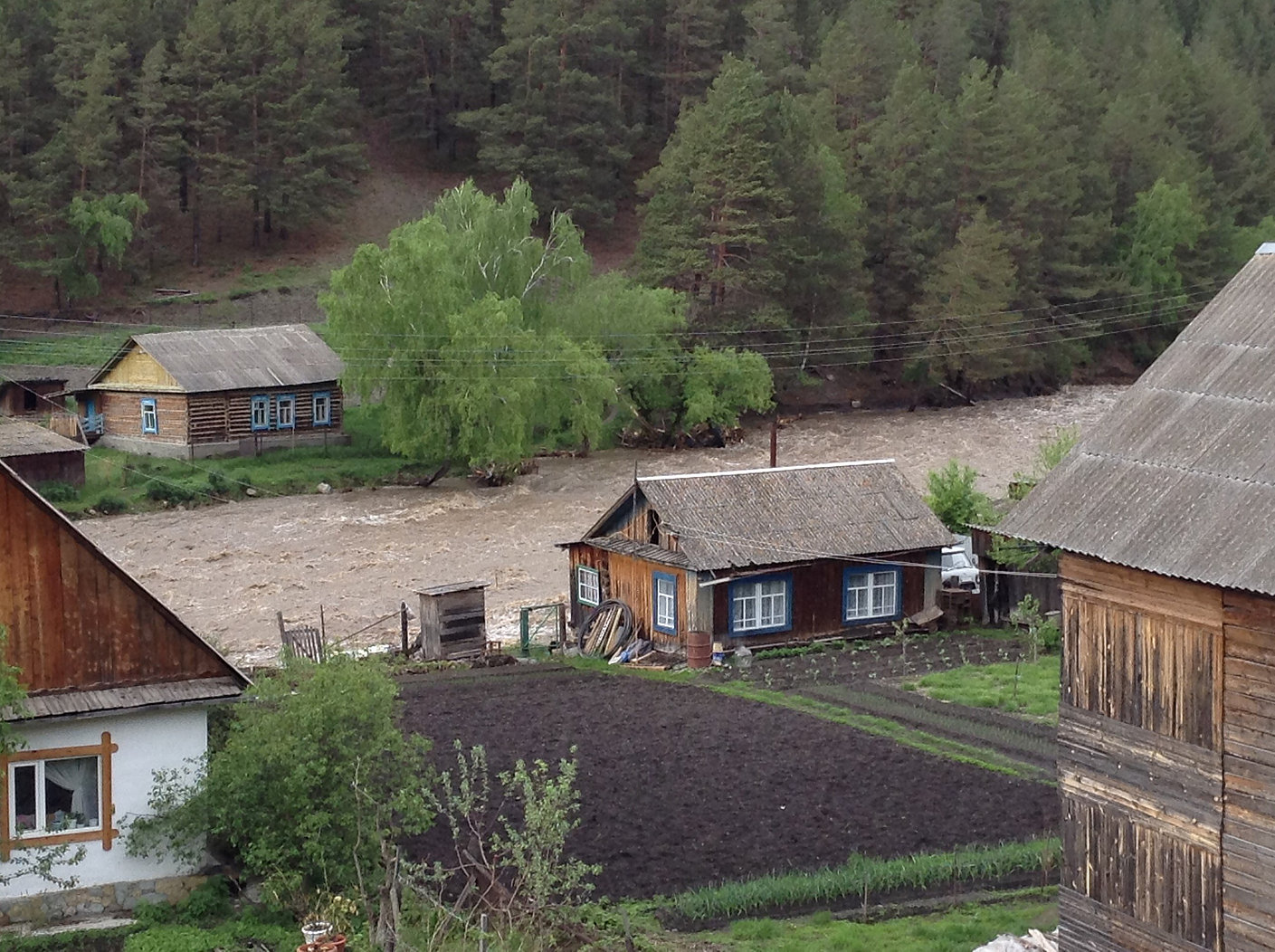
The river has changed course, and its bed has deepened by about two metres. A large island overgrown with century-old willows has floated away.
There have already been casualties. Three people tried to drive across the torrent in a GAZ-66, but it overturned. Only one surfaced, barely alive. A bridge that had stood for a hundred years was swept away... On the Chemal River, water is pouring over the dam; if it gives way (and it is old), the water will rise by several metres... It’s frightening.
At first, cars heading to the other side of the village were allowed along the top of the opposite bank. But a day later, an inspection of the ground revealed a crack and the danger of a landslide. It would block the riverbed, and there would be a lake where our houses now stand. The road was closed immediately.
We packed an emergency bag, turned the car around to face the gate, and instructed Nastya to run to it as fast as she could if she woke to a terrible crash.
31 May
Outside the yaranga it’s +3 (!); inside the yaranga, +18. We don’t light the stove, because it has an electric pump. And there ain’t no electricity. The rain has set in, turning to hail and snow. But yesterday’s gloom has given way to acceptance and our usual joking around. Ordinary life in an ordinary state of emergency. We collect rainwater and wonder how we might hook the pump up to a bicycle so we can pump water from the well (and our buttocks at the same time).
We fry pancakes outside. In felt boots.
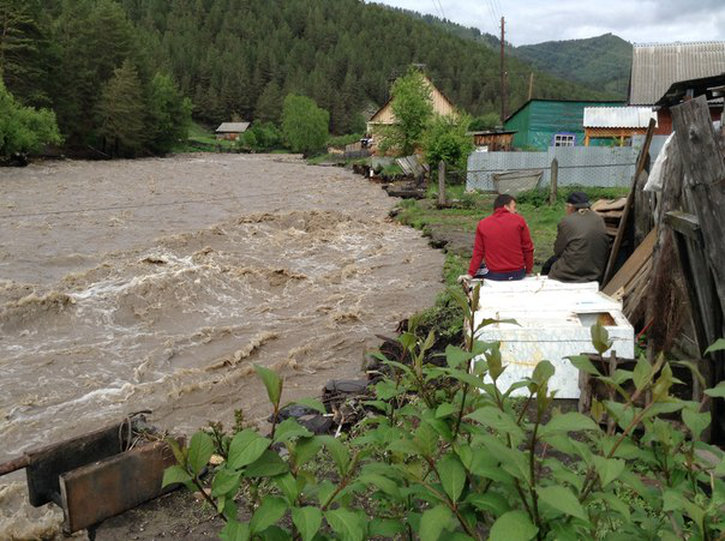
The villagers now greet each other like this:
“Have you been washed away yet?”
“Not yet.”
For everyone in the area, Mikhalych’s toilet is the landmark. His outbuildings have floated away, and if the outhouse goes, another couple of “our” houses will go with it, the new one and the old one. So at night everyone keeps glancing out of the window at the forlorn little light glowing on the toilet hut, somehow managing to charge from the sun during the day. We breathe out: the toilet is still standing. Everything is under control.
Photo: Outbuildings by the river
Photo: The outbuildings by the river have floated away. Aunt Nina laughs bitterly: “They used to block the whole view, and now I come out onto the terrace and—what a beauty, I can see the river!”
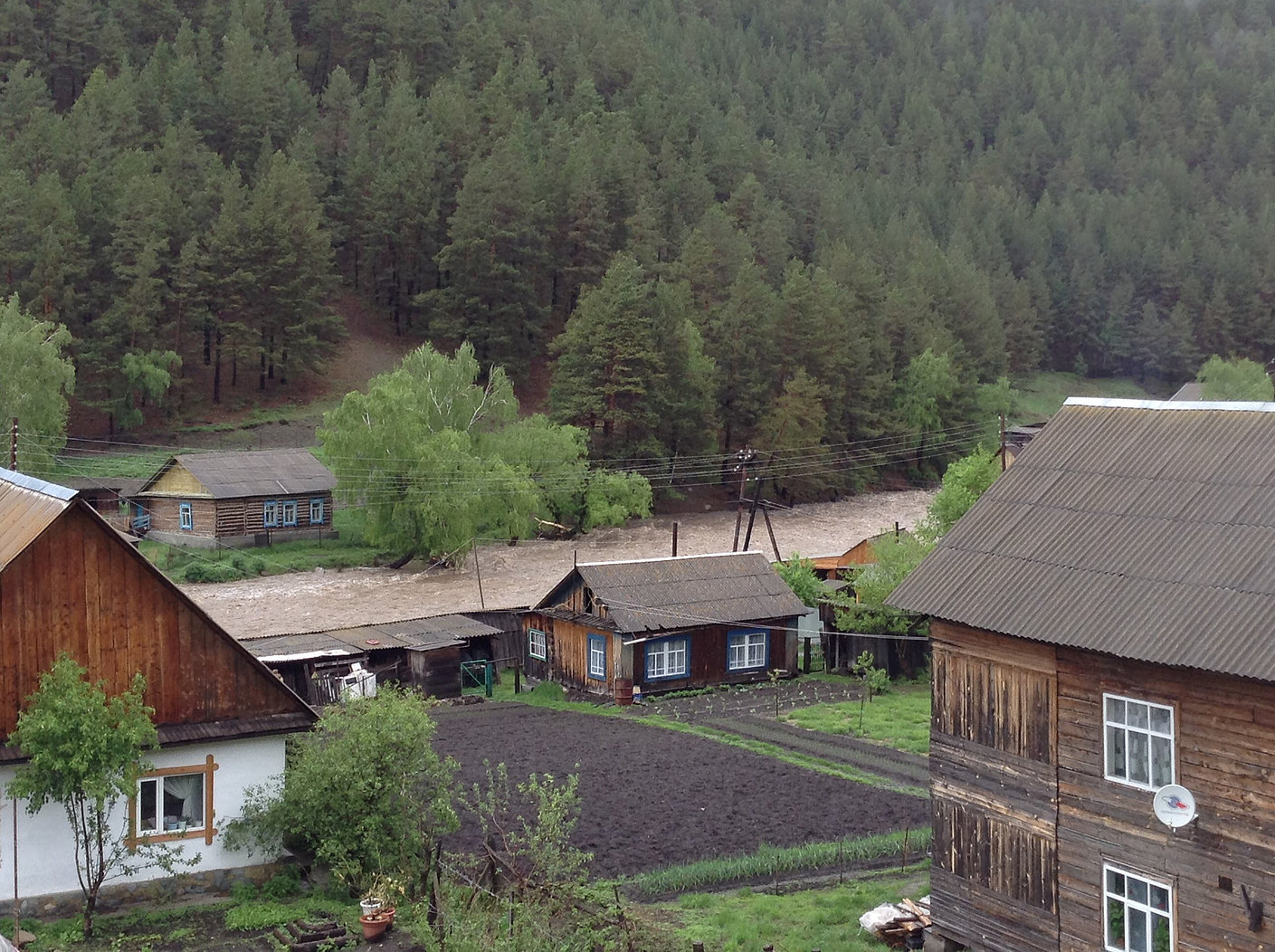
Another metre or so of land has been cut away, and another couple of large bridges over the Katun have been washed away. Near Lake Aya, the federal highway has flooded. Our escape route is cut off ).
A fellow in a soaked raincoat walked past:
“Which is better, winter on the yacht or this?”
“About the same, really,” we chorus, laughing.
People can get used to anything.
P.S.: We had no electricity or communications for two weeks. It turned out we didn’t particularly need them. Twice a day, for one hour, we switched on a diesel generator shared between two households. In that time, we managed to pump water, charge the laptop (to watch films in the evening), then the phone, and even do the vacuuming. Our neighbours milked their cow in the forest until the end of the summer, while a new enclosure was being built. But that was nothing compared with what others went through. Twice a day, the residents of the cut-off homesteads scrambled straight up the mountainside with jerry cans, went halfway around the village, and climbed Barantal, which had become a place of pilgrimage for all the horned refugees.
There they searched for their cow, milked her, and headed back with all their gear—full buckets and a jerry can. They came down the mountain sliding on their heels, rather like downhill skiers. One way, across rough terrain, was about three kilometres.
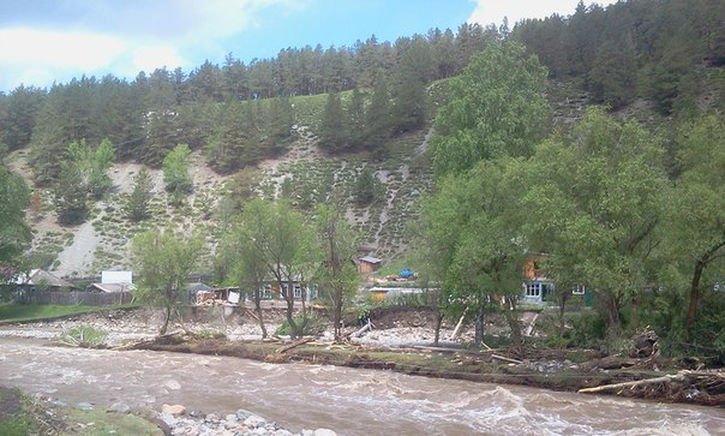
A year later:
For several years, the traces of destruction and the flood defences robbed the Altai landscapes of their pastoral charm. The vegetable gardens and houses have been partially restored.
In nine years of living in the Altai, we have already survived a major forest fire and now this flood. This season has brought another scourge—an invasion of spongy moth caterpillars, which have devoured almost all the greenery in the forest and gardens.
Meanwhile, we are preparing to sail around the world.