
From the Travely-Family archive · Other Entries
Malaysia. Langkawi: Where, What and How Much
An original publication from the former Travely-Family website. This English translation was preserved from the technical-site archive without editorial rewriting.
Many Europeans flee the cold winter for the hot summer. More and more often, our compatriots stay in warmer climes—for example, Thailand—for extended periods. If you decide to stay longer than a month, the question of extending your visa arises (a 30-day visa is automatically issued at the airport). To extend it, people often use the visa-run service offered by local tour operators. A bus takes you to the border with a neighbouring country, waits while you cross the border on foot and come back, and then takes everyone back to where they started. Such a trip takes 12–24 hours and costs about 1,500–2,000 roubles. We prefer to combine a visa extension with a short journey. In February, we travelled from Samui (Thailand) to the island of Langkawi (Malaysia). It lies in the southern Andaman Sea, right on the border with Thailand.
The island is a free economic zone, and all sorts of goods, including electronic and electrical equipment, can be bought at tax-free prices—albeit on one condition: before making a purchase, you must have spent at least 72 hours on the island. How exactly they keep track of this—whether in the shop itself or at the border—we have no idea:).
Getting from Samui to Langkawi is relatively easy.
A few figures
We bought the whole trip in one go: the bus to the border town of Satun, including the ferry from Samui to Donsak (the port on the mainland in southern Thailand that handles the main transport links with Koh Samui). We paid 2,400 baht for the three of us for the entire journey. We spent the night in Satun, where a shabby room in a shabby hotel costs 550 baht. In the morning, we set off for the port by tuk-tuk (150 baht for two adults and an eight-year-old child). The Satun–Langkawi ferry costs 300 baht per adult and 200 baht per child, and takes about two hours, if memory serves.
We arrived in Langkawi at around noon local time (in winter, it is one hour ahead of Thailand).
We liked Langkawi straight away and, on the whole, it lived up to our expectations. In size and development it is similar to Samui, except that there are few good supermarkets but plenty of monkeys. Our daughter refused to leave because, as it turns out, she loves monkeys very much.
We had booked the hotel online in advance.
We chose the Geopark Hotel, located very close to Langkawi’s famous cable car. The Geopark Hotel stands in the centre of another of the island’s attractions, Oriental Village. I cannot for the life of me work out what is “Oriental” about it and what is “Village,” but it is a very beautiful place: a well-kept park with ponds, delicate little bridges and a row of boutique-style shops on the ground floors of attractive two-storey buildings. There are also several restaurants and food courts on the grounds, catering to every taste and budget. The Geopark Hotel delighted us with its wonderful location, the views from the windows and the décor of the rooms. Relatively inexpensive and very decent. A room cost around 100 ringgit per night (890 roubles in our money).
A ten-minute walk from the village lies the secluded Burau Bay and a beach of sorts. Nearby are the luxurious Berjaya Langkawi Beach & Spa Resort and Mutiara Burau Bay. The Geopark Hotel minibus takes guests to Mutiara every two hours for walks, entertainment and beach pursuits.
Like everyone else, we began our acquaintance with the island at Eagle Square. Langkawi’s symbol spread its mighty concrete wings, fixing a stern gaze on the picturesque bay. The square projects into the sea in the rays of a five-pointed star; on the way to the attraction, you will find several small restaurants and shaded avenues with bridges. In Malay, eagle is kelang, while kawi means reddish-brown. And there you have the island’s name.
These birds are greatly revered on the island, and tourists are offered boat trips to their habitat to feed and photograph them. We also went to feed the symbols as part of a boat trip to Dayang Bunting Island. The aforementioned island lies south of Langkawi and is separated from it by a narrow strait. You can tell at once that the two pieces of land were once a single whole.
Dayang Bunting has the picturesque freshwater Lake of the Pregnant Maiden. The name was apparently inspired by the sheer wonder of such a bowl of fresh water appearing on a small patch of land in the middle of a salt sea. There is a belief that if a woman who wishes to become pregnant swims in the lake, it will inevitably happen within a year. Malay women travel there specially for this from all over the country.
The trip takes four hours, including boarding and disembarking. Excursions are sold right on the pier in Cenang, the liveliest spot in south-western Langkawi. Restaurants, hotels and shops—everything holidaymakers’ souls and bodies might need.
The best way to explore the island is, of course, from the seat of a motorbike. It is not as expensive as a car or taxi, and it gives you complete independence. The same is true of the neighbouring countries, including Thailand, Singapore and Indonesia. Of course, there are other ways of getting around, but this was the one that suited us best. In Burau Bay, we rented a motorbike for 35 ringgit per day (350 baht in our money). On Samui, a day’s moped rental costs about 200 baht, but petrol in Malaysia is about half the price). It is easier for the whole family to ride on a Thai moped because its seat is narrower and longer. In principle, you can ride around the coast of Langkawi in a day. There are many roads, and they are of good quality—better than in Thailand.
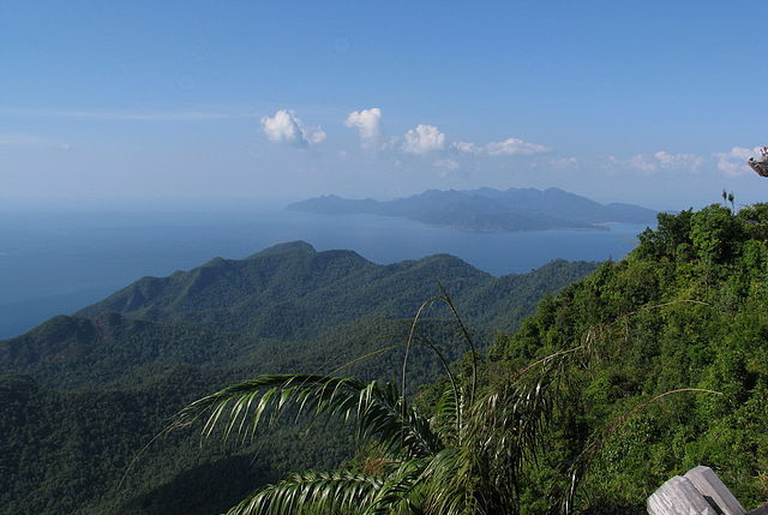
Troops of monkeys leap joyfully along the roadside, something you would not see on Samui, for example. Most of the island is covered in jungle and mountains around 700 metres high. There are open grasslands, orchards, wastelands and villages. Langkawi’s administrative centre lies in the south-east and is called Kuah.
Among the island’s attractions, you should visit the cable car and, accordingly, Oriental Village, as well as the Seven Wells Waterfall (I think that is what it is called). Langkawi is also home to one of the largest aquariums in Asia.
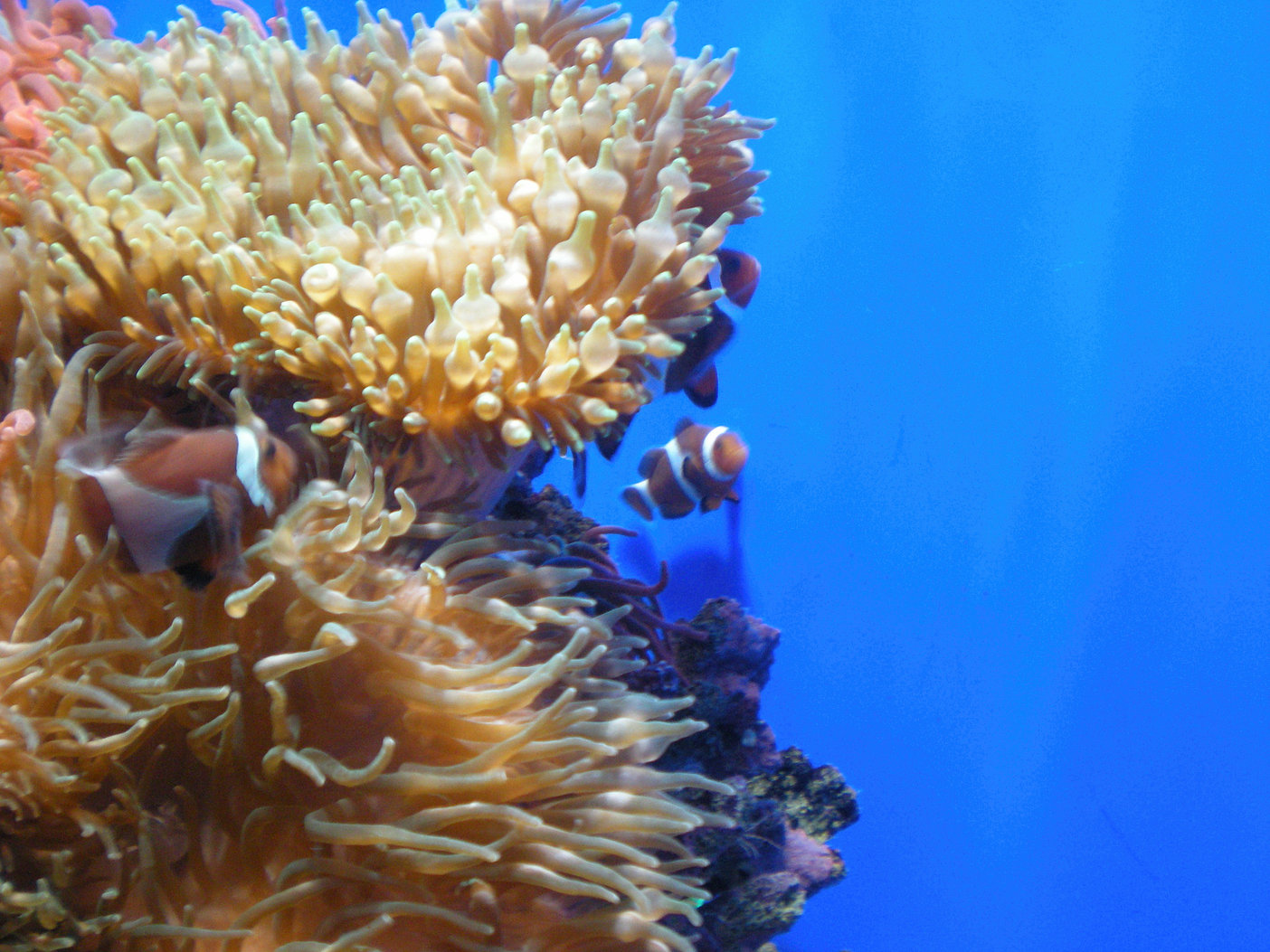
It houses something like 5,000 marine animals. There are even several species of penguins. They swim and nest in huge refrigerated chambers containing water, Antarctic ice and concrete dry land. It is quite interesting, but personally I was more impressed by Underwater World in Singapore.
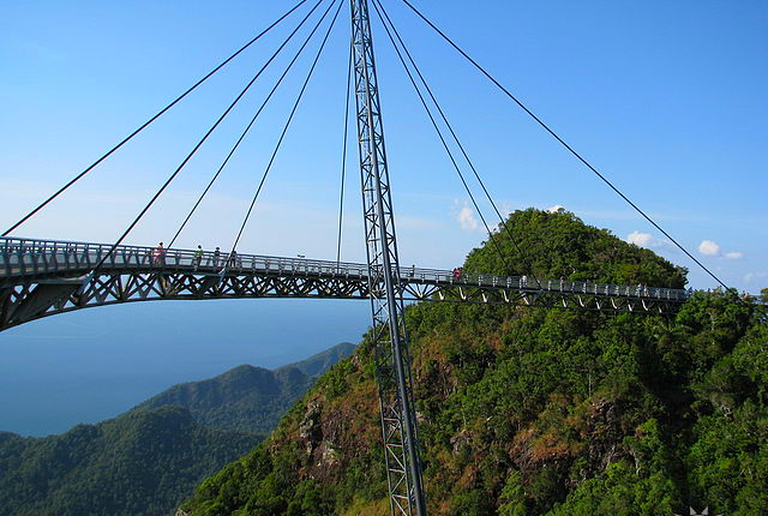
The Cable Car in the geopark has two stages and takes visitors up to an altitude of 710 metres above sea level. The observation decks offer fabulous views across the whole island and its shores, the fanciful curves of the coastal cliffs and bays that look as though they have come straight out of a glossy magazine. You can walk across a bridge to the observation deck on the neighbouring summit.
The beauty takes your breath away, and it is a little frightening. Directly beneath your feet, impossibly far below, the humid subequatorial jungle lives its own life—vines, palms, shrubs and trees, hundreds of species of birds and animals—one enormous living mass.
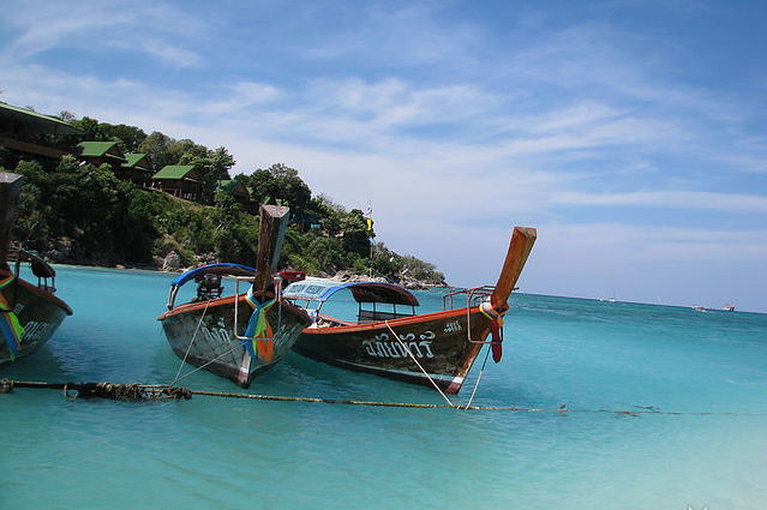
It was from this very bridge that my daughter and I dropped our last 5 ringgit while my husband went to look for the port from which speedboats whisk travellers off to Koh Lipe in Thailand. The port is very close by, in Burau Bay, and provides berths for private yachts and speedboats bound for Lipe. We managed to leave the following morning. The speedboat fare is 120 ringgit per person.
The exit stamp is put in your passport on the first floor of a small house, like something out of a film about the nineteenth century:). The sweet young woman behind the office desk does not even compare your face with the photograph in your passport. About ten other foreign nationals were leaving the island with us. After passing through the token passport control and filling in a Departure Card, we boarded the boat, which literally whisked us to Koh Lipe—the island of Robinson Crusoes, in the Kingdom of Thailand—in just an hour and a half....But that is another story altogether.