
From the Travely-Family archive · Patagonia and Tierra del Fuego
Ice Age Aboard the Yacht
An original publication from the former Travely-Family website. This English translation was preserved from the technical-site archive without editorial rewriting.
Ice age aboard the yacht. How we got frozen into the ice. The fjords of Tierra del Fuego, calving glaciers and seals right under our noses. What Karelia and Patagonia have in common. Transmitted by satellite.
Getting up early in the morning isn’t easy: your ears are freezing, and the rest of you has no desire whatsoever to crawl out from under the blanket. It’s 7 degrees above zero inside the boat, and by the time the heater has stoked the temperature up to something tolerable and the sun has opened both eyes, it’s around eleven. We knock back a tot of tea and weigh anchor. Ahead lie 25 miles between mountains with blue glaciers. The weather seems to be apologising for yesterday: the sky turns blue and the sun sparkles.
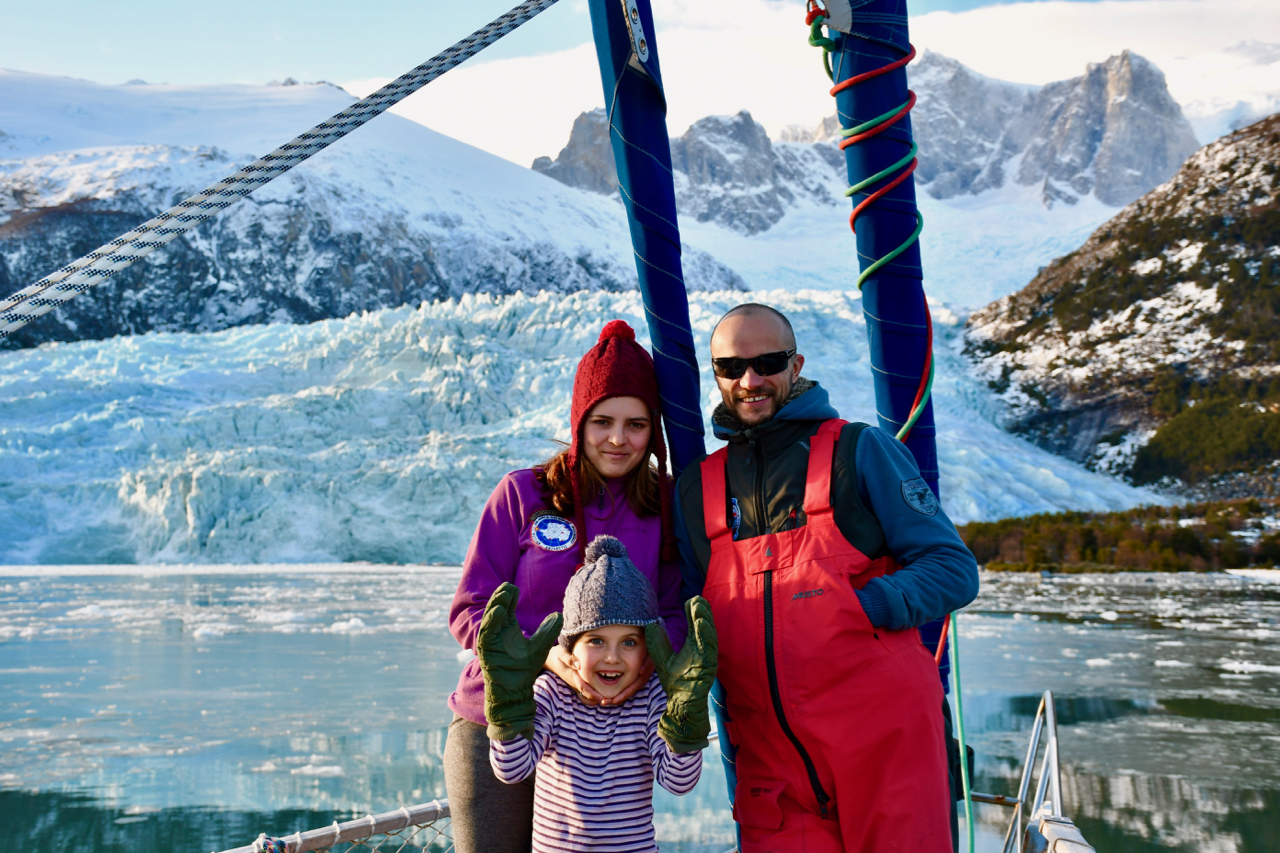
Alcamar Yamana! Alcamar Yamana! This is the yacht Lady Mary! — the captain calls the Armada de Chile.
We dutifully report our departure and arrival, how long we intend to stay, and sometimes ask for weather advice. But since rapid-fire Spanish is impossible to make out through the hiss of the radio, the captain asks in English. The radio falls silent in bafflement and, instead of a forecast, says:
Thank you for the message, goodbye! Kisses, your prince.
Thoroughly kissed, we sail on. A good sign, surely.
We spend the passage out on deck. Eyes wide open. God really did create such beauty!
A typical exchange between Andrey and me:
No, but seriously... just look at that!
Uh-huh!
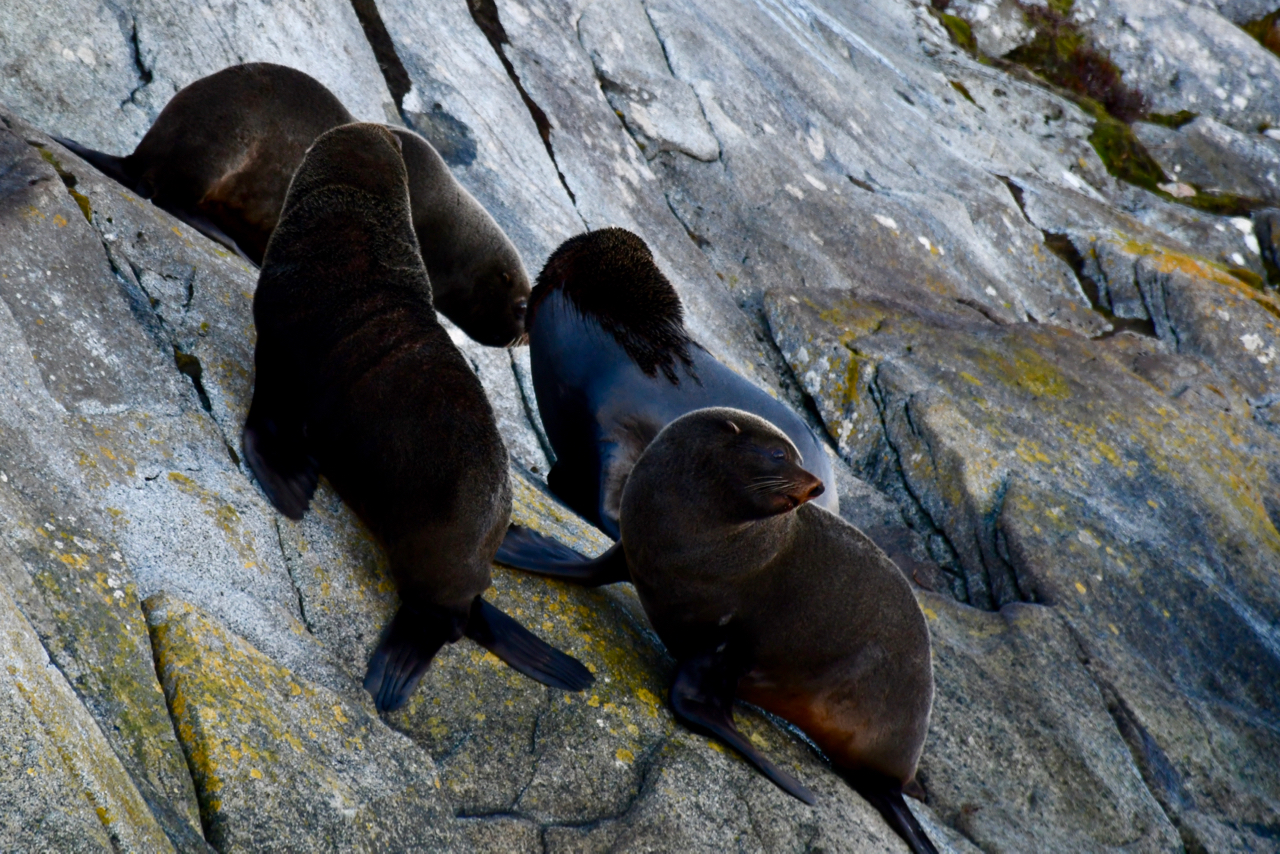
Somewhere near my heart, the overture to the film The Children of Captain Grant is playing. The sun hangs so low that its rays do not reach the middle of the channel. Closer to two in the afternoon, the northern mountain slopes brighten up as the light reaches them. A little fishing steamer is setting crab pots along the shore. The fishermen, dressed in orange suits, rhythmically throw overboard traps connected by rope and buoys. The boat sounds its horn in greeting; we smile and wave. We warm ourselves with lemon tea and sunbathe. Groups of sea lions, all of which we collectively call seals, keep appearing first beside the yacht, then along the shore. It would be a sin not to pay a visit to a large colony on the rocky coast, and the captain takes the boat so close in that you could jump ashore from the bowsprit.
Sea lions
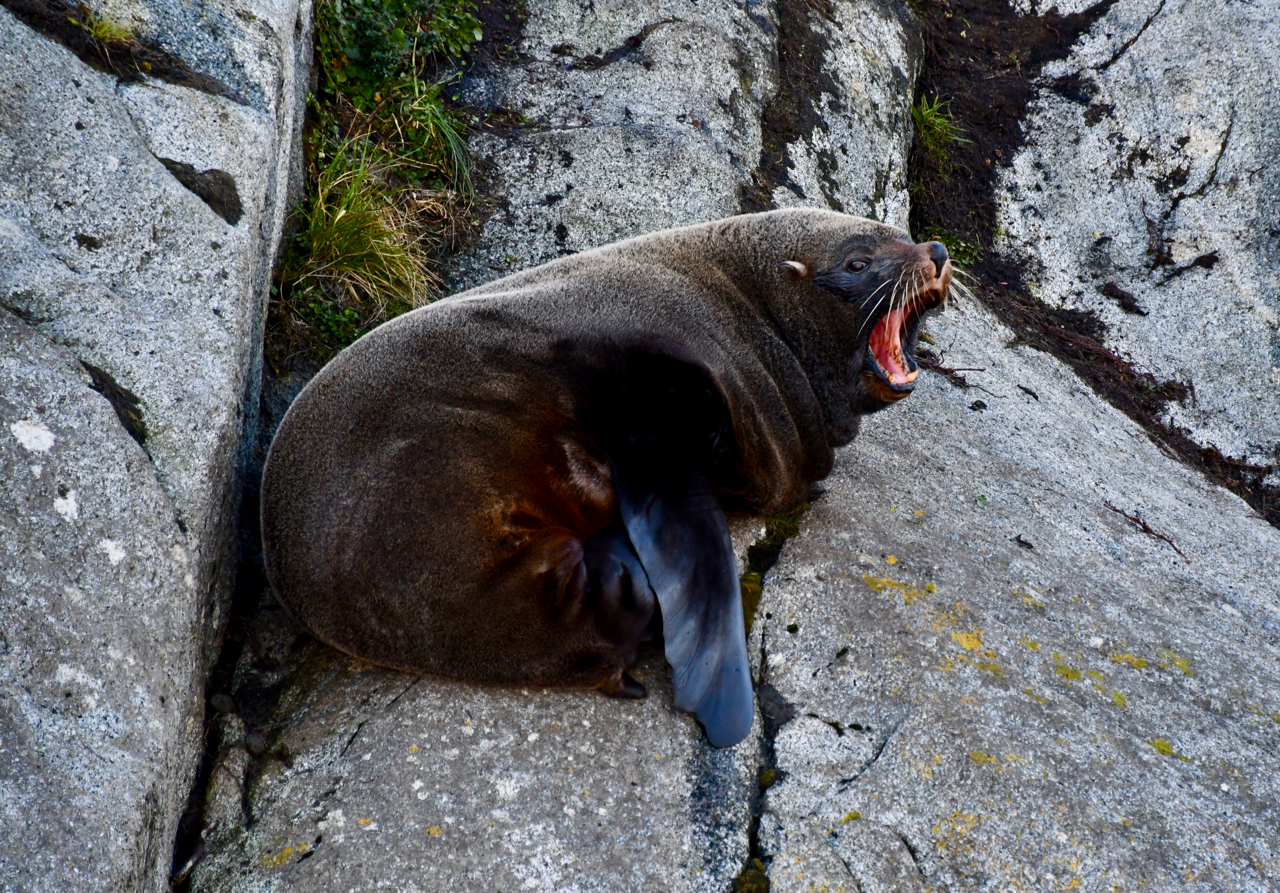
The lions put their nerves to the test. On our first approach, the most timid ones flop into the water. Some stare tensely at the aliens—that is, us. Others couldn’t care less and carry on grumbling, dozing, gawping and squabbling among themselves. On our second approach, with our bowsprit even closer to the rock, an elderly lion snorts and roars menacingly; I even worry that, in his righteous fury, he might leap aboard and nip me on the leg.
Our young sailor is delighted. Though they don’t smell too great.
Here he is, the fearsome lion
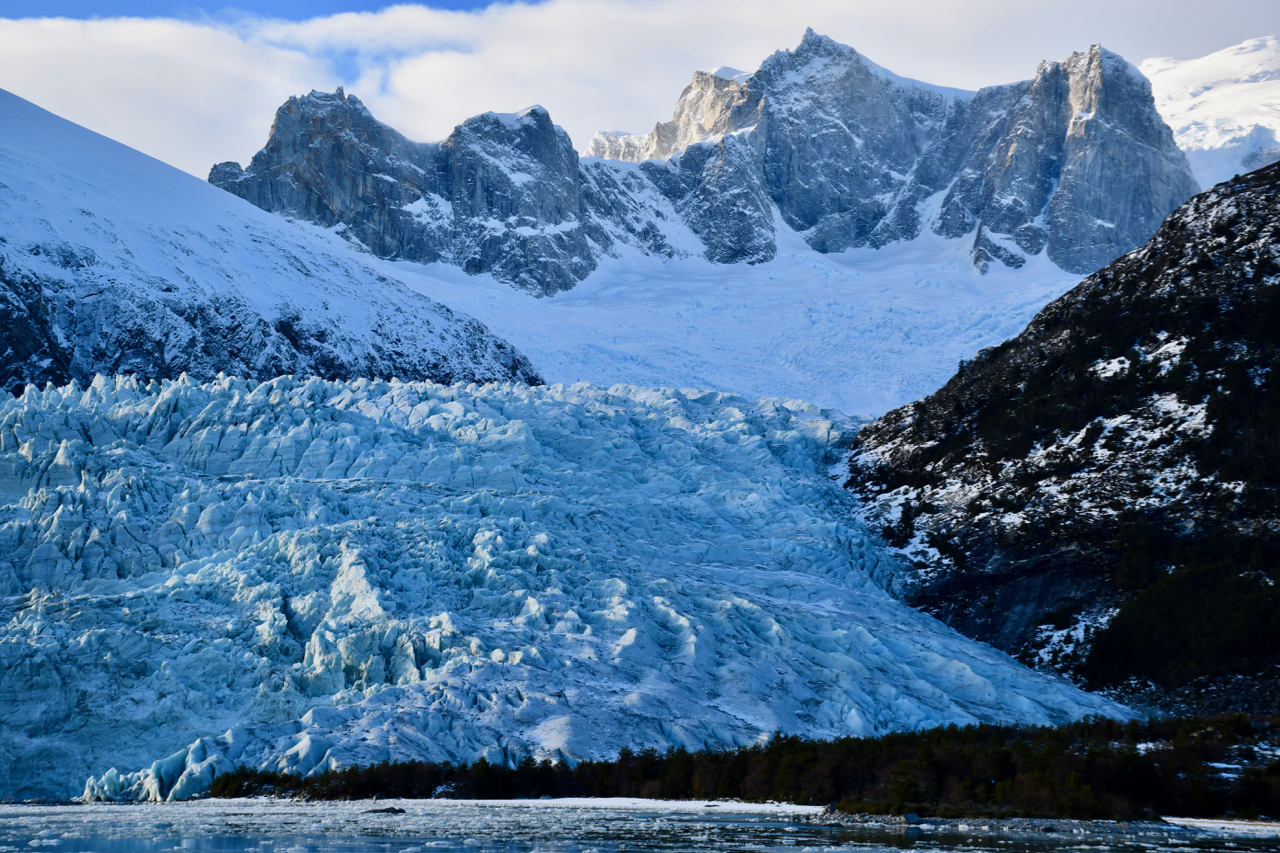
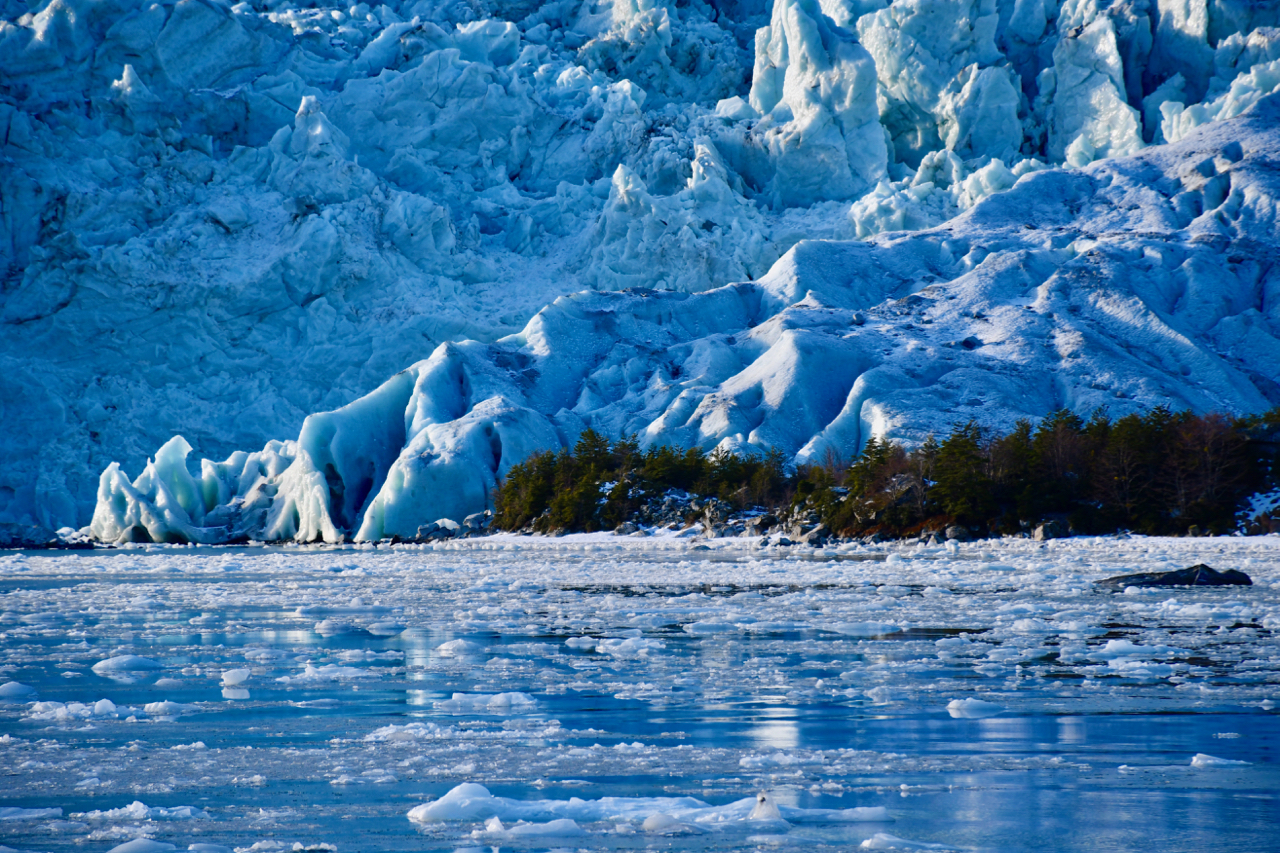
We leave the lions in peace. Waterfalls plunge into the channel every half-mile. The mountaintops are white, and glaciers slide towards the water, filling it with broken ice and little icebergs. In places we pass through belts of ice, just like in Antarctica. Except that there are no beech groves on those shores. Their greenery sometimes makes us doubt that it is winter now. Though how else could you explain this cold? Well, not cold-cold-cold, of course. But it is about 2 degrees below zero in the shade.
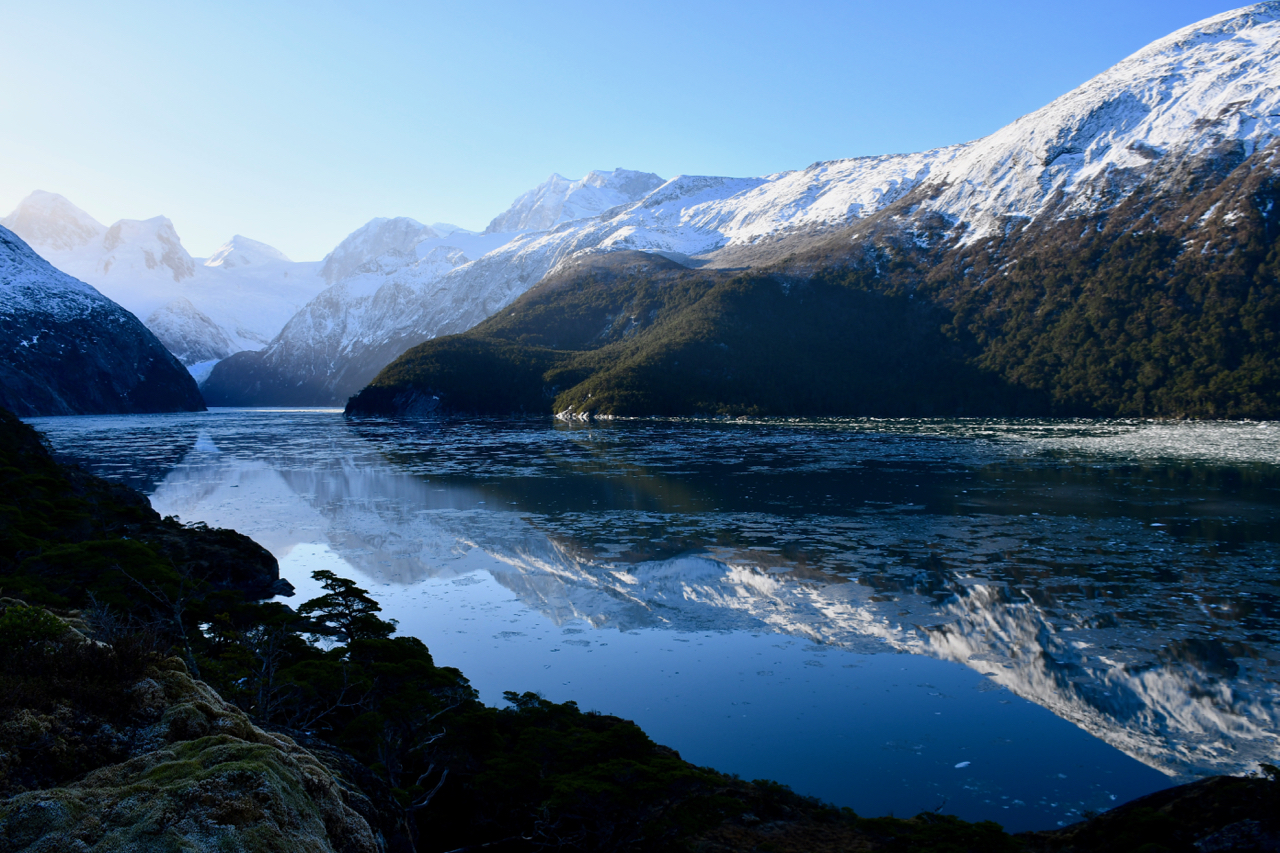
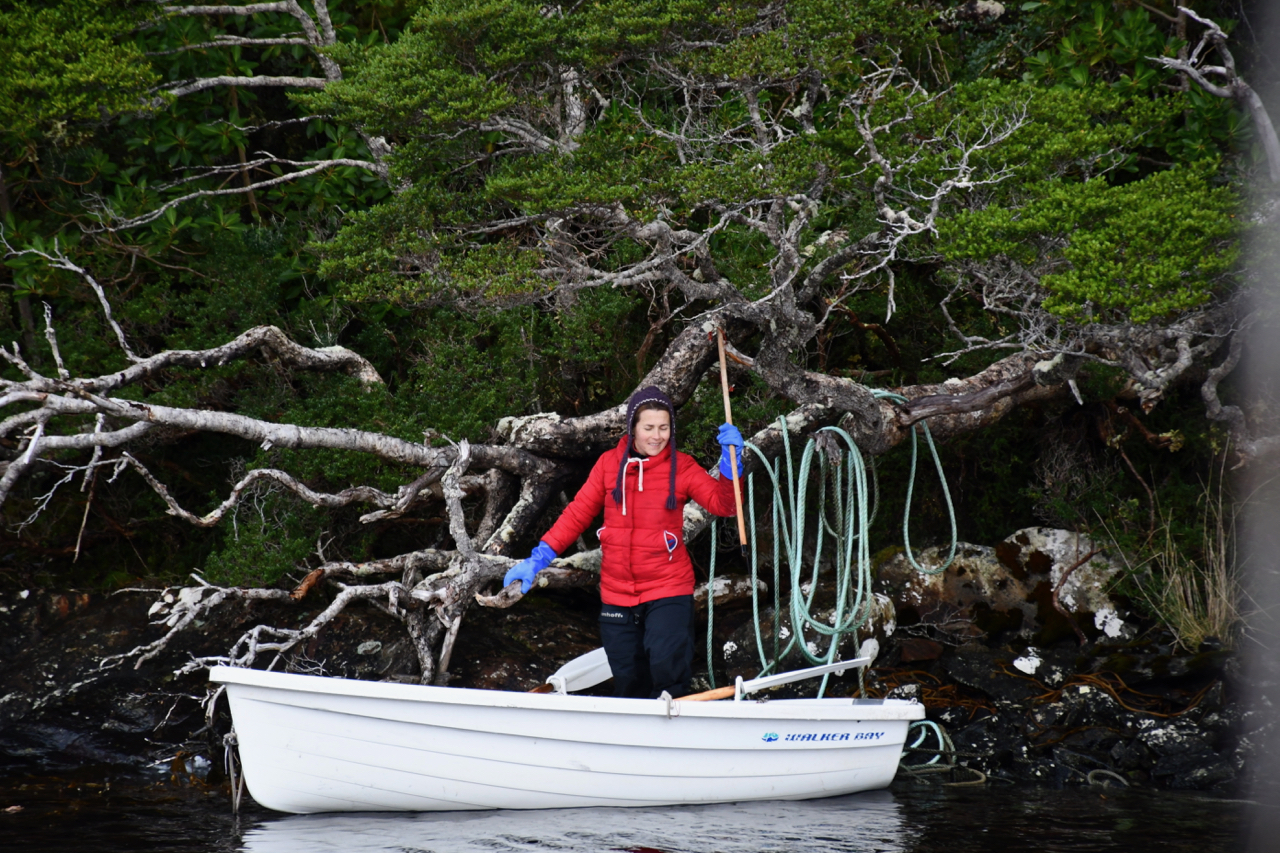
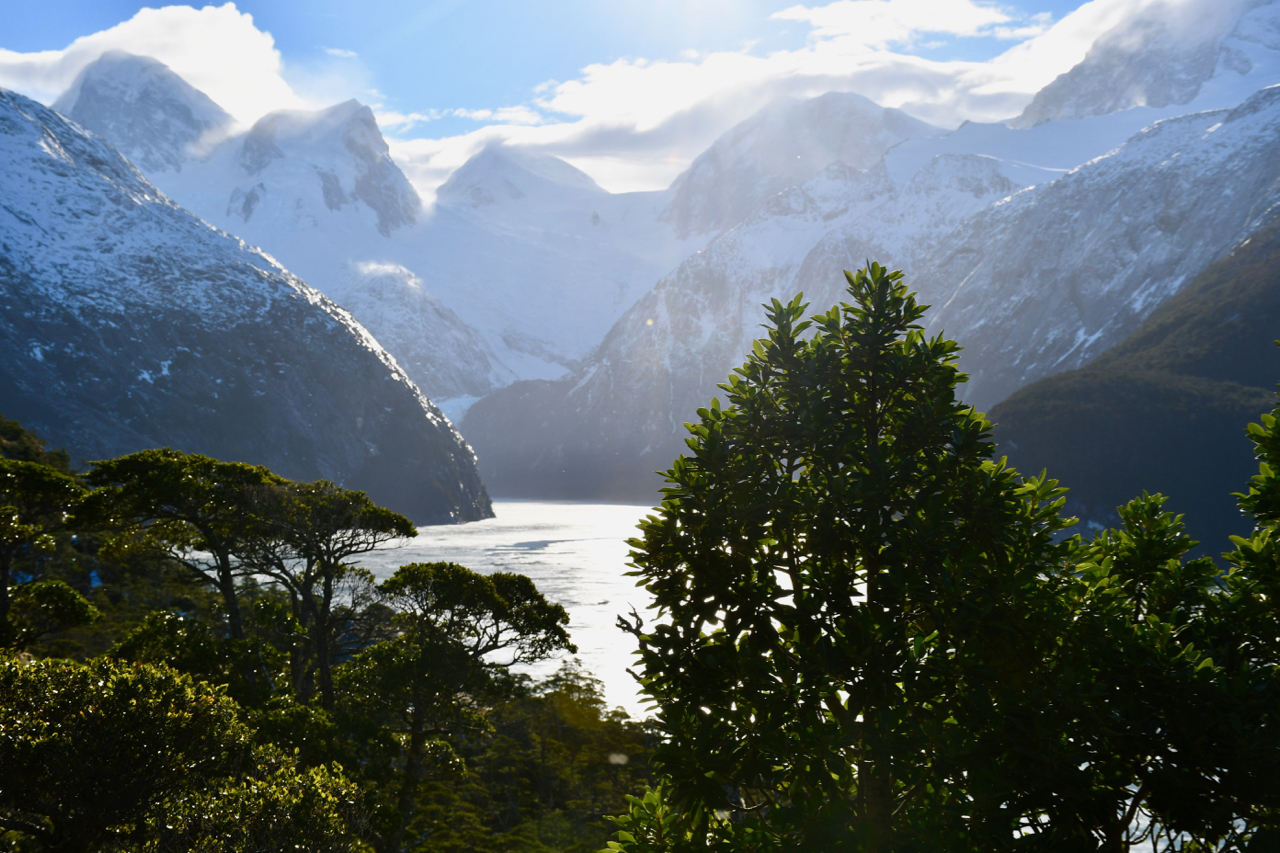
And here is the first proper fjord on our route, a branch about 15 kilometres long called Seno Pía. Each of its arms ends at a glacier or an extraordinarily picturesque cove. We stop in one of these for the night, secured with shore lines. That means that I will now row ashore, trailing a hundred-metre floating line from the stern. There I will tie it to a tree and return for the second one. Nastya pays out the line, while the captain helms.
I couldn’t resist climbing up a hill. And before sunset I managed to drag everyone else out for a walk. The sun drops rapidly, and within twenty minutes a sunlit shore becomes dark. And the fjord... Lord, thank you for this beauty. For as long as possible, almost until dark, we stay on deck, absorbing every detail, every smell and sound.
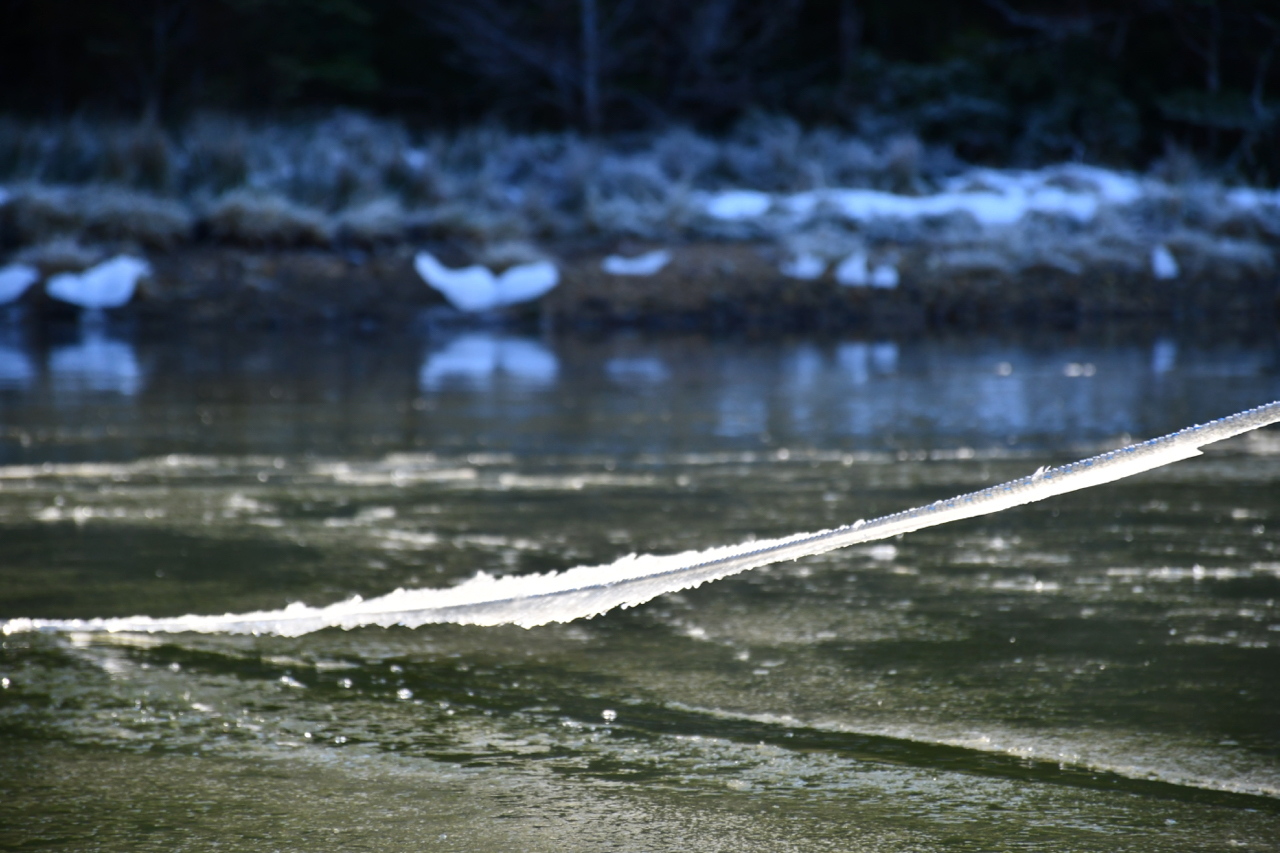
Towards morning, something periodically rubs and clatters against the stern. By 8 a.m. the boat has chilled down to +5, even though we only switched off the heater at midnight. We run it for about eight hours a day. But this was a cold night, which is why we woke up... in the middle of an ice rink. Literally on an ice rink, not merely in a slush of ice floes. We climbed down into the dinghy; the captain could not break through the ice with an oar and concluded: “That’s it, girls, the outing’s off.” “What do you mean, off? We still have to go ashore for the lines!” The captain soon realised himself that we would have to get ashore anyway. We hauled ourselves along the line, wrenching it free from beneath the ice, and had a great time on the way, dodging splashes, chunks of ice and the thick, wet rope.
The slopes are covered in hoarfrost or a thin crust of ice. The crags, adorned with twisted little trees, shrubs and mossy stones, are somewhat reminiscent of the landscapes of Karelia. Add Norwegian-style narrow inlets between sheer green walls, and you get Chilean southern Patagonia. The girls amuse themselves by breaking ice in small, deep pools. Large sheets of ice, big enough to fit into a window if you wanted, come crashing off the rock with a crystalline ring. We climb higher, onto yet another boulder overgrown with so many kinds of evergreen plants—and even berries—that once again I have to remind myself that it is winter now, not summer.
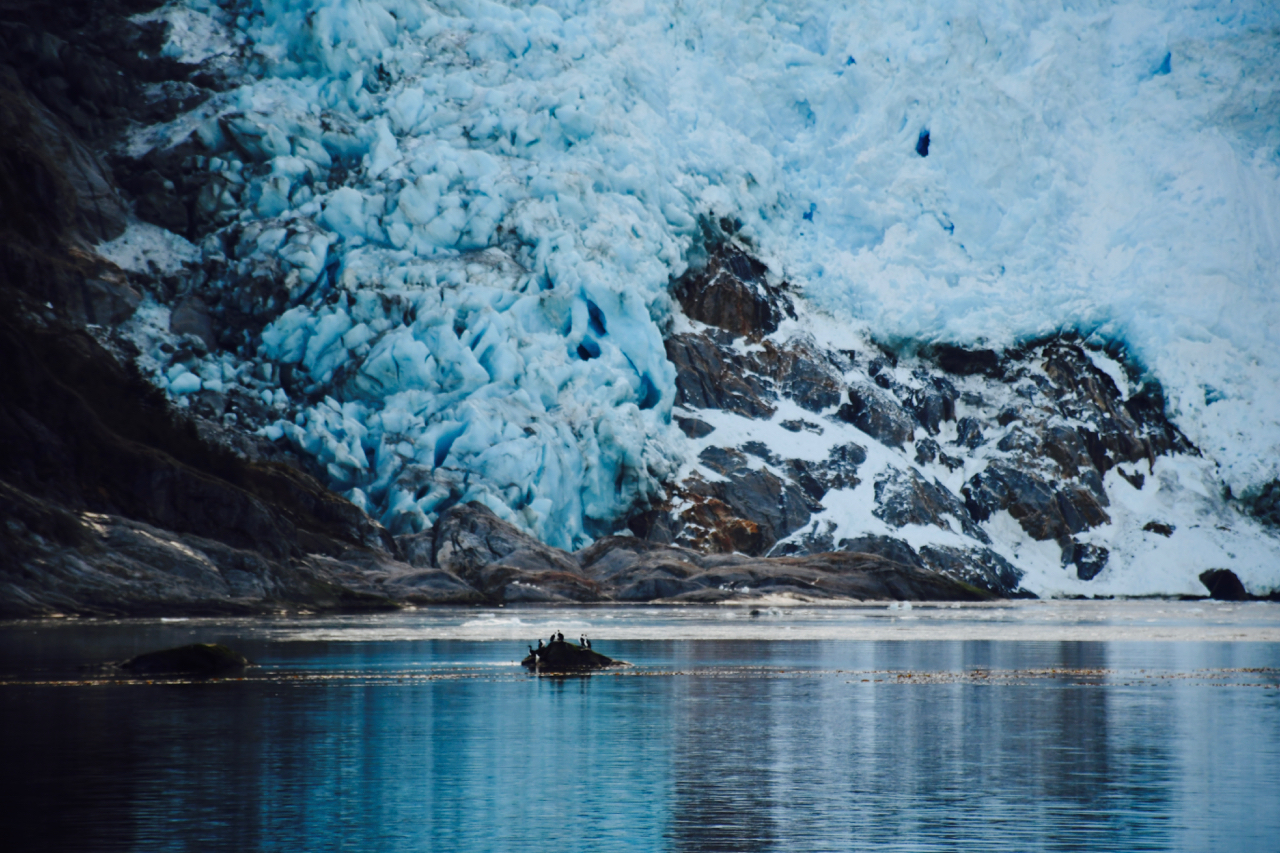
Once we have internet, we’ll post photographs. Perhaps they will convey at least a faint glimmer of this magic. After our walk, we make our way through the ice into another arm of Seno Pía Fjord, towards a glacier that cracks ominously and periodically drops a scattering of small icebergs into the water.
It grows colder near the glacier. Lions trumpet and roar from all sides. But only one colony, on a rocky ledge, is visible to the naked eye. The blue serac towers look like medieval castles in places. To starboard, along the shore, stretches the moraine of another glacier, covered in stony dust and therefore grey. I saw glaciers like that in the Himalayas. But for some reason there were no blue ones there, like those here or in Antarctica.
We make a couple of zigzags close to the blue ice and then withdraw into a sheltered cove. It is dangerous to stay by the glacier: it may calve. At the entrance to the quiet inlet, Lady Mary sighs as she icebreaks her way in; ice up to 3 cm thick scrapes the antifouling paint off along the waterline. The thin layer undulates and bends with the gentle swell but does not break. Today we are once again secured with shore lines, but veery close to the shore. Through the ice, though. We even manage with a single 120-metre line, looped around a tree.
But getting ashore in the dinghy— now that is quite an attraction. After I had splashed about and laughed myself silly without making much headway, I called Nastya for help. Because it is impossible to smash into the ice with a club made from an oar and row at the same time. Nastya rows—if there is water beneath the oar, of course, rather than solid ice—while I wield the club: I drive it into the ice and pull us shoreward through the hole. The dinghy reluctantly crawls onto the ice and crushes it. Then I swing again and once more drive the shaft into the ice.
The dinghy rocks, we balance and roar with laughter. Half an hour of exercise, then the long-awaited “Hooray!” There it is, our dear shore! And the tree, and the line, whose end we drag back, trying to follow the channel we broke through the ice. Afterwards we all have dinner together on deck, despite the touch of frost. Because these ringing cedars—I mean beeches—of southern Patagonia are some kind of ancestral call, guys. You simply can’t tear yourself away. You dissolve among the gnarled trunks, tiny leaves and the tentative squeaks of some little bird.
Incidentally, it squeaks more actively when our young sailor whistles her songs to it. “That’s how we talk, and she understands me!” Ladunya is certain. And indeed, the bird falls silent when our young sailor stops chirping.... In the morning, we set off on a hike up the mountain. Along a path that is difficult to spot at first, all the way to a little summit whose edge it is hard not to fall from. But it is even harder to resist the temptation to step right out onto the very edge. You want to fling your arms wide and fly. Ah, if only we had a quadcopter.
Seno Pía Fjord
We’re eagerly waiting for the shore team to send us your comments. Together with messages sent through the website and by email, they are our only connection to the world of people. For now the Armada de Chile has fallen silent; the radio is quiet, or only very, very rarely erupts with the voices of unseen fishermen.
Friends, the Iridium track should be recording by now. It’s on our website under the Route tab. Many thanks to Andrey Shtykh for fixing the website’s main glitches! The map with the Iridium track is also available at bit.ly/iridium360.
Greetings from the end of the world. We are still heading towards the Strait of Magellan. Thank you for being there for us!