
From the Travely-Family archive · Central and South America
How Wonderful That We’re All Here... The Las Perlas Archipelago
An original publication from the former Travely-Family website. This English translation was preserved from the technical-site archive without editorial rewriting.
How wonderful that we’re all here... The Las Perlas Archipelago. Why the islands were called the Pearl Islands, and how much the world’s most astonishing pearl is worth. Night and songs
In the 16th century, the Spanish discovered these remnants of ancient volcanoes and, on them, an incredible abundance of pearls, which the naïve indigenous people traded for European trinkets.
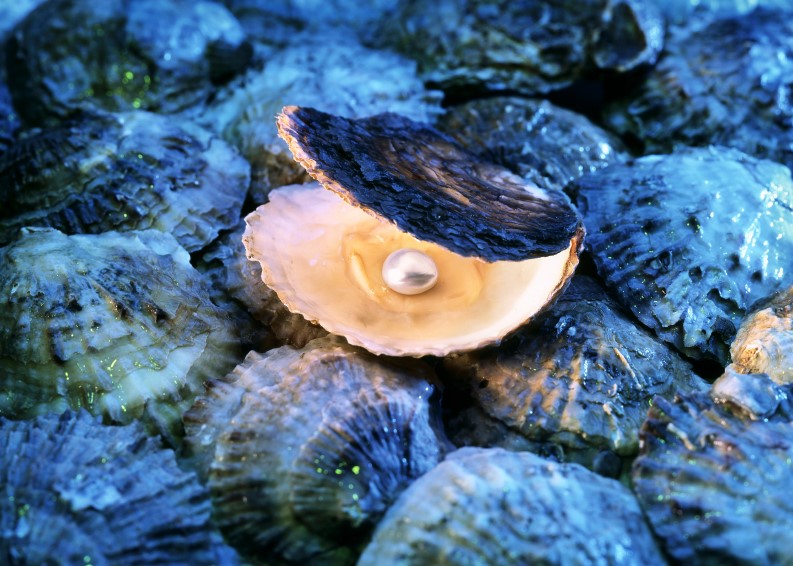
And so the archipelago was named the Pearl Islands (from the Spanish Las Perlas—pearls).
The 31-carat Perla Peregrina (meaning the Pilgrim) was found in Las Perlas—a grandmother among pearls. The treasure was discovered by slaves about 400 years ago. They say the pearl got its name not because of a passion for travel, but because of its unusual shape. Until 2011, the precious old lady of a pearl belonged to Elizabeth Taylor, and once the actress’s beloved dog nearly swallowed it. The two of them even had a bit of a quarrel over it.
Before Liz Taylor, the treasure was owned by the august Spanish monarch Philip II, a French emperor (which one, I wonder?), and an English queen. At an auction held after the great actress’s death, on December 13, 2011, the “Peregrina” fetched 9 million euros.
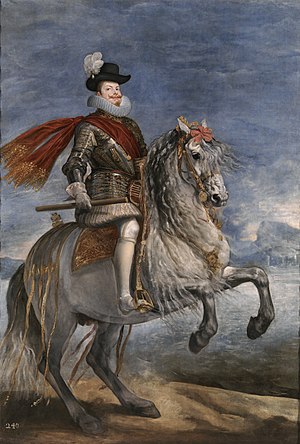
King Philip III of Spain, portrait by Velázquez. The “Pilgrim Magenta” pearl is on his hat.
No, we didn’t even try to find anything of the sort here, though of course we had our dreams. The colour of the water wouldn’t allow it:). For some reason, instead of the expected azure, it had such a cosy, homely, Russian-style brown murkiness. This oddity with the water naturally put paid to any spearfishing as well. And the rays, turtles, whales and dolphins went on playing blind man’s buff without us for the time being:).
Passage from Taboga
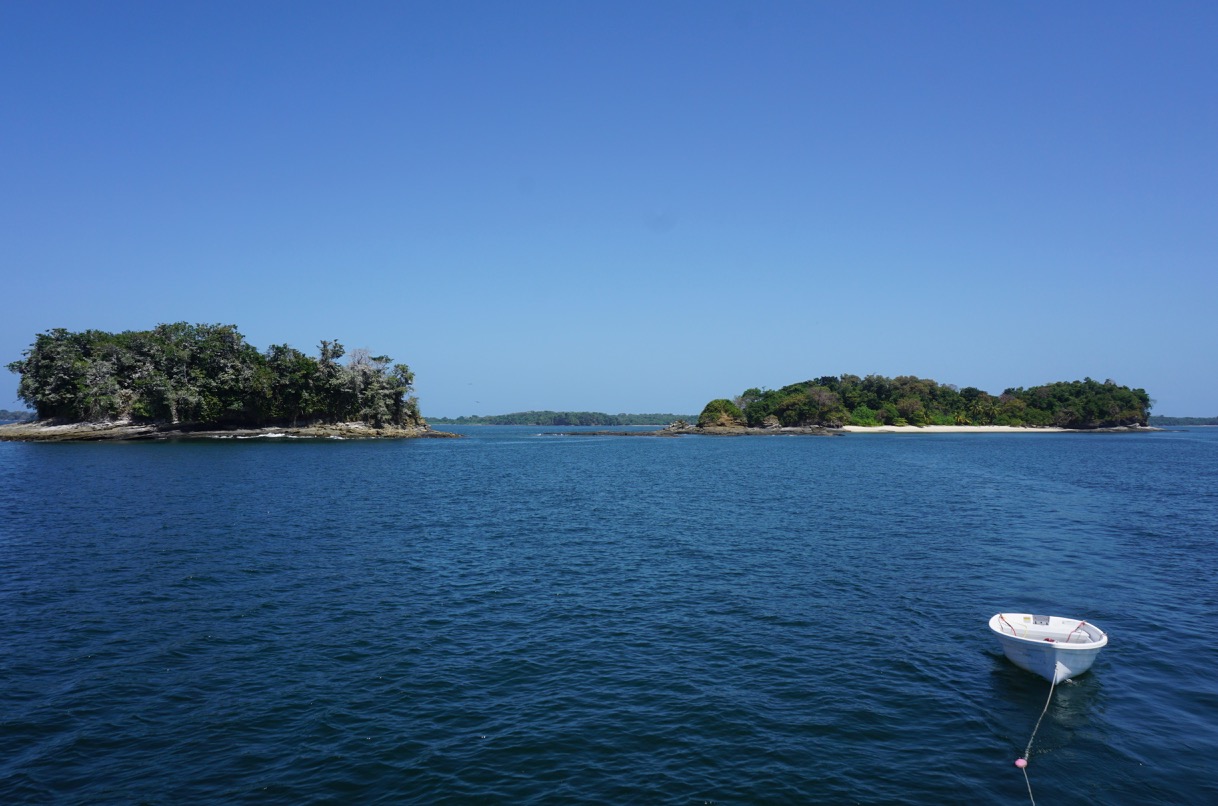
The night was beautiful and starry. The little town of San Pedro on the island of Taboga, with its spit that disappears at high tide, looks very cosy and sleepy.
We weighed anchor at dawn. Today’s weather was a gift from God. A fair wind, almost no swell, and by half past three we were already entering a bay on Pedro González Island. A small village nestles in the north-west of the island, but we rounded the headland meant to shelter us from the wind and anchored on the opposite side.
The wind, incidentally, was gusting briskly up to 22 knots. It also cooled the ardour of our conversations to the point of “Put on a hoodie!” And the stores of warm clothes that had lain unopened for a year were excavated from the depths of the yacht.
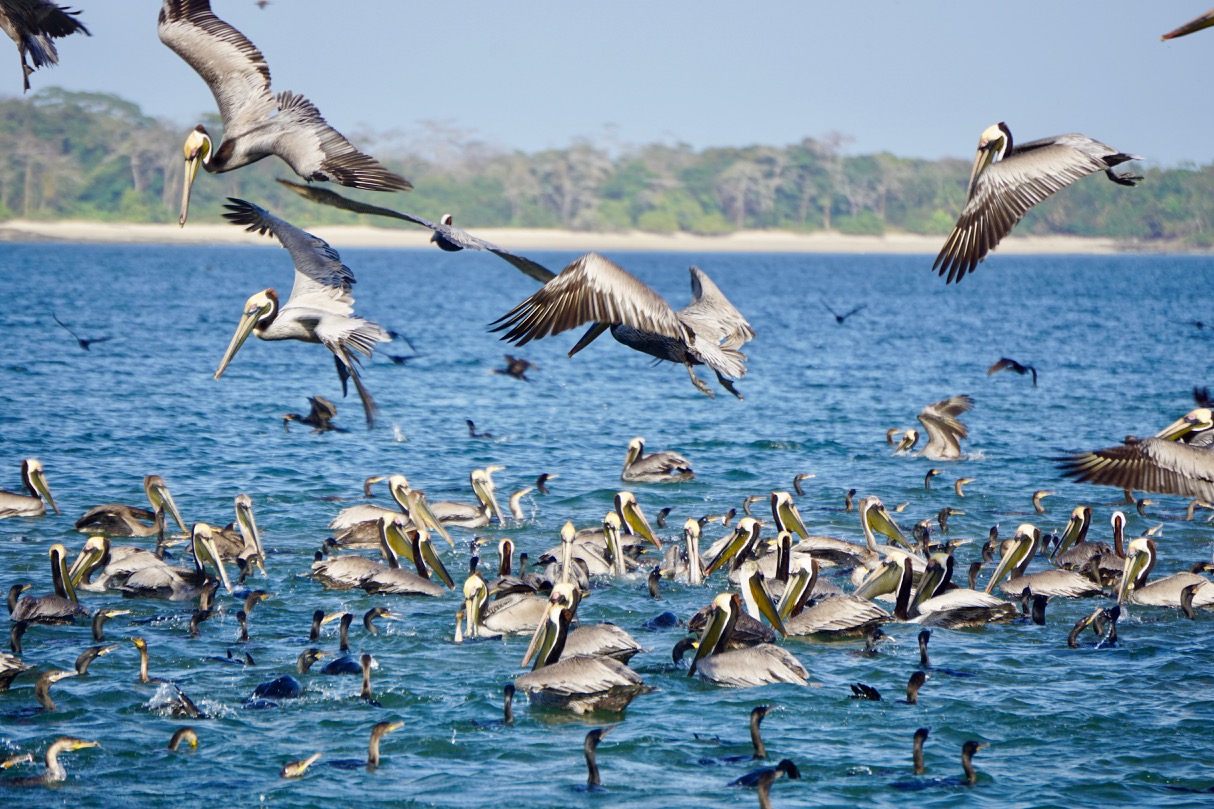
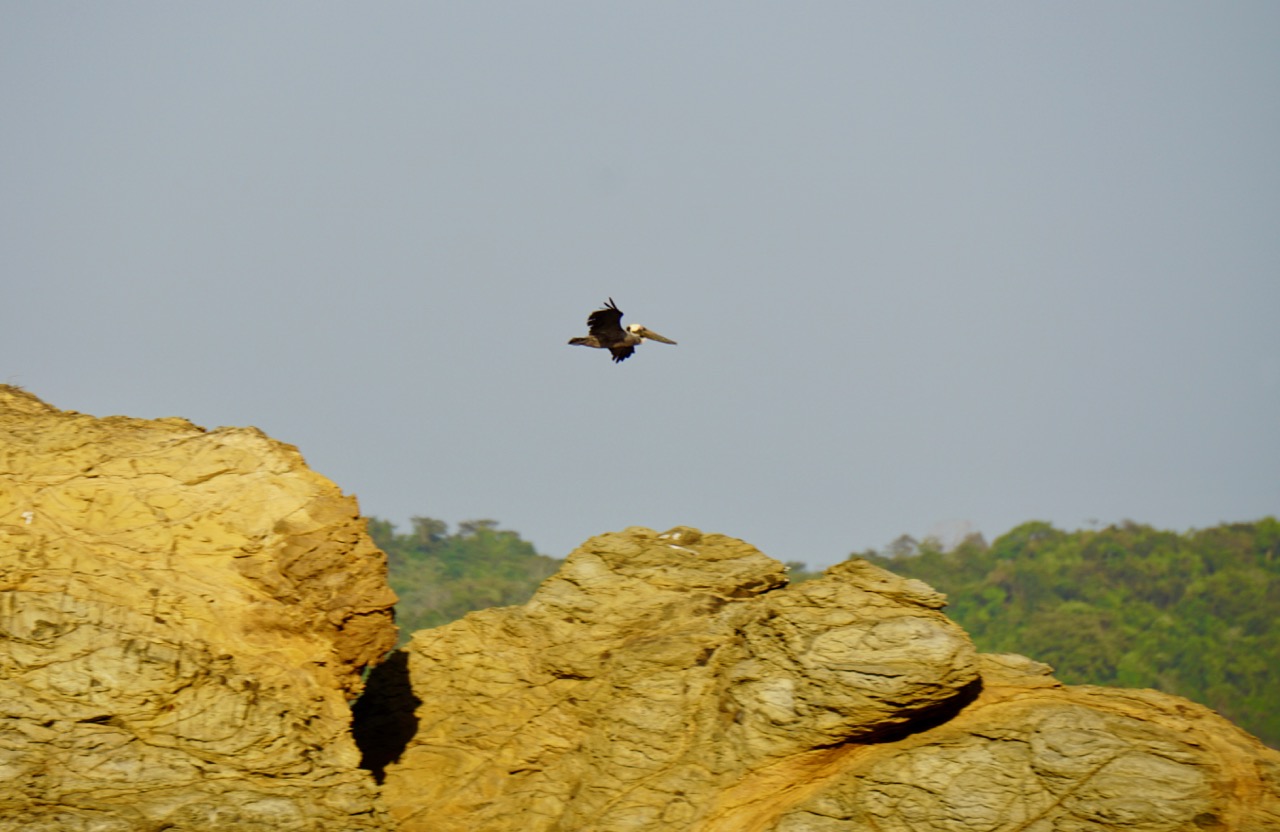
Pelicans soar overhead, diving from every direction, dropping like stones after fish visible only to them. High, high above, barely discernible, the occasional frigatebird circles; from time to time, white and grey herons lift away from the beach’s slender crescent. In some places there is a hubbub of birdsong, interspersed with moments of silence—nothing but the surf.
The bay is somehow reminiscent of magical, palm-fringed, sandy Englishman’s Bay on the island of Tobago. At the north-eastern end of the bay sits a high islet with steps and a concrete cross on top. It was right beneath its sheer cliff that a gust of wind would capsize the sailing dinghy the next day; the captain would survive and spend a good hour searching the seabed for our sunken treasures.
Low tide turns the beach’s slender crescent into almost a half-moon, while at high tide the moon disappears and the mountainous south-western headland becomes a separate little island.
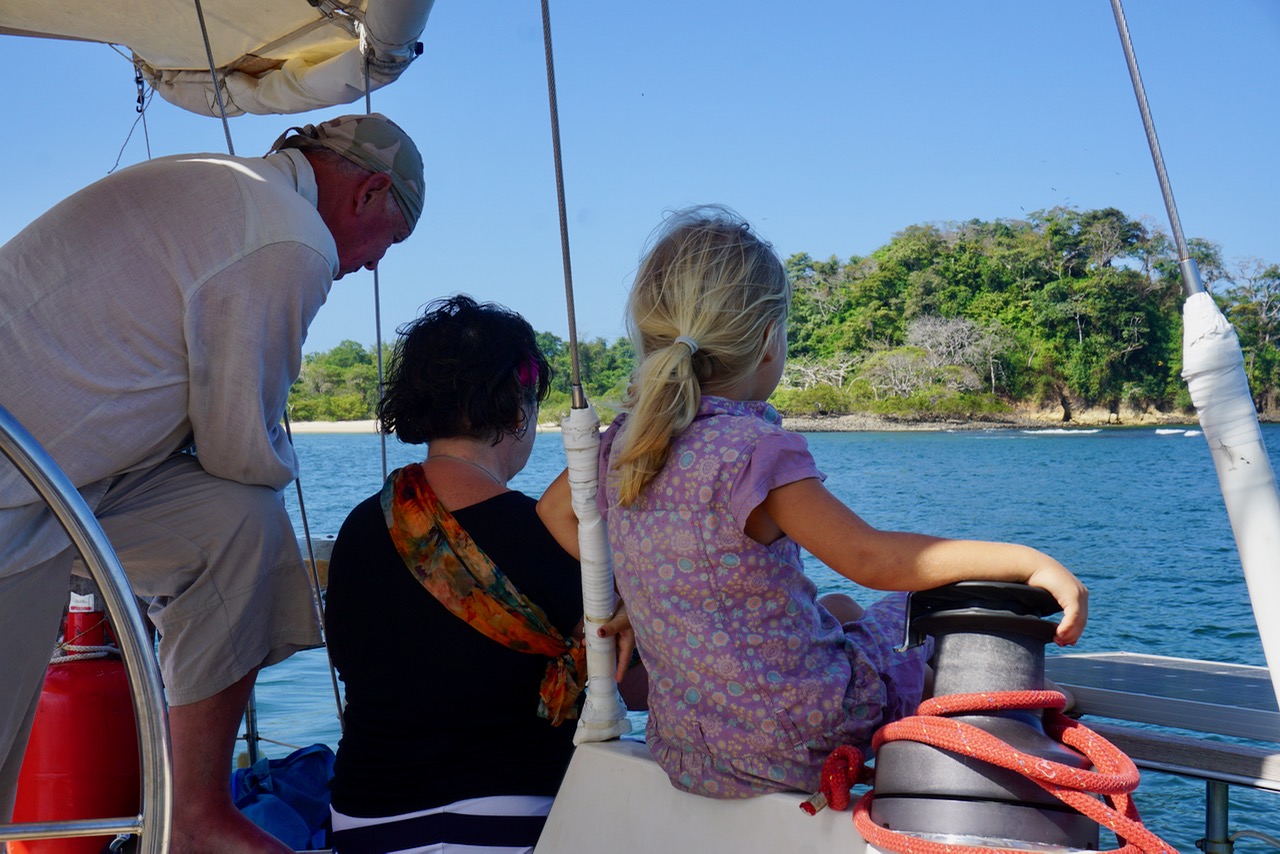
It will soon be getting dark—time to take the guitar out of its case. Russian bard songs drift through the evening gloom of the bay, the pelicans fall silent, the waves listen. And all around us are the familiar campfires, the outdoor adventures of our youth, mountains and friendship—in the voices of three generations: the children; us, the parents; and our guests, whom the children christened their adoptive Colombian grandma and grandpa. No one has spoiled us like this abroad for a long time:). That evening, we all feel an incredible sense of togetherness and the winds of boundless roads.
Elena Stepanovna is delighted to stay and sleep under the stars—and how does she keep from falling off the bench? She is very pleased. And I’m very pleased that they have brought such verve and liveliness into our quiet, stay-at-home routine.
Morning in a pine forest 🙂
In the cockpit, Lada and her “Colombian grandma” chant Spanish words together, busily making cards with the Spanish and Russian versions and pronouncing them with such enthusiasm that all of us immediately want to learn something too. E.S. says, “Ladushka, you and I must get through at least ten lessons this week (!).” She teaches in such a cheerful way, using associations. At this rate, our young sailor will soon be our interpreter too:).
We had coffee and hot sandwiches for breakfast in the cockpit and started getting ready to go ashore. Andrey rigged the dinghy with sails, and the men set off for the yacht of Christian, a New Zealander, anchored nearby overnight, whom we had been alongside before and after the canal. Christian had unexpectedly turned up at the same anchorage as us.
We wanted to ask whether he might know the secret of why the water here was bottle-green rather than turquoise. And where we could find that very water where all sorts of fish and corals live. Christian shared our bewilderment; apparently, he too had been looking for coral and pearls to fill his holds, but had found none—you couldn’t see a thing. We had no choice but to blame all the murk on the wind, the season and the currents.
Since there were no underwater wonders, we would have ourselves a brisk, high-speed swim to shore. The girls, Elena Stepanovna and I put on masks and fins and leapt into the invigorating water....
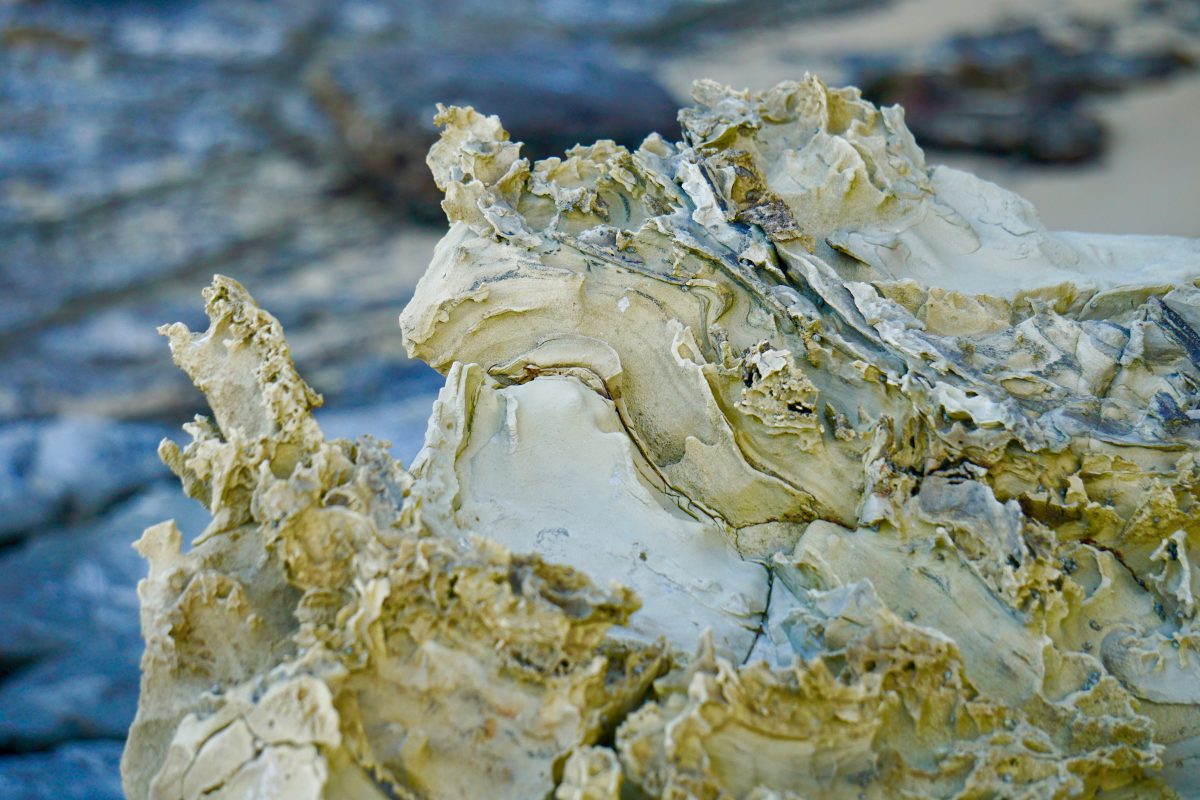
And ashore we studied geology and volcanology, glued ourselves to strange fragments of lava, met a ranger, walked barefoot over gravel (we haven’t walked over hot coals yet), ate with shells and ground tin cans between stones...
The frozen music of stone. Millions of years ago, it was liquid
To be continued!