
From the Travely-Family archive · Central and South America
What Life Is Like for a Sailor in a Colombian Shipyard
An original publication from the former Travely-Family website. This English translation was preserved from the technical-site archive without editorial rewriting.
A Colombian tropical industrial zone. The devil isn’t as black as he’s painted ). Although sometimes it’s not only the devil they paint, but sailors too
It turns out that a shipyard tucked away deep in the most industrial part of the industrial zone can feel quite like a resort:).
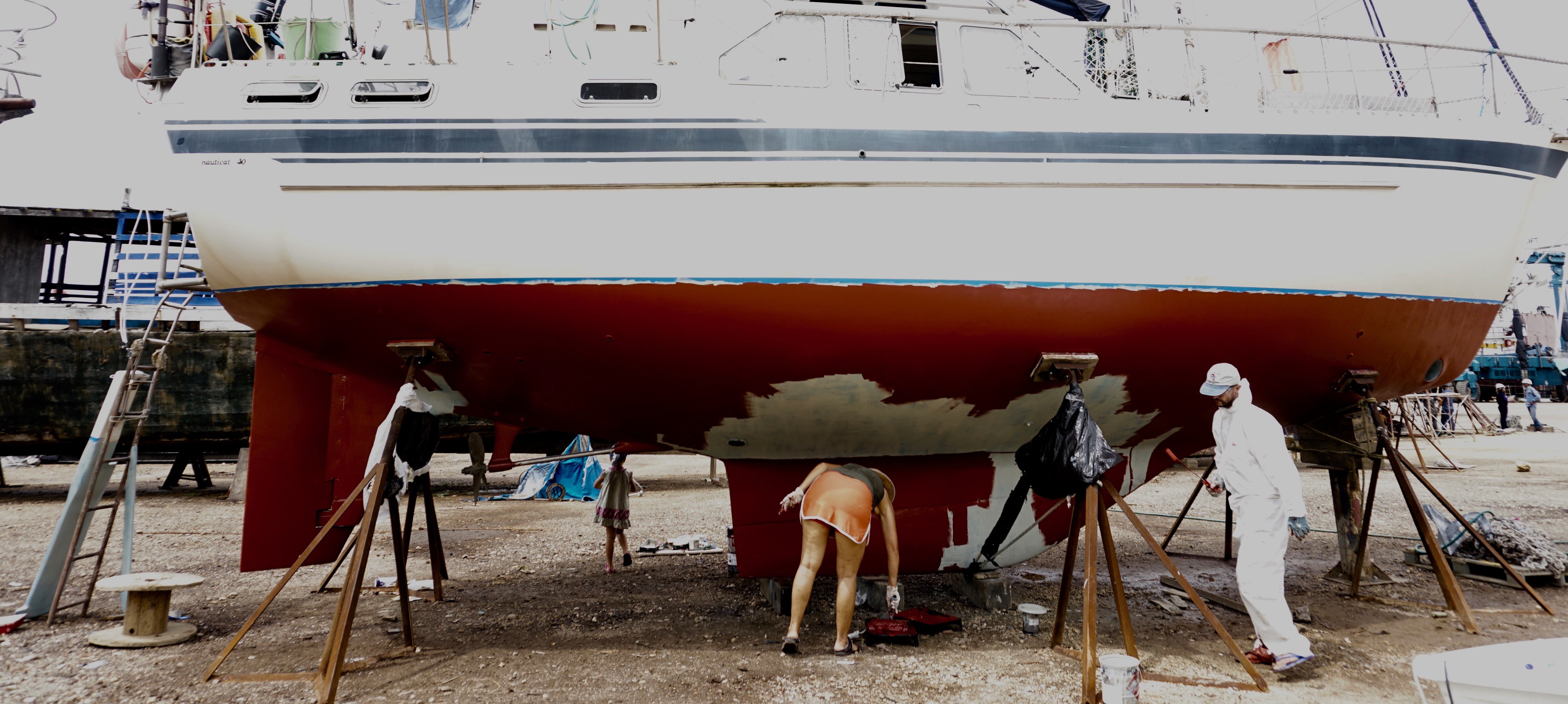
After returning from the depths of Colombia, from misty mountains and waterfalls, we have, strangely enough, settled rather comfortably into the industrial zone. Our days have fallen into a routine: at 7 a.m., using lessons as an excuse, Nastya hurries to slip away to the hut before she can be roped into household chores. But retribution catches up with her by half past eight, and our young sailor trudges off gloomily to paint the yacht. By half past seven, even the captain wakes up from the heat. We hastily eat a piece of fruit or drink some water. Then we climb down to the ground and wield the rollers with four hands, trying to get the work done before it gets really hot.
The process follows the finest traditions of Tom Sawyer—how often do you get the chance to paint a fence? There is twice as much paint as we need, at almost half the price it was in the Canaries. Nobody had any use for our spare half-bucket, so we keep applying coat after coat, increasing the displacement through sheer thickness of coating. We’ll keep at it until it runs out. The label claims that three coats are enough for a whopping 90 months. We’re hoping that six coats will last us about three years....
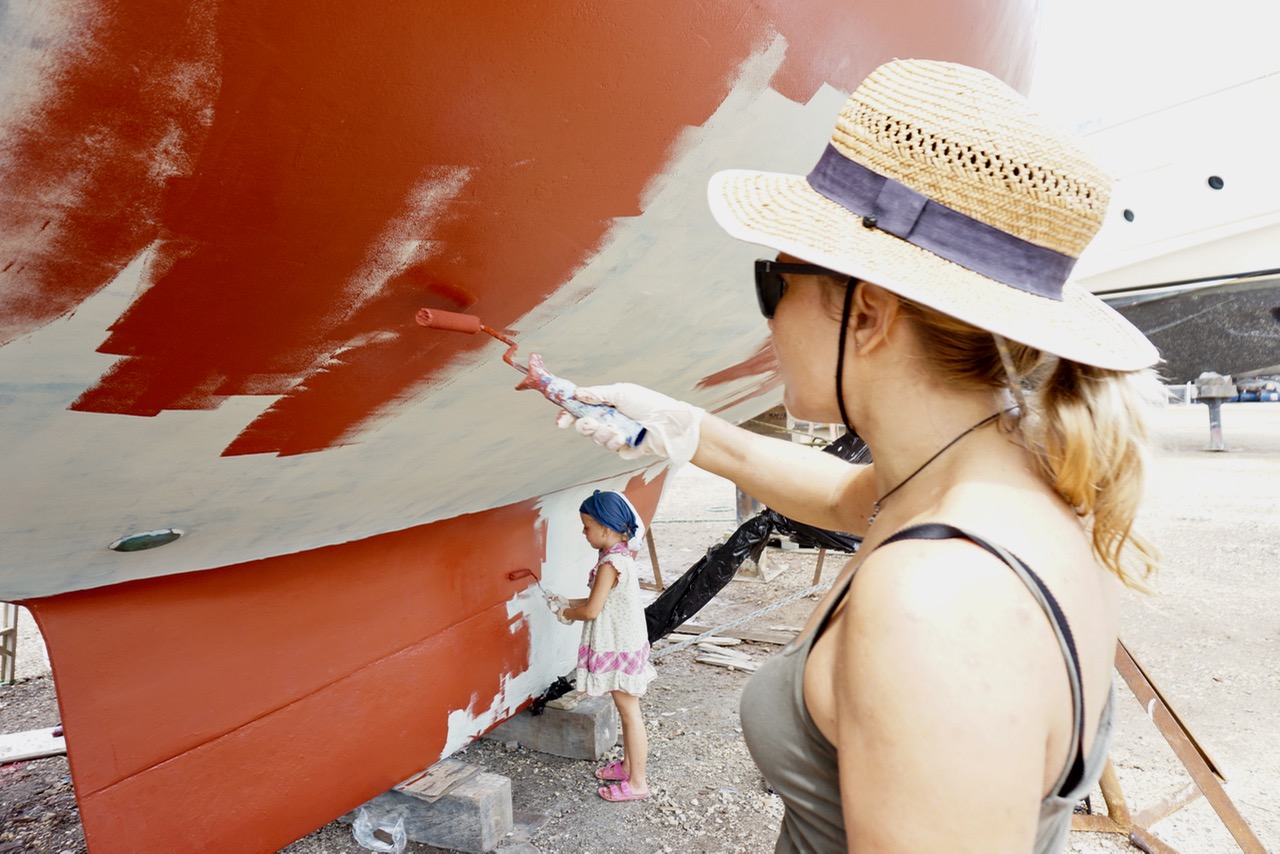
Over the last couple of square metres, the paint thickens as you work, and you smear it across the surface. It flies apart beautifully in fine fibrous strands—this is the essence of the antifouling: particles that slough off. For the moment, though, those particles are attaching themselves to the crew’s bodies, only to be scraped off with fingernails in the shower.
Once you’ve finished the day’s quota of painting, you shoot up the ladder into the wheelhouse, pack water, fruit, coffee, a towel and clean clothes, laptops, cables, flash drives... And before you melt completely beneath a layer of paint, sweat and dust, you run to the air-conditioned hut. After a shower, you stretch out blissfully on the little plastic sofa—if it isn’t occupied—looking forward to cool air, reading, writing and other intellectual labours.
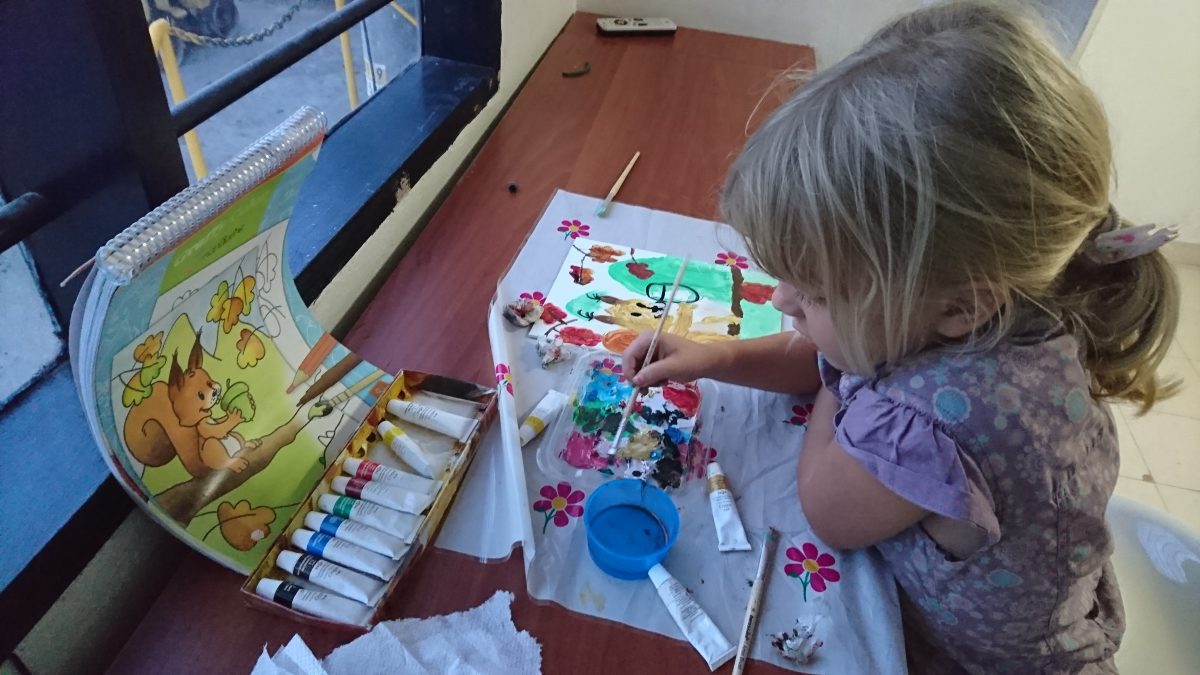
Lada brings a box of Lego or sketchbooks and brushes, plus Ruslan and Lyudmila, which she chose to read herself and has been reciting to us for the second week running. We’ve remembered again who Naina is, and “Shepherd, I do not love you”... We’re following the plot through the junior crew member’s account. It will be interesting to see whether the whole story can be reconstructed from her retellings alone—the work is complicated, studied in the fifth grade, while our junior crew member is only six.
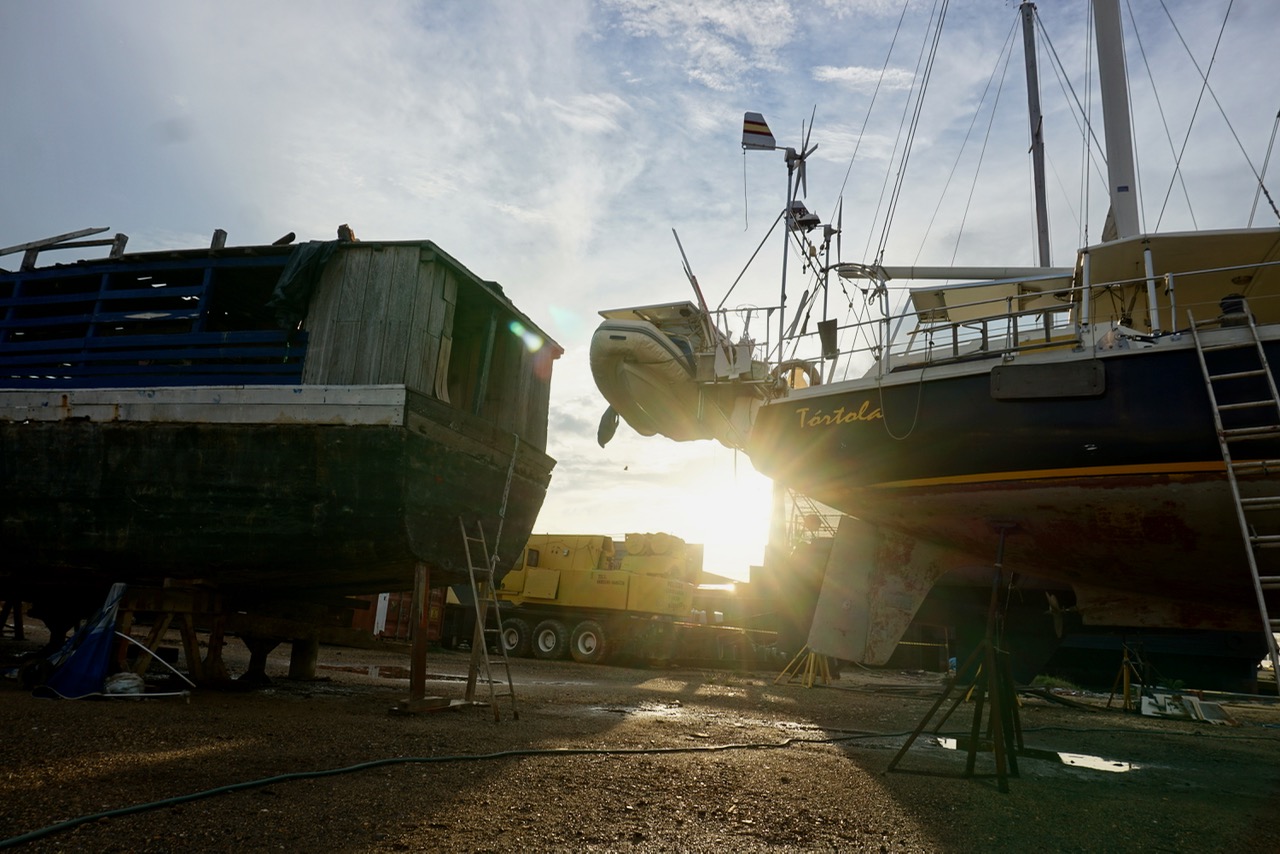
Our neighbours in the communal flat (sorry, the apartments)
The amusing transformations wrought by adaptability: the two-room hut that seemed so uninviting on the first day—“Oh, what the hell, at least there’s air conditioning and internet”—a week and a half later already looks like a sweet little two-room house with all mod cons.
We have fairly divided these apartments between two permanent tenants, while the other “drop-ins” come by for an hour or two, wash off the paint, check in online, and vanish once more into the fumes and their work.
The second permanent tenants are French, from Bordeaux. Their forty-four-foot yacht has already been sitting here on the hard, preening itself, for more than a month, and looks set to remain for another month at least. They even spent three nights sleeping on the floor of “our apartments” once, when the inside of their saloon was in complete disarray. This family crew cruises between Panama, the Caribbean and Colombia. This French boat is an excellent match for us as far as children are concerned: thirteen-year-old Lucie and sixteen-year-old Paco sit over their lessons every day, just like us. I tease Nastya by persistently calling the wide-eyed lad her “bridegroom,” and she gets cross:
“Muuum!”
“What, daughter? He can’t understand what we’re saying anyway.”
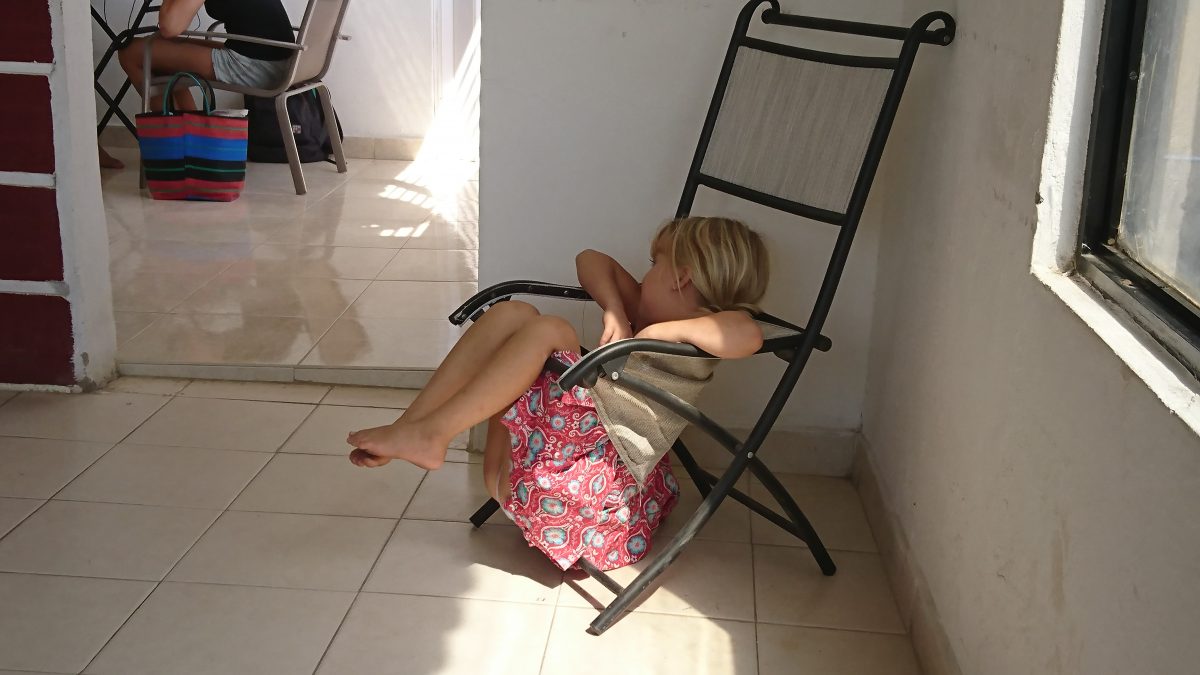
The intimate cosiness deep inside the hut-apartments is captured perfectly by this rather empty-looking photo
For a week, the children silently eyed one another, while secretly coaxing their parents to throw some kind of party so they could make friends under cover of the commotion. Lada was the first to crack: she began flirting and showing off in every possible way—in Tom Sawyer terms, trying to make an impression. Nastya went on eyeing them, but no longer in silence; now everyone was laughing.
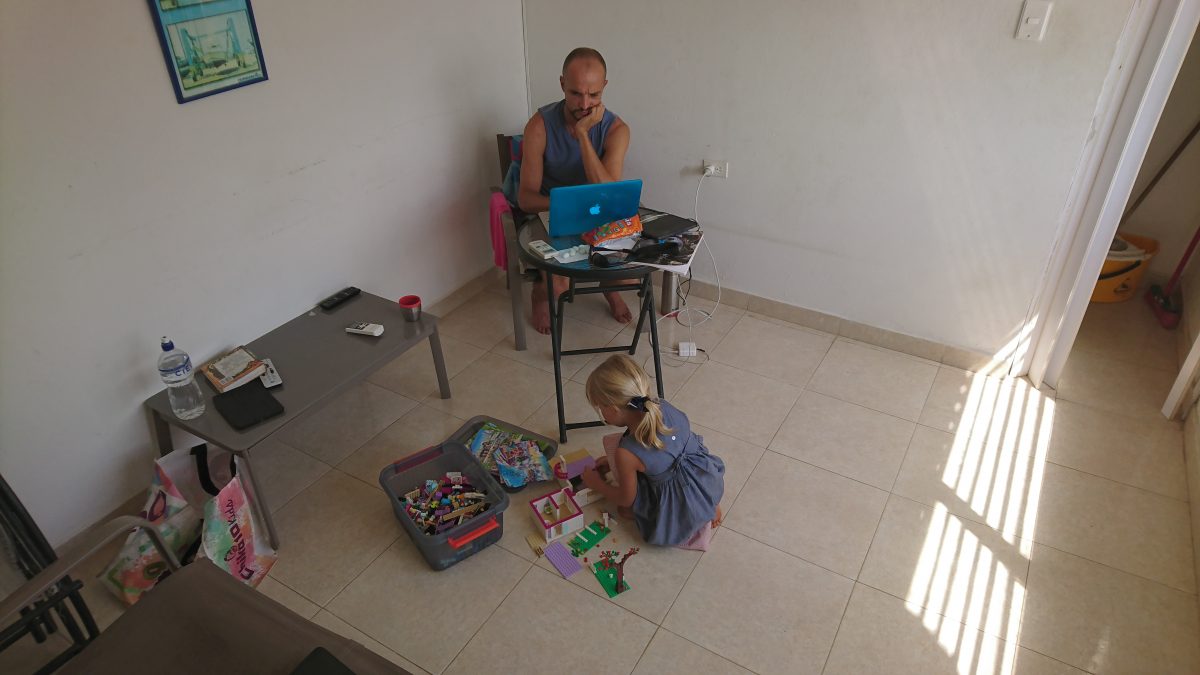
A barbecue in the hut
Then, to cement the friendship, the French invited us to a barbecue. We postponed our evening salsa outing until the following day—we’d been invited by a Cuban from Panama who had studied in Russia during the Soviet era—and prepared to walk over and sit beneath their yacht, but they said:
“Why don’t we just have the barbecue here, in the apartments, at one or two in the afternoon?”
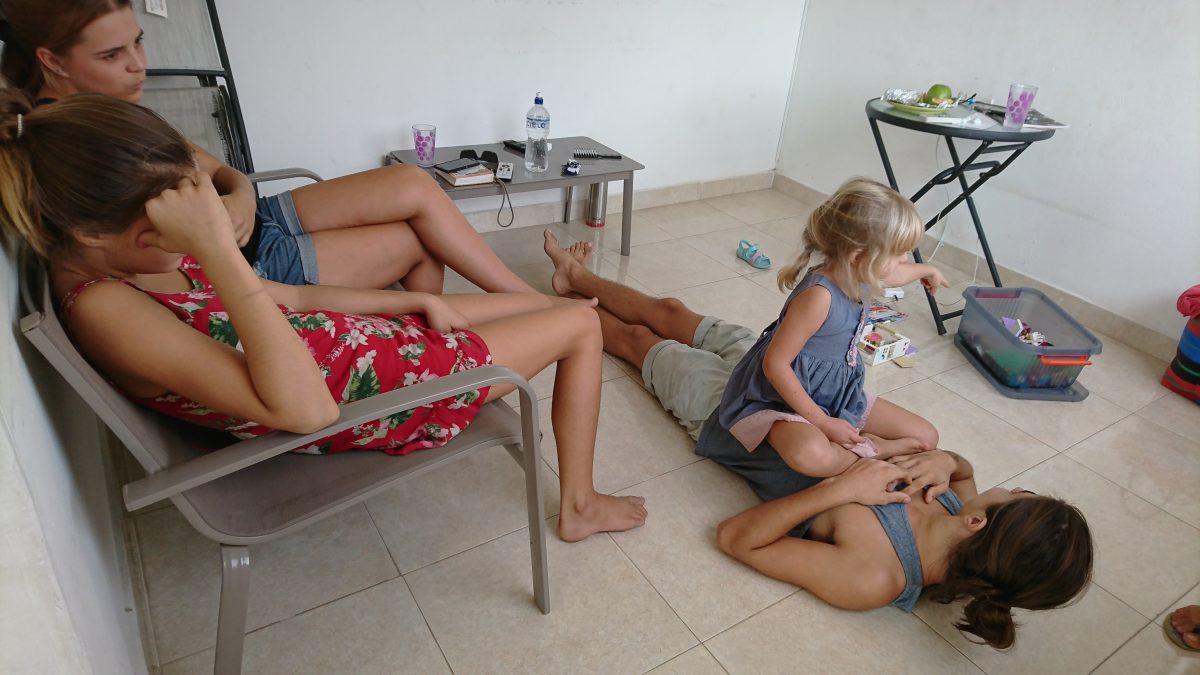
At first it felt a bit odd to us, but then it was fine and we got into the spirit of the feast. They brought a baking tray full of chicken cooked over the fire, wine and salad; we brought fruit and a bar of chocolate, and we all sat down in a circle right on the floor. And, amazingly enough, no strangers came in; we sat there by ourselves until it was completely dark ).
The children assembled construction sets in the next room, ate, and then started rolling around and fighting. The simplest way to overcome a language barrier is to play rough-and-tumble games.
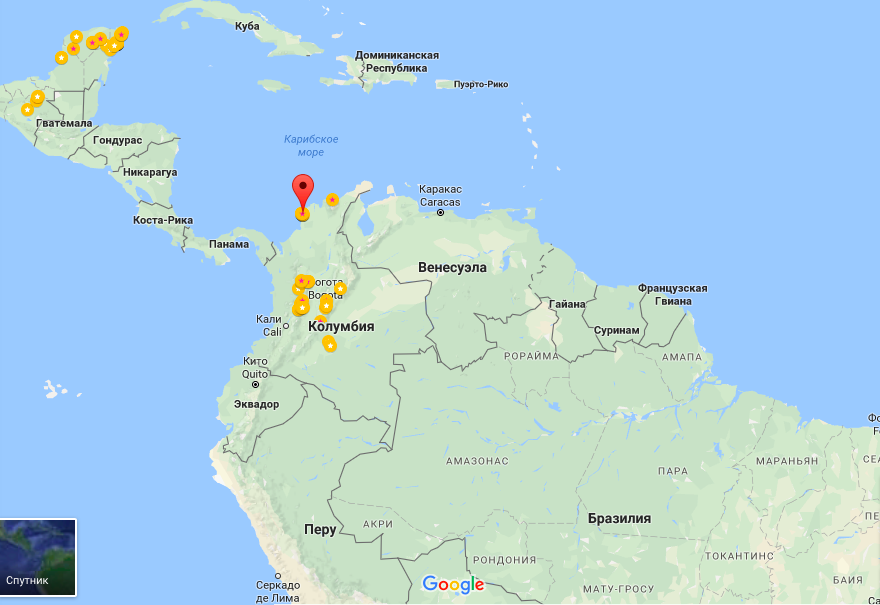
Towards evening, we took the bus to the supermarket and carried on feasting until lights-out....
To be continued!