
From the Travely-Family archive · Pacific Ocean
How We Spent the Night in the Dinghy. Part One
An original publication from the former Travely-Family website. This English translation was preserved from the technical-site archive without editorial rewriting.
How We Spent the Night in the Dinghy. Part One. An airstrip, coral, and a headwind dying away almost to nothing.
When I was a child, Mum always told me: A girl should sleep at home. In five years of living aboard, we have spent only a handful of nights anywhere other than our floating home. And they were always respectable places: a bedroom in our friends’ house, a hotel in the centre of Colombia, or a coconut harvesters’ shelter. But this time it was a dinghy in the middle of the sea.
Kauéhi Atoll, where we are anchored, is between 15 and 20 km across.
“Why don’t we sail waaay over there!” I say, dreamily pointing to an uninhabited islet and already looking forward to a picnic, snorkelling over the coral, and walks through the palm grove.
“Okay. But we’ll have to set off early in the morning,” the captain agrees, adding that naturally we won’t be going there.
We’ll go somewhere a bit closer instead, towards the local airstrip he wants to have a look at, about 4 miles (7–8 km) as the crow flies from our floating home...
The call to adventure
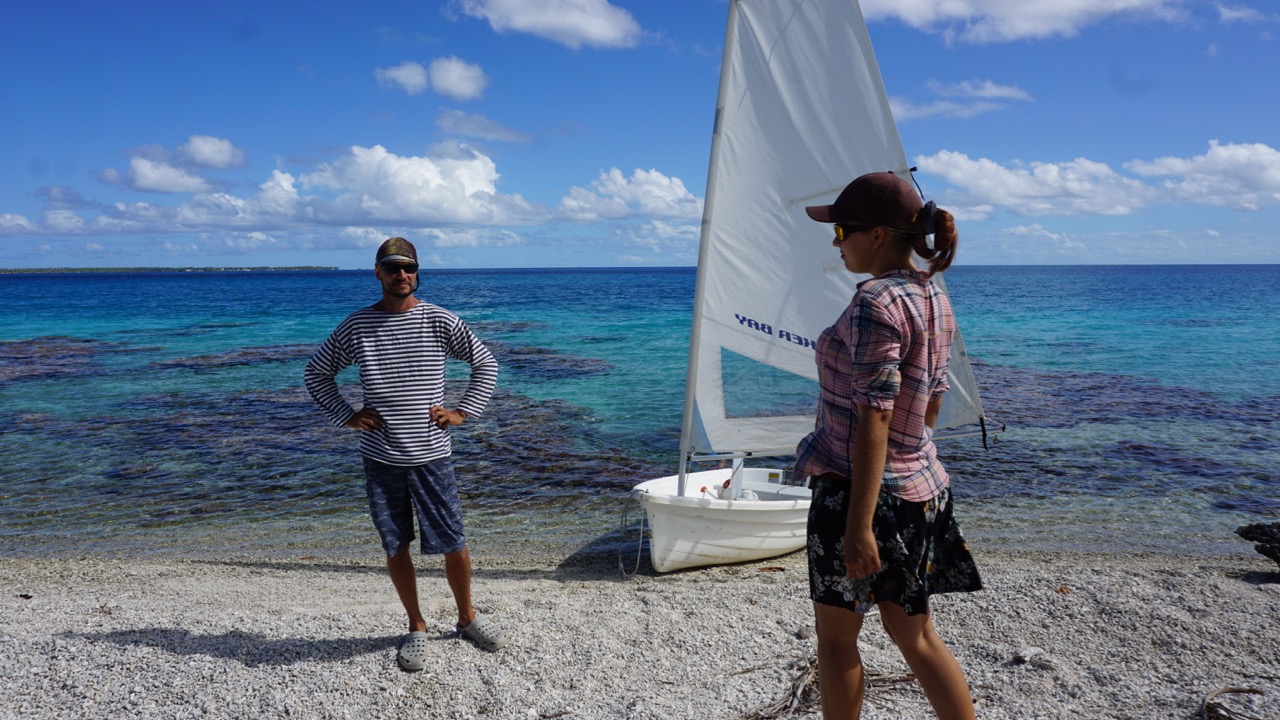
We set off almost early. At about noon. Because another yacht had arrived that morning and said they were going to stock up at the little shop, then drop by before heading south (they’re into wilderness, wild places, apparently). So we waited for them to drop by. And at around eleven, we discovered that they already had. Dropped by their own boat, that is. And were now waving their stern at us.
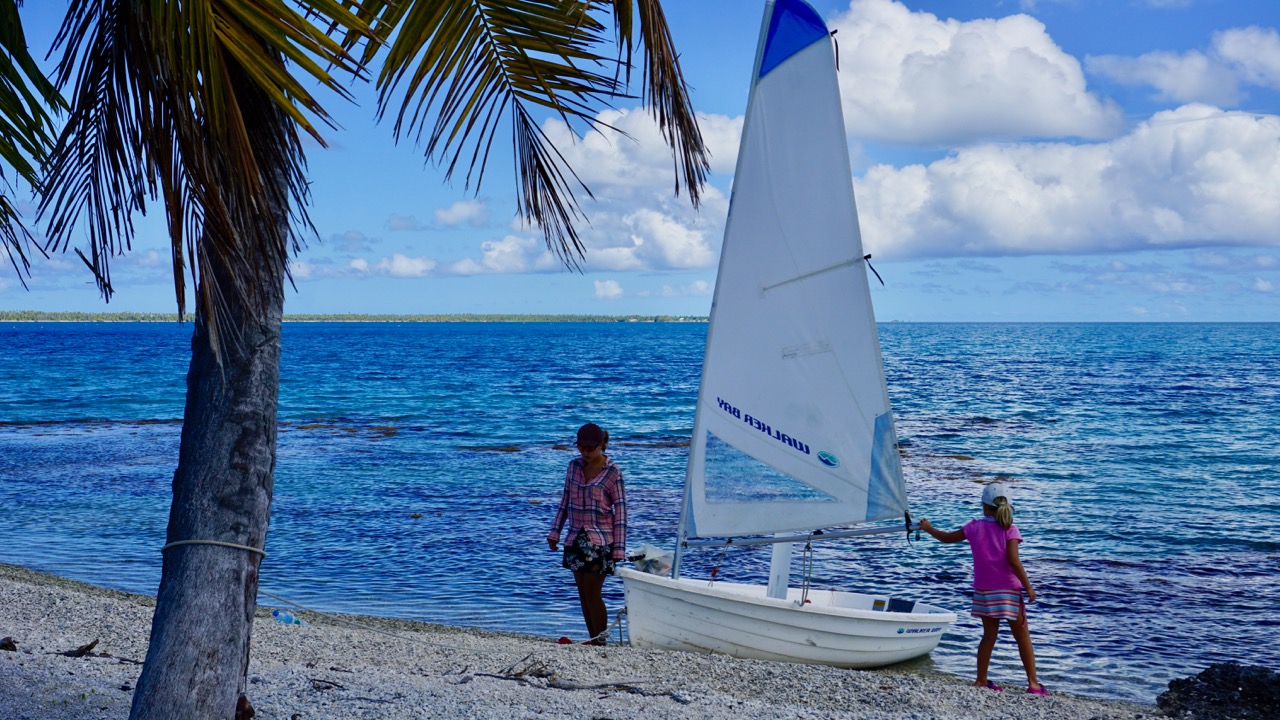
The Cap reminds us to bring a torch, and Nastya and I giggle: does he really think we’ll be coming home after dark? The throttle handle on the dinghy’s outboard has snapped off, but we’re sailors, not motorboat people. So the outboard has been hanging on the yacht’s stern for two months now. We have a mast and sail for the dinghy too; we’ll fly like birds.
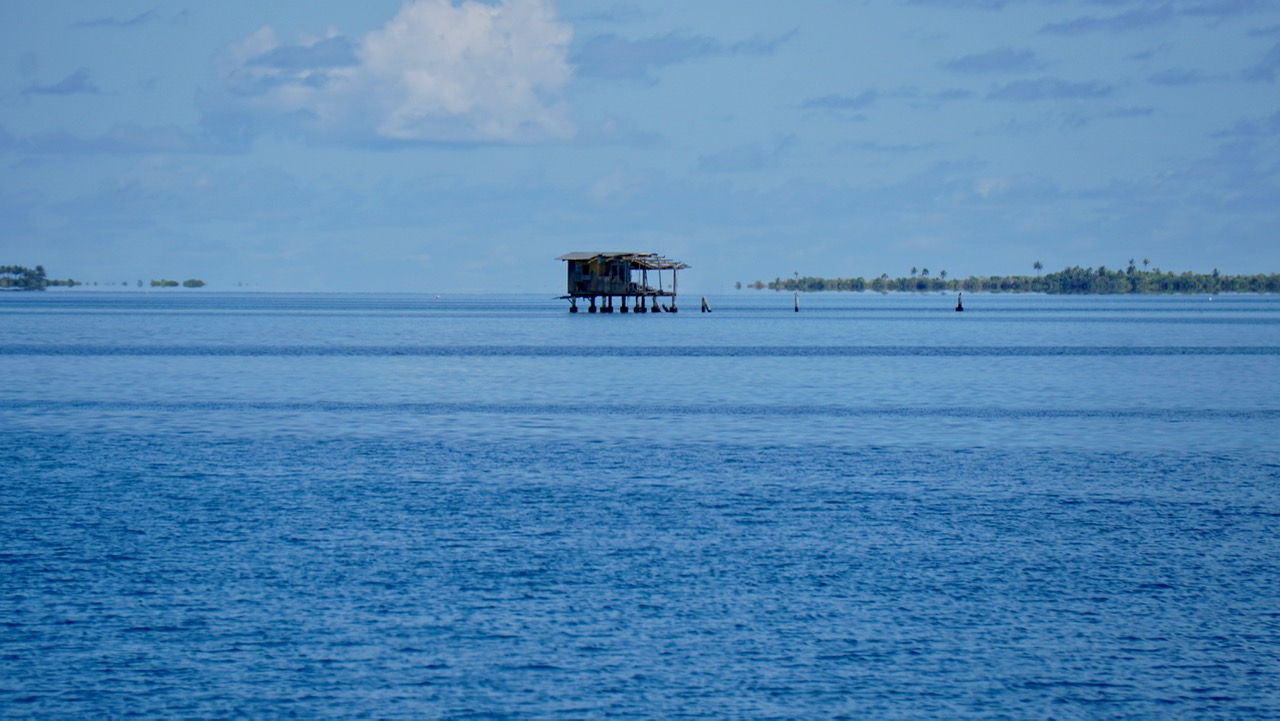
We take the makings of shawarma—tinned food and flatbreads—three litres of water, and pomelos (also known as pamplemousses). Andryukha takes the dinghy’s aft thwart, Nastya the floor at his feet, while the young sailor and I fold ourselves up on the floor by the forward thwart. After all, ours is a sailing boat, not some inflatable dinghy, and the boom (the pole across the mast that the sail is attached to) swings over our heads whenever we tack. We sail downwind for an hour, then another. Something strange is sticking up to port. At first we take it for a floating hut, like the ones at pearl farms.
A pearl farm on Kauéhi
As we get closer, it turns out to be a great lump of rock—the top of an extensive reef. Coral bushes grow almost flush with the surface, spreading out like a flat tabletop: lilac and yellow, with white branches that look dusted with frost. The water slaps and smacks over them, the sunlight refracts into diamonds, fish circle, and reef sharks dart about. The young sailor asks to go for a swim, but according to my ciguatera-recovery schedule, today it’s my back that aches. And so badly that I can’t sit, lie down, or stand. Personally, I consider this proof of perfect health: every day something new hurts. 🙂
“Marinochka, you do realise we’ll have to beat all the way back, don’t you?”
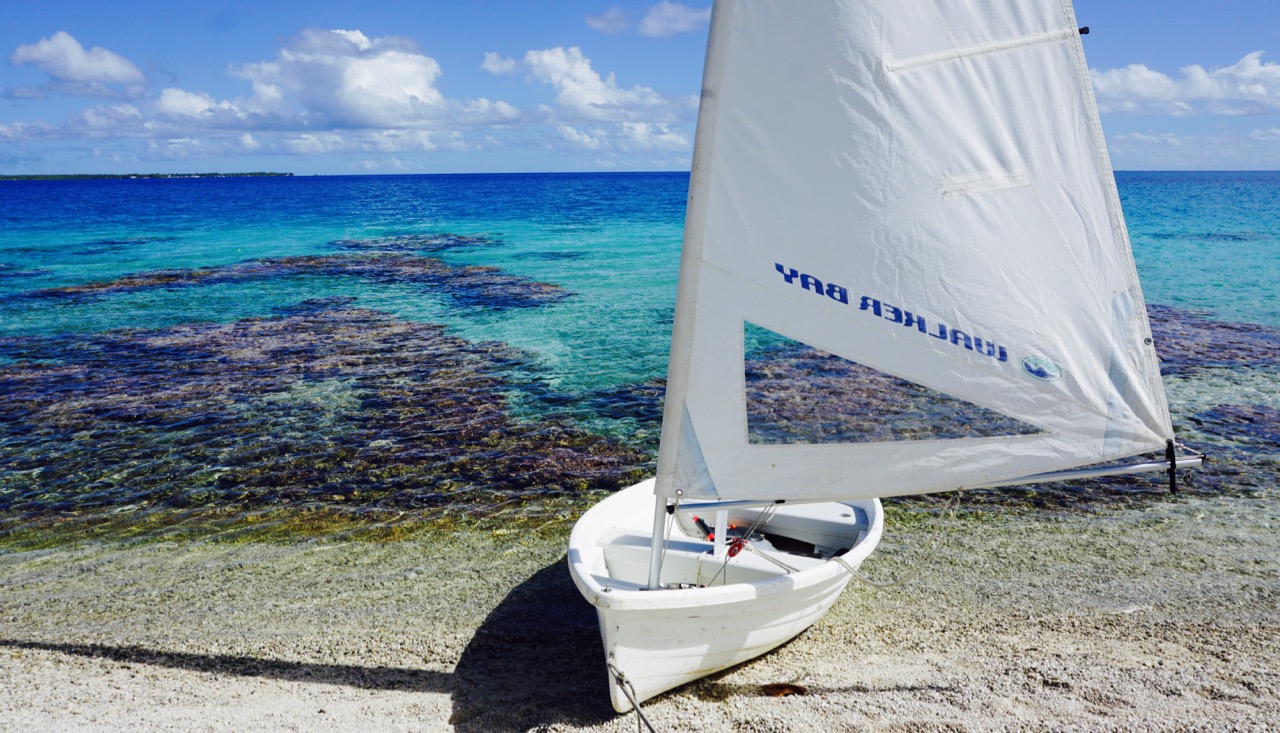
Deceived by the Cap’s calm tone, I fail to grasp the full significance of his words. We promise the young sailor a swim later and set a course for the airstrip. There’s a beach there, and coral too. As we discover when making landfall, a great mass of very fragile coral branches blocks the way to the beach. There are only a couple of narrow channels, each more winding than the other, where a pilot’s firm hand can guide the dinghy ashore.
Naturally, mine is the firmest hand. I jump into the water up to my chest (luckily, we brought our water shoes today) and lead the dinghy by the bridle, heavy with passengers and its sail full of wind.
An airstrip on a Pacific atoll
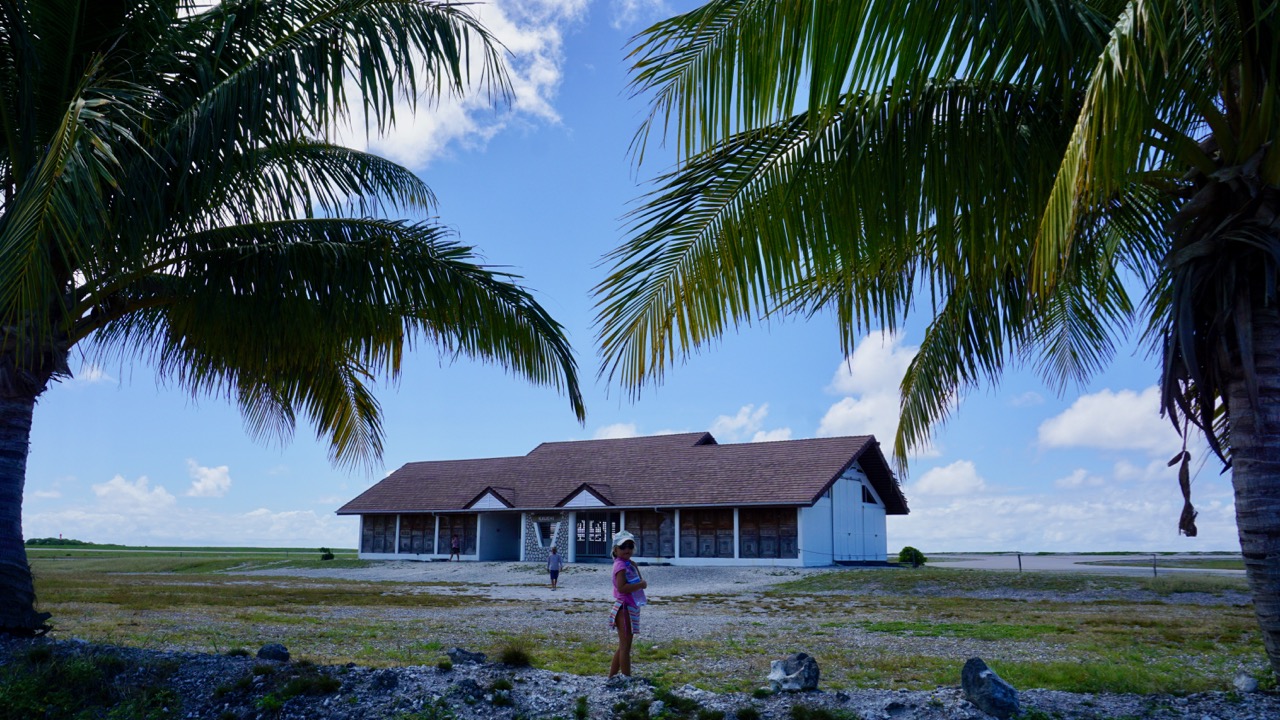
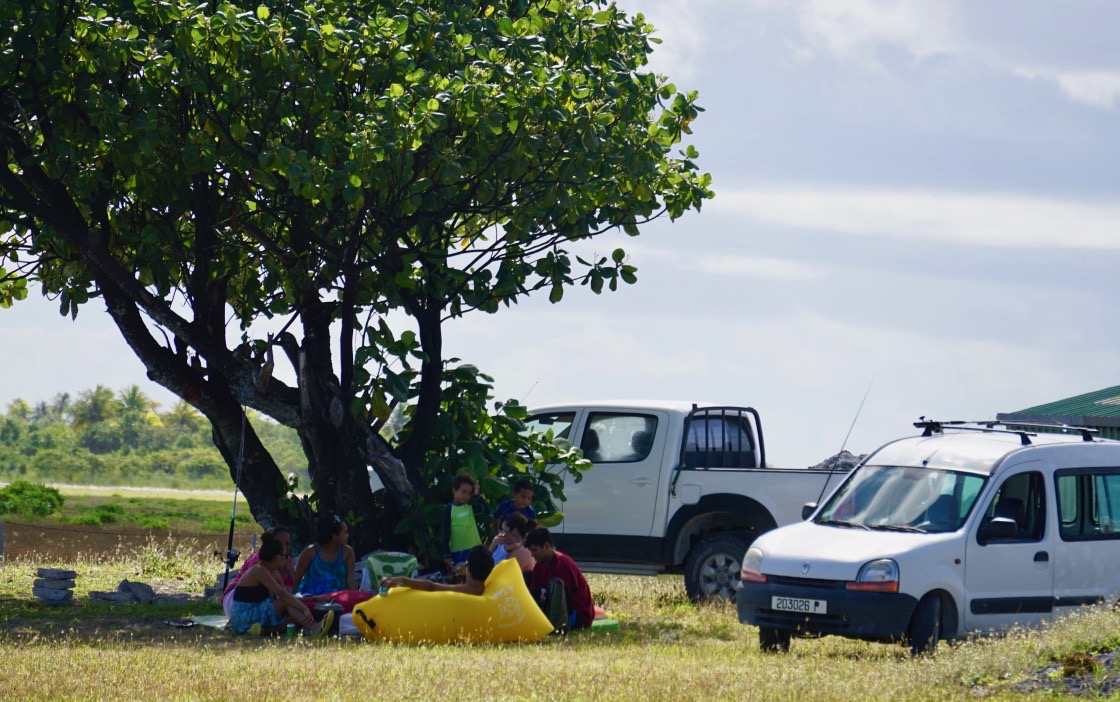
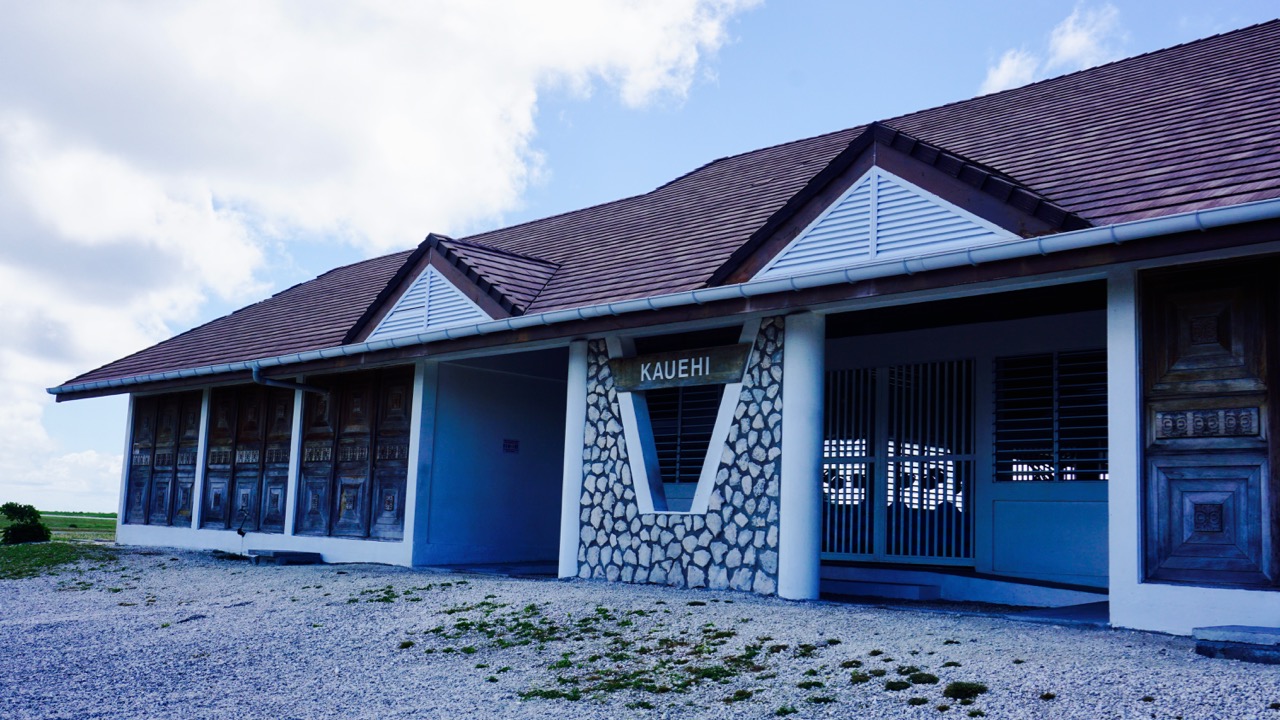
The empty airport building appears to contain every facility its status requires, only in miniature, within a space 20 by 30 metres. The runway stretches along the boundary between the ocean and the lagoon. A plane comes in from Tahiti either once a week or once a month. We aren’t the only ones drawn to the airstrip for a picnic; the locals come too. For them, it is almost their only chance to give the car an outing, since most of the time it sits beside the house in the village. The family who own the pearl farm settle down beneath a shady tree.
The airport building. The runway is behind it
A man who looks more Chinese than Polynesian is fishing from the coral. His name is Tiva.
“How come you speak English so wonderfully?”
“I’m often in Tahiti. We have a pearl shop there; we grow pearls.”
Kauéhi is one of the atolls where pearl oysters live, and apparently they are by no means found everywhere. After talking to Tiva about the peculiarities of pearl cultivation and the cost of pearls, we wish one another “bon appétit” and tuck into lunch without delay. Right on cue, a coconut crashes down from the neighbouring palm, and now we have dessert.
The pearl-farm owners picnicking by the airstrip
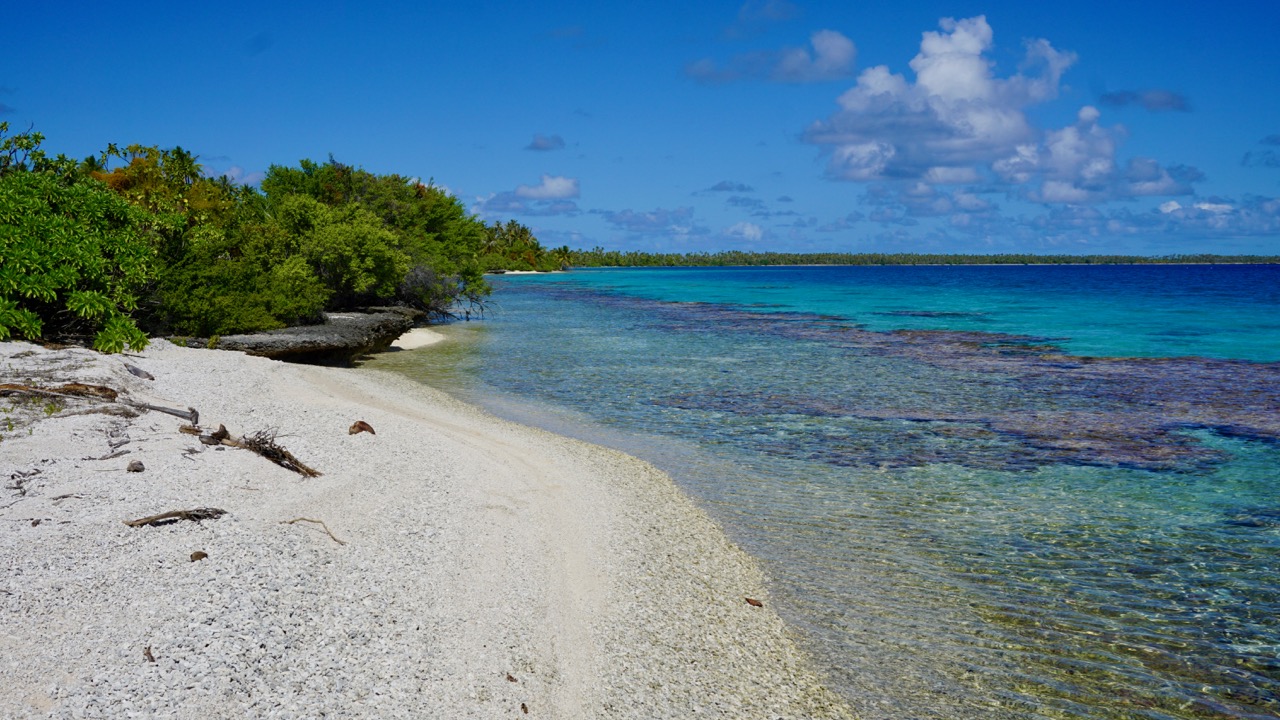
While we pack our things back into the dinghy, Ladunka explores the underwater world. It’s three in the afternoon; time to go. Once again I am the pilot, but the lively dinghy, tugged by the sail, creeps sideways towards the coral.
“Stop!” I say. “Wait for the pilot.”
But the captain is always right, so he gallantly plants the dinghy’s belly on the coral reef, and with a porcelain crunch, a coral colony crumbles onto the floor of the lagoon.
“What sort of Viking are you?” I lament. “There were only two metres left through the channel. You can’t break coral; it’s a vital part of the ecosystem!”
The Cap promised not to do it again. And we dashed for home. Weell... “dashed” might be overstating it. The wind is blowing directly from the yacht. Beating almost 8 kilometres as the crow flies in a three-metre dinghy is not the problem. The problem is that the only thing worse than a strong headwind is a weak headwind. In other words, you can’t build up enough speed in the direction you need to go; you keep tacking, but regardless of which way you point, the wind and the foul current carry you farther and farther towards the centre of the lagoon. Farther from where you started, but no closer to the finish. After an hour, we have been swept a good mile offshore; after two, despite the counter-tacks, another half-mile.
“Prepare to spend the night out here, girls. I hope we’ll make it in about eight hours.”
“Whaaat???”....
Oh, guys, that’s a lot of words! Let’s split this tale into two parts.
The continuation is already written. Fair winds to everyone!
Tomorrow we’ll explain why it absolutely has to be a fair wind when you’re sailing a heavily laden dinghy.
And this is Kauéhi Atoll airport:
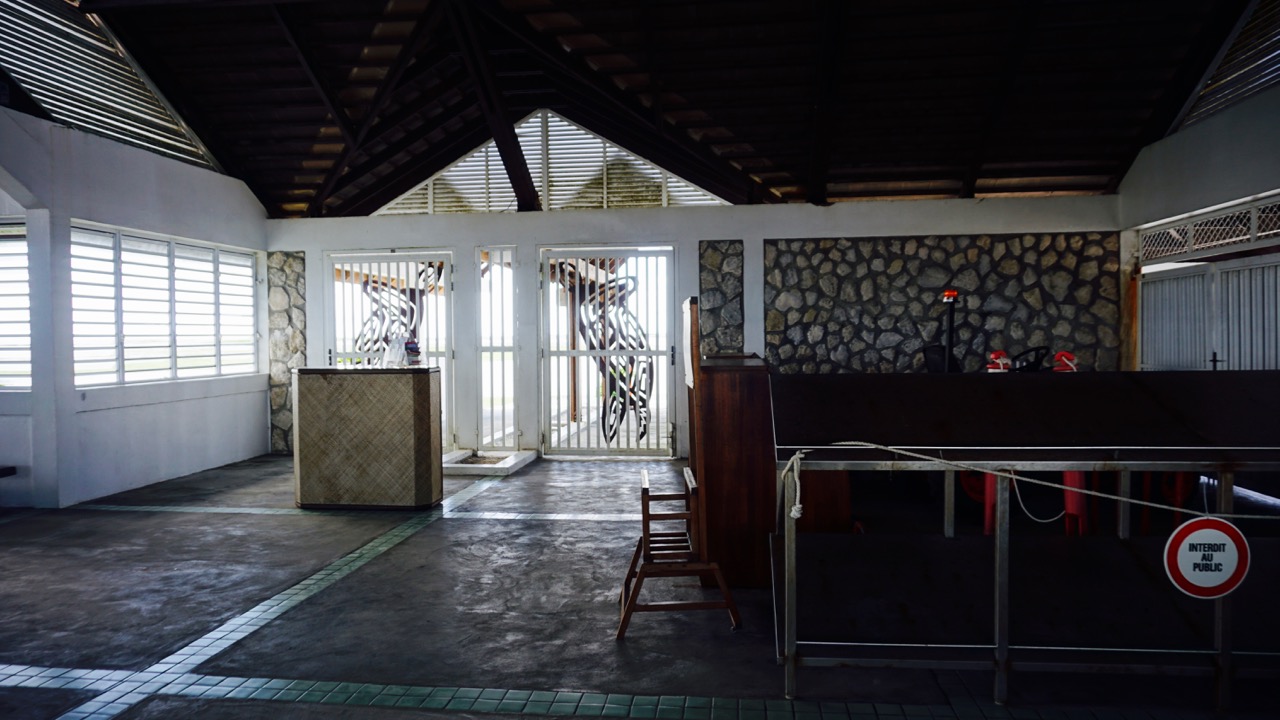
The airport building. It contains the arrivals and departures areas, ticket desks, café and waiting room, check-in and boarding.
Inside the “airport” building