
From the Travely-Family archive · Central and South America
How the Young Sailor and I Scared a Police Officer
An original publication from the former Travely-Family website. This English translation was preserved from the technical-site archive without editorial rewriting.
How the Young Sailor and I Scared a Police Officer.
Do you have to pay the police? On corruption on Mexico’s roads, drug couriers’ routes and police toilets. What is Tabasco?
Our First Encounter with the Police
Tabasco isn’t just a hot sauce that positively reeks of Mexico. It is also one of the 32 regions of the country known as the United Mexican States (yes, yes, that’s right—not simply Mexico. 31 states + 1 federal district).
And judging by the number of police cordons, the famous routes of the Mexican drug cartels run straight through Tabasco. The entire highway is studded with speed bumps. Guardians of law and order with assault rifles stand both at checkpoints and elsewhere, with the watchful eyes of servants of the law.
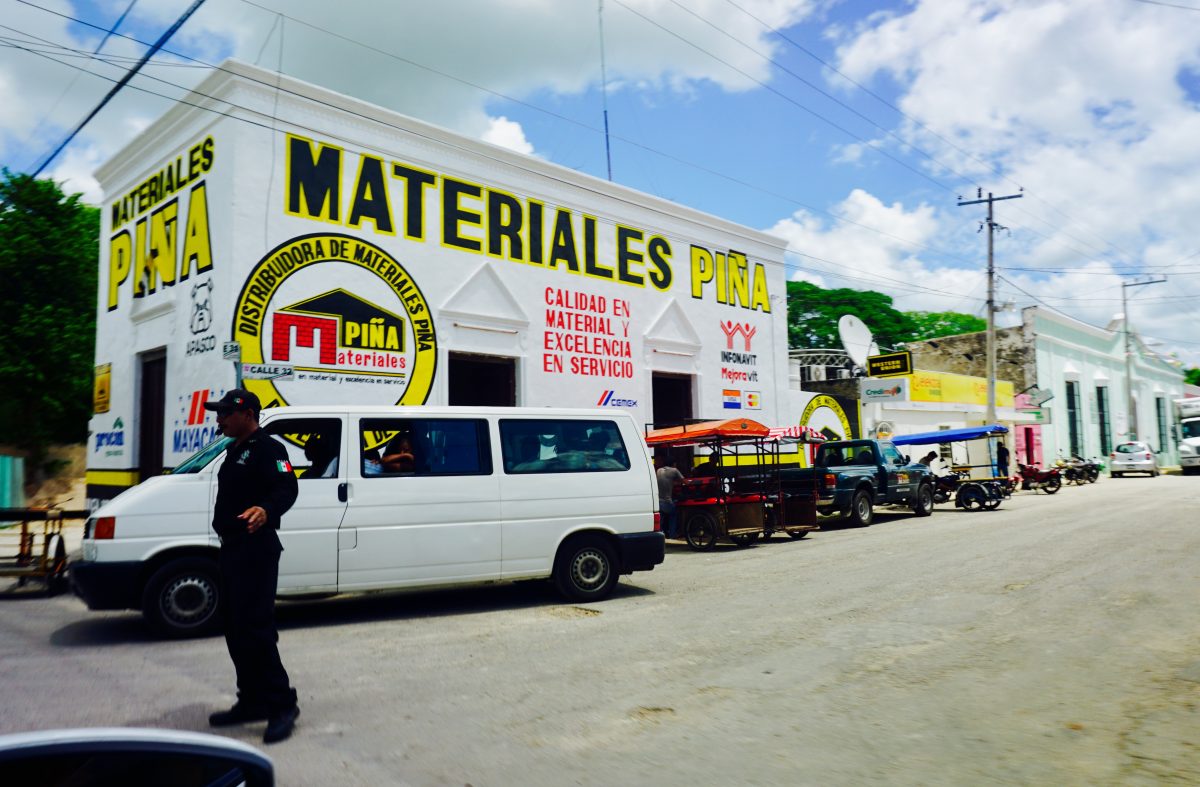
While driving through the state of Tabasco, we were stopped by the police twice. The first time, the reason for stopping us went like this:
“You bounced rather high over that speed bump. You must have been speeding. Oh, and your children aren’t wearing seat belts either!”
“Oh dear,” Andrei said in broken English. “How can that be? No, no, that wasn’t us.”
“Habla español?”
“No, no.”
“Do you speak English?”
“Poquito English, poquito.”
“Español?”
“No, no español.”
“So what language do you speak?”
“Well, Russian.”
Despite a certain hard-won fearlessness, I personally have been rather afraid of the militia since childhood, never mind the police. It’s not as if they used to frighten me with stories of a stern policeman when I was little, but something was clearly amiss. Perhaps, while pregnant, my mother stole an official Chaika limousine and was punished to the fullest extent of the law? Otherwise, why would I feel so intimidated by the police?
“Come on, Andryusha,” I say. “Let’s drop the dumb act and at least admit that we understand English.”
With a barely perceptible act of will, Andryukha pinned me to my seat, urging me to maintain silence and a foolish smile. “All right,” I think, and something distinctly imbecilic appears on my face. The children play dumb in the back.
“Well, that’ll be 2,000 pesos,” says the militiaman in the meantime.
“Oh, how come?”
“Well, you bounced too high, plus the children aren’t wearing seat belts—that comes to 2,000 pesos.”
“I don’t understand. My English is poquito. And my español is absolutely zero.”
The bloke types the number 2,000 into his phone and adds the word “pesos.” Just in case, the children discreetly click their seat belts into place. Meanwhile, a second man with an assault rifle comes over, discusses our linguistic abilities and the speed of our vessel with the first one, and says in perfect English that we had allegedly exceeded the speed limit, for which we owed the valiant police a fine of 2,000 pesos.
“And your children aren’t wearing seat belts either.”
“I don’t understand,” says Andryukha. “Two thousand pesos? Why 2,000 pesos? We weren’t driving fast. No fast, verstehen?”
“You really weren’t driving fast?”
“Yes, yes, really! We were driving ve-e-ery slowly, you understand, yes?”
“Then what about the seat belts?”
“What about them? The seat belts are on—see for yourself.”
Ladunya chirps away from the back seat, trying to find out why we’re still stuck here. Keeping my face vacantly amiable, I mumble that it might be nice to start understanding spoken English already. Andryukha sticks to his guns, continuing to smile while also asking whether they happen to speak Russian. Something resembling a smile appears on the stern faces of the men with assault rifles, and they ask where such dim-witted extraordinary specimens as us have sprung from.
“From Siberia,” we say. “It’s cold there, and there are bears.”
“Okay, go back to your Siberia, take care of yourselves and don’t speed on Mexico’s roads.”
“Oh yes, of course, we won’t speed!” we promise joyfully and leave the checkpoint without paying a penny..
Our Second Encounter with the Police
Even though we crept over the speed bumps at the pace of a sleeping earthworm, 100 kilometres later the militiamen spotted us anyway and once again decided to check whether everything was in order. They asked for our documents, standing by both front doors.
“What’s that?” The policeman nodded at a bag of crisps.
“Crisps,” I crunched. “Want some?”
“Nope. All right, get out of the car and open the boot.”
We did. In the boot was a bottle of red wine that I had opened the previous evening.
“You’ve been drinking.” The statement was addressed to Andryukha.
“No, I haven’t. I’m driving.”
“Then why is the wine open?”
“My wife drinks it.”
“Ha ha ha,” they said, and the rest of the conversation flowed in a friendly atmosphere. “Okay, carry on, keep taking care of yourselves and don’t speed on Mexico’s roads.”
And then it turned out that Ladunka was absolutely desperate for a wee. “Quickly, before they change their minds,” her mother whispers to her while asking where the facilities are. The policeman solicitously leads us to some bushes concealing a bright orange portable toilet.
“Ladun, why don’t you squat down behind the toilet?” I suggest, having seen plenty of decidedly unglamorous details in roadside cubicles back home.
But I decide to check whether it is respectable enough inside after all. As the great Nekrasov rightly observed, a Russian woman will enter even a burning hut without knocking, so what is the stiff door of a portable toilet at a Mexican police checkpoint compared with that? After one tug, I felt that if I applied a bit more pressure, the door would open. And so it did: the door flew open with a crash, and a huge young fellow sitting there with his uniform partly lowered from his knees began muttering in embarrassment:
“Caca, caca!”—apparently explaining what he was doing in there.
“Oh, sorry!!!” I wailed tearfully, slamming the door and dragging the young sailor farther into the grass.
“Pee here, and let’s scarper before they bump us off!” And Lada obediently does as she is told.
Together we leg it through the bushes back to the car.
“Go!” I bulge my eyes desperately, the captain floors the accelerator, and we all spend the rest of the journey roaring with laughter..
The Moral of This Fable
If a toilet door doesn’t open straight away, try calling out before breaking it down.
You don’t always have to bribe the police. Sometimes it is enough to look baffled for a long time and know no language but your own.
On the road, it is best to act naturally and amiably—and not bounce over speed bumps.