
From the Travely-Family archive · Other Entries
A Whale and the Expedition’s Final Interim Tally
An original publication from the former Travely-Family website. This English translation was preserved from the technical-site archive without editorial rewriting.
We’ve rounded all three Great Capes; only one task remains, and for now it is proving difficult to accomplish
On 17 April, Lady Mary crossed the longitude of Cape Leeuwin—the third Great Cape of the planet and of our voyage. It was the easiest of the three Great Cape roundings. We rounded the great and terrible Cape Horn on the 52nd day of a non-stop voyage across the Southern Ocean. The Cape of Good Hope came in the first days of a 53-day non-stop passage. And Leeuwin fell on both the first and the last day at once ).
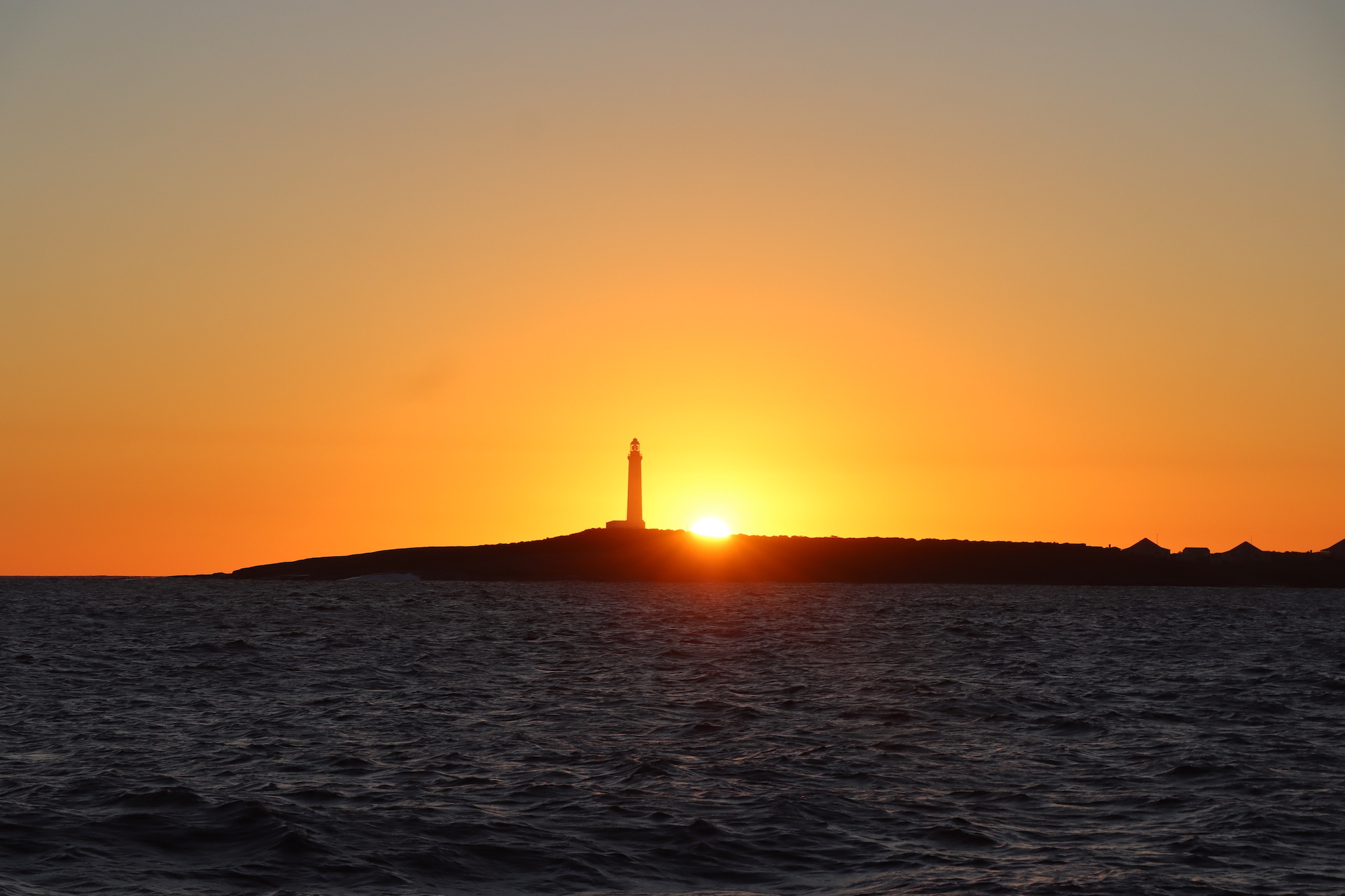
Up at dawn; anchored under the shelter of the reefs by lunchtime. Then we bucked on the anchor chain in a metre-and-a-half swell until evening. Fortunately, our tireless young sailor dragged me away from my laptop and onto the deck in the final seconds before sunset. Thanks to that, the lighthouse appeared in the photograph bathed in orange rays.
The three Great Capes
At their head is
Cape Horn, known as the Everest of sailors.
The Cape of Good Hope holds the honourable second place, while third goes to Australia’s south-western cape, Cape Leewin (also Leeuwin, also Luin, also Liuwin... what a name!).
The capes were called great because this is where the waters of two or more oceans meet. Cold Antarctic currents collide with warmer ones, gigantic waves rise over the long continental shelf, and it blows hard almost all the time.
In short, our captain timed the weather perfectly. From the heavenly cove of Hamelin Bay
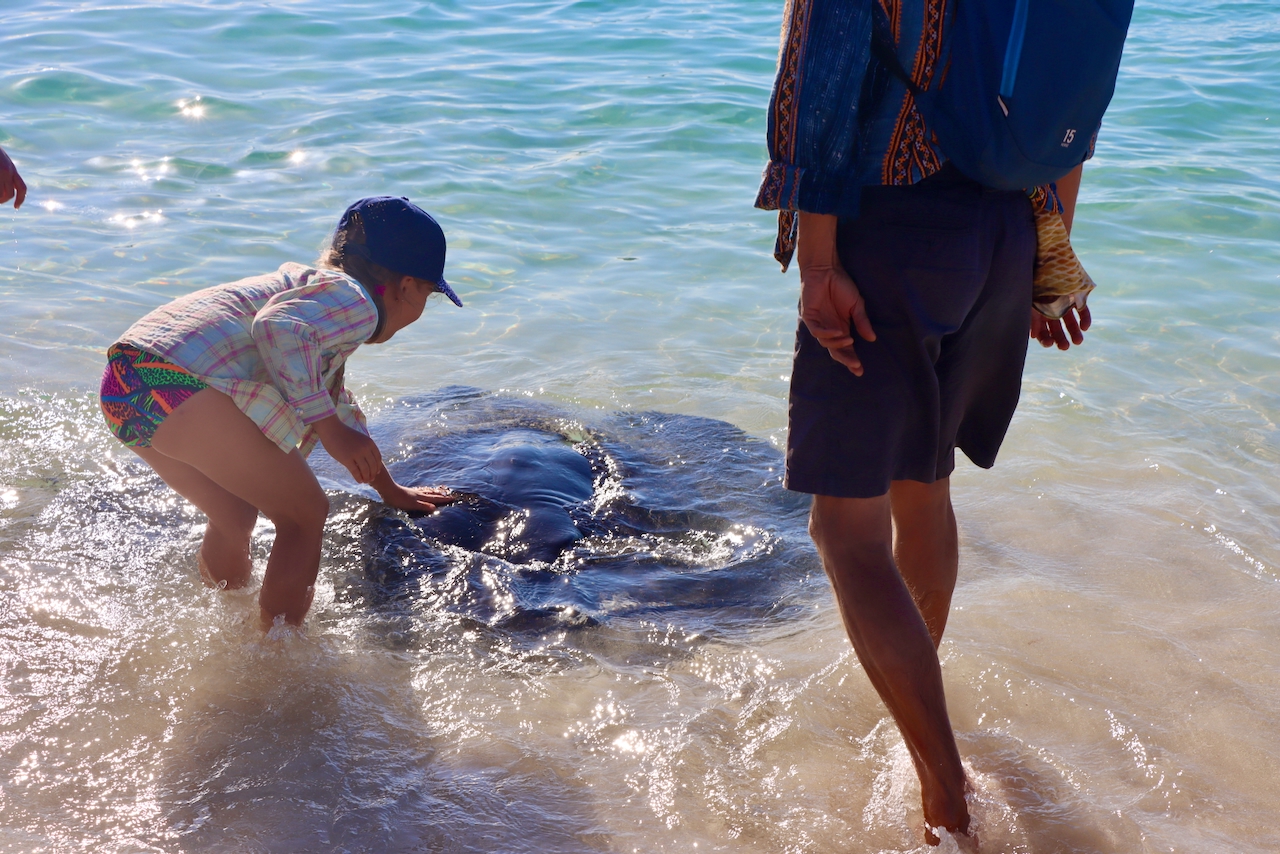
(where the rays are tame) tame rays in Hamelin Bay we shot briskly out into the ocean at dawn, and by afternoon we were already looking for somewhere to anchor under the shelter of the reefs. They gave us a little protection from the swell and none at all from the gusty wind, but we held out there until evening.
Weather in the south of the planet
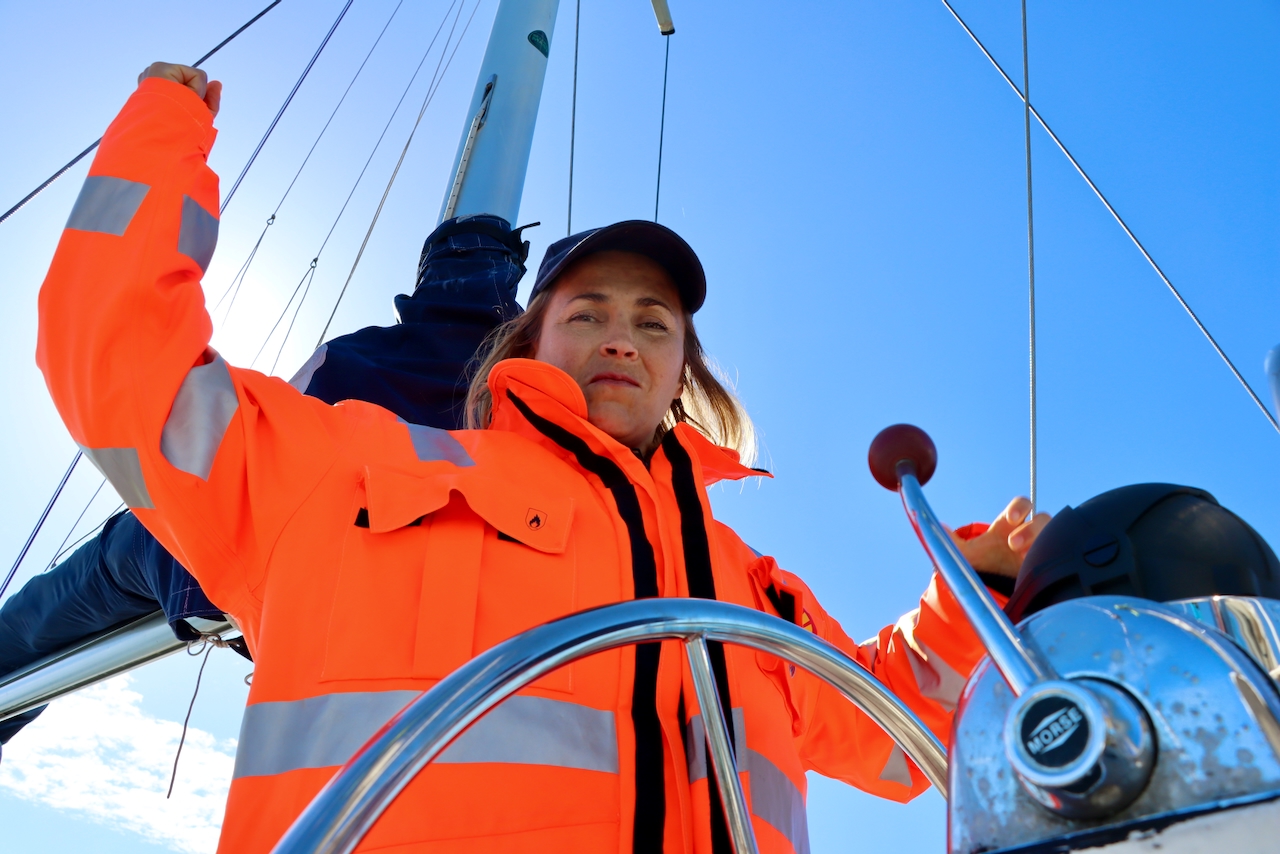
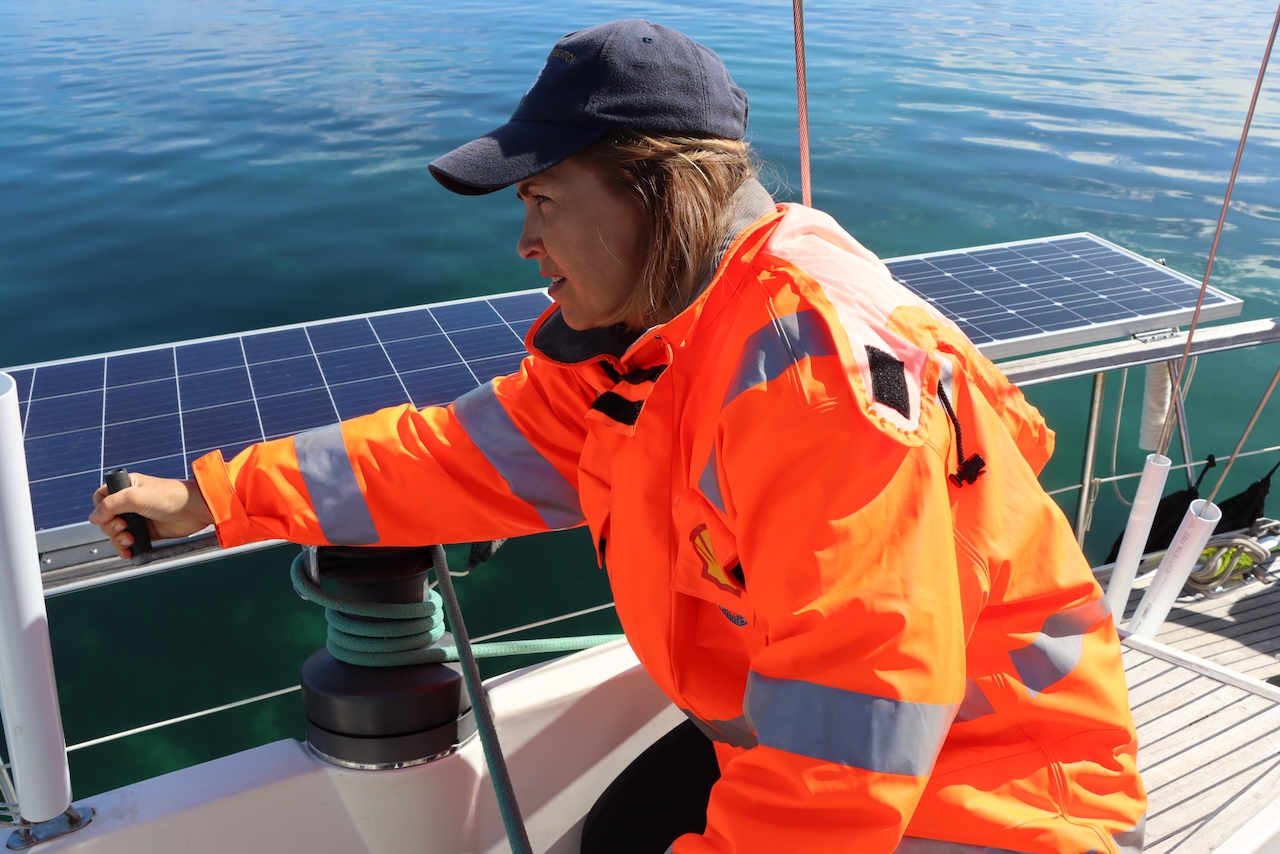
Southern Australia is no resort at all. I still haven’t taken off my ultra-orange, synthetic-padded “railway-worker’s jacket” with reflective stripes. The proud Shell logo on one side of the chest gives me a connection to the oil business; on the other, it keeps me from forgetting the wonderful Ksyusha Arkhipova, who gave me this workwear.
It has already appeared as a spacesuit in a video marking the anniversary of the first space flight, which we filmed in the wheelhouse with our young sailor and her friend Mila. (The video won an international competition in Australia and received two certificates signed by real cosmonauts. One was from the St Andrew the First-Called School of Geography.
It was signed by Alexander Alexandrov, twice Hero of the Soviet Union. The second certificate, bearing another cosmonaut’s signature, will arrive from Moscow. And I’m thinking, how cool is that! Cosmonauts have never signed certificates for us before:).)
But back to the point. It was in this very space jacket that I summed up the final interim results of our expedition.
The passage to Albany (Albani?)
We set out for Albany—the southernmost port in Western Australia—at night. There were no other weather windows. The sea was an order of magnitude calmer, and the weather many times better and warmer than what “we like.”
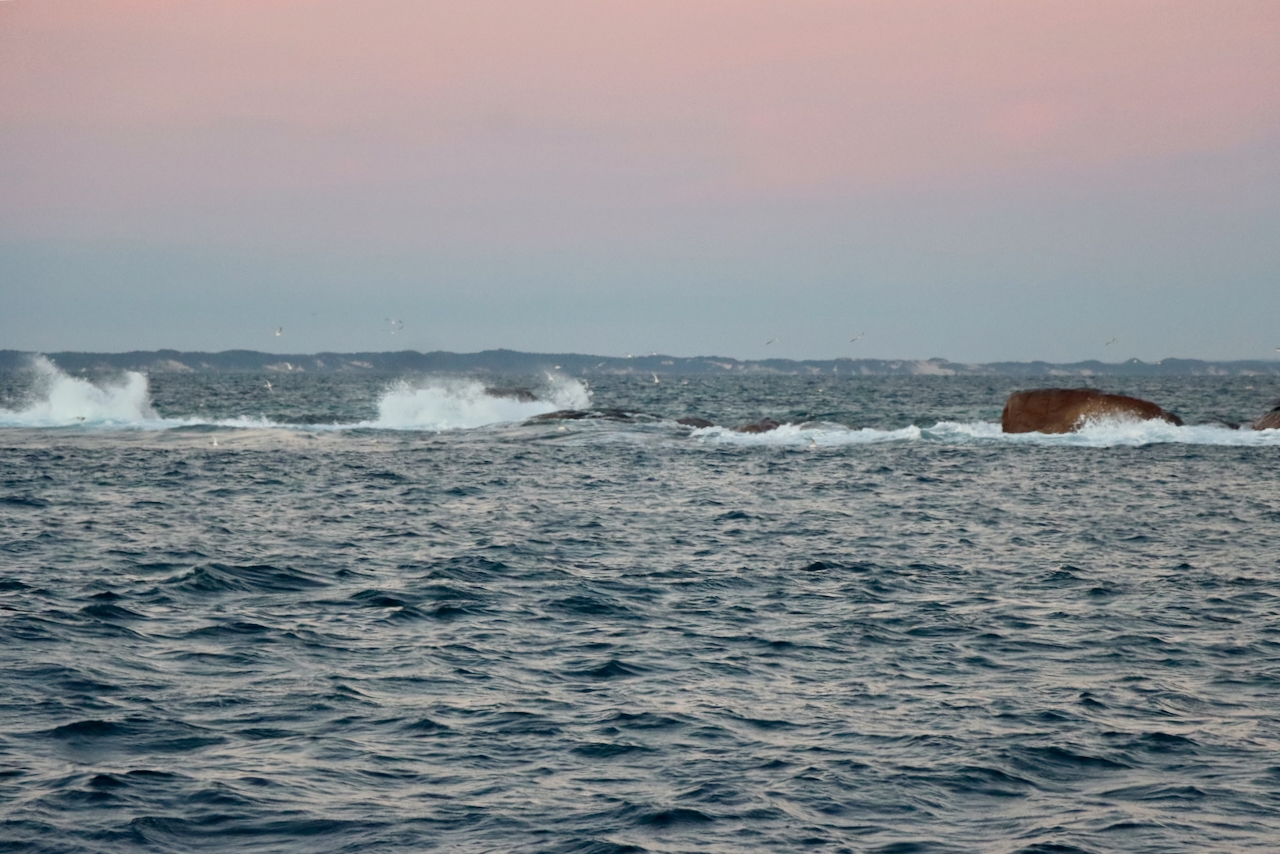
the reefs—the only shelter from wind and swell at the anchorage off Cape Leeuwin
Once darkness fell, we raised anchor and navigated around the breakers by instruments. After leaving Leeuwin, Lady Mary spent two days beam-on to a two-metre swell. And that, my friends, is quite a song. Especially in the first days of a passage. I barely managed to sleep at night because my body could not make sense of the merry-go-round coursing through its veins. But once again it—my body—appreciated the plywood divider between the mattresses on the captain’s and my double bed. Why on earth did we sail for six years without it? I simply cannot understand. Because without the divider, it is impossible for more than one person to sleep in that bed.
A beam sea is no great pleasure, but it is still better than a head sea. We sailed under reefed canvas—mainsail, genoa and mizzen. For most of the way, a following current of one to one and a half knots nudged us towards the anchorage, so instead of arriving in the evening, we got there by lunchtime.
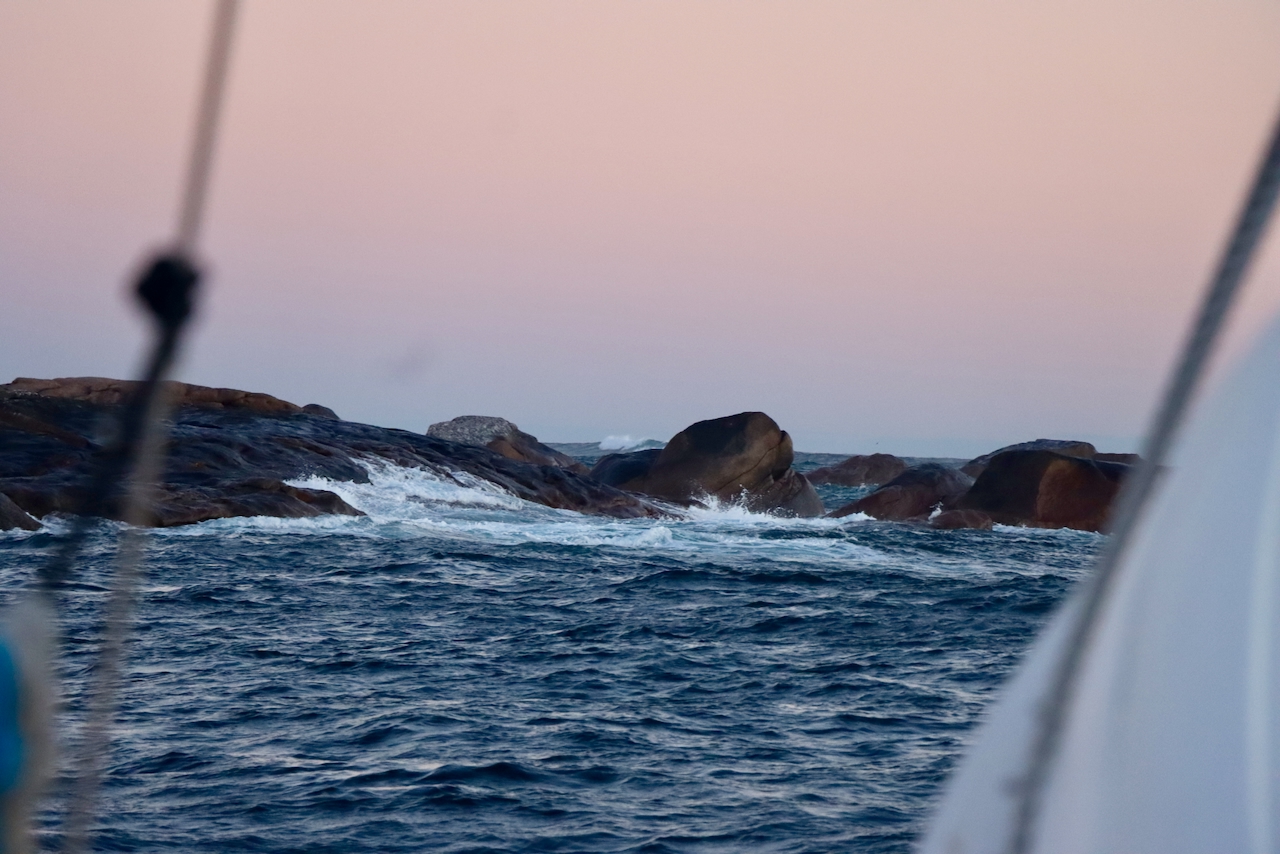
the reefs we sheltered behind off Cape Leeuwin
A whale!
As we entered Albany’s beautiful, misty harbour, an escort joined us.
“A whale, Lada, a whale!” exclaimed the captain. Our young sailor breathed out, dumbfounded: “Oooh.”
The ten-metre whale exhaled three metres astern.
Oh, Mum, what if he decides to surface under the yacht? That was my first thought.
The whale liked the idea and disappeared beneath the water. Twenty seconds later, our escort surfaced the same three metres away. By the third time, we had come to believe that he was not going to dive under the yacht. The whale sighed, arched his body from head to tail, and surfaced slightly to port. Apparently, he was bored just wandering around the ocean on his own. It was more fun with us. Our young sailor’s endearing murmurs put every creature in the sea into a blissful frame of mind. Even the sky decided to come closer and dumped a couple of buckets of rain into the wind. The weather cleared only in the morning. That was when it became apparent that the place where we were anchored looked very much like the lakes of the Southern Urals from my childhood and youth.
About the place where celebrated explorers once landed and where the biggest pelicans now gaze into your eyes; about a free mooring buoy—with a condition—and “setting the sun by hand”—in the next post.
Keep moving, everyone!
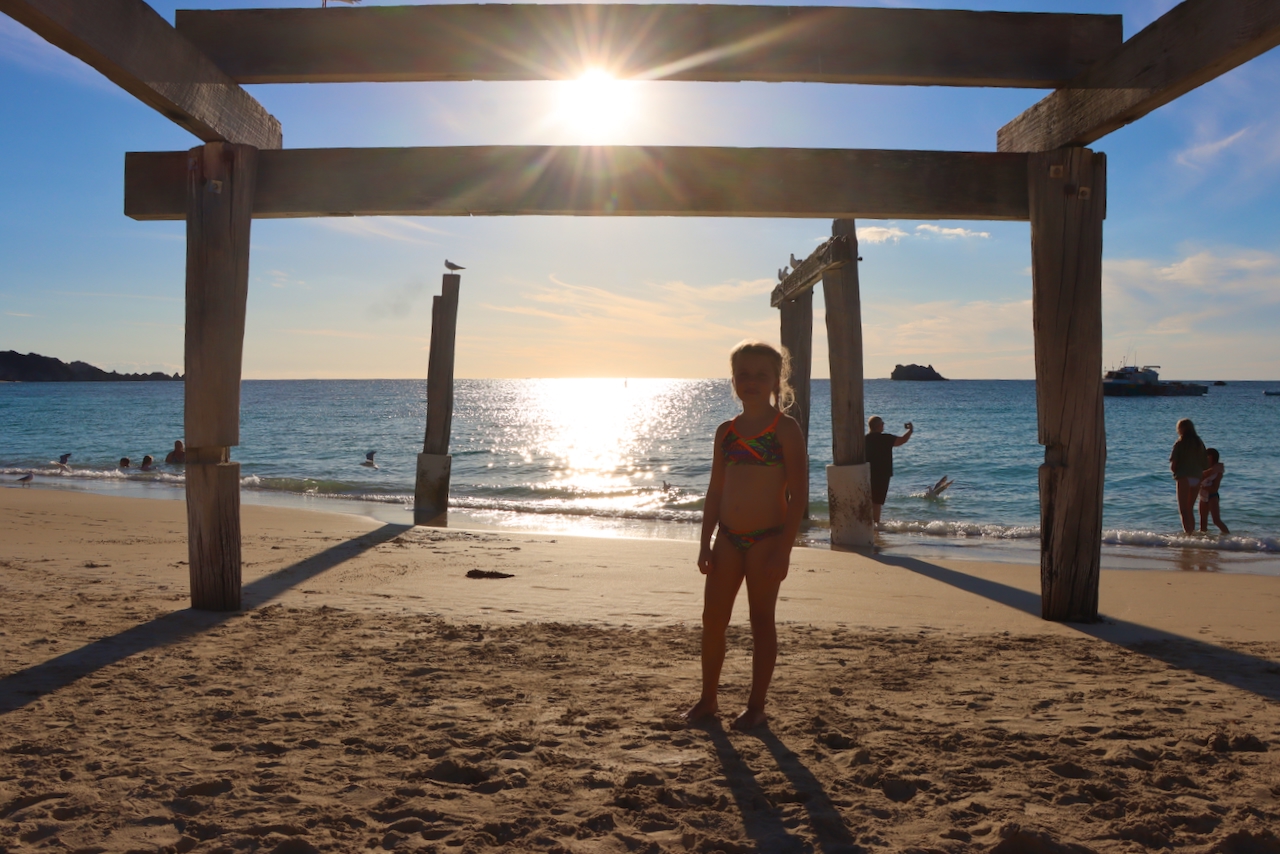
the site of the old jetty in Hamelin Bay, where the rays come swimming in