
From the Travely-Family archive · Atlantic
Clearing In by Yacht in The Gambia
An original publication from the former Travely-Family website. This English translation was preserved from the technical-site archive without editorial rewriting.
Captain’s notes.
We’ve arrived.
Lady Mary dropped anchor opposite the old ship-repair yard in Banjul, in a place with the optimistic name Half Die.
It was Friday, and the authorities were open until one in the afternoon.
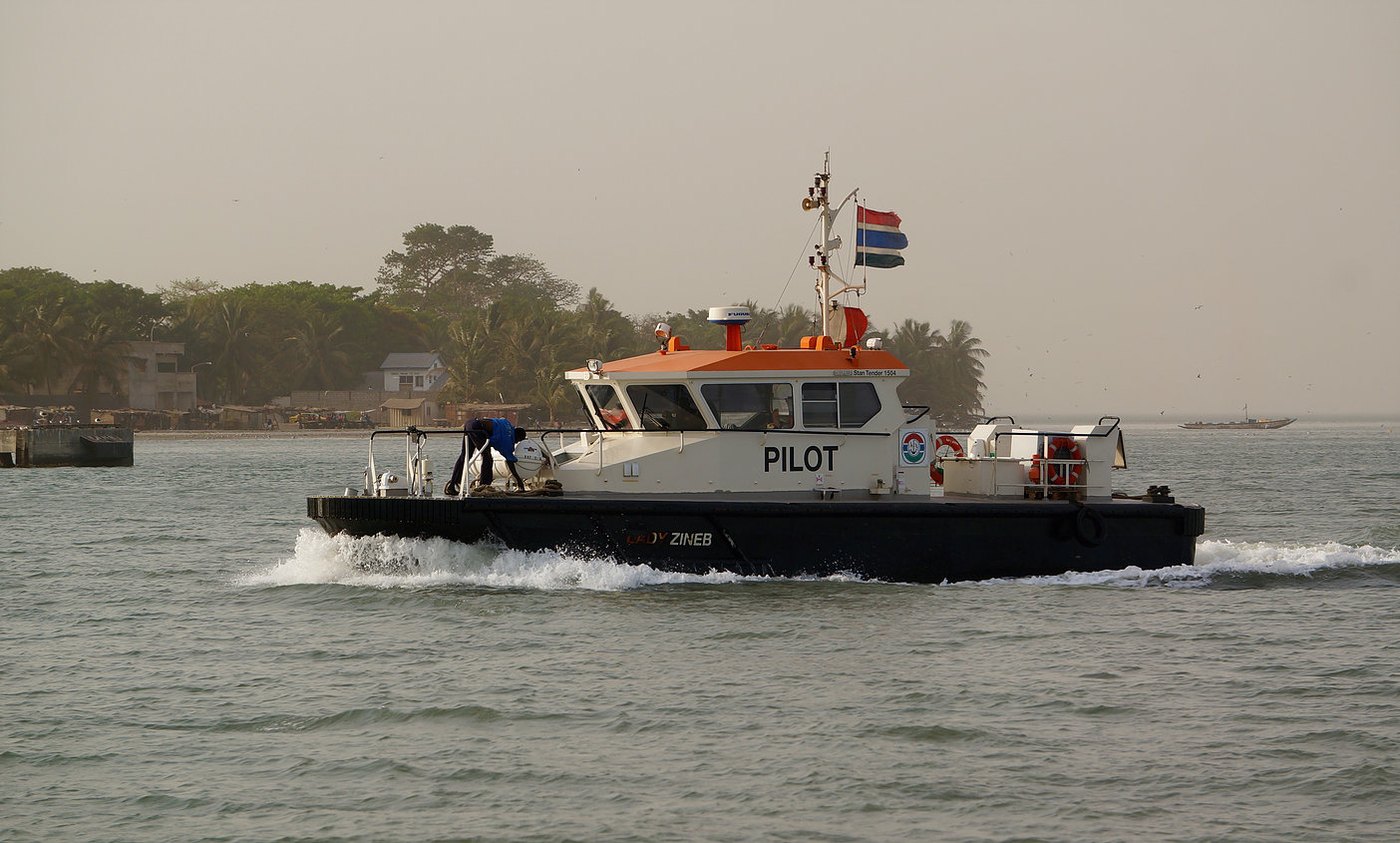
By nine in the morning, Nastya had taken me ashore in the dinghy, to the pier where the pilot boats were berthed. The smiling lads on the pilot boat invited us to moor alongside them. After shaking everyone’s hand, I clambered onto the pier across two vessels—theirs and the next one—and sent Nastya back to the yacht.
At the exit from the port area, they asked for identification. The guards were satisfied with a passport copy reduced to credit-card size and laminated.
No one in The Gambia was happier to see me than Ebu, a guide-cum-fixer. He waved so vigorously from the quay and ran nearly a kilometre so fast to nab me that he was left gasping for breath. At first I wanted to shake him off, but I soon realised that making the rounds of the authorities to clear in by yacht was much quicker and easier in his company than on my own.
Immigration
Immigration Police is twenty metres from the exit. The officer stamps me in and tells me to come back again, because the boss is not there and there is no one to decide on issuing visas. It turns out that an entry stamp and a visa are not the same thing in The Gambia.
Before heading to Customs, Ebu recommends changing some money into the local dalasi. Nearby shops exchange euros and dollars. I have Senegalese francs. No one wants to exchange them at a reasonable rate. But a couple of streets away we find a proper bureau de change, where, after brief negotiations, they exchange francs for dalasi. The same area is home to the banks and an ATM that accepts Mastercard.
Customs
The procedure is divided into two parts:
1 The paperwork itself
You need:
passports, copies of their photo pages, the yacht’s registration document and a copy of it.
Once the forms with the boat’s and crew’s details have been completed, we move on to the second stage.
2 Inspection—an important stage of clearing in by yacht
A special courier takes the documents to another building. Meanwhile, an important customs officer walks with stately dignity alongside us to the far pier for the inspection. On the way, he flags down some taxi, which gives us a free lift to the entrance to the quay. Our relaxed chat about life eventually leads to the question: do I have a gift for him? I was prepared for the question. And the equivalent of 15 dollars migrates into the customs officer’s pocket in exchange for assurances of eternal friendship and no complaints arising from the “inspection carried out” aboard Lady Mary.
We walk back to Customs; the inspector has the documents approved by his boss and—voilà—Customs gives us the all-clear!
Meanwhile, Immigration has called Ebu’s phone—the boss has arrived.
At Immigration, I run into a recent change in visa fees: instead of 1,000 dalasi per person (about 25 euros), they now charge 3,000 dalasi, as announced by an official notice on the reception-room wall listing countries, requirements and fees.
Russians arriving by yacht, or by any other means, need a visa. It is issued for two months and can be extended (I do not yet know on what terms), and it costs 75 euros.
Well, that’s a turn-up for the books!—300 euros for visas to The Gambia...
I bargain, radiating charm, once again show them the passports with the children’s photographs and... the ice begins to thaw. The stern head of the Immigration Police agrees to make concessions. We settle on 200 euros for the four of us, although the passports are stamped with the figure of 3,000 dalasi. I present the boss with a packet of cigarettes, and as we part he gives me his phone number, promising to help arrange a free visa extension if we need one.
Port Authority
At a brisk pace—to the Port Authority. For an official fee of 1,017 dalasi (actually 1,050—they did not give me any change, and I did not make an issue of an amount under $1), they issue a Cruising Permit—permission to navigate the River Gambia and its tributaries.
The official part of clearing in by yacht is over.
Ebu and I go to the market and buy bags full of fruit, which he helps carry, load into a taxi and transfer into the dinghy. I also buy an Africell SIM card and activate an internet package on it.
100 dalasi for the SIM card, 750 dalasi for 4 gigabytes for one month. If there is coverage upriver, we’ll stay in touch. In Banjul the connection is decent—3G.
Towards the end of our outing, Ebu hints at his fee. He asks for 8 euros. I value his help at 10 euros.
A Fly in the Ointment
I asked Ebu to put another 500 dalasi of credit on the phone—that is where we hit a snag. Over the next few days, the lad called back ten times and said he could not put the money on my SIM card (?). But he will return the money when I get back to Banjul. Maybe he pocketed it, or maybe he really will... return it....
In any case, 10 euros is not enough to lose faith in humanity over 🙂
Photos
The dashing pilot boat
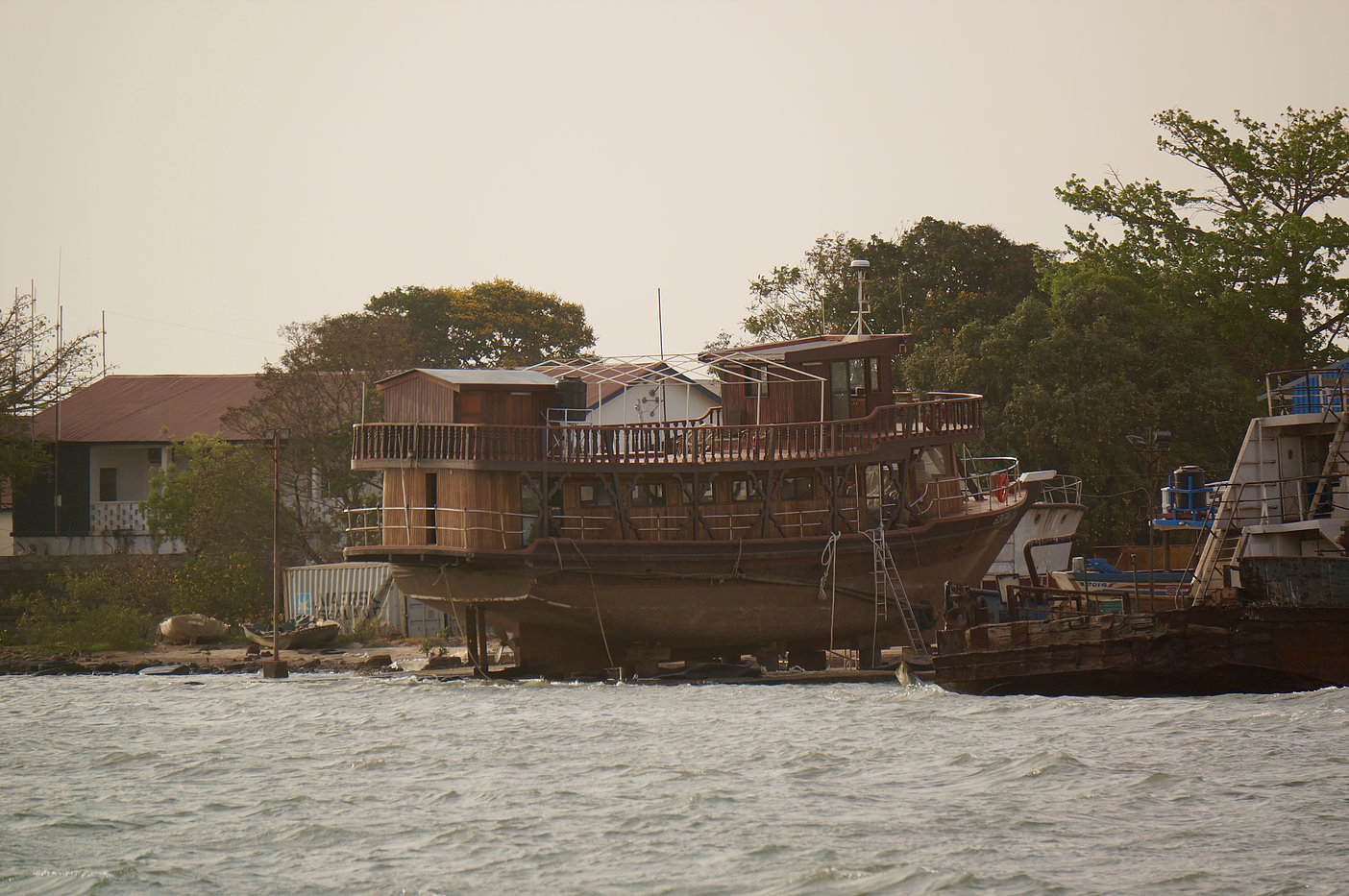
The Port of Banjul—a graveyard of wrecked ships. Half of them went down in the harbour and protrude from the water only at low tide (at high tide, two out of five are visible); the other half line the shore, in places presenting an almost romantic sight The Port of Banjul
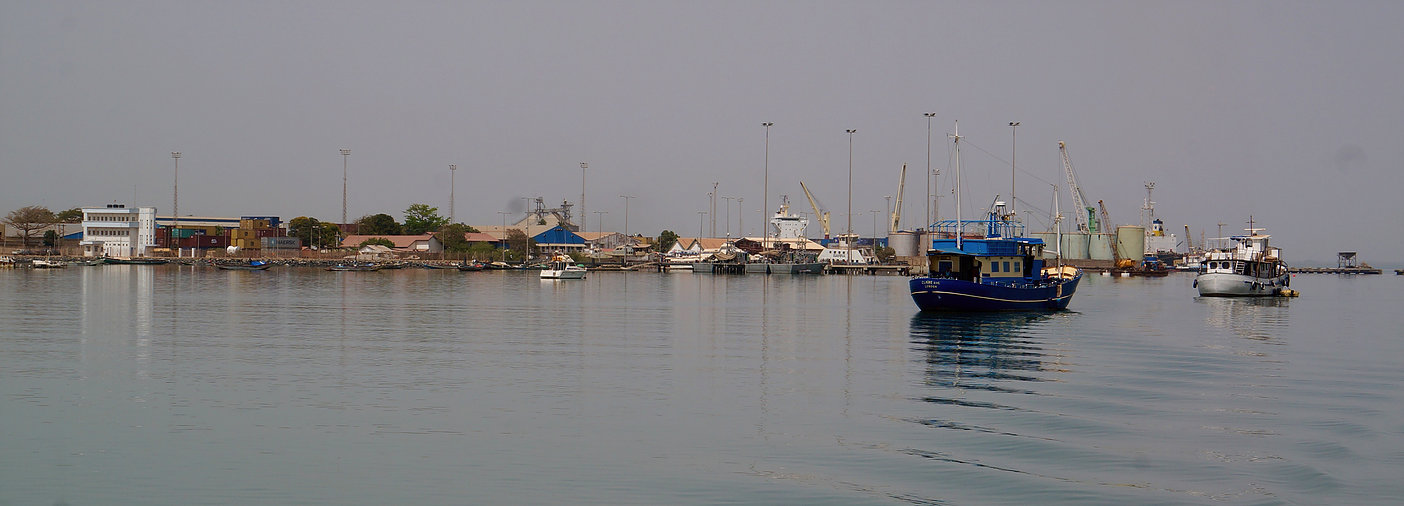
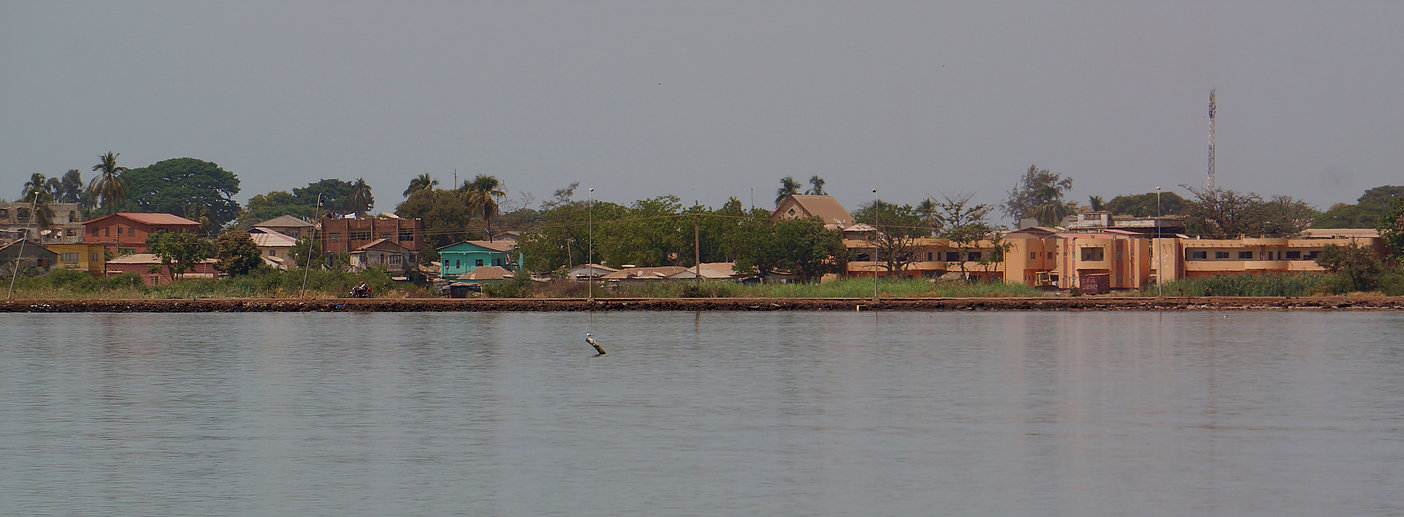
Banjul, viewed from the river
If you found this article useful and would like to thank the authors but do not know how, click the button below 🙂