
From the Travely-Family archive · Pacific Ocean
Easter Island. Visas for Sailors
An original publication from the former Travely-Family website. This English translation was preserved from the technical-site archive without editorial rewriting.
Easter Island. Visas for Sailors.
Clearing in by yacht, the whims of the weather, and passages from one end of the island to the other. Attentive officials, a radio that never falls silent, and clearance officers visiting aboard.
The first rule when anchored off Easter Island is to keep the radio on Channel 16 around the clock. And at night, someone must remain aboard.
— Lady Mary, Lady Mary! — at sunset, the radio suddenly spoke in a human voice and invited us to switch to Channel 14 for a chat.
— Head over to us at Hanga Roa tomorrow afternoon! The wind is going to shift.
— Ah, sure, no problem, we’ll sail over! We’ll call you on Channel 16 as soon as we arrive.
The radio operator spends another few minutes clarifying the details—after all, he has driven all the way back to the other end of the island in his gleaming white pickup truck. There it is, parked at the edge of Anakena Bay. Here on Easter Island, we are their only yacht, an object of special care and attention.
— And it’s a good thing we didn’t go ashore illegally! — we reflect. — There’s no hiding a dinghy on an empty beach. What if everyone here reports to everyone else where uncleared arrivals have gone? At least now we can establish relations unclouded by any breach of the law..
Why There Are No Yachts on Rapa Nui
If you arrive at Easter Island on a sailing yacht, you will most likely be the only one here. According to statistics, no more than 30 yachts a year visit the Navel of the World.
There are no favourable winds blowing this way, and the two-thousand-plus miles—more than 3,600 km—from the Galápagos will most likely have to be fought upwind. Or you can come from the west, from New Zealand. Through the thirties and the Roaring Forties.
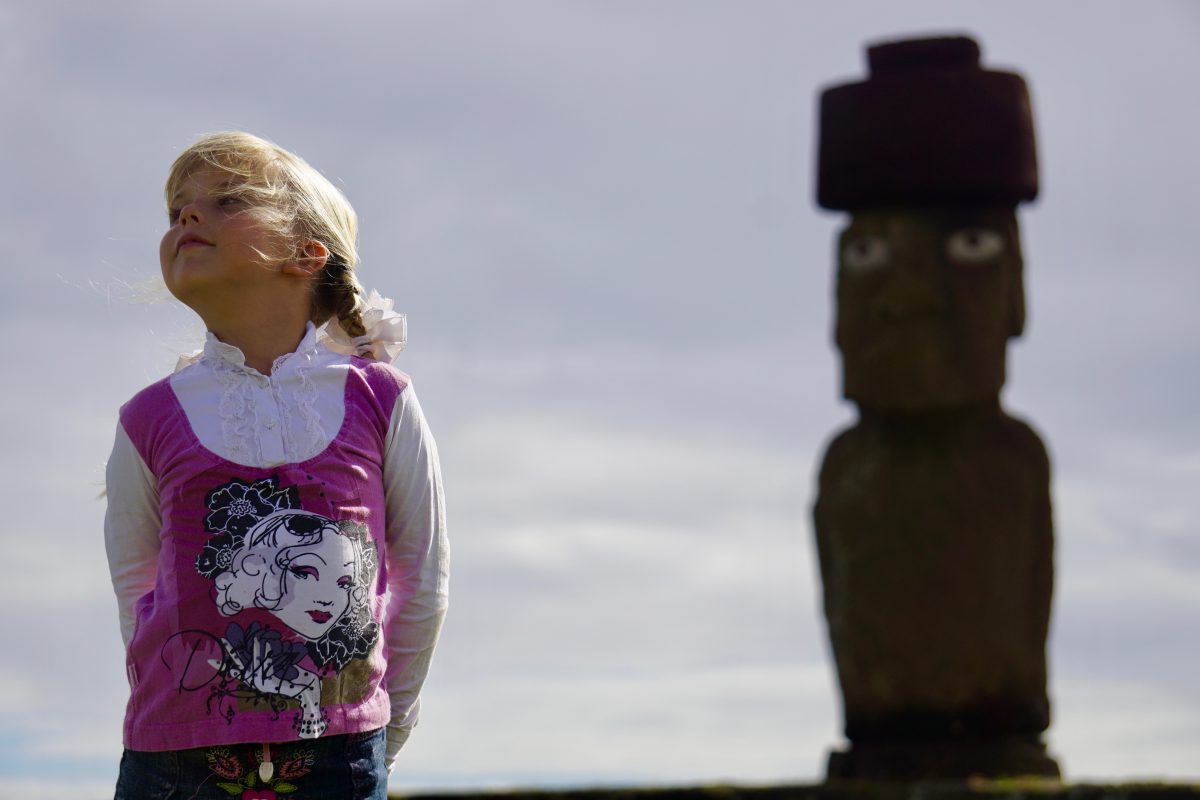
For thousands of kilometres around the island, there are no other inhabited territories. More than 2,000 km to the west is— Pitcairn Island. It has a whole 56 residents.
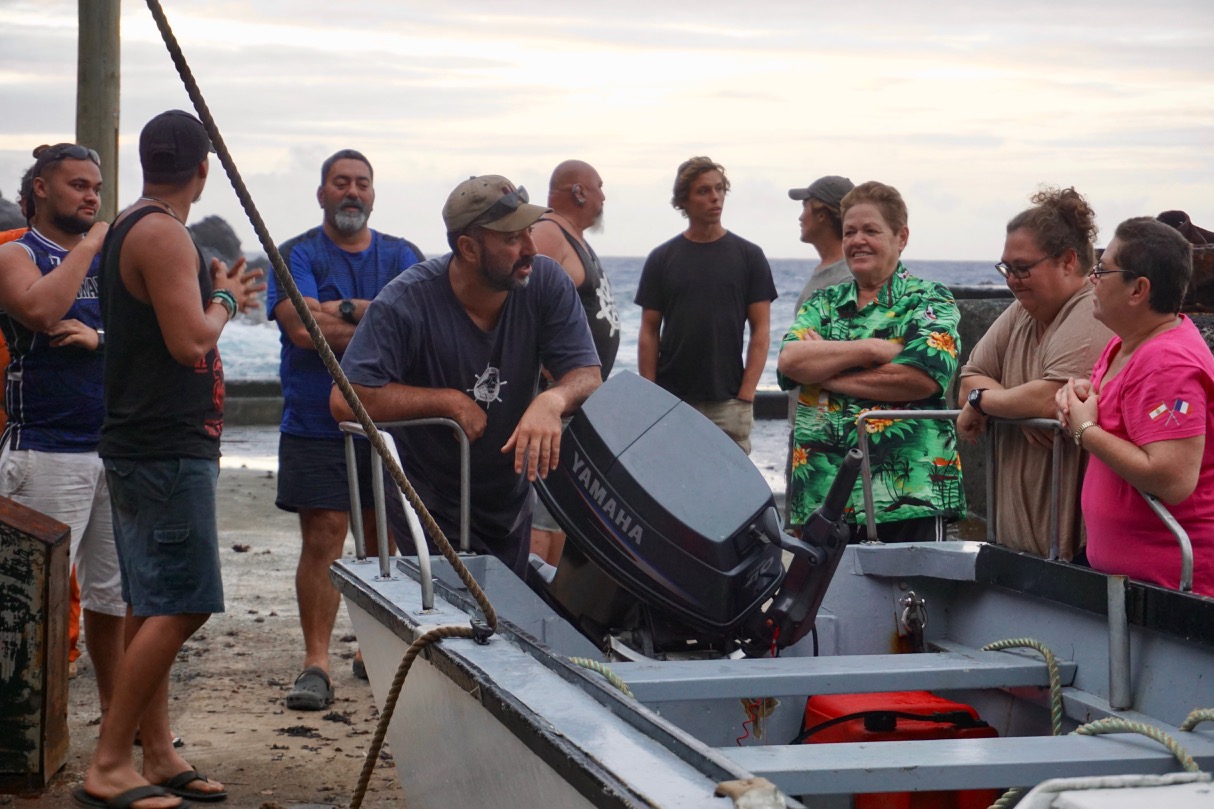
Residents of Pitcairn Island
It is hard to say who feels lonelier in this world: the six thousand Easter Islanders, cut off from the mainland and surrounded by tourists, or the five and a half dozen descendants of the mutineers from the Bounty.
But distance is not the only reason yachts do not visit Rapa Nui. After a difficult three-week passage, you discover that you cannot anchor on the side where the people and officials live. (In the worst case, you cannot anchor anywhere off the island.) So you head to the other side to wait for the wind to change. The winds shift every two or three days, but they can also blow for weeks. You cannot go ashore until you have cleared in. If you do manage it, they will most likely find out. The host authorities keep a gentle finger on your pulse around the clock.
And Easter Island is also an island of time gone astray. The local time zone is set not by the sun, but by Chilean time—just to keep things simple. As it turns out, not everyone takes this calmly. The sun shows its rosy flank above the ocean at 8:50. And if you are used to greeting dawn at six, it is hard to adjust to the sun’s new routine. Friends who anchored here before us left just three days short of their planned departure. “We can’t take it,” they said. “Dawn at nine. It’s just too much,” they said. “And everything is expensive. We want to go home to New Zealand.”
Making It Official
Along with the morning sun, the captain appeared in the cabin doorway. He ordered us to tidy everything in the galley and deckhouse so we could weigh anchor in an hour.
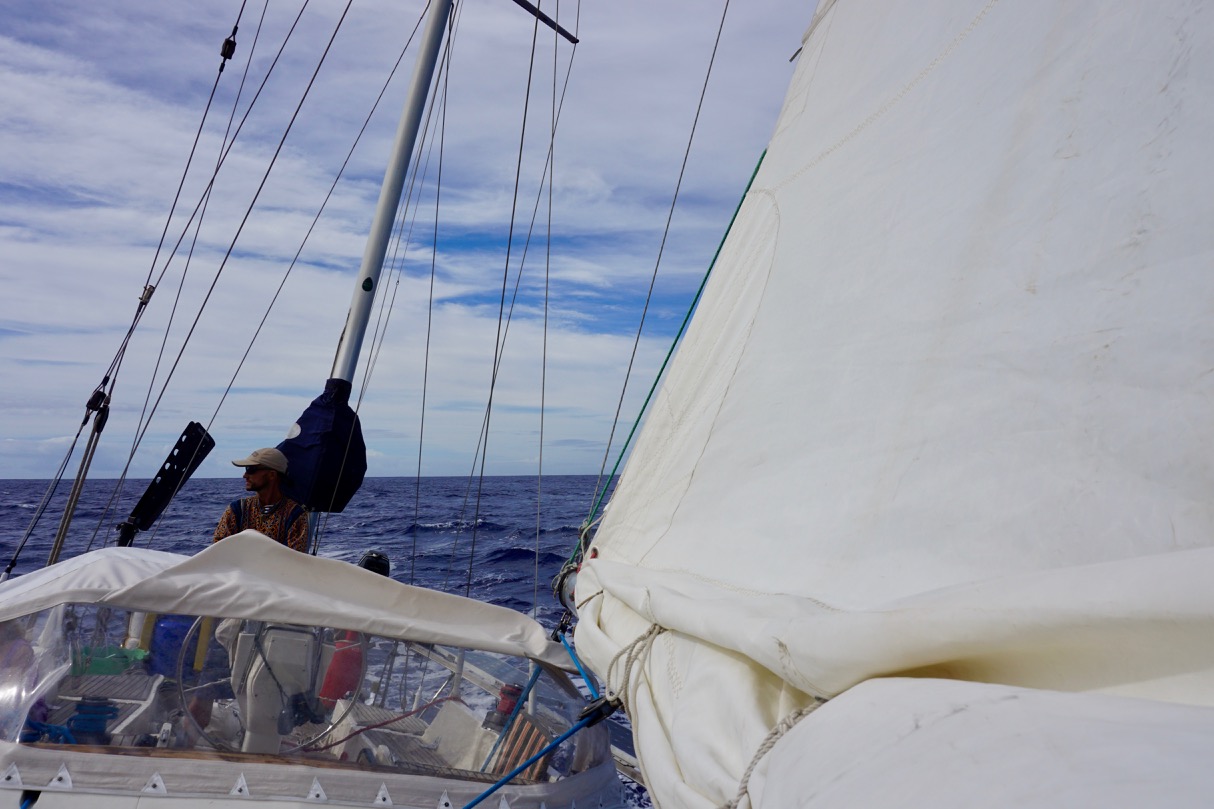
It is about 10 miles to the village of Hanga Roa. It takes us around two hours, traditionally upwind:). But we bound softly over the waves as if they were our own—we have grown used to them over the past three weeks.
The moment our bowsprit emerged from behind the headland, the radio crackled:
— Lady Mary, Lady Mary—answer Pascua Radio!
— We’re here!
— Anchor beyond the line of red buoys; there’s a reef close inshore.
— Okay, — the skipper agrees. — Pay out all the chain! — that last part is addressed to me.
— All 100 metres??
— Leave 2 metres 15 centimetres aboard!
— Shall I climb into the locker with a ruler?
— Yep.
One hundred metres of anchor chain tumble out into 22 metres of water. Meanwhile, the captain answers the questions of the border-control officer from Chile’s valiant armed forces, who is interrogating him over the radio:
— Your passport numbers? Dates of birth? Number of masts? Make and serial number of your EPIRB? Call sign? Telephone number? Satellite phone? What make of satellite modem? Iridium? Inmarsat? Your email? How much water do you have? Fuel?... Oh, and tell me the make of your dinghy as well!...
— Uniform. Bravo. Quebec. Kilo. Eight... — The captain patiently opens things, removes things, finds things, and spells out every detail.
— Thank you, Captain! We’ll come out to you in about an hour. Back to Channel 16. Over.
The Clearance Party
How wonderful that the officials come straight aboard! At least it makes us give the yacht a proper clean-up. Otherwise, we would have left everything strewn around just as it was and dashed ashore.
It is nearly lunchtime. The crew have only just ladled the passage borscht into bowls—it took our last beetroot and cabbage—when the telephone radio rings again:
— Stand by to receive us!
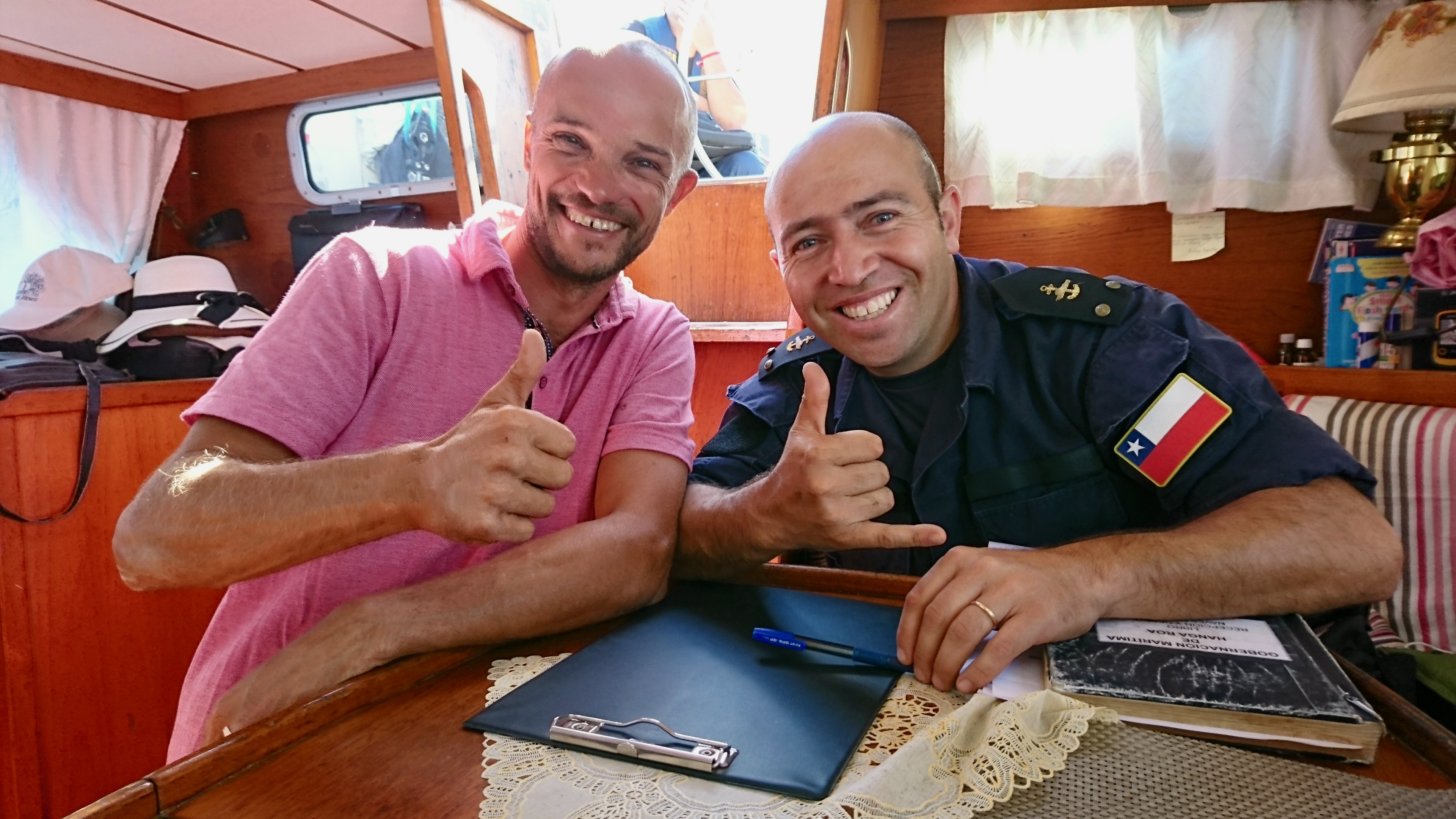
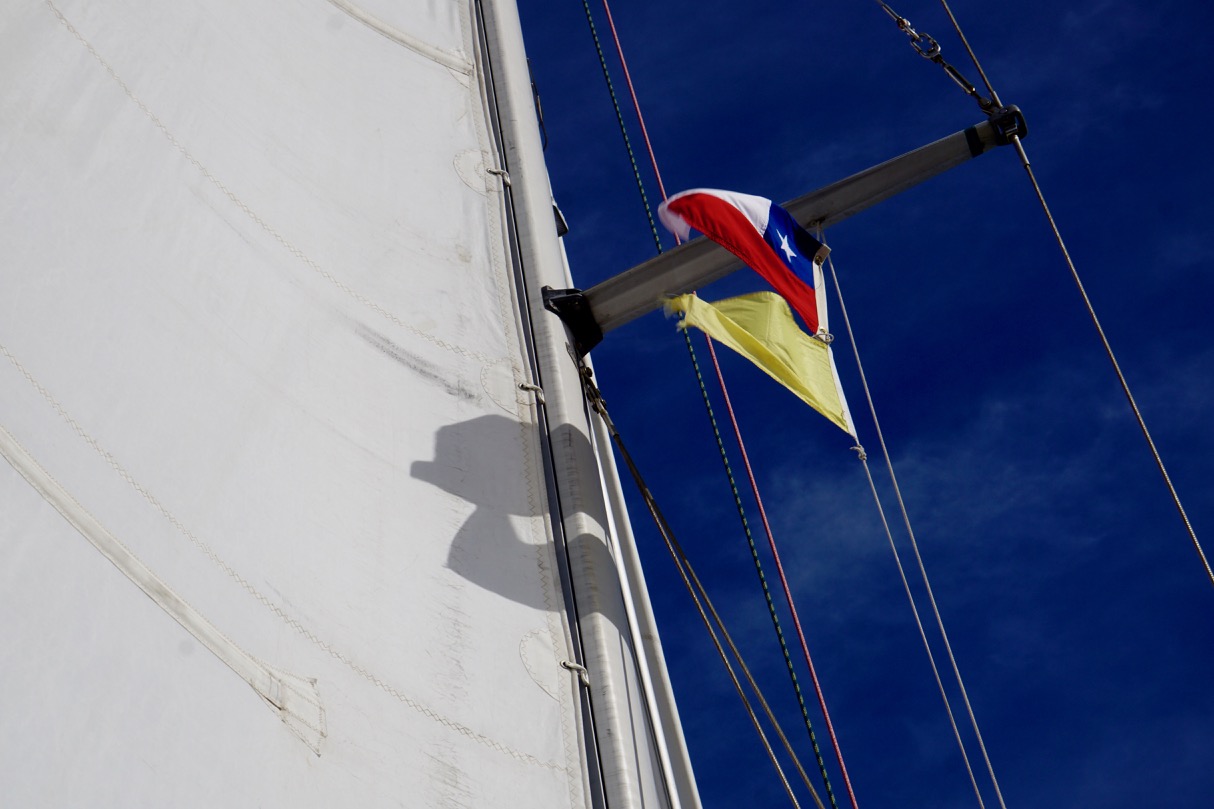
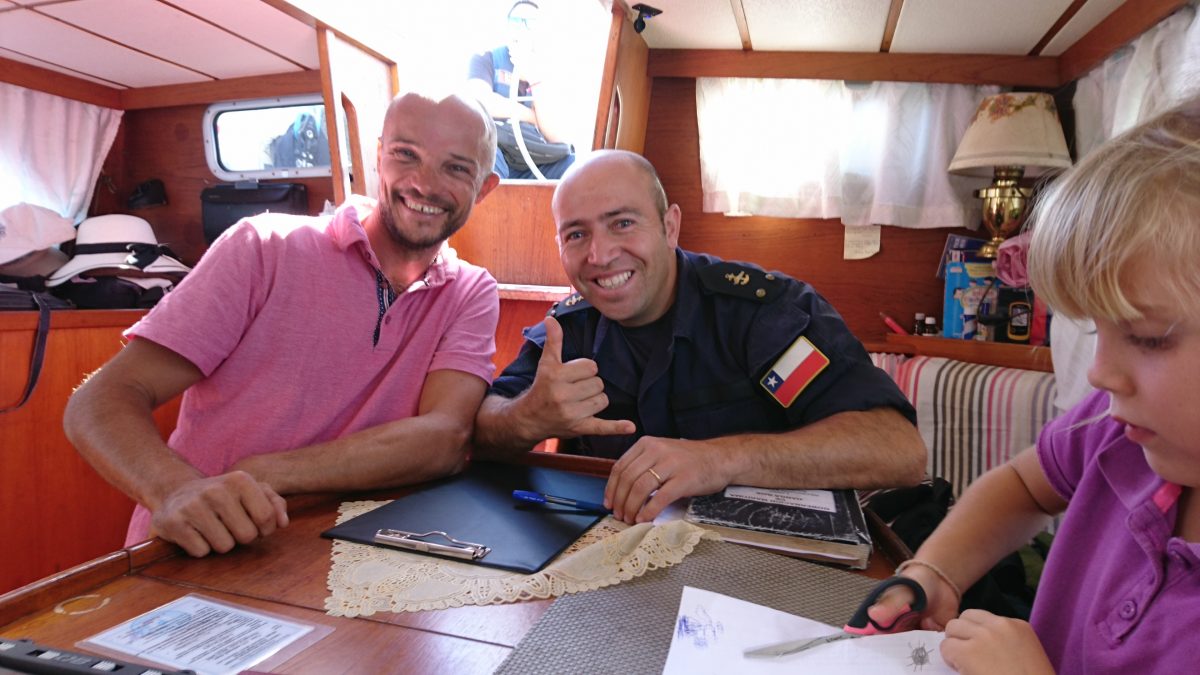
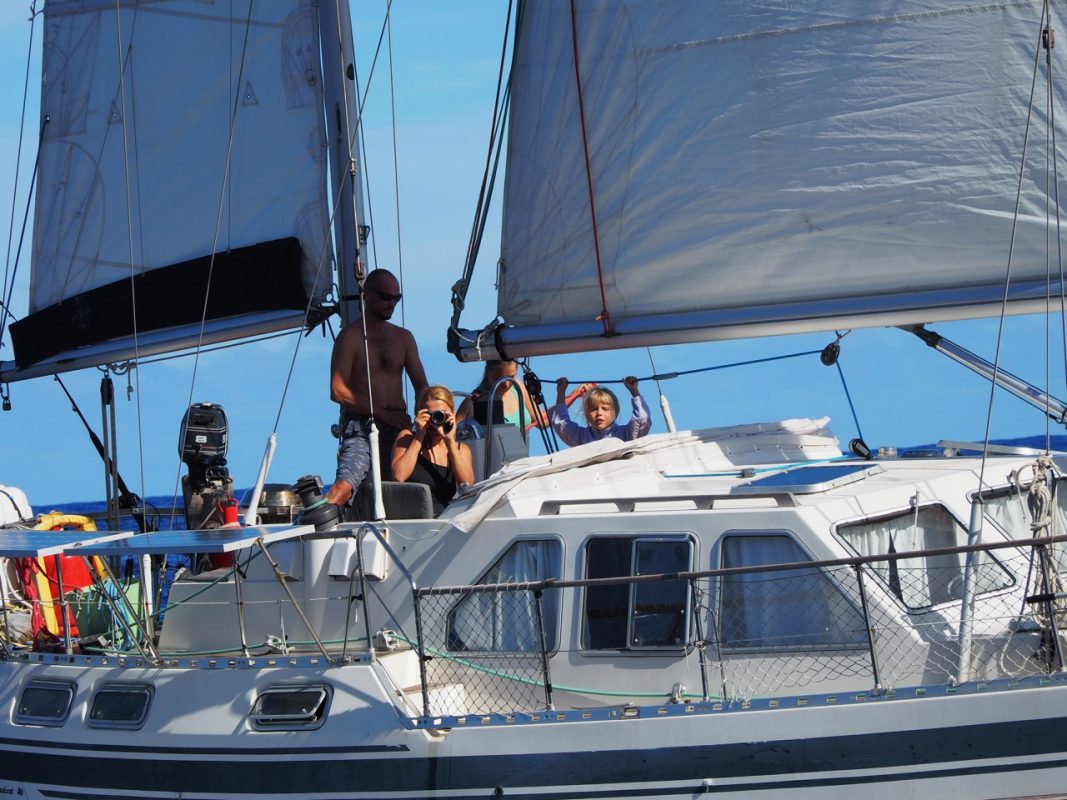
Flags beneath the starboard spreader: the yellow flag means the yacht is awaiting inspection. The coloured one is the flag of the country whose waters the yacht is in A delegation of six people, plus two coxswains with “Armada” written across their backs: an officer of the Chilean armed forces, Mauricio—the very man who had been showering us with attention over the radio for the past two days. There was also a young doctor, Fabrizio, a vet, an agronomist, a customs officer, and immigration. Everyone settled into the cockpit. Mauricio went into the deckhouse, and then Fabrizio joined him there. Later, the young woman who was either the vet or the agronomist peered in as well. The rest carried on sunbathing.
The captain had prepared the traditional packet of documents:
— passports — the boat’s registration documents — the ZARPE from the previous port (outward-clearance document).
From above, the agronomist spotted our floral wards:
— Oh, and who might this be?
— That’s our aloe, for treating the children’s sunburn and scratches, — the captain explained in a voice full of concern for children left unanointed.
— Where did you get it?
— In Panama, — the skipper lied without batting an eyelid. The idea being that the more recently we acquired it, the safer it would seem to the agronomists.
Then Dr Fabrizio widened his eyes ominously and prepared us all for an epidemic of dengue fever:
— Cover yourselves in repellent, wear long sleeves and trousers, and if you come down with a fever, go to the hospital immediately!
We nod seriously, not quite understanding: where is Easter Island, and where is dengue? Even in perpetually rainy Panama, no one had worried about tropical fever. Here it is dry, the island is small, there are no mosquitoes buzzing around, and the nearest other islands are two thousand versts away. Where would dengue come from? Then again, no one had ever asked about the make of our dinghy before either:). That’s personal service for you.
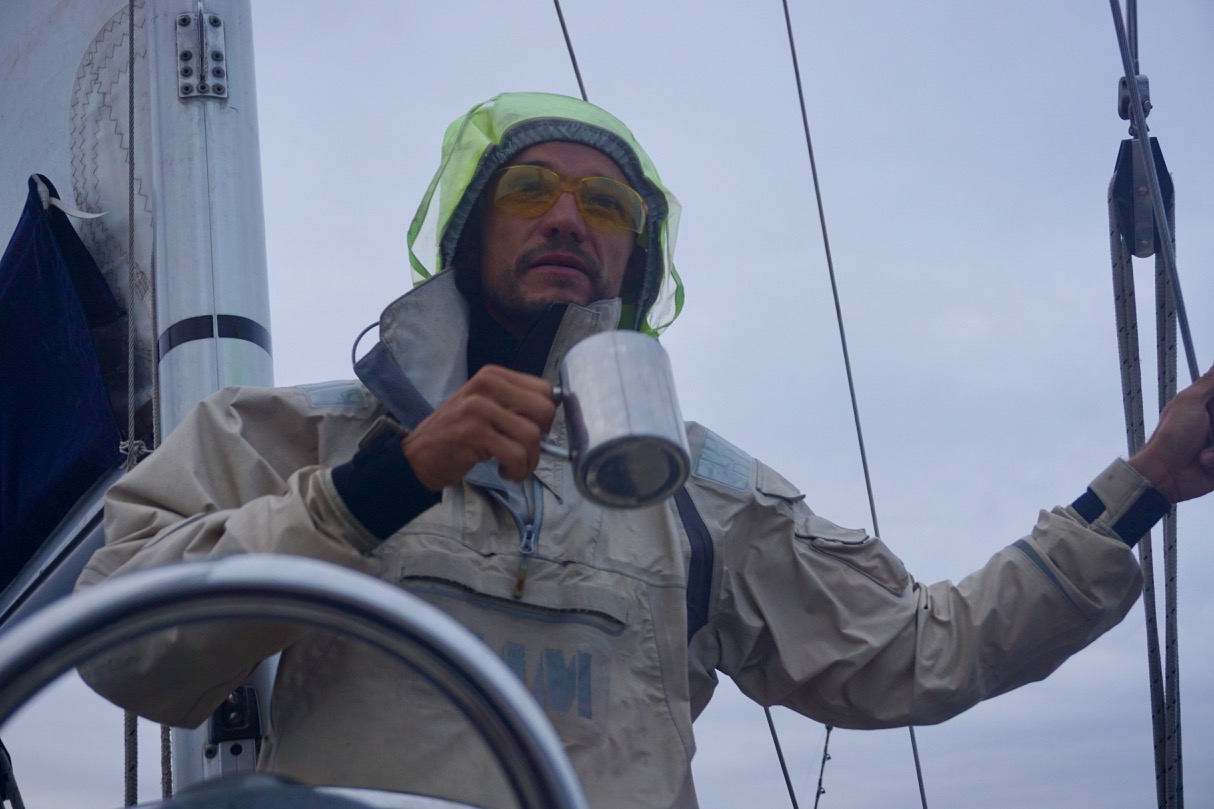
Passage from Bay to Bay on Easter Island — What did you say your previous port was? And the one before that? And the one after? — The officer, who is also the harbourmaster, who is also Mauricio, looks like an ingenuous fellow, tells us about his family and how he wants to return to Chile. He adds that he worked in Panama and caught drug traffickers. And he does not forget to ask different crew members the same follow-up questions.
— Are there any weapons aboard? — the conversation continues.
— No.
— None at all?
— None at all!
— Any narcotics?
— No.
— Any “drugs”?
— Only aspirin.
— Do you take drugs?
— No.
Mauricio looks cheerful, but attentive. Our young sailor had taken a great liking to him. So much so that while we filled out the paperwork, Ladunya drew him our anchorage at Anakena, with its palms and the idols of the long-eared Rapa Nui tribe.
— Mum, write “From” here for me. But shhh!
Our young sailor signed it “From Lada,” added a picture of our yacht with the Russian flag, and gave it to Mauricio. The officer was touched and announced that he would come aboard with a dog the following week to search for drugs.
— Just tell me if you don’t want the dog aboard, and we won’t come!
— Do come, — we say. While privately thinking: yes, tell them not to come and they’ll decide we’re running drugs here. Better let them bring their four-legged colleague.
— If you have any problems, if you suddenly need anything, any help... call me. Here’s my phone number. And this is my email. Don’t get the wrong idea—it’s my job.
— Thank you, Mauricio!
— And give me your address in Russia as well. And your phone number there. And your email. If you sink here, we’ll notify them immediately.
It was all very heartfelt. Moved by the occasion, the first mate gave the harbourmaster a small matryoshka doll because he remembered that about three years earlier they had cleared in the yacht Lady Arisha (hi, guys!), and the crew had showered them with gifts, including a spoon decorated with Russian symbols.
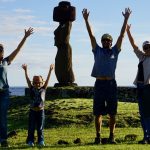
We parted as good friends, received a photograph of the whole company as a keepsake, and—Ta-da!—landed on Easter Island (more about that in the next report).
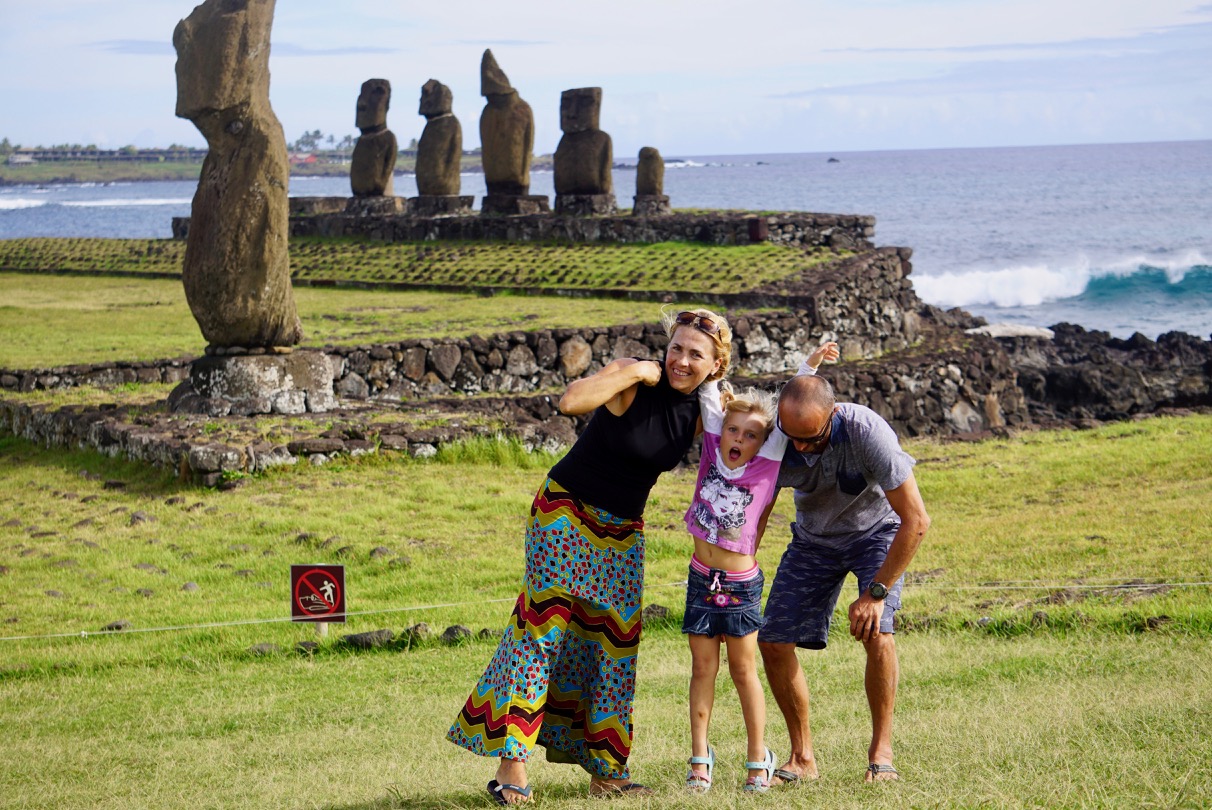
Easter Island. A platform with moai near the island’s main village.
The Finishing Touch and the Cost
Nine in the evening. Our silent enjoyment of the dinner obtained ashore was interrupted by the radio:
— Lady Mary, Lady Mary, this is Pascua Radio!
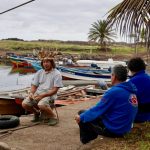
Mauricio. Does he ever rest at all?
— Pascua Radio! Lady Mary.
— The weather is going to change. Westerly winds 21–25 knots. On Sunday morning, scoot over to the eastern side.
— Okay! We’ll have a look and move over.
Five minutes later:
— Lady Mary, Lady Mary, this is Pascua Radio!
— Pascua Radio! Lady Mary.
— I’ve emailed you the weather forecast. Let me know once you’ve seen it.
— Thank you!
— And thank you, Captain. Have a good evening!
Yes, About the Money
You are supposed to pay $1 per tonne of the yacht’s displacement and, apparently, another fee of $45. Then you can stay for three months. But no one asked us for any money. Maybe later, on Easter Island time?
Now, every two or three days, we’ll get to practise anchoring and weighing anchor, plus two or three hours of sailing against a 20-knot wind to the other half of the island. Rapa Nui’s free training centre:).
Wishing everyone stability and fair weather!
To be continued! And we are heading ashore to search for the treasure hidden by the TV show Oryol i Reshka, naively hoping that no one has dug it up in four years.
Residents of Pitcairn Island
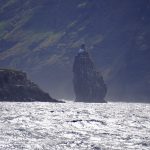
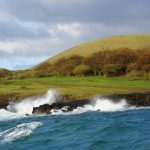
Passage from Bay to Bay on Easter Island
Flags beneath the starboard spreader: the yellow flag means the yacht is awaiting inspection. The coloured one is the flag of the country whose waters the yacht is in