
From the Travely-Family archive · Family, Children and Life Aboard
Children. Sleep. And a Sailing Yacht
An original publication from the former Travely-Family website. This English translation was preserved from the technical-site archive without editorial rewriting.
To understand what heeling and rolling on a yacht are like, imagine your house perched on a trampoline attached to a swing... 🙂
Under these conditions, the most ordinary things—sleep, for example—turn into a stunt that you
(a) psych yourself up for; (b) perform; (c) breathe a sigh of relief after.
Of course, it isn’t always like this. But it often is. Especially in winter, somewhere in the Mediterranean or the North Atlantic.
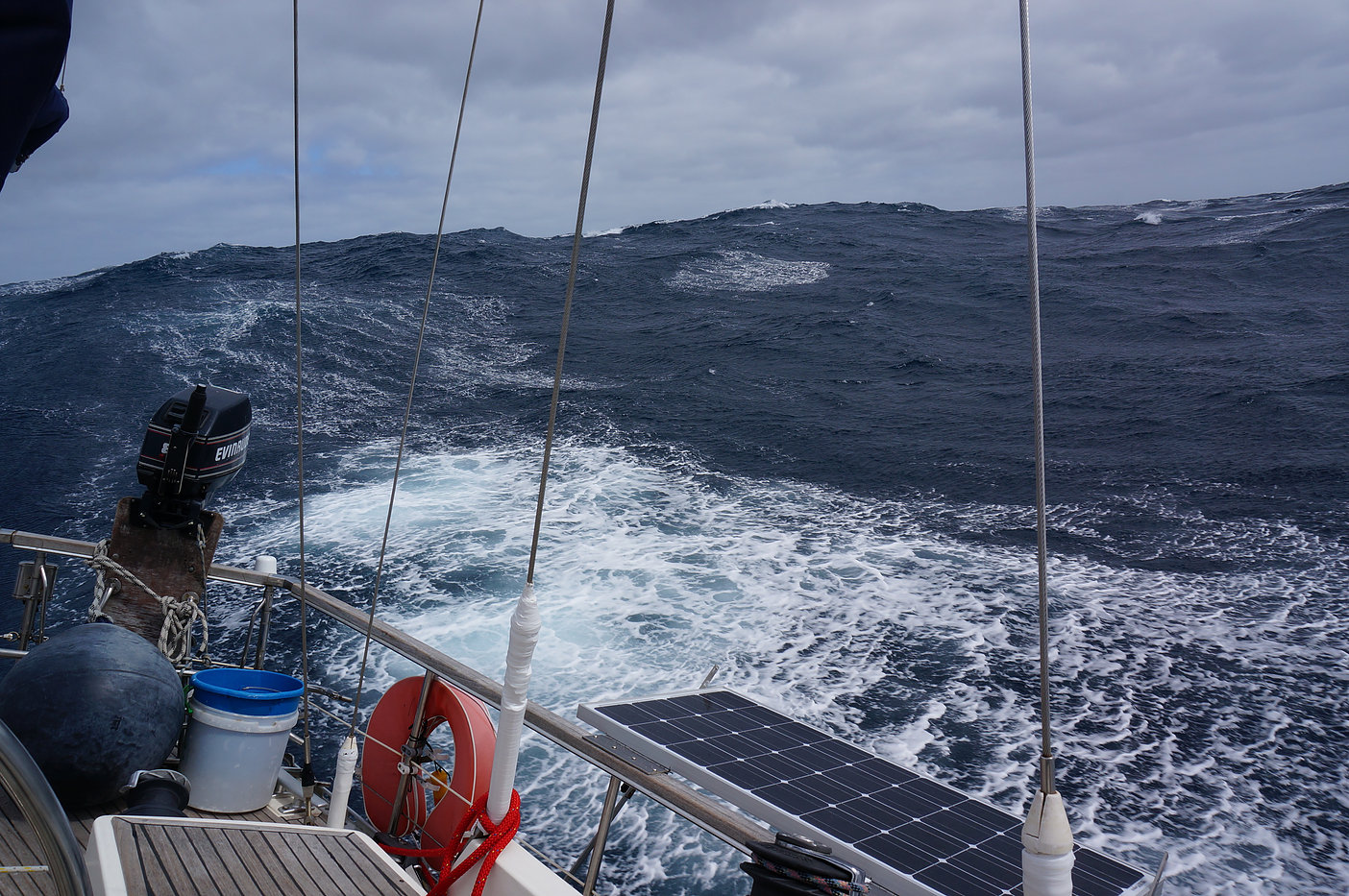
One such stunt is— Teleporting tired children to their sleeping quarters on the open sea.
On long, rough sea passages, Groundhog Day takes on a dreary dark-grey hue. To make yacht life blossom in more cheerful colours, you have to... somehow keep yourself busy with various jobs around the boat. And the last thing you want is to lie in the cabin. The annoying thing is that this is exactly what you end up doing most of all:).
Whenever possible, we—the first mate and the young sailors, all susceptible to seasickness to varying degrees—try to stay on deck or in the deck saloon during passages. It is light here, you can see the leaden sea, and you don’t get drenched in cold water as you do in the cockpit. Here, the helm, the winches and the first mate’s duties are all close at hand. Here, you don’t feel like Prince Gvidon in his barrel. (Incidentally, Pushkin said nothing about how the prince and his mother were feeling while they were tossed about upon the “ocean-sea.” And they were clearly tossed about for quite a while, seeing as our hero had time to shoot up from an infant into a fine young man.).........
Even in the evenings, the children have no wish to crawl into the cabin and fall asleep pinned by gravity against the backrest of the watchkeeper’s settee. This is only possible on starboard tack. But they somehow manage to fall asleep on port tack too. In the only possible position—like centipedes, braced against the table with every limb.
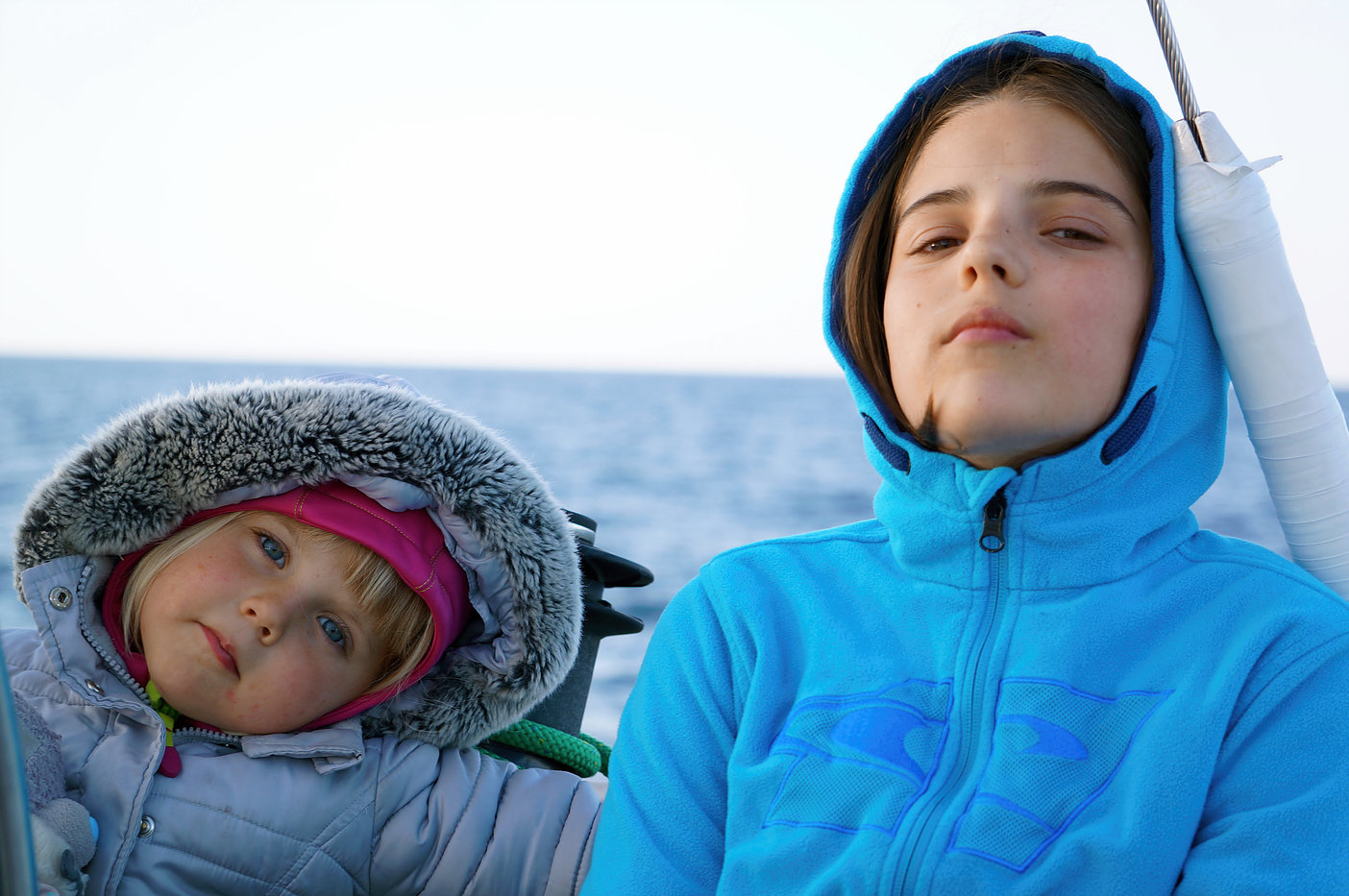
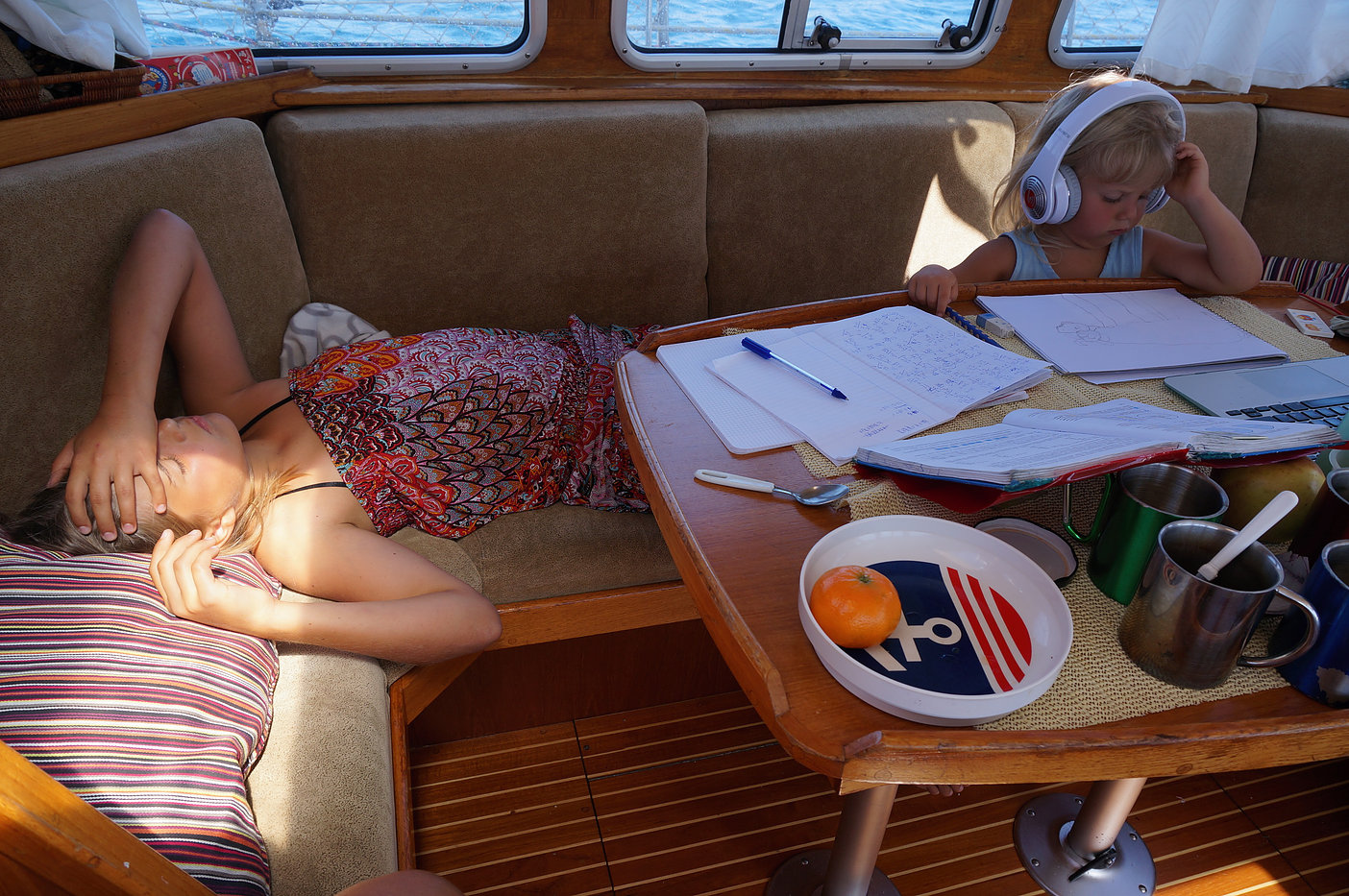
The photo shows that very settee with the children, though during a calm sea passage:
Moving the offspring to their sleeping quarters for the night in a seaway becomes an all-hands operation.
It goes something like this:
one parent (Mum) holds open the door to the aft cabin
(because the catches don’t catch a damn thing). As she does so, she braces one shoulder against the wall and one foot against the step perpendicular to the bed (feeling like Spider-Man). The captain carries the younger daughter from the deck saloon in a series of short tacks: one step down from the bench to the saloon floor, a metre of level floor, the passageway and two steps down, then another metre of floor. Dad often covers this metre with the sleeping child in his arms in low-level flight. Sometimes he manages to fly head-first straight into the bookshelf. The important thing at that moment is to land the child squarely on the mattress. Otherwise... there must be no otherwise.
Having applied his entire head to the yachting literature and tested the strength of his skull bones, Dad completes Part 1 of the mission and, half-crouching, makes his way back into the deck saloon.
Mum now enters the active phase. She drags the child along the bed towards the pillow using the “casualty evacuation during an earthquake” technique, periodically flying up under the ceiling on all fours. The little one slumps against the hull side, and it is unclear what she is sleeping on more: the mattress or the wall.
(Unfortunately, we cannot provide an illustration of the process, because at that particular moment, recording events for posterity is the last thing on our minds.)
No. 2
Dad brings the second child to the same place. Meanwhile, Mum drags the little one away from the wall, and the elder one crawls into her place.
They sleep like this: the elder one on the wall, the younger one on top of the elder one. When we change tack, the elder one has to wake up before she crushes the younger one and climb over to the opposite wall to finish sleeping. To the soft whimpering of our daughter (at the realisation of just how unique our way of life is, naturally), the lighting is switched off, and Mum, fighting down the rising nausea, crawls back into the deck saloon to watch us sail into a thunderstorm.
Judging by the stars, which shine brightly only astern and on either side, the cloud is directly ahead. It looks like a pencil case stuffed with murky cotton wool. We wedge ourselves into its end, heeled jauntily over, to the howl of the wind, the crash of the rigging and the deathly green glow of lightning.
Strangely, there is no thunder to be heard at all. This supports the theory that the cloud is of absolutely infinite length.
30 knots of wind (15.5 m/s) and a beam sea. Rain, and +8°C. Just the way we like it:).