
From the Travely-Family archive · Patagonia and Tierra del Fuego
Navy Day — the Soaked Navy
An original publication from the former Travely-Family website. This English translation was preserved from the technical-site archive without editorial rewriting.
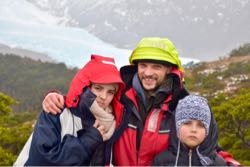
Navy Day — the Soaked Navy
How we set off for a glacier, became Indians and got caught in a cyclone. Navy Day, Patagonian style................
We have always marked Navy Day with a hike. On the last Sunday of every July, my dad’s friends climb to the highest point in #Taganay National Park, to the memorial plaque for Sergei Sokolov, a Snow Leopard mountaineer, Everest climber and honorary citizen of Zlatoust. Fifteen years ago, he disappeared while descending the killer mountain K2.....
We hike to Kruglitsa in any weather. And the weather in Zlatoust can be... enough to make you weep. +10°C and pouring rain, for example. And we still go. We spend the night at the shelter by Gremuchy Spring and sing songs to a guitar. On Sunday, we hobble 22 km, dragging little Lada along by the hand, carrying her in a backpack, or even in a sling. So this latest hike to the glacier through a blizzard brought by a South Pacific cyclone felt just like home to us. Except that, unlike Kruglitsa on Dad’s hike, we didn’t actually have to slog all the way to the glacier.
.........................................................................................................................................................................................................
In the morning, the water in the bay is like a mirror. Ducks break the symmetry of the reflections, flapping their wings for aaages as they run along to take off. The small, stiff leaves of the evergreen beeches are motionless. The sky is grey, and the forecast promises a dead calm. That is essential for our hike: we have to row about a kilometre to the valley where the river flowing out of the glacial lake comes down. Getting there is easy, but the return trip is against the prevailing winds.....
We row right up to the rocks. Flag trees hang overhead; the cliffs, streaked with dark yellow veins, seem alive and cosy despite the winter cold. Streams tumble down in miniature waterfalls.
“Oh, brilliant! We’re like the Yámana!” our young sailor exults as we enter the reed-choked river mouth.
But we cannot row as far as the glacial lake: gravel shoals protrude from the water. The river meanders, and at every bend rotten branches tumble into the dinghy. Well, now we have firewood; we won’t perish after all.
“Hooray! We’ve run aground!”
And we rock the boat to get her off. Around the next bend, beavers have piled up trees, and our mini-tribe goes ashore. If the sailing directions are to be believed, there is a trail to the glacier somewhere over there. But every little path through the Patagonian taiga ends at piles of guanaco guanO, pardon me. This is their trail to the watering place.
The captain confidently pushes through the thorny bushes and leads us out to the shore of the channel. Or rather, we push our way towards the shore, following the red patch of the cap’s jacket..........................................................................................................................................................................................................
At the same time as us, a nasty rain-bearing cyclone arrives at the channel. After a kilometre, the shell beach runs into a bog, and we squeeze in beneath the sparse little trees. If only there were some kind of shelter! An uprooted tree provides something almost like an awning. Except that the drizzle and wind are coming from the other side.
As we fantasise about Indian wigwams, we hear a jaunty whistle. The cap, materialising among the hummocks, reports that the trail has disappeared into the bog, but that we can follow the ridge for quite a long way and at least see something. Sounds promising.
The young sailor begins to whine. But with an echidna of a mother, there is no point trying it on.
“You’re a mountaineer’s granddaughter,” I say. “Up you go!”......
A guanaco, spotted by Andrei on a distant mountain, helps her get going. While Lada tries to make out its movement in the sight formed by her dad’s hands, her tiredness almost disappears. I am raring to press on, but the children are soaked, and the young sailor’s down jacket looks like a wet wetsuit..........................................................................................................................................................................................................
We drink our fill of tea in the wet bushes, lament that not a single Yaghan shelter has survived, and turn back. The wind is whistling from the direction of the yacht, too, so we will have to row against the elements.
On the way, we remember the time we spent the night in the dinghy... see the post of the same name on the website... and estimate how long we would last in a Tierra del Fuego winter compared with the eternal summer of the Tuamotus.
It is here on the descent that I remember Kruglitsa and Navy Day. And I cheerfully announce to everyone that, right now, our people back home are also returning from their hike. Probably in the same sort of weather. Well, perhaps about 15 degrees warmer.
And I remember Dad. I think about him every day, actually........................................................................................................................................................................................................
On the rise, we lean into the icy wind howling over the channels among the 40,000 islands of the Tierra del Fuego archipelago. The young sailor whimpers.
“Hang on,” I say. “We’ll be home soon, and there’ll be hot tea.”
“And a cartoon,” she adds plaintively.
“And a cartoon, yes.”.........................................................................................................................................................................................................
We find the tied-up boat on the first try. My hands are full of “herbarium”—Lada once called a herbarium that, and now that is what it is known as. It contains a spiky crab shell, extraordinary seashells and some dried-up marine thing, plus local moss resembling sprawling cabbage leaves. And a whole heap of other flora specimens, one of which transformed in transit from a funny little ball into a pile of forked spikes.
Oh! On the beach, the young sailor found a tusk! Either from an elephant seal or a sea lion. It looks like half a small banana. Lada carried this trophy herself.
By the river, we hid and watched a beautiful bird that looked either like a crested woodpecker or an overgrown blue kingfisher. The camera, fogged up from the rain, refused to take any sharp photographs of our subject. The subject eventually got bored and flew away.
Clutching our precious herbarium, we climbed into the dinghy. At low tide, shoals had bared their sloping flanks throughout the channel. Once, we had to get out and drag the boat overland. We emerged from the river mouth into a headwind. But the cap’s mighty arms were so eager to get home, where it was neither pouring nor blowing, that we flew back to the yacht in barely half an hour.
The young sailor was soaked right down to her knickers. We wrung out her down jacket on deck and dried it by the heater for twenty-four hours. Garlands of all our other clothes decorated the saloon, while we drank scalding tea and roared with laughter at the cartoon about Ivan Tsarevich and the Grey Wolf.
The next morning, Lady Mary weighed anchor and carried us into the most beautiful fjord in all Patagonia. And there she froze into the ice. But that is another story.
Humour to you all!.........................................................................................................................................................................................................
Friends, thank you for being with us! We eagerly await your comments; they keep our spirits up on dark winter evenings. Our email works, but our track is not being recorded at the moment. Perhaps it really wasn’t such a good idea for the young sailor to knock the tracker off the chart table before we left Puerto Williams? For now, look for Lady Mary on marinetraffic.com using MMSI 273334590..........................................................................................................................................................................................................
We thank Ivan P. from Krasnodar and Yuri B. from Kharkiv for supporting the expedition’s morale through Paypal.me/TravelyFamily. You are part of our brave crew!