
From the Travely-Family archive · Atlantic
Creating a Vegetable Garden on a Sailing Yacht
An original publication from the former Travely-Family website. This English translation was preserved from the technical-site archive without editorial rewriting.
Creating a vegetable garden on a sailing yacht. And what are we going to eat out in the ocean?
Besides tinned food, we’ll eat our own home-grown produce (well, “eat” may be a bit of a stretch... use it as garnish for our drinks:)). Provided, of course, that I don’t forget to bring dill and parsley seeds to plant in the yacht garden.
So far, this form of life aboard Lady Mary exists only as a flower bed containing plants unknown to me. A good place for a flower bed is in the deck saloon, on a shelf with a raised edge.
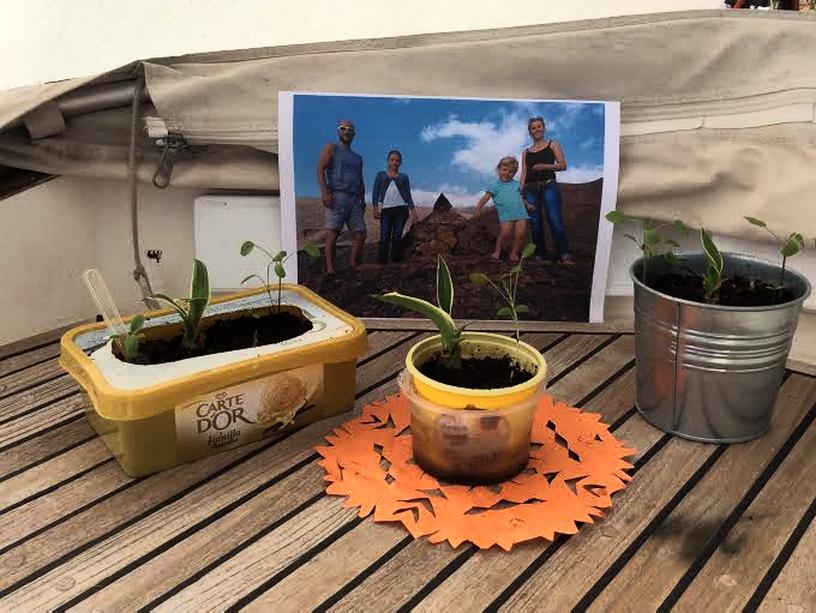
Our friends kept their vegetable garden in the forward head, which was large and had its own hatch onto the deck. So throughout the transatlantic passage, the crew munched fresh parsley “straight from the bush.”
Ice-cream tubs work well for this. You cut a large hole for the plant in the lid, so the pot is enclosed around the edges while leaving access for watering beside the stem. Although if a setup like that overturns, the boat will still end up covered in soil. So the whole thing needs to be wedged tightly in place. Ours never fell over once, even in a heavy swell.
The main drawback of flower beds—and, I suspect, vegetable gardens—on a yacht is that fauna proliferates there along with the flora. For example, a lovely pansy plant bought for 50 roubles at a fair on La Palma soon had to be fed to the fish, together with an aphid colony that had grown to alarming proportions.
A Flower Bed Is Not Food
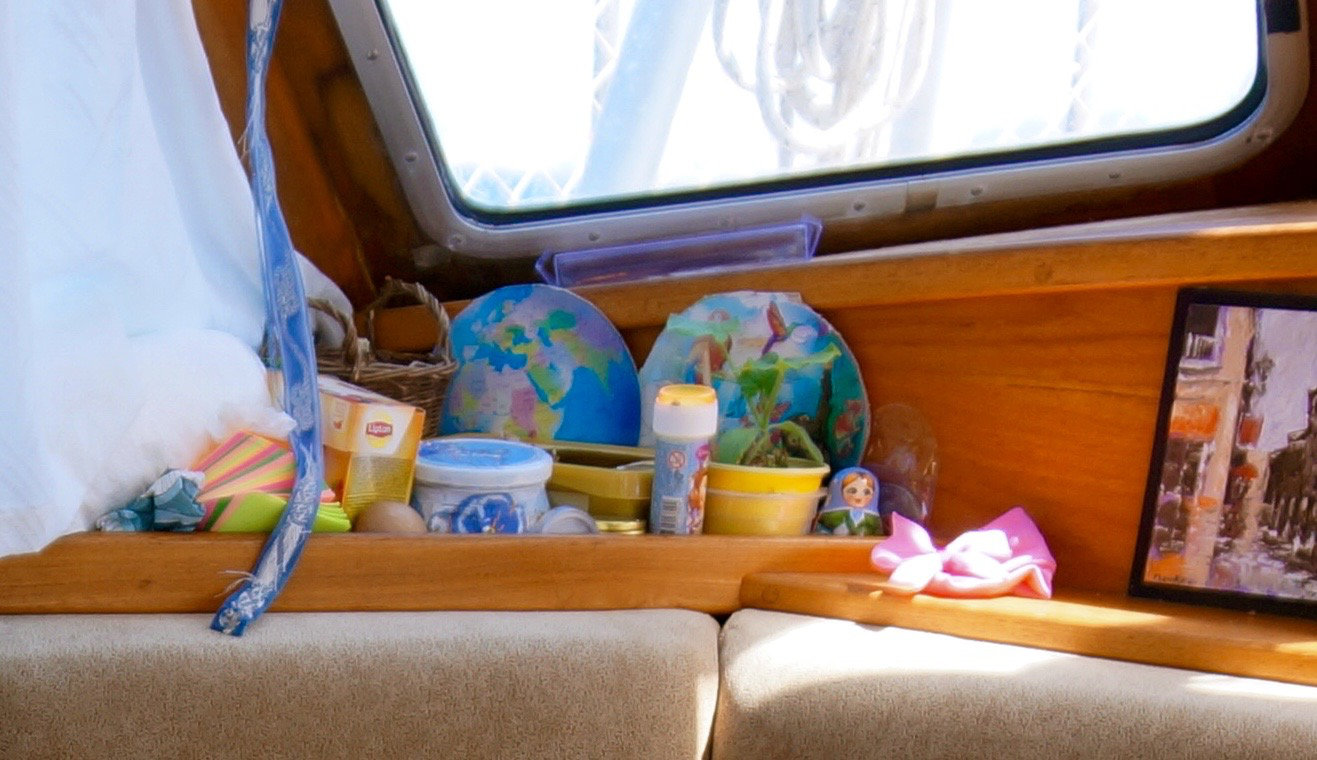
But here’s another story, with a happy ending so far. Back in winter on Tenerife, Nastya and I picked up several bulbs from some plant we couldn’t identify. The bulbs sat there showing no signs of life for about three months. In hot Morocco, just before we left the yacht, shoots began to emerge. “Well, that’s it—you’ll be dying just as soon as you’ve had a taste of life,” I announced to the flowers by way of farewell, and the crew set off across the country by car.
The children and I flew out of the ancient city of Fez, while the captain returned eight days later and sailed the yacht to the Canary Islands, where he left her until September.
During our autumn Skype calls, we naturally never even mentioned our flowers, because it was obvious that nearly three months without water in an arid climate was hardly comme il faut for them. Besides, what old sea dog would remember a few bulbs left behind in the deck saloon? Everything seemed obvious—until Andrey sent this photo:
Whenever I ask, “How??? How did you manage to preserve and expand our garden?” he just smiles in silence. How little we know about the miracles our loved ones are capable of!
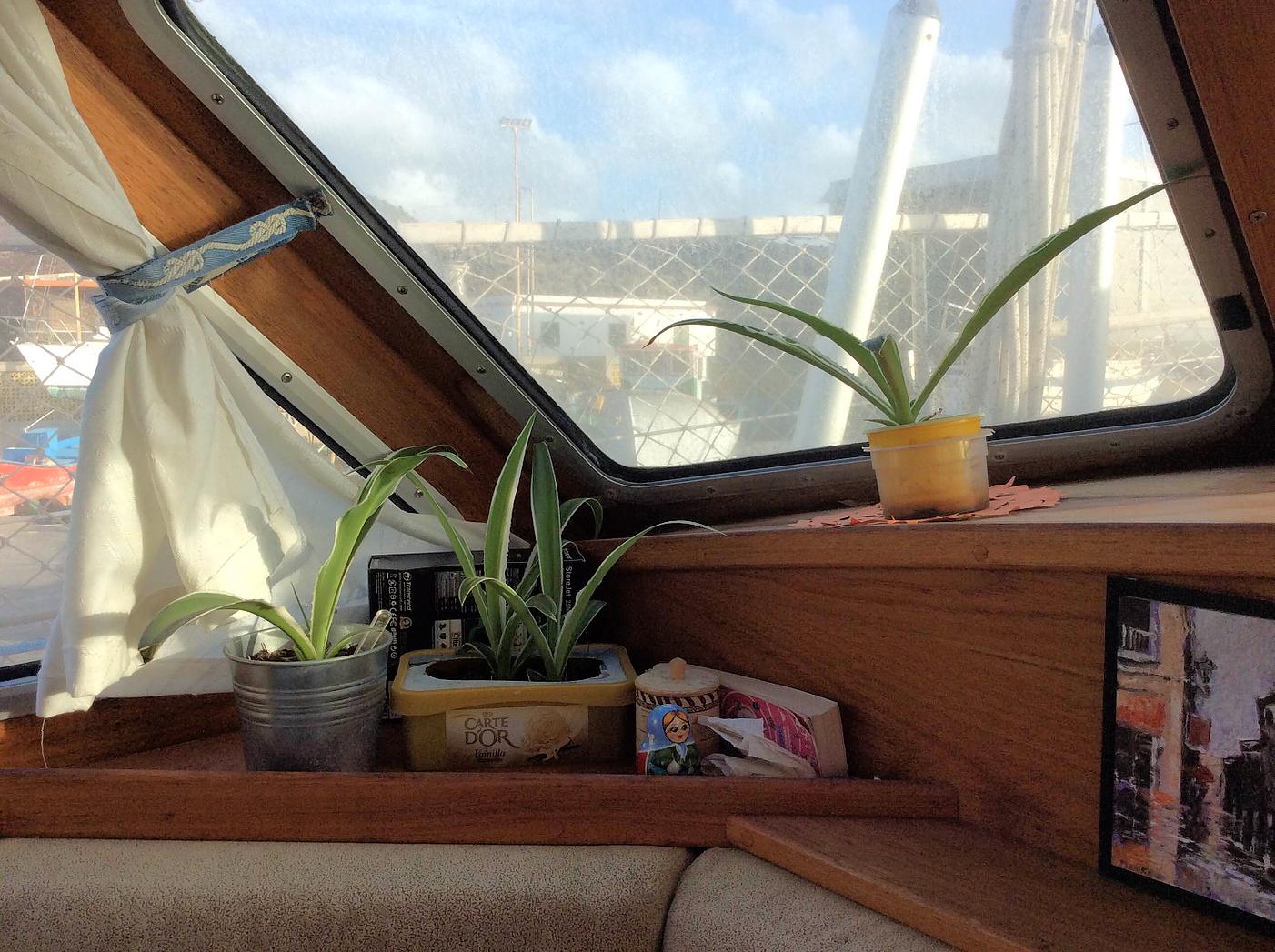
Now the flower bed looks like this:
P.S. According to the captain, something is constantly buzzing around inside these happily surviving flowers too. Friends, if anyone knows any gentle ways to control insects in a yacht garden, please enlighten us in the comments.
Floating Farm
In Cape Verde (several months later), our crew saw with their own eyes just how much we still had to learn about creating yacht gardens:):
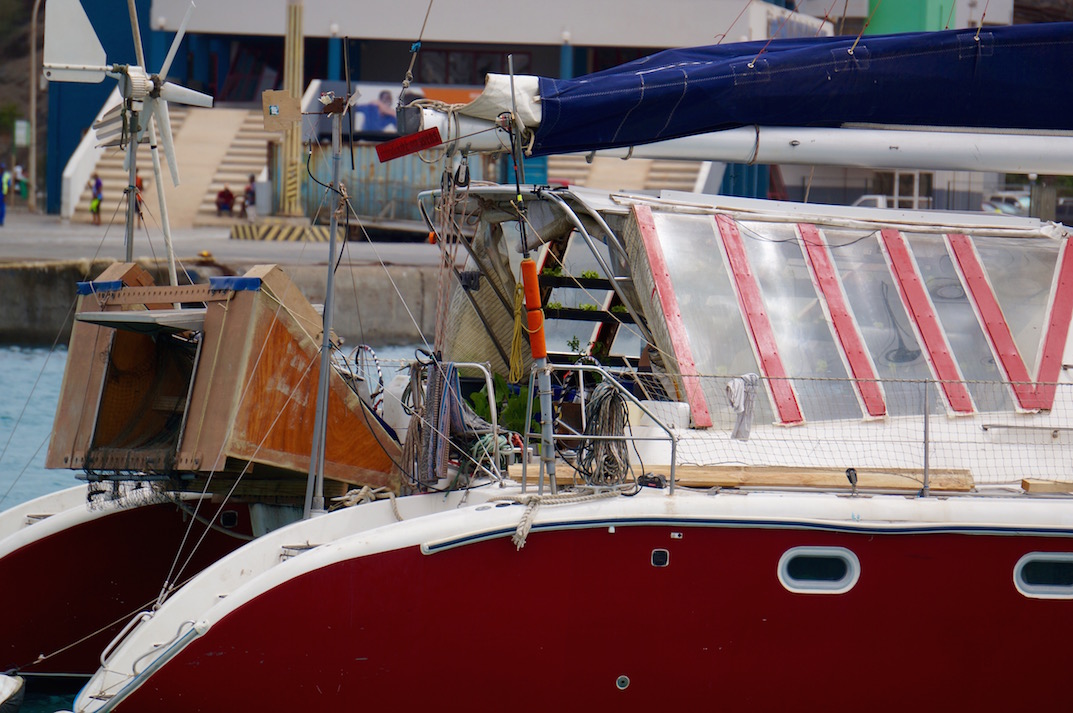
A vegetable garden and chicken coop on a sailing catamaran ))
In the mornings everyone is woken by crowing roosters, while herbs—and, I suspect, vegetables—grow in plastic pipes cut lengthwise and fixed to the walls. Four people are travelling on the catamaran: two guys and two girls, none of them older than 25 ).