
From the Travely-Family archive · Yacht, Sea and Equipment
The Diamond Arm, or Why a Tourist Needs Medical Insurance
An original publication from the former Travely-Family website. This English translation was preserved from the technical-site archive without editorial rewriting.
Gran Canaria 2012 and medical insurance
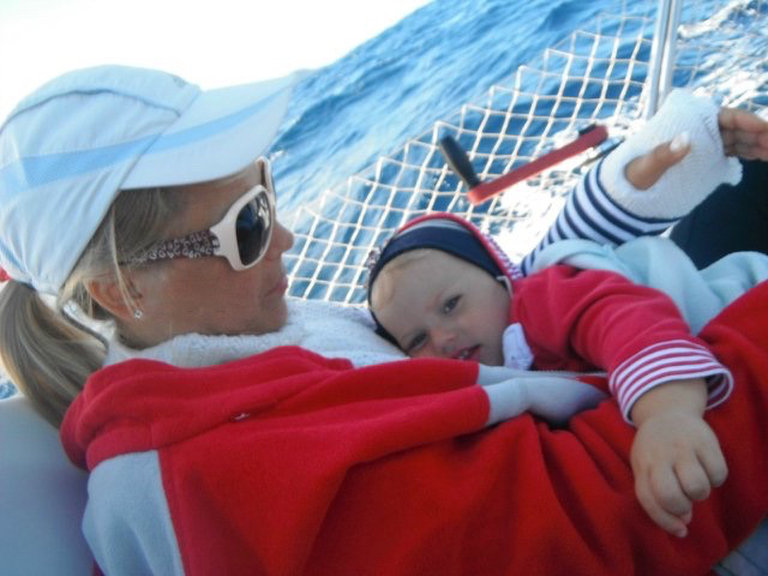
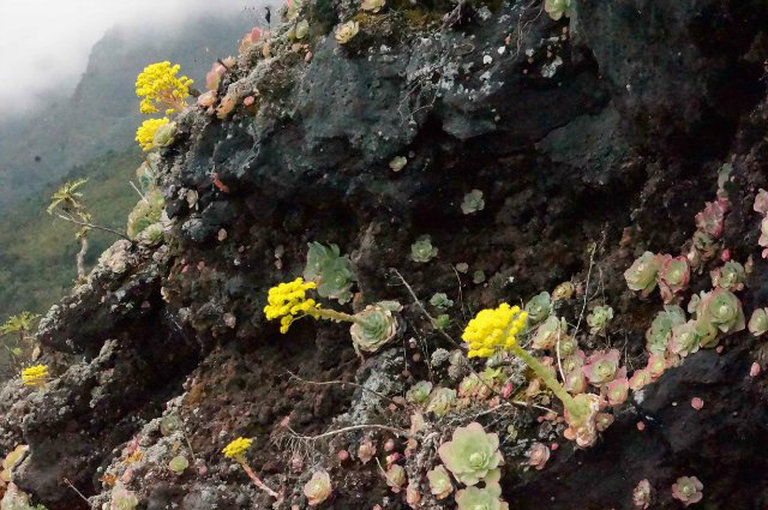
The photos, apart from the first one, show the beauty of the Canary Islands, have little to do with the subject of this report, “Why a Tourist Needs Medical Insurance,” and were taken a week later with my one unplastered hand.
On the yacht with a cast and little Lada )
Slipped, fell...
One day we headed into the mountains for a picnic. Because of the rain, we had to finish our olives and cheese in the car. Before setting off home, we got out to take a look at the mountains (why on earth did I go over there?!). And then... I, who in the misty dawn of my youth had clambered over every mountain and hillside, fence and tree, slipped on level ground...
I fell exactly as one should. But my backside is big and beautiful—I couldn’t bear to land on i-i-it—so I had to put out my hand. It isn’t as big, after all. And now it’s probably not as beautiful either—you can’t tell under the cast 🙂 (Ah, if only my judo instructor had seen me... he’d have had me doing push-ups on my fists for a week.) As you might expect, there was a sharp pain in my wrist, cries of “Ow-ow-ow,” and a crooked limb that swelled up at once... We made a splint out of a plastic bottle and drove about eighty kilometres along winding mountain roads to the hospital. With a nursing baby on my remaining arm.
The hospital on the outskirts of town )
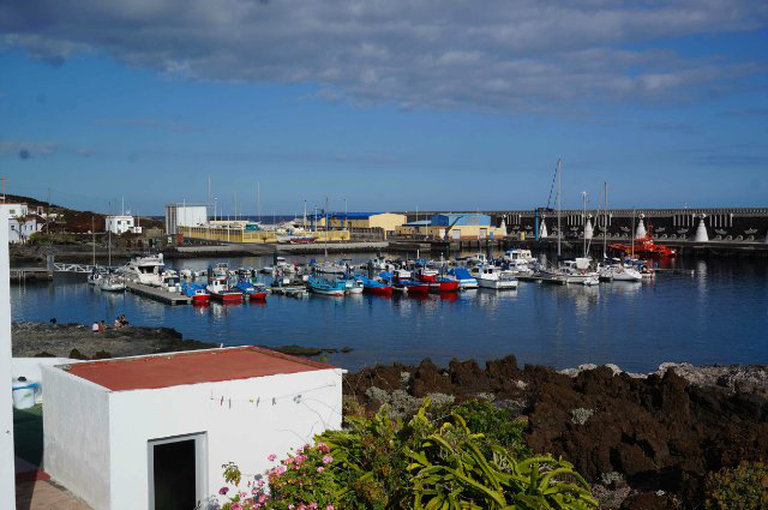
The nearest clinic turned out to be the private Clinica Roca in San Agustín (Maspalomas). Picture the scene: eight in the evening. A polite manager, speaking good English, warns us that the procedure is chargeable. We do have travel medical insurance, but that is hardly our priority right now. We nod. The X-ray seems to show displacement. They put on a plaster splint and said, “Wear it for four weeks, give us 300 euros, and come back tomorrow for a check-up.” All the while, their eyes keep darting worriedly to one side. I ask, “Doesn’t it need setting?” “Nah,” they say, while their eyes go, “Mmm,” off to the side.
Morning is wiser than evening...
In the morning it turned out that I needed an operation, two pieces of metal, and roughly 7,000 euros. Why were they too shy to mention that the night before? Perhaps there were no specialists available, or perhaps...
According to a surgeon friend of ours, if they had set the arm straight away, no operation would have been necessary. At our rural hospital near the Gingerbread House, that is precisely what the on-call surgeons do around the clock, completely free of charge. So I am left wondering whether they wanted the money or simply did not have the right specialists in the evenings. It seems our free healthcare is considerably more competent than their very-very-expensive kind.
I did eventually have the operation, but not until the second day. The insurance held everything up.
Fears and risks
Our initial dealings with AlfaStrakhovanie, the company that had issued our overseas medical insurance, inspired hope. The assistance company replied that they did not work with this clinic, but would sort out the formalities. Then it turned out that sorting them out was not so simple. The company did not suggest seeking help at another clinic. The moment the insurers learned how much the operation would cost, they promptly fainted dead away.
Once they had recovered, their optimism had diminished. First, they requested medical certificates, X-rays, test results and documents, including copies of every family member’s passport. Then they told us to send them all again. Emails and phone calls went back and forth until evening. The hospital threw up its hands: the entire set of documents had already been sent, and even sent twice.
But Russians never give up, as everyone knows. And so, upon receiving the justification for the operation, our insurer summed matters up: “The medical insurance is valid, yes. Let the injured woman fly to Russia; she can have the operation there.” “She cannot go without surgery,” the doctor says. “Your lady could die. Flying with unset limbs carries a risk of blood clots.” Unperturbed, they reply, “Ah, but perhaps you could issue her clearance to fly anyway.”...
Meanwhile, I am crying in the corridor. Waiting, supposedly, for the operation. Time passes, the pain does not go away, and the children have been sitting alone in the car by the entrance for hours... Some doctors avert their eyes as they pass; others smile sympathetically. Eventually, a kind woman invited me to lie down with an IV painkiller drip. I went home for the night to take Ketanov.
A day and a half after the fracture
In the morning I had been told to come at 8:00—we would begin the operation at 9 a.m. At half past nine, it turned out that the doctor did not arrive until 10, and hardly anyone had any idea that anything had been scheduled for today at all.... Somehow that made it feel cosier, like home. Negotiations, more certificates for the insurance company...
My husband looked at all this and said, “To hell with it, we’ll pay ourselves. Otherwise my wife will die and I’ll have to find a new one somewhere”... and took out his bank card...
Hospital service for a fortune
As soon as the required sum of 7,500 euros had been blocked on our account, the smiling Dr Alejandro announced that he was one of those who would be operating. The doctor explained what awaited me during and after the surgery and sent me off to be prepared.
I woke up—and there was a cast
A kind male nurse who looked like the heroine of Tootsie invited me for a ride in the lift. His jokes about red and black caviar betrayed a knowledge of our language and mentality. On the third floor, I was handed over to the nurses: “This is that Russian woman.” A nurse rolled up a wheelchair.
“I can walk!”
“Enjoy the ride while you can—it’s all paid for.” I gave in.
The private room, with its own bathroom, was clean and lovely, like a hotel. Disposable slippers and a gown that did up at the back. I was told not to wear anything else. They wheeled me into the lift and off for tests: a chest X-ray and an ECG (the smiling male nurse assured me it was not electroshock therapy).
Blood pressure, catheter into a vein. At full readiness
The Roca clinic’s operating theatres are on a separate floor. Green walls with portholes; the doctors, for contrast, wear blue. Streamlined and compact, like something in space.
In the corridor I enjoyed my fifteen seconds of fame: everyone who wanted to came running out in turn to have a look. Someone would say “perestroika” or “comrade.” Then the operating-theatre door opened. The anaesthetist began explaining what she was going to do to me, something about a mask and anaesthesia. I thought they would put me to sleep through the mask. After that, there were only loud voices: “Marina, Marina...”
A trolley ride back to the ward, an IV painkiller drip, and a new, attentive male nurse who cheerfully and frequently asked whether I wanted to go “pee-pee.” Thank God, I did not want to go “pee-pee.”
Who’s here?
Incidentally, I never saw a single doctor I recognised on that porthole floor. And later, someone entirely unfamiliar came to the ward. Why they first introduced one set of surgeons and then sent completely different people to monitor the “post-operative patient,” I never did understand; I put it down to a narcotic blackout...
During the remaining eight hours I spent in the hospital (I went home for the night to save money), they fed me three times. Huge amounts, and none of it tasty. Strange—for some reason people think that in such a state, a person needs to stuff herself silly and then life will be fine again.
The follow-up appointment was two days later. They wished me luck and split the cast. You may fly only with the cast split, with clearance from a doctor, and no sooner than three days after the operation. 5,500 euros—and we said goodbye to the Roca clinic for ever.
Epilogue
For several more days, AlfaStrakhovanie kept asking whether the operation had actually been performed and whether the patient was still alive. The assistance company drove us out of our minds, but then called and said the case appeared to have been recognised as an insured event. A rare stroke of luck, especially considering that from the very beginning everything had been by the book: the injured person was sober, the situation was not extreme, the medical insurance was valid, and so was the visa... Back home, the wrangling continued for another six months. By the end of the seventh month after the fracture, the insurer had exhausted all its counterarguments, and at last the sum of 200,000 roubles was credited to our card.
As for winter yachting with a freshly broken arm and a baby clinging to your neck—that deserves a story of its own.
The original version of this report can be found on the My Planet website.
Take care of yourselves! 🙂