
From the Travely-Family archive · Central and South America
A Barrel of Honey and a Spoonful of Tar in a Colombian Industrial Zone
An original publication from the former Travely-Family website. This English translation was preserved from the technical-site archive without editorial rewriting.
A Barrel of Honey and a Spoonful of Tar in a Colombian Industrial Zone. How the right approach helps you survive repairs in an inhospitable place. Who lives here and how, what they feed you, what they poison you with, and why the sirens wail The Factory Whistle
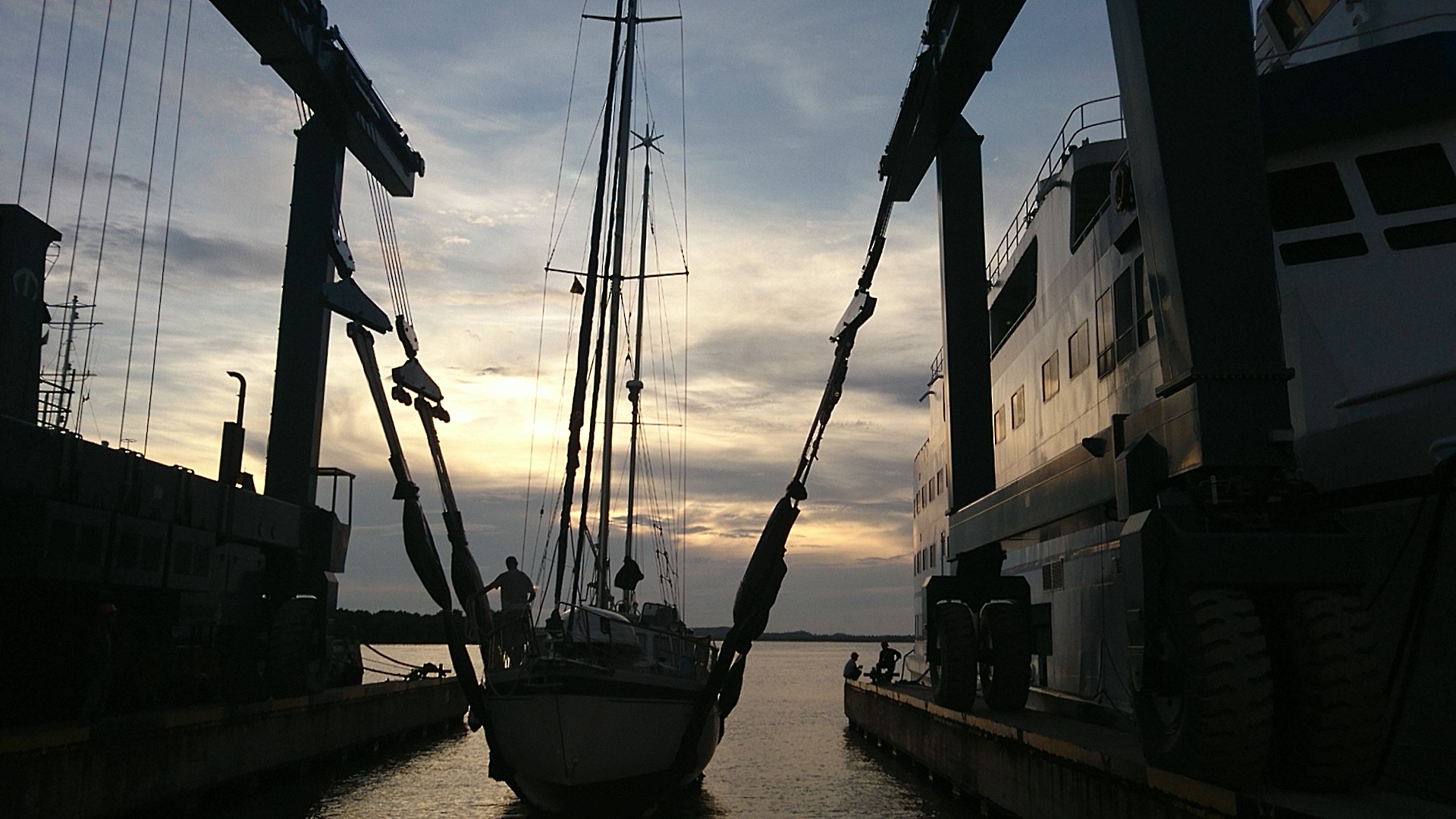
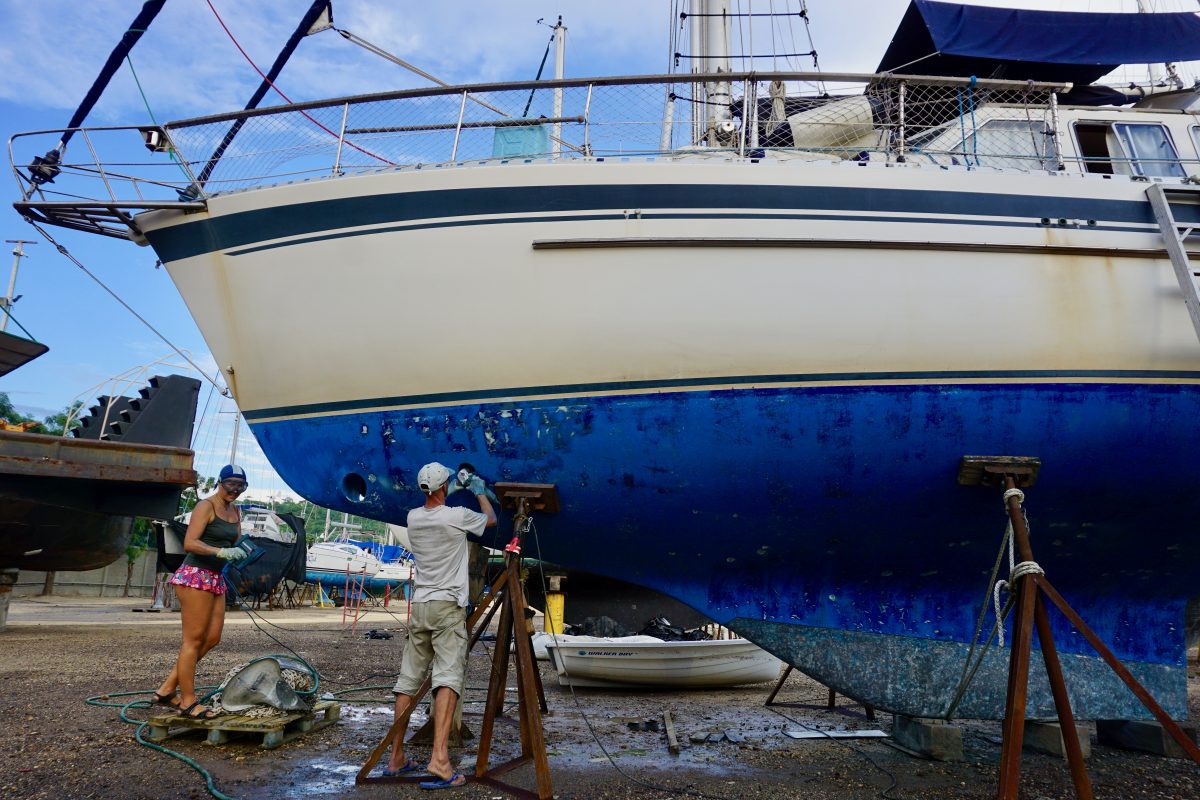
All in all, we really like this shipyard. They work like clockwork, hoisting boats ashore and back into the water with the crane’s precisely calculated, gigantic movements; everything is nice and clean; the air conditioners in our two-room cabin hum away reliably; after painting, you wash yourself clean and feel like a proper millionaire. We’ve also got into the habit of bringing a thermos of coffee back with us after the barbecue party, along with fruit and various sweet buns. We work hard from the morning until the thermometer starts showing +32, then head back to our quarters.
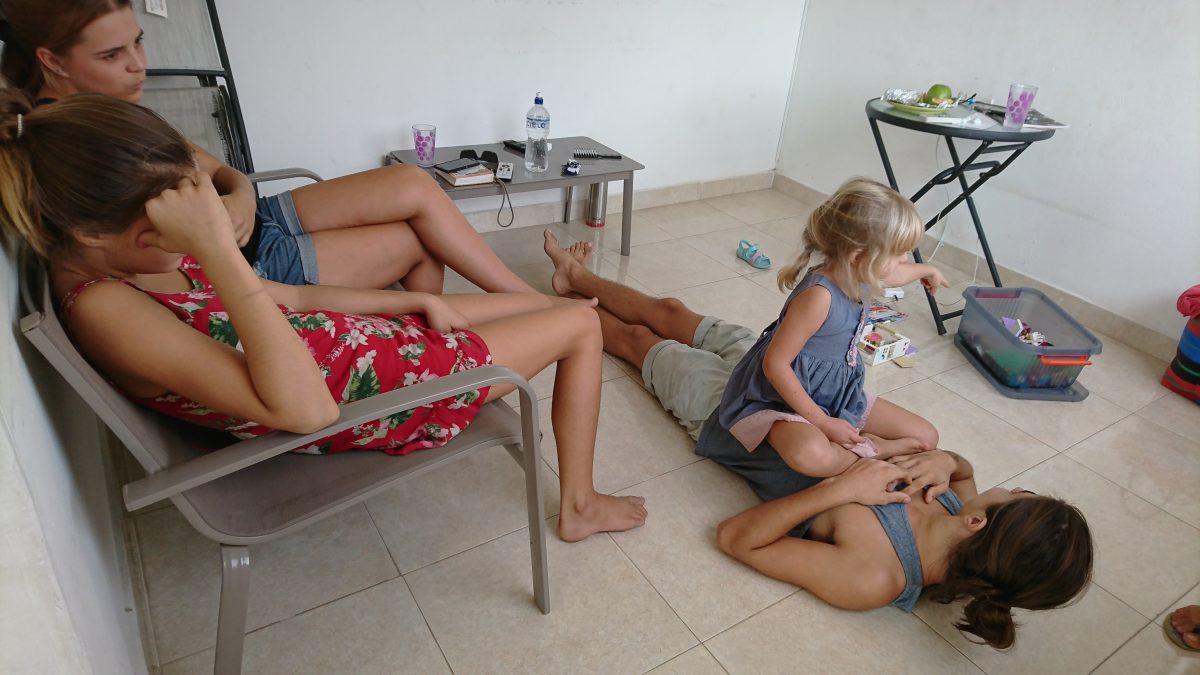
All the other residents of the industrial zone are clearly very hard-working: they carry on even at +38, then come to our apartments in the evening and find a sign on the door saying, “Dear guests, please take off your shoes.” What else can we do? We’ve grown attached to the little house, and Ladunka and I have brought indoor shoes with us. Our children might be rolling around on the floor, while they tramp about in their dirty boots.
We’ve been watching, and after a few days almost everyone is taking off even their boots. There are two girls and one bloke who don’t, so we’ve put them on the blacklist:).
We wanted to leave on Tuesday. Monday was a holiday here, so there was no one to operate the cranes around the yard. But our way out was blocked by a 30-metre superyacht, and until they’ve finished sanding it, they’re obviously not going to move it back and forth. “You’ll have to wait,” they say.
“What do you mean, wait? We only wanted to stay for a month, and now we’re waiting for the holiday to end, and then we have to wait again—and pay more as well?” The captain was sad but good-natured.
“Well then, don’t pay. Just stay.”
We rejoiced and took a day off—that is, instead of loafing around from eleven in the morning, we started the moment we got up. In the meantime, the captain put away the tools, closed the lockers and returned the long-suffering settees to their places; the young sailors and I spruced everything up and washed the floors and walls. Then it was back to the air-conditioned room to enjoy a blissful coffee break and work with our heads, unclouded by the clammy heat. How precious that is! And how badly some of us (well, everyone except the captain) miss it.
And they feed us here too!
It would be a sin not to mention the canteen. The day begins with the wail of a siren. For the first two days, we wondered what the alarm was for. Then we worked it out: at half past seven, a one-minute siren calls everyone to work; at noon, the siren announces the start of lunch; at one, its end. And at five in the evening, the siren sends the workers off for their well-earned rest.
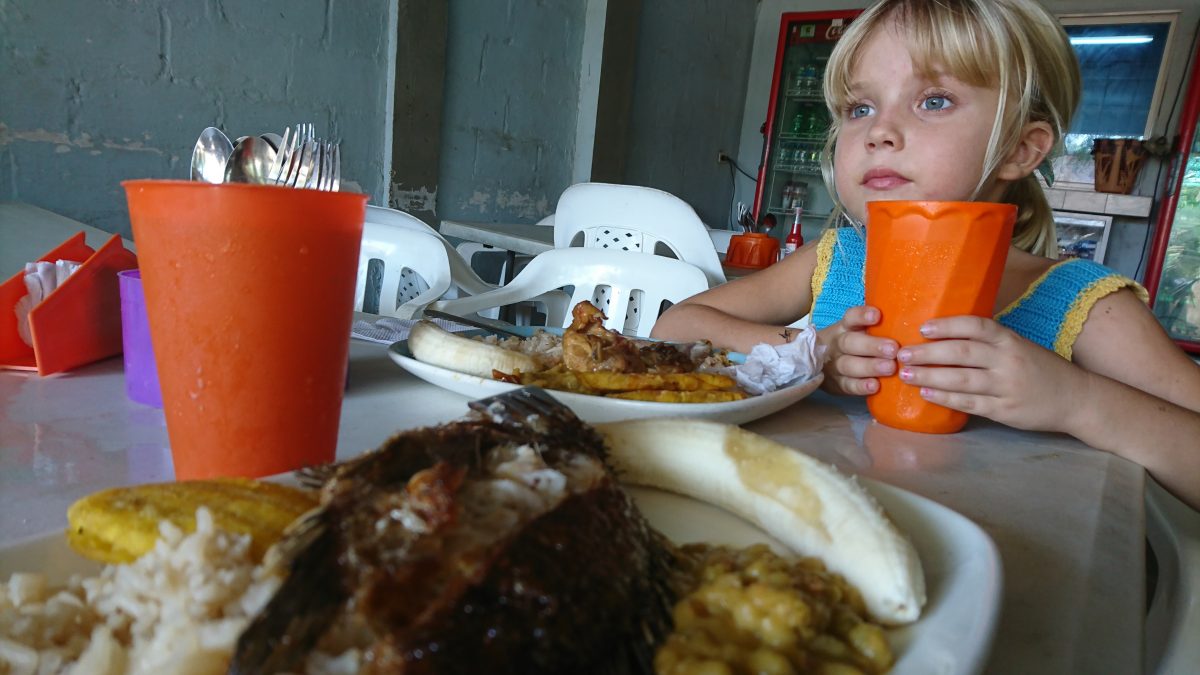
Half an hour after the lunch siren, the young sailors and I go to the canteen. A main course costs 8,000 local pesos (16 roubles): a large plate of rice, fried plantains, lentil sauce and a good-sized piece of tasty chicken, fish or meat. Plus a glass of something to drink. Two portions are enough for the three of us. So on the days when the canteen is open, the crew is spared having to cook in the sweltering galley.
And the young sailor takes the lunch leftovers to the cats. A couple of months ago, the scrawny, rather ugly local cat gave birth to a sweet litter of five, whom the young sailor and I spotted one evening. Ever since then, we’ve been bringing them a little milk or some chicken cartilage. And it turns out that Lucy, the Frenchwoman, feeds them dry food. There’s also a hefty Black woman from the Italian catamaran whose two-part antifouling failed because it didn’t set, so they had to strip it all off again—the very same woman who is on the blacklist because she doesn’t take off her shoes in our apartments despite the notice... (Is this getting tedious? Yep...) Anyway, she also feeds the furry five and their mother. She gets a plus point for that. That’s how the cats survive, with the whole shipyard looking after them.
“Managed it today.” — “Congratulations, sir.”
There is one substantial spoonful of tar in this barrel of honey called the shipyard:
Well, these are port repair facilities... And our big shipyard is actually the small one; the big one is ten metres away from us, beyond a low fence. That’s where the cargo ships are—two-hundred-metre container vessels and the like. They need their bottoms painted too, and before that, the old coating has to be abraded and sanded off. Two hectares of hull sides and bottom!
To avoid blanketing the daytime sky in foul-smelling smog, they sand the ships at night, when most people are asleep and can’t see anything. From ten in the evening until four in the morning—you could set your watch by it. Nine times out of ten, a light breeze carries the clouds of sanded-off paint fifty metres past Lady Mary’s stern. But on that one occasion when the near-calm sends it our way, we, the boat and everything in her get thoroughly dusted. And while the savage grinding of the sandblasting machines no longer even keeps us awake, the clouds of dust before bedtime plunge us into gloomy thoughts about lung disease.
Beautiful, like the Sahara, except the sand is grey rather than brown...
Apart from that, life is a good thing! Whichever way you look at it:). We want to go sailing in clean water, but we’re even sorry to leave—we’ve grown so cosy here. Or rather, so cool..
Here’s the tip— the shipyard is called “Ferro Alquimar” and is located in the Albornoz district of the heroic city of Cartagena de Indias, Colombia.
Prices: haul-out, relaunch, cleaning the bottom of shell growth with a pressure washer and scrapers, plus one month ashore, will cost us 850 dollars (about 50,000 roubles).
Wishing everyone comfort, wherever you may be!