
From the Travely-Family archive · Central and South America
French Guiana. The Shore-Side Brotherhood :)
An original publication from the former Travely-Family website. This English translation was preserved from the technical-site archive without editorial rewriting.
French Guiana. The Shore-Side Brotherhood. What life looks like after sailing around the world, whether children are taught to shoot, and what seasoned sailors know about Russians
Almost everyone in the Dégrad des Cannes marina is French. Many have lived here for years, started families, bought cars, and drive to work every day. Others are staying for now but plan to move on. Drop-ins like us are few and far between. The moment the crew of Lady Mary stepped ashore, we found ourselves in the caring hands of the shore-side brotherhood:
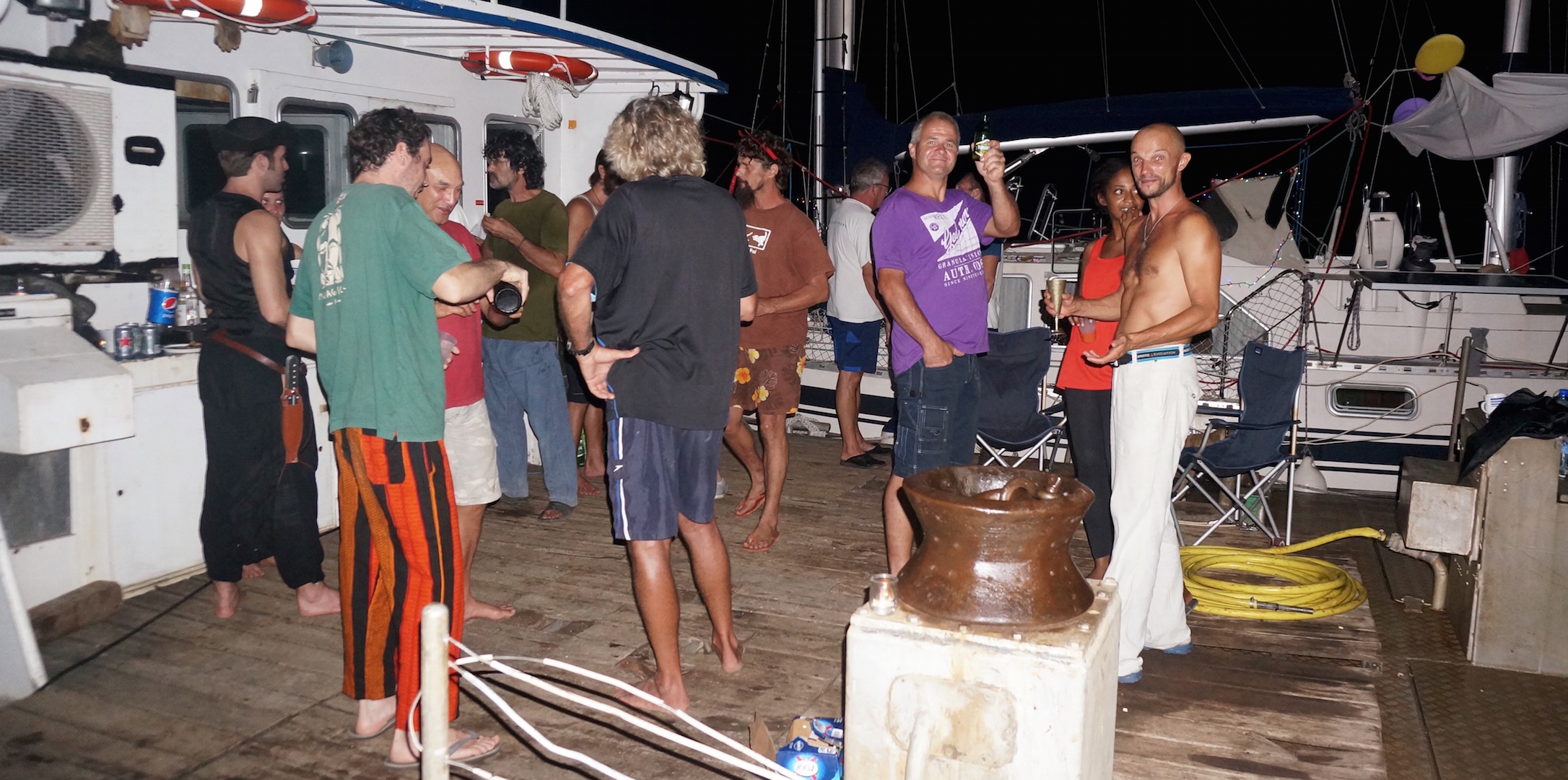
Where are you from? When did you arrive? How long are you staying? Only three days after crossing the Atlantic? Oh, yes!...You must have missed dry land:).
Moor your dinghy inside the marina; it’s awkward here. Besides, you never know—illegal fishermen might come upriver from Brazil and take your little boat for themselves, or at least steal the outboard.
Who are you lot? Russians?—Russians are welcome here (:)).
Here’s the water; you can fill your tanks for free. Come alongside after 8 p.m. and stay in this berth until morning. Clear out by 8 a.m.: a tour boat berths here.
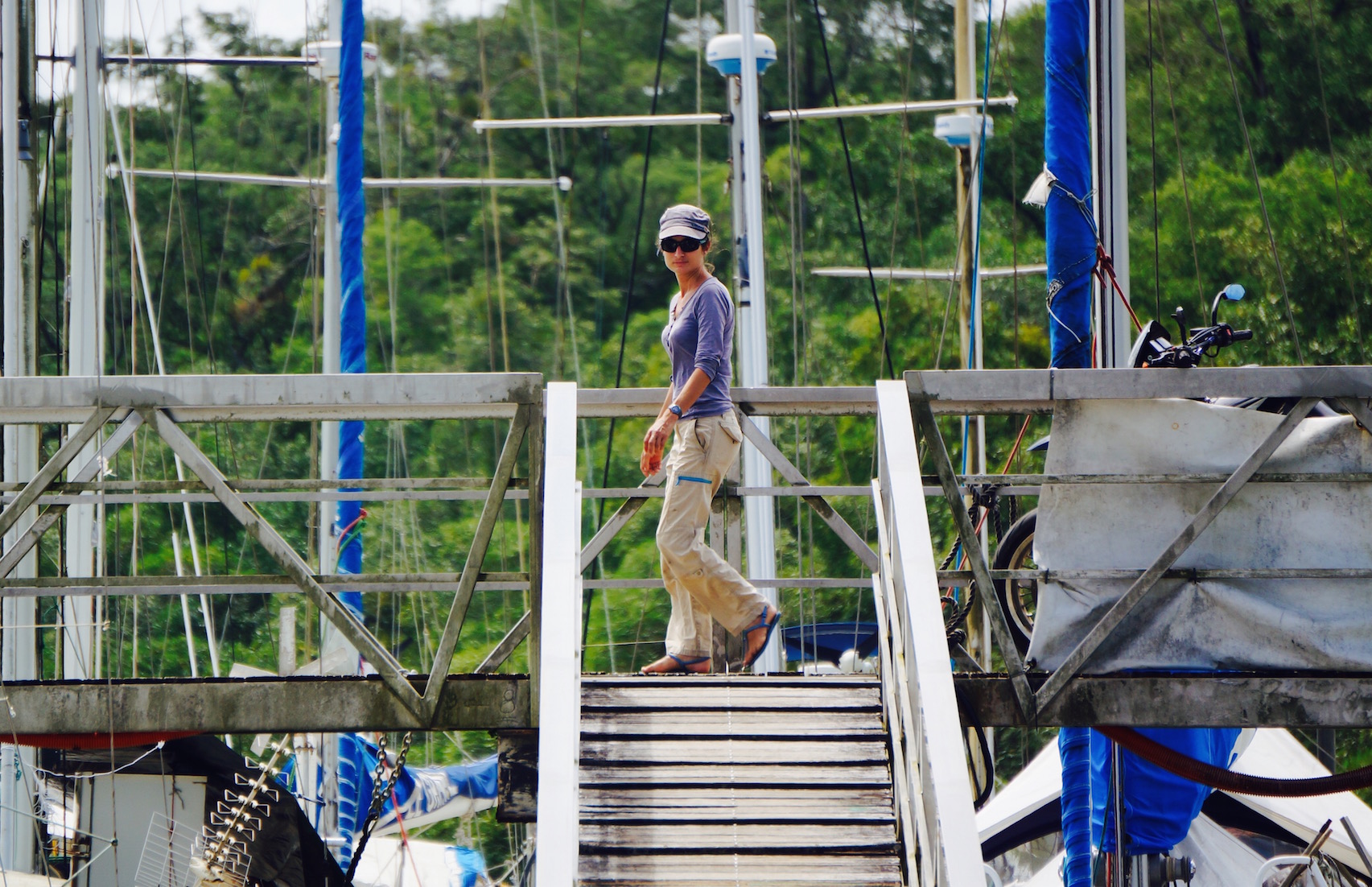
The boat Django arrives half an hour later. At the helm is a petite young woman named Magali. With practised ease, she passes the mooring line ashore, sees the passengers off, and departs in an unknown direction.
Magali—captain of the tour boat
Sailor Profiles 🙂
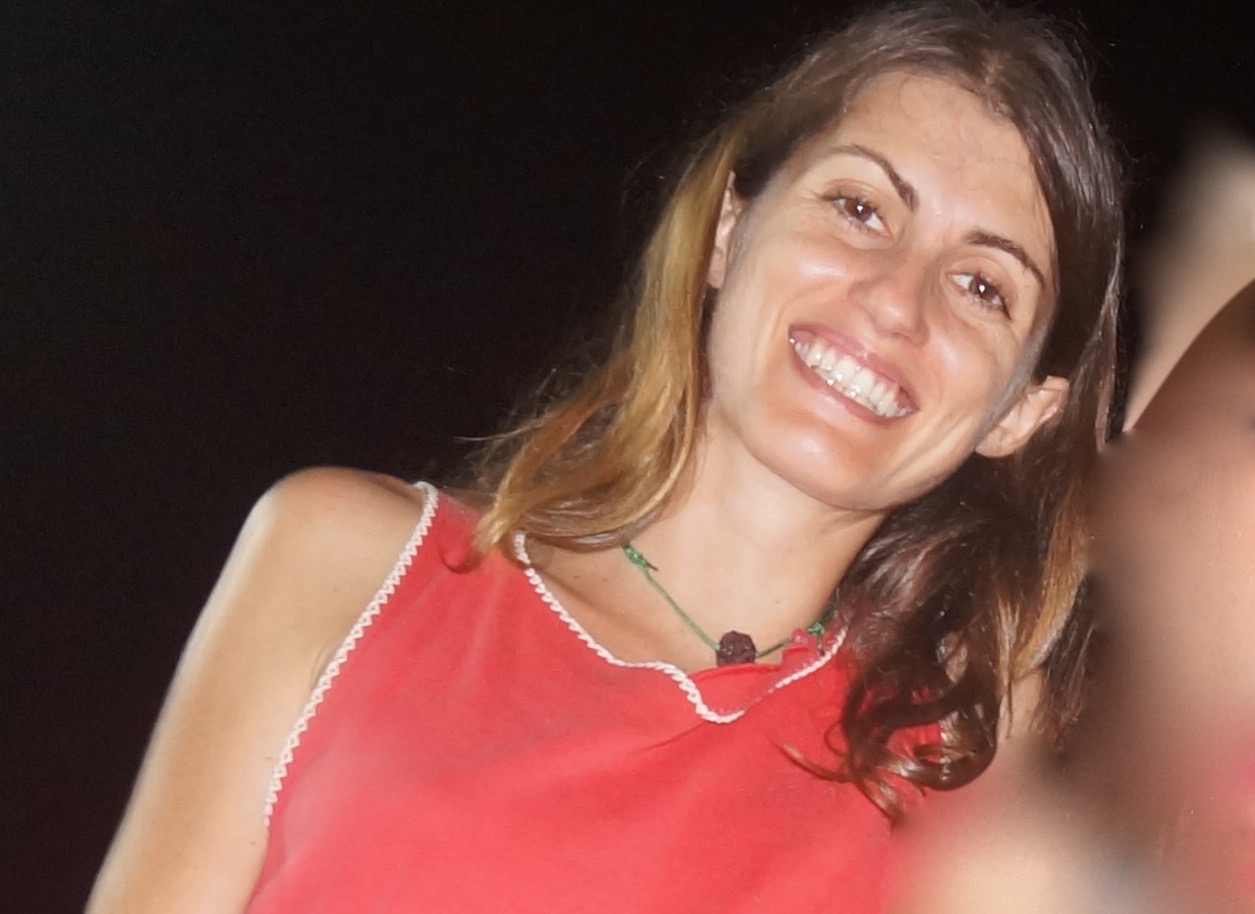
Gloria
“Hi, I’m Gloria,” a slender Italian woman says with a warm smile. “Who are you, and where are you from?”
Gloria and her French boyfriend arrived here from Senegal six months ago. She works as an English teacher; he is a solar-energy specialist. If he gets a permanent job, they will stay in Guiana for a couple of years.
“Guiana is safe. Yes, you can rent a car in Cayenne. Ask those guys over there—they rented one once...”
Profile: Eduardo and Claudia
Eduardo, from the yellow 38-foot yacht, is Spanish and grew up in France. He is 53. His ex-wife, an ethnic Ukrainian from Poland, understands a little Russian and knows how to say “Good afternoon.” They sailed around the world together, but now, in the finest soap-opera tradition, Claudia lives on the neighbouring pontoon with another sailor. Eduardo and Claudia have a nine-year-old son, and judging by his flourishing appearance, dividing his life between two homes does not trouble the boy in the slightest. Their son goes to school, like many of the children here.
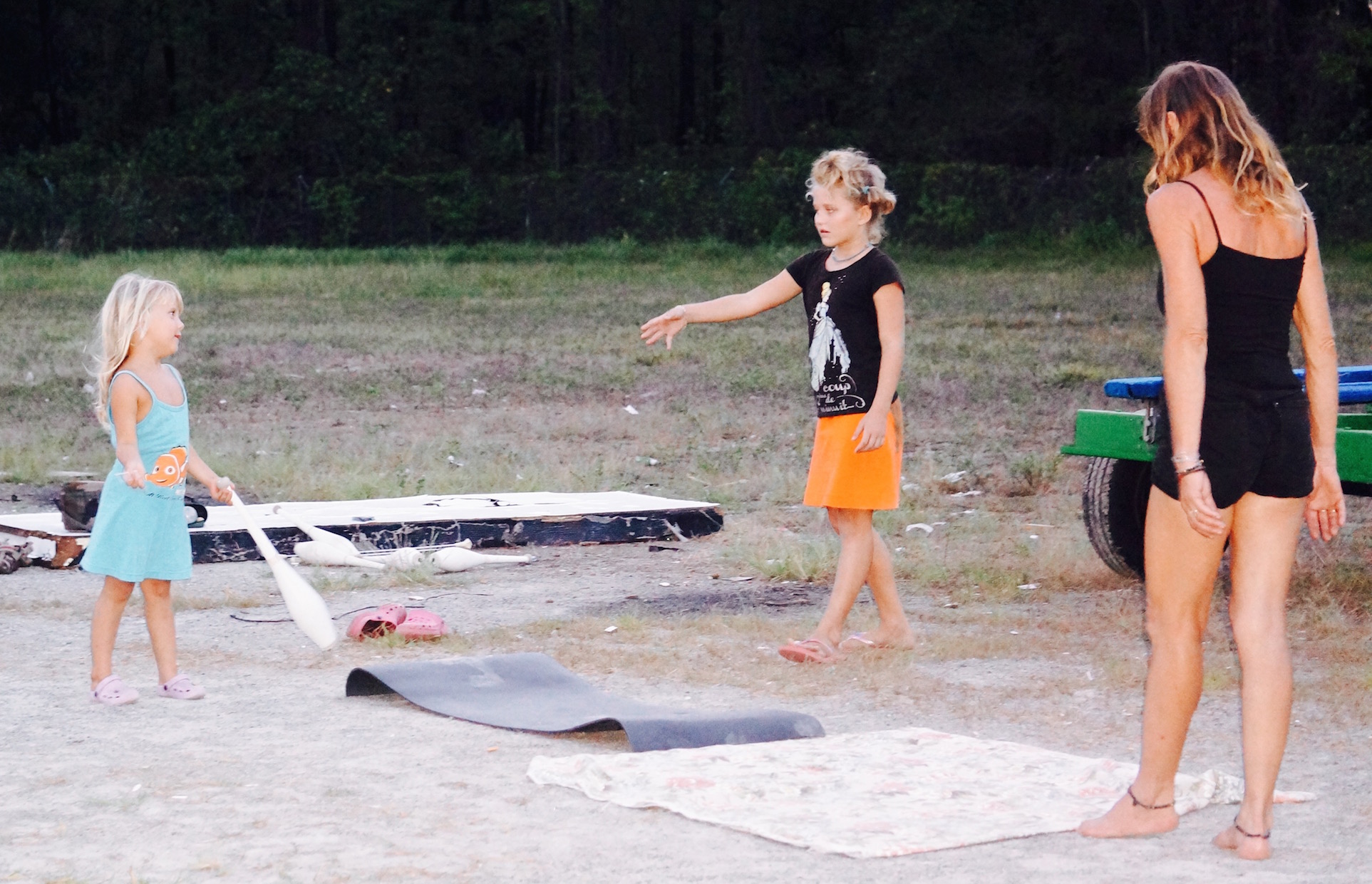
His father gave him his own rifle and taught him to shoot at a target. His mother taught him to do handstands and skilfully twirl various objects. From a distance, 50-year-old Claudia looks like a girl. She has practised gymnastics and pole dancing all her life and used to perform somewhere in public squares and clubs. “People didn’t used to talk about it, but now you can,” she says with a smile.
Claudia leads a gymnastics session for the junior crew
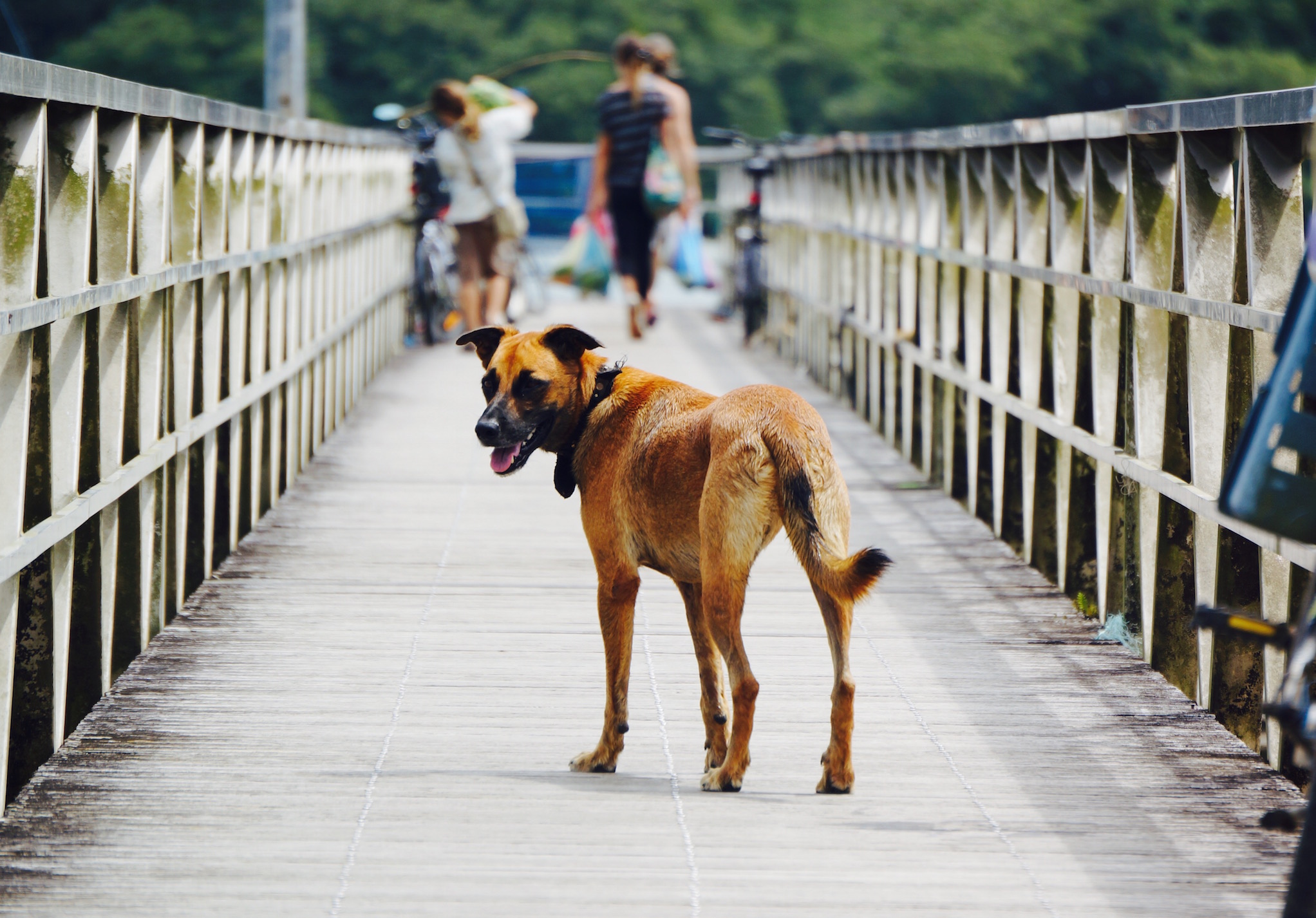
Eduardo works not far from the port. He is a specialist in edged weapons. Our captain wants to buy a machete from him—it is handy for splitting coconuts. Eddy speaks Spanish, French, and English with equal fluency. Anticipating our questions, he gives us a thorough introduction to yachting life in Guiana. The skipper of the bachelor’s yellow submarine has a dog, a good-natured mongrel named Lucky. His predecessor was also called Lucky and sailed around the world with his owner.
Lucky—the yacht dog
Profile: Élie, Marie, and Jules
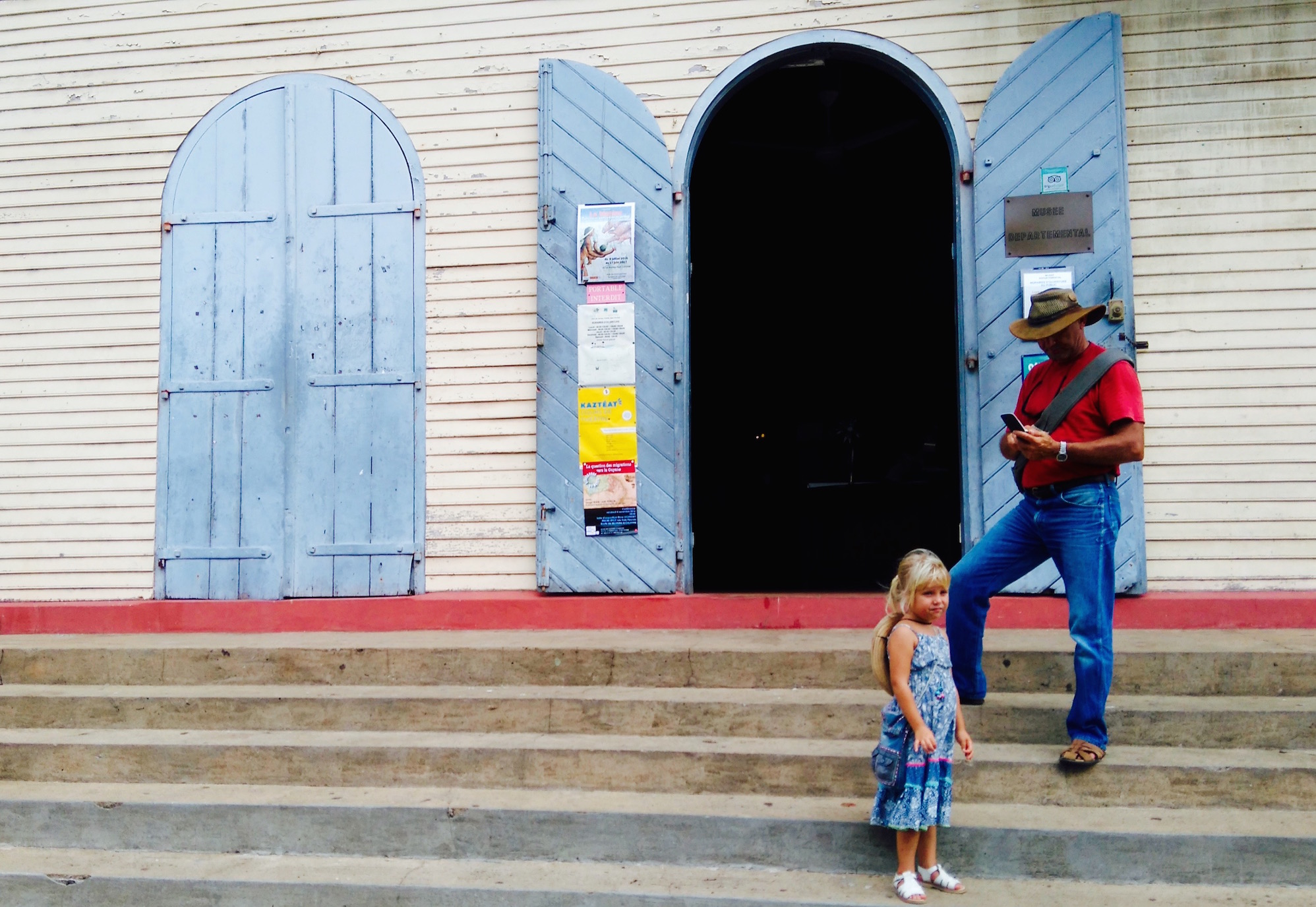
Thirteen-year-old Jules, the very boy who leapt into the river from the bridge in the previous post:), is the son of the French couple Élie and Marie. The head of the family first came to Guiana 25 years ago. He looked around, returned to France, bought a boat there, and dropped in on Guiana again after crossing the Atlantic. He crossed the Pacific and met the lovely Marie in New Caledonia. Together they sailed north along the east coast of Asia as far as Japan, then crossed from Japan to Alaska. By then Marie was already pregnant, and the crew decided to linger in Alaska—they really wanted to watch grizzly bears from the deck of the yacht:). A year later, now three aboard, they sailed south to California.
Élie and Ladunya by the unassuming gates of the local history museum in Cayenne
The family set out into the Pacific with five-year-old Jules, leisurely circumnavigated the globe, and settled in Guiana about a year ago. The now older young sailor decided he had had enough of homeschooling and that it was time to study alongside his peers. Orienne, a girl from another yacht, dreams of the same thing, incidentally, but for some reason her parents insist that she, her sister, and her brother study aboard the yacht through a Canadian distance-learning programme.
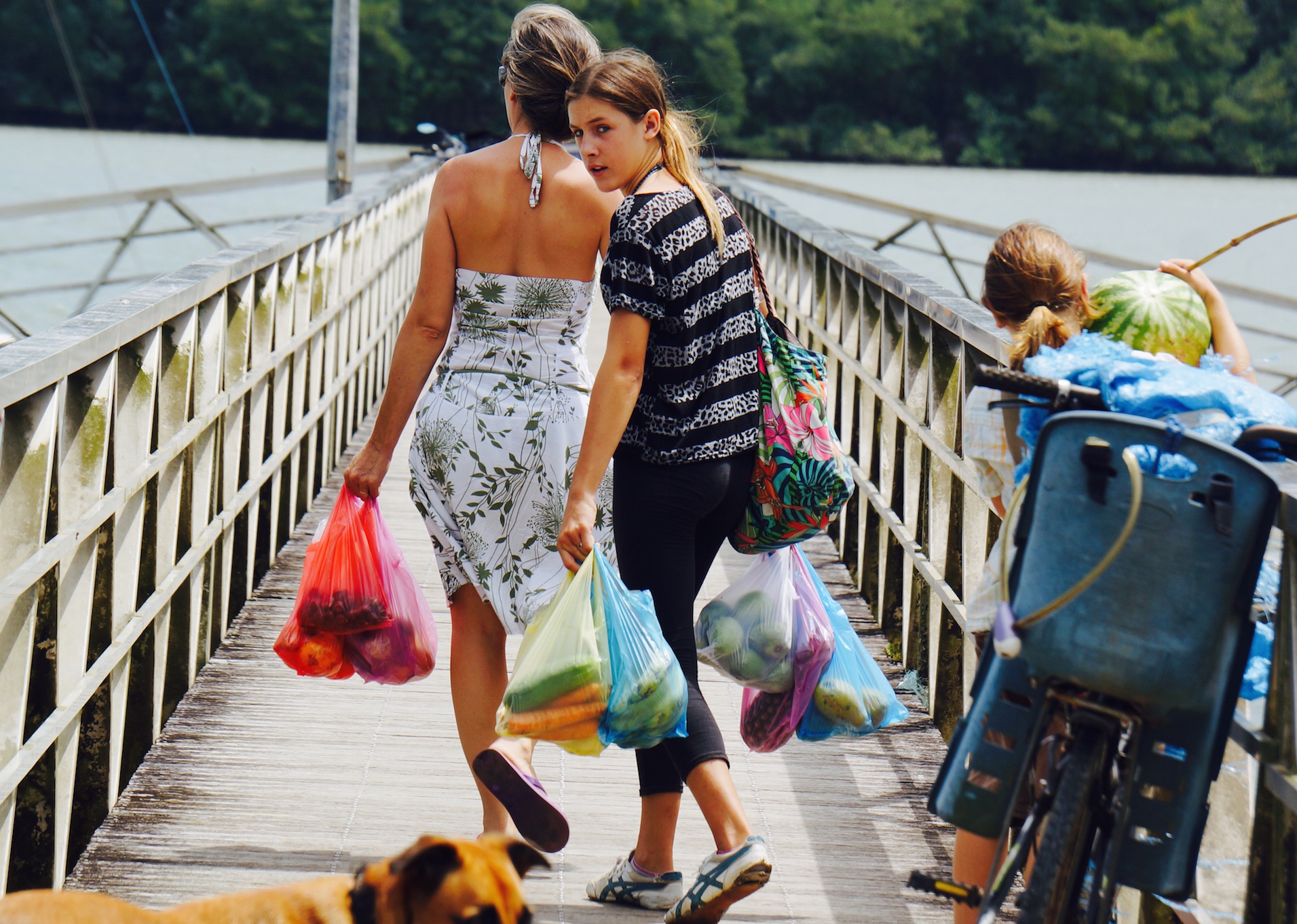
Nastya’s friend Orienne with her mother and brother
More about homeschooling aboard a yacht >>
Profile: Lionel + Genési and their neighbour Michel
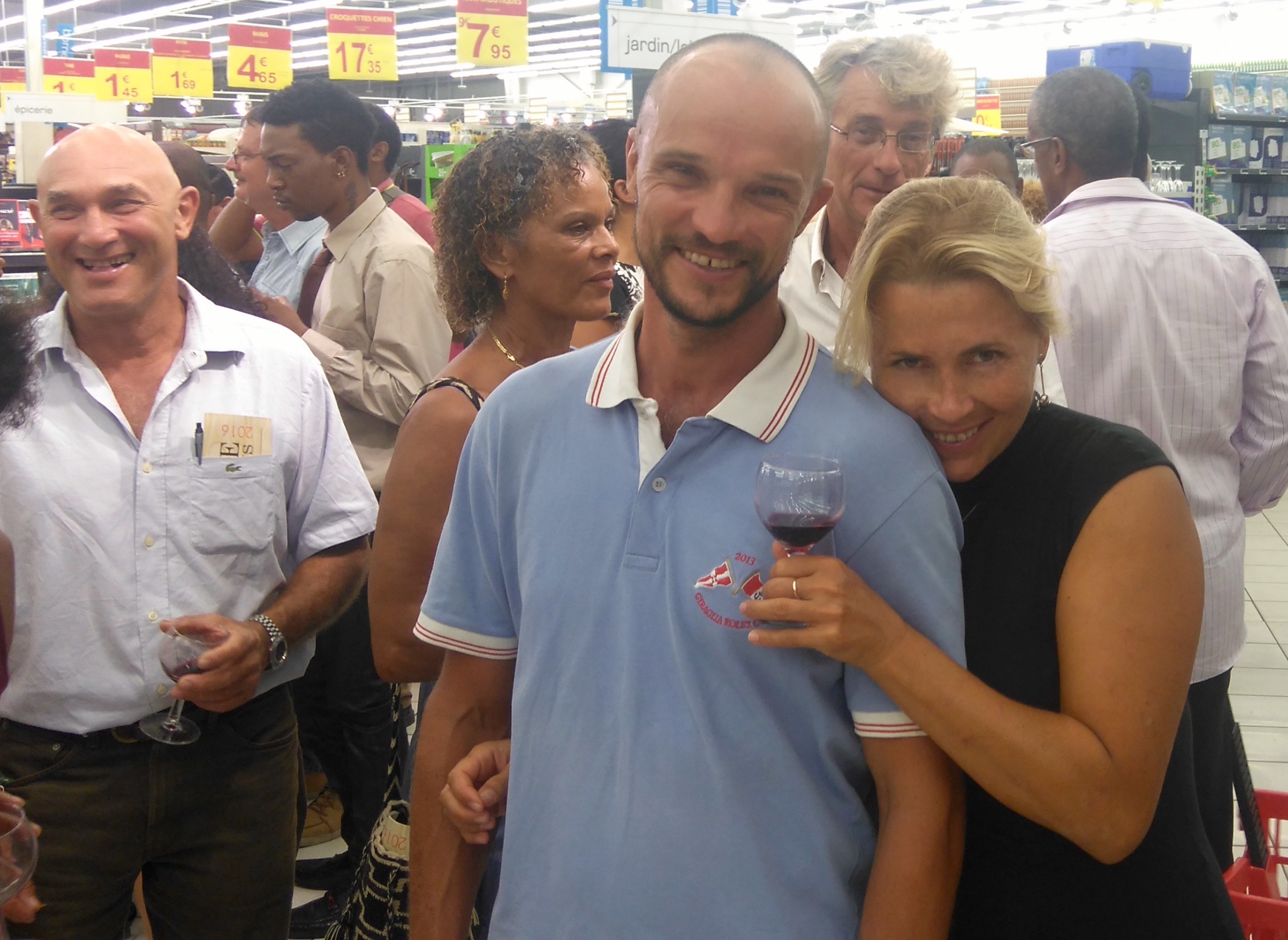
Tall, grey-haired Lionel and his wife Genési are old-timers here. In 1990, Lionel set out by motorcycle from France for South Africa. From there he sailed by ship to Buenos Aires, then crossed South America by motorcycle from south to north, all the way to Mexico. From Mexico he decided to return to “the best place on Earth”—French Guiana. A beautiful Creole woman was waiting for him here. A few years later, Lionel bought a yacht and sailed around the world twice. He spent long periods in New Caledonia and settled in France for a while, but he always returned here. He considers Guiana his home. Here he has work, friends, and the woman he loves, Genési, along with her relatives.
At a French wine tasting. Our happy faces are blocking Genési and Lionel. Élie is smiling on the left
Across the way lives Michel, a good-natured fat man who looks like Captain Vrungel. For four years he has been repairing his old Bédou, whose wooden hull was riddled by termites. Piece by piece, he is replacing parts of the planking with materials that are hard to eat.
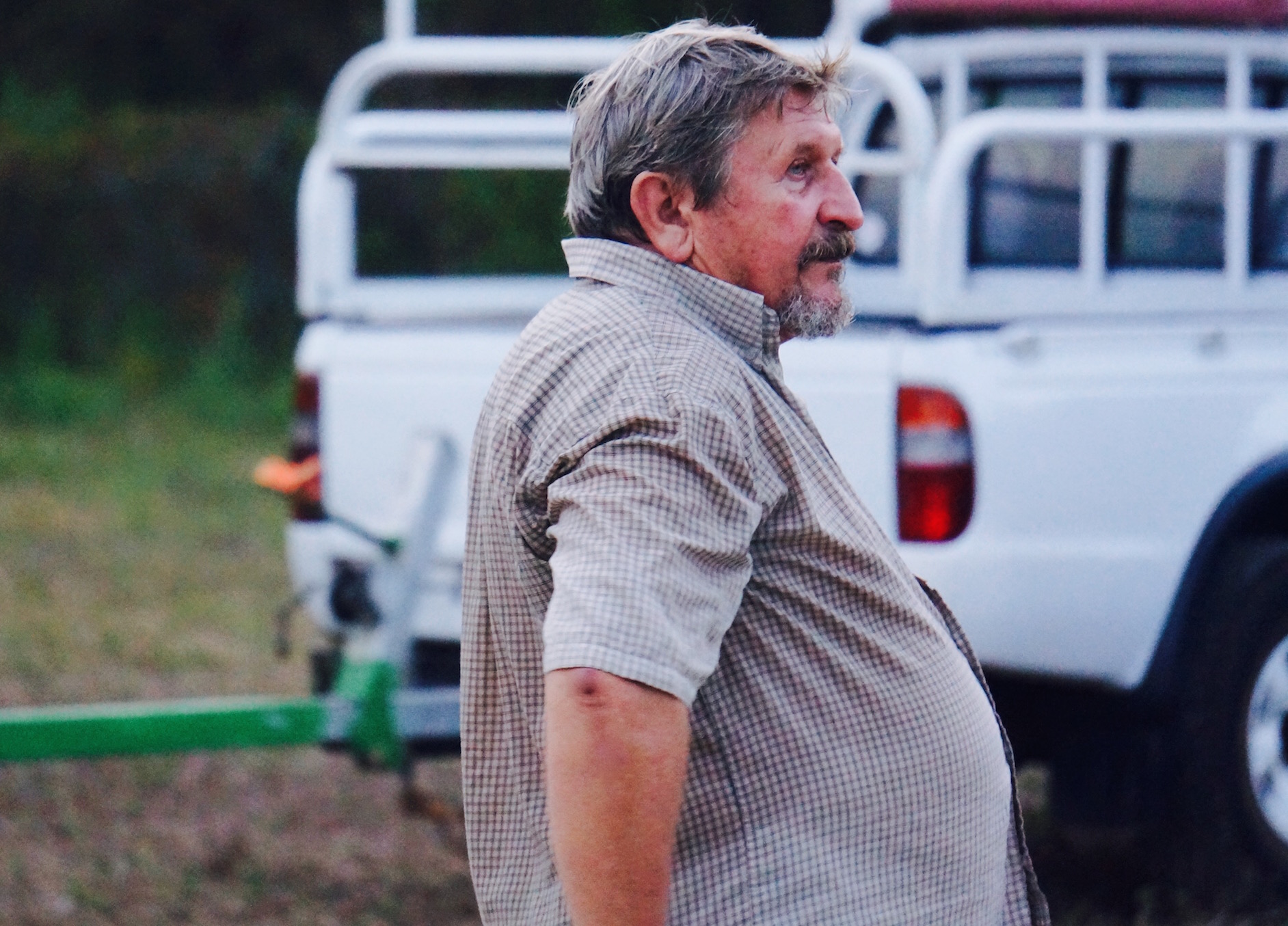
Michel looks tired here.
Profile: Tony the Dutchman
Tony is the engineer aboard the self-propelled barge next to which we have settled. A rotational worker, he spends one month working and living aboard the barge and the next month at home in the Netherlands. This strange and expensive arrangement is explained by the fact that the Dutch are the world’s best builders and keepers of canals, and a large Dutch company is engaged here in constructing and dredging fairways. The company’s entire staff consists of loyal Dutch subjects. Under their contracts, workers and employees are forbidden to drink alcohol throughout the month, so they bring their own non-alcoholic beer to parties.
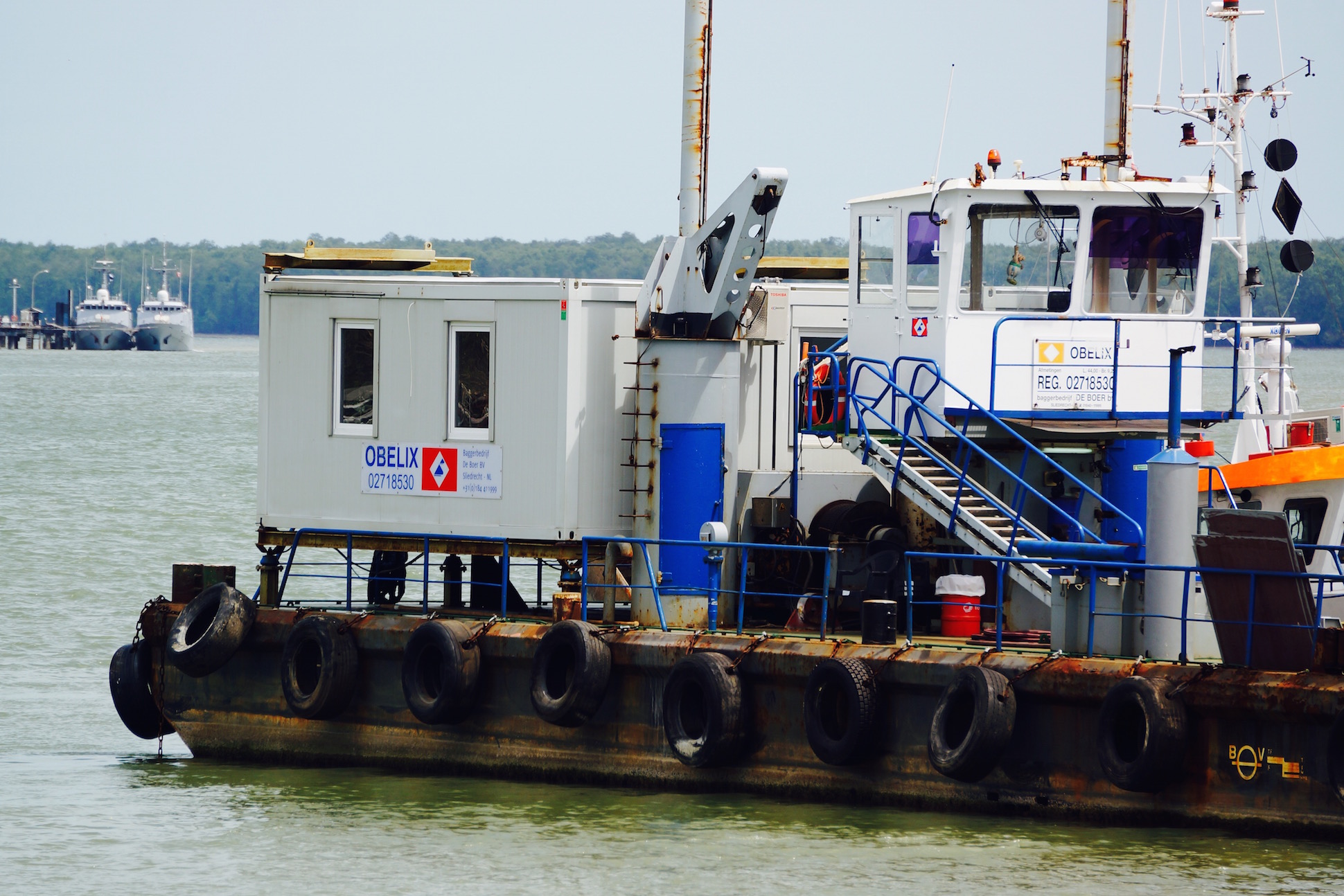
The day we met Tony, we learned that the school holidays had begun in Guiana, and to mark the occasion all the families we were interested in were leaving for a week in the jungle. Our first mate sat gloomily on the bow—only the second time in three whole years that our young sailors had found company, and every last one of them was leaving until the very time we expected to depart. She complained to Tony about cruel fate tearing them apart, and, moved by our sorrow, he immediately invited the crew to tea in his quarters. The white shipping container attached to the barge’s wheelhouse turned out to contain an apartment with a toilet and shower, kitchen-living room, study, gym (!), and bedroom.
The white “little house” on the left side of the barge is Tony’s apartment
During the visit, our young sailors struck lucky: they got to drink Coca-Cola and watch a collection of cartoons in English with Dutch subtitles. We, meanwhile, found a good friend.
Tony
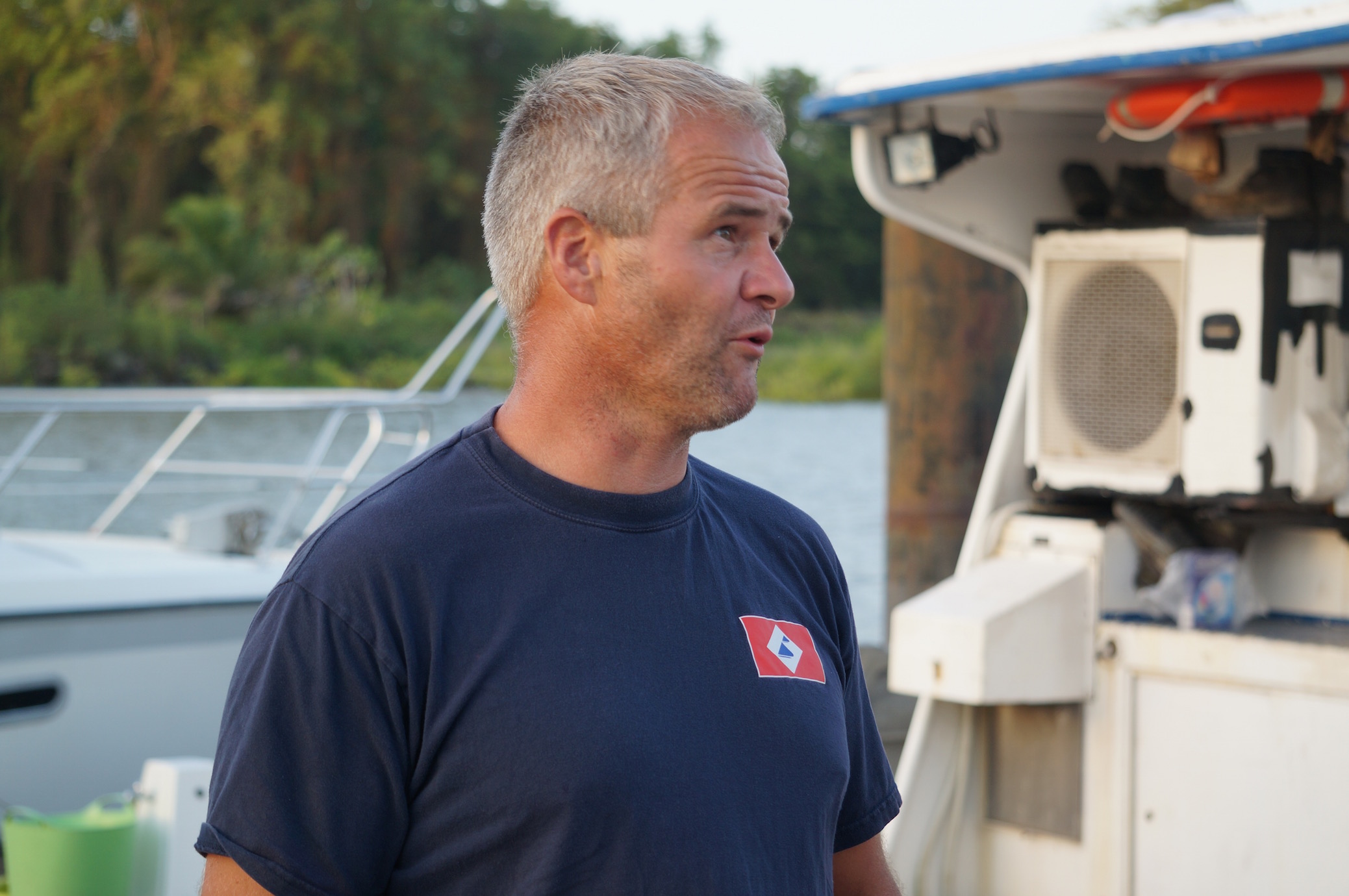
Tony misses his family, goes running in the mornings, dives on weekends, and wants to take our children to the swimming pool. His son’s and daughter’s names are artistically tattooed on his forearms.
From our first days here, the shore-side brotherhood took us under its wing. A Russian family aboard a yacht is exotic to them:). Only Eduardo could recall that a yacht belonging to some of our compatriots had been here about a year ago (Phil, Toma—was that you?), while Marie said she had never in her life met any Russian cruising sailors.
Perhaps that is why her husband Élie so thoughtfully offers us trips to the Cayenne market, a wine tasting, and even the local history museum. On the way, he asks many questions about Russia—what we drive, what we drink, how things stand with communism and corruption, and what Russians think of Americans. We answer fully and honestly, but reveal no military secrets:).
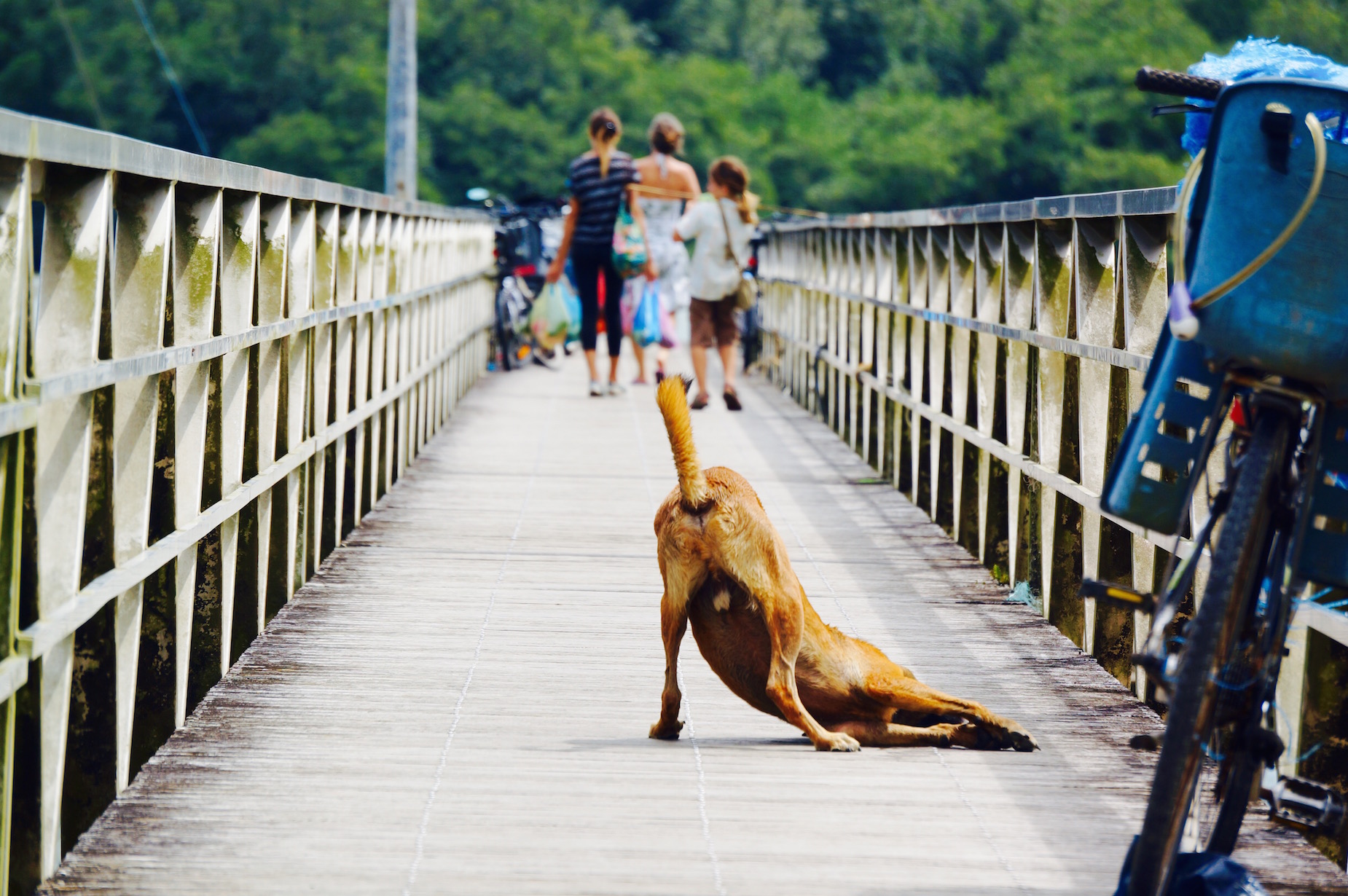
Lucky is actually a well-trained dog... But damn it, it happens to the best of us! 🙂
And here is another post about other people who live and travel aboard yachts 🙂