
From the Travely-Family archive · Other Entries
Plankton and the Scientific Expedition. Approaching Antarctica
An original publication from the former Travely-Family website. This English translation was preserved from the technical-site archive without editorial rewriting.
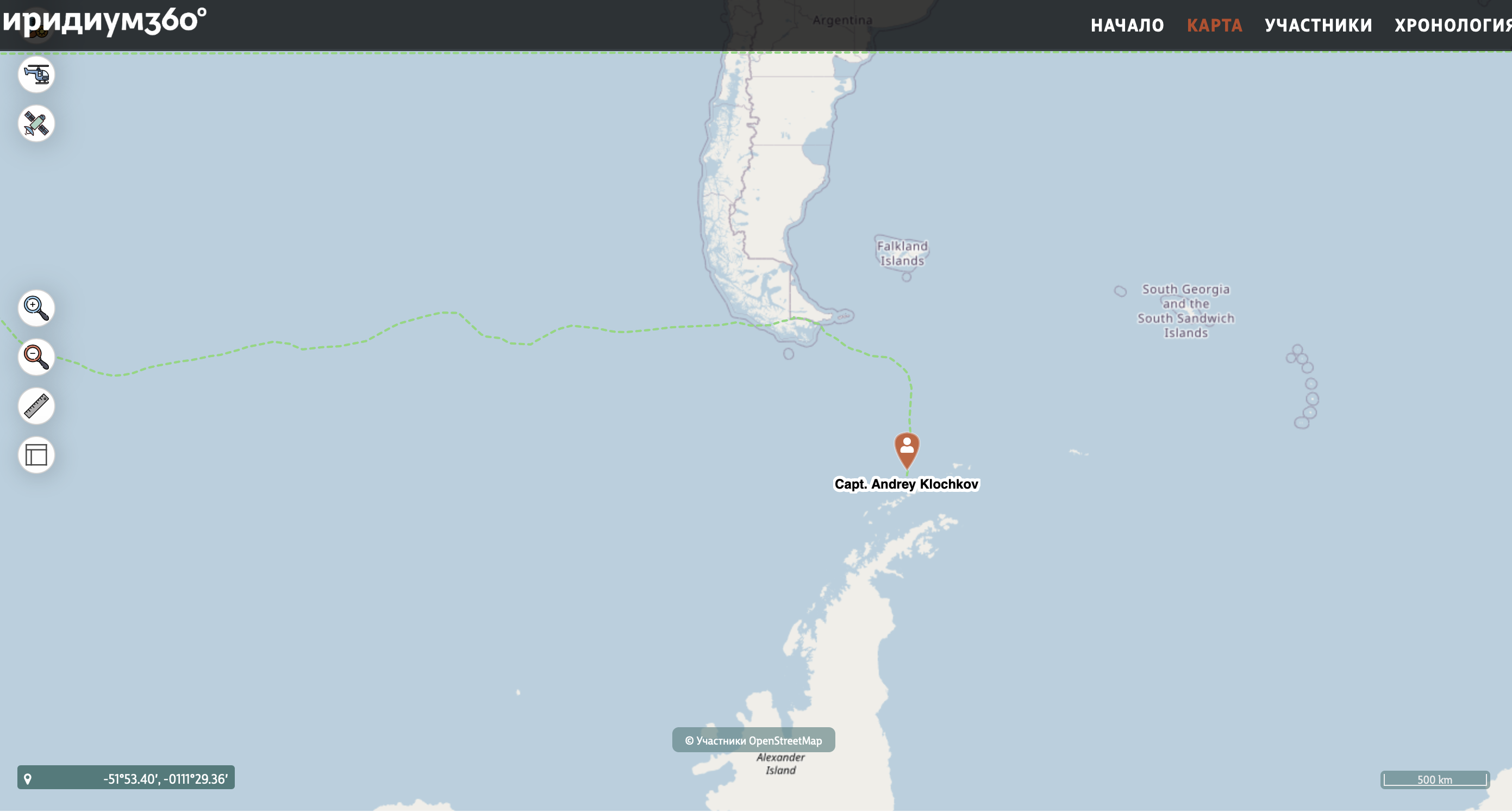
18 February
The wind in the Drake Passage refused to shift all morning. We are making extremely slow progress compared with our dash across the Pacific from Australia to Ushuaia. A head current and head sea, plus the wind close-hauled (right-in-your-face wind), are slowing us down considerably. We are still carrying the staysail and helping things along with the engine.
But it must be said that the Drake, usually stormy, has given us no more than Force 4–5 on the Beaufort scale this time. I consider that a great stroke of luck.
More and more expedition members are finding their sea legs and no longer suffering from seasickness.
Accordingly, the cook has more work to do. The guys who did not want to eat during the first couple of days are now starting to make up for lost time.
Breakfast was rice porridge with strawberries, lunch was broccoli cheese soup, and dinner was baked potatoes, vegetable salad and beefsteak.
And, of course, throughout the day there were tea ceremonies courtesy of Misha Yanchenko. The teas he brought are simply magnificent.
By nightfall the wind had veered, allowing us to keep closer to our intended course. Before that, we had been set far to the east. Be that as it may, half of the stormiest passage is behind us, and King George Island, which we are aiming for, is less than 300 miles away.
19 February. How the Ocean Is Studied
61 degrees south. A scientific expedition in the Drake Passage. Once, this seemed like something unreal. And now, on the fifth day, we are finally setting up the equipment on deck. The equipment consists of a metre-wide reel holding a kilometre of 8 mm rope; a three-phase electric motor with a pulley selected for a specific rotational speed and, accordingly, hauling speed; and nets for collecting plankton samples from depth.
The net is a cylinder made of an extremely fine, tulle-like fabric, tapering at the bottom into a cone and a plastic cylinder used to rinse out the biological material. A separate petrol generator has been installed on deck specifically to power the electric motor, along with a tonne of fuel for it.
A device is fitted to the lower part of the net, providing two readings: water temperature and time spent in the water. This is how we will measure the Ocean’s temperature throughout the water column down to 200 m. Jumping ahead, I will say that the average temperature here is +3°C, while the minimum was recorded at a depth of 150 metres: minus half a degree.
The foresail boom was swung out over the starboard side and secured by hauling the boom preventer and foresail-boom sheets taut (we tightened some special ropes:)). From it, through a block, we suspend the net, attached by a spliced eye and a stainless-steel shackle to that same kilometre-long rope.
Dima, the mechanic, is at the electric motor controls. Sanya, the bosun, hauls the rope through the pulley. The other Sanya and Misha Yanchenko, Russia’s chief coffee pot, stand on either side of the metre-wide reel, manually paying out or winding in the rope. Andrei, the fifth expedition member, guides the rope onto the reel so that it lays evenly.
Den has the most responsible position on deck: by the side, he controls the net as it is lowered into the depths.
Keeping the Vessel in Position
I got my usual place on the bridge, at the schooner’s mission control. Under the original plan, our task is to put the stern into the waves and, manoeuvring at dead slow speed, hold the vessel in that position. The first attempt is unsuccessful. We lower the net to 200 metres, but cannot remain completely stationary, and the long rope begins to sweep under the hull, with the risk of becoming wound around the propeller.
I put the engine into neutral and we haul the net back in. Researcher Yana and Alexander Leonidovich, the head of the scientific team, rinse the net, washing out any possible microplankton samples for subsequent study.
Den and I decide instead to hold the vessel bow-on to the waves, working the helm and engine alternately at dead slow astern and dead slow ahead. On the next cast, the net descends almost vertically, which means the vessel is practically stationary relative to the water despite the waves. But it was only a momentary lull. During the final stage of lowering the net to the same depth of 200 metres, the wind rises to 8 metres per second and we begin drifting at just over 1 knot. We urgently haul the net and its anticipated catch back up. Fifteen people watching the proceedings from the afterdeck speculate about what we might catch. Suggestions include the Kraken, a mermaid and a huge jellyfish wrapping its venomous tentacles around the net. But no—the net still contains only microplankton samples.
In the end, as far as the plankton was concerned, neither deployment was entirely successful (we did not catch the mermaid), but we did manage to collect all the available information on the temperature of the different layers. The third scientist, also called Sasha, was almost dancing at the computer as he decoded the data from the underwater temperature sensor.
This continued until 7 p.m. After that, the guys set about tidying the deck. Den took over as watchkeeper on the bridge, while I went down to the saloon for dinner and two hours’ sleep in preparation for the night watch. I am due on at 22:00.
Tomorrow, at around 5–6 a.m., we expect to see the South Shetland Islands. We are already in Antarctica.
To be continued!
Huge thanks to the wonderful people Rudolf L., Leonid, and the holders of cards
4627 and 8393, who are supporting the expedition budget through sobe.ru/na/travelyfamily. Friends, you are now part of the team too!
Follow the expedition of the schooner Elsi, aboard which our captain Andrei is currently serving as chief mate, at:
https://www.iridium360.ru/guest/journey/8db92642