
From the Travely-Family archive · Other Entries
Antarctica. The First Russian Family Expedition
An original publication from the former Travely-Family website. This English translation was preserved from the technical-site archive without editorial rewriting.
Antarctica. The First Russian Family Expedition. Drake Passage. We Crossed 61° South. Bellingshausen Station
The captain’s calculations proved correct: after motoring for more than twenty-four hours, Lady Mary managed to reach shelter before the storm. By the fifth day, the wind had shifted astern, and, still making 6–7 knots, we came right up to the Antarctic Peninsula. At around two o’clock, the sky glittered with stars, revealing a pale band on the horizon. Andryukha decided it was the glow of the polar stations—there must be about a dozen of them on King George Island. Dawn crept up at 4 a.m. A small iceberg, the snowy cap of an islet, and black-and-white rocky shores drifted past the window.
The day dawned overcast, but the blocks of ice glowed blue. We drew closer to the largest island, named Waterloo Island by Bellingshausen’s expedition. But like most islands discovered by Russians, this patch of land is better known by the name King George Island.
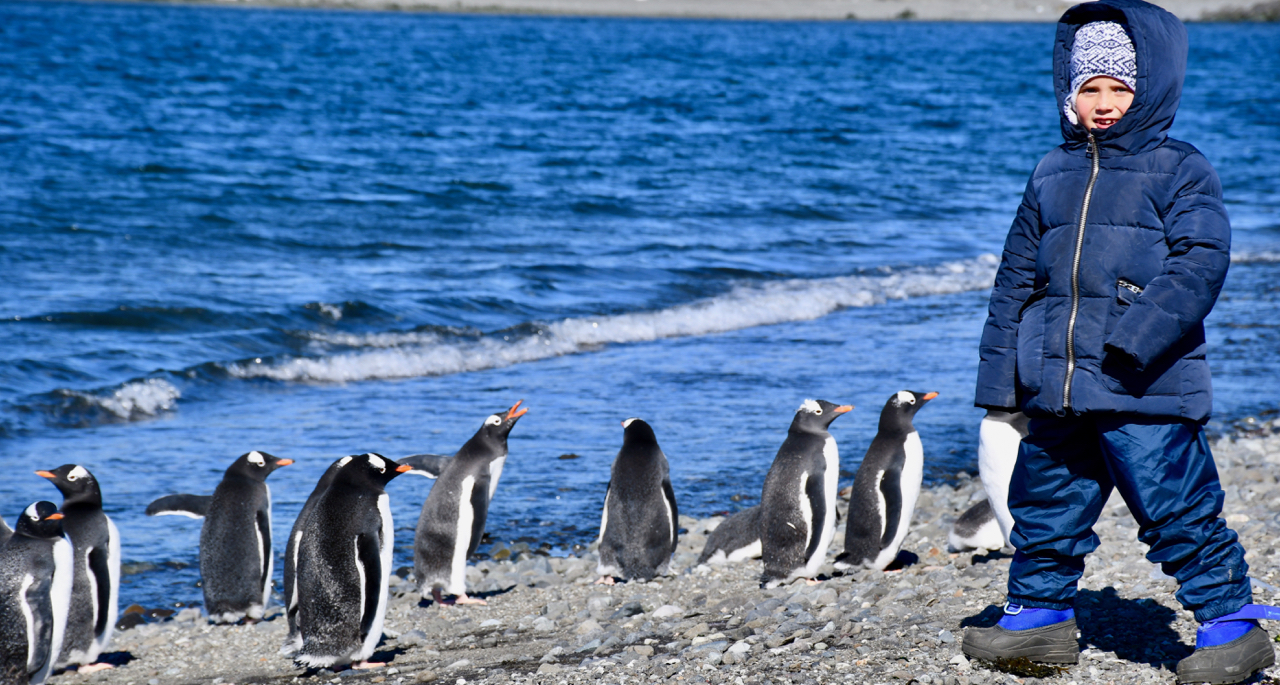
While our young sailor stared wide-eyed and sleepy at the glaciers sliding into the ocean, we rounded the far side of King George Island. Off the starboard side lay the snowy dome of Nelson Island. Fur seals and a pair of enormous dolphins surfaced ahead of Lady Mary’s bow. A sooty albatross made a comical running take-off across the water. It was so close to our stem that it had to crane its neck towards the yacht: would we run it down or not? The AIS beeped to announce new vessels. Inside the bay, a naval cruiser was racing along at 15 miles per hour.
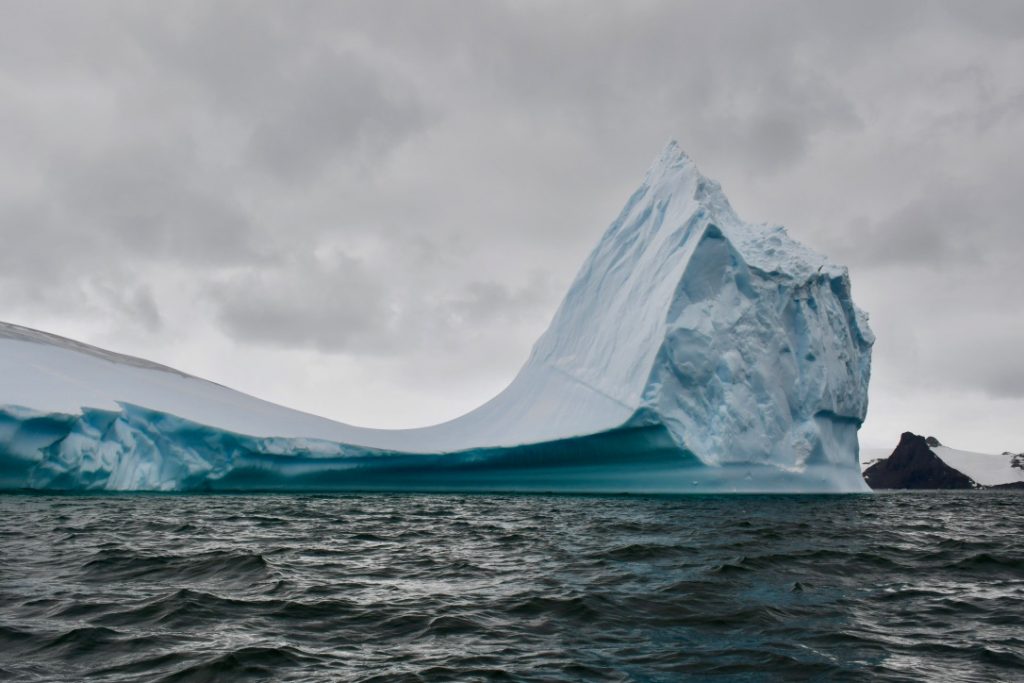
An expedition ship flashed up behind it. Things are lively here in the Antarctics. We pulled our fur trousers on over our boots and crawled out on deck. The yacht glided deep into the vast Maxwell Bay. Prickly snow lashed down from the grey dome above, and Ladunya looked forward to us building a snowman or a fort. The November-grey shores were adorned here and there with blue masses of icebergs.
“Where’s our station—is that it?”
“No, the blue roofs must be Argentina.”
“And the red ones? Not ours either. There’s the oil depot, and here’s another station. Where are our people?”
“A church! I can see a church!” the young sailor rejoiced.
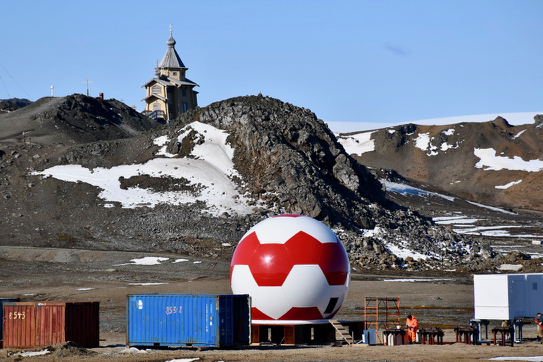
And sure enough, on a rock in Ardley Cove, the world’s southernmost permanently operating church, the Russian Orthodox Holy Trinity Church, glowed warm and yellow. Our friends Vladimir and Sergei helped build it. Volodya is a mountaineer; he climbed Everest with my dad in 2001. And then he went and built a church in Antarctica. We recalled the amusing details of its construction that never made it into the press. Three or four years ago, Sergei had been urging us to take Lady Mary to Antarctica to watch a volcanic eruption from the Ross Sea.
“Holy moly, Antarctica? What volcano?!” The very thought horrified me. “I’ve got children on the yacht—I’m a mother, for goodness’ sake!”
And here we are, three years later. To reach the most incredible goal, you simply have to keep taking little steps, remember?
Meeting the Polar Crew
On another hill to the left, the white walls of a Catholic chapel stood out, with Antarctica’s Chilean outpost settled at its foot. The Chileans had checked in here in style. The vast striped orange dome of a sports hall added a cheerful splash of colour. It was used by staff from three bases at once: sailors, aviators, and scientists. On our side, just across the stream, there were domes too, reflecting the sun and grand ambitions. And these weren’t just some sports halls. This was Roscosmos and its brand-new GLONASS antennas.
We donned thick rubber gloves nine sizes too big and went to prepare the anchor, rig the bridle, and raise the dinghy a little—it had been resting peacefully on the forehatch for three months. The windlass tried to refuse to work in such conditions: in the tropics it had paid out chain with a cheerful whirr, but now it could barely crawl, grumbling, “Well, what have you lot cooked up now?” The anchor set on the first attempt; in five metres of water, we laid out 50 metres of chain. The dinghy’s outboard also failed at first to see why it should stir itself at zero degrees. At first it maintained an offended silence, then began sneezing and spitting. It took the captain just over an hour to persuade the engine finally to show some conscience.
VHF Channel 16.
“Bellingshausen, Bellingshausen, this is sailing yacht Lady Mary, over!”
“Bellingshausen receiving!”
And towards evening, the crew finally landed at Russia’s northernmost Antarctic station.
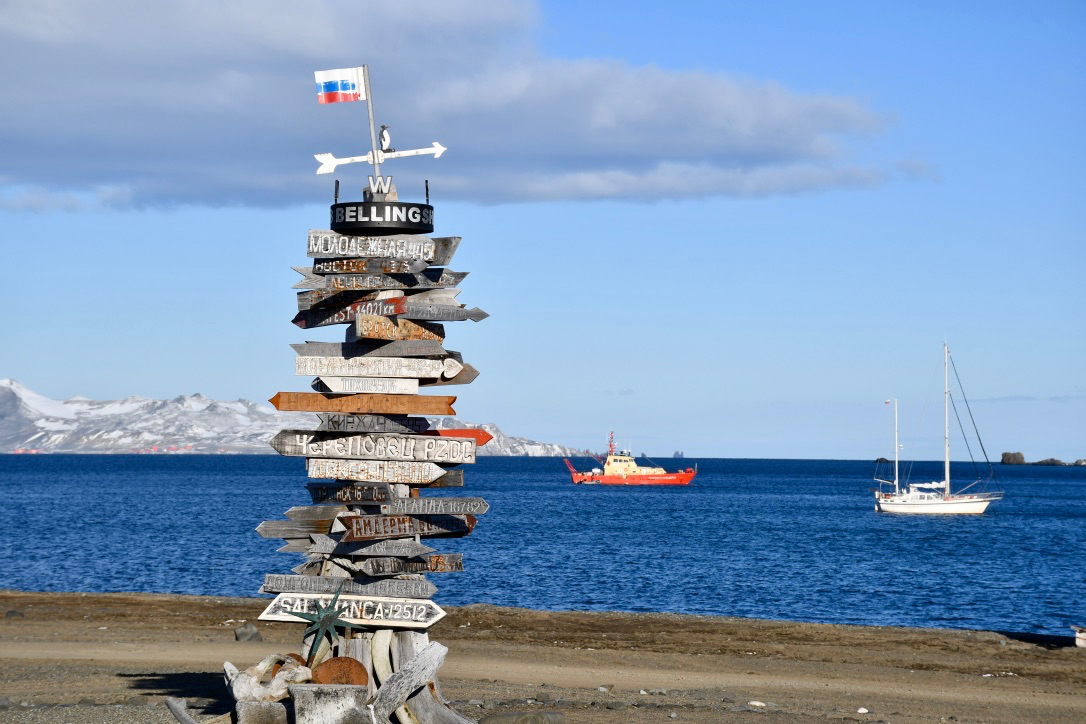
Alexei, the radio operator, gladly gave us a tour of the entire station. While we listened to how the research station operated, Ladunka ran off to the snowfields to make snowballs. We looked inside the Catholic church and visited the Chilean post office. Visitors to Bellingshausen Station had left postcards with Alexei, which he took to the neighbours’ post office. From here, letters stamped in Antarctica flew all over the world. The post office opened for one hour a day, from five to six in the evening. At other times, there were other concerns. The Chilean stations’ airfield lay beyond the rise, and in half a day no fewer than two planes took off from it.
We climbed up to the log church. “Mmm, that smell—just like home!” we breathed almost in unison. Our Gingerbread House in Altai is built from the very same Siberian cedar as the church in Antarctica. The tiny church felt homely and snug. Carpeted floor and indoor shoes. The church’s framework is held together by thick chains running from the foundations to the very top of the dome. The winds here are the strongest in the world, and to keep the church from coming apart log by log, they devised this design: a flexible, mobile structure held by chains. In storm-force winds, the church creaks and sways, but stands firm.
We found the mosaic icon of St Nicholas the Wonderworker. Sergei Golomolzin had told us the complicated, almost detective-story tale of how it was delivered to the other end of the world. He was the very man who brought it here, and the first to inspire us to go to Antarctica. Father Maxim appeared in the doorway. It turned out that both he and the other priest, Father Sergei, were from the Altai Mountains. They lived and served a hundred kilometres from our home —when they weren’t in Antarctica, of course.
Maxim gave us icons and beeswax candles. And the kindness radiating from him is hard to put into words. Besides the church, Bellingshausen has the Radio House, the House of Friendship, and the Hospital. We were invited to tea in the House of Friendship. Uncle Sasha, the head chef and a veteran of polar expeditions, could not stop marvelling:
“No, I thought I’d seen everything in my life, but this! Going to Antarctica with a crew like yours!” And Russian condensed milk and fresh rye bread materialised beside our table.
With difficulty, we tore ourselves away from our post-tea table tennis and contemplation of the busts of Bellingshausen and Lazarev, and headed to the Radio House.
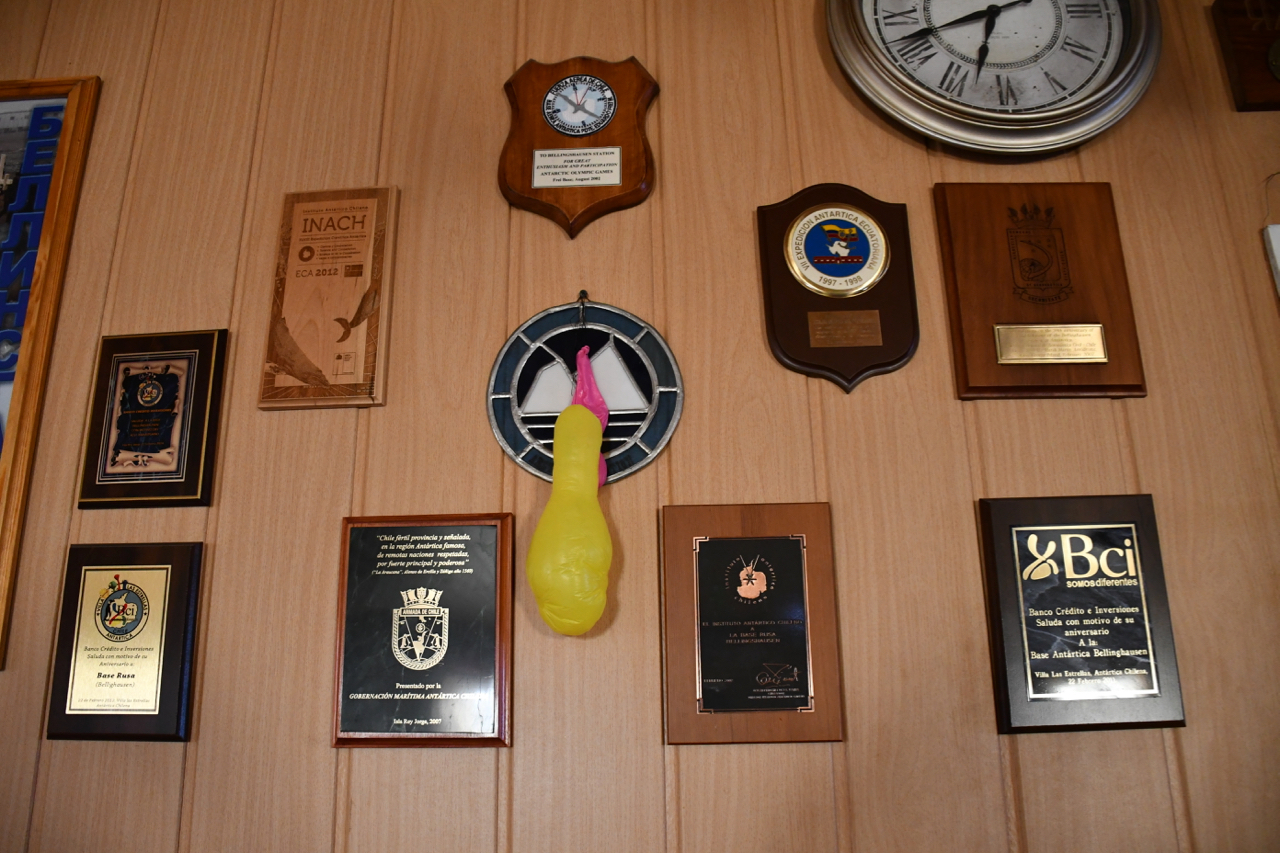
In the entrance hall, people took off their outdoor clothes and exchanged their boots for slippers. The corridor walls were covered with photographs of participants in every Antarctic expedition since 1968 and various commemorative plaques presented to the station.
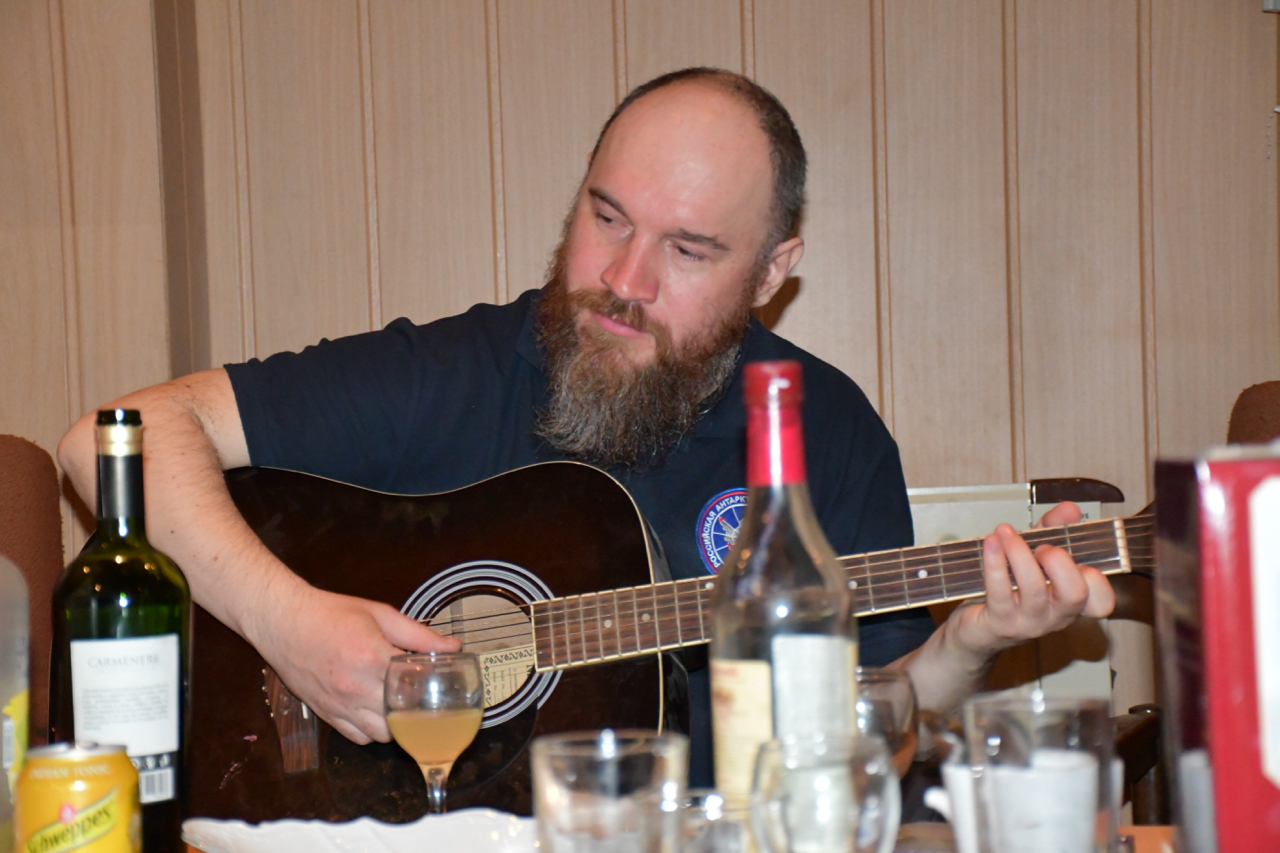
The expedition leader, radio operator, meteorologist, and oceanographer lived here. Their wonderfully cosy offices were here too, along with a spacious, warm mess room. We settled in there until midnight. Over mugs of Ivan tea, the conversation flowed about life at the pole. Our young sailor played with Sergei, the expedition leader, and Vitaly, the meteorologist. They showered her with so many presents that Lada felt as though it were her birthday.
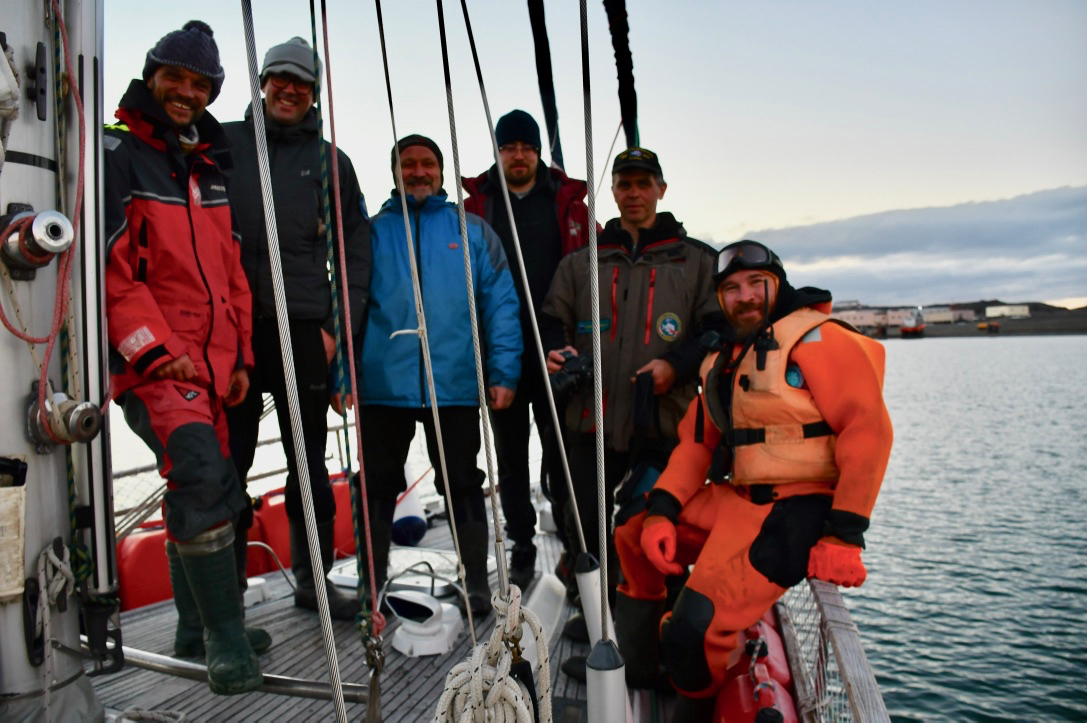
“It’s so wonderful here!” I breathed dreamily. “Just like... like... a polar station!” It sounded silly, yes, I know. After all, it was a polar station.
We’ll tell you more about Bellingshausen Station and its people, but for now I keep wondering: how are we ever going to leave?.
The Storm
The storm came in from the sea during the night. The strongest winds swept past farther north through Drake Passage. In the bay, it was blowing 23 metres per second, Force 9, gusting to Force 10. At two in the morning, we leapt up at the anchor alarm. The yacht had moved outside the set circle. We started the engine and drove her back with all our might. The anchor held fast.
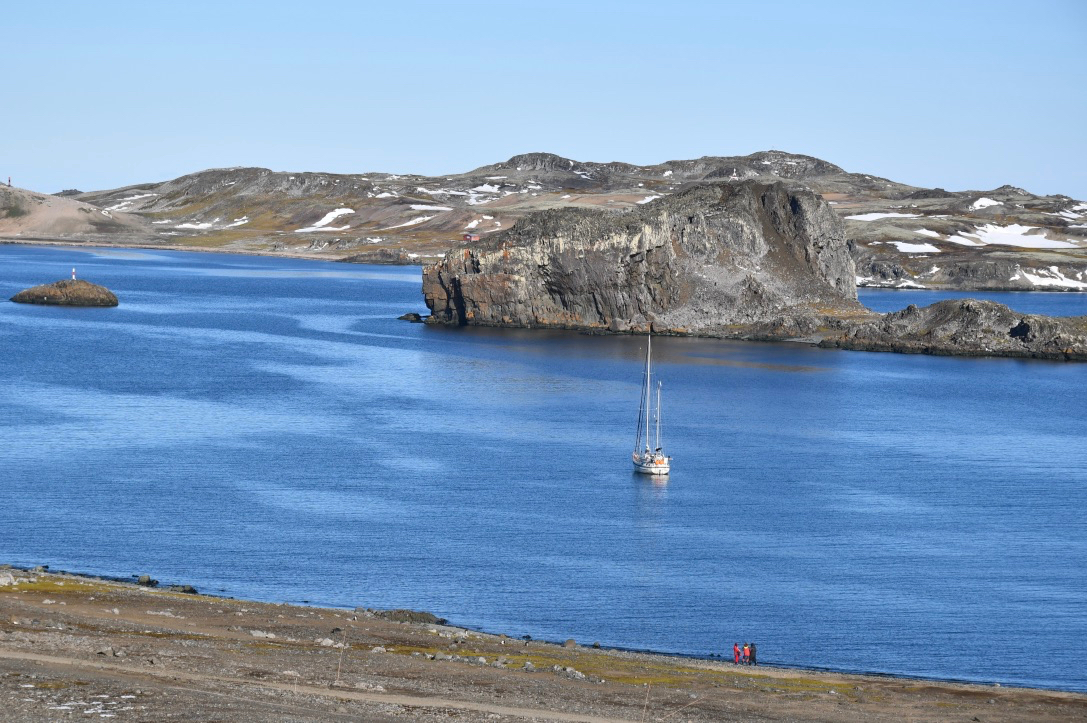
Lady Mary pranced like a tethered horse, while the little foal of a dinghy pounded against the hull. Ah, we shouldn’t have left it in the water. But going out into the night in driving snow and 45 knots of wind—oh, we really didn’t want to do that! At 3 a.m., I took over the watch in the wheelhouse to monitor whether any drifting ice was bearing down on us. One ice floe tried to snag our anchor chain. The fenders wedged between the dinghy and the yacht’s hull could not withstand the strain: one was ripped away by the sea, while another burst like a hot-water bottle under load in the unaccustomed frost.
By six in the morning, the three of us went up on deck and mounted a rescue operation for our brave, frozen dinghy. We hooked the slings and secured them to a halyard. Andrei took the winch, while Nastya and I kept the dinghy, made heavy by its outboard, at a safe distance from the yacht, hauling it forwards while the wind tried its best to do the opposite. Our boots slipped on the snow.
“Daughter, keep your centre of gravity low! It’s too early for a swim!”
Nastya balanced between the side deck and the swinging dinghy dangling from the halyard. I knelt and pushed our elephant of a dinghy against the stinging blizzard. One-two-one more... there! The dinghy was finally on deck, the outboard hadn’t smashed into anything, the shrouds were still in place, arms and legs intact, and everyone aboard. Now that was great! And we went below to our little home for hot tea. The storm continued until lunchtime.
Our dear friends, thank you for the warmth and light in your comments! Congratulations on the arrival of spring, and a big hug to you all!
And from the bottom of our hearts, special thanks to the true members of our shore team, those who support the expedition through PayPal.me/TravelyFamily. Thank you to Alexander Z. from Veliky Novgorod, Sergei K. from Kyiv, and Alexander F. from Ufa. You motivate the first mate to write reports even from the ice of near-polar waters:).