
From the Travely-Family archive · Antarctica
Back at Cape Horn. Across the Drake Passage for the Third Time
An original publication from the former Travely-Family website. This English translation was preserved from the technical-site archive without editorial rewriting.
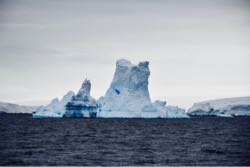
Back at Cape Horn. Across the Drake Passage for the third time. 12 March. The windows between the low-pressure systems racing from the Pacific into the Atlantic are shorter than the time it takes our yacht to cross the Drake Passage. So whichever way you look at it, there’s no escaping a race with the winds. We stand our watches; there are no ships, and the icebergs are behind us. A day after the small staysail was torn to shreds, we found a moment to take it down. Lady Mary has a set of storm sails tucked away, so the captain, the sailor and I go forward to hoist the storm staysail.
Our junior crew member monitors the situation and the vessel’s course from inside the wheelhouse. And up on the bow it’s great! The bowsprit plunges into the waves, and the sea growls, trying to scare us with breakers rising from the depths. Waiting until the captain had moved back towards the mast, a wave washed right over my head. Water seeps into my boots, and at this point I realise that my supposedly waterproofs have become water-permeable even around the trousers. The first time it’s unpleasant; after that you don’t care. You sit down in a cold puddle, there’s a puddle inside your jacket and trousers, and all is right with the world.
A wet face immediately freezes until your eyebrows ache. The captain works his magic on the fastenings, our boots skid mercilessly on the teak deck, and the staysail—which on closer inspection turns out to be a jib—is ready to hoist. The sail feeds into the luff groove on the forestay without much trouble. But it turns out that it can’t be furled now, because the luff is much shorter than that of its torn companion, causing the staysail halyard to wrap around the forestay and jam the whole arrangement. We decide to leave both this storm sail and the genoa up. When the wind eases, we keep moving with almost no loss of speed.
13 March. It has become much warmer than in Antarctica. There, we ran the heater almost around the clock and snowflakes lay along the seams of the sails; now we can switch the heating off for the whole day, and there’s no snow in sight either. The humidity immediately rose, which is wonderful. Because with the heater running nonstop, the humidity in our little home is 42 percent. Your mouth is parched, and it feels horrible. After so many years at sea in the tropics, where humidity is around 80 percent, we are no longer used to such dryness.
The wind is still almost on the nose, but it’s fairly light, the swell has subsided, and the sun winks from behind the clouds. If only we could sail like this all the way! Nastya and I say dreamily, gazing at the horizon, which is clearly visible for the first time in several days. The weather allowed Ladunya and me to do some drawing in our beautiful new sketchbooks. They’re hardback drawing albums the size of a large book. As it turns out, inspiring our young sailor to draw with the sight of a beautiful album alone isn’t so easy—but if we sit down together...
Putting my other chores and work aside, I tell myself that I love drawing too and have long dreamed of doing it again. Over the years of living at sea, we’ve learned how to draw and write without the pencil flying off the table—or us flying off the sofa. I’m creating a scene of Japanese life, with cherry blossom and a pine tree. It’s a shame that entering Japan by yacht is far from straightforward. Visiting the Land of the Rising Sun—specifically its countryside—has long been a dream of mine. Ladunya devoted herself to depicting the life of an owl family in the hollow of an oak tree. Drawing turned into a game. The owlets acquired names and stories.
In the evening we read our messages and wonder what sort of sabotage is going on with our YouTube channel, why videos and comments have suddenly started being taken down. One more job to deal with ashore.
The sunset, unusually, blazes through the windows, the sea breathes calmly, and the crew disperses to their watch stations and bunks to await the strong wind.
14 March. The headwind has strengthened, heeling us over, and half asleep I try not to crush Nastya in the large aft bed. Towards morning, the captain selflessly reefs the sails without waking anyone. That reduces the heel a little and, despite the smaller sail area, the boat picks up a little speed. So far we are managing to stick to the plan. And the yacht is not being set as far east as in our pessimistic course plot. Our Andryukha really is a genius. Thanks to his meticulous study of charts and weather, his planning and attention to detail, we have never ended up in some deep... trouble, never been driven off God knows where by a storm, never had to battle straight into one. A tack north while the low passes to the south; a tack west, allowing for the strong wind farther on that will carry us east. Speed up here, slow down there, and point a little closer to the wind.
All the calculations are proving correct, and it looks as though we really will slip through before the storm, without having to heave to amid the wild waves. There are 86 miles left to the entrance to the Beagle Channel. A little over 30 until we are abeam of Cape Horn.
The AIS has detected a new target: some ship with a Russian MMSI is overtaking Lady Mary. While we speculate which of the vessels we know—Akademik Ioffe or Akademik Vavilov—is coming up behind us, a name finally appears on the screen. And it turns out to be a third Akademik, Karpinsky. An hour later, they call us on the radio in Russian. Standing watch aboard this genuine expedition vessel, rather than a tourist carrier, is Chief Officer Alexander Alesin. Karpinsky is bound for St Petersburg from the Amundsen Sea. The scientists had been carrying out geological exploration work on the Antarctic shelf; they too haven’t seen any Russians for several months and are glad to meet us.
We chat warmly on the radio for half an hour, and our spirits begin to rise. The sun bursts into light at the sight of us almost reaching land. Andryukha returns from the deck lightly dressed; there’s no need for his polar suit today, and it feels so strange. In general, it feels as though we’re heading home after a trek. But while returning from a trek to a city flat is usually depressing, here it was a little sad when we first set out from Antarctica, but not hard. After all, ahead lie the Patagonian fjords and the Strait of Magellan, the Falkland Islands and... the moment when we must decide which way to sail from Tierra del Fuego to complete our circumnavigation: west or east. Each option has its advantages.
By yesterday evening the weather had cleared and the wind had died. You step out on deck and it’s a holiday resort. No three layers of jackets, no two pairs of gloves nine sizes too big. When it isn’t cold, everything suddenly seems so easy and comfortable. Even without boots, your feet don’t freeze in just socks. We started the engine, reefed the mainsail, and furled the staysail and genoa. It’s about 10 degrees outside, and in the sun all of 15 above zero—sweltering! In Antarctica it was around zero, below freezing at night. Our Antarctic adventure took three and a half weeks.
Lady Mary spent more than half a month of that south of 60 degrees south latitude. Despite the cold, difficult navigation, pushing through ice, and active watchkeeping around the clock, it was absolutely wonderful there. A window into a parallel world. The warmest part of that desolate, cold, life-incompatible continent turned out to be unexpectedly close to our hearts—and inhabited.
At around 2 a.m., the AIS displayed our radio acquaintance Akademik Ioffe, whom we had spoken to on our way out from the Ice Continent. After spending less than a day in Ushuaia, the hard-working ship is already heading back to Antarctica. Such is the life of a ferryboat carrier! We passed silently four miles apart; I didn’t want to wake the captain with a radio conversation, as he still had to take the helm through the channel from 6 a.m. The main joy and huge relief is that we will make it into the Beagle Channel before the storm. Hurrah for the captain’s precise calculations!
But this isn’t the end yet: a strong headwind and waves are spitting the yacht back out of the channel towards Antarctica. Lady Mary has begun galloping so wildly that some of those fresh from the Drake Passage are feeling seasick. Short, steep waves pound the bow and lash over the coachroof. Whitecaps cover the water. The propeller bogs down in the waves, and the bow buries itself. If it’s blowing around 30 knots here, what must it be like off Cape Horn? The weather forecast shows no strong wind over Tierra del Fuego or the channels. Perhaps our battle won’t end this evening after all, but by the morning of the 16th. Our position can once again be viewed at marinrtraffic.com. Lady Mary’s MMSI is 273334590.
Friends, thank you for your feedback! We look forward to it every day and feel the warmth of your hands, and even your souls, very close beside us. It’s so wonderful!
A separate and enormous thank-you for bolstering the expedition’s fighting spirit through PayPal.me/TravelyFamily! Our thanks to Vladimir K. from Primorsky Krai, Oleg I. from Novosibirsk, Galina S. from Oryol, Gennady Z. from Vladivostok, and Taras V. from Lviv Oblast! You are our greatest motivators!