
From the Travely-Family archive · Family, Children and Life Aboard
About the “Round-the-World Voyage via the Great Capes and Antarctica with Children” Expedition —
An original publication from the former Travely-Family website. This English translation was preserved from the technical-site archive without editorial rewriting.
To Antarctica with Children
On an expedition along a difficult route, you will usually find either people who do not yet have children, or men who leave their wives and children at home. There are also women who leave their children with their husbands, but there are not many of them. Regional and local expeditions usually take several months; a round-the-world voyage takes more than a year. A round-the-world sailing expedition via the Great Capes and Antarctica with children took three years (including a one-year delay due to the pandemic).
Many yachts from Europe and America sail around the world, including family crews with children. But there are almost no Russian speakers among them. We met only three families (all from France) who had ventured into high latitudes with children. The first rounded South America through the Beagle Channel and returned to the trade winds; the second sailed to Antarctica, returned to the tropics and settled in Tahiti. The third crew, with two daughters, sailed from France to Australia via the Northwest Passage from the Atlantic to the Pacific, reached Tierra del Fuego and returned to warmer latitudes.
And so you face a choice: fulfil a great dream and do something no one has ever done before, or stay at home. Leaving the children with relatives does not feel quite right, and the children want to be with their parents. It turns out that the only chance to follow the Path and show the children a world with different degrees of freedom is to set off together.
A Difficult Task
Organising such an expedition was made easier by the fact that we travelled this path step by step, from simple to complex. We trained and prepared the yacht for an Atlantic crossing and a circumnavigation in warm following winds. Before setting out into the Pacific, we fitted her with the necessary additional equipment, including a watermaker. We repaired the diesel heater, and once in Tierra del Fuego we purchased everything required for a voyage To Antarctica with children. With every mile sailed, with every degree of latitude, the crew’s confidence and skill grew. After all, we did not end up in Antarctica after a couple of pleasure cruises around the Caribbean. A well-prepared crew finds it more interesting to tackle difficult challenges and reach places you cannot simply fly to.
Does It Benefit Society?
We represent our country. We carry a positive image of the Russian traveller—someone who treats nature and people with care—to the farthest corners of the planet. When people in distant countries meet the crew, they see that Russians are not just vodka, bears, fur hats and AKs. Ours is a nation that has made great discoveries, a people who are friendly and courageous, always ready to help.
By undertaking an unprecedented sailing expedition across the Southern Ocean, we are building experience in extreme family cruising around the world, finding the best ways to maintain harmony within the crew, and educating children while travelling. We are developing rules for safety, coordinated work aboard the yacht and effective conduct in different situations. Other sailing crews can draw on our experience of a family circumnavigation, whatever their composition.
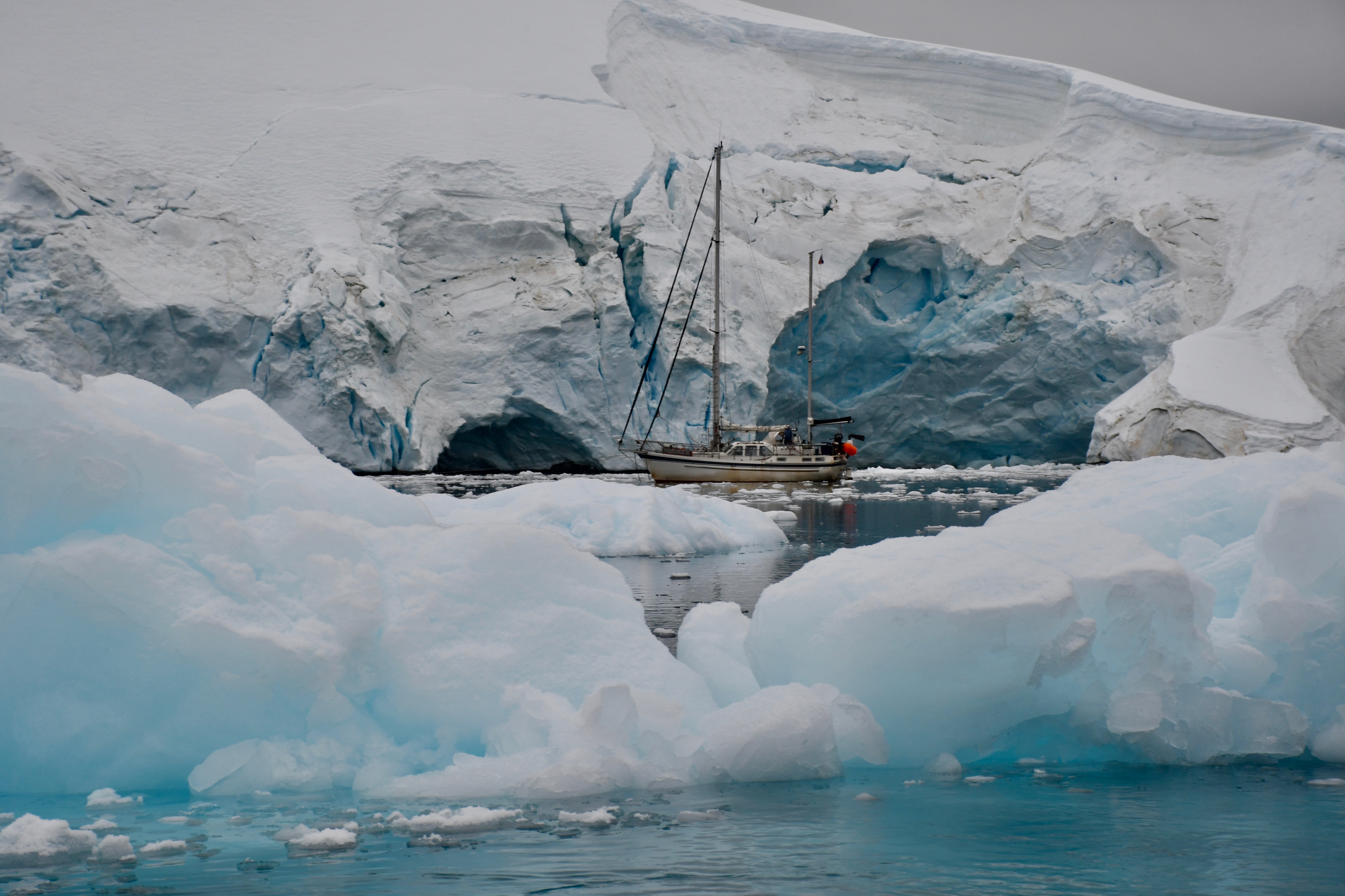
Together with our children, we explore the world and retrace the routes of famous explorers and the heroes of adventure books. Such a difficult expedition, undertaken by an ordinary family, helps many people believe in themselves and spread their wings. Hundreds of followers of our website, social media pages and YouTube channel write to us about this. Our experience shows that an ordinary person can do anything if they truly want to.
We are confident that those who follow us will write bold new lines in the history of Russian cruising, which is still at the beginning of its journey but is gaining momentum, thanks in part to the “Expedition via the Great Capes and Antarctica with Children.”
And now—to business.
Participants
Crew of the sailing yacht Lady Mary:
Andrey Klochkov — captain. More than 100,000 nautical miles of sea experience, over 85,000 of them as captain. High-latitude sailing experience: 40,000 nautical miles, including among ice. Competitor and prize-winner in the prestigious Rolex Middle Sea Race and Fastnet Race. Participant in extreme mountain expeditions and a speed ascent of Mount Kinabalu.
Marina Klochkova — first mate. More than 70,000 nautical miles of sea experience. High-latitude sailing experience: 20,000 nautical miles, including among ice. Member of the Russian Geographical Society, travel journalist, teacher and environmental enthusiast. Participant in extreme mountain expeditions, including in the Himalayas. Former volunteer with WWF Russia.
Anastasia Klochkova, born in 2001 — able seaman. More than 60,000 nautical miles of sea experience. High-latitude sailing experience: 18,000 nautical miles, including among ice. Year 11 student at the Geographical School Named after St Andrew the Apostle. Travel blogger. Graduate of Cape Town Sailing Academy (RYA).
Lada Klochkova, born in 2011, young sailor. More than 65,000 nautical miles of sea experience. High-latitude sailing experience: 25,000 nautical miles, including among ice. Year 6 student at the Geographical School Named after St Andrew the Apostle.
Antarctica under Sail
Mode of Transport
Sailing yacht Lady Mary
(Port of registry: Moscow, Russia).
Yacht model: Nauticat 40
Year built: 1988
Sail plan: Bermuda ketch
Sail area: 108 square metres
Displacement: 14 tonnes
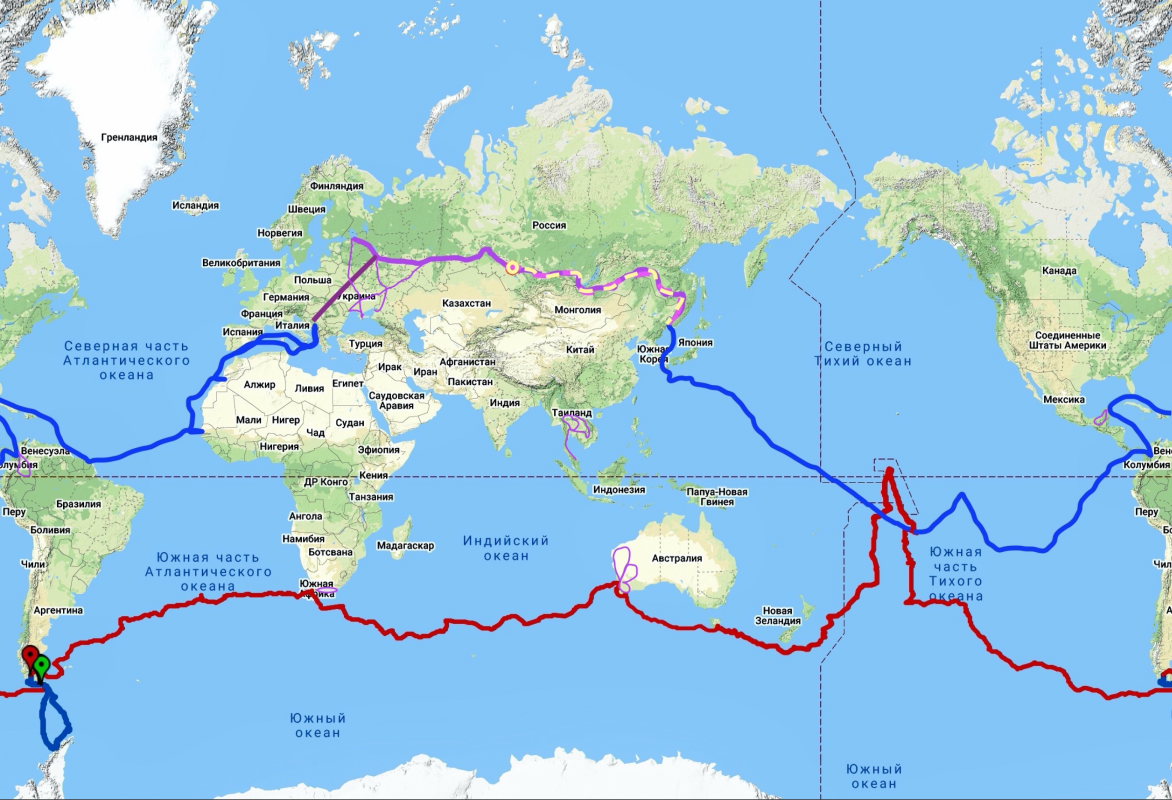
Principal dimensions: length 12 m, beam 4 m, height above waterline 20 m, draught 1.8 m.
Engine: SP-90, Ford Lehman
Vessel speed: 6/7 knots (under power/under sail)
Number of berths: 8
Antarctica under Sail.
Project Description
The first Russian family circumnavigation in high latitudes is being carried out by a single family—the four crew members of the sailing yacht Lady Mary. We ourselves handle the voyage and its organisational and technical preparations, equip and outfit the expedition for extreme sailing, plan the route, organise educational and cultural-exchange events in ports of call, keep the audience informed about expedition news, and carry out other online and offline activities.
The circumnavigation of the Southern Ocean runs from west to east via all five of the planet’s southern capes, including the three Great Capes: Cape Horn, the Cape of Good Hope and Cape Leeuwin, with a visit to Antarctica.
Most of the route lies through the Roaring Forties of the Southern Hemisphere. The voyage around Cape Horn passes through the Furious Fifties.
The sailing voyage to Antarctica through the Drake Passage runs through the 50s and 60s latitudes.
The route includes five self-sufficient passages lasting from 25 to 55 days.
During the expedition, the children study seamanship and follow the secondary-school curriculum.
The “Expedition via the Three Great Capes and Antarctica with Children” began in November 2018 on Tahiti, where we had arrived from Montenegro. In the middle of the Pacific Ocean, we suspended our original voyage for the sake of a grand undertaking—to complete a unique family circumnavigation with children.
Goal Achieved!
On 26 November 2021, the circumnavigation via the Great Capes and Antarctica
WAS SUCCESSFULLY COMPLETED IN THE MIDDLE OF THE PACIFIC OCEAN. Lady Mary now faces the long journey home and the continuation of her first circumnavigation.
Track of the round-the-world expedition on Google Maps >>
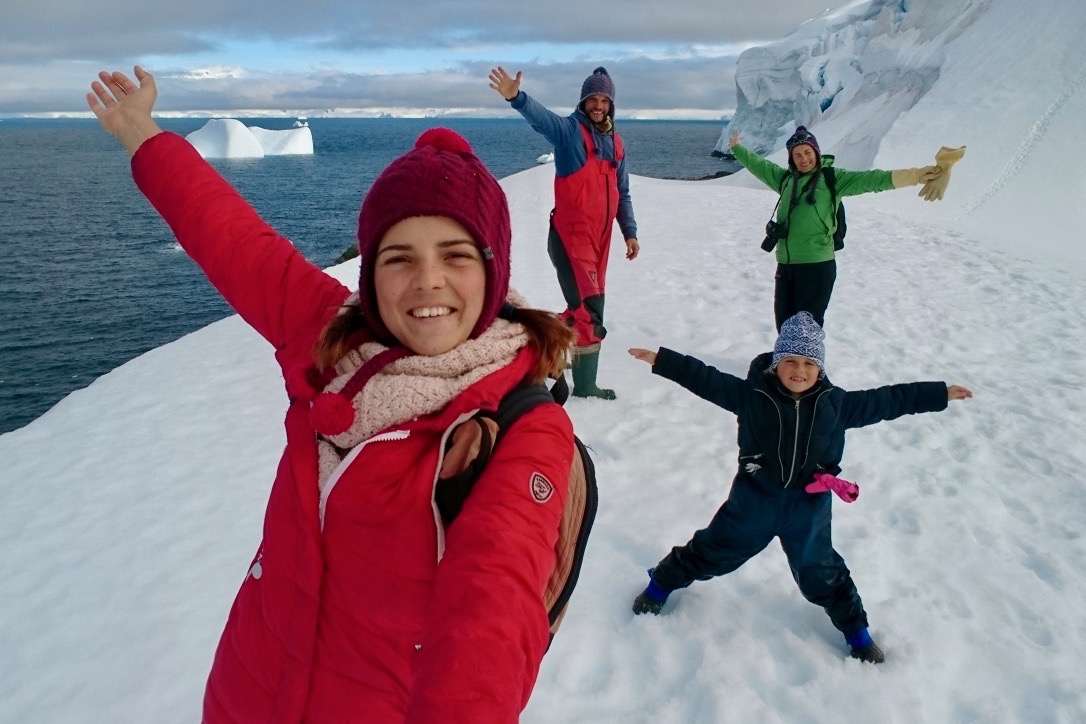
Route of the Travely-Family round-the-world sailing expedition. The final stage of the route is highlighted in red Expedition Stages
The circumnavigation consists of five major stages. Lady Mary crossed the South Pacific, rounded Cape Horn and sailed to Antarctica, endured severe storms in the South Atlantic, reached the Cape of Good Hope, crossed the southern Indian Ocean and stopped for a year (because of the pandemic) in Western Australia. On 3 September 2021, the crew departed Hobart (Tasmania, Australia) for the finish of the circumnavigation. The chronicles of the final, almost three-month stage begin here >>
Stage 1
Tahiti—Cape Horn. November 2018—January 2019
The most significant and longest stage of the journey. 6,365 nautical miles by track.
Key points:
1. An applied survey of the phantom-island region of the South Pacific and the elimination of “blank spots” on the chart. From the Society Islands, via the Austral Islands, the yacht set a course for the latitudes in the 30s and reached the 37th parallel. The crew carried out a series of geographical “closures,” demonstrating in practice that the phantom islands of the 30s—Wachusett, Ernest Legouvé and 1957—and the legendary Maria Theresa Island (Tabor Island), described by Jules Verne in the novel In Search of the Castaways, do not exist.
2.
The Oceanic Pole of Inaccessibility—Point Nemo
(48°52’6 S, 123°23’6 W). In 1992, Croatian scientist Hrvoje Lukatela calculated the point on our planet farthest from any land. It was named after Captain Nemo, the hero of Jules Verne’s trilogy.
The orbit of the ISS passes above the Pole of Inaccessibility. Space agencies use the oceanic pole of inaccessibility as a spacecraft cemetery.
3.
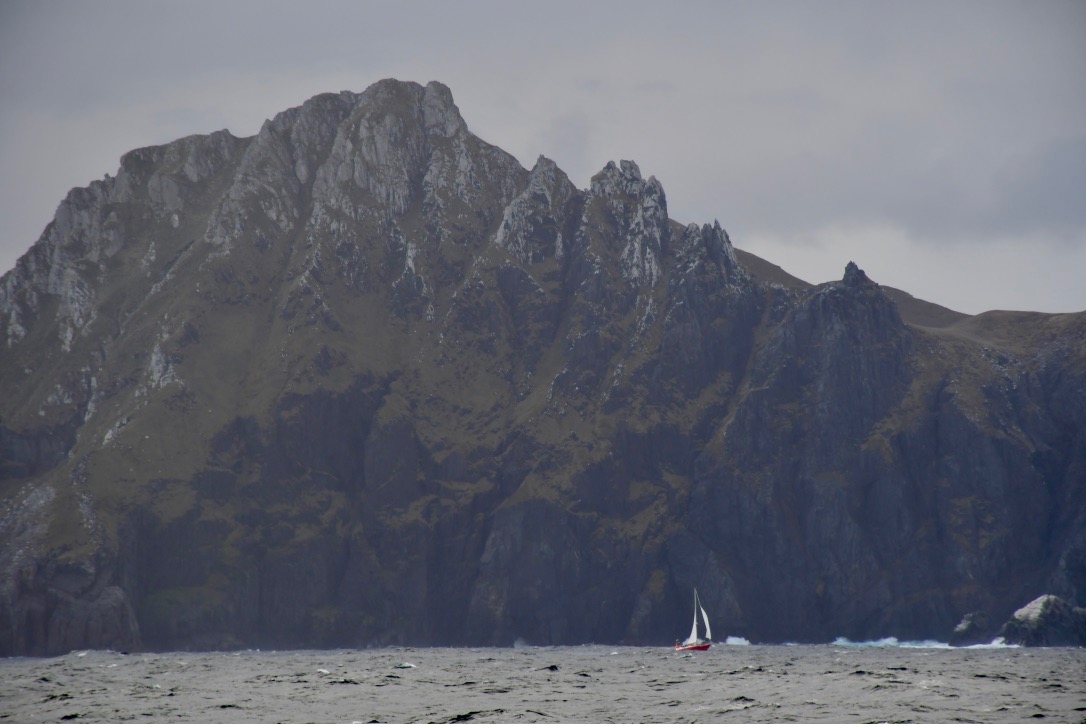
The Everest of Sailors—Cape Horn, considered the stormiest place on the planet. Rounded on 19 January in Force 8–9 winds on the Beaufort scale. On 21 January 2019, the yacht arrived in Puerto Williams, Chile.
Cape Horn
The stage was completed in 62 days, with a short stop off Rimatara Island on the ninth day of the passage to replenish fresh provisions. The self-sufficient passage from Rimatara Island
(French Polynesia) to Puerto Williams
(Chile) took 54 days.
Stage 2
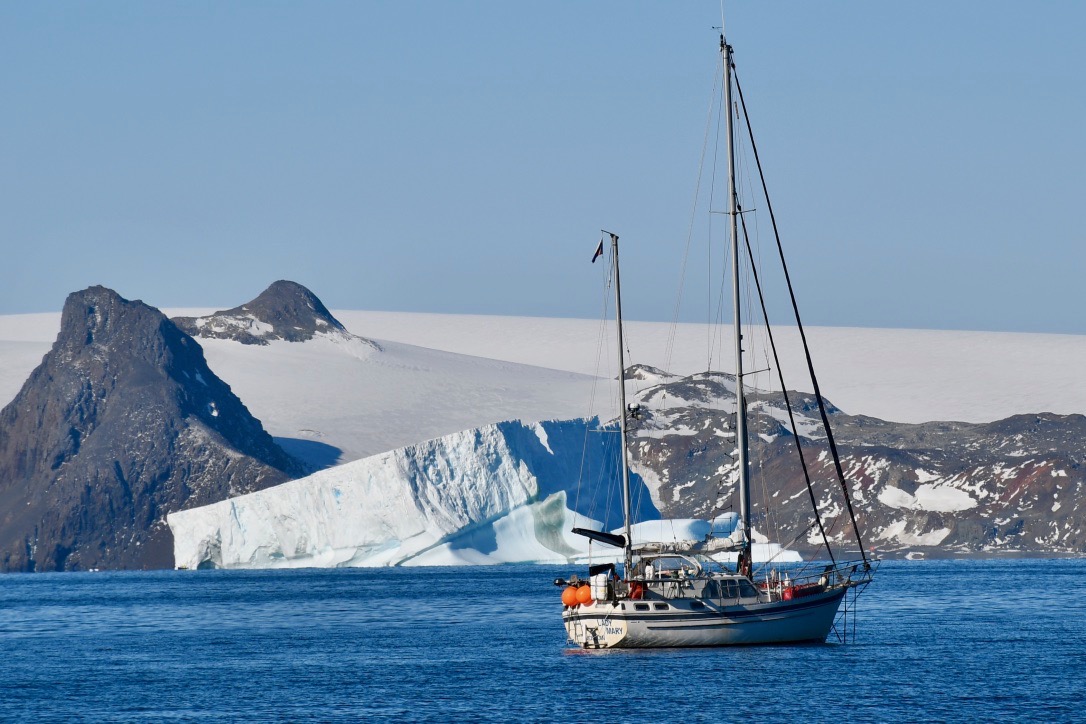
Antarctica under Sail.
21 February—16 March 2019.
1,742 nautical miles
Ushuaia—Drake Passage—Russian Bellingshausen Polar Station (King George Island, South Shetland Islands)—Melchior Islands—Antarctic Peninsula—Port Lockroy—Lemaire Channel—Bellingshausen Sea—Drake Passage—Ushuaia (Argentina).
In May 2019, Lady Mary joined the flotilla welcoming Fyodor Konyukhov’s rowing boat Akros at Cape Horn, where she was the only yacht flying the Russian flag. On 9 May, the crew rounded Cape Horn for the second time.
Stage 3
Cape Horn— Cape of Good Hope.
Completed on 21 October 2019.
5,500 nautical miles
During the winter in Tierra del Fuego, the crew sailed through the Patagonian fjords with their glaciers and entered the Strait of Magellan, one of the most difficult waterways in the world to navigate.
On 30 September 2019, the yacht entered the Atlantic Ocean. A Force 11 storm drove the yacht away from the Falkland Islands, and the crew set a course for Tristan da Cunha, the island most remote from inhabited land. We rested for three days at anchor in an area with uncharted depths. Nineteen days later, we reached Cape Town, South Africa. The entire self-sufficient passage took 55 days, including 33 days from leaving the Strait of Magellan to Tristan da Cunha through the latitudes of the 50s and 40s in the Southern Ocean.
Stage 4
Cape of Good Hope (Cape Town, South Africa)—Perth, Western Australia—Cape Leeuwin—Albany—Tasmania (Australia)
Distance to Perth: 4,800 nautical miles by great-circle course, 5,250 in practice.
The Great Cape Leeuwin was rounded on the Perth—Cape Leeuwin—Albany—Tasmania (Australia) leg.
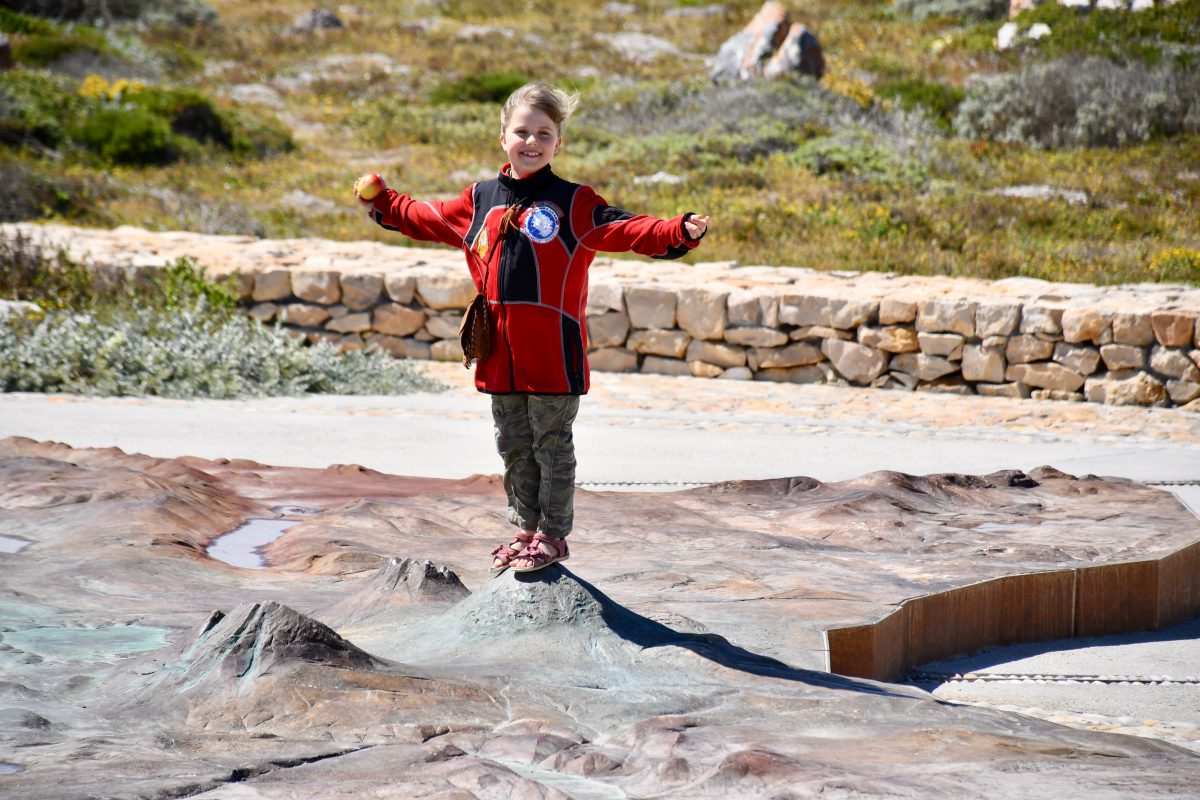
Young sailor at Cape Agulhas, South Africa
Stage 5: Australia—Polynesia
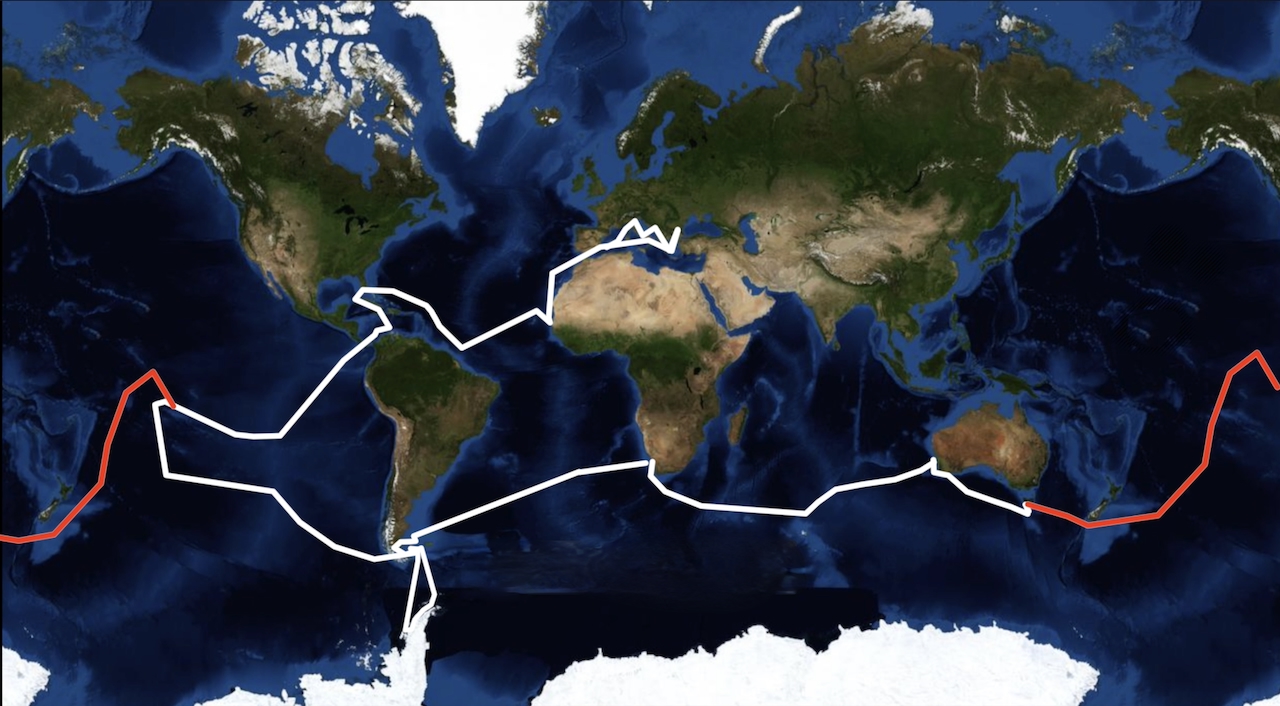
Tasmania (Australia)—around New Zealand to the south—Tahiti (French Polynesia); 6,150 nautical miles by great-circle course; 7,100 nautical miles in practice.
In 85 days, the yacht sailed from Tasmania (Australia) to French Polynesia, where on 26 November 2021 she crossed her own track between the islands of Moorea and Huahine. During this passage, the crew rounded the last of all the planet’s southern capes.
The entire route covered 26,000 nautical miles (48,150 km) by great-circle course. In practice—up to 30,078 nautical miles (55,705 km).
Lady Mary’s average speed—100 nautical miles per day.
Expedition Goals
1. To become the first crew with children in history to complete a west-to-east sailing circumnavigation through regions considered unsuitable for family cruising.
To reach two poles—the sailors’ pole, Cape Horn, and the Oceanic Pole of Inaccessibility, Point Nemo—with underage children aboard.
To round all five of the planet’s southernmost capes from the south.
To become the first crew in the history of the former Soviet Union to undertake an independent voyage to Antarctica with children, in honour of the 200th anniversary of the continent’s discovery by the expedition of F. Bellingshausen and Lazarev.
2. To survey the latitudes from 33° to 37° south in the South Pacific in order to confirm or disprove the existence of the phantom reefs Ernest Legouvé, Wachusett, 1957 and Maria Theresa, shown on modern charts. To establish reliable geographical information about the Pacific Ocean’s phantom-island region.
3. To bring Russian cruising to a world-class level and shape a positive image of Russia around the world.
4. To raise environmental issues. To foster responsible attitudes towards the planet’s resources through the crew’s specific actions and findings (regarding waste disposal and storage during long self-sufficient passages, economical use of resources from purchase to consumption, and so on).
5. To develop a strategy for teamwork during long self-sufficient voyages, including at high latitudes (relationships, yacht handling, safety and education), using a family with underage children as an example.
6. To create a foundation for implementing large-scale research and educational projects and organising expeditions to train cadets from maritime colleges and sailing clubs, teaching not only the art of seamanship but also historical and cultural heritage.
7. To motivate the audience to look beyond the horizon and explore the world; to follow their calling, seek answers to questions and achieve great goals. To show that a person can do anything if they truly want to.
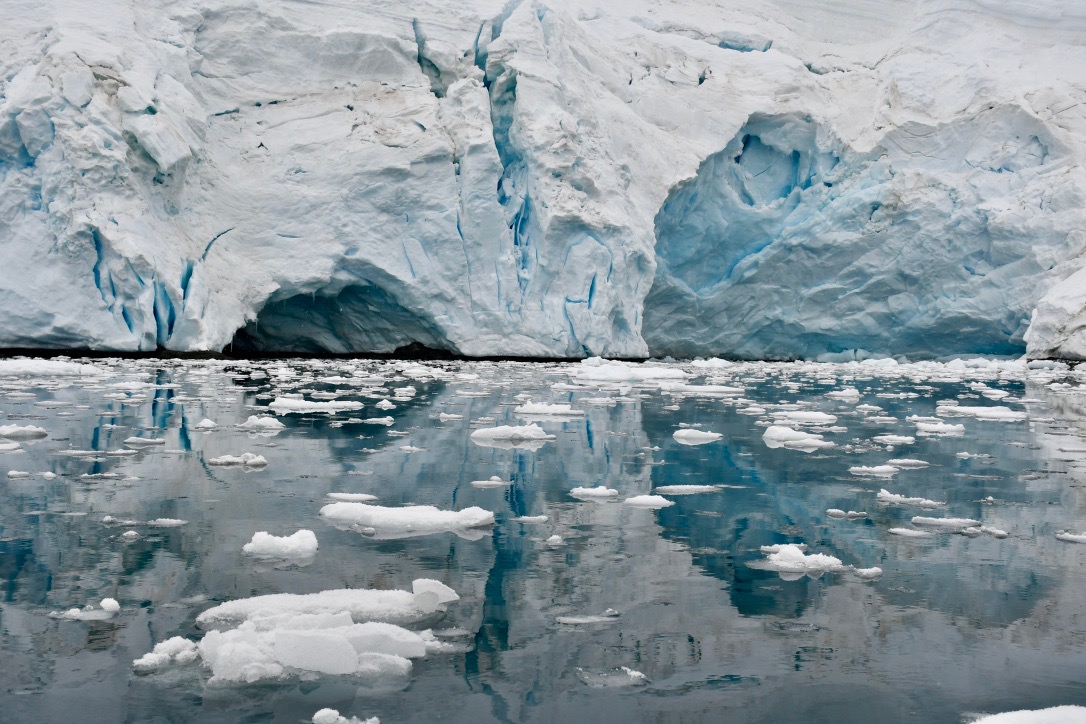
Paradise Bay, Antarctic Peninsula.
Tasks Addressed During the Expedition
1. To combine theory and practice in studying the Earth at the intersection of disciplines—biology, ecology, geography, history and literature—by observing the condition of the ocean and coastline and comparing the data with descriptions by explorers of earlier years; and, in history, geography and literature, by retracing the routes of great Russian seafarers and famous foreign explorers.
2. To publish the research materials as reports and popular-science articles, films and radio programmes. To reflect in them our own experience and observations, as well as the unique cultural and historical characteristics of different countries.
3. To prepare and hold events for Russian-speaking communities abroad dedicated to the 200th anniversary of the discovery of Antarctica, which played an enormous role in establishing Russia’s prestige as a maritime power. To hold cultural-exchange events along the route and introduce the public to our cultural and historical heritage.
4. To hold meetings with the general public, school pupils and members of children’s sailing clubs in Russia on the subject “A Round-the-World Voyage to Antarctica with Children,” in honour of the 200th anniversary of the discovery of Antarctica. To continue these events after returning to Russia..
Results of the Round-the-World Voyage via the Great Capes and Antarctica with Children Project
The progress and interim results of the expedition are covered on the website
Achievements
The southernmost round-the-world sailing expedition with children has been completed. During it, all five of the planet’s southern capes were rounded.
Geographical closure of the Pacific Ocean’s phantom islands
The crew sailed through every known coordinate of the Maria Theresa, Wachusett, Ernest Legouvé, Jupiter and 1957 reefs and demonstrated empirically that there are no submerged or emergent features in this area.
Link to a talk on the subject at the Russian Geographical Society lecture hall:
https://www.rgo.ru/ru/event/belye-pyatna-na-karte-sushchestvuyut-li-rify-prizraki-tihogo-okeana.
A sailing voyage to Antarctica in honour of the 200th anniversary of the continent’s discovery by Russian seafarers F. Bellingshausen and M. Lazarev.
The first Russian and post-Soviet passage of this route by a crew of this kind. Link to a talk on the subject at the Russian Geographical Society lecture hall: https://www.rgo.ru/ru/video/191020-i-m-klochkovy-parusnyy-pohod-v-antarktidu-s-detmi
The first passage with children around all three Great Capes: Horn, Good Hope and Leeuwin.
Reaching two of the planet’s poles: the Oceanic Pole of Inaccessibility (Point Nemo) and the sailors’ pole—Cape Horn (twice).
Four self-sufficient ocean passages lasting from 53 to 85 days
55,000 nautical miles, more than 15,000 of them in high latitudes, including among ice.
*There are no equivalents anywhere in the world to any of the above (or to the round-the-world voyage via the Great Capes and Antarctica with children itself).
Track on Google Maps
Other Results
As a result of the voyage, more than 50 original pieces have been published on behalf of the expedition in various media. The first book about the voyage is being prepared for publication.
The Antarctica under Sail passage was successfully completed. Seven-year-old young sailor Lada Klochkova became the youngest seafarer in the post-Soviet world, and the only child under 16, to round Cape Horn and reach Antarctica.
The expedition’s southern latitude record—65°6.41’ S
(reached at longitude 63°59.72’ W).
During the expedition, rules were developed for crews with children that make it possible to survive, develop and feel well during long, extreme voyages in a confined space. These include policies for relationships, an effective educational process and onboard safety. The experience can be applied to expeditions of varying degrees of difficulty.
Part of the route of the sloops Vostok and Mirny in 1820–21 was retraced (off the South Shetland Islands, in the Bellingshausen Sea and off Tasmania). Part of the route of the first Russian circumnavigation aboard the sloops Neva and Nadezhda under I. Krusenstern and Y. Lisyansky was sailed, along with part of O. Kotzebue’s route aboard the vessel Rurik in 1815–1818,.
As part of the young explorers’ education in history, geography and literature, most of the route from Jules Verne’s novel In Search of the Castaways was retraced along the 37th parallel, with a detailed study of the points along the route and their history.
The journals were studied and parts of the routes of Charles Darwin aboard the Beagle, Thor Heyerdahl, James Cook and Jack London were retraced
(Easter Island, Fatu Hiva, Pitcairn Island, Mangareva Island and the Gambier Islands, the Austral Islands, the Beagle Channel, the Strait of Magellan, the Drake Passage).
The Southernmost Sailing School in the World
Public Activities
To date, 14 meetings have been held with compatriots and local residents in countries along the route (Pitcairn Island, Chile, Argentina, South Africa—with support from the Russian Consulate General in Cape Town—and Australia), including in local schools. Subjects:
A round-the-world voyage with children; A sailing voyage to Antarctica in honour of the 200th anniversary of the continent’s discovery by Russian sailors; An introduction to Russian culture and traditions. At the school on Pitcairn Island, a folklore lesson and a workshop on making a traditional Slavic protective doll were held for pupils, teachers and visitors from the United Kingdom and Sweden.
A meeting was held with the polar explorers of the 63rd Russian Antarctic Expedition at Bellingshausen Antarctic Station.
During a short trip to Russia, public meetings were held in Novosibirsk and the Altai Republic.
With support from the Russian Consulate General in Cape Town, a meeting with compatriots was held. Particular attention was devoted to the voyage to Antarctica in honour of the 200th anniversary of the last great geographical discovery by F. Bellingshausen and M. Lazarev.
In Australia, meetings were held with the general public, teachers, parents and pupils from all four Russian schools in Perth. Lectures and project presentations, quizzes and quests for children were held. Two meetings with compatriots were held on Tasmania.
Interviews and live broadcasts on Russian Radio in New York, Russian Radio and SBS Radio in Australia.
Five online meetings with Russian and Russian-speaking school pupils; six online meetings with adults, including two in the Russian Geographical Society’s online lecture hall; An online presentation at the international BoatShow about the unique Russian expedition; In 2022, more than 50 public meetings were held in Russian cities, from Vladivostok to St Petersburg.
A popular-science book about the expedition via the Great Capes and Antarctica with children is being prepared for publication. Marina Klochkova’s articles from the preparatory and main stages of the round-the-world expedition are published in the media: in Yacht Russia magazine and on the website of the Moya Planeta television channel.
Films and video reports have been made:
About the educational process aboard the round-the-world expedition, for the Flagman children’s sailing club (Yekaterinburg) and the major distance-learning project interneturok.ru; A documentary series about the expedition to the Pacific Ocean’s phantom islands.
A documentary film about rounding Cape Horn. The film was shortlisted at the 2019 Man and the Sea festival in Vladivostok.
Documentary films were shot and released about the sailing voyage to Antarctica with children and the meeting with polar explorers at the Russian Bellingshausen Antarctic Station.
The film Antarctica under Sail: Survive won the Man and the Sea festival in 2020
The film Sailing to Antarctica with Children won the tourist-film festival
Edge in 2021 and took third place at the Golden
Globe festival. In 2022, the Travely-Family films Storm and Suwarrow Atoll took first places at these festivals.
These films are shown on the Ocean-TV channel.
Travel videos created by young sailor Lada:
The Southernmost Museum in the World. A Tour by the Young Sailor
Australia in 14 Minutes
Space for Children
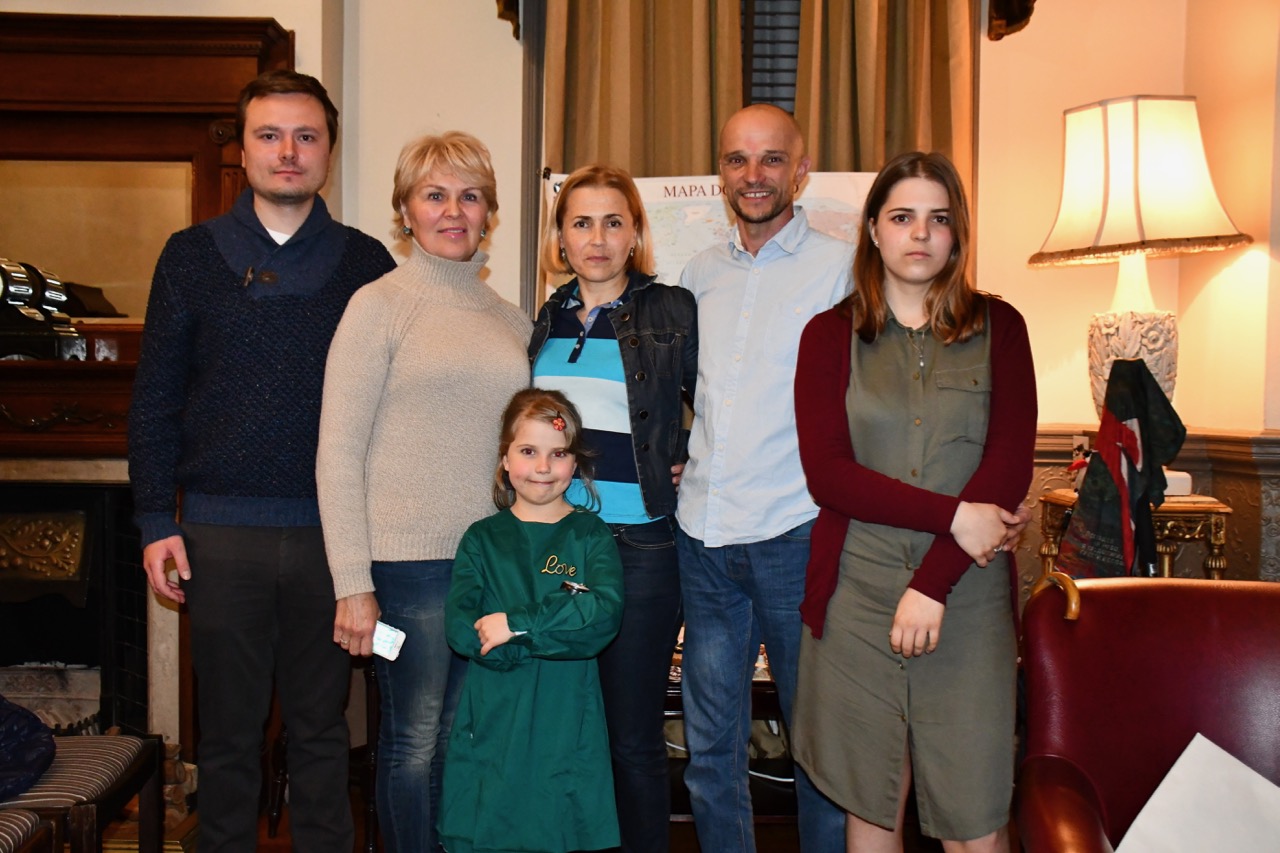
(the video won the international First Flight into Space video competition)
Recognition
The southernmost circumnavigation completed by a family crew with children—Russian Book of Records.
Best Journey of 2021 according to the Russian Circumnavigators’ Union.
Finalist for the Crystal Compass award from the Russian Geographical Society (Travel and Expedition category, 2019).
Nominations for the national Yachtsman of the Year award in 2018, 2019 and 2021. In 2021, the winner’s name had not yet been announced.
Nomination for the 2019 Crystal Peak award.
Winner at the Man and the Sea documentary film festival in 2020 and at the Edge festival with a film about Antarctica; second and third places at the Golden Compass festival, the Moya Planeta Award and Star under the Rucksack.
Hundreds of mentions in Russian and foreign media.
Reports on federal television:
ROSSIYA 1, the programme
Morning of Russia
“The Klochkov Family’s Lucky Break”
ORT Channel One, report on the programme
Sunday Time on Channel One
RIA Novosti report
“A Six-Year Family Circumnavigation”
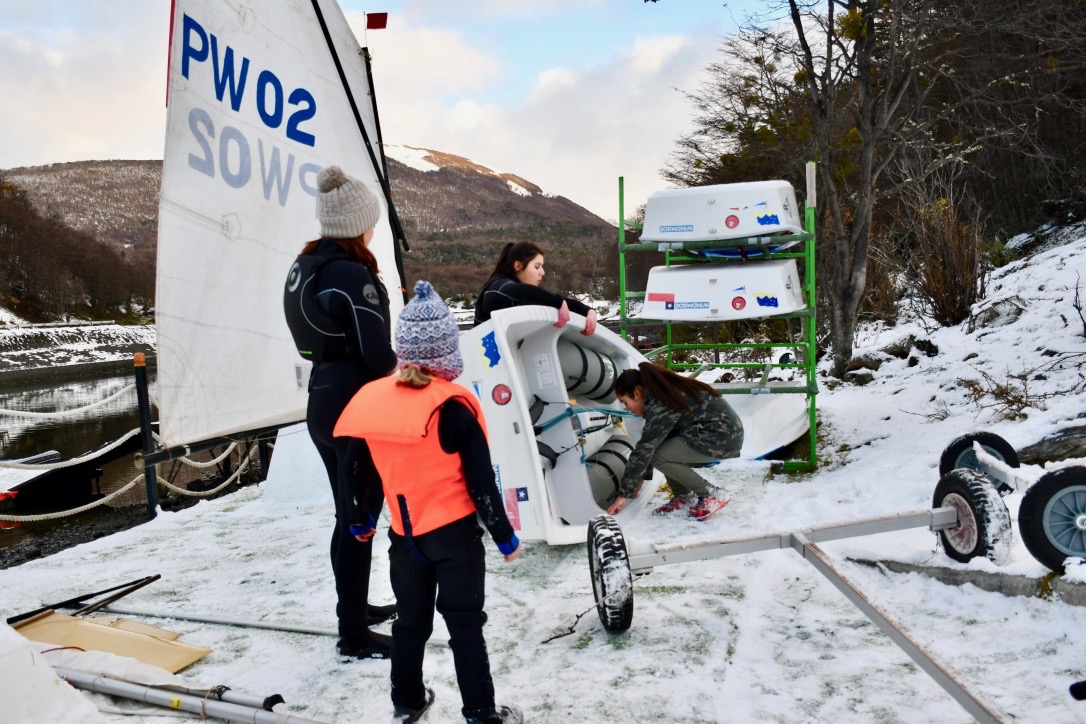
NTV, report on the programme Today
Life under Sail
REN TV https://ren.tv/news/v-mire/916799-zastriavshaia-v-okeane-semia-puteshestvennikov-iz-rf-remontiruet-iakhtu
360 TV Channel https://www.youtube.com/watch?v=vZGeTm0UQvs
Links to some federal-press articles about the expedition’s completion:
Lenta.ru
We Helped Hundreds of People Believe in Themselves
A Russian Family Set a World Record During a Round-the-World Voyage
Komsomolskaya Pravda
Survival Training Every Day
Moskovsky Komsomolets
We Collect Water from the Sails. A Novosibirsk Family Trapped by an Ocean Lockdown
The Klochkov Seafarers Completed Their Circumnavigation
IA REGNUM
Isolation in the Ocean and a World Record
Rambler
A Family from Novosibirsk Reached Antarctica in a Small Yacht
RIA Novosti https://ria.ru/20200126/1563854456.html
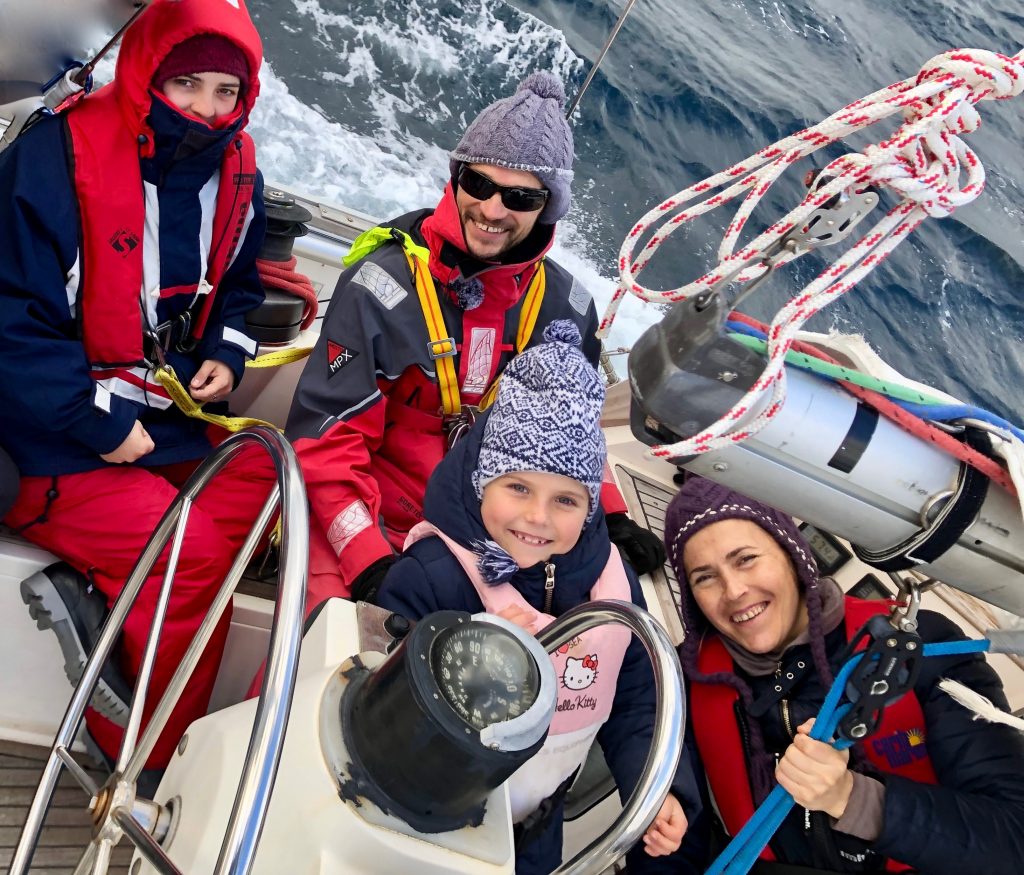
Match TV
Around the Earth by Yacht with the Whole Family. No One in the World Had Ever Done It Before NGS
A Novosibirsk Family with Children Completed a Yacht Circumnavigation: How They Lived on the Ocean for Eight Years Vesti Novosibirsk
A Novosibirsk Family Completed a Round-the-World Expedition across the Southern Ocean
Besides the chronicles, our website contains a great deal of technical and organisational information, curious and funny incidents, storms and difficult moments. You can find the information you need by entering a word in the search box. For example, “Cape Horn” or “safety,” and so on.
Vivid films about the voyage and our discoveries await you on our
Travely Family YouTube Channel.
We wish you all interesting challenges and the strength to accomplish them, friends!
The crew of the round-the-world sailing voyage via the Great Capes and Antarctica with children—Andrey, Marina, Nastya and Lada Klochkov