
From the Travely-Family archive · Atlantic
5+1 Facts About The Gambia
An original publication from the former Travely-Family website. This English translation was preserved from the technical-site archive without editorial rewriting.
Fact 1 — Crime and Safety
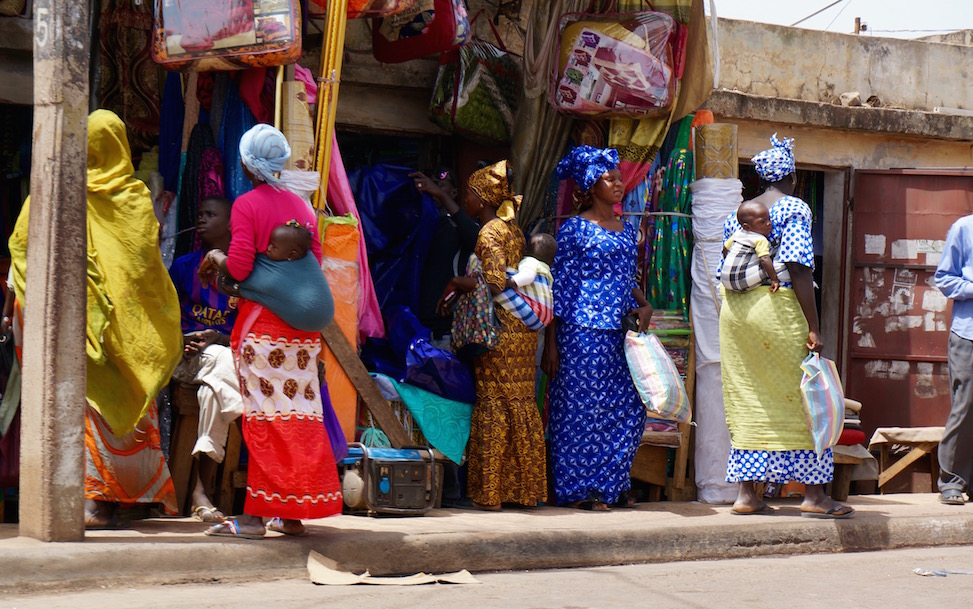
Every Gambian hastens to assure you that The Gambia is hospitable and safe. When we go to the main market, our local friends advise us to keep our money in our underwear and wear our little backpack with the straps facing backwards. But that is only at the big market in Serekunda. Even back home in Novosibirsk, you are better off keeping your money in your underwear at the Central Market—that’s a fact. So everything is fine here.
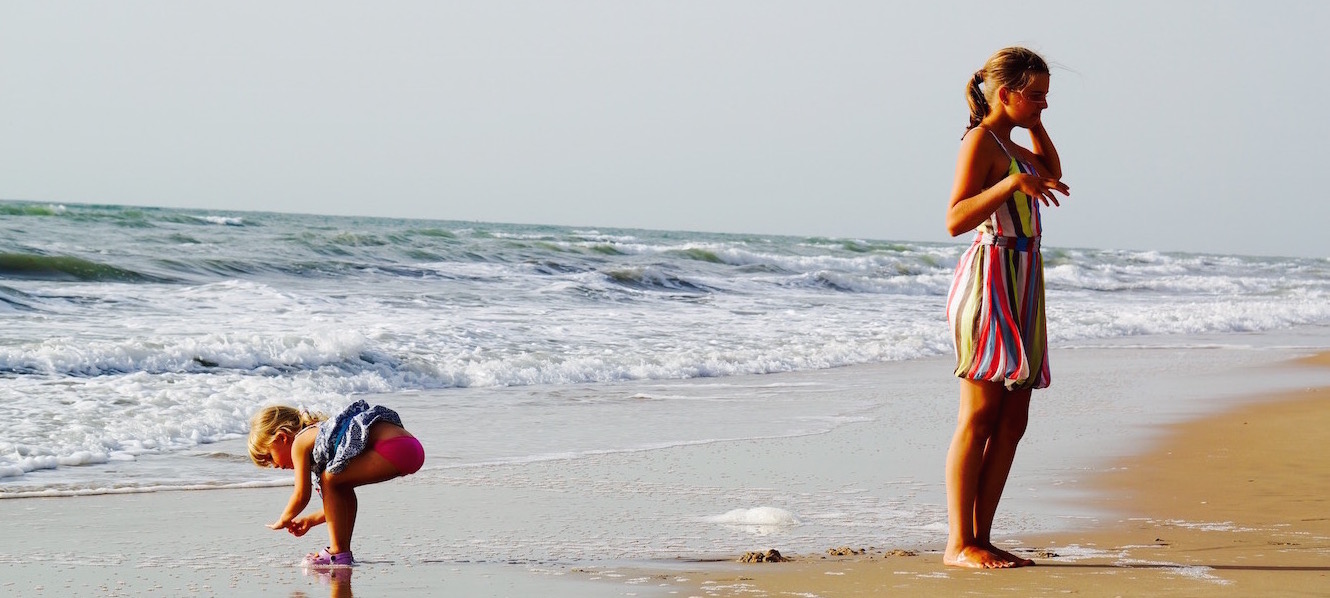
In places, the markets look perfectly ordinary. At the extraordinary ones, we did not take the camera out much
Serekunda is a satellite town of the Gambian capital and the largest settlement in the country. It has numerous suburbs and satellite towns of its own. We soon grew tired of trying to work out which house marked the end of one settlement and the beginning of another, and stopped bothering. Our guide, Jibril, does not deny that thefts occur. But there do not seem to be any robberies in the streets, in houses, and certainly not aboard yachts.
One morning Jibril arrived by boat looking upset and told us that the buoys from their fishing net had been stolen. That was at dawn. By evening, our friend was already graciously accepting an apology at his home from the repentant little thief, who had not stolen the buoys but merely borrowed them for a while.
During our two months in The Gambia, both we and the children felt completely safe. We only hoisted the dinghy at night when we were far upriver, and we lived in perfect harmony with the local people.
Fact 2 — Water
Our Dutch friends Helga and Rob, recalling their voyages along the Gambia River in the late 1990s, advised us to take plenty of water and ration it strictly for a cruise upriver. Twenty years ago, clean water could only be taken on in the capital. The supply had to last for 300 km upriver and the equally long return journey.
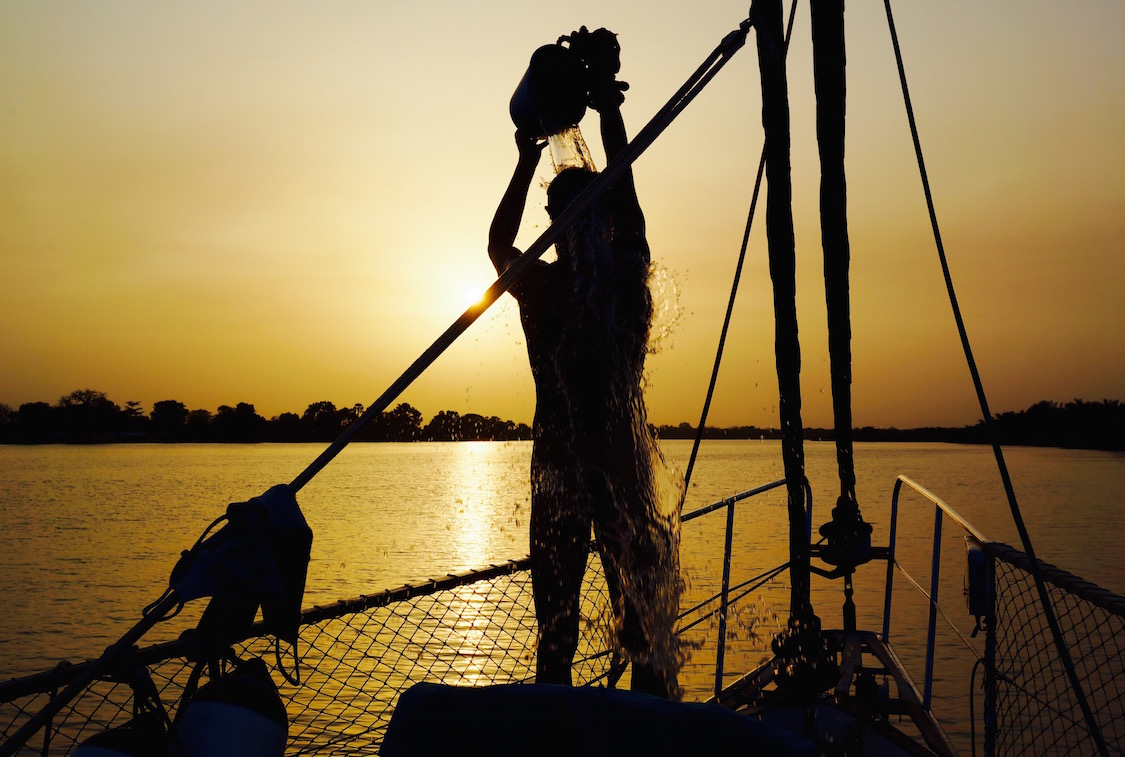
Gambian river water is just right for a shower )
About 100 kilometres upriver, the water in the Gambia becomes completely fresh, but drinking it gives unaccustomed people non-stop diarrhoea. That was why Rob and Helga suffered from thirst and even went hungry, forced to gnaw dry pasta straight from the packet (there was no water to cook it in). For the record, people upriver in The Gambia have been drinking settled river water for a thousand years, and they are fine. We did not try it.
At Lamin Lodge a boy brings water from the village on a small but very hardworking donkey. The cart holds 300 litres—for 300 dalasi. The price includes delivery to the yacht and filling the tanks.
Everyone insists that the drinking water in The Gambia is better than Senegal’s. Standpipes supplied with groundwater can be found throughout the country. A modest source of national pride.
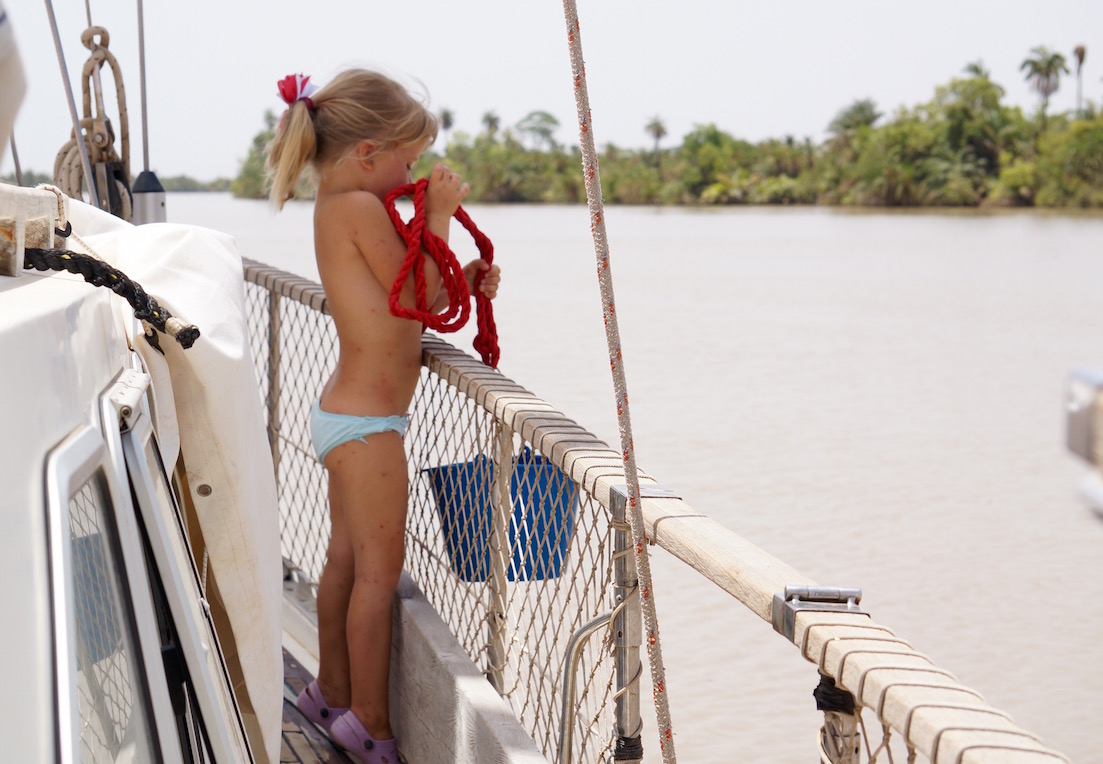
Lada collects washing water from the river in central Gambia
Fact 3 — Daily Bread
The local Gambian bread, “tapa-lapa”—small, narrow loaves made from lower-grade flour—tastes like Uzbek flatbread, Maltese round bread, and all the other local breads of various countries. It is sold wrapped in newspaper. Sometimes sand crunches between your teeth, and one side may be covered in soot. But that does nothing to diminish tapa-lapa’s virtues, and our crew can polish off as many as four loaves in one sitting.
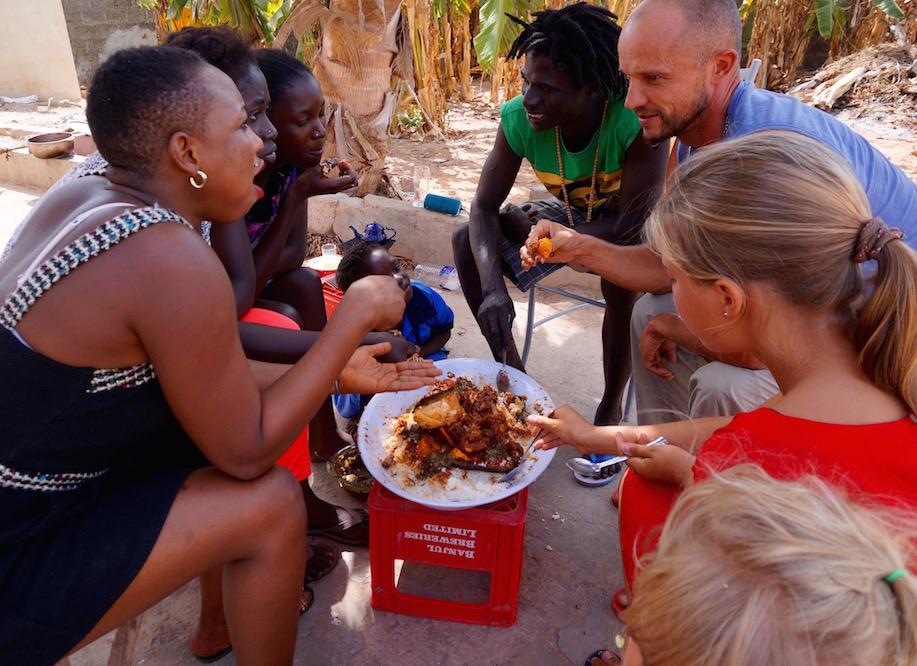
In The Gambia, people love gathering for tea, which, just as at our
Altai Gingerbread House, can last for hours. Everyone gathers around a shared dish for the meal and takes food with their hands—or rather, with the right hand (the left is considered unclean). A useful tradition: it saves water and spares you the bother of washing dishes.
If a guest says that they do not like spicy food, people make a special effort to prepare something that is not too spicy for them. The result is that the guest sheds tears straight into the communal bowl, while five-year-olds stare in amazement with coal-black eyes, chewing the same food and wondering: why is the guest’s nose running all over the place? But it is delicious—there is no denying that.
Most of the population rarely eat apples, and many have never tried pears, although both are available at the markets: they are expensive.
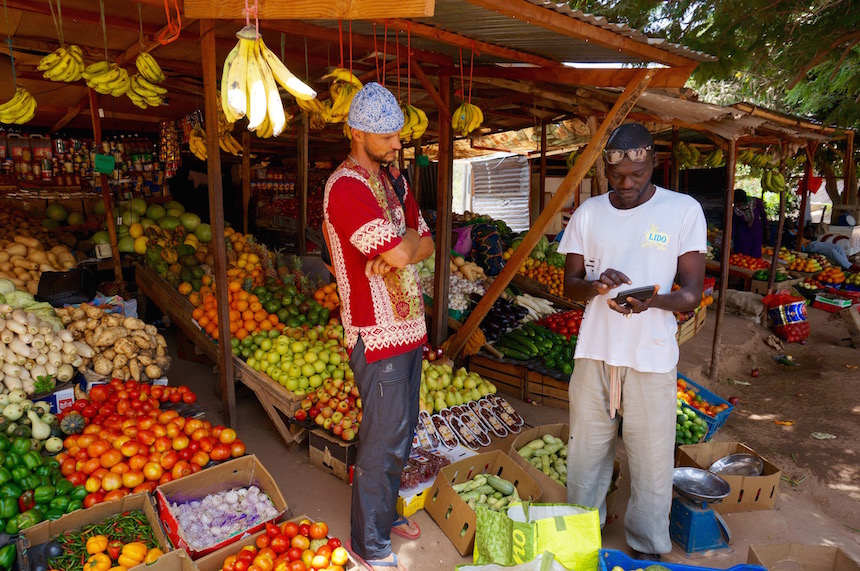
Shopping before setting sail for Cabo Verde
The staple of the Gambian diet is rice. It is grown during the rainy season and imported from Pakistan and even America (!). Each month a family buys a sack of rice—a guarantee that nobody will starve to death.
The shops and markets of The Gambia sell practically all the foods we are used to, with the possible exception of tvorog and sour cream.
Once, we spent an entire day with an African family and, having gone through every stage of the ritual—from a trip to the market to sharing the meal—we learned to cook the national dish of rice, meat and vegetables, “Chuiapa.”
The crew of Lady Mary visiting a Gambian family
Fact 4 — Sights
Our crew covered the standard tourist programme around the capital in a day. To do so, we hired a vehicle from an acquaintance of Jibo’s, through people who were not exactly experienced in such matters. More on that later.
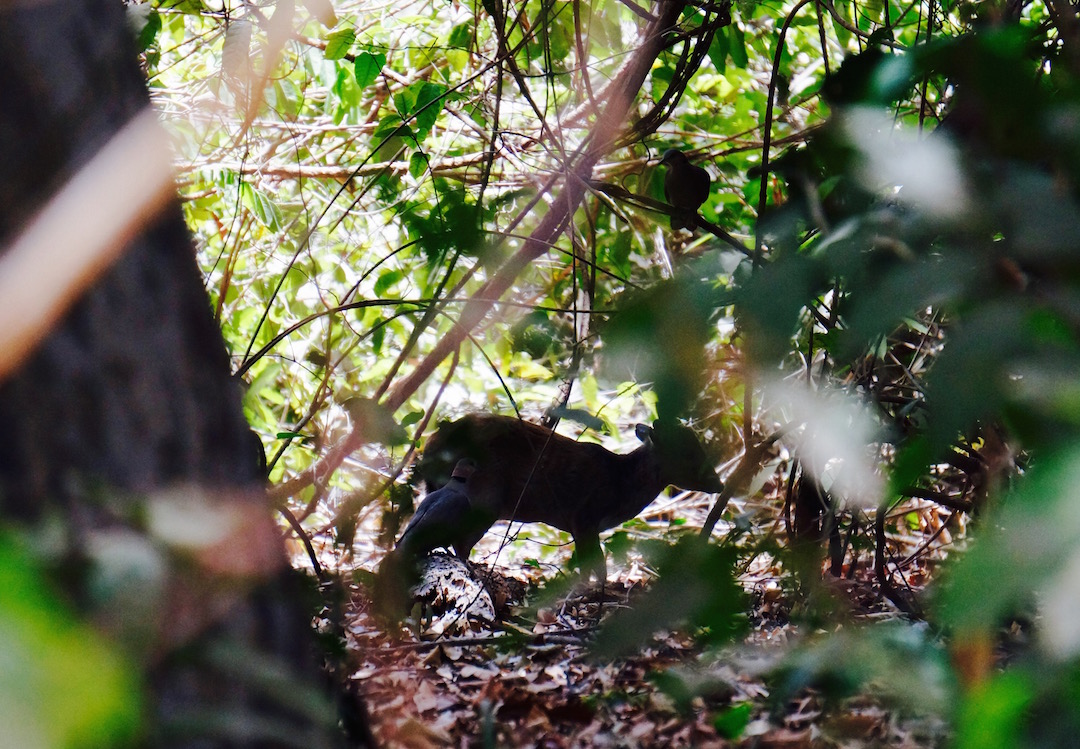
Abuko National Park is the smallest of the country’s seven nature reserves. It begins right outside the village of Lamin. Monkeys busily gobble nuts from people’s hands. Colourful birds and small antelopes—the largest animals in the park—hide in the undergrowth. The trail leads to a two-storey building beside the crocodile pool. A small exhibition tells visitors about the inhabitants of the Gambian savannah.
A small antelope in Abuko
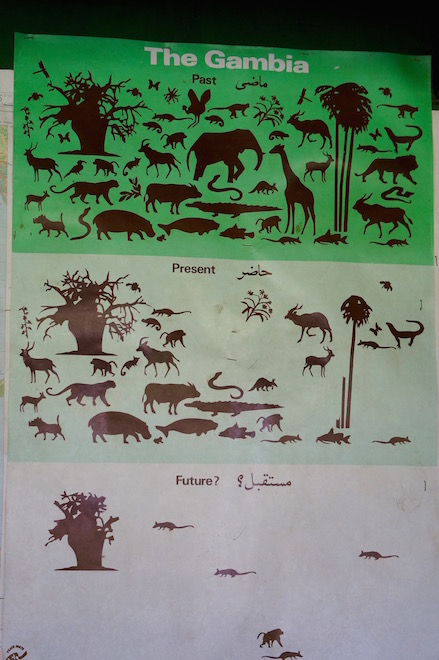
Species extinction. The Gambia
A poster on the wall illustrates the catastrophic rate at which animals and plants are disappearing.
As recently as the last century, elephants and giraffes lived here. Today, the country’s largest mammal is the hippopotamus. It is under threat, along with a good half of the other animals and birds.
If the current rate of human encroachment on nature continues, only rats and a few monkeys will remain in the forests by the end of the century.
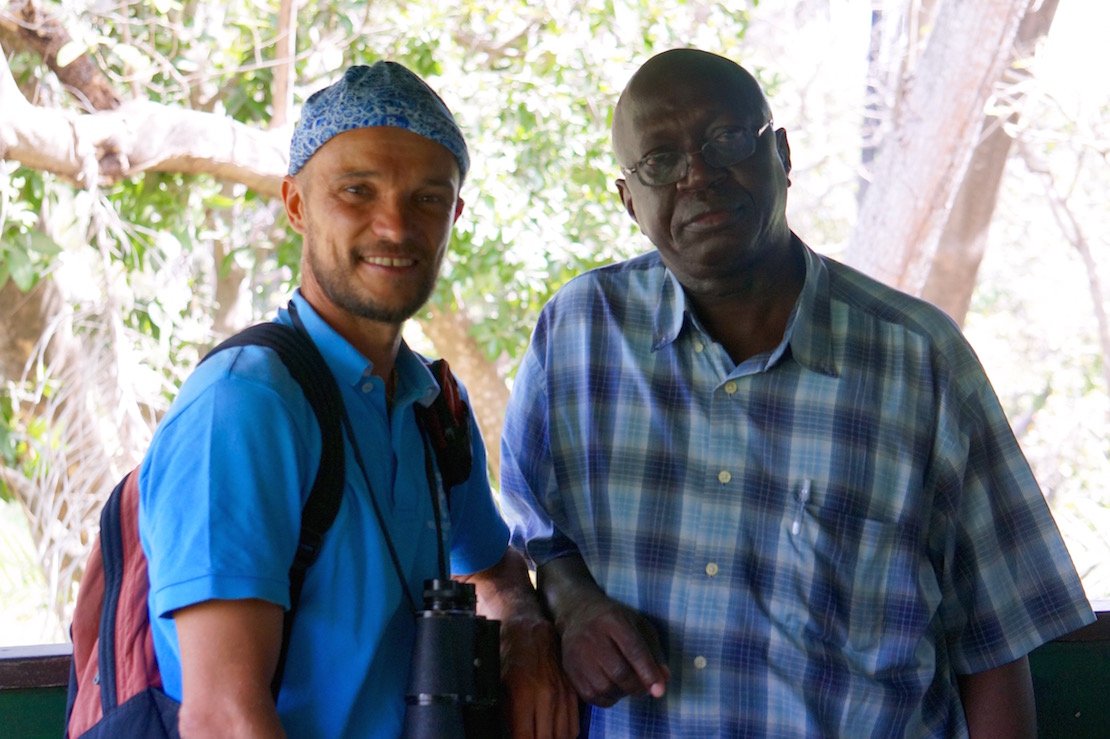
The head of the exhibition had visited Russia several times and was very pleased to see us.
Crocodile Pool
It is in the tourist area around the capital, not far from luxury hotels, embassies and residences. The fortified American embassy inspires particular awe among the locals (Jibo asked me to hide the camera every time).
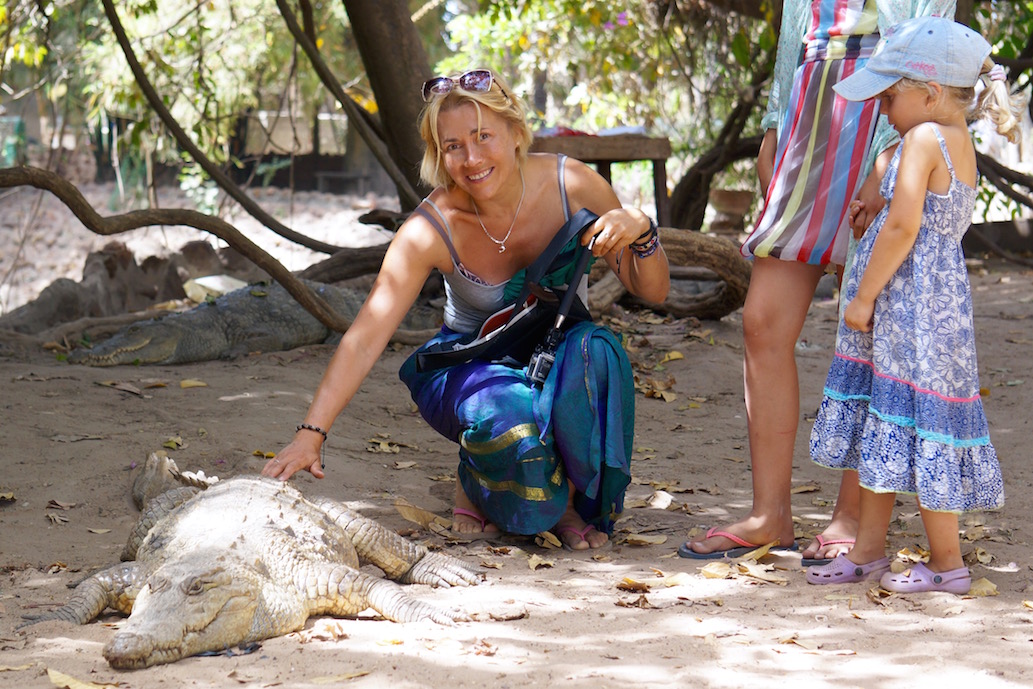
The “Crocodile Pool” is an artificial lake with a good hundred sleepy crocodiles. The reptiles are fed plenty of fish so that they do not regard people as lunch. The great lizards crawl phlegmatically around the pool or lie there airing their toothy jaws. You can even touch them. But it is very frightening! Who knows—perhaps these monsters, stupefied by gluttony, have not lost their appetite for culinary experimentation?
At the crocodile pool. The Gambia
Besides the crocodiles, there is a small and very pleasant museum housed in three round, whitewashed traditional huts—musical instruments and masks, household utensils and ceremonial costumes.
Batik Factory
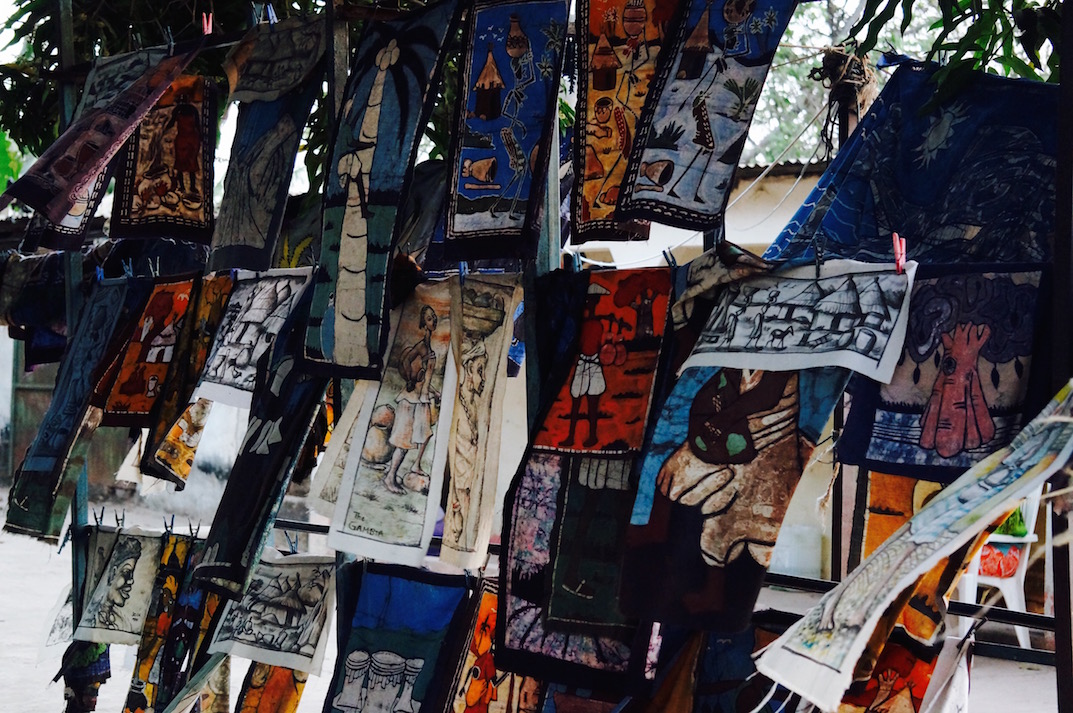
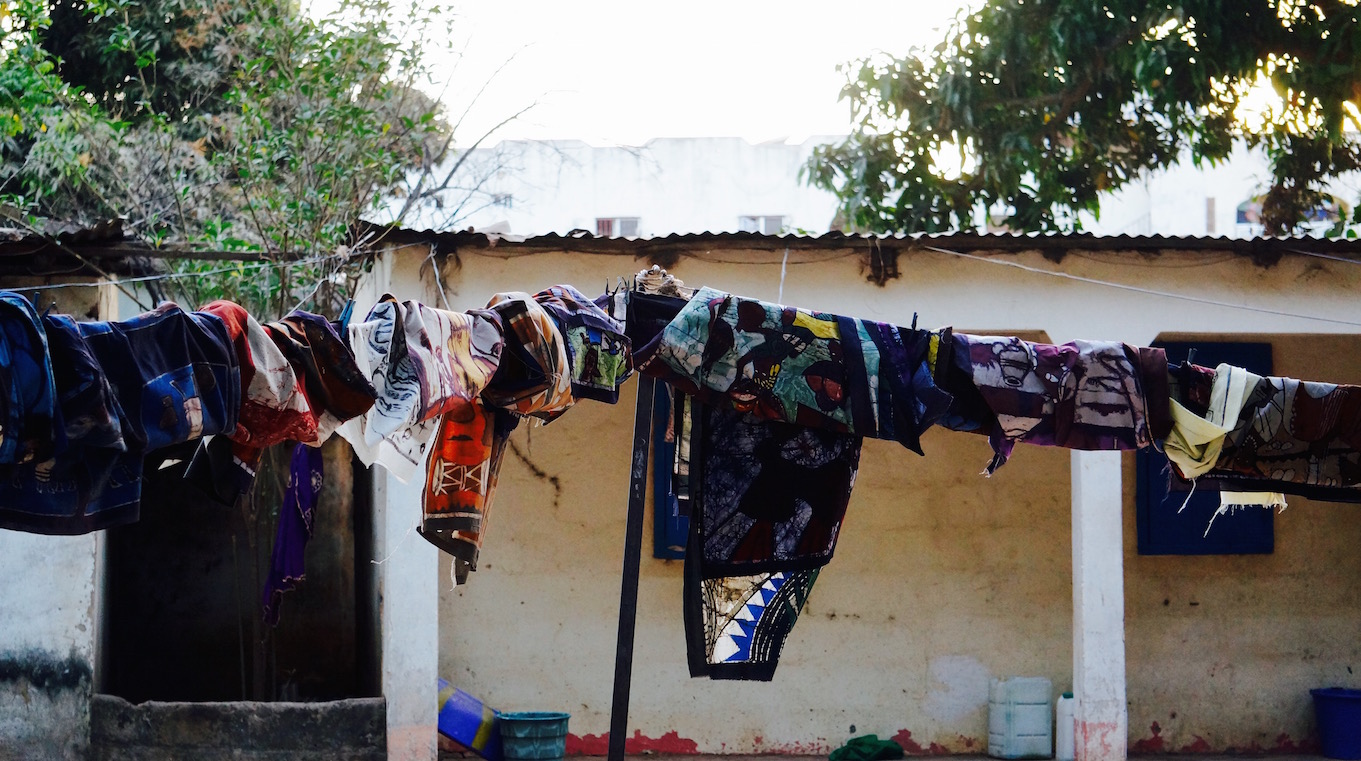
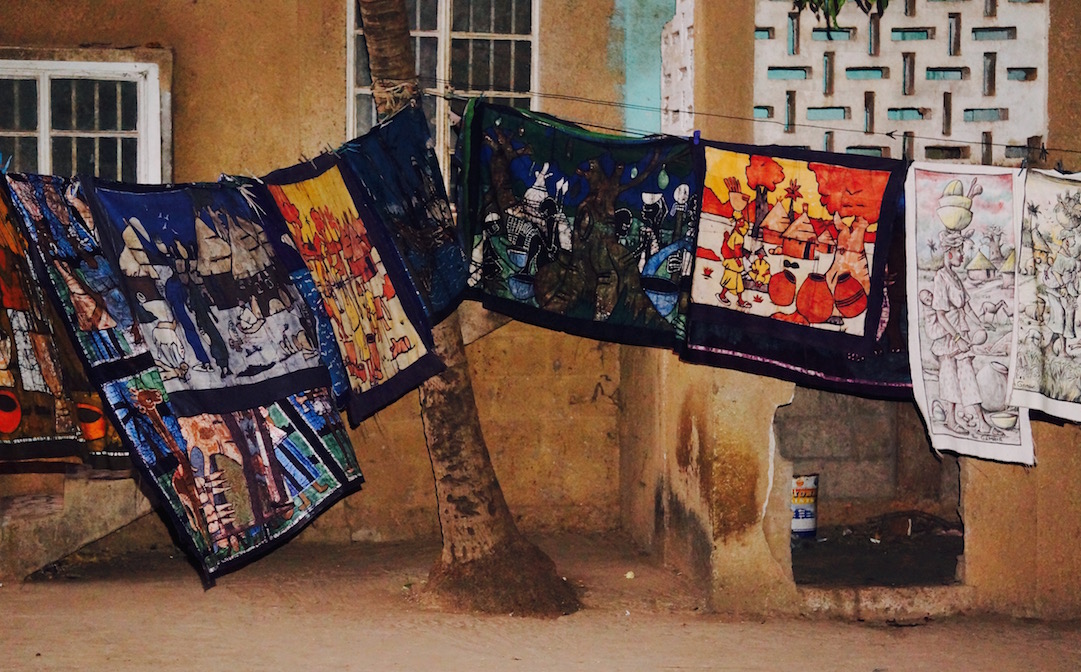
Somewhere between the anchorage and the capital, a batik workshop operates in the large courtyard of a house (and inside the house as well). Delays caused by conversations with the police (more on those below) prevented us from reaching the factory on time. We turned up after seven in the evening, when all the cloths had been packed away and those hung out to dry had been rolled up. Our determined faces persuaded the women to unfold their creations again, and we ended up buying one of them.
Batik rolled up for the night
To the immense delight of the starving children, we finished our traditional tour of the tourist sights at a Swiss restaurant on the Atlantic coast. A clean beach and long ocean swells. Fried chicken and French fries. The sun was preparing to drop into the ocean.
For dessert, we got another encounter with the police (our second that day), after which our wallet was even thinner and we had to call the driver.
Fact 5 — Police and Transport
As a policeman explained to us for a small fee, foreigners in The Gambia are only allowed to drive passenger cars. Ours looked more like a minibus and, as it turned out, had special commercial vehicle plates. Even if you are travelling alone or with your own family in such a vehicle, you will have to pay every time you meet the police. You are not allowed to transport tourists, full stop. Even if the tourist you are transporting is yourself—you are still a tourist.
Our first conversation with a policeman lasted about 20 minutes. After bargaining, the guardian of the law took a 500-dalasi bribe-cum-fine in exchange for giving us his phone number “in case you get stopped again.” The conversation with the second policeman on the way back dragged on. Paying less than 500 dalasi required greater eloquence and persistence. The traffic policeman was not awestruck by his colleague’s number, and the colleague himself did not answer the phone. We handed over 200 dalasi and called the owner-driver. He agreed to charge us 1,500 for the vehicle instead of 2,000.
After that, we found the right way to hire a vehicle in The Gambia: we began renting one for the whole day together with a driver. For 600 dalasi a day. Such is the Gambian paradox.
Once, the police fined our driver as well. You are not allowed to run red lights here either:). For the first 20 minutes, the policeman insisted on impounding the vehicle and even began unloading the entirely innocent bales and crates of provisions we had bought for our ocean passage onto the roadside. With great difficulty, we persuaded him to forget about us in exchange for 300 dalasi (1 dalasi = 1.5 roubles).
Fact 6 — Protection Against Ebola Fever
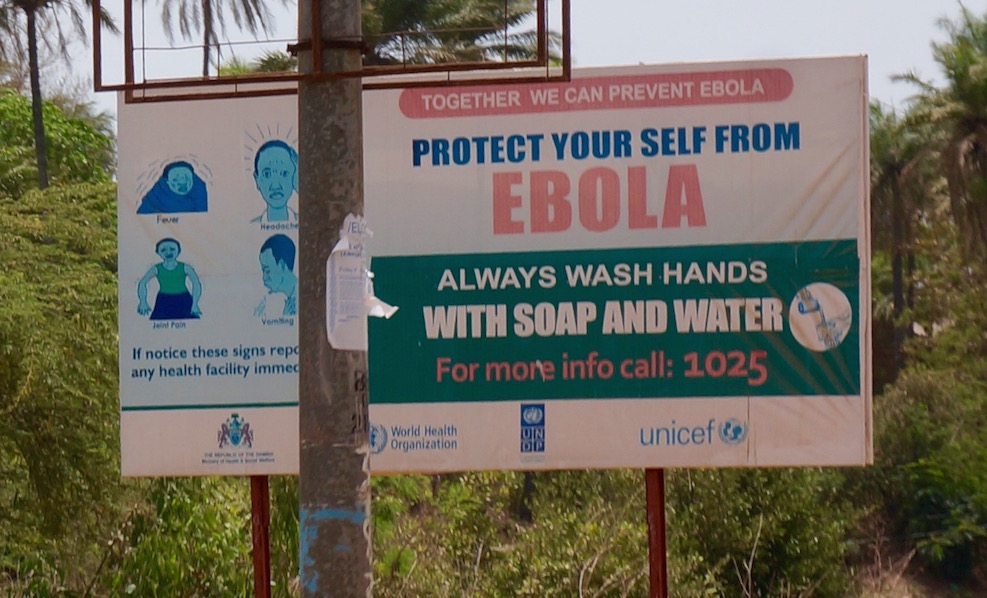
To protect yourself from Ebola, all you need to do is wash your hands with soap and water... It is that simple and almost free.
How to protect yourself from Ebola
To be continued! 🙂
More photos:
At the batik factory
Cloths of every colour and size are painted by hand
One of the reserve’s managers had visited Russia and Central Asia several times
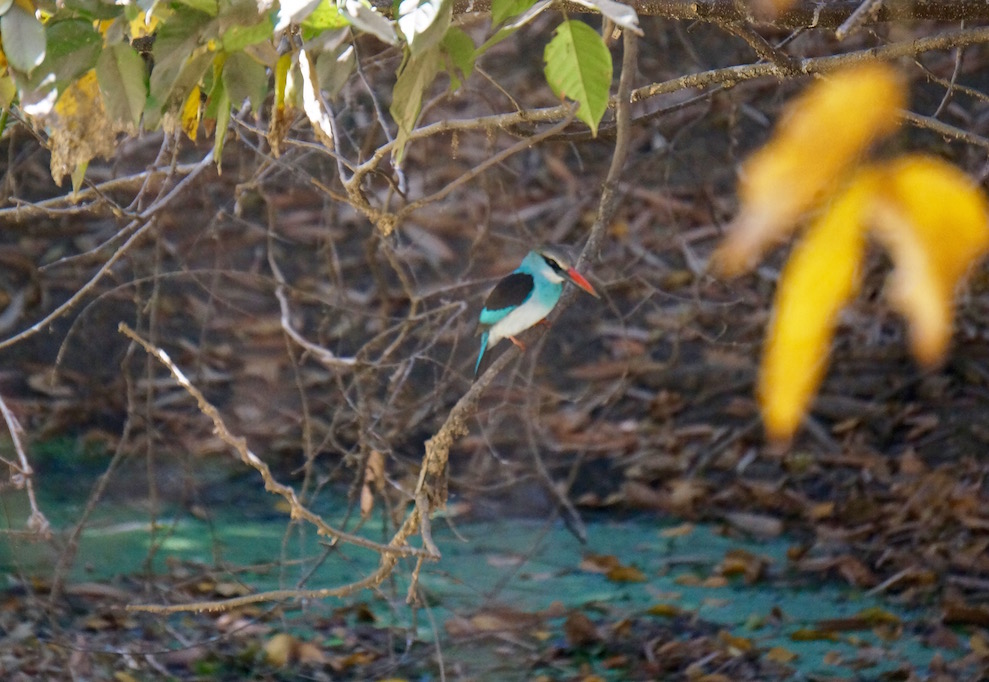
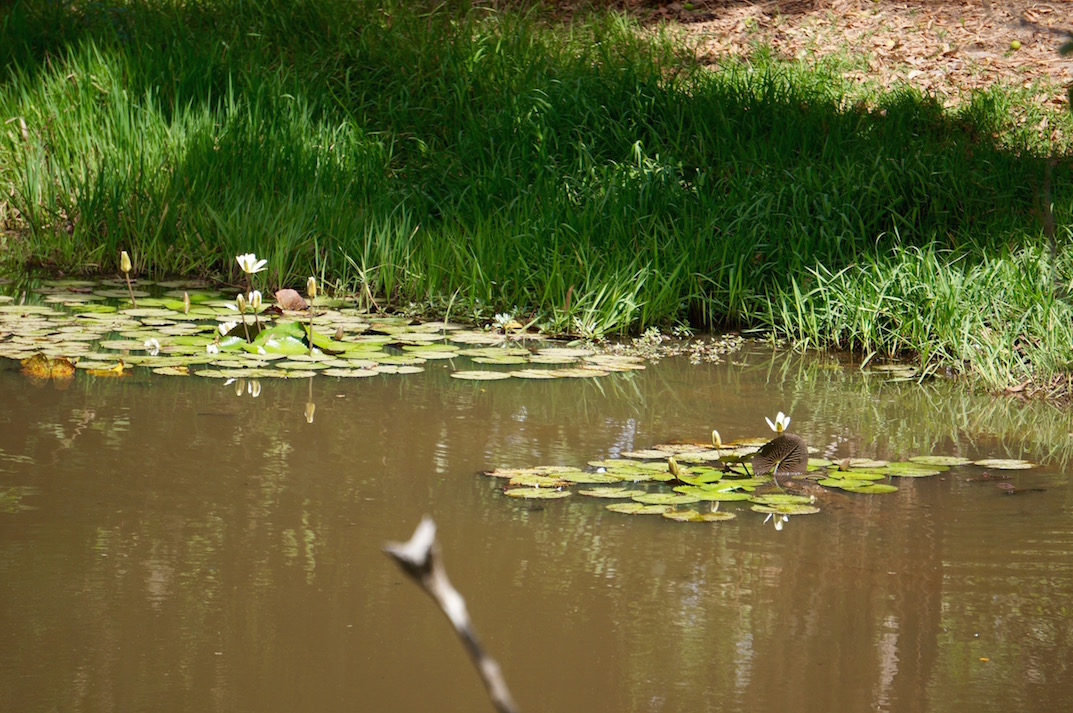
The crocodile pool. The crocodiles in the national park hide from people
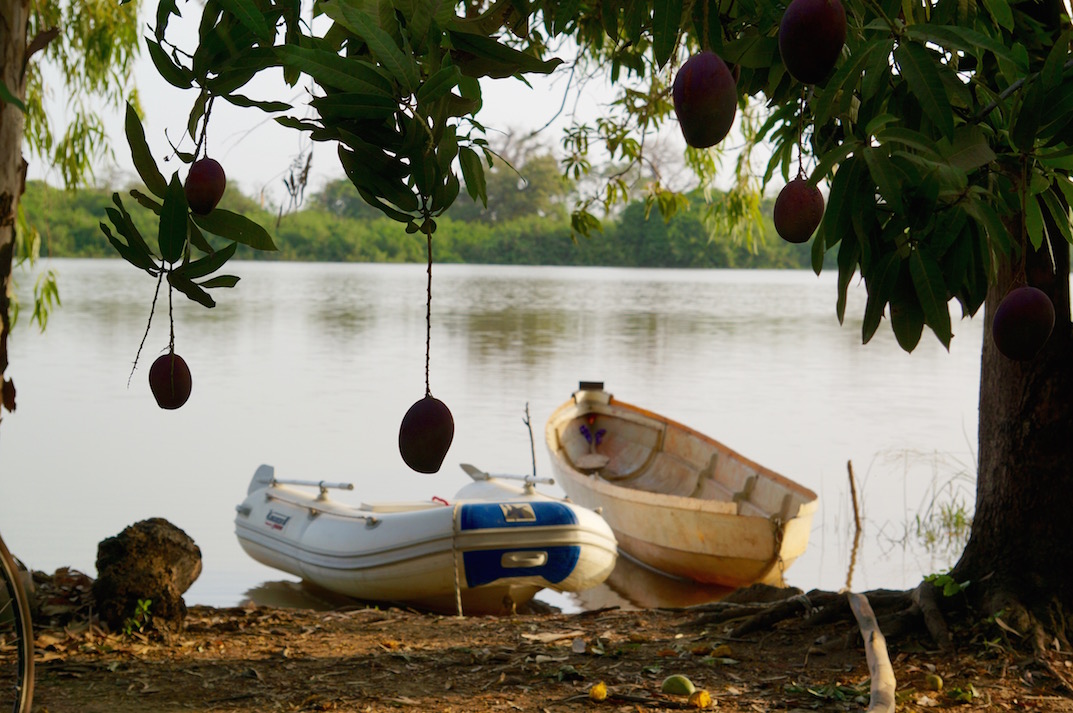
A mango orchard by the river in central Gambia
A bird on the grounds of the crocodile pool and national museum
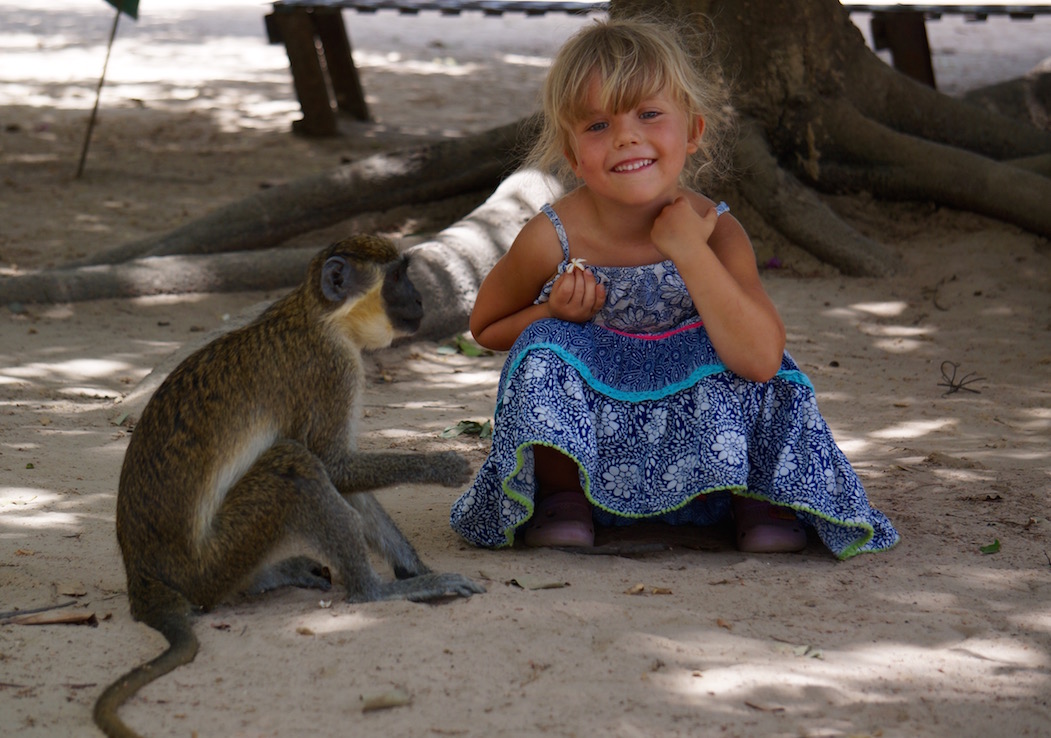
Lada makes friends with the monkeys in Abuko National Park
Previous posts about The Gambia here>>, here>>, here>> and here>>