
From the Travely-Family archive · Atlantic
The Past and Present of Pirate Island: Tobago
An original publication from the former Travely-Family website. This English translation was preserved from the technical-site archive without editorial rewriting.
The Past and Present of Pirate Island: Tobago
The history of its discovery, an ancient relict forest, a search for waterfalls, and the bay where an Englishman once lived and where the descendants of his slaves now sell souvenirs. How we ran out of electricity aboard, and what snakes are found on Tobago.
“Land!”—the lookout’s cry heralds a new discovery.
The sailors pour onto the deck, rejoicing. Keen black eyes watch from behind the branches as the foreign white-sailed “gods” arrive. The Caribs—short indigenous people, the island’s original inhabitants—gaze at Columbus’s flagship with fear and awe.
The year is 1498, the great navigator’s third voyage across the ocean. Tobago’s indigenous people have only 50 years left to live on their green island. Did the Caribs know then that they were doomed?...
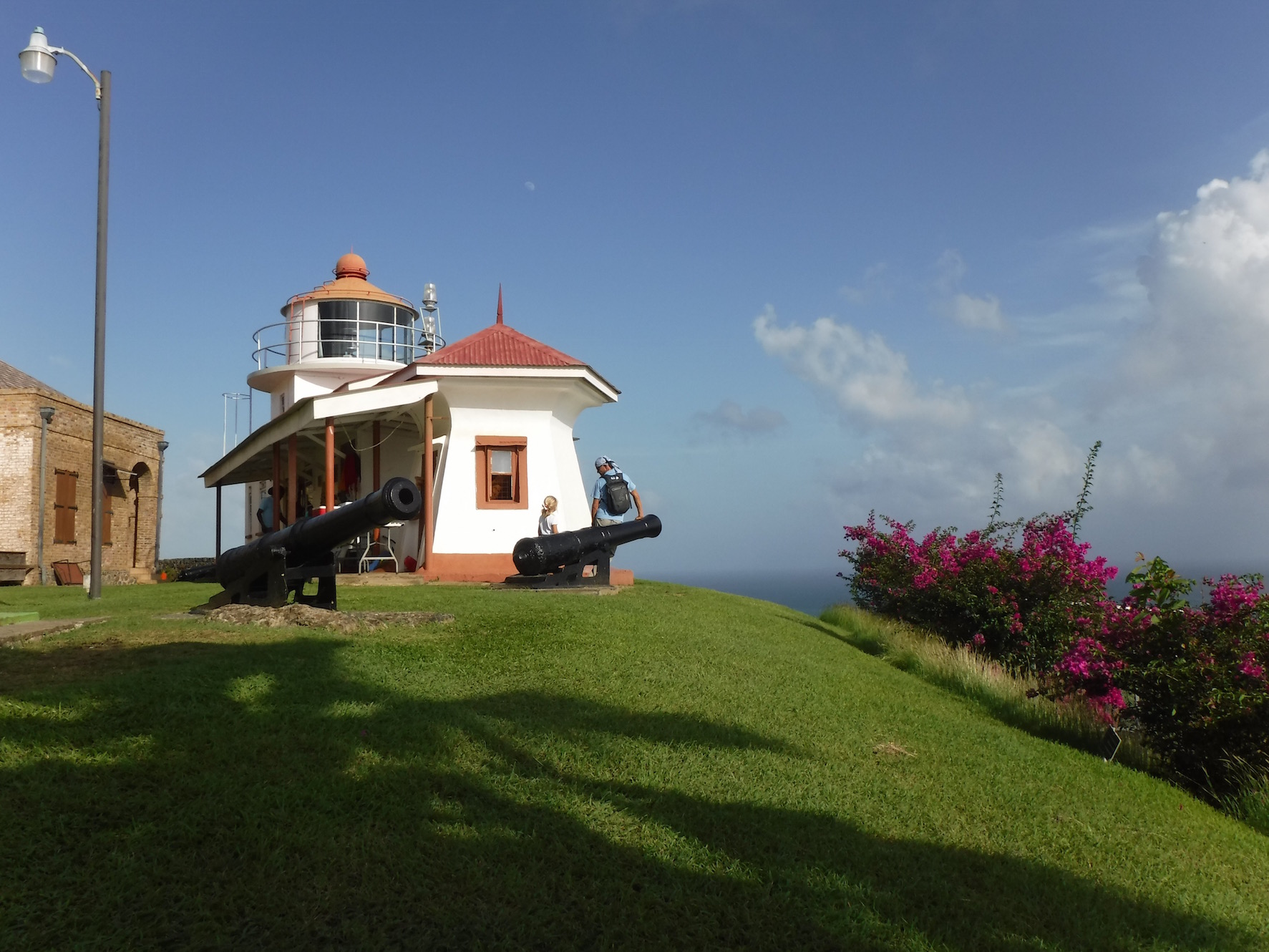
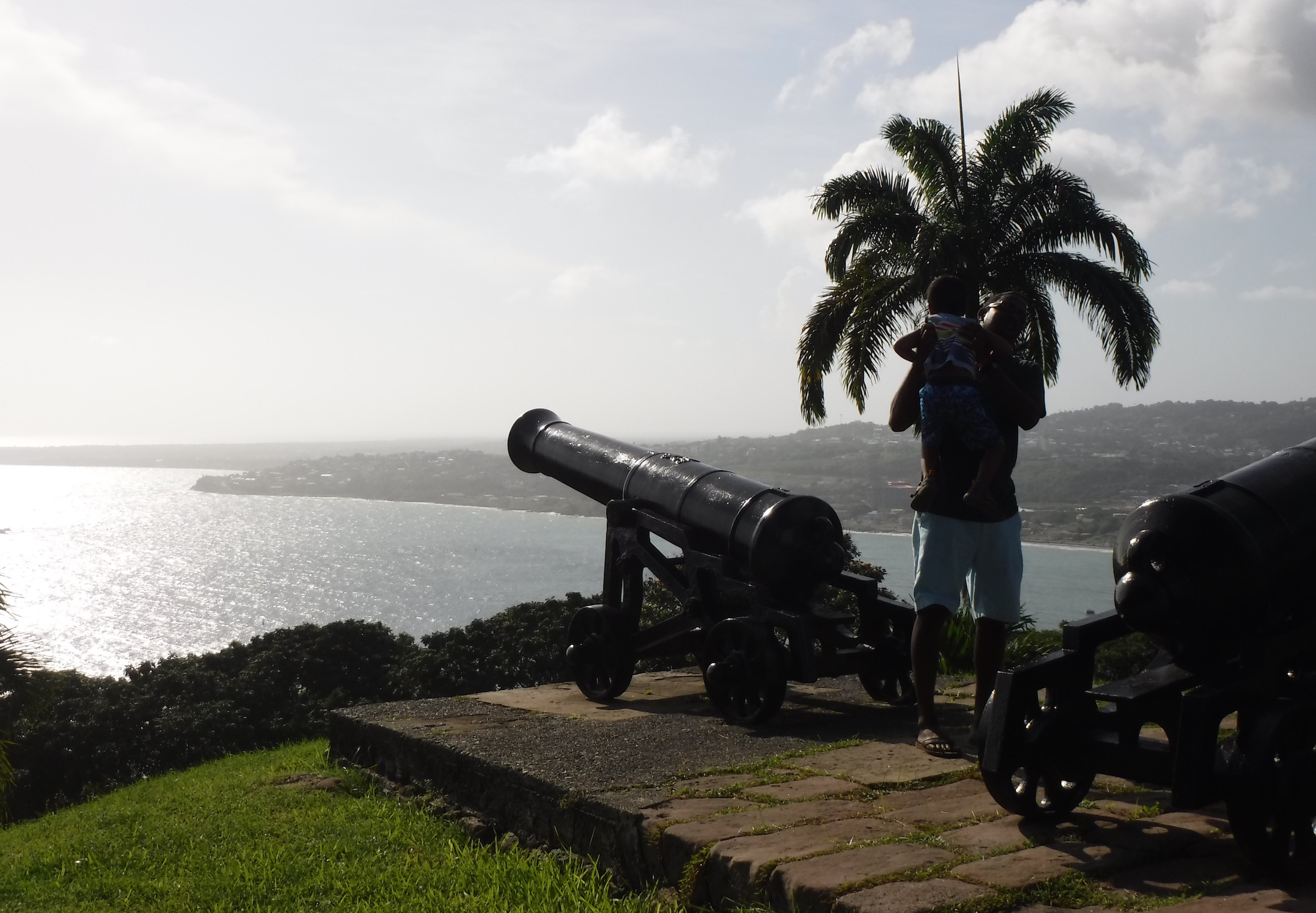
The guns of Fort King George controlled the strait between Trinidad and Tobago from 1780 onwards
Over five centuries of tragic history, Tobago passed from the Spanish to the Dutch, the French, the English and the Courlanders, and back again. Unable to reach an agreement, the interested parties declared the island neutral territory, which the pirates promptly took advantage of. While Peter the Great was laying the foundations of the Peter and Paul Fortress, Caribbean pirates were establishing their base on Tobago. For 60 years, the pirates lay low here between bouts of mayhem, until Great Britain smoked them out of the island. At the same time, it elbowed the other claimants aside, building its own forts and carrying out a series of cunning military operations.
Those times are now recalled by historic ruins, the museum at Fort King George, and the names of bays—Bloody Bay, Pirates Bay....
Fort King George
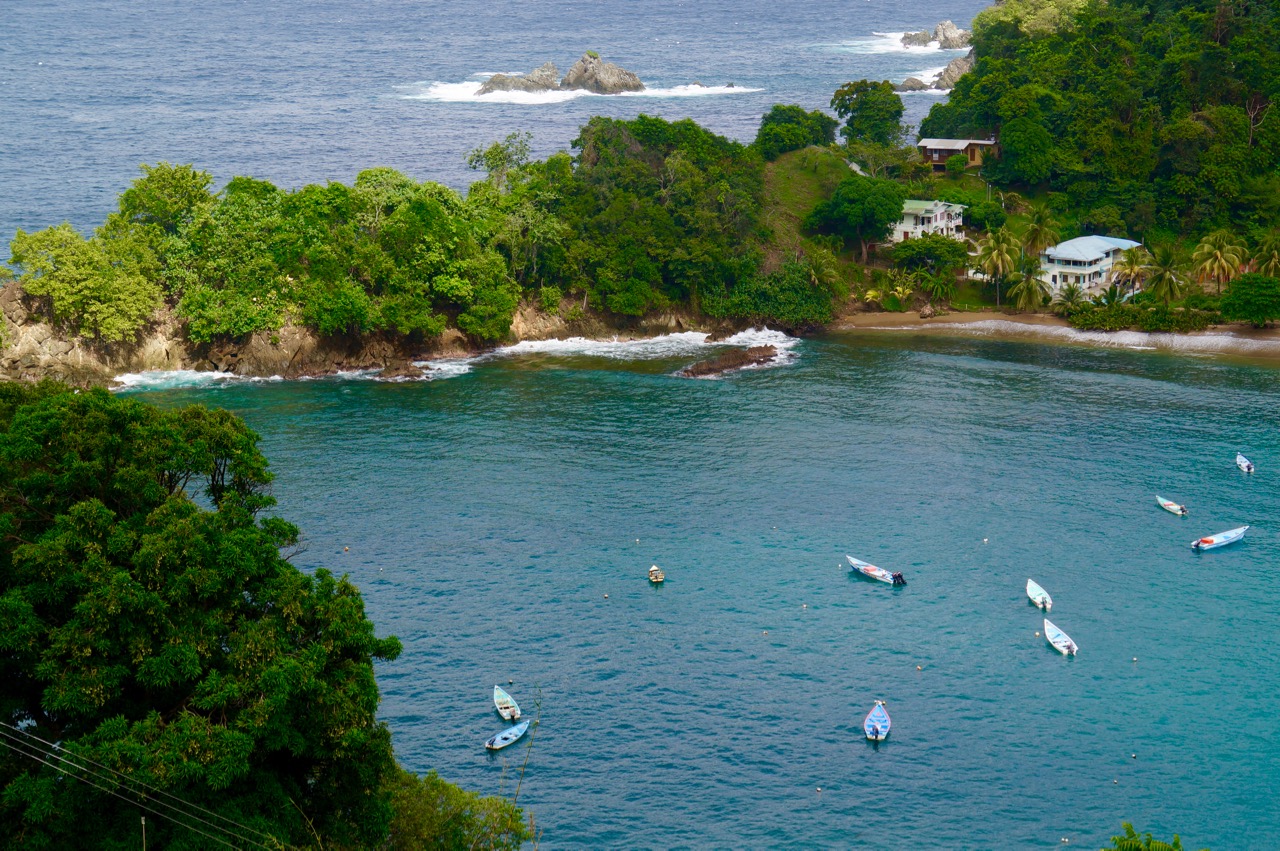
Pirates Bay
The Ancient Forest
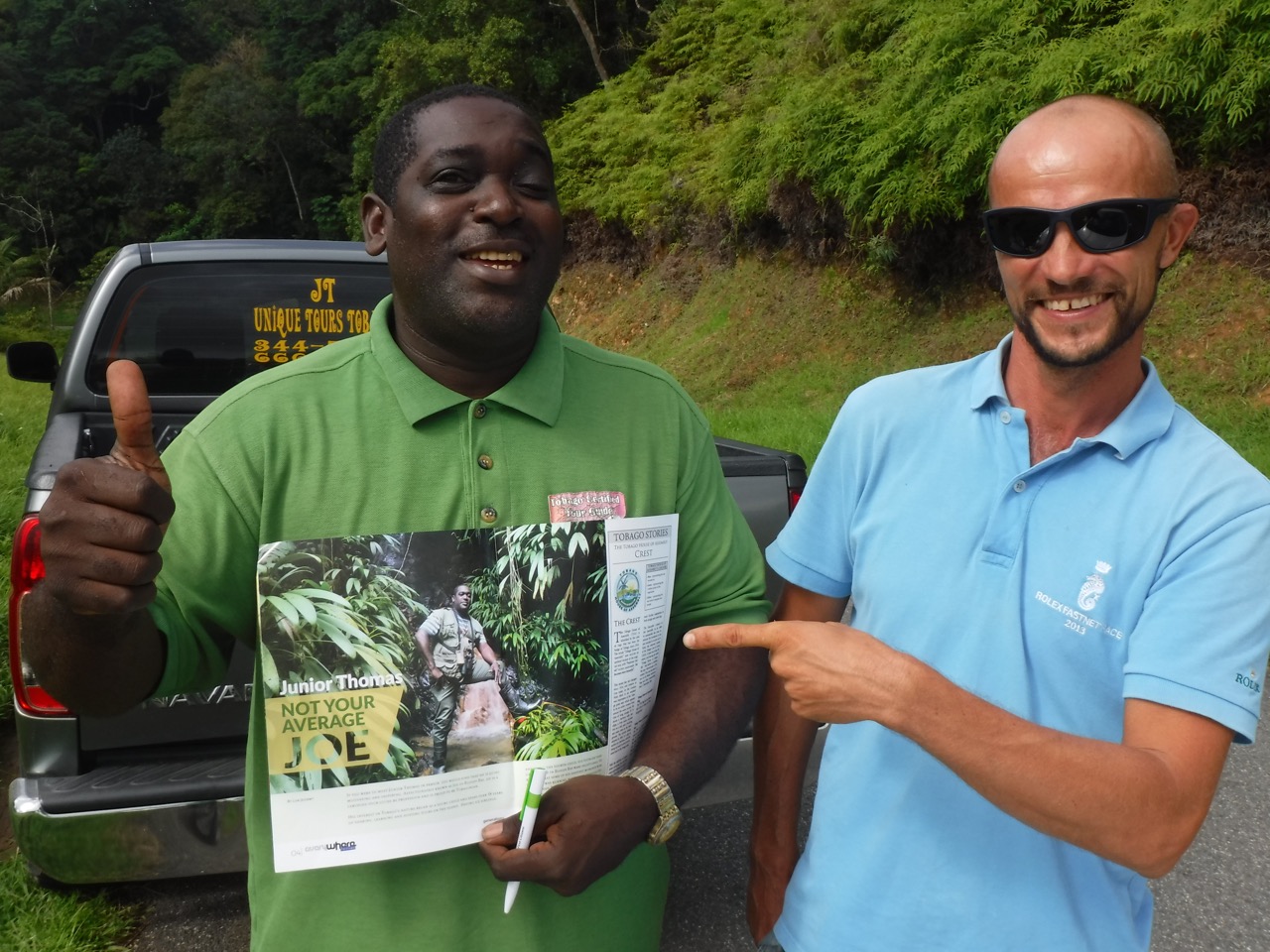
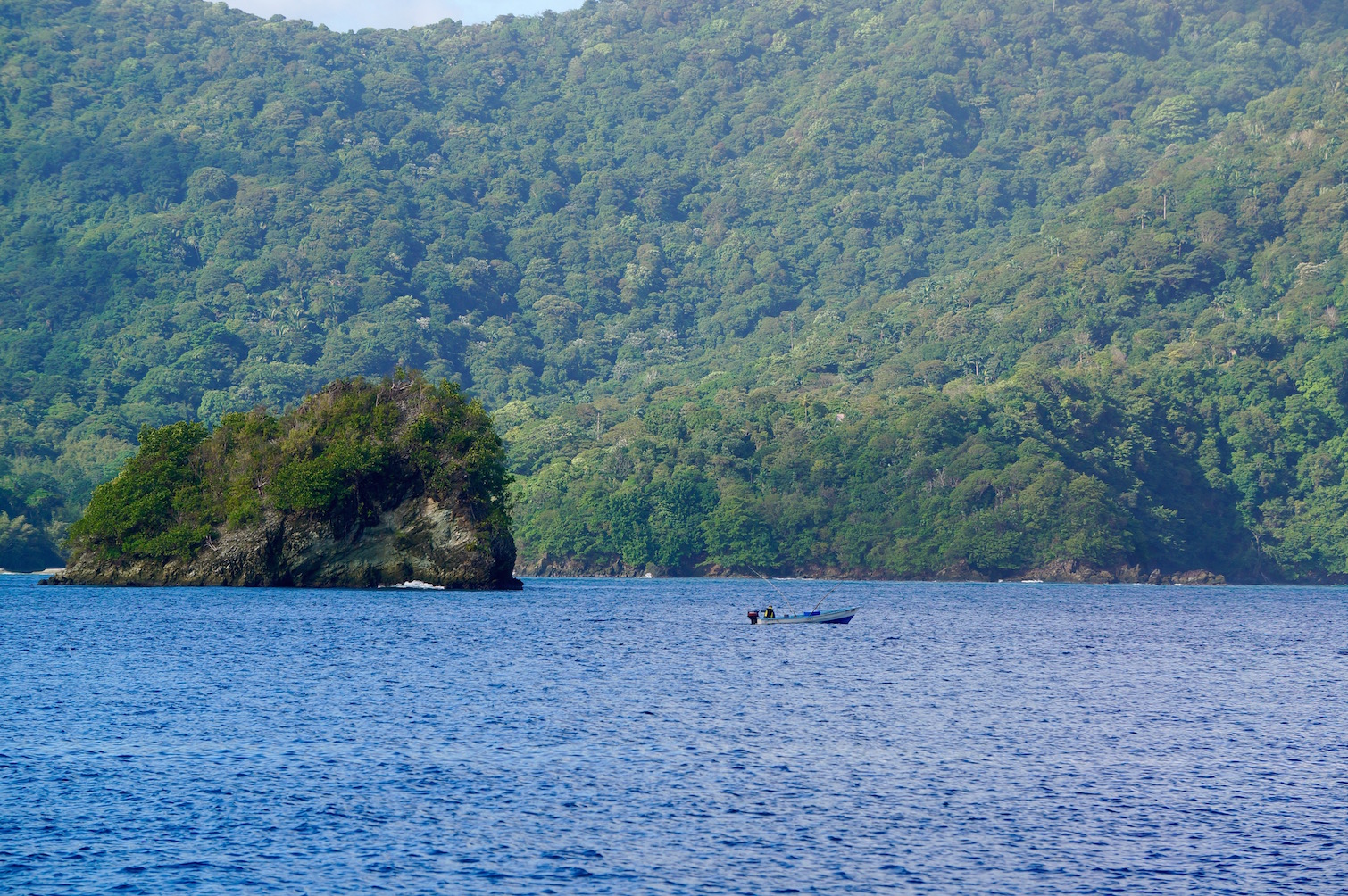
Humankind has not yet managed to leave too deep a mark on Tobago, and so every description of the island’s natural world comes with the prefix “eco-”. Thirty-two species of hummingbird compete with butterflies for flower nectar, South American birds nest on the protected islet of Little Tobago, and the evergreen jungle trails its branches directly in the turquoise ocean. As you move farther away from the equator, the Caribbean islands become drier, with less true tropical jungle and more human construction. Tobago, however, looks like that very “tropical paradise,” with lianas, palms and giant trees straight out of Avatar.
Incidentally, there are no venomous snakes here. But non-venomous ones are quite enough to add a little spice to resort life. We came across the half-decomposed carcass of a large snake while looking for waterfalls. Unfortunately, the photo has been lost. So here’s another photo instead—a pretty one:).
It seems this particular bay is called Bloody Bay
You need to hire a car on the island. A small saloon can be rented in Store Bay for €40 a day. A chain of roads leads into the island’s interior, where rainy December becomes thoroughly sodden. You can touch the mist with your hands, and heavy drops hang from the boughs of... pine trees covered in lianas!
Thinking of taking a walk along a path into the depths of the forest, we decided to begin with a roadside picnic and... got bogged down in sludge disguised as grass. Having read up on the island’s safety rules (the leaflets are handed out right in the tourist office), we kept our distance from local pick-ups darting through the forests. And then that very pick-up materialised on the deserted road, and its smiling driver readily helped push our car back onto the tarmac. Our rescuer was called Junior Thomas and turned out to be an accredited guide and a local celebrity—and, of course, he offered to take us for a walk through the ancient rainforest. Once we learned what a one-hour walk plus the hire of four pairs of wellington boots would cost, we swore off walking—€30, with a discount for the children.
Our rescuer and, judging by the magazine article, famous Tobago guide 🙂
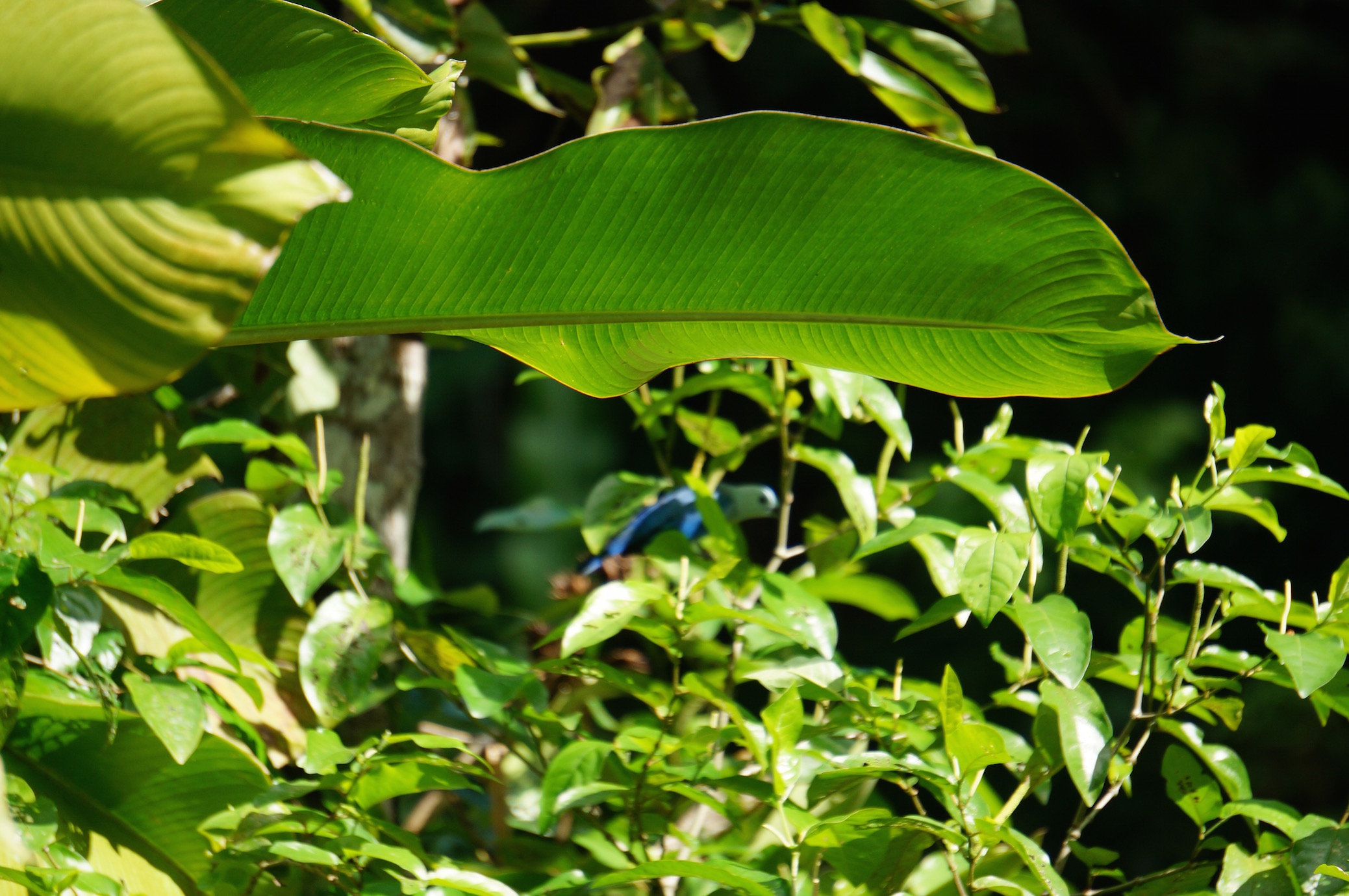
A little blue bird hiding beneath a banana leaf
Waterfalls: To Swim or Not to Swim?
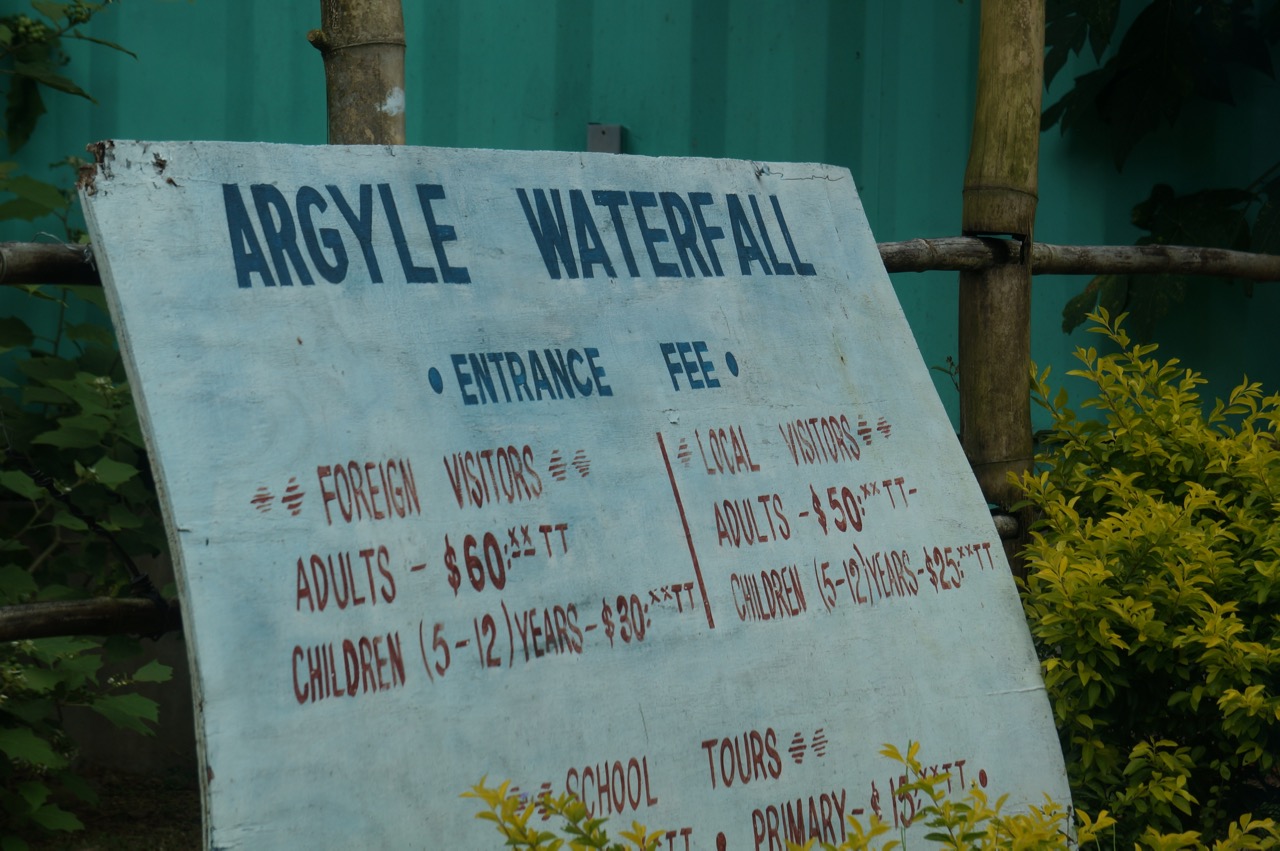
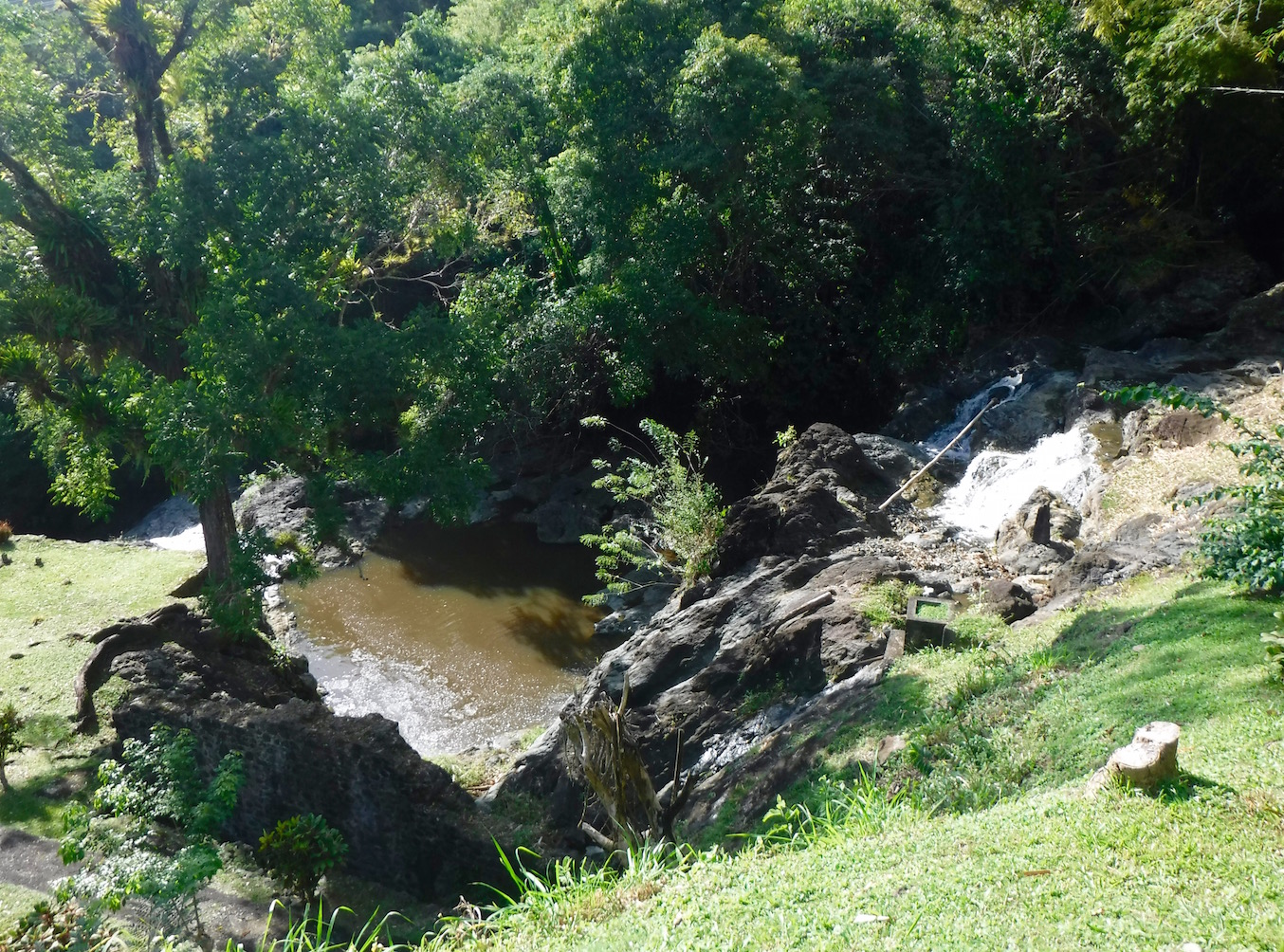
Before you can swim somewhere, you first have to find that “somewhere.” Tobago has around a dozen waterfalls of varying heights and degrees of accessibility. Armed with assorted maps and periodically asking locals for directions, we found two and a half of the six waterfalls we were looking for. The most impressive, Argyle, can be reached by car in the north of the island. Finding the car park and the start of the walking trail to the island’s main waterfall is easy. But what personally stopped us from following the trail to the swimming spot was... our reluctance to cough up the money. An adult ticket to the waterfall costs almost $10, and a child’s ticket, for under-12s, costs $5. We decided to study waterfalls in pictures and swim in the sea. 🙂 Prices for viewing the waterfall
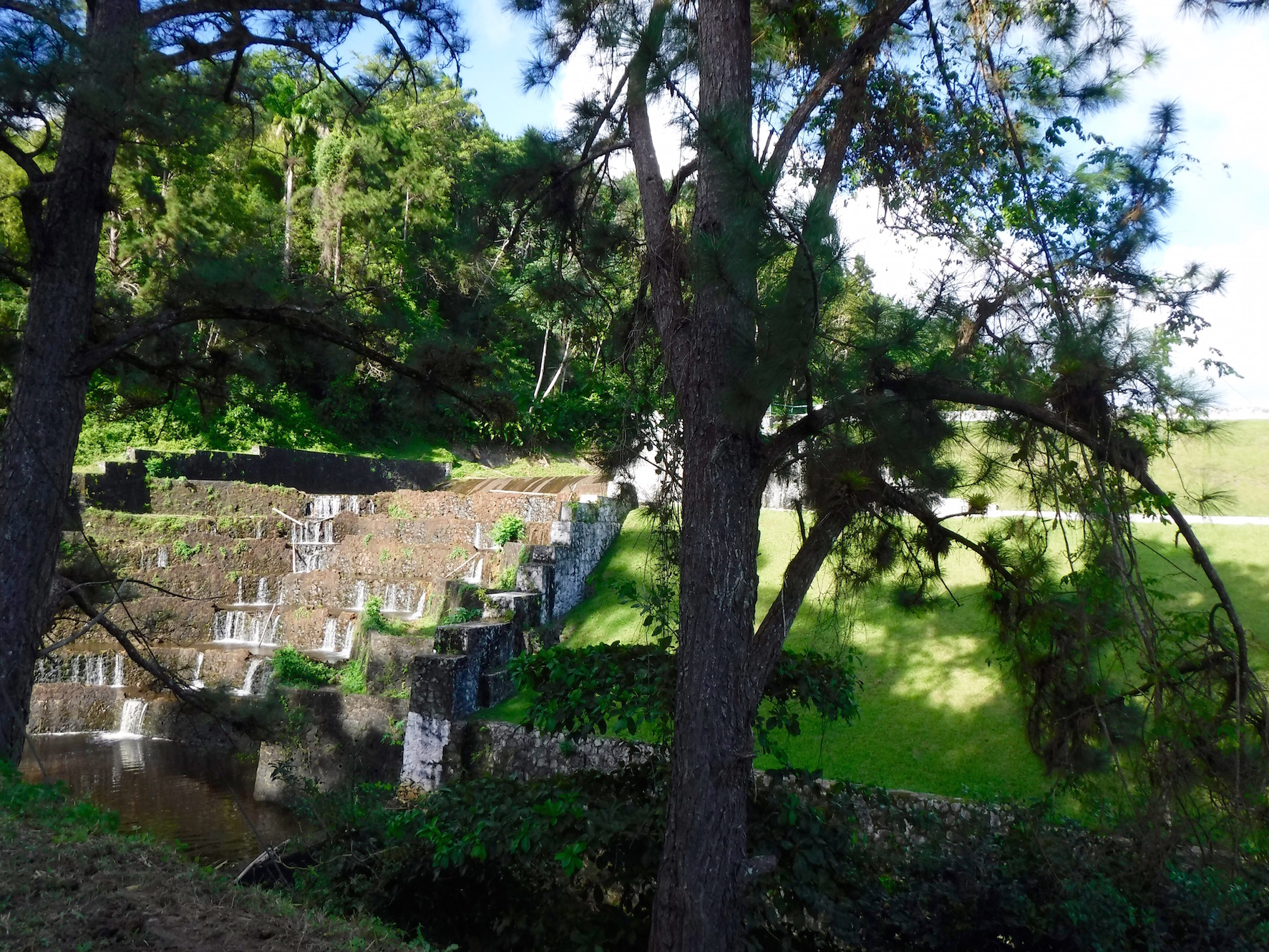
The second mini-waterfall turned out to be an abandoned weir on a stream; the third was not a waterfall at all, but a functioning dam and reservoir:
Dam spillway
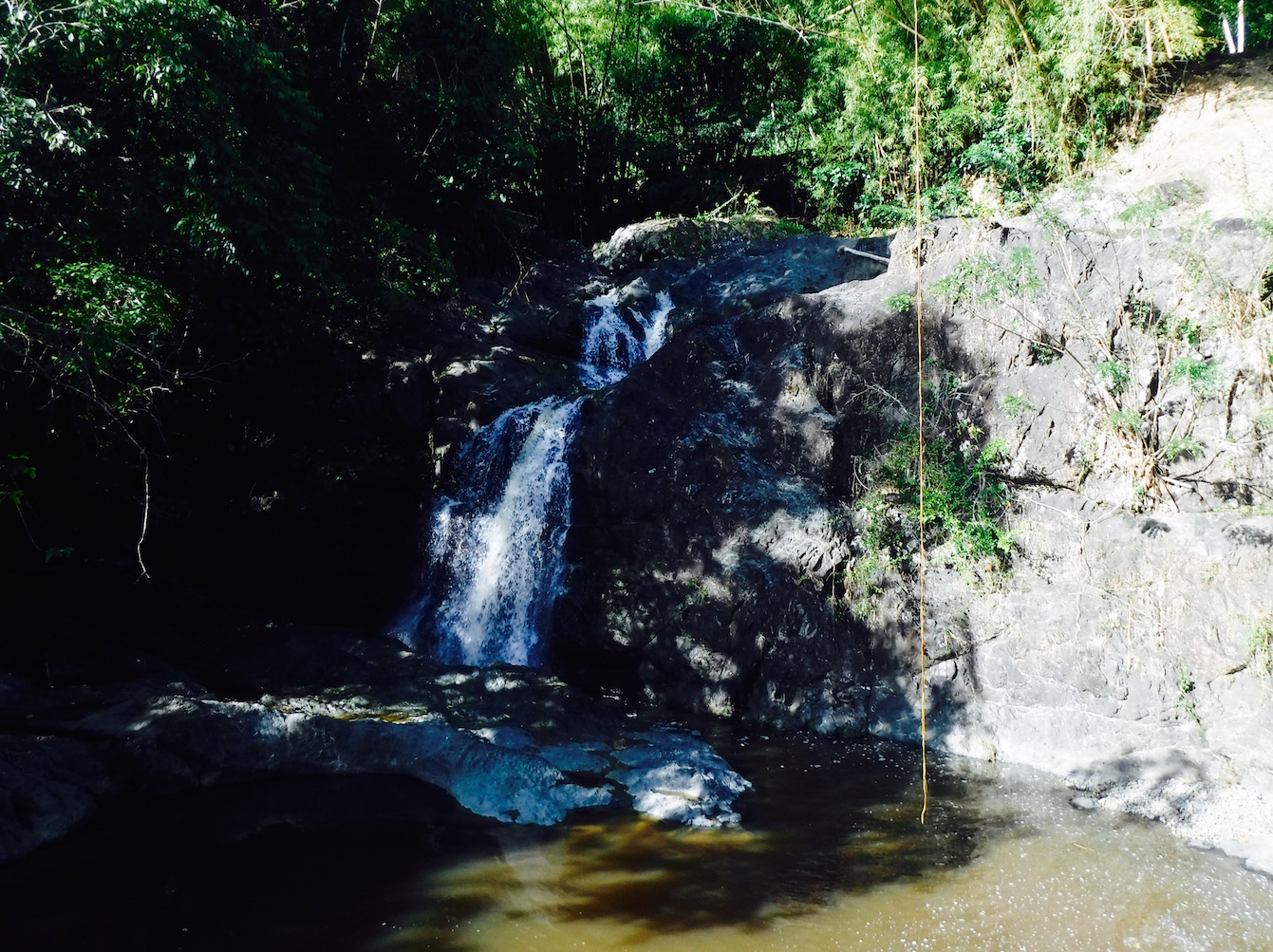
But the fourth finally rewarded us with some views:
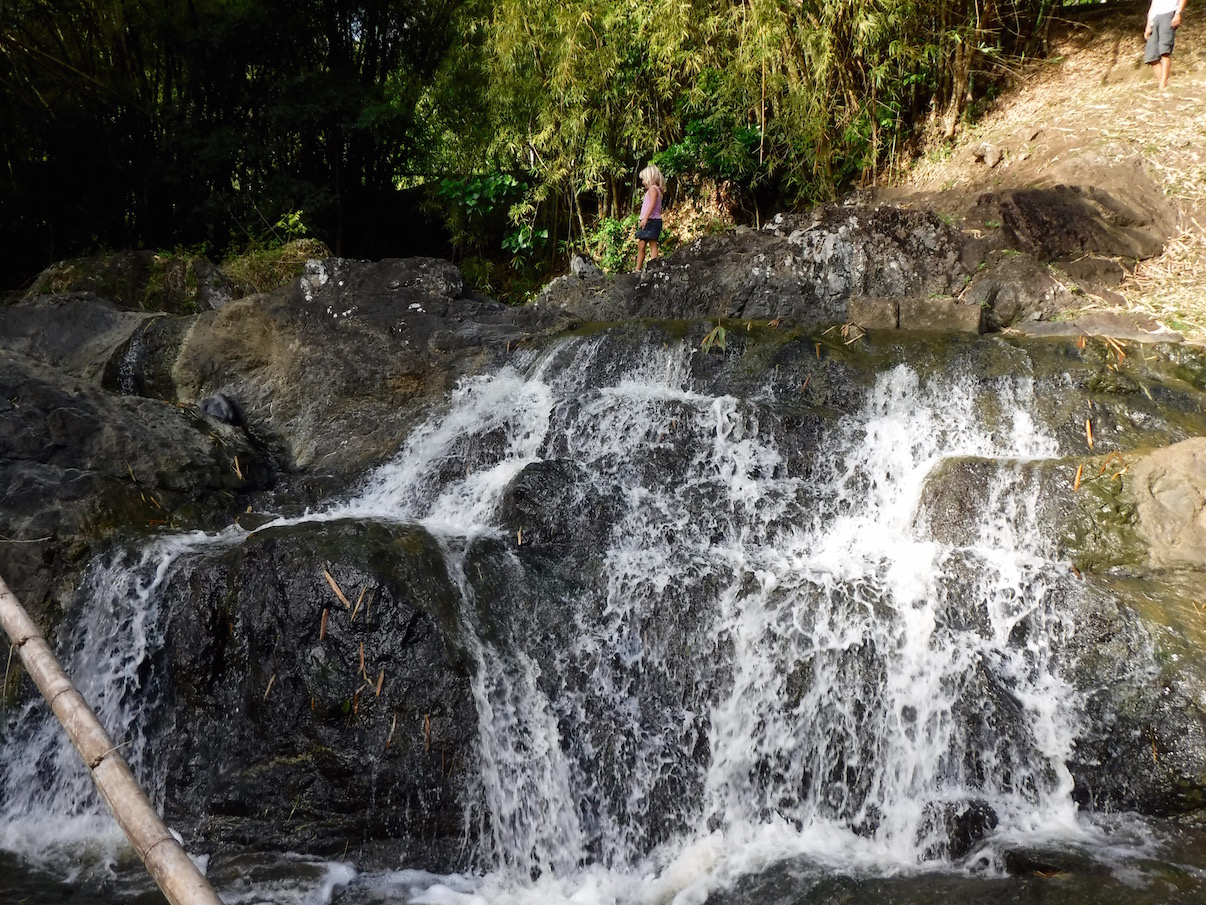
The first of three cascades of a waterfall accessible directly from the road
“Rise of the Machines”
By the time we set off for another bay, the island was gradually being swept up in the run-up to Christmas—Tobago had decked its Christmas trees with ornaments and its people with Santa hats.
The rains pour down New Year songs, and Lady Mary suddenly loses all contact with the outside world—the chargers want a holiday too. The first to give up after three hard years at sea was the 12-volt MacBook charger. Its insulation had long since dried out in the sun, and the cable ended its long-suffering existence in style—with a short circuit. What’s a party without company? thought the inverter, and shorted out too, leaving us unable to charge anything from 220 V either.
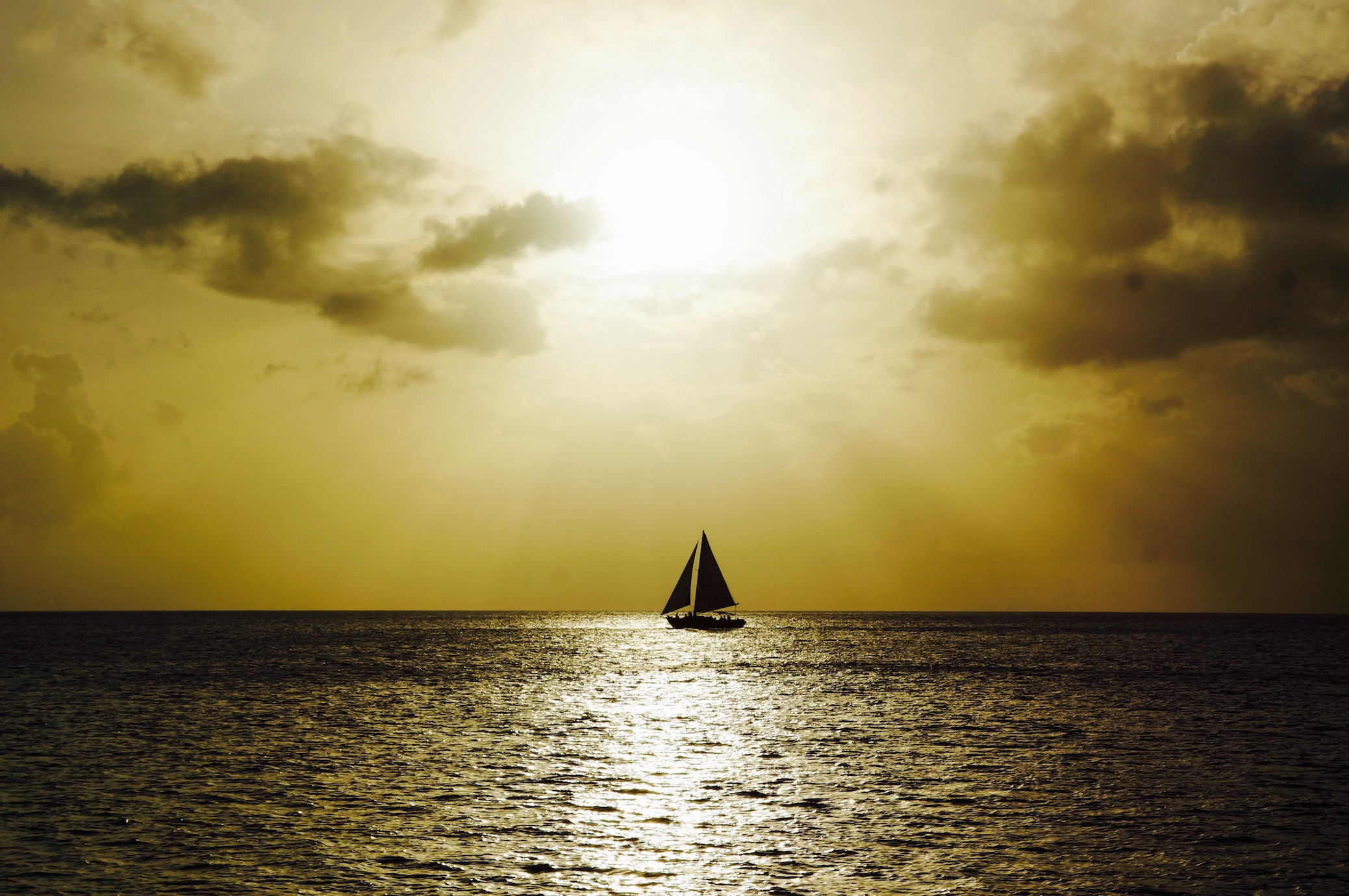
Having exhausted their entire stock of obscenities, the crew put the gadgets well out of sight and headed out into the Caribbean Sea without writing to anyone.
“Above him, a ray of golden sunlight...”
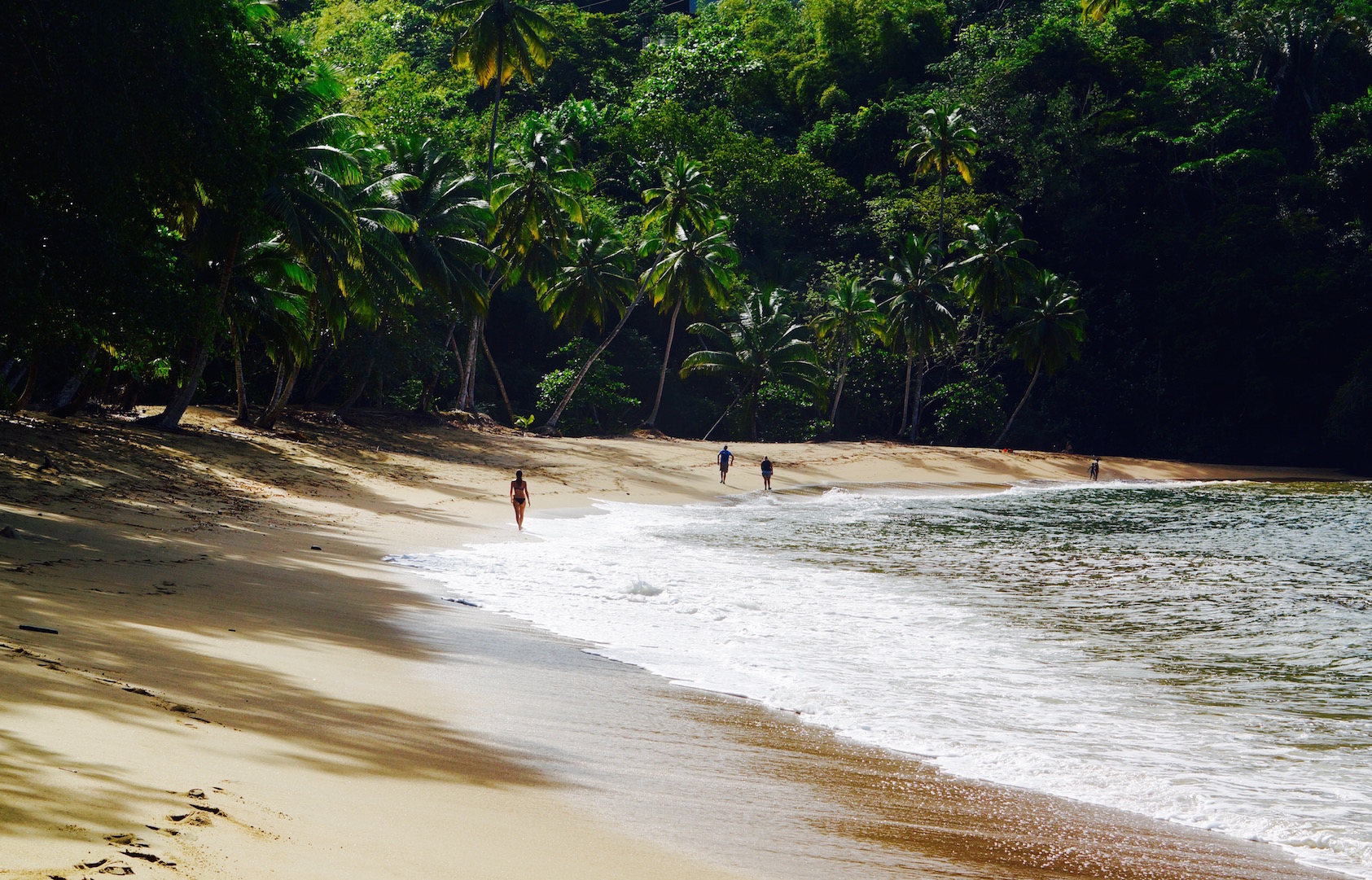
A Solitary Englishman Once Lived Here
There are many beautiful bays of varying degrees of seclusion along the island’s north-eastern coast.
Englishman’s Bay had caught our eye during our drive around the island. A photo of this bay graces more than one tourist brochure. A week before Christmas it had been deserted; now around 20 people are relaxing on the beach and sitting in its only café.
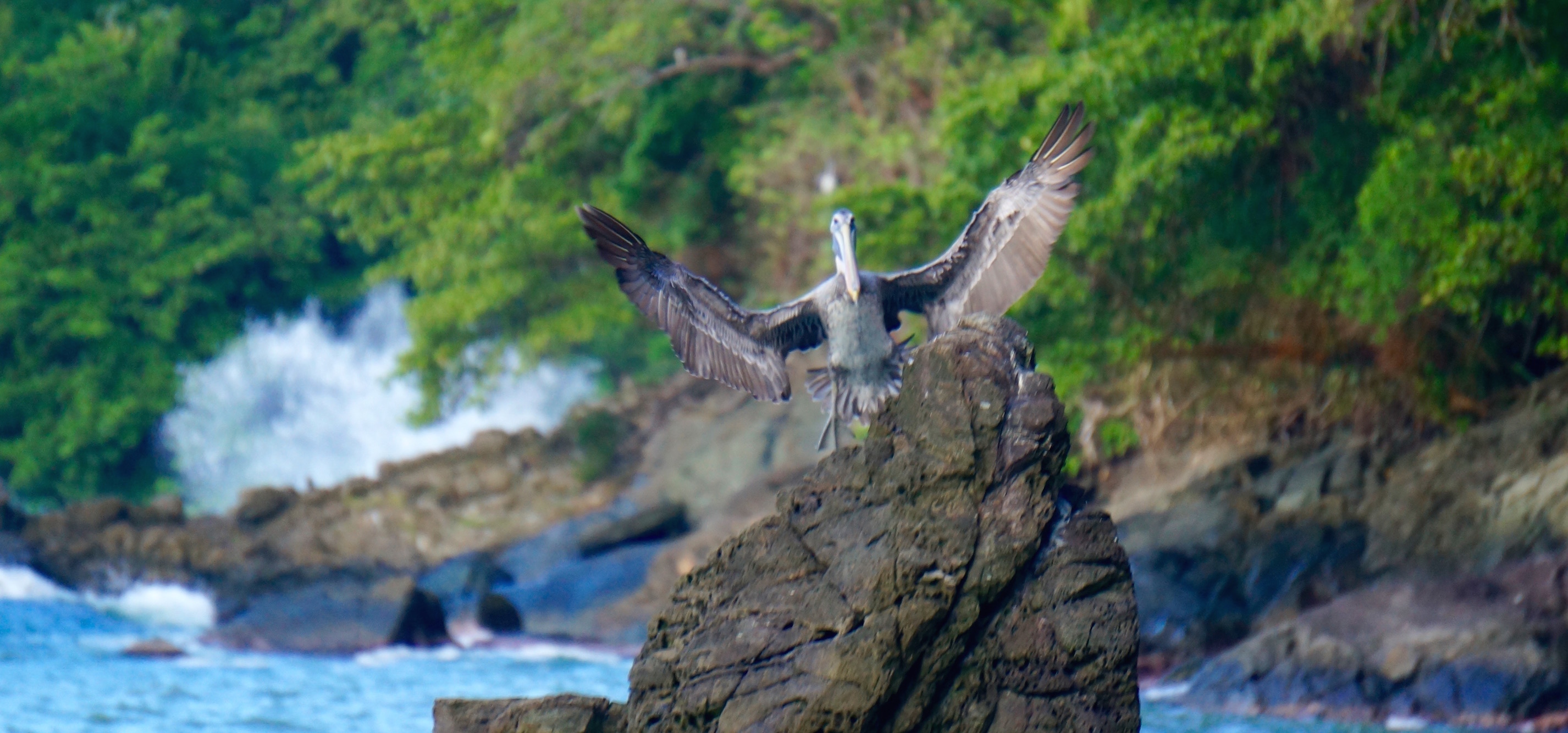
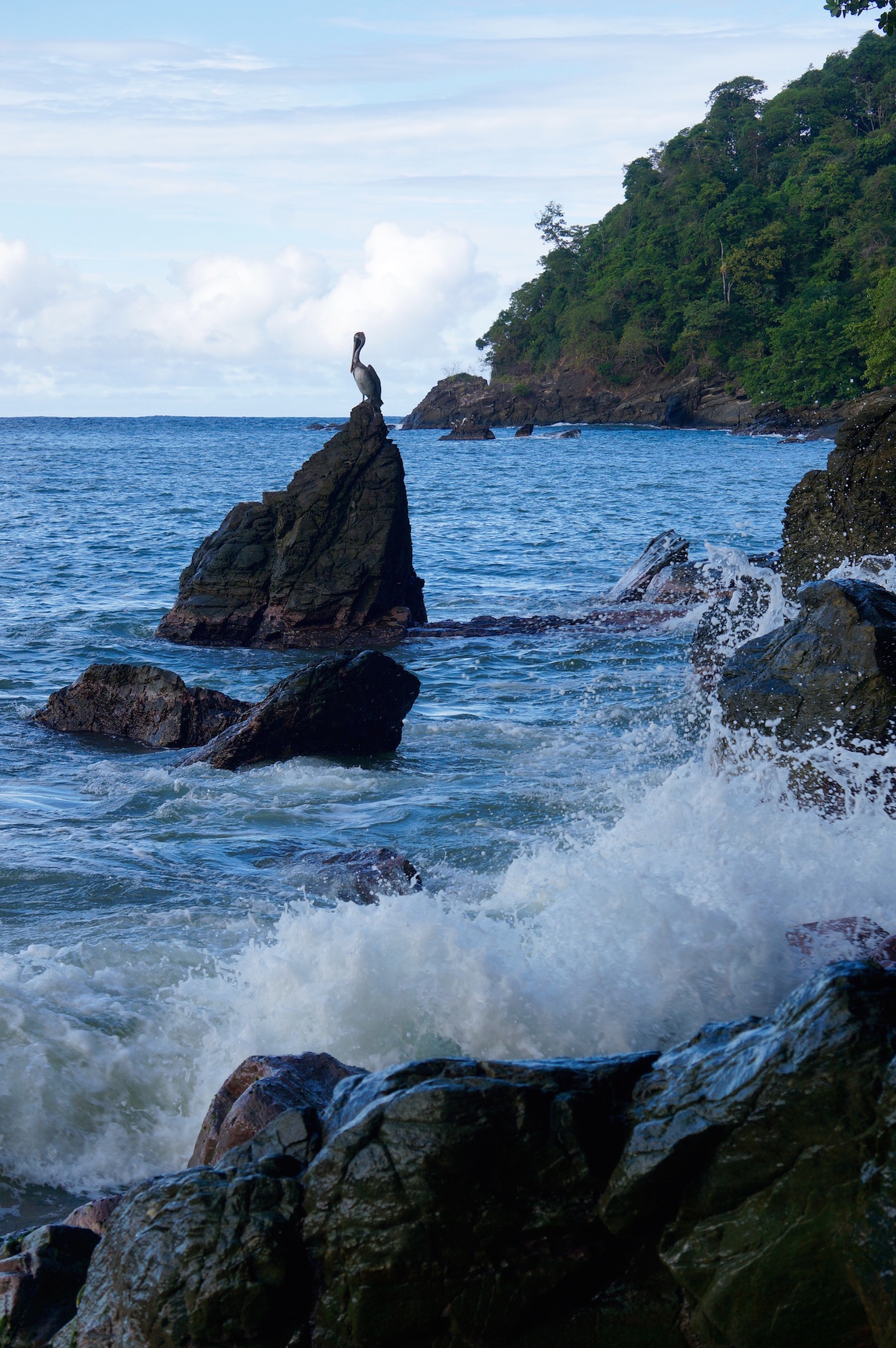
Englishman’s Bay is round and snug, but its protection from the waves is rather nominal. On the other hand, there are lots of pelicans; the one in the main photo is apparently their leader—did you notice the charisma? 🙂 Secluded Englishman’s Bay
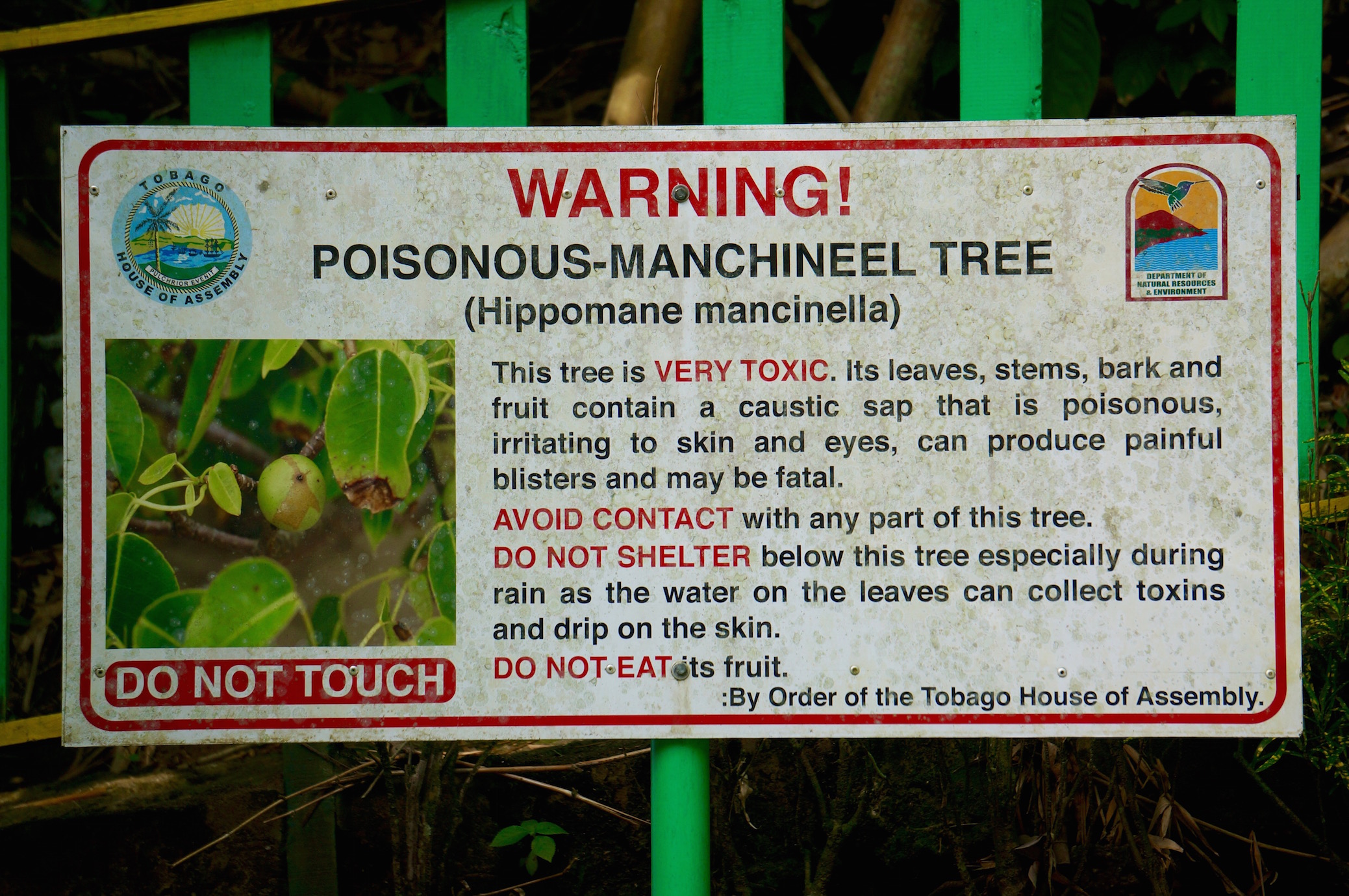
On shore, a poisonous manchineel tree casts dense shade; its fruit, a small fragrant apple, was brought to Mum by Lada for inspection. Mum held it, sniffed it, suspected manchineel and threw it away. Half an hour later, we read the sign:
It says that an apple like this is highly toxic, that you mustn’t stand beneath the tree when it rains, and that in general you shouldn’t touch anything from this tree of knowledge )
To this day, everyone who took part in the experiment looks perfectly healthy:).
The next morning, Lady Mary sped along the misty cliffs through high seas towards the village of Charlotteville, where we would clear out of the country (Link coming soon! “Trinidad and Tobago: Yacht Clearance Procedures”).
Photographs from Deep within Tobago
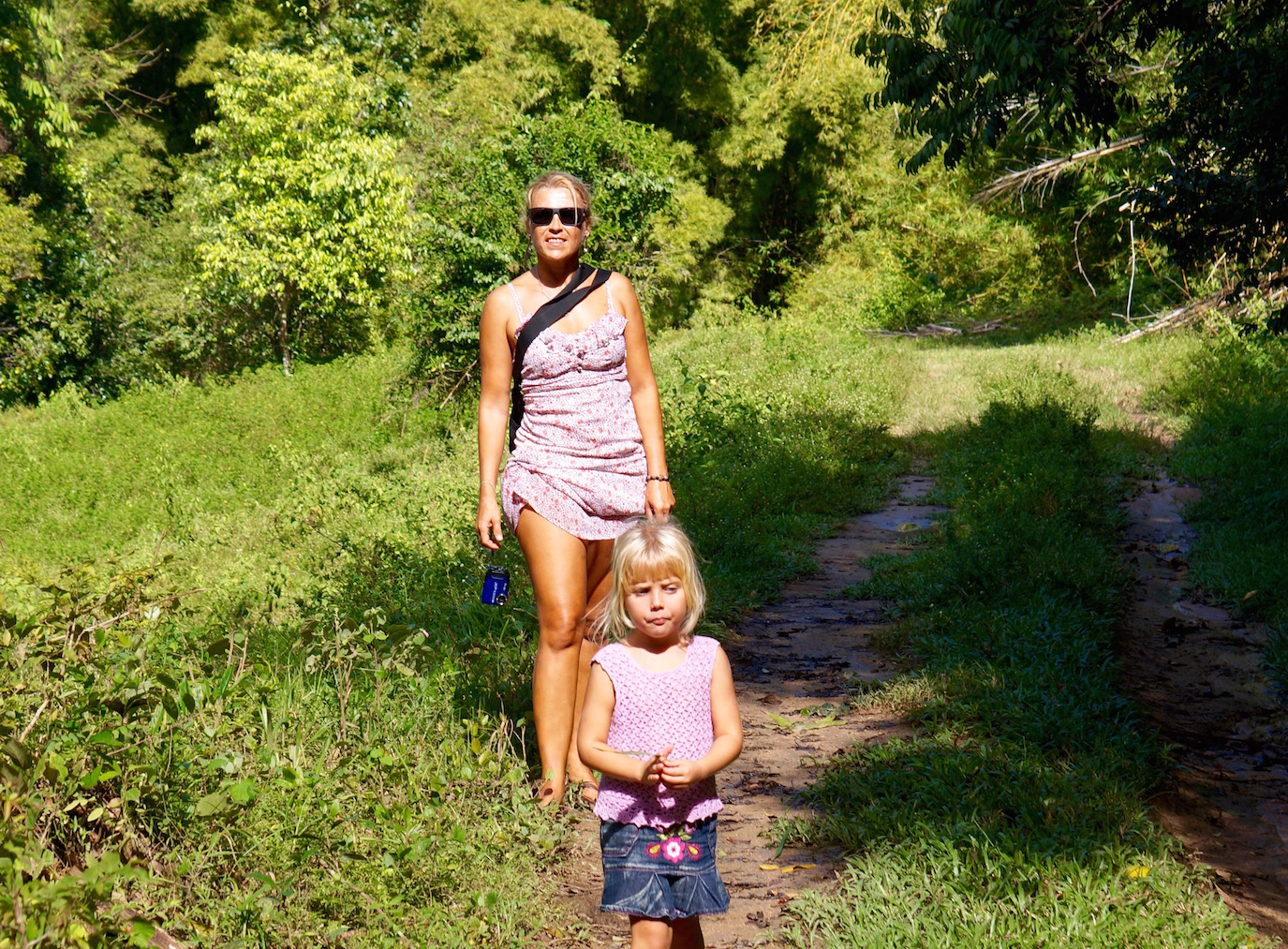
The first mate chose far too romantic a dress for a walk in the forest. To get through the sludge on the path and ford a stream, she had to turn her “maxi” into a “mini” in a hurry 🙂
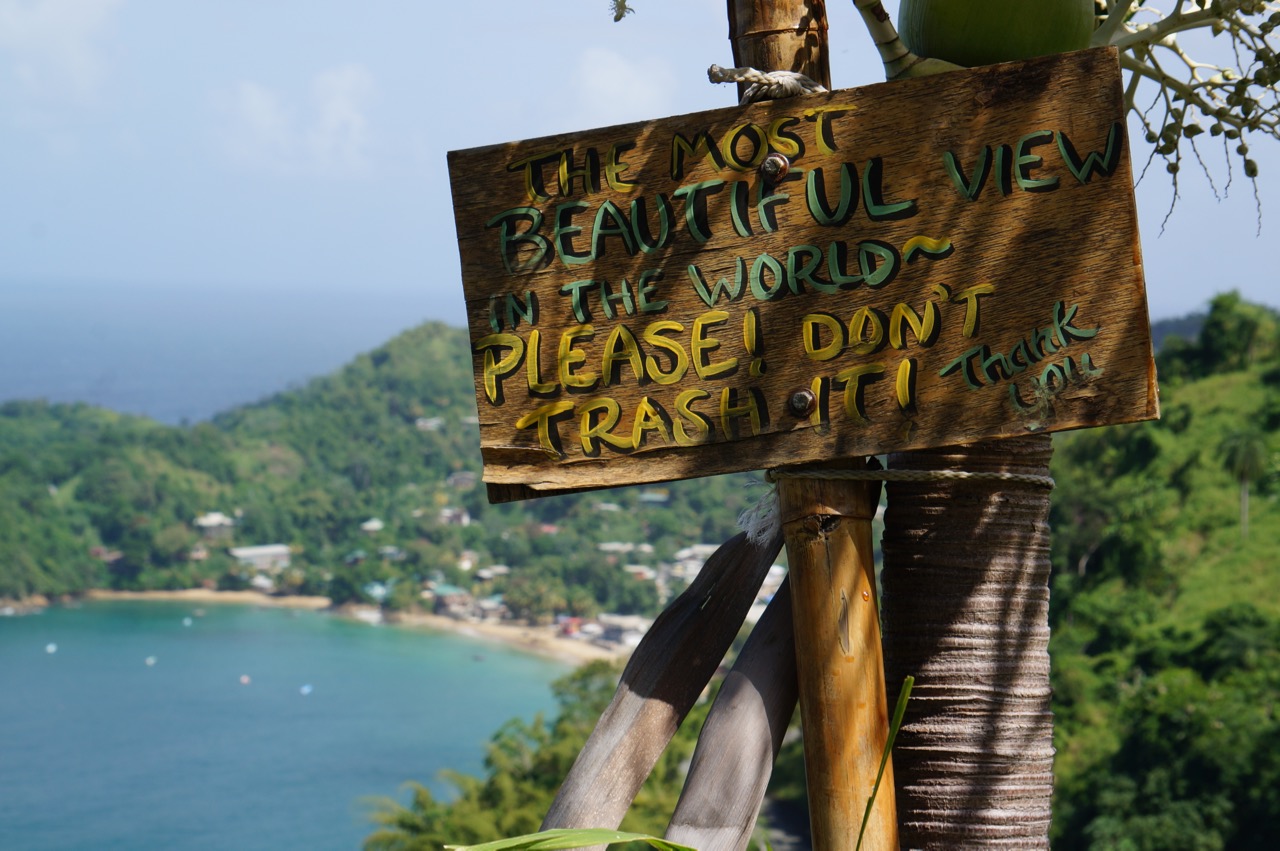
The sign says: “This is the best view on Earth. Please do not litter it”
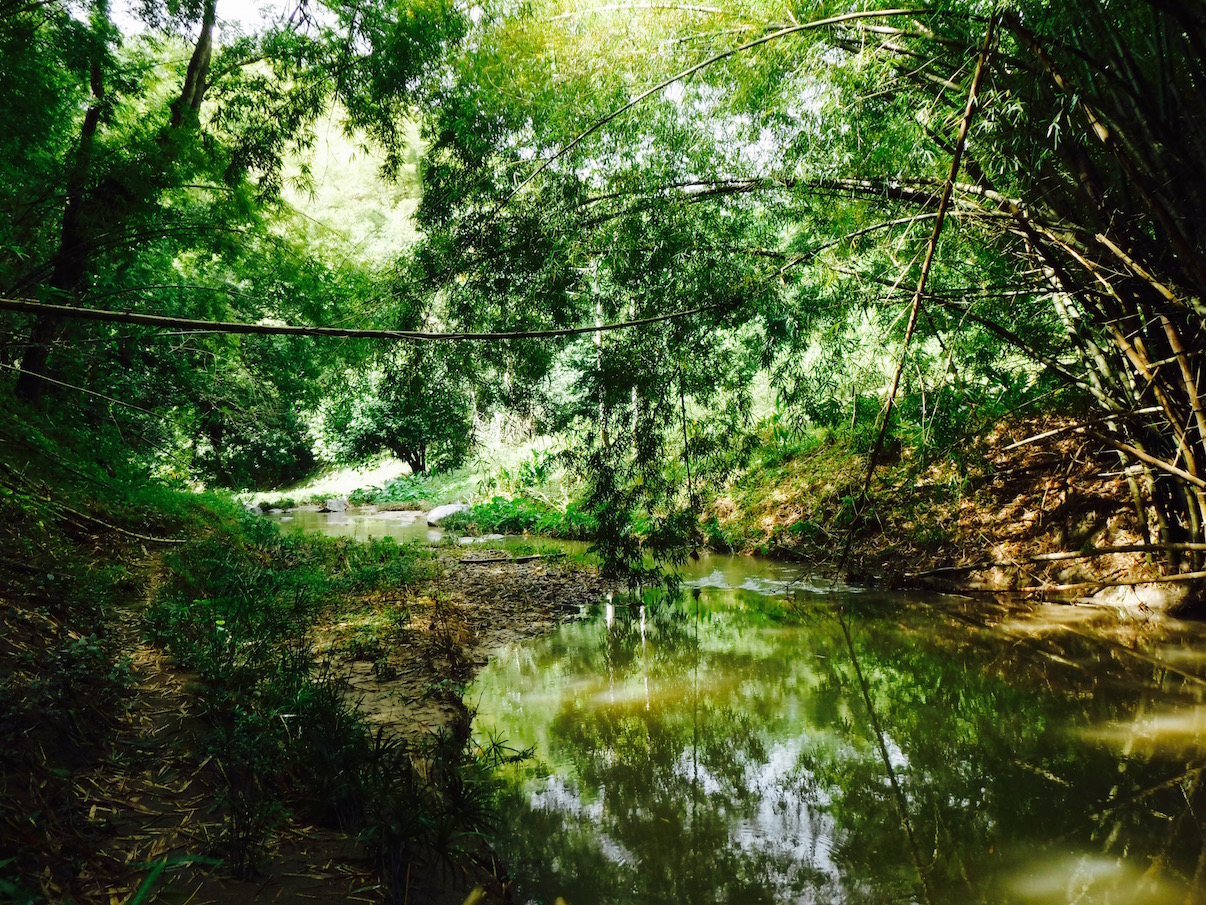
A stream in the tropical forest
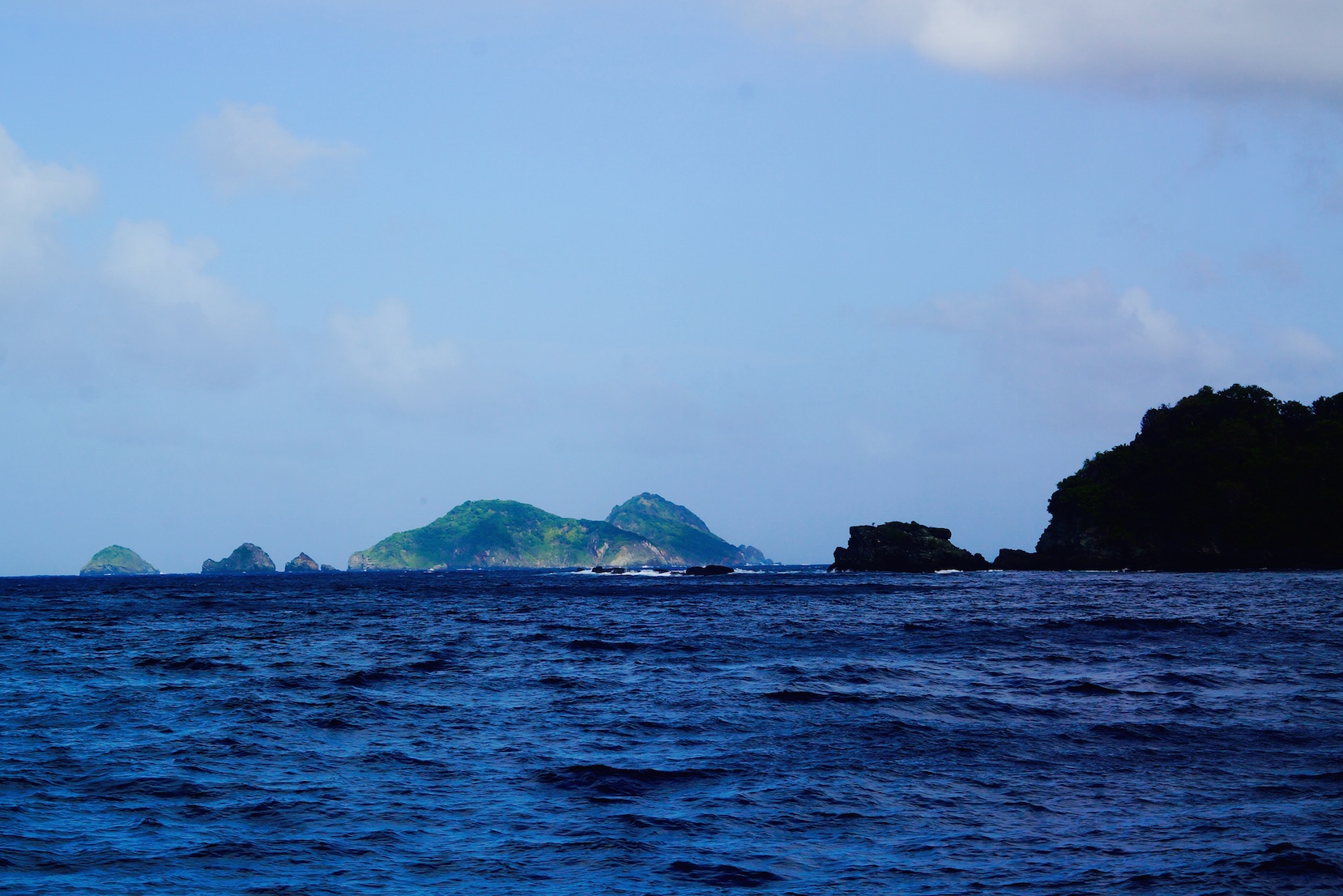
Heading out into the open sea
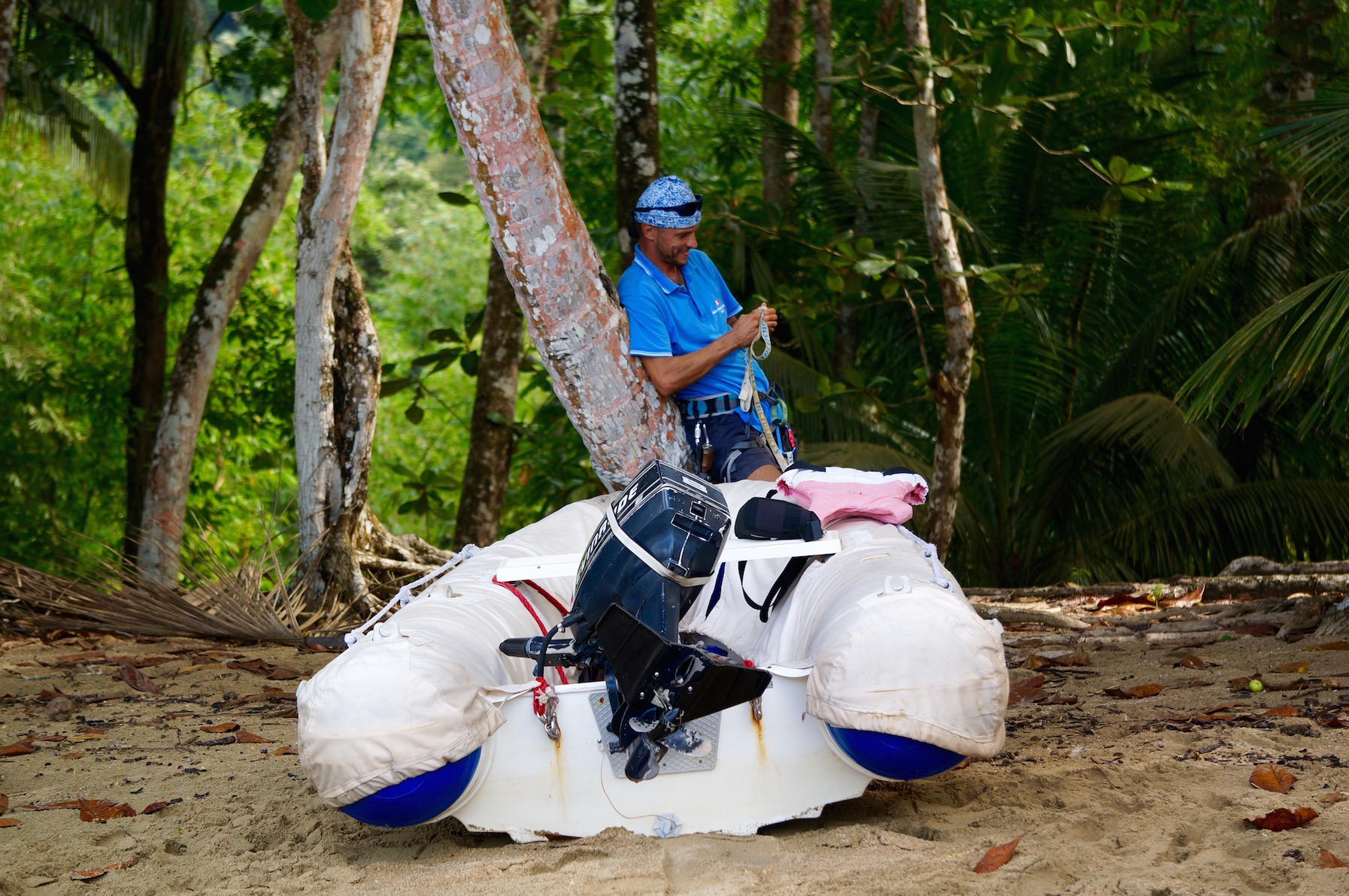
The captain fastens a climbing harness for an assault on a coconut palm
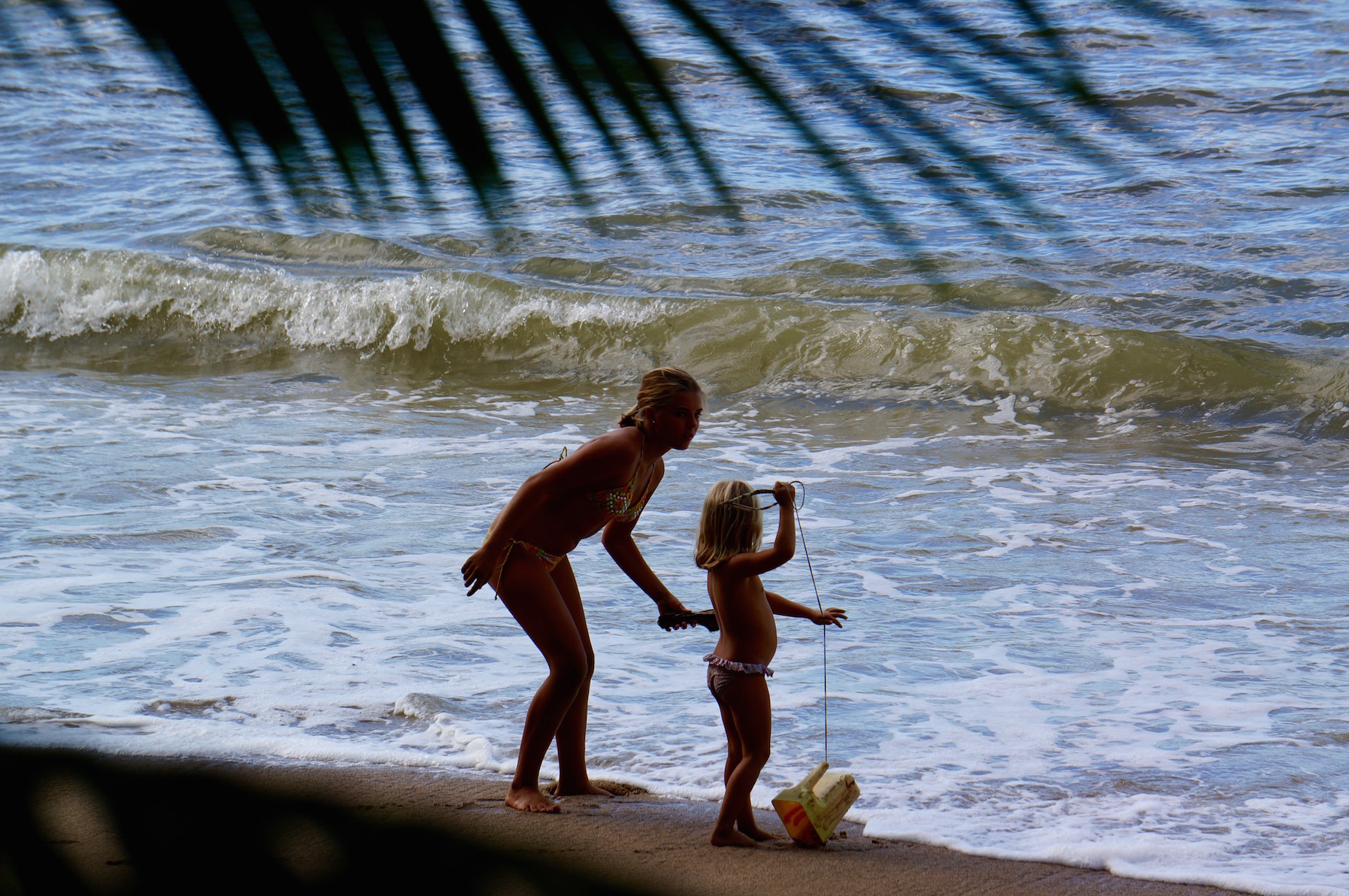
Englishman’s Bay and the little pirate girls
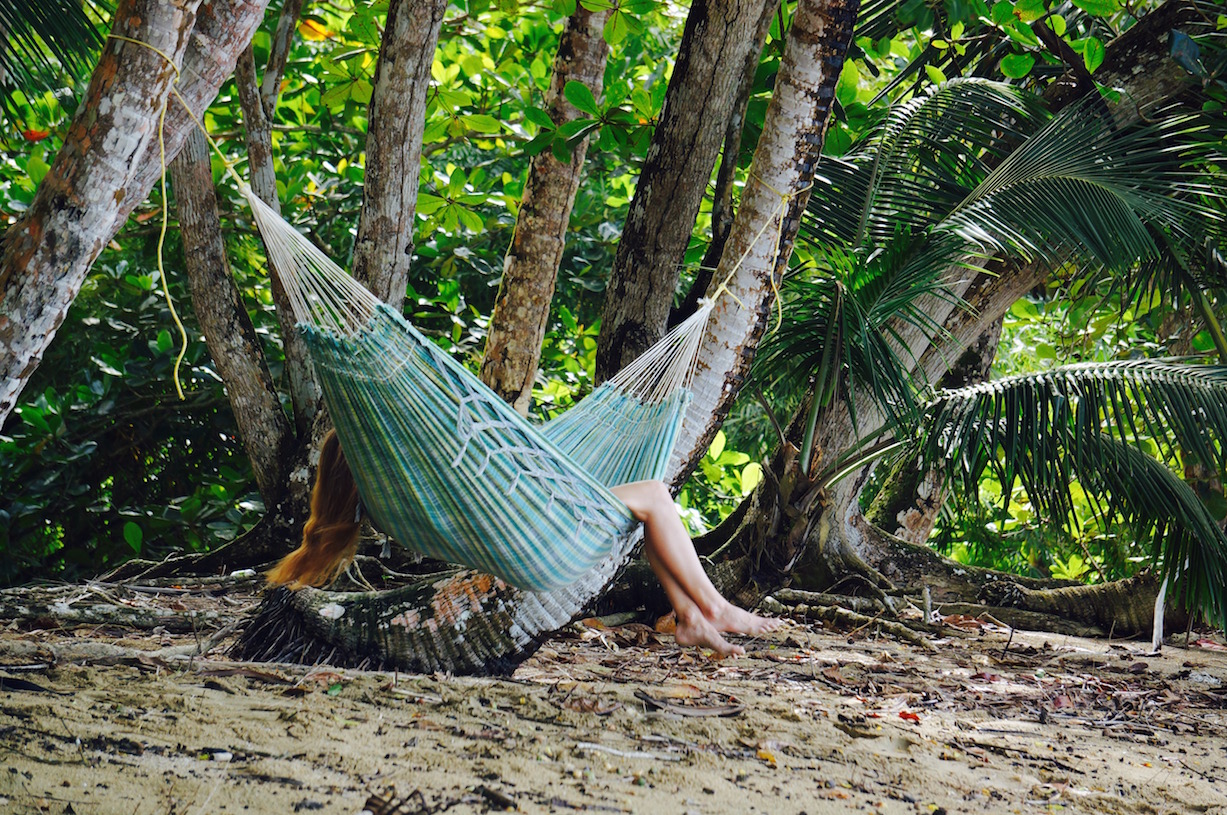
Englishman’s Bay and relaxation
To be continued!